
Choosing the right storage requires balancing weight, accessibility, and durability to ensure your equipment remains secure on the road. Professional operators often face the frustration of disorganized gear and moisture-damaged tools that lead to expensive downtime. Without a reliable system, you risk safety violations and lost productivity during critical long-haul routes. The installation of a high-performance aluminum semi truck tool box provides the heavy-duty protection needed to keep your fleet running efficiently.
Why choose an aluminum semi truck tool box for fleets?
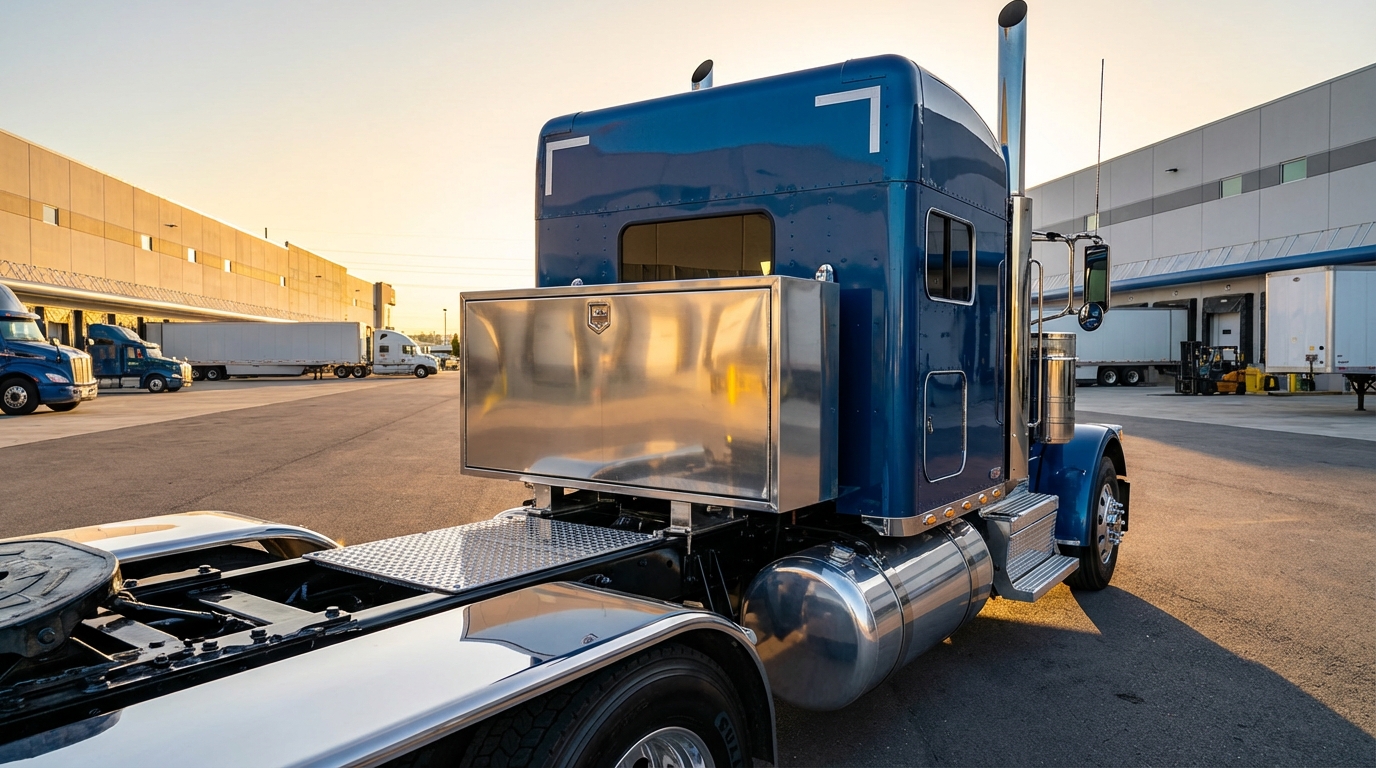
Fleet managers prioritize aluminum because it offers the highest strength-to-weight ratio available for commercial vehicle storage. Utilizing an aluminum semi truck tool box allows you to maximize your hauling capacity without exceeding bridge weight limits.
Lowering the curb weight of your vehicle directly translates to better fuel economy and reduced wear on suspension components. This material choice ensures that your investment provides long-term value through decreased operational costs.
Is weight reduction critical for your payload?
Here is the deal: every pound saved on accessories is a pound you can add to your billable freight. Lightweight storage solutions are essential for staying competitive in a market where fuel prices fluctuate constantly.
- Aluminum is roughly one-third the weight of steel.
- Reduced weight lowers the center of gravity for better handling.
- Payload optimization increases the revenue generated per mile.
Will corrosion resistance extend the box’s life?
Aluminum naturally forms a protective oxide layer that prevents the deep structural rust common in steel units. This makes it ideal for northern routes where road salt and chemicals quickly destroy lesser materials.
Look at it this way: a box that doesn’t rust is a box you don’t have to replace every three years. Your fleet maintains a professional appearance while protecting internal components from the elements.
Key Takeaway: Selecting aluminum units significantly improves payload capacity while providing a rust-free solution that outlasts traditional steel alternatives.
| Feature | Aluminum Benefit | Impact on Fleet | |
|---|---|---|---|
| Weight | ~30% of steel weight | Increased payload & fuel savings | |
| Durability | High corrosion resistance | Longer service life in harsh weather | |
| Appearance | Maintains bright finish | Professional brand image |
The structural advantages of aluminum make it the preferred choice for fleets looking to optimize their total cost of ownership.
What aluminum semi truck tool box styles fit your frame?
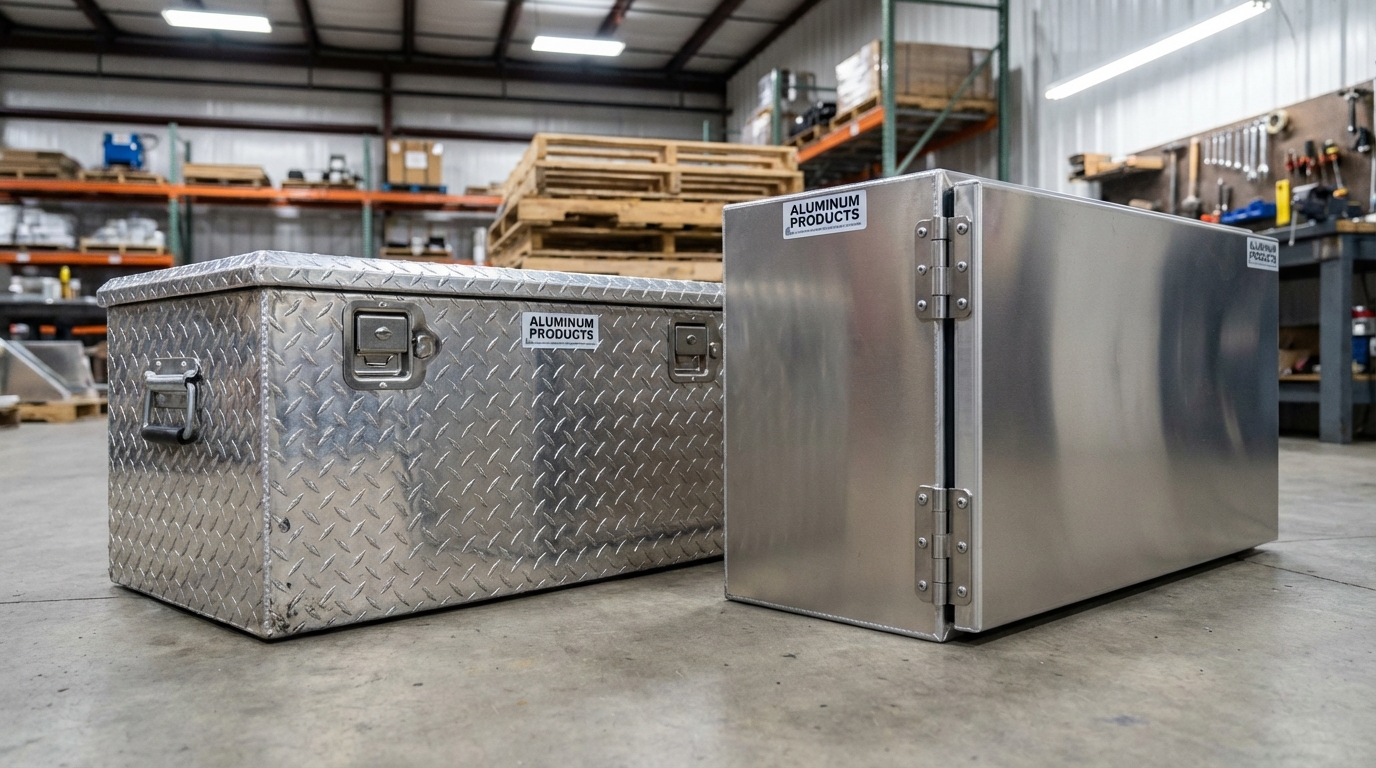
The style of box you select depends entirely on your chassis layout and the specific tools you need to carry daily. Integrating an aluminum semi truck tool box involves choosing between side-mount, underbody, or specialized step configurations.
Each style serves a unique purpose, from providing quick access to heavy chains to utilizing empty space beneath a flatbed. Proper selection ensures your gear is organized and does not interfere with the vehicle’s mechanical functions.
Should you choose an underbody or side-mount?
Underbody boxes are the perfect solution for flatbed trailers where top-side deck space is at a premium. These units hang from the trailer frame, keeping the center of gravity low and the deck clear for cargo.
- Side-mount boxes offer easier waist-high access for the driver.
- Underbody mounts utilize otherwise wasted space between the axles.
- Both styles can be equipped with heavy-duty moose bumpers for total vehicle protection.
Are step boxes the best multi-purpose option?
The bottom line is: why just have a box when it can also be a safe way to climb onto the deck? Step boxes feature reinforced lids with grip patterns that serve as a sturdy transition point for the operator.
Here is the deal:
- They save valuable frame rail space by combining two functions.
- Integrated steps improve driver safety during pre-trip inspections.
- High-grip surfaces prevent slips in rain or icy conditions.
Key Takeaway: Matching the box style to your frame layout maximizes storage volume without sacrificing accessibility or safety.
| Box Style | Best Application | Primary Advantage | |
|---|---|---|---|
| Underbody | Flatbeds & Drop-decks | Saves deck space; low center of gravity | |
| Side-Mount | Sleeper tractors | Easy ergonomic access for frequent use | |
| Step Box | Limited frame space | Dual-purpose storage and entry step |
Identifying the correct mounting location is the first step toward creating an organized and efficient mobile workspace.
How does an aluminum semi truck tool box protect gear?
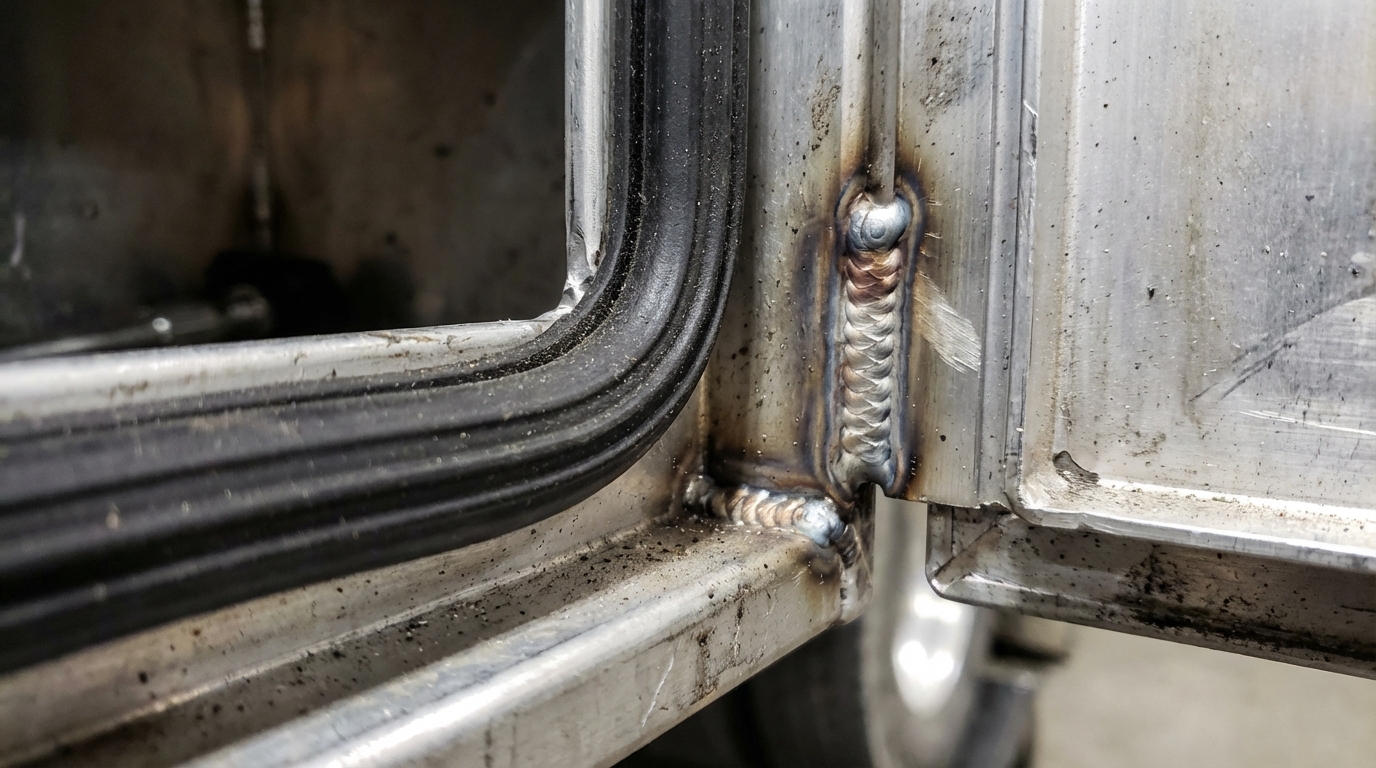
Weather protection and security are the two most important functions of a high-quality storage unit. An aluminum semi truck tool box utilizes specialized gaskets and welding techniques to create a hermetic environment for your expensive equipment.
Protecting your gear from road spray and dust is critical for maintaining the functionality of winches, straps, and electronics. Superior craftsmanship ensures that even in torrential rain, your interior remains bone dry.
Are automotive-grade seals necessary for weather?
Without a high-quality bulb seal, road grime and moisture will eventually find their way into your storage compartment. Automotive-grade gaskets compress tightly against the door frame to block out external contaminants effectively.
- Bulb seals maintain their shape even in extreme cold.
- They prevent the “whistling” noise often heard at highway speeds.
- Proper sealing prevents the buildup of mold on nylon straps.
Do lap-joint welds improve water resistance?
Look at it this way: the way a box is put together determines how well it keeps out the rain. Lap-joint welding provides more surface area for the weld bead, creating a much stronger and more water-tight corner.
Here is the deal:
- Lap joints are less likely to crack under frame-twisting stress.
- They provide a smooth exterior finish that sheds water quickly.
- This construction method is standard in truck bodies designed for extreme longevity.
Key Takeaway: High-grade seals and precision welding are the primary defenses against environmental damage and equipment failure.
| Component | Specification | Benefit | |
|---|---|---|---|
| Door Seal | Automotive bulb gasket | 100% moisture and dust exclusion | |
| Joinery | Lap-joint TIG welding | Superior structural strength and sealing | |
| Rain Gutter | Integrated perimeter | Diverts water away from door opening |
Ensuring your tools stay dry is just as important as keeping them locked away from potential theft.
Which aluminum semi truck tool box door is most efficient?
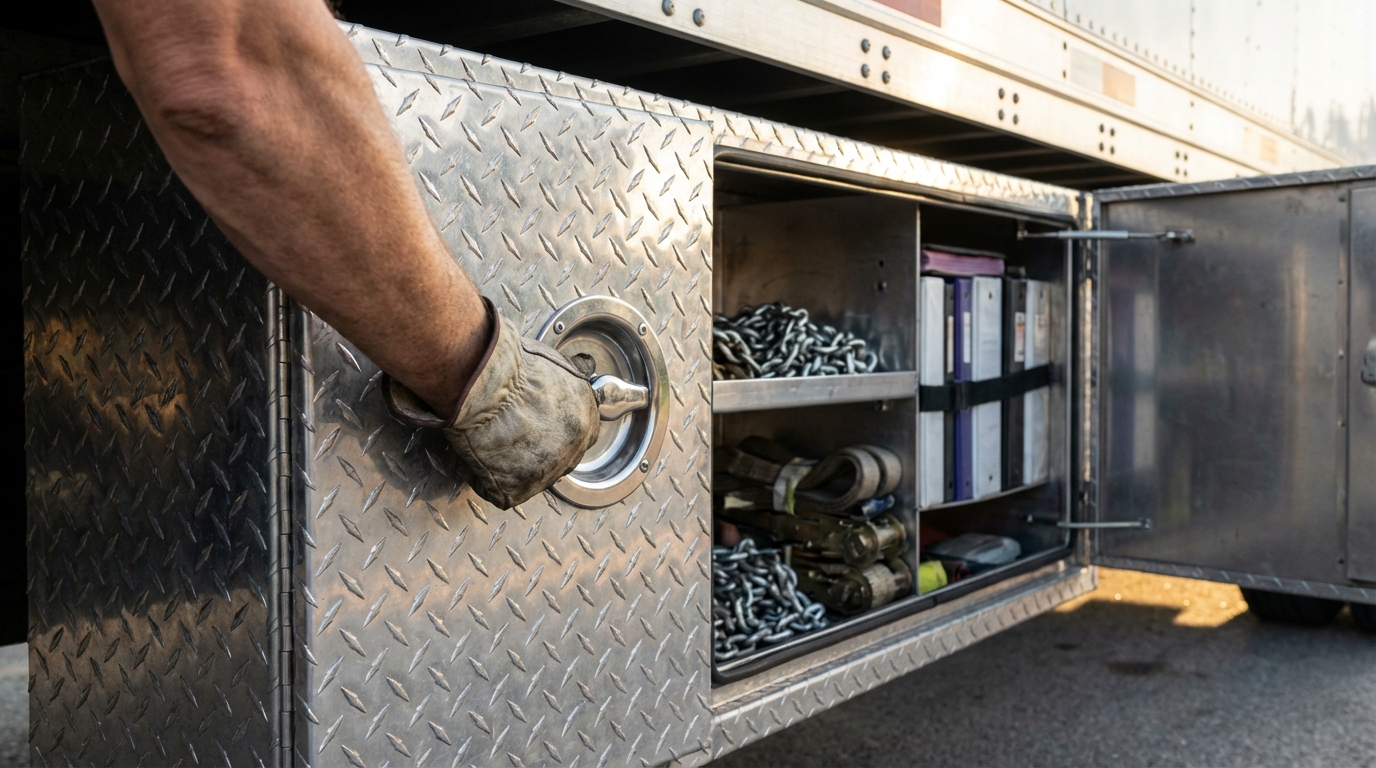
Efficiency on the road often comes down to how quickly you can retrieve the gear you need to get moving. Your aluminum semi truck tool box can be configured with several door types, including drop-down, side-swing, or heavy-duty cam-lock designs.
Choosing the right door depends on the size of your tools and the clearance available around your fuel tanks and fairings. A poorly chosen door can become a nuisance if it cannot open fully in tight loading dock environments.
When should you opt for a cam-lock handle?
Cam-lock handles are the industry standard for high-security and heavy-vibration environments. These handles use a vertical bar to compress the door against the seal at multiple points, ensuring a rock-solid closure.
- They are easier to operate with heavy work gloves.
- The cam action provides extra leverage to crush ice or dirt.
- This is the preferred choice for logging fleets operating on rough terrain.
Is a drop-down door better for accessibility?
Here is the deal: a drop-down door can act as a temporary workbench while you are sorting through your tools. It hangs flat against the box or stays parallel to the ground, giving you a clear view of the entire interior.
Look at it this way:
- There is no side-swing to worry about hitting adjacent obstacles.
- Cables or gas struts hold the door securely in place.
- It provides the widest possible horizontal opening for bulky items.
Key Takeaway: Door configuration should be based on your specific access needs and the physical constraints of your truck’s mounting area.
| Door Type | Best Feature | Operational Benefit | |
|---|---|---|---|
| Cam-Lock | Multi-point compression | Maximum security and vibration resistance | |
| Drop-Down | Integrated workspace | Full visibility and no side-swing issues | |
| Side-Swing | Rapid access | Ideal for tall, vertical storage spaces |
The right door mechanism prevents frustration and helps drivers maintain a faster schedule during equipment swaps.
How to size your aluminum semi truck tool box correctly?
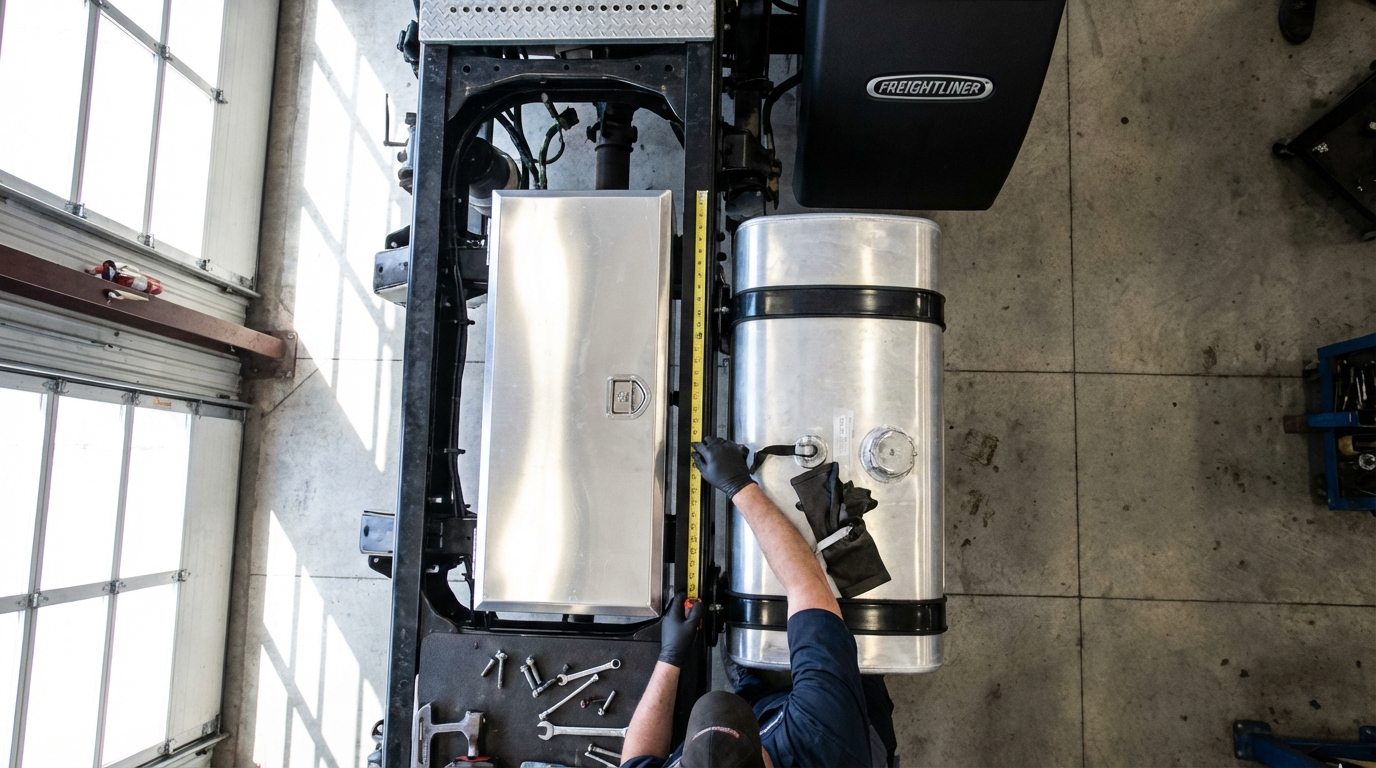
Correct sizing prevents interference with critical truck components like fuel tanks, air lines, and exhaust stacks. When measuring for an aluminum semi truck tool box , you must account for the physical box dimensions plus the space needed for the door to swing open.
Failing to measure correctly can lead to “cab strike” during tight turns or prevent the door from opening past a fuel tank fairing. Always leave a minimum of two inches of clearance around all sides to allow for frame flex.
How do you measure frame clearance accurately?
You need to measure the available “clean” frame rail from the back of the cab to the start of the fifth wheel or rear suspension. Ensure you are measuring between fixed obstacles like spring hangers and air tanks.
- Measure the depth from the rail to the outer edge of the tires.
- Check the height from the top of the rail to the ground or fairing.
- Consider using chain hangers for vertical space optimization.
Will the door swing clear of the fuel tanks?
Here is the deal: if your door hits your fuel tank, you won’t be able to get your tools out when you need them most. You must check the “swing radius” of the door to ensure it clears all nearby obstructions.
Look at it this way:
- Top-hinged doors need vertical clearance from the cab or sleeper.
- Side-hinged doors need space to the left or right of the box.
- Drop-down doors must clear the ground or trailer frame.
Key Takeaway: Precise measurements of frame rail length, depth, and vertical clearance are non-negotiable for a professional installation.
| Measurement | What to Check | Why it Matters | |
|---|---|---|---|
| Rail Length | Distance between fixed obstacles | Determines max box width | |
| Frame Depth | Rail to tire/fairing edge | Prevents protrusion issues | |
| Swing Radius | Door travel path | Ensures full access to tools |
Taking the time to measure twice ensures that your installation process is seamless and your gear remains accessible.
When is a custom aluminum semi truck tool box necessary?
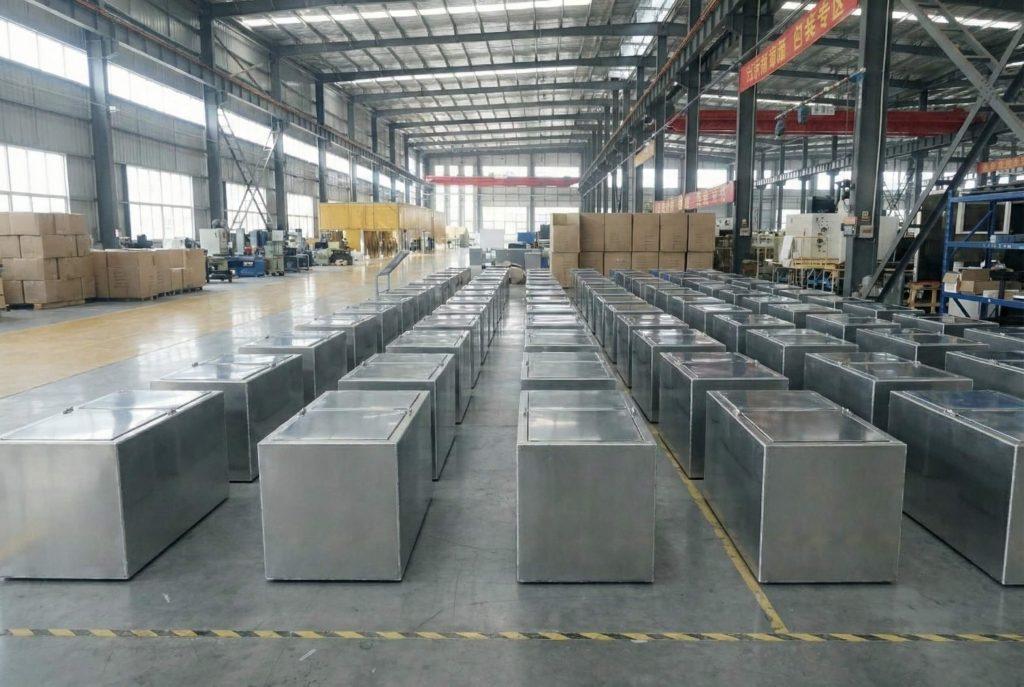
Standard catalog sizes work for many, but specialized hauling often requires unique dimensions to accommodate odd-shaped equipment. A custom aluminum semi truck tool box can be designed with internal dividers, slide-out trays, or specific mounting points that aren’t available off the shelf.
Custom fabrication allows you to utilize every square inch of available space on a crowded vocational chassis. This is particularly useful for trucks carrying specialized rescue gear, heavy rigging, or oversized maintenance tools.
Do you have unique dimensions for odd cargo?
Sometimes you need to store items that are simply too long or too tall for standard storage units. Custom manufacturing allows you to specify the exact height, width, and depth required for your specific mission.
- Long-handled shovels or pry bars require extra-wide boxes.
- Tall fluid containers may need deep vertical compartments.
- Internal shelves can be placed at custom heights for better organization.
Is specialized mounting required for your rig?
Look at it this way: not every truck has a flat frame rail ready for a standard L-bracket. Custom boxes can be built with notched backs or integrated mounting plates to fit around obstacles like hydraulic pumps or DEF tanks.
Here is the deal:
- Built-in mounting saves time during the final installation.
- Custom brackets can be reinforced for extreme off-road use.
- It ensures a “factory” look that matches the vehicle’s lines.
Key Takeaway: Customization is the best path for operators with specific storage needs that cannot be met by standard mass-produced sizes.
| Customization Option | Best Use Case | Operational Benefit | |
|---|---|---|---|
| Internal Dividers | Organizing small fittings & PPE | Reduces time spent searching for gear | |
| Notched Backing | Fitting over frame obstacles | Maximizes storage in tight spaces | |
| Pull-out Trays | Accessing heavy tools/parts | Better ergonomics for heavy lifting |
Working with a manufacturer that offers tailored solutions ensures your fleet is equipped with the exact tools needed for success.
Where to mount an aluminum semi truck tool box for safety?
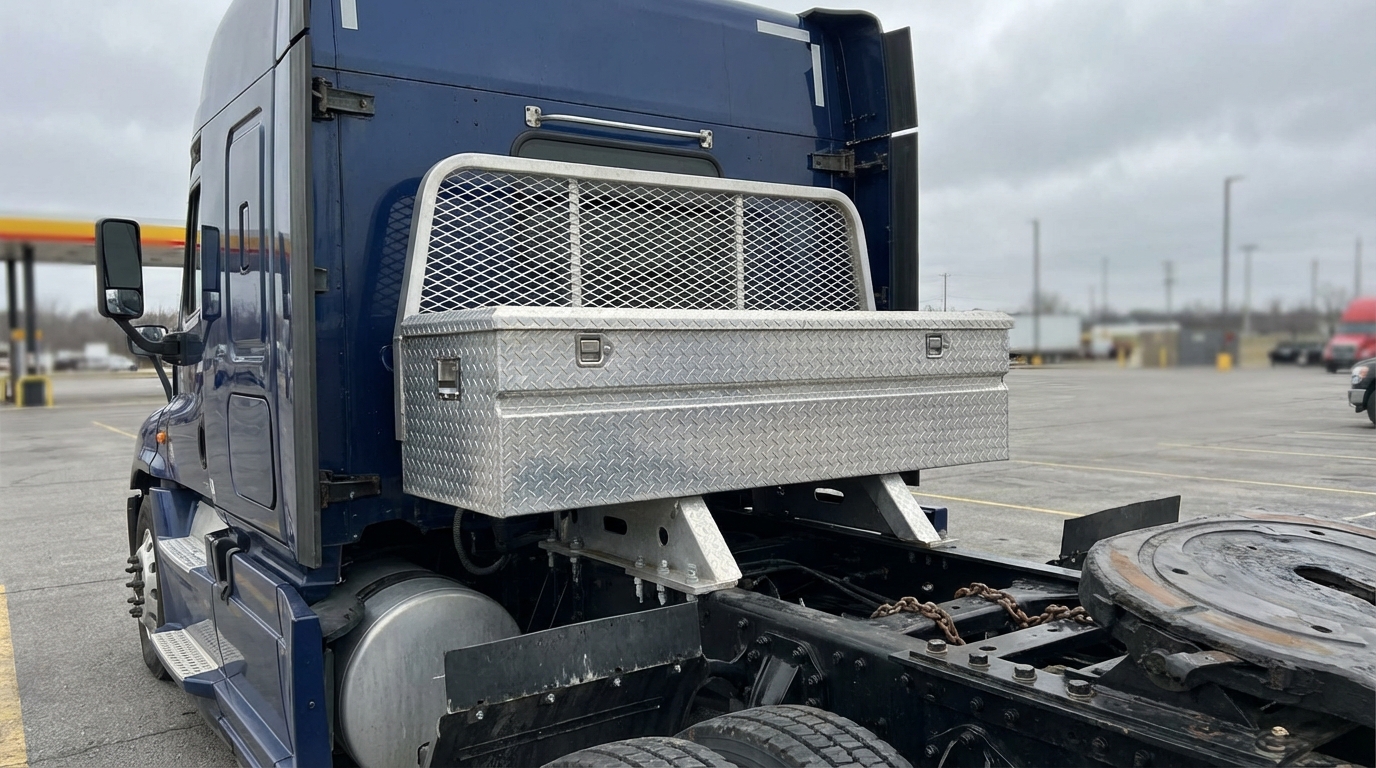
Mounting location affects both the weight distribution of your vehicle and the safety of the driver during access. An aluminum semi truck tool box is most commonly mounted on the side frame, but headache rack mounts and rear-of-cab positions are also popular.
Safety should always come first; never mount a box where it blocks your view of the fifth wheel or prevents proper trailer articulation. A poorly placed box can lead to dangerous “jackknife” damage if the trailer hits the storage unit during a sharp turn.
Can you mount it behind the cab sleeper?
Mounting behind the sleeper cab keeps the box protected from direct road spray and minimizes the aerodynamic impact on the vehicle. This position is ideal for storing items that you don’t need to access every single hour, such as emergency spill kits or spare parts.
- It leaves the side rails open for larger fuel tanks.
- It provides a more balanced weight distribution across the frame.
- High-mount boxes can be integrated with protective headache racks.
Is end-of-frame mounting safe for dump trucks?
Here is the deal: dump trucks and vocational vehicles often have open frame space at the very rear of the chassis. While this provides easy access, you must ensure the box is mounted securely to handle the vibration and impact of off-road work.
Look at it this way:
- Rear-mounted boxes must be clear of the dumping mechanism.
- They are more exposed to rear-end collisions and road debris.
- Heavy-duty mounting hardware is essential to prevent “sagging” over time.
Key Takeaway: Strategic mounting ensures that tools are accessible while maintaining the structural integrity and safety of the vehicle platform.
| Mounting Location | Safety Consideration | Advantage | |
|---|---|---|---|
| Side-Frame | Curb-side access only | Easy reaching from ground level | |
| Behind Sleeper | Trailer clearance | Protected from wind and road spray | |
| End-of-Frame | Visibility and overhang | Utilizes otherwise dead space |
Choosing the safest location protects both your equipment and the personnel who must interact with it daily.
How to maintain an aluminum semi truck tool box long-term?
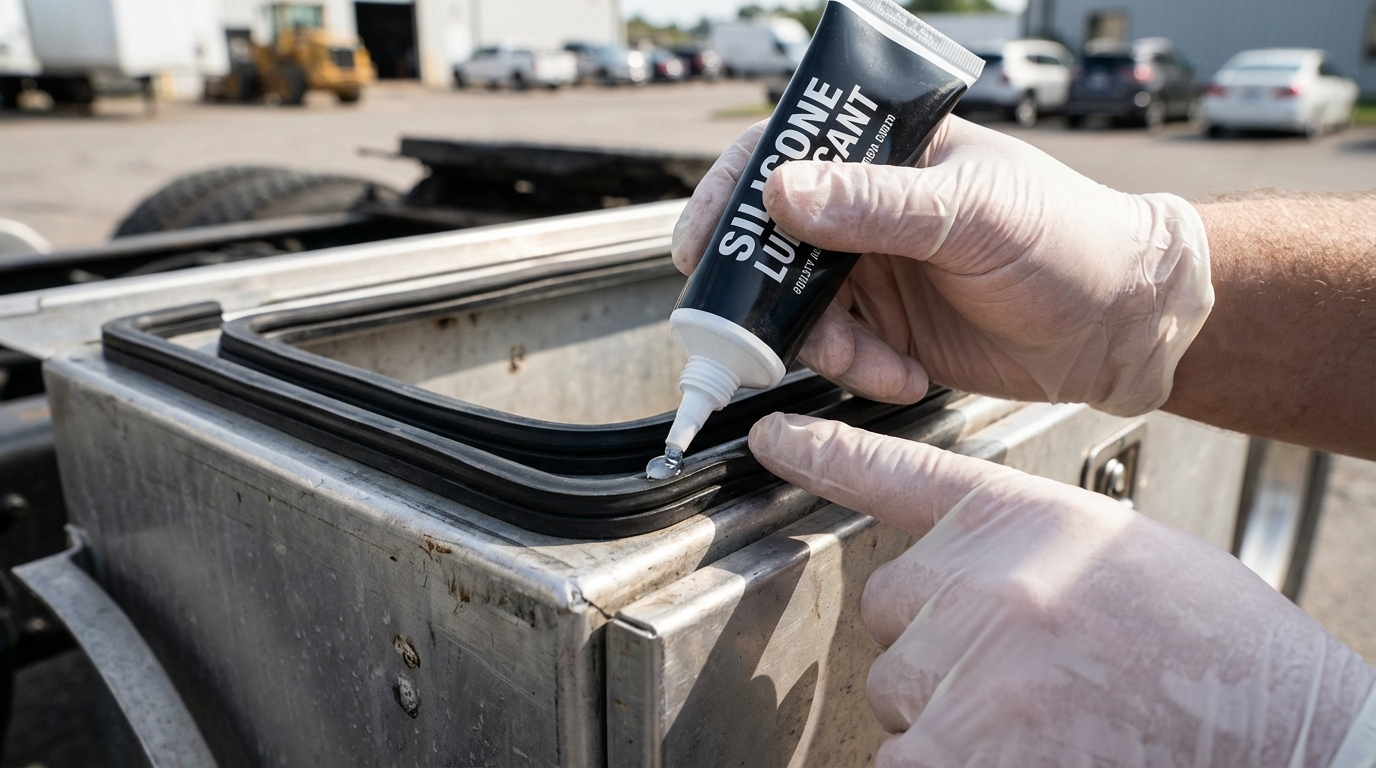
Even the most durable equipment requires a basic maintenance routine to stay in peak operating condition. Maintaining your aluminum semi truck tool box involves regular cleaning, lubrication of hinges, and inspection of the mounting hardware.
Ignoring these simple steps can lead to “frozen” locks or leaking seals that eventually damage your interior gear. A well-maintained box will easily last the entire lifespan of the truck, providing decades of reliable service.
Should you apply silicone to the door gaskets?
Yes, applying a thin layer of silicone lubricant to the rubber seals prevents them from drying out and cracking over time. This also prevents the door from “freezing” shut during the winter months when moisture can turn to ice around the seal.
- Use a high-quality silicone spray or wipe every six months.
- Clean the seal with a damp cloth before applying lubricant.
- This ensures the seal remains flexible for a perfect weather-tight fit.
How often should you check the mounting brackets?
Look at it this way: a heavy box full of tools puts immense stress on mounting bolts every time you hit a bump. You should inspect the tightness of all mounting hardware during every scheduled oil change or PM service.
Here is the deal:
- Vibration can slowly loosen even the best Grade 8 bolts.
- Check for any “egging” or elongation of the mounting holes.
- Ensure the brackets show no signs of stress cracking or bending.
Key Takeaway: Routine lubrication of seals and periodic bolt tightening are the keys to ensuring your storage system remains secure and waterproof.
| Maintenance Task | Frequency | Purpose | |
|---|---|---|---|
| Gasket Lubrication | Twice a year | Prevents cracking and freezing | |
| Hardware Inspection | Every PM service | Ensures box stays safely attached | |
| Hinge Greasing | Every 3 months | Maintains smooth door operation |
A small investment in maintenance time prevents the high cost of emergency repairs or lost equipment on the road.
Why is an aluminum semi truck tool box better than steel?
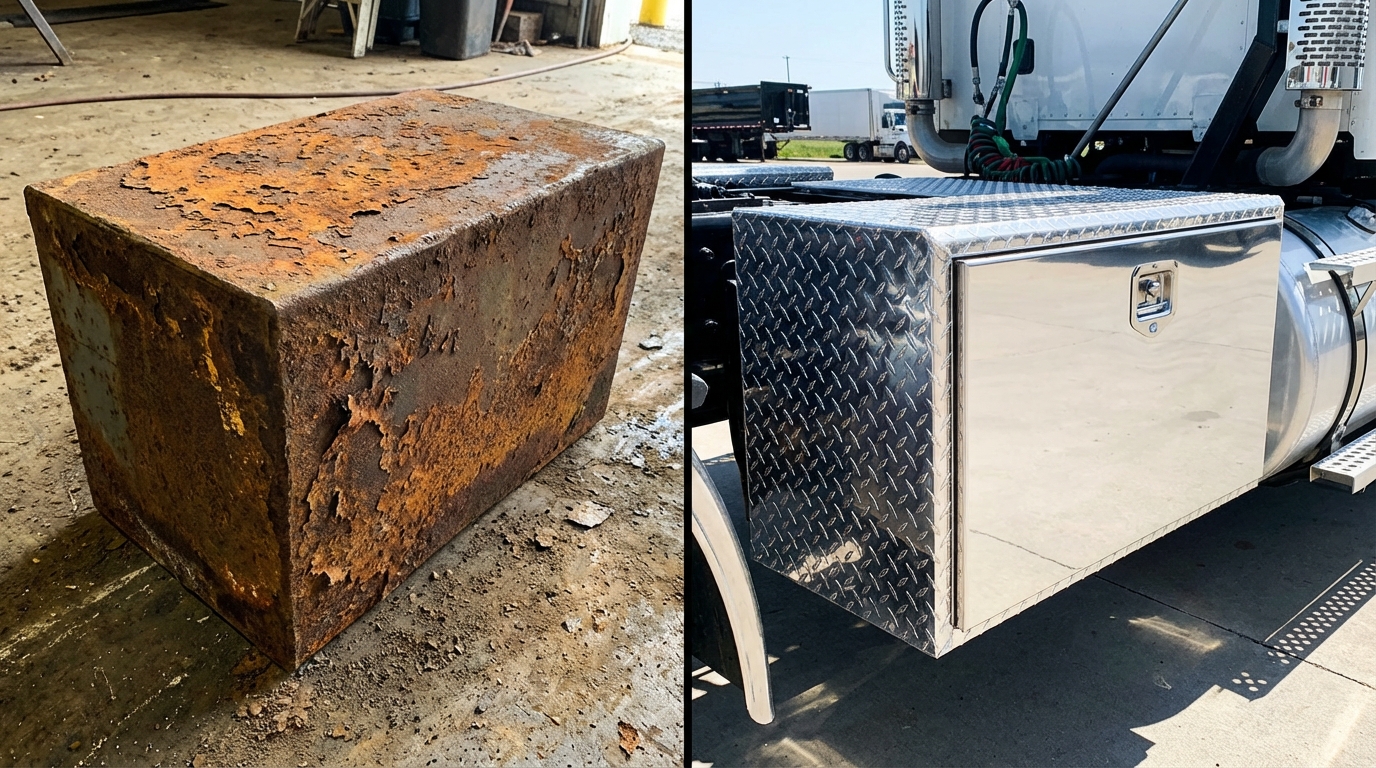
When comparing materials, aluminum consistently beats steel in nearly every category relevant to modern trucking. An aluminum semi truck tool box provides superior corrosion resistance, significant weight savings, and a much higher resale value.
While steel may have a lower initial purchase price, the hidden costs of painting, rust repair, and increased fuel consumption make it more expensive in the long run. Aluminum remains the industry standard for fleets that prioritize efficiency and longevity.
Is the strength-to-weight ratio superior?
Aluminum is inherently lighter, but modern alloys allow it to be just as strong as standard mild steel. By using thicker gauge aluminum, manufacturers can create a box that is incredibly rigid without adding unnecessary bulk to the truck.
- Aluminum doesn’t require heavy powder coating to stay pretty.
- It absorbs impact energy better than brittle, low-grade steel.
- You can haul more freight because the truck itself is lighter.
How much fuel can you save by reducing weight?
Here is the deal: every 100 pounds you remove from your vehicle can improve fuel economy by up to 1%. While one box might not seem like much, a full suite of aluminum accessories across a 100-truck fleet adds up to thousands of dollars in annual savings.
Look at it this way:
- Less weight means less strain on the engine and drivetrain.
- It helps vocational trucks stay under “overweight” permit limits.
- The savings pay for the premium cost of aluminum within the first year.
Key Takeaway: Aluminum’s combination of low weight and high durability makes it the most cost-effective material for long-term fleet operations.
| Material | Initial Cost | 5-Year Cost | Weight | |
|---|---|---|---|---|
| Aluminum | Moderate-High | Low (No maintenance) | Light | |
| Steel | Low | High (Rust & Fuel) | Heavy | |
| Plastic | Low | Moderate (Cracking) | Lightest |
Transitioning to aluminum components is a strategic move that enhances both performance and the bottom line of your business.
What aluminum semi truck tool box specs matter most?
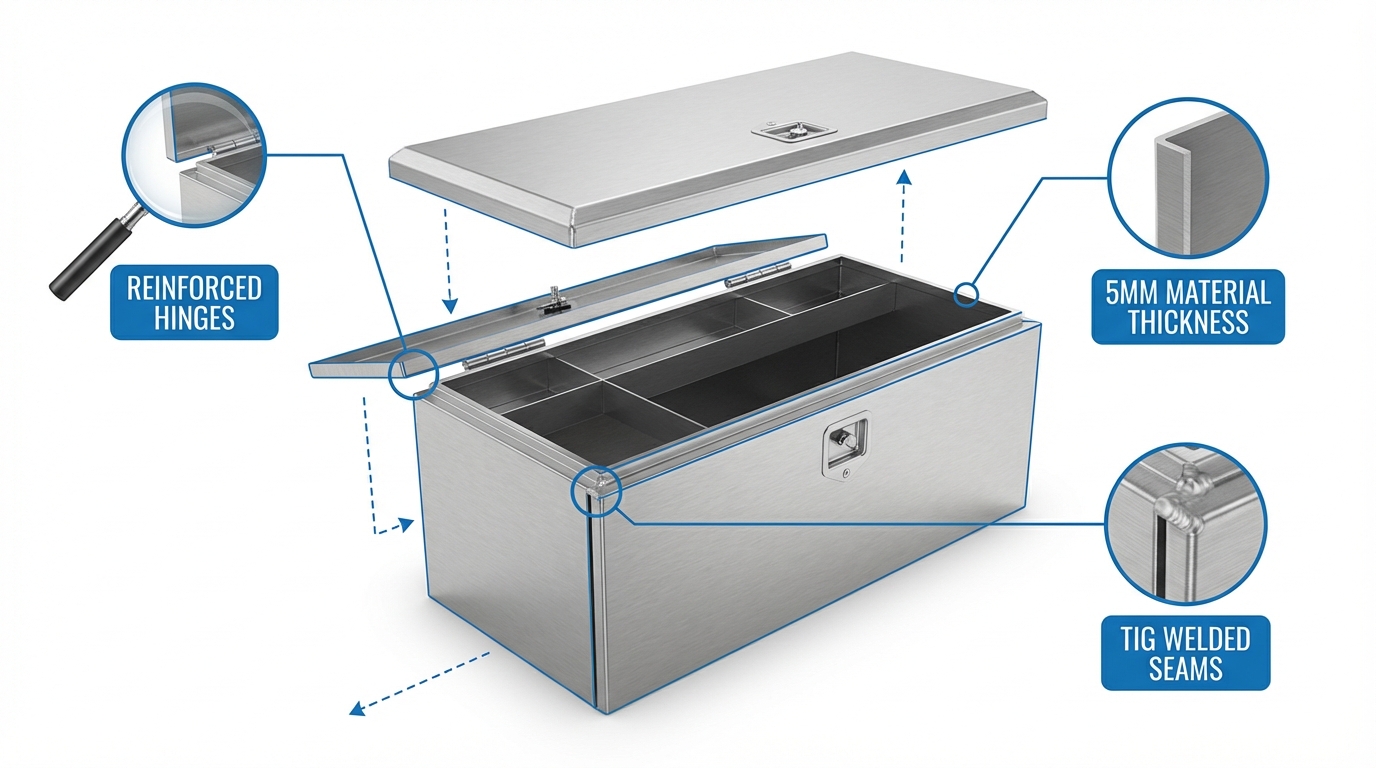
Understanding technical specifications allows you to distinguish a high-quality professional box from a cheap consumer alternative. When shopping for an aluminum semi truck tool box, you should focus on material thickness, hinge design, and the type of welding used.
High-performance units typically use 1/8-inch (0.125″) thick aluminum or heavier for the main body. Thin-walled boxes will quickly vibrate apart or sag under the weight of heavy chains and binders.
Which alloy grade offers the best durability?
The 5052-H32 aluminum alloy is the gold standard for truck accessories because of its excellent salt-water corrosion resistance and workability. Some specialized heavy-duty boxes use 6061-T6 for the frames to provide maximum structural rigidity.
- 5052 alloy is highly resistant to stress-corrosion cracking.
- It maintains its strength even after the heat of the welding process.
- This material is also widely used in professional marine applications.
Are reinforced hinges worth the extra cost?
Look at it this way: the hinge is the most common point of failure on any storage box. Reinforced “piano” hinges or heavy-duty cast hinges prevent the door from sagging and ensure it always lines up perfectly with the latch.
Here is the deal:
- Cheap hinges will bend if a driver leans on the open door.
- Stainless steel hinge pins prevent the rust that causes binding.
- Reinforced designs can handle the weight of doors with integrated tools.
Key Takeaway: Prioritizing 5000-series alloys and reinforced hardware ensures your storage unit survives the rigors of the highway.
| Specification | Professional Standard | Benefit | |
|---|---|---|---|
| Material Grade | 5052-H32 Aluminum | Maximum corrosion and crack resistance | |
| Thickness | 0.125″ (1/8 inch) | Prevents sagging and structural failure | |
| Hinge Type | Continuous Stainless Steel | Smooth operation and extreme durability |
By focusing on these core specifications, you ensure your equipment provides reliable service for the life of your vehicle.
Conclusion
Investing in high-quality storage is a fundamental step toward optimizing your fleet’s efficiency and protecting your valuable tools. By choosing a solution that balances weight reduction with rugged durability, you eliminate the headaches of disorganized gear and moisture damage. Whether you are managing a single owner-operator rig or a large-scale highway fleet, the right equipment ensures your focus stays on the road rather than on equipment failures. We are committed to providing North American fleets with the engineering excellence and precision manufacturing required for extreme conditions. To discover how our customized storage solutions and heavy-duty accessories can transform your operations, contact us today for an expert consultation.
Frequently Asked Questions
Can I get the same key for all my tool boxes?Yes, most professional manufacturers offer “keyed-alike” options so you only need one master key for your entire vehicle. This simplifies driver operations and reduces the risk of lost keys causing downtime during equipment checks.
What is the best thickness for a semi truck tool box?A minimum of 0.125 inches (1/8″) is recommended for heavy-duty commercial use to prevent sagging and structural fatigue. Cheaper boxes often use thinner material that cannot withstand the constant vibrations and weight of heavy chains.
How do I know if the box will fit my truck?You must measure your available frame rail space and account for the swing radius of the door around fuel tanks and fairings. Leaving a two-inch safety gap around the box prevents damage caused by natural frame twisting during transport.
Can I mount a tool box myself?Yes, if you have the proper L-brackets and heavy-duty mounting hardware, although professional installation is recommended for fleet consistency. Always use Grade 8 bolts and internal backing plates to distribute the load across the box surface.
How do I prevent my aluminum box from dulling?Regular washing with a non-acidic soap and occasional polishing will maintain the bright finish for years. Many operators prefer “diamond plate” textures because they naturally hide scratches and road debris impacts better than smooth finishes.