
Yes, grille guards are generally legal in both Canada and the United States, provided they do not obstruct required lighting or interfere with factory safety systems. Many fleet operators hesitate to install front-end protection due to a complex web of varying regional regulations. This fear of heavy fines or failing roadside inspections often keeps owners from investing in Grille Guards that prevent animal strike damage.
Operating a Class 8 truck or a heavy-duty pickup without a guard is a significant gamble. One moose or deer collision can result in tens of thousands of dollars in repair costs and weeks of downtime. However, installing non-compliant equipment can lead to “out-of-service” orders. By understanding federal standards and provincial differences, you can equip your fleet with high-performance protection that remains 100% compliant with the law.
1. Are grille guards legal on North American roads?
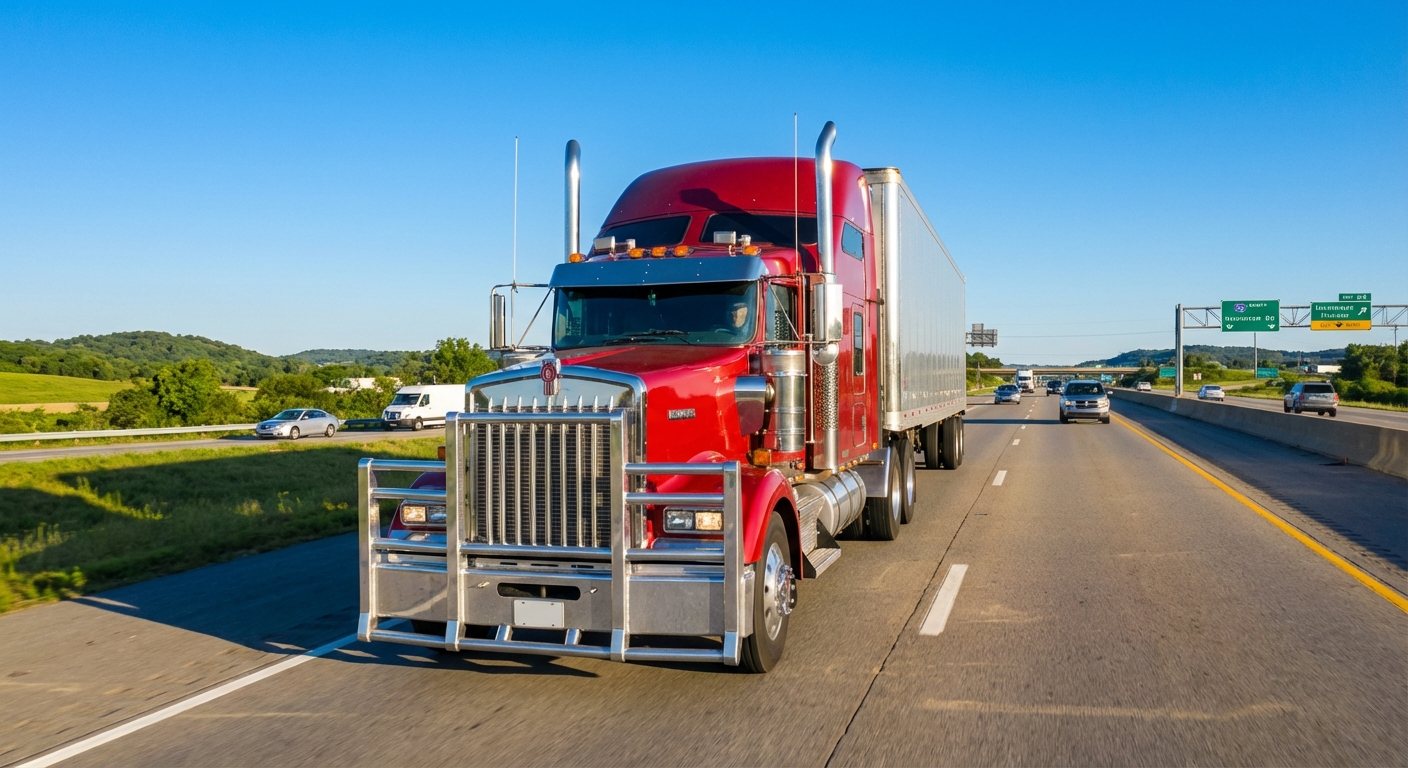
Grille guards are legal for use on public highways across North America as long as they do not interfere with the vehicle’s primary safety systems or essential lighting. While there is no overarching federal ban, legality is determined by how the Grille Guards interact with existing safety standards.
But here is the thing: You must ensure your equipment does not violate regional protrusion or lighting rules.
- Federal standards allow for most modifications.
- Provincial laws focus on sharp edges.
- Local codes usually follow state guidelines.
Do federal regulations prohibit front-end guards?
Currently, neither the FMVSS in the U.S. nor the CMVSS in Canada explicitly prohibit the installation of aftermarket protection. Instead, they regulate the performance of the vehicle as a whole. Any guard must be designed not to degrade the vehicle’s original safety certifications or structural integrity.
How do state and provincial laws differ?
Legality often shifts from “permitted” to “regulated” once you cross state or provincial lines. Some jurisdictions have specific “sharp edge” or “protrusion” laws designed to protect pedestrians. Others focus strictly on the visibility of license plates and headlights.
Key Takeaway: Grille guards are legal across North America as long as they adhere to specific safety, visibility, and mounting regulations defined by regional authorities.
| Aspect | Regulation Status | Key Consideration | |
|---|---|---|---|
| Federal (US/Canada) | Legal / Permitted | Must not interfere with safety systems | |
| Provincial/State | Varies by Region | Focus on light obstruction and width | |
| Local Municipalities | Rarely Restricted | Usually follow provincial/state code |
This data shows that while federal law provides a baseline of legality, regional specifics determine the final compliance status of your vehicle.
2. What are the DOT regulations for grille guards?
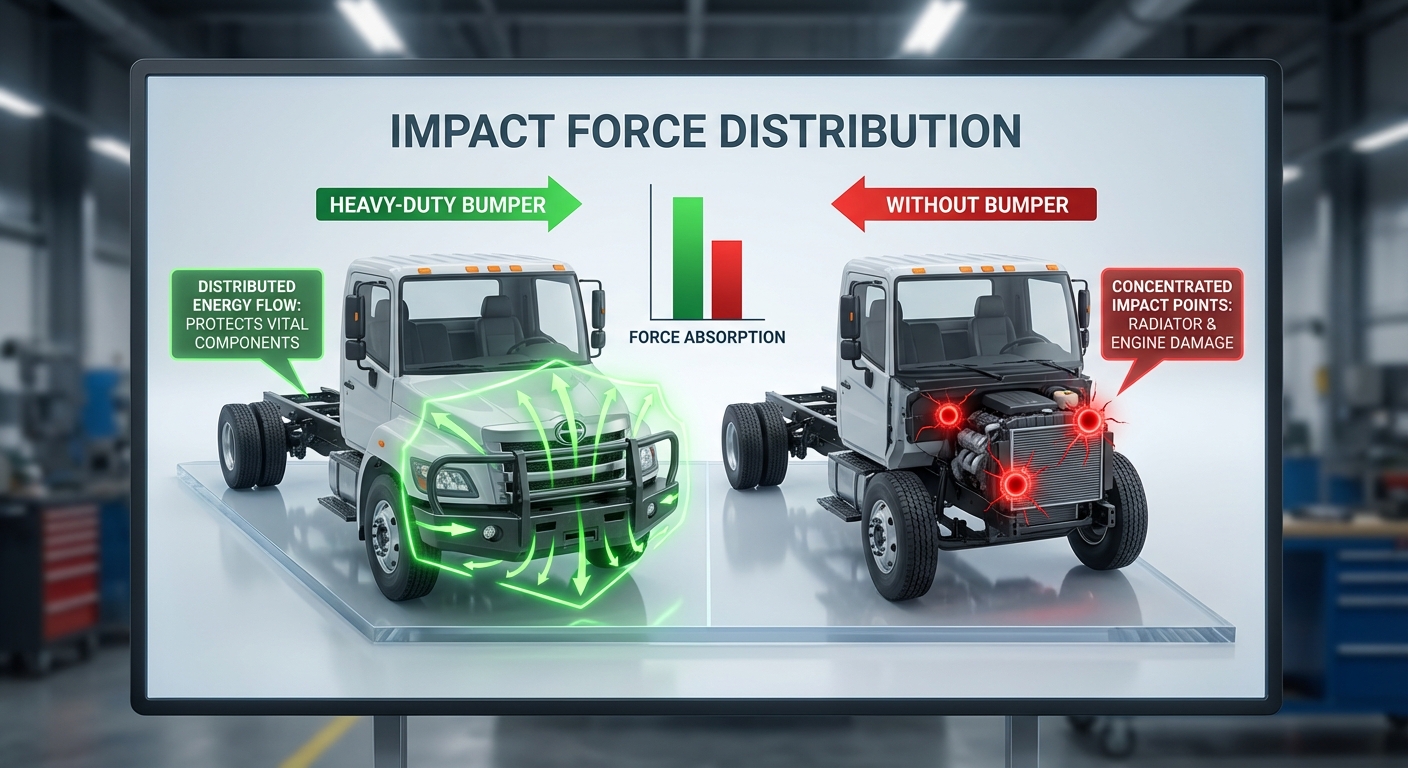
DOT regulations for grille guards focus primarily on lighting visibility and the structural integrity of the mounting hardware. When selecting moose bumpers for Class 8 trucks, it is essential to ensure that the hardware does not compromise the vehicle frame. Grille Guards must allow all required reflectors to remain visible to other motorists.
The bottom line? You must maintain full visibility of all safety-critical lighting components during operation.
- Lights must be visible from 500 feet.
- Reflectors must not be covered by mesh.
- Turn signals must meet the 45-degree rule.
Does the FMVSS govern aftermarket bumpers?
The FMVSS primarily applies to original equipment manufacturers. However, Section 49 CFR 571 mandates that any modification must not “make inoperative” any required safety device. This includes the effectiveness of the bumper’s energy absorption and the visibility of required reflectors.
How does the “lighting obstruction” rule apply?
DOT inspectors strictly enforce visibility rules during roadside inspections. A guard is deemed illegal if any part of the metal tubing obscures more than a certain percentage of the headlight beam. It must not prevent turn signals from being visible from a standard 45-degree angle.
Key Takeaway: DOT compliance hinges on the guard’s ability to provide protection without obstructing required lighting or compromising the vehicle’s structural safety standards.
| Regulation | Requirement | Potential Violation | |
|---|---|---|---|
| 49 CFR 393.11 | Lighting Visibility | Tubing blocking headlight path | |
| 49 CFR 393.203 | Structural Integrity | Cracked or poorly welded brackets | |
| FMVSS 214 | Side Impact/Crash | Guards extending too far laterally |
Adhering to these DOT codes ensures that your fleet avoids costly out-of-service orders during routine highway inspections.
3. Are there specific laws for grille guards in Canada?
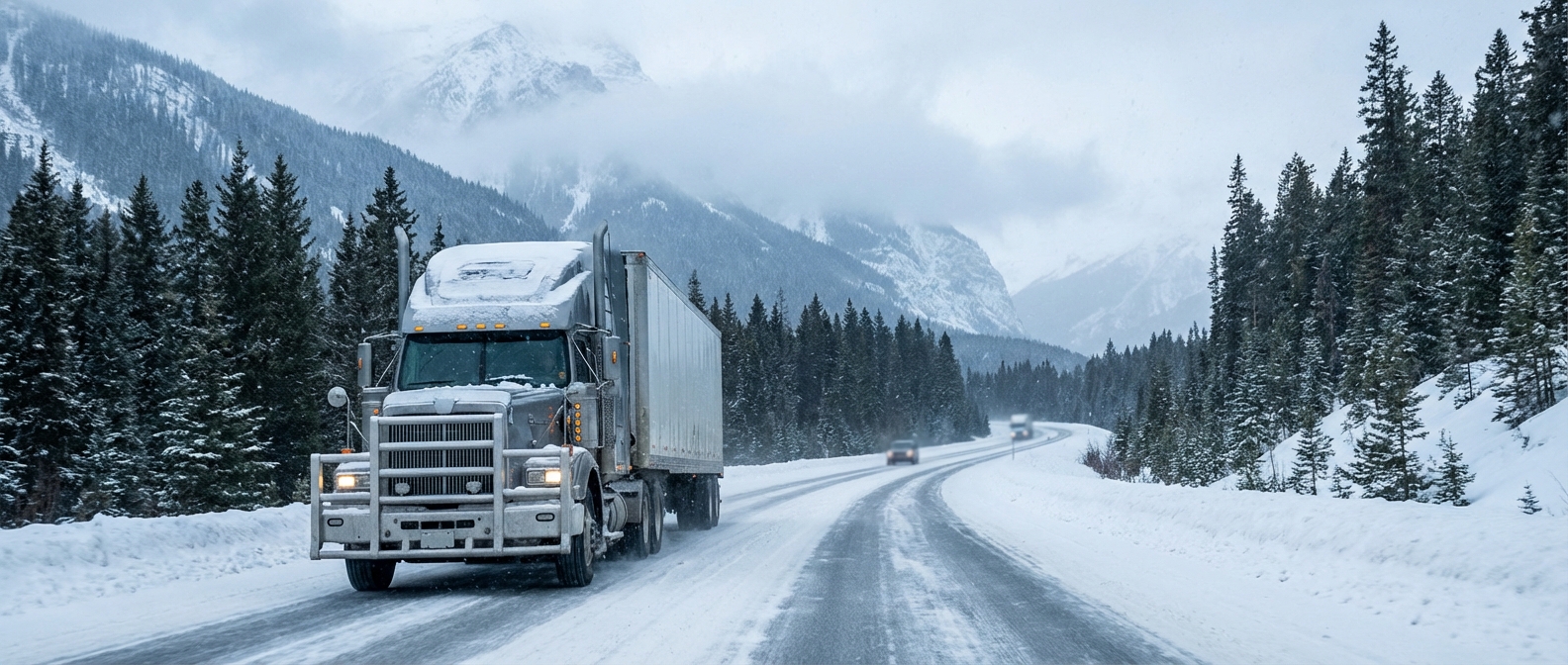
Canadian laws generally support the use of heavy-duty guards but require them to be professionally manufactured with smooth edges to prevent pedestrian injury. Because of high animal strike frequencies, Grille Guards are encouraged in northern regions as safety equipment.
The best part? Most provinces recognize the safety benefits of these guards for wildlife-prone routes.
- Guards must be securely frame-mounted.
- Protrusions must not have sharp edges.
- Width cannot exceed 2.6 meters.
What does Transport Canada say about bull bars?
Transport Canada provides guidelines rather than strict prohibitions for front-end protection. They emphasize that any guard must be securely attached to the vehicle’s frame. For commercial vehicles, the guard must not exceed the maximum allowable width of the vehicle.
Are moose bumpers legal in all provinces?
In provinces like British Columbia and Ontario, strict “protrusion” rules exist. If a moose bumper has sharp outward-facing edges or excessive forward reach, it could be cited as a hazard. However, rounded, professionally engineered guards that follow the truck profile are widely accepted.
Key Takeaway: Canadian provinces prioritize guards that have smooth, rounded edges and do not extend beyond the vehicle’s legal width or obscure identifying plates.
| Province | Primary Concern | Enforcement Rigor | |
|---|---|---|---|
| British Columbia | Protrusions/Sharp Edges | High | |
| Alberta | Wildlife Protection | Moderate | |
| Ontario | Lighting & License Plate | High |
Selecting a guard that respects these provincial nuances is key to operating smoothly across the Canadian border.
4. Do grille guards affect vehicle safety certifications?
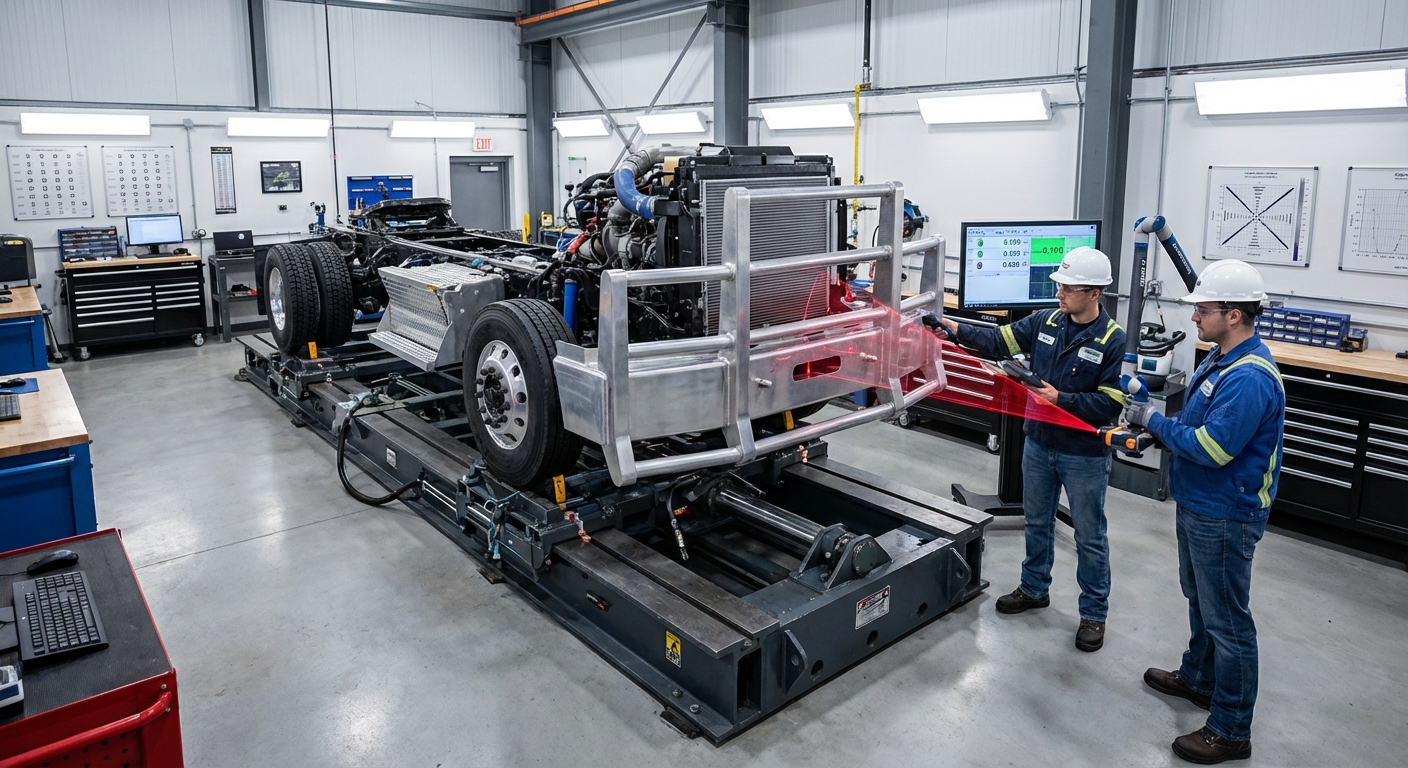
Grille guards do not necessarily void certifications if they are designed using professional engineering capabilities to work with factory safety systems. Properly designed Grille Guards ensure that the truck’s original crashworthiness and sensor functions remain intact.
Think about it: A guard that interferes with an airbag sensor is more of a liability than a benefit.
- Airbag sensors must remain unobstructed.
- Crumple zones must function as intended.
- Mounting must use factory-approved points.
Will a guard interfere with airbag deployment?
Modern trucks use sophisticated accelerometers to trigger airbags during collisions. A properly designed guard is engineered to allow the vehicle’s crumple zones to function properly. Illegal or poorly designed guards that are too rigid can potentially delay or prematurely trigger airbag sensors.
How do guards impact crumple zone performance?
OEM bumpers are designed to fold and absorb energy. Grille guards must be mounted in a way that allows this energy transfer to occur naturally. Non-compliant guards often use “rigid-mount” systems that can cause frame damage rather than absorbing the impact energy.
Key Takeaway: Certification remains valid only if the guard is designed to work in harmony with the vehicle’s existing energy-absorption and sensor systems.
| Safety Feature | Impact of Guard | Risk Level | |
|---|---|---|---|
| Airbag Sensors | Minimal with proper mount | Low (if certified) | |
| Crumple Zones | May alter energy path | Moderate | |
| Pedestrian Safety | High impact profile | High |
Engineering documentation confirms that the right guard preserves the vehicle’s safety rating while adding a layer of physical protection.
5. Can grille guards block headlights or signals?
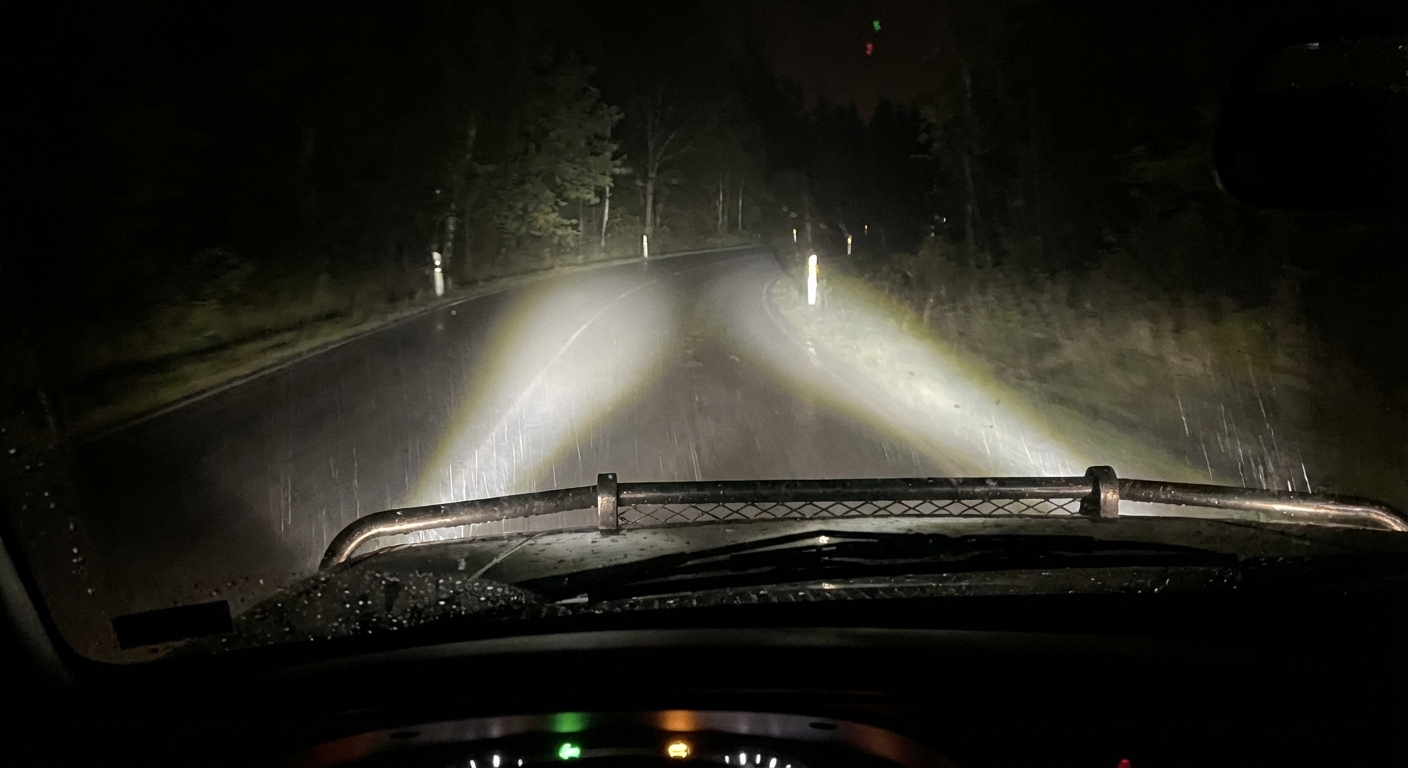
Grille guards are considered illegal if they block the light path or reduce the visibility range of headlights and signals below legal limits. To stay compliant, your Grille Guards must allow for unobstructed light projection as per DOT standards.
It is a simple rule: If the inspector cannot see your turn signal from the side, you are getting a ticket.
- High beams must reach 500 feet.
- Low beams must reach 150-300 feet.
- Mesh must be high-transparency.
What is the legal visibility range for lights?
Most jurisdictions require that headlights and signals be visible from a distance of 500 feet in clear weather. If the guard’s uprights or mesh screens create a “shadow” that dims the light output, the guard is considered illegal. This is a primary focus during night-time inspections.
Are mesh covers allowed over headlamps?
While mesh covers are popular for preventing rock chips, they are a gray area in the law. If the mesh is too dense, it can reduce light output by up to 30%, which is a violation. Compliant guards use high-transparency mesh or open-circle designs that protect the glass legally.
Key Takeaway: To remain legal, ensure your guard’s geometry allows for unobstructed light projection and meets the 45-degree visibility rule for signals.
| Light Type | Visibility Requirement | Common Guard Obstruction | |
|---|---|---|---|
| Low Beam | 150-300 ft | Horizontal cross-bars | |
| High Beam | 500 ft+ | Mesh screens | |
| Turn Signals | 45-degree angle | Vertical uprights |
Lighting compliance is non-negotiable for safety; ensure your guard design prioritizes the beam pattern over pure aesthetics.
6. How do guards impact ADAS and sensor compliance?
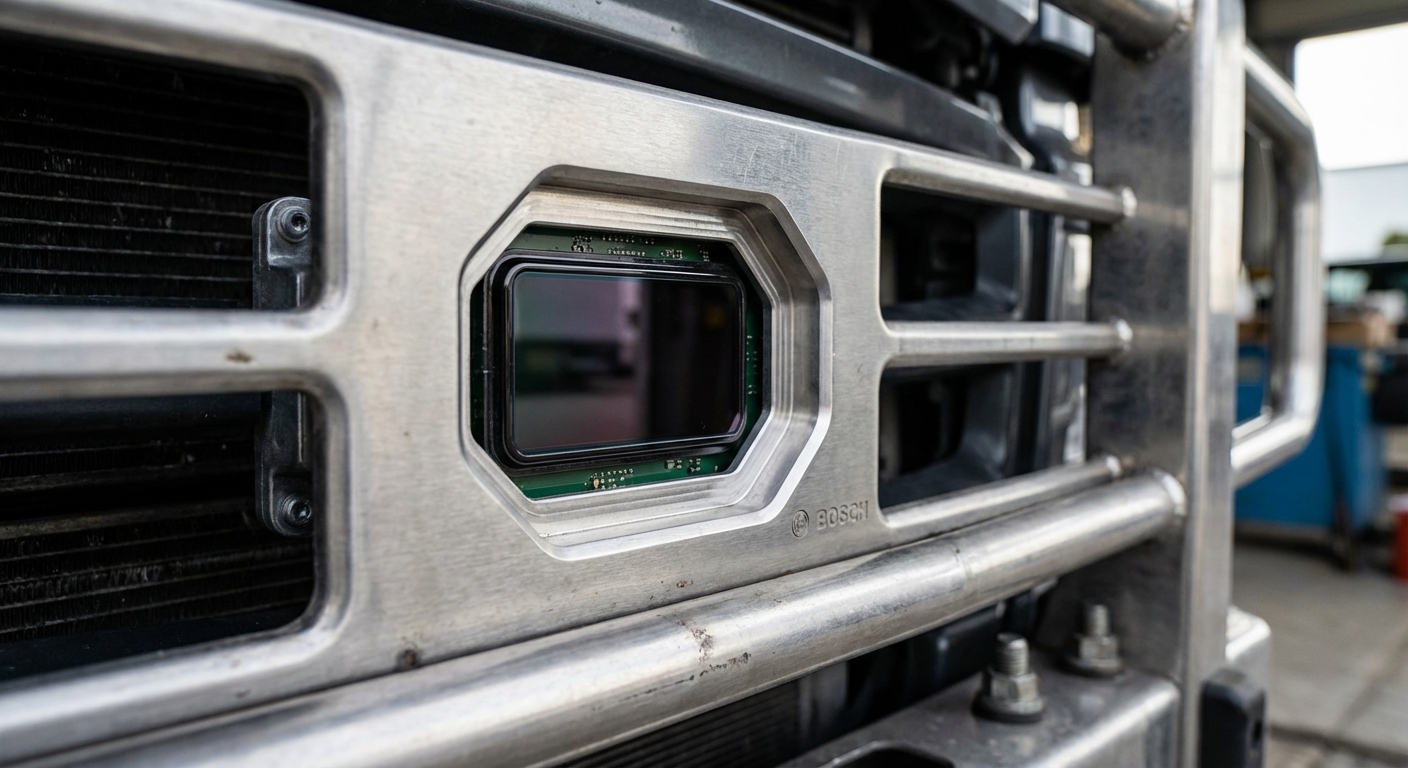
Modern grille guards must feature specific cut-outs to allow radar and camera systems to function for long-haul highway fleets . If Grille Guards block these sensors, the vehicle’s collision mitigation systems will fail, creating a legal and safety hazard.
Believe it or not: Disabling a factory safety system can lead to massive liability in a court of law.
- Radar requires a clear line of sight.
- Cameras must not see the top bar.
- Proximity sensors need side clearance.
Will a grille guard trigger radar interference?
Radar sensors used for adaptive cruise control are typically located in the center of the bumper. If a guard’s cross-bar passes directly in front of this sensor, it can cause “ghosting” or system failure. This is a significant safety violation that DOT inspectors are beginning to monitor.
Is camera visibility regulated for safety?
Many Class 8 trucks now use front-facing cameras for lane-keep assistance. A guard that enters the camera’s field of view can disable these safety features completely. Legally, any modification that disables a factory-installed safety system can lead to liability during an accident.
Key Takeaway: Compliance in the modern era requires “sensor-compatible” guards that feature specific cut-outs or mounting locations for radar and camera systems.
| Sensor Type | Function | Guard Requirement | |
|---|---|---|---|
| Radar (CMS) | Emergency Braking | Unobstructed “window” | |
| Camera (LKA) | Lane Keep Assist | Clear field of view | |
| Proximity | Parking/Docking | Side-clearance |
Ensuring sensor compatibility is now as important as lighting for maintaining the legal operation of modern commercial vehicles.
7. Is there a maximum width limit for truck guards?
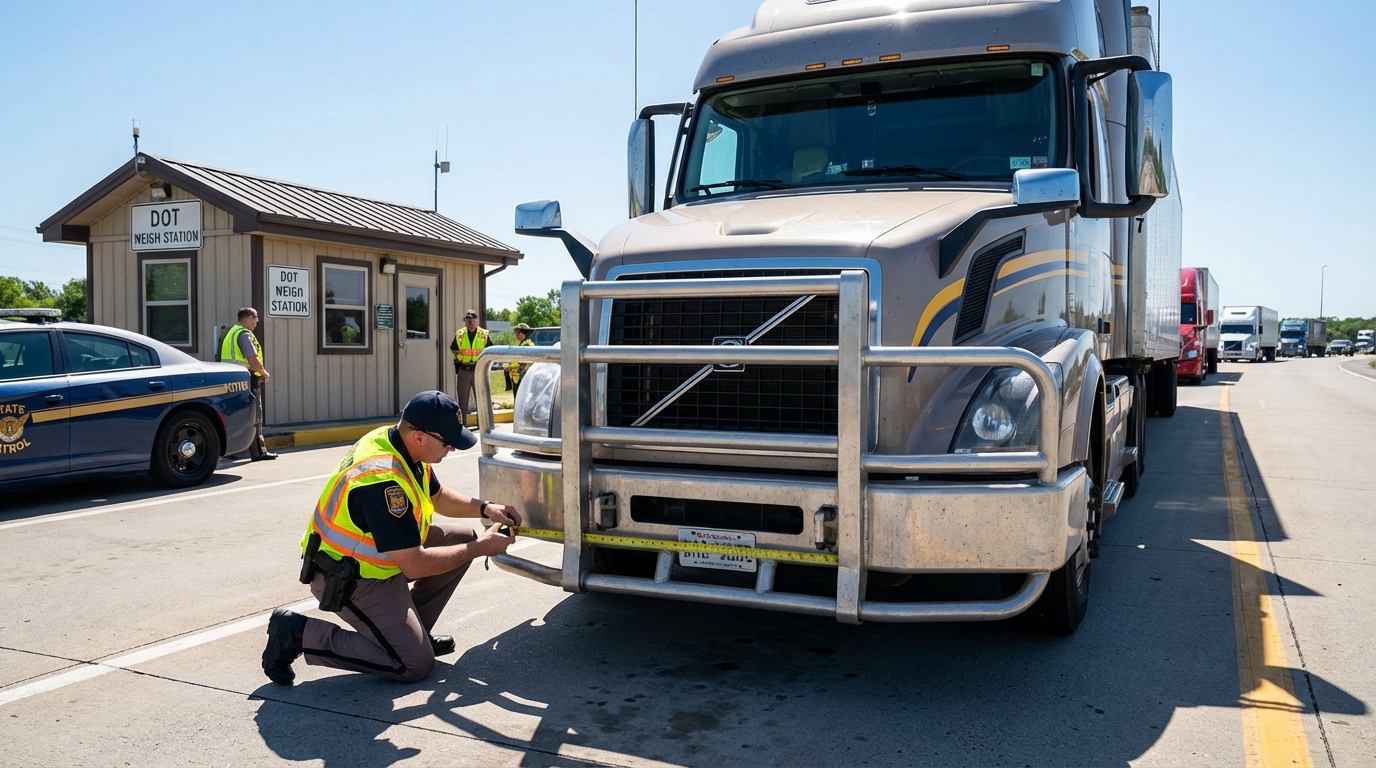
The maximum legal width for a truck guard is 102 inches, which matches the standard width of a commercial vehicle. Overwidth Grille Guards are considered hazards and can result in immediate fines or the requirement for oversize permits.
Keep this in mind: Your guard should never extend beyond your fenders or mirrors.
- Width limit is 2.6 meters (102 inches).
- Tapered designs prevent “hooking”.
- Side protection must be rounded back.
Do oversized guards require special permits?
Generally, a guard must not exceed the width of the vehicle’s cab or fenders. If a guard extends beyond the tires, it is considered a hazard to other motorists and pedestrians. This often results in immediate fines at weigh stations or during roadside checks.
How is the “overwidth” threshold defined?
In most of North America, the maximum width for a commercial vehicle is 102 inches. A grille guard must stay within these strict bounds. Any “ears” or side protection on the guard must be rounded back toward the vehicle to prevent hooking other objects.
Key Takeaway: To avoid overwidth violations, always select a guard that is custom-engineered for your specific truck model’s width specifications.
| Feature | Legal Limit | Compliance Tip | |
|---|---|---|---|
| Total Width | 102 inches | Match guard width to fenders | |
| Forward Reach | 12-18 inches | Keep close to the OEM bumper | |
| Side Protrusion | 0 inches | Use aerodynamic tapered sides |
Staying within the 102-inch limit is a fundamental requirement for legal operation on all standard highway routes.
8. Are aluminum and steel guards treated differently?
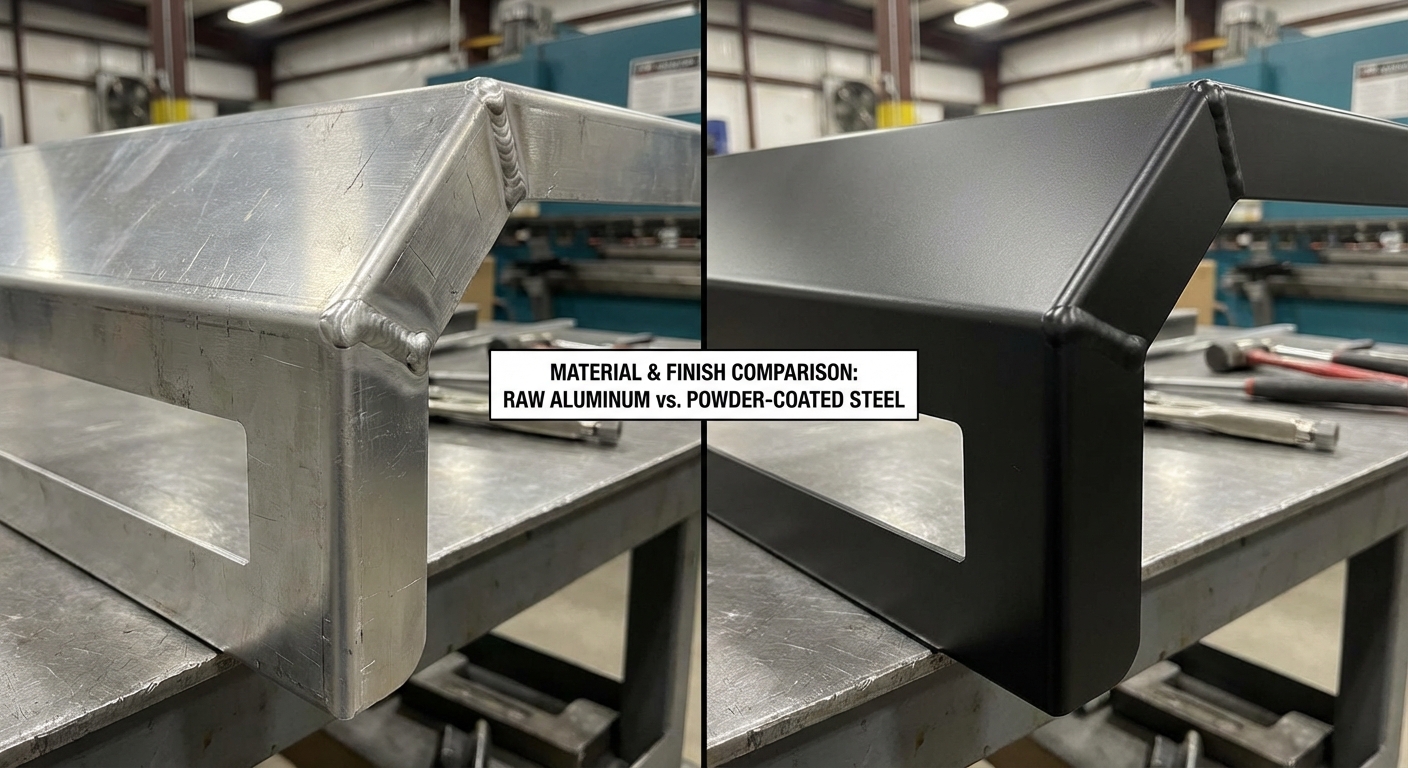
While both materials are legal, they are treated differently regarding weight limits and pedestrian safety because pickup bumpers and heavy guards must not cause the axle to exceed legal load ratings. Grille Guards made of steel are heavier and more scrutinized during weigh station inspections.
Here is the deal: Material weight matters more for legal compliance than the material itself.
- Aluminum reduces front axle strain.
- Steel requires higher GAWR capacity.
- Rounded edges are mandatory for both.
Does material weight affect legal axle loads?
Adding a heavy steel bumper can push a truck close to its Gross Axle Weight Rating (GAWR). If the guard causes the front axle to exceed legal limits during an inspection, you could be fined. Lightweight aluminum guards are often the legal solution for weight-sensitive applications.
Are there sharp edge regulations for pedestrians?
Both U.S. and Canadian safety guidelines discourage “external protrusions” that could harm pedestrians. Aluminum guards often have smoother, extruded finishes that comply easily. Any guard that could catch a pedestrian’s clothing or cause unnecessary injury is liable for citation.
Key Takeaway: Material choice is less about legality and more about remaining within your vehicle’s Gross Axle Weight Rating (GAWR).
| Material | Weight Impact | Surface Safety | |
|---|---|---|---|
| Steel | High (Heavier) | Requires rounded welding | |
| Aluminum | Low (Lighter) | Naturally smoother profiles | |
| Stainless Steel | Moderate | High visibility/Reflectivity |
Understanding the weight implications of your material choice ensures you don’t accidentally violate axle weight laws.
9. Can a grille guard void your vehicle warranty?
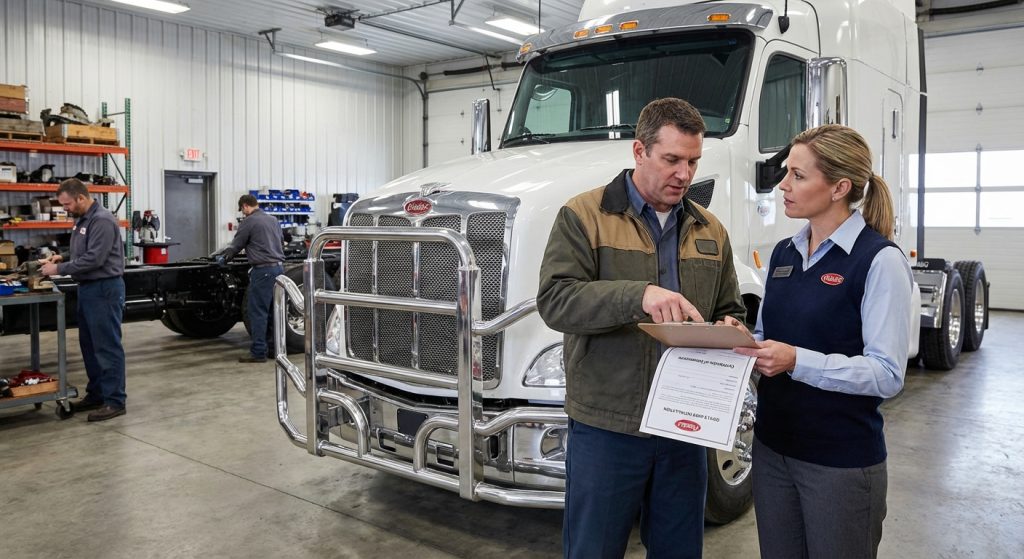
A grille guard cannot legally void your entire warranty unless the manufacturer can prove the part caused a specific failure. Using professionally manufactured Grille Guards that utilize factory mounting holes is the best way to maintain your warranty status.
The good news? Laws protect you from arbitrary warranty cancellations based on aftermarket parts.
- Manufacturers must prove the part caused damage.
- Bolt-on guards are generally safer.
- Factory mounting points are preferred.
What does the Magnuson-Moss Act say?
In the United States, the Magnuson-Moss Warranty Act protects consumers from having warranties voided unfairly. It states that a manufacturer cannot deny a claim just because you installed an aftermarket part. However, if the guard weight cracks the frame, that specific repair won’t be covered.
How do OEM manufacturers view aftermarket guards?
Many OEMs provide “Body Builder Layout” guides for modifications. If a guard is installed according to these factory-approved mounting points, it is generally considered a compliant modification. This keeps the vehicle’s legal and warranty status fully intact for the owner.
Key Takeaway: Using a professionally manufactured, bolt-on guard that utilizes factory mounting holes is the best way to maintain both legal standing and warranty protection.
| Entity | Stance on Guards | Condition for Approval | |
|---|---|---|---|
| Magnuson-Moss Act | Protective | Part must not cause the failure | |
| Truck OEMs | Neutral to Positive | Must use approved mounting points | |
| Insurance Co. | Positive | Must be professionally installed |
Warranty protection relies on professional installation; always keep your installation records and compliance certificates on hand.
10. How can you ensure your fleet remains compliant?
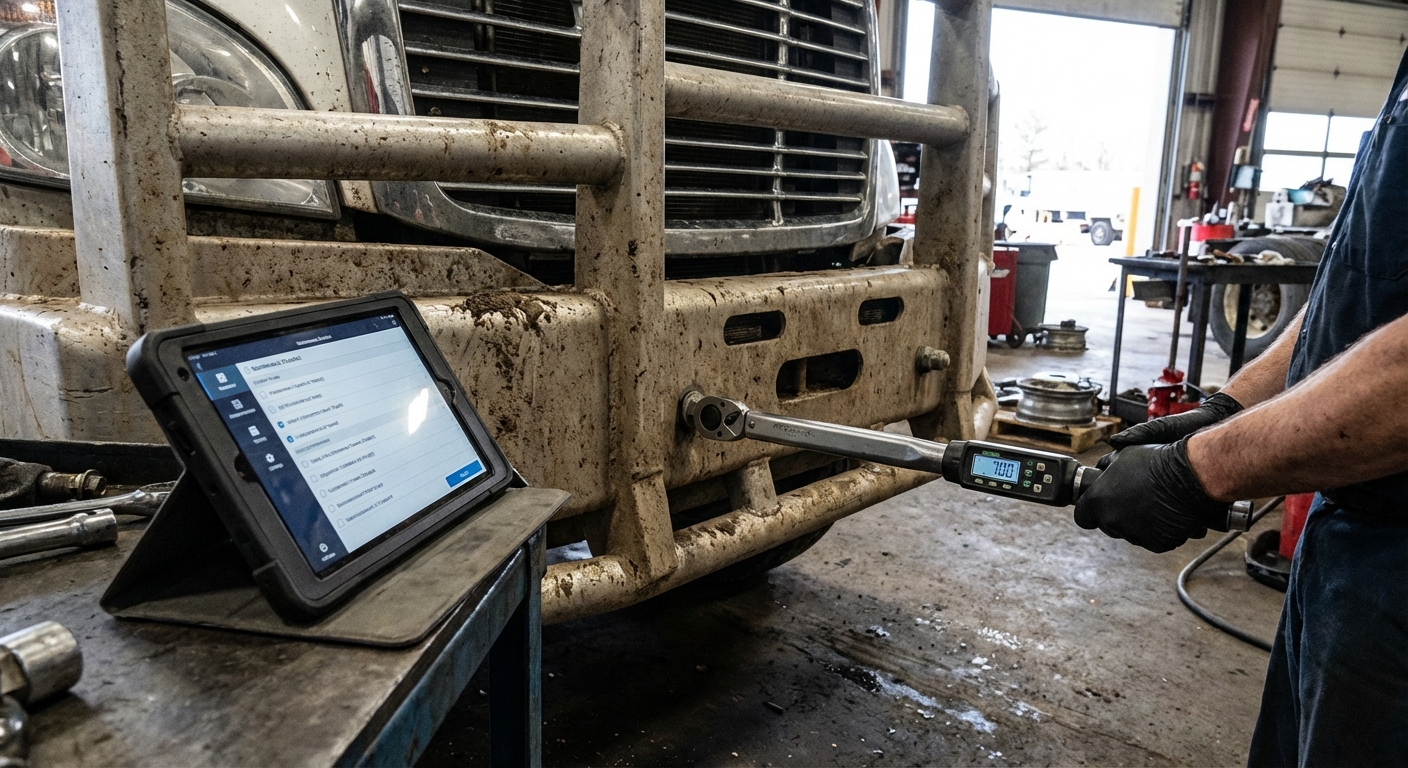
Ensuring compliance involves choosing certified products and performing regular pre-trip inspections to verify that Grille Guards remain secure and unobstructed. Professional engineering certification is key to proving your equipment meets DOT and Transport Canada standards.
Don’t wait: A loose bolt can turn a legal guard into an illegal hazard in a single shift.
- Inspect mounting bolts weekly.
- Check light clearance daily.
- Verify sensor alerts immediately.
Why is professional engineering certification key?
A “home-made” guard lacks the testing data required to prove it doesn’t interfere with safety systems. Choosing a manufacturer with ISO-certified processes ensures that the product meets the rigorous standards expected by authorities. This provides a legal paper trail in case of an inspection.
What should you check during pre-trip inspections?
To remain compliant, drivers should inspect their guards daily. Loose bolts, cracked welds, or bent tubing that begins to obscure a headlight can turn a legal guard into an illegal one. Maintenance is the final pillar of long-term legal compliance.
Key Takeaway: Compliance is an ongoing process. Selecting the right equipment is the start; regular inspections ensure you remain on the right side of the law.
| Checkpoint | Compliance Standard | Frequency | |
|---|---|---|---|
| Mounting Bolts | Torqued to spec | Weekly | |
| Light Clearance | No shadow on beam | Daily | |
| Surface Integrity | No sharp edges/cracks | Monthly |
By following these maintenance protocols, you ensure your front-end protection remains a legal asset rather than a liability.
Conclusion
Staying legal while protecting your truck is a matter of choosing the right engineering partner and maintaining your equipment. At Brontec, we are committed to providing North American fleets with high-performance protection that meets every regulatory standard. Our guards are built for durability, sensor compatibility, and legal peace of mind. To secure your fleet with certified protection, contact us today .
Frequently Asked Questions
1. Can I be fined for having a grille guard if I haven’t hit anything?Yes, if the guard obscures your headlights or turn signals beyond legal limits, you can be cited during a routine inspection regardless of your collision history.
2. Do I need to notify my insurance company after installing a guard?While not always legally required, it is highly recommended as many providers view these guards as loss-mitigation devices and may offer premium considerations.
3. Are “Bull Bars” and “Grille Guards” the same in the eyes of the law?Generally, yes; both are classified as aftermarket front-end protection. Bull bars typically refer to smaller pickup units, while grille guards refer to full Class 8 coverage.
4. Is it legal to mount auxiliary lights on my grille guard?Yes, but they must follow DOT rules, cannot replace primary headlights, and must be mounted at a legal height to avoid blinding traffic.
5. Are there specific finishes that are illegal?Most finishes are legal, but extremely mirror-like surfaces that cause significant glare for other drivers may occasionally be flagged by inspectors.