

Off-Road Pickup Frame Failure Elimination
How proper manufacturing execution and installation logic eliminate front-frame failures caused by aftermarket bumper installations in high-frequency off-road pickup applications.
Real-World Off-Road Pickup Operating Conditions
Before addressing the solution, it's essential to understand the demanding environments where fleet pickups and work trucks operate daily—and why frame integrity matters for your bottom line.
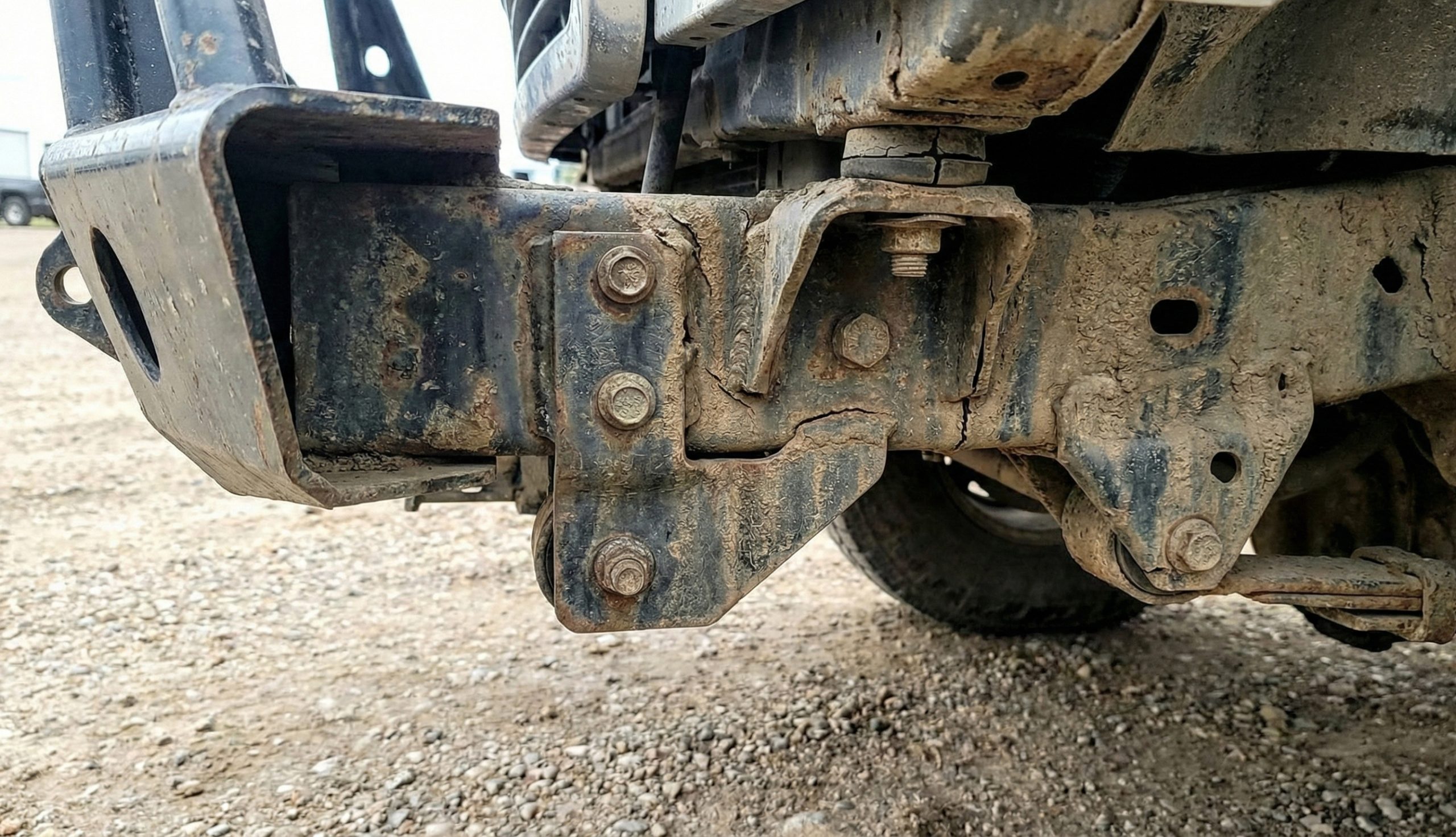
Where Your Fleet Pickups Work Hardest
Commercial and fleet pickup trucks face operating conditions that push vehicle frames to their engineering limits. These high-demand applications create continuous stress cycles that directly impact vehicle uptime, maintenance costs, and long-term asset value.
The Frame Fatigue Factor
Multi-directional impacts, high-frequency low-speed loads, and continuous vibration with torsional stress create ideal conditions for accelerated frame fatigue—especially when aftermarket front-end structures redirect forces improperly, leading to unplanned downtime and costly repairs.
Need bumpers engineered for high-frequency commercial applications?
Explore Off-Road ApplicationsFrame Failure Is Not a Single-Event Problem
A common misconception that leads to reactive maintenance strategies and unexpected fleet downtime.
Common Misconception
Many fleet managers and purchasing teams believe frame failures result from single catastrophic impacts—one major collision that overwhelms the structure. This assumption leads to reactive maintenance approaches where damage is only addressed after visible failure, resulting in unplanned downtime and emergency repair costs.
"We assumed our frames were fine since there were no major accidents. Then multiple vehicles started showing weld cracks within the same quarter—right when we needed them most."
The Engineering Reality
Frame failures in commercial pickups develop progressively through accumulated stress over operational cycles. The frame weakens gradually until structural integrity is compromised—often at the worst possible time for fleet operations.
- Cumulative stress from daily commercial operation
- Improper load paths accelerating fatigue cycles
- Progressive frame deformation over months of use
- Weld cracking and mounting point fatigue
Experiencing frame integrity issues across your fleet?
Request Engineering AssessmentThe Problem Isn't Modification—It's Execution
Aftermarket pickup bumpers serve essential fleet protection functions. The issue lies in manufacturing consistency and installation approach, not the modification itself.
Front-end protection is a valid and often necessary upgrade for commercial pickup fleets. However, inconsistent manufacturing quality, improper design execution, and installation variations between batches can transform a protective component into a source of accelerated frame damage and unpredictable maintenance costs.
Strength-Only Design Focus
Many suppliers prioritize material strength without engineering load transfer paths. A stronger bumper that concentrates impact forces at weak frame points creates more damage potential—and more unpredictable repair schedules for fleet operations.
Mounting Point Misalignment
Installation points that don't precisely interface with original frame structures create stress concentration zones. Dimensional variations cause fitment issues during installation and contribute to localized fatigue at improperly aligned connection points.
Batch-to-Batch Inconsistency
Manufacturing variations between production batches lead to unpredictable fitment and structural behavior. For fleet operators, this means different maintenance outcomes across the same vehicle models—making preventive planning nearly impossible.
The Business Impact
Impact loads concentrate at frame weak points instead of distributing across engineered load paths. This accelerates fatigue and creates unpredictable failure modes—leading to unplanned downtime, emergency repairs, and inconsistent total cost of ownership across your fleet.
Looking for bumpers with consistent manufacturing quality and proper load distribution?
View Pickup Bumper SpecificationsWhat Fleet Operators Actually Evaluate
Professional purchasing decisions are based on total cost of ownership and operational reliability—not marketing claims. Understanding these priorities guides proper supplier selection.
Not Decision Drivers
- "Strongest" or "Toughest" marketing claims
- Heavier weight as durability indicator
- Aggressive appearance over function
Actual Evaluation Criteria
-
Frame Failure Risk Reduction
Does this modification reduce or increase long-term frame damage probability?
-
Predictable Maintenance Cycles
Can inspection and repair follow a consistent, plannable schedule across the fleet?
-
High-Frequency Operation Suitability
Is this engineered for continuous daily commercial use, not occasional recreational trips?
-
System-Level Protection
Does the bumper protect—or stress—the frame and front-end components?
The Professional Procurement Framework
Experienced fleet managers and purchasing professionals evaluate front-end protection as a system engineering decision impacting total cost of ownership. A properly manufactured and installed bumper should reduce overall vehicle risk and maintenance variability—not create new failure modes. The evaluation question isn't "how strong is this bumper?" but "how does this bumper affect fleet-wide structural reliability and maintenance predictability?"
Ready to discuss technical specifications and OEM/ODM capabilities for your fleet application?
Schedule Technical ConsultationCorrect Manufacturing & Installation Logic
The core value isn't design ownership—it's precise manufacturing execution based on your confirmed specifications, ensuring every batch meets the same exacting standards.
Build-to-Print Manufacturing Excellence
We manufacture pickup bumpers based on your approved drawings, samples, or specifications. Our role is execution excellence—ensuring that what you've designed is produced with the dimensional accuracy, structural consistency, and batch-to-batch repeatability that protects your fleet's frame integrity.
OEM/ODM Manufacturing Model
Your design specifications + Our manufacturing precision = Consistent results across every order. We don't impose design changes—we execute your requirements with verified quality controls.
-
Mounting Point Accuracy
CMM-verified hole positions matching your drawing tolerances for precise frame interface.
-
Structural Consistency
Welding procedures, material specifications, and assembly sequences locked to your approved sample.
-
Batch Stability
Production controls ensuring order #1 and order #50 deliver identical fit and performance.
Manufacturing Control Process
-
1
Drawing & Sample Review
Technical review of your specifications to confirm manufacturing feasibility and identify critical dimensions.
-
2
First Article Production
Initial production sample with full dimensional inspection report for your approval before batch production.
-
3
Production Fixture Lock
Custom jigs and fixtures created from approved sample, ensuring repeatable positioning across all batches.
-
4
In-Process Verification
Stage-gate inspections at cutting, welding, and assembly to catch deviations before they compound.
The Result: Proper Load Distribution
Impact loads transfer through the bumper structure and distribute correctly across the frame's designed load paths—rather than concentrating at vulnerable points. This is achieved through manufacturing precision, not by changing your design. Your bumper protects the frame instead of accelerating its failure.
Ready to discuss your OEM manufacturing requirements?
View Our Manufacturing CapabilitiesMaterial & Structure: Engineered for Frame Protection
The goal isn't "stronger"—it's "more controllable." Every structural element serves the purpose of distributing loads properly and protecting the vehicle frame.
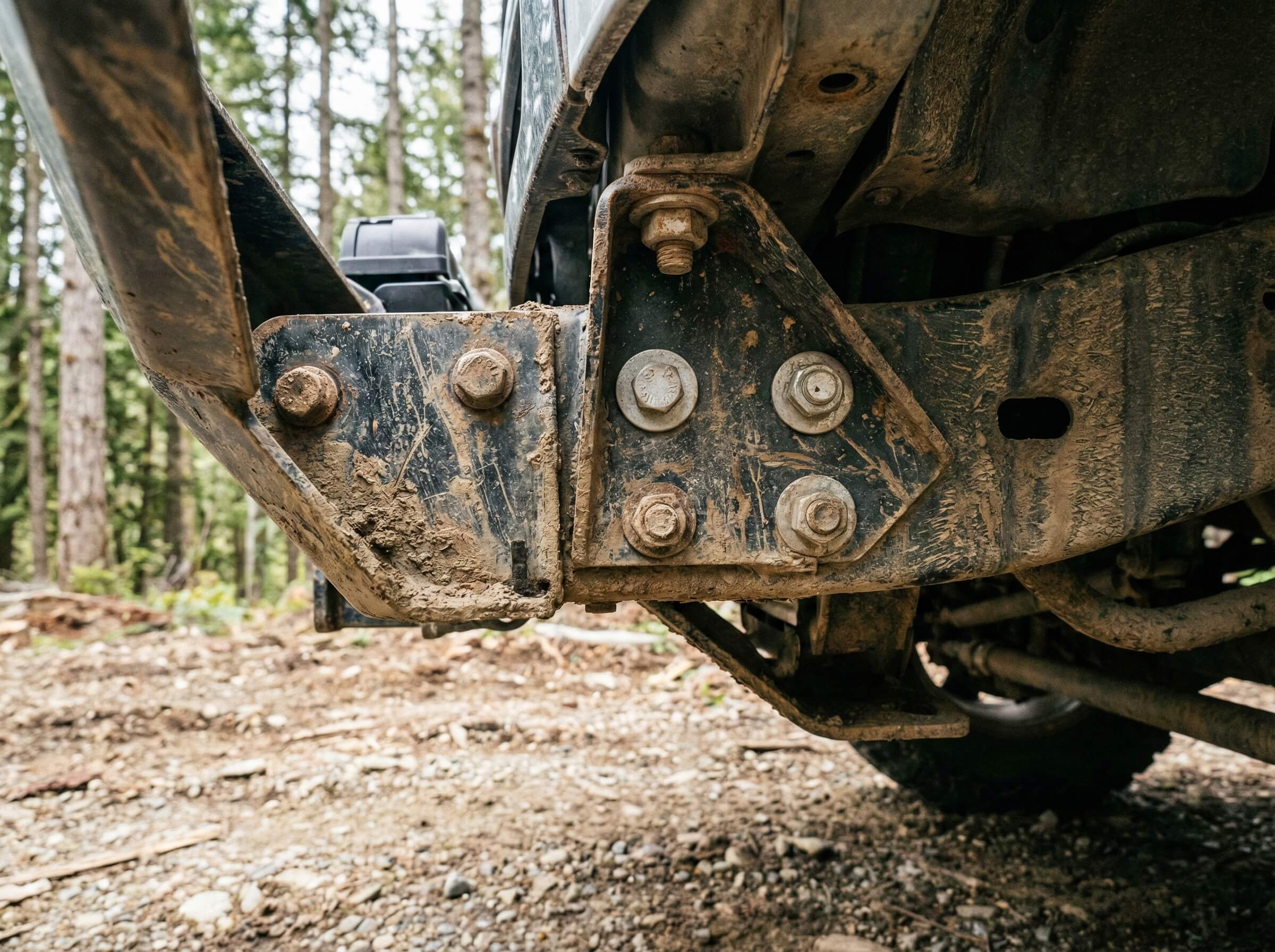
Structural Design Philosophy
Steel pickup bumpers provide the necessary structural rigidity for off-road protection. But rigidity alone isn't the goal—the frame-style construction is specifically engineered to manage how impact forces travel through the structure and into the vehicle frame.
-
Impact Load Distribution
Frame-style structure spreads impact forces across multiple mounting points rather than concentrating stress at single locations.
-
Stress Concentration Reduction
Gradual load path transitions minimize peak stress points where fatigue cracks typically initiate.
-
Integrated Accessory Mounting
Recovery points, winch mounts, and light brackets incorporated into the overall load path design—not added as afterthoughts.
The Design Principle: Controlled, Not Just Strong
Maximum strength isn't the goal—controlled, predictable structural behavior is. A bumper that's "stronger" but concentrates forces incorrectly will damage your frame faster than a properly engineered structure. Our manufacturing ensures that the load distribution your design intended is actually achieved in every production unit.
Want to review technical specifications for your application?
View Pickup Bumper ProductsFrame Failure Risk Effectively Controlled
Based on operational feedback from fleet applications, properly manufactured and installed bumpers deliver measurable improvements in frame reliability and maintenance predictability.
Reduced Frame Fatigue
Frame-related cracking and deformation issues reported significantly less frequently in properly-equipped fleet vehicles.
Consistent Maintenance
Front-end inspection and repair activities follow predictable schedules, enabling better maintenance planning and budgeting.
Clearer Service Procedures
Post-use inspection and maintenance protocols become standardized when bumper fitment and behavior are consistent.
Reduced Downtime Risk
Vehicle availability improves when frame-related major repairs become less frequent and more predictable.
These outcomes are typically observed when pickup bumpers are manufactured with proper dimensional control and installed according to correct procedures. Results reflect operational feedback from fleet applications where manufacturing consistency was maintained across multiple order cycles.
- Observed: Reduced frame cracking incidents
- Reported: More predictable maintenance cycles
- Typical: Lower emergency repair frequency
Want to discuss expected outcomes for your specific fleet application?
Request Fleet AssessmentWhy This Applies to Your Off-Road Fleet
The structural challenges facing off-road pickups are highly consistent across applications. This isn't a brand-specific issue—it's an engineering problem with a manufacturing solution.
Common Failure Sources
Across different vehicle makes, fleet sizes, and operating environments, frame failures typically trace back to the same root causes in aftermarket front-end modifications.
- Improper aftermarket modification execution
- Structural inconsistency between batches
- Dimensional variation affecting load paths
Universal Solution Logic
The manufacturing and installation approach that eliminates frame failure risk works across all off-road pickup applications—regardless of vehicle brand or specific use case.
- Construction & jobsite fleet applications
- Forestry & logging operations
- Agricultural & ranch work trucks
- Remote access & utility vehicles
An Engineering Problem, Not a Brand Problem
Frame failure in off-road pickups isn't about which vehicle brand you operate or which bumper brand you've been using. It's about whether the front-end protection was manufactured with the dimensional precision and structural consistency required to distribute loads correctly. The solution is proper manufacturing execution—and that applies universally across fleet applications.
Operating a commercial pickup fleet in demanding off-road conditions?
Explore Off-Road ApplicationsDiscuss Your Off-Road Application
Evaluating how aftermarket front-end modifications affect your fleet's frame reliability? Our engineering team is ready to discuss your specific application requirements, review your specifications, and explain how our manufacturing approach delivers the consistency your operation requires.
Response within 24 hours · No obligation · Technical team available for detailed discussions