
In 2026, fleets are facing a mix of current rules, proposed changes, and stricter enforcement priorities affecting safety data, electronic documentation, and commercial driver qualification reviews. Fleet owners are currently facing a complex landscape where FMCSA is previewing a more peer-based prioritization approach, while the current public SMS framework still uses seven BASICs. Failing to adjust your internal workflows today could lead to immediate out-of-service orders and a significant degradation of your safety ranking. By understanding the FMCSA rule changes 2026, you can navigate these hurdles while maintaining a competitive edge in the North American logistics market.
How do CSA updates define the FMCSA rule changes 2026?

The FMCSA is previewing and proposing changes to how carriers are prioritized for intervention, rather than fully replacing the current SMS/BASIC framework overnight. As of early 2026, the agency still publicly presents the current SMS with seven BASICs, while also showing a CSA Prioritization Preview for future methodology changes.
Why could peer-group-based prioritization become more important?
The new system compares your safety events only to companies that operate in similar environments and manage comparable equipment numbers. This eliminates the unfair comparisons between small regional fleets and massive long-haul enterprises that plagued the previous regulatory era.
In FMCSA’s prioritization preview, peer groups are organized more narrowly, utilization assumptions are higher, vehicle maintenance is separated more specifically, and Driver Fitness intervention thresholds may be higher than under the legacy presentation.
Will the 12-month window help my score?
FMCSA’s future prioritization discussions place strong emphasis on recent safety performance, but fleets should not assume that the agency has already switched to a universal 12-month-only scoring window. Current public SMS materials and prioritization preview examples still reference a 24-month record.
| Feature | Current Public SMS / Preview Context | Direction of Change |
|---|---|---|
| Violation Grouping | Current SMS still uses established BASIC structure | Future grouping is being previewed |
| Scoring Horizon | Public materials still reference 24 months | Recent performance is receiving stronger emphasis |
| Vehicle Maintenance | Current SMS shows Vehicle Maintenance BASIC | Preview materials suggest narrower maintenance distinctions |
This comparison illustrates the direction FMCSA is signaling in its prioritization preview, especially the stronger emphasis on recent safety performance and more targeted grouping logic.
Do FMCSA developments make eDVIRs more practical in 2026?
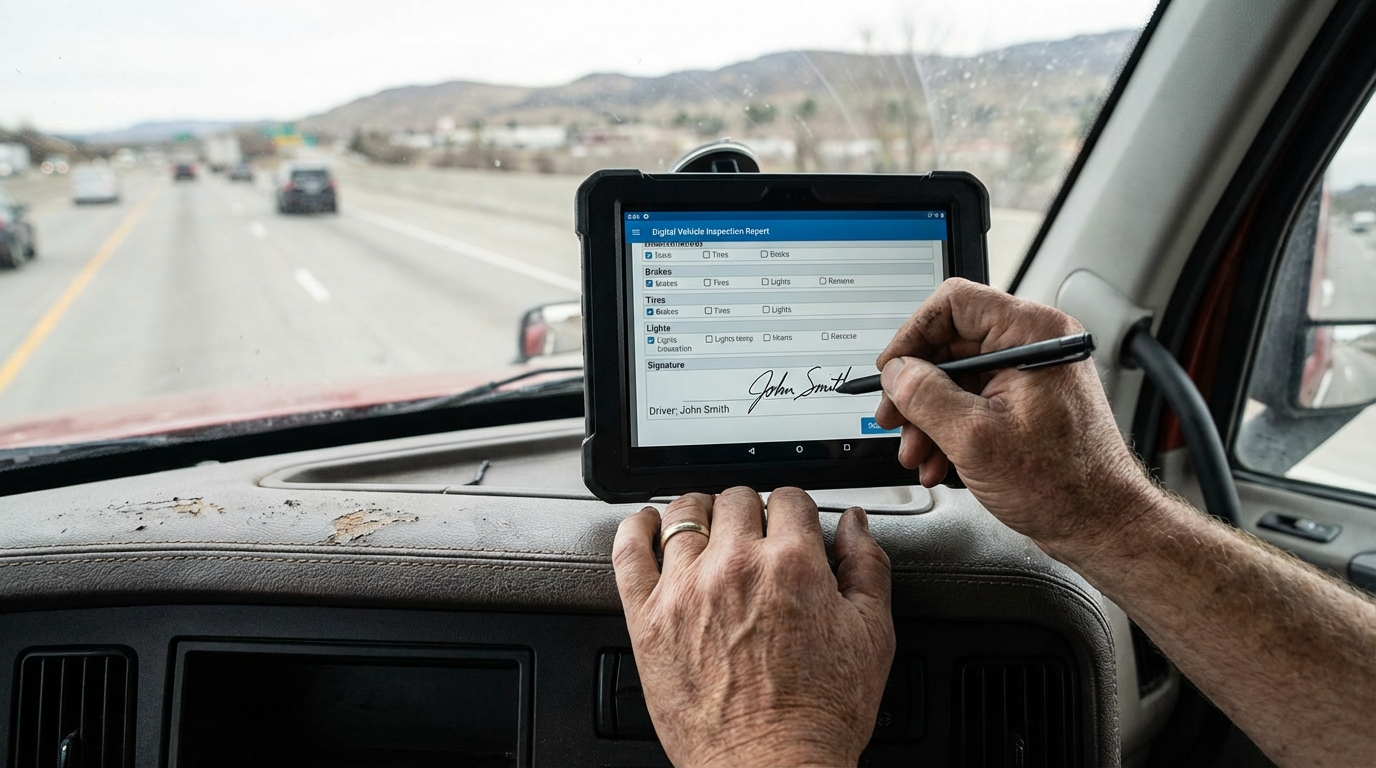
FMCSA permits electronic signatures and electronic documents for compliance purposes, which makes eDVIR adoption a practical best practice for many fleets. However, fleets should not describe electronic DVIRs as a new universal 2026 mandate unless a specific rule citation requires it.
What are the required eDVIR fields?
Your digital inspection process should capture the required DVIR information in a compliant electronic format. This includes clear identification of the vehicle, the date of inspection, and a detailed list of any defects found by the operator.
- Vehicle ID and trailer numbers.
- Date and time of inspection.
- Specific defect descriptions, with optional photo documentation to support maintenance verification.
- Electronic signatures or equivalent electronic acknowledgments from the driver, and repair certification details when corrective action is required.
How long must I store digital records?
Federal regulations require that you maintain every DVIR for a minimum of three months to satisfy potential audit requests. These records must be retained in a system that allows fleets to quickly retrieve inspection reports during an audit or roadside inspection.
Key Takeaway: Adopting digital inspection workflows ensures that your records are always legible, searchable, and aligned with current federal record-retention requirements.
| Compliance Field | Requirement Status | Digital Advantage |
|---|---|---|
| Driver Signature | Mandatory | Instant Time-Stamping |
| Defect Photos | Recommended | Visual Proof for Audits |
| Storage Period | 3 Months | No Physical Filing Needed |
The transition to digital records reduces the risk of document loss and provides a verifiable trail of maintenance actions for every unit in your fleet.
What CDL shifts occur within the FMCSA rule changes 2026?
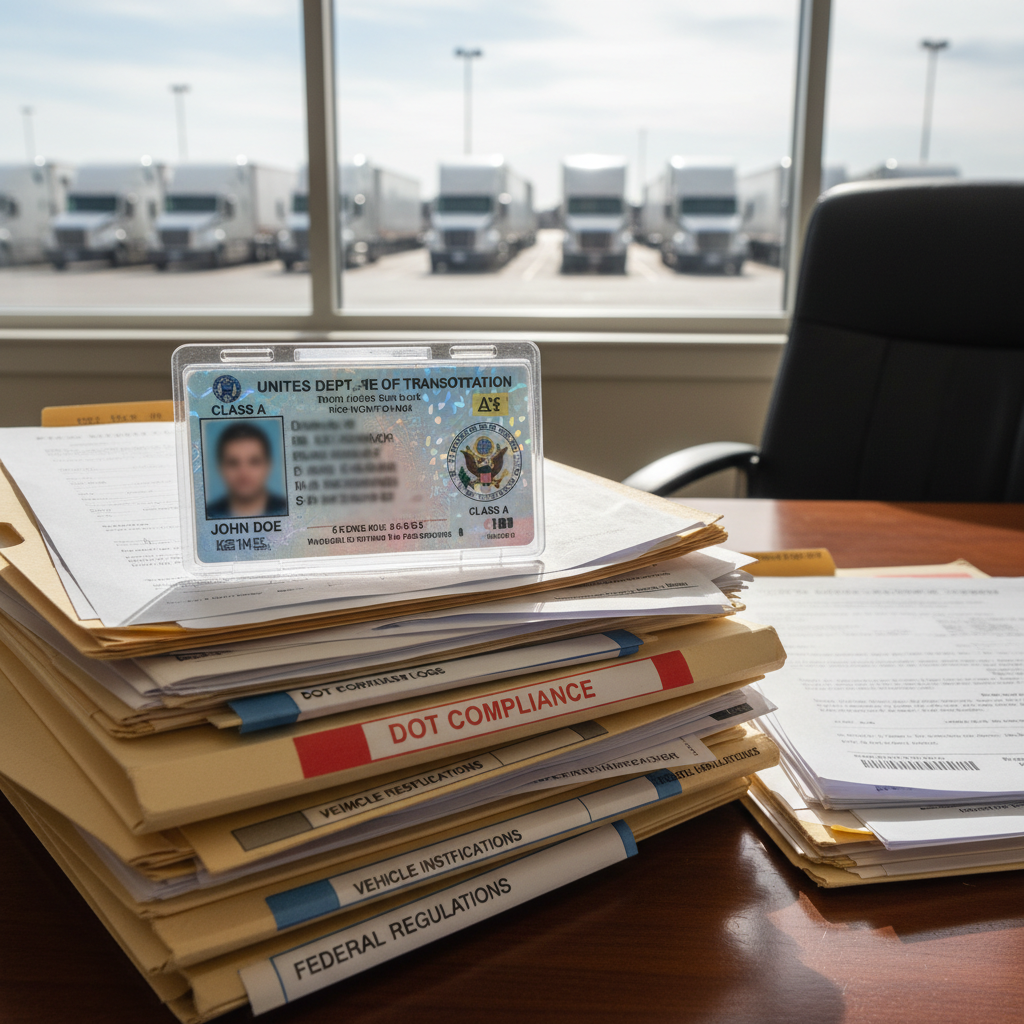
FMCSA and DOT have tightened oversight of non-domiciled CDL issuance and eligibility, especially around lawful immigration status documentation. Fleets employing drivers with non-domiciled credentials should review Driver Qualification files carefully and confirm that each driver’s licensing and immigration documentation aligns with current federal and state requirements.
Why are training providers being removed?
FMCSA and DOT have increased attention on CDL qualification integrity, including action aimed at preventing unqualified foreign drivers from obtaining commercial licenses. Fleet managers should review Driver Qualification files carefully, but should avoid relying on unsourced claims about mass license removals or provider purges.
How do I verify my drivers?
You should conduct a comprehensive review of licenses issued under non-domiciled CDL processes that may be affected by recent federal scrutiny or state-level compliance findings. Maintaining a digital Driver Qualification file is one of the most effective ways to track expiration dates and status changes in real time.
Key Takeaway: Rigorous verification of driver documentation protects your company from the massive liability associated with operating under invalid or fraudulent commercial licenses.
| Enforcement Area | Current Risk | Action Required |
|---|---|---|
| Non-domiciled CDL eligibility | Higher scrutiny | Audit DQ files and immigration-status documentation |
| Training source validity | Registry verification risk | Verify provider status before relying on credentials |
| Renewal and status monitoring | Ongoing compliance burden | Track expiration and eligibility changes |
Managers should prioritize driver-status verification to avoid unexpected staffing disruptions caused by licensing or eligibility issues.
Do ELD revisions matter for current FMCSA rule changes 2026?

FMCSA has proposed rescinding the requirement for drivers to carry a physical ELD operator’s manual in the cab, but fleets should verify whether that proposal has been finalized before updating internal compliance checklists. Fleet managers should monitor the FMCSA ELD registry closely, because revoked devices can trigger replacement obligations and compliance risk. You must verify that your current hardware remains on the federally registered list to avoid hours-of-service violations during roadside inspections.
The federal agency recently decertified several popular ELD models that failed to meet the latest cybersecurity and data transmission standards. Carriers using these revoked devices were given a very short window to replace them or face significant penalties. Look at it this way: your expensive telematics hardware is only an asset if it stays on the right side of the law.
Which devices were recently decertified?
Several manufacturers were removed from the official registry because their systems could not reliably transmit HOS data to law enforcement tablets. If you are using PSS, Black Bear, or RT ELD Plus models, you must transition to a compliant system immediately.
- Verify device against the ELD registry.
- Check for latest software firmware updates.
- Ensure data transfer via Bluetooth or USB.
- Monitor whether the proposed removal of the in-cab ELD operator’s manual requirement becomes final before revising internal checklists.
Can I still use paper if my ELD fails?
While ELD compliance is required for most covered operators, malfunction procedures still allow temporary use of paper logs under the existing rules. However, these exceptions are strictly limited in duration and require immediate notification to the authorities to avoid being flagged as non-compliant.
Key Takeaway: Staying current with the ELD registry prevents your trucks from being placed out of service due to technical hardware failures beyond the driver’s control.
| Device Status | Compliance Period | Required Action |
|---|---|---|
| Registered | Active | Regular Software Updates |
| Revoked | Expired | Immediate Replacement |
| Malfunctioning | 8 Days Max | Revert to Paper Temporarily |
Monitoring the federal ELD registry is a critical weekly task for any manager responsible for hours-of-service compliance.
Will AEB systems impact the latest FMCSA rule changes 2026?

Advanced braking and collision-mitigation systems remain an important safety topic for heavy-duty fleets, but carriers should verify the current federal rulemaking status before planning around any future mandate.
Fleets that begin planning for AEB integration now will avoid the supply chain bottlenecks that are likely to occur when the mandate becomes final. These systems use radar and camera technology to detect obstacles and apply the brakes automatically if the driver fails to react. Consider this: investing in advanced safety tech today can significantly lower your long-term insurance premiums and repair costs.
When will factory mandates take effect?
NHTSA and FMCSA have proposed requiring AEB on certain heavy vehicles, with compliance dates tied to the publication date of any future final rule. Because the proposal has not yet become a final nationwide mandate for heavy trucks, fleets should describe AEB as a likely future compliance issue rather than a fixed 2027 requirement.
Does AEB help my safety score?
While the technology itself doesn’t directly add points to your score, the reduction in accidents will keep your fleet out of the high-risk safety categories. Every avoided collision is a victory for your company’s reputation and financial stability in an increasingly litigious industry.
Key Takeaway: Proactive adoption of AEB technology shields your fleet from the devastating financial and legal consequences of preventable highway collisions.
| Vehicle Class | Current Status | Timing |
|---|---|---|
| Heavy vehicles covered by the current proposal | Proposed AEB requirement | Compliance would be tied to a future final rule |
| Other heavy vehicle categories | Under consideration | Timing not final |
| Medium-duty expansion | Not final | Future rulemaking uncertain |
Preparing your procurement strategy for these safety mandates will ensure that your fleet remains at the forefront of industry safety standards.
How does the Clearinghouse meet FMCSA rule changes 2026?
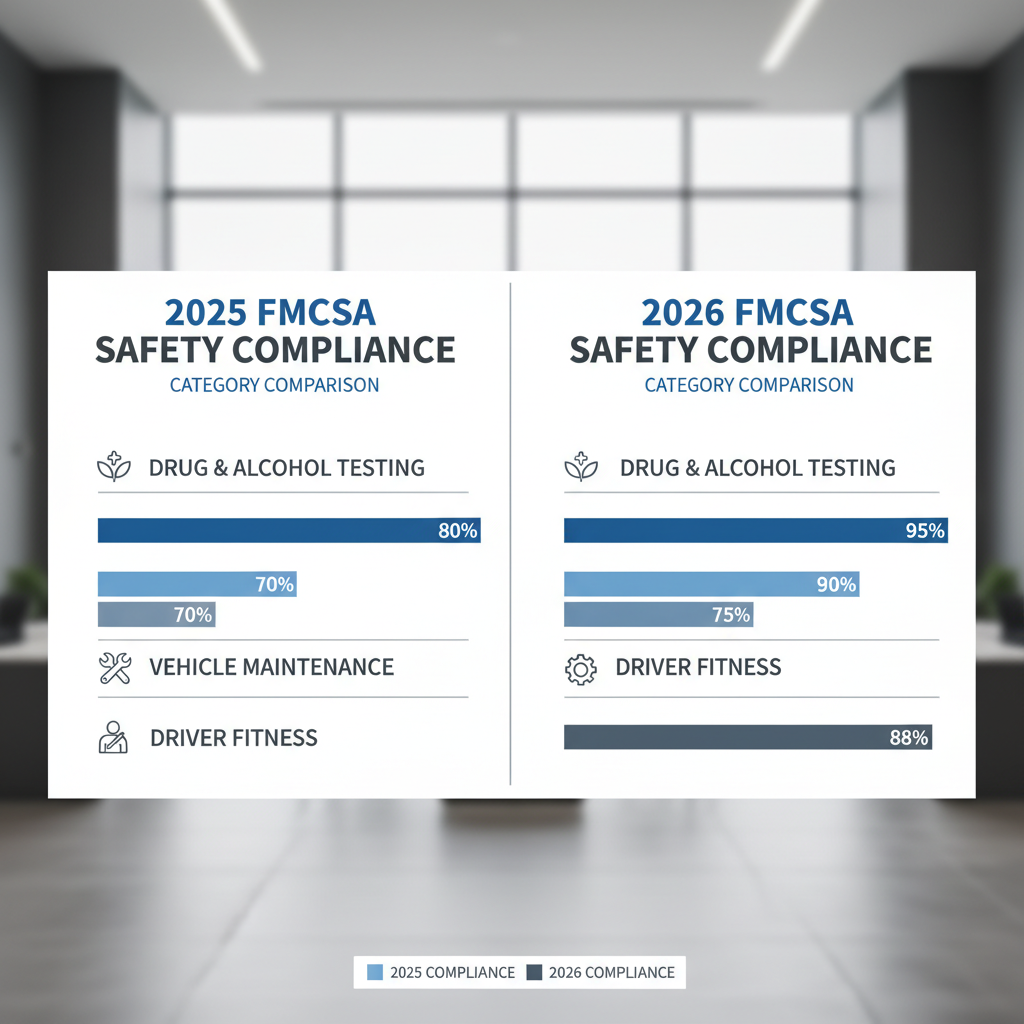
Drug and alcohol compliance remains a major issue for fleets in 2026, and DOT has proposed expanding Part 40 testing panels to include fentanyl and norfentanyl as part of broader efforts to address opioid-related safety risks. Your fleet must remain diligent in conducting both pre-employment and annual queries for all commercial drivers.
DOT has proposed allowing, but not requiring, broader use of electronic signatures, electronic forms, and electronic storage for drug and alcohol testing records. For now, fleets should treat digital workflows as a growing compliance option, not a universal replacement mandate.
Why is fentanyl being added now?
The inclusion of fentanyl reflects the urgent need to protect the public from the dangers of high-risk narcotics in safety-sensitive positions. By proposing a broader testing panel, DOT is signaling a stronger enforcement focus on high-risk narcotics in safety-sensitive transportation roles.
- Mandatory pre-employment queries.
- Annual queries for all CDL holders.
- Immediate removal for positive results.
- Electronic consent and recordkeeping.
Can I use hair testing for screening?
While urine testing remains the primary legal requirement, some fleets are interested in hair testing to catch long-term substance abuse patterns that other tests might miss. Fleets interested in hair testing should wait for clear final federal authorization before treating it as a core compliance method.
Key Takeaway: Maintaining a drug-free fleet through rigorous Clearinghouse participation is the most effective way to eliminate the risk of catastrophic safety failures.
| Testing Metric | 2025 Status | Regulatory Direction |
|---|---|---|
| Mandatory Panel | Standard 5-Panel | Fentanyl/norfentanyl addition has been proposed |
| Record Format | Hybrid Paper/Digital | Broader electronic use is being expanded/clarified |
| Query Frequency | Annual/Pre-Hire | No major change indicated |
Updating your internal drug and alcohol policy today will ensure your fleet is ready for the upcoming changes to mandatory testing panels.
How does FMCSA registration modernization affect MC numbers and carrier registration?
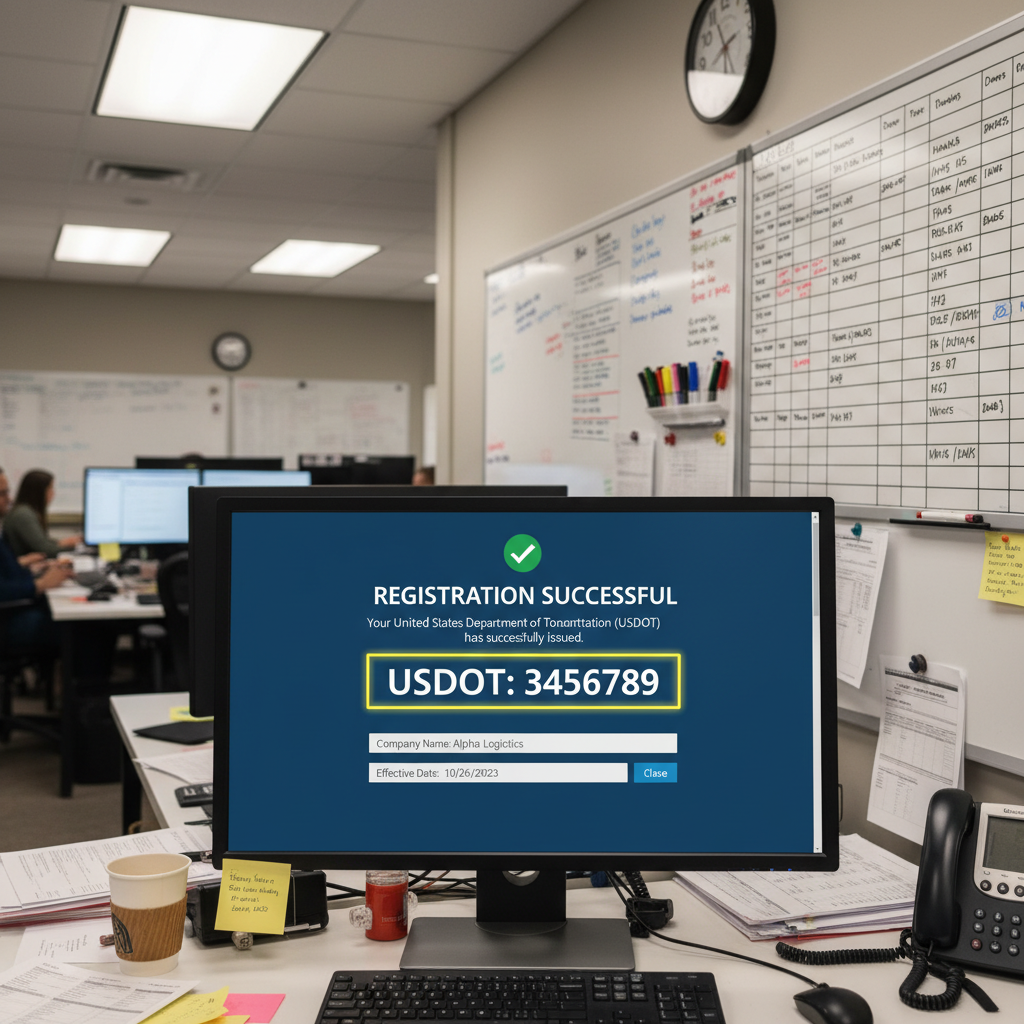
The FMCSA registration modernization initiative aims to simplify how carriers manage operating authority, safety identification, and regulatory filings. The agency is developing a new digital registration system that will be rolled out in phases, and fleets should monitor official FMCSA guidance for implementation timing.
Although FMCSA has discussed reducing long-term reliance on MC numbers, the agency has clarified that eliminating MC/FF docket numbers is not part of the first release of the new registration system. For now, carriers must continue using both their USDOT number and MC number according to current filing requirements.
Fleets should avoid assuming that a full transition to USDOT-only identification has already been finalized. Instead of rushing to update decals or administrative documents, fleet managers should monitor official FMCSA guidance as the registration modernization program evolves.
| ID Type | Current Role | Future Direction |
|---|---|---|
| MC Number | Operating authority identifier | May become less central in future systems |
| USDOT Number | Primary safety identifier | Expected to remain the core carrier ID |
| MX Number | Specialized authority identifier | Likely integrated into digital registration systems |
Carriers that proactively update their registration documentation will experience the least amount of friction during the federal transition to the Motus platform.
Can maintenance scores help with FMCSA rule changes 2026?
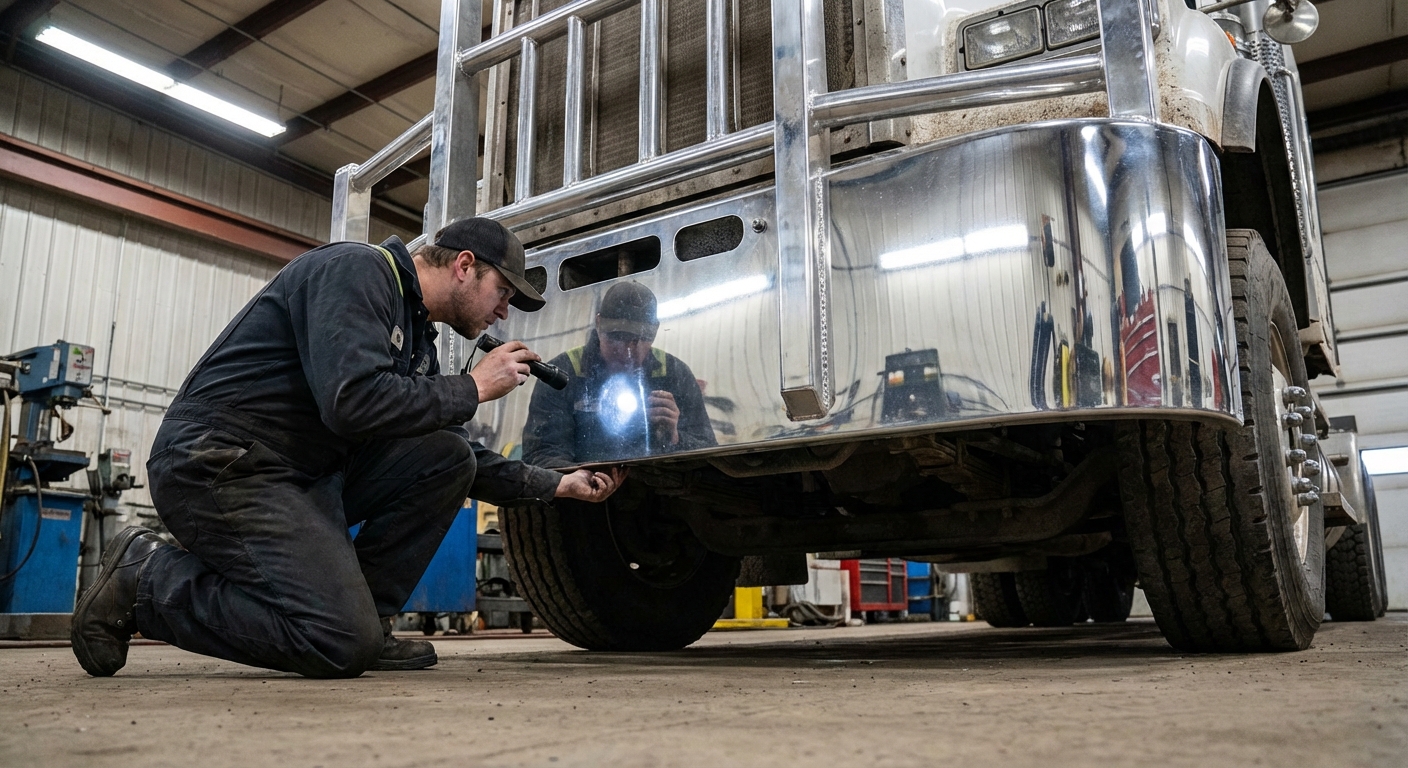
Under FMCSA’s future prioritization preview, vehicle maintenance issues may be separated more narrowly, which could place more attention on defect patterns such as driver-observed maintenance issues. However, fleets should distinguish between the current SMS and future methodology previews.
A minor collision with wildlife or road debris can cause lighting failures that lead to immediate roadside inspections and maintenance violations. By reinforcing your fleet with heavy-duty bumpers, you prevent the structural damage that often results in costly safety citations. The bottom line is: physical vehicle protection can support a stronger compliance strategy by reducing damage-related defects that often lead to inspections, maintenance findings, and downtime.
How do defects lead to work orders?
Modern fleet management requires a seamless transition from a driver-identified defect to a certified mechanic’s repair. Implementing a system where digital inspections automatically trigger maintenance work orders ensures that no safety issue is overlooked or left unaddressed.
- Driver flags defect on eDVIR.
- Mechanic receives instant alert.
- Repair is documented with photos.
- Vehicle is recertified for dispatch.
Why are lighting defects so critical?
Lighting violations are among the most common reasons for roadside stops, providing inspectors with an entry point to conduct a much more thorough vehicle audit. Keeping your lights functional and protected by rugged grille guards reduces the “low-hanging fruit” that often leads to larger safety penalties.
Key Takeaway: Combining high-quality physical protection with digital maintenance tracking creates a multi-layered defense against vehicle maintenance safety violations.
| Maintenance Category | Focus Area | Prevention Strategy |
|---|---|---|
| Category A | Lighting & Body | Grille Guards/Bumpers |
| Category B | Tires & Brakes | Scheduled PM Services |
| Documentation | Compliance | Digital Work Orders |
Protecting the physical integrity of your vehicles is essential for maintaining a clean safety record under FMCSA’s emerging prioritization preview, which may place more distinct attention on different types of maintenance-related defects.
Why are DQ file audits key for FMCSA rule changes 2026?

In 2026, Driver Qualification file audits deserve closer attention because FMCSA and DOT are placing greater emphasis on licensing integrity, eligibility documentation, and record accuracy. You must ensure that every driver’s file contains up-to-date medical certifications, annual motor vehicle reports, and verified employment histories.
Many fleets fail audits because they rely on outdated paper files that are missing critical timestamps or required federal signatures. Transitioning to a digital DQ management system allows you to automate the tracking of expiration dates and receive alerts before a driver becomes ineligible. Let’s be honest: manually tracking the paperwork for dozens of drivers is a recipe for expensive compliance failure.
What are the top audit red flags?
Auditors frequently look for missing annual reviews and gaps in employment history that could indicate a carrier is hiding past driver safety issues. If your files are disorganized or incomplete, you are much more likely to be targeted for a comprehensive safety intervention.
- Missing annual MVR certificates.
- Expired medical examiner cards.
- Incomplete driver applications.
- Unverified previous employment.
Can digital files prevent disqualification?
A digital system provides a “central source of truth” that is accessible during an unannounced DOT audit at your home office. By maintaining cloud-based records, you ensure that even if physical files are lost or damaged, your compliance status remains fully protected.
Key Takeaway: Automated tracking of driver qualification documents eliminates the human error that leads to most federal audit failures and driver disqualifications.
| Document Type | Update Frequency | Audit Risk Level |
|---|---|---|
| Medical Cert | Every 2 Years | High (Out of Service) |
| MVR Record | Annually | Medium (Fines) |
| Driver Review | Annually | Low (Corrective Action) |
Regularly auditing your Driver Qualification files is a non-negotiable task for fleet managers who want to avoid the severe penalties associated with unlicensed operations.
Does digital tracking solve the FMCSA rule changes 2026?
Adopting a robust digital tracking system is one of the most effective ways to manage the complex requirements of the FMCSA rule changes 2026. These platforms provide real-time visibility into your fleet’s compliance status, from hours-of-service data to the latest maintenance records. Without digital integration, your ability to respond to federal information requests is severely limited by the speed of manual filing systems.
Modern inspection apps allow your drivers to complete thorough vehicle checks even in remote areas without cellular connectivity. Once the device returns to a network area, all data is automatically synced to your central dashboard for immediate review. Think about it: why risk your carrier authority on a lost piece of paper when a digital system offers total accountability?
How does photo verification help?
Including photos in your digital reports provides undeniable proof of the vehicle’s condition at the time of inspection. This visual evidence is invaluable during roadside disputes or insurance claims, as it creates a verifiable timeline of maintenance and repairs.
- GPS-stamped inspection locations.
- High-resolution defect photos.
- Offline data storage and syncing.
- Instant manager notification alerts.
How can GPS stamping improve inspection verification?
Some digital inspection systems include GPS location stamps that verify where and when an inspection was completed. While not required by federal regulation, these features can provide additional documentation during internal reviews or compliance audits.
While FMCSA regulations focus primarily on inspection documentation and record retention, many modern fleet platforms add features such as photo verification, GPS location tags, and cloud storage to simplify compliance management.
Key Takeaway: Digital tracking platforms transform regulatory compliance from a burdensome chore into a streamlined, automated system that protects your business interests.
| Tracking Feature | Operational Benefit | Compliance Value |
|---|---|---|
| Real-Time Sync | Faster Decision Making | Audit Readiness |
| GPS Stamping | Proof of Presence | Reduced Fraud Risk |
| Offline Mode | Uninterrupted Workflow | Remote Area Compliance |
Investing in digital tracking technology ensures that your fleet can adapt to any future changes in federal safety regulations with minimal disruption.
FAQ: Common Compliance Questions
- Can I still use my old MC number on my business cards after the Motus launch?
Yes, you may continue to use it for marketing purposes. However, fleets should continue to follow current FMCSA filing requirements and should not assume that MC numbers have already been eliminated. - What’s the best way to handle a driver whose license was revoked in a non-domiciled crackdown?
Direct answer: Remove them from safety-sensitive functions immediately and verify their eligibility for a new license in a compliant state. - How do I know if my current ELD device is at risk of being decertified?
Yes, you can check the official FMCSA ELD registry website which maintains an updated list of all revoked and registered devices. - Can I avoid a CSA penalty if I repair a defect at the roadside before the inspector finishes?
No, the violation will still be recorded on your safety score, although the “out-of-service” status can be cleared once the repair is certified. - What’s the best strategy for storing three months of DVIR records in a small fleet?
A cloud-based digital inspection platform is often the most practical option for small fleets because it simplifies retention and retrieval, even though FMCSA focuses on record availability rather than requiring a specific storage technology.
FMCSA Rule Changes 2026 Compliance Checklist for Fleets
Fleet managers should take proactive steps now to prepare for evolving FMCSA enforcement priorities, current requirements, and pending regulatory proposals. The checklist below highlights the most important compliance actions to review in 2026.
- Review the CSA Prioritization Preview methodology and monitor future SMS updates.
- Verify that all ELD devices remain listed on the official FMCSA ELD registry.
- Confirm that DVIR records are retained for at least three months and can be quickly retrieved during inspections.
- Audit Driver Qualification (DQ) files to ensure licenses, medical certificates, and employment history are current.
- Monitor DOT proposals affecting drug testing panels, including potential additions such as fentanyl.
- Track FMCSA registration modernization updates and avoid assuming an immediate transition away from MC numbers.
- Implement digital inspection and maintenance tracking systems to improve compliance visibility and audit readiness.
Conclusion
Navigating a mix of current FMCSA requirements, proposed methodology changes, and expanding digital compliance practices requires a proactive and tech-forward approach. By addressing the shift toward peer-based scoring, overhauling your driver qualification files, and reinforcing your vehicles with heavy-duty bumpers, you solve the most common compliance bottlenecks. Our company supports fleets with heavy-duty front-end protection solutions designed to reduce damage-related maintenance risks. We believe that every fleet deserves the highest level of safety equipment to match its commitment to federal standards. To ensure your operation remains resilient and fully compliant with the latest standards, contact us today for a professional consultation.