
Installing a grille or bumper guard is the most effective way to shield your truck’s vital cooling components and expensive headlights from costly impact damage. Your truck represents a significant capital investment, yet its front end is surprisingly fragile when facing road debris, wildlife, or job site hazards. A single minor collision can lead to thousands of dollars in repairs and weeks of operational downtime. By integrating a heavy-duty shield, you ensure that grille guard airflow remains optimized while providing a steel-reinforced barrier against the unexpected.
What exactly are grille and bumper guards?
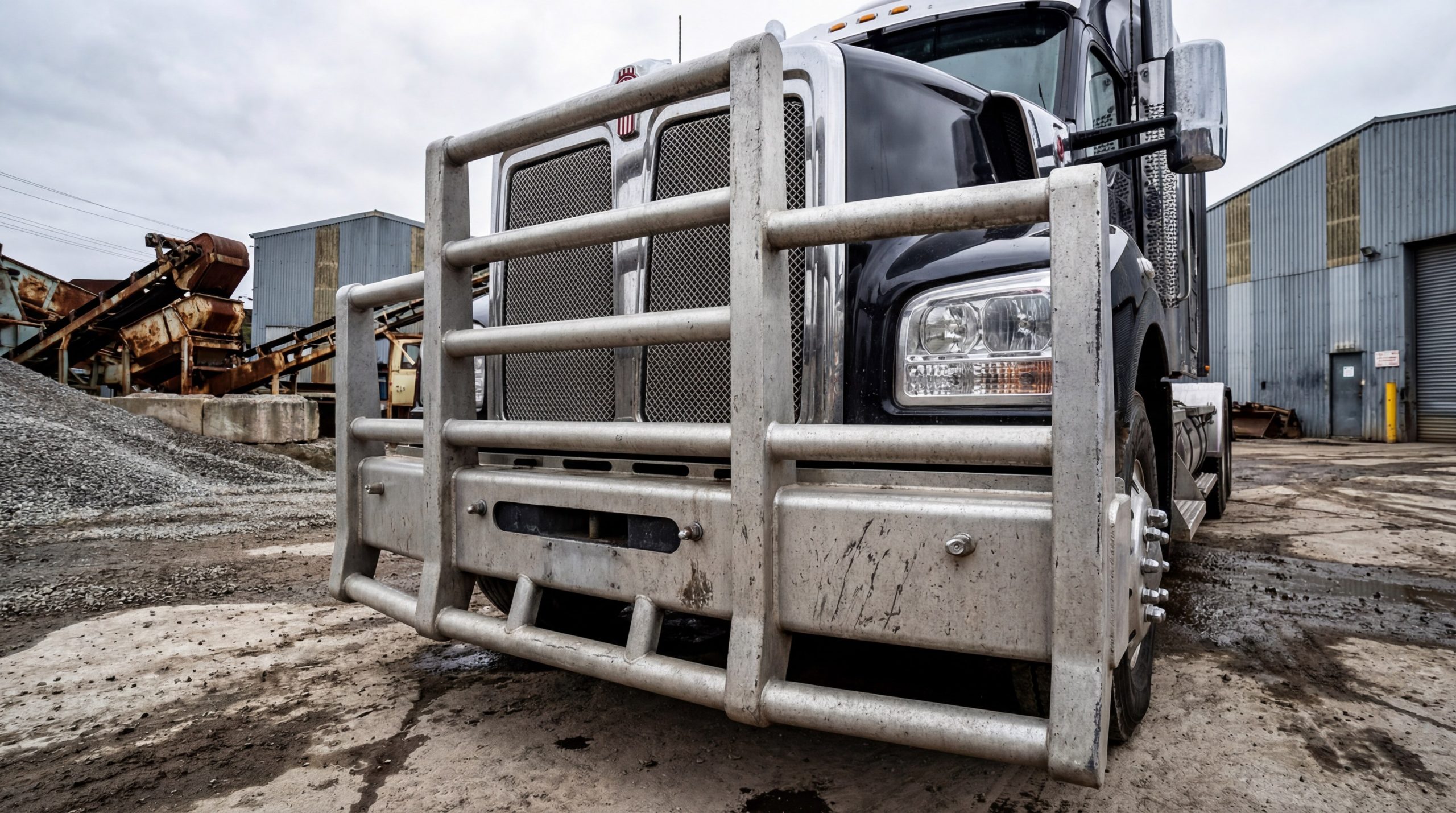
Grille and bumper guards are specialized exterior armor systems designed to provide a robust physical barrier for a vehicle’s front fascia. These components are essential for maintaining proper grille guard airflow while preventing physical objects from penetrating the radiator or damaging the lighting systems.
Defining the Components
A full grille guard typically consists of a center section that protects the radiator intake and side “wings” that wrap around the headlights. These are distinct from bull bars, which usually only protect the lower-center portion of the bumper.
Look: Choosing the right guard depends entirely on your specific risk environment. While a highway hauler might prioritize aerodynamic efficiency, a logging truck requires maximum structural steel thickness.
- Stainless Steel: Offers the highest corrosion resistance for coastal or salted roads.
- Powder-Coated Steel: Provides a rugged, matte finish that resists scratching and impact.
- Aluminum Alloy: Reduces front-end weight while maintaining high structural integrity.
Engineering Standards
Modern guards are no longer just “cosmetic” additions but are engineered safety systems. They must align with the vehicle’s structural points to ensure they don’t interfere with airbag deployment or parking sensors.
Key Takeaway: Grille guards serve as the first line of defense, transforming a fragile plastic front end into a reinforced industrial tool.
| Component Type | Primary Material | Protection Zone | |
|---|---|---|---|
| Full Grille Guard | Steel / Aluminum | Radiator, Headlights, Bumper | |
| Bull Bar | Steel Tubing | Lower Center Bumper | |
| Moose Bumper | Heavy-Gauge Plate | Full Frontal Surface |
These diverse options allow fleet managers to tailor protection levels to their specific operational hazards.
How do these guards protect your truck’s frame and body?
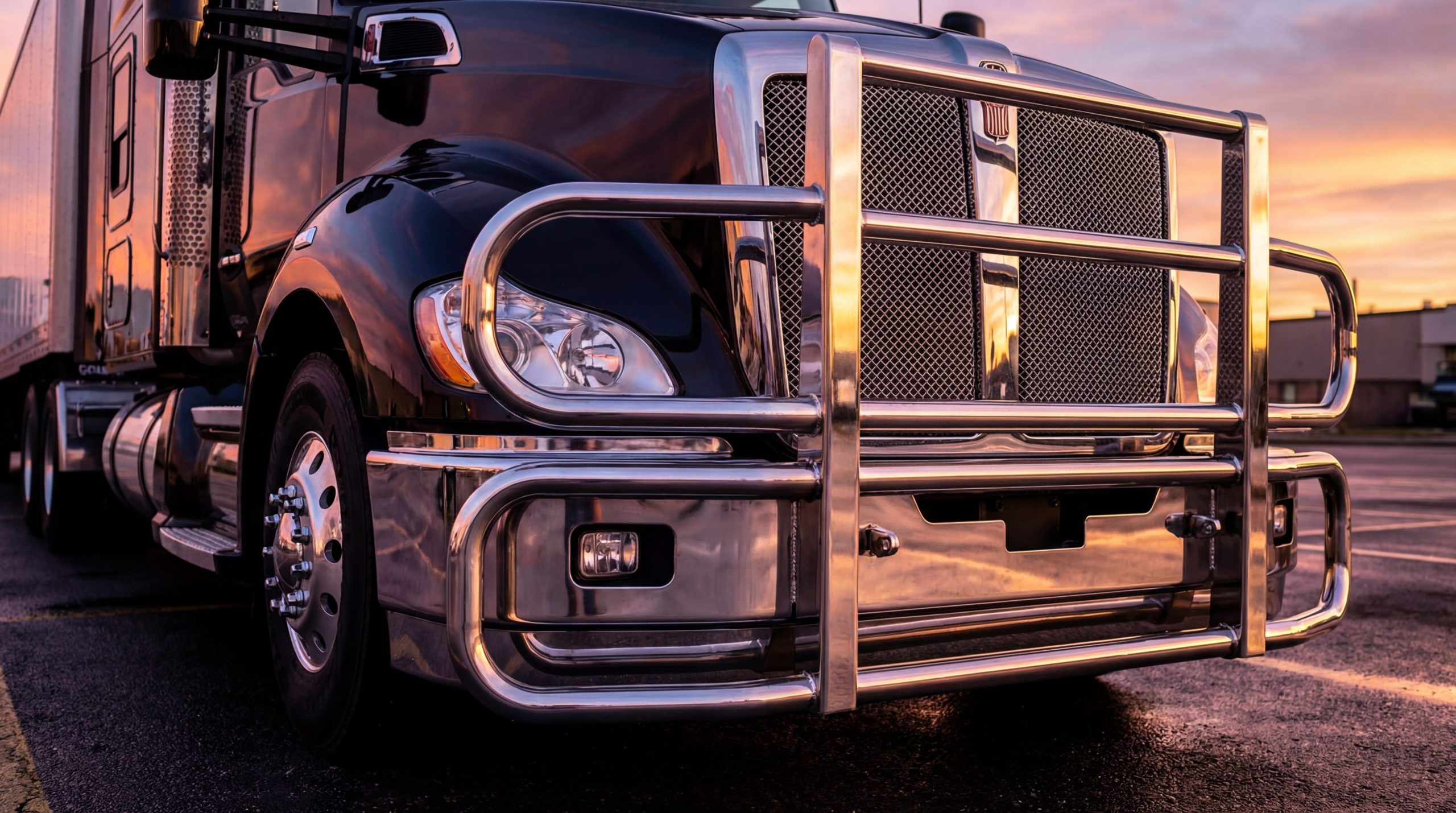
These guards protect your truck by acting as a structural extension of the chassis, redirecting impact energy away from delicate body panels. Even with a guard installed, maintaining consistent grille guard airflow is critical to prevent heat soak during heavy towing or long-haul routes.
Structural Energy Transfer
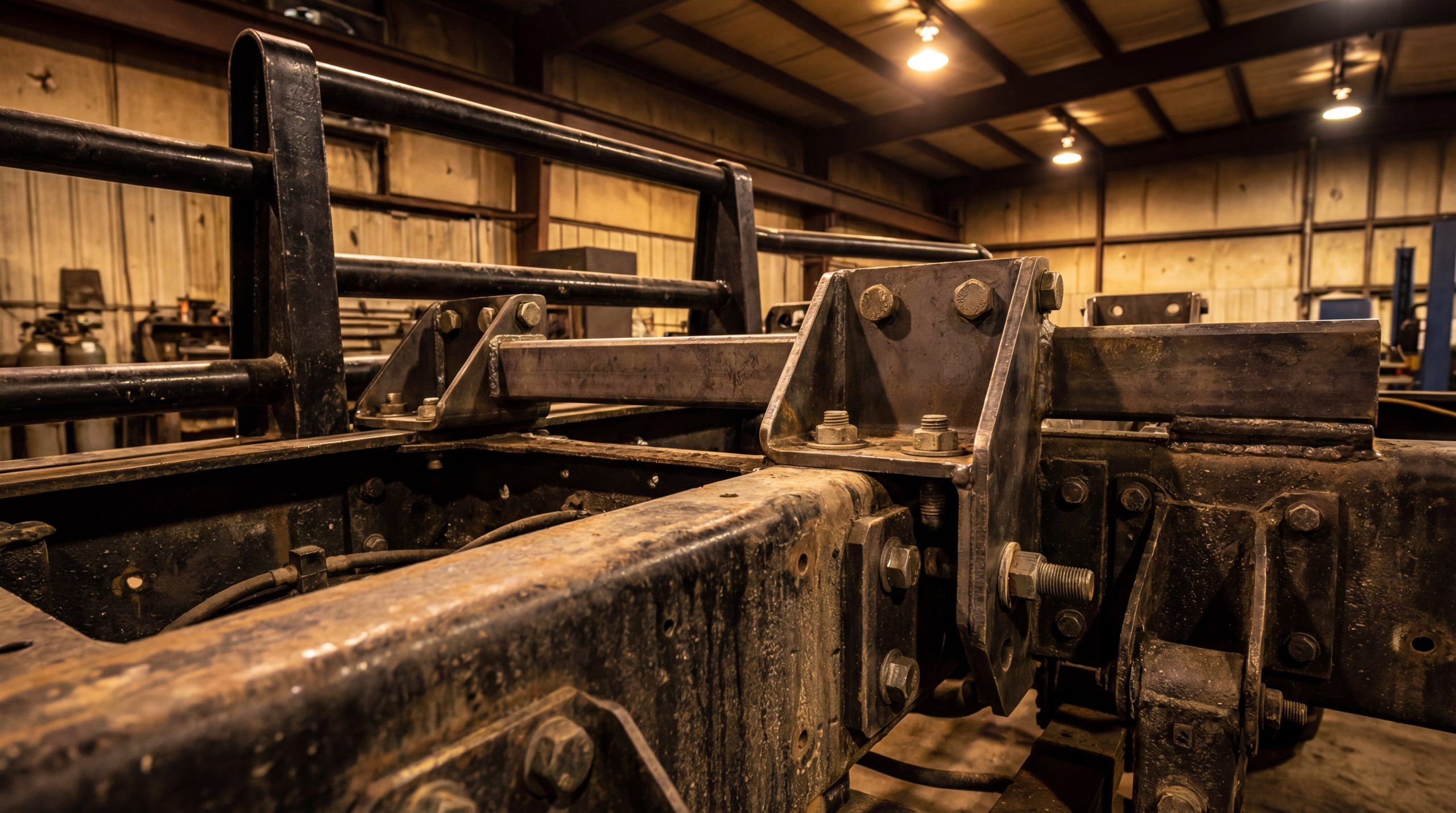
When an impact occurs, the guard absorbs the initial force and transfers it directly to the truck’s frame through heavy-duty mounting brackets. This prevents the “crumple zones” from triggering during low-speed incidents, which would otherwise require extensive bodywork.
Here’s the deal: Factory bumpers are designed to collapse easily for passenger safety in high-speed crashes. However, this design makes them highly susceptible to damage from minor bumps that a steel guard would shrug off effortlessly.
- Direct Frame Mounting: Eliminates reliance on thin-gauge sheet metal for support.
- Vibration Dampening: Prevents the guard from rattling or causing fatigue on the vehicle’s mounting points.
- Impact Absorption: High-tensile steel bends slightly to soak up energy, protecting the engine block.
Preserving Body Lines
By standing several inches out from the vehicle’s face, the guard prevents objects from ever making contact with the hood or fenders. This physical gap is what saves your truck from the dents and scratches that lead to rust over time.
Key Takeaway: The guard functions as an exoskeleton, utilizing the vehicle’s strongest structural points to shield its most vulnerable aesthetic and mechanical parts.
| Feature | Function | Benefit | |
|---|---|---|---|
| Frame Mounts | Rigid Attachment | Prevents Body Panel Buckling | |
| Stand-off Gap | Physical Clearance | Eliminates Surface Scratches | |
| Reinforced Uprights | Structural Pillar | Blocks Heavy Object Intrusion |
A properly mounted guard ensures that the frame bears the burden of impact rather than the expensive radiator or intercooler.
Why is front-end protection a smart financial investment?
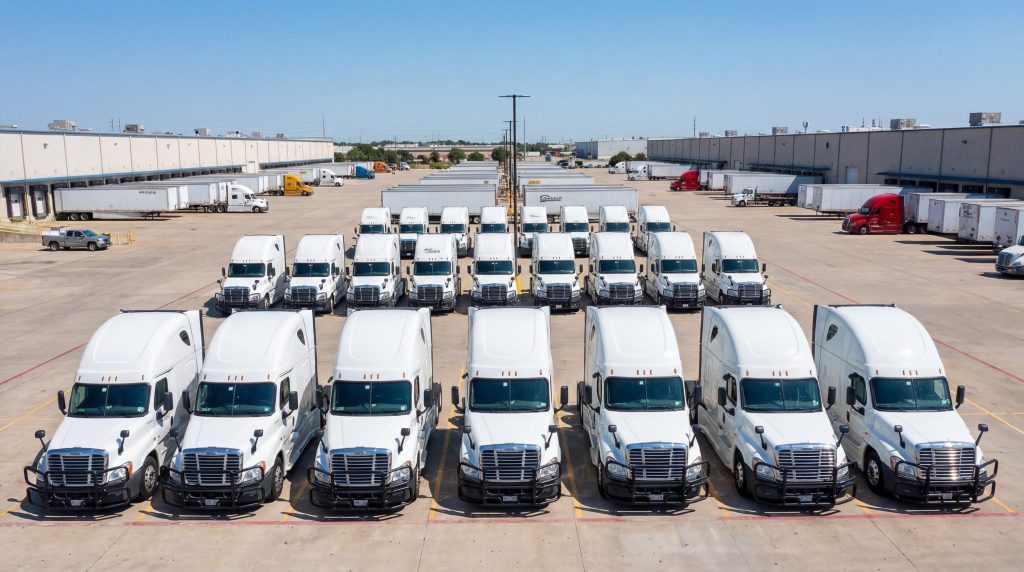
Front-end protection is a smart investment because it significantly reduces the Total Cost of Ownership (TCO) by preventing expensive repairs and protecting the grille guard airflow systems. For commercial operators, the cost of a guard is often less than the insurance deductible for a single animal strike.
Reducing Repair Downtime
When a truck is in the shop for front-end repairs, it isn’t making money. A guard prevents the “cascade failure” where a simple bumper bump cracks a headlight and punctures the AC condenser simultaneously.
Think about it: If your truck is off the road for two weeks, how much revenue are you losing? The price of a guard is a one-time insurance premium that keeps your fleet operational through the toughest conditions.
- Resale Value: Clean vehicle history reports and original paint fetch higher trade-in prices.
- Insurance Premiums: Fewer claims for minor damages keep your fleet’s insurance rates stable.
- Lower Maintenance: Protection of cooling cores reduces the frequency of radiator replacements due to debris.
Maximizing Lifecycle
By shielding the vehicle from the environment, you extend the usable life of the truck. This is especially true for fleets operating in harsh northern climates where road salt and wildlife are constant threats.
Key Takeaway: Investing in protection today prevents the massive financial drain of emergency repairs and lost productivity tomorrow.
| Expense Category | Without Guard | With Guard | |
|---|---|---|---|
| Minor Impact Repair | 1,500−3,500 | $0 (Surface Scratch Only) | |
| Vehicle Downtime | 5-14 Days | 0 Days | |
| Component Replacement | High (Radiator/Lights) | Low (Hardware Only) |
The financial data clearly shows that front-end protection pays for itself after the very first incident.
Does a grille guard airflow impact engine cooling?
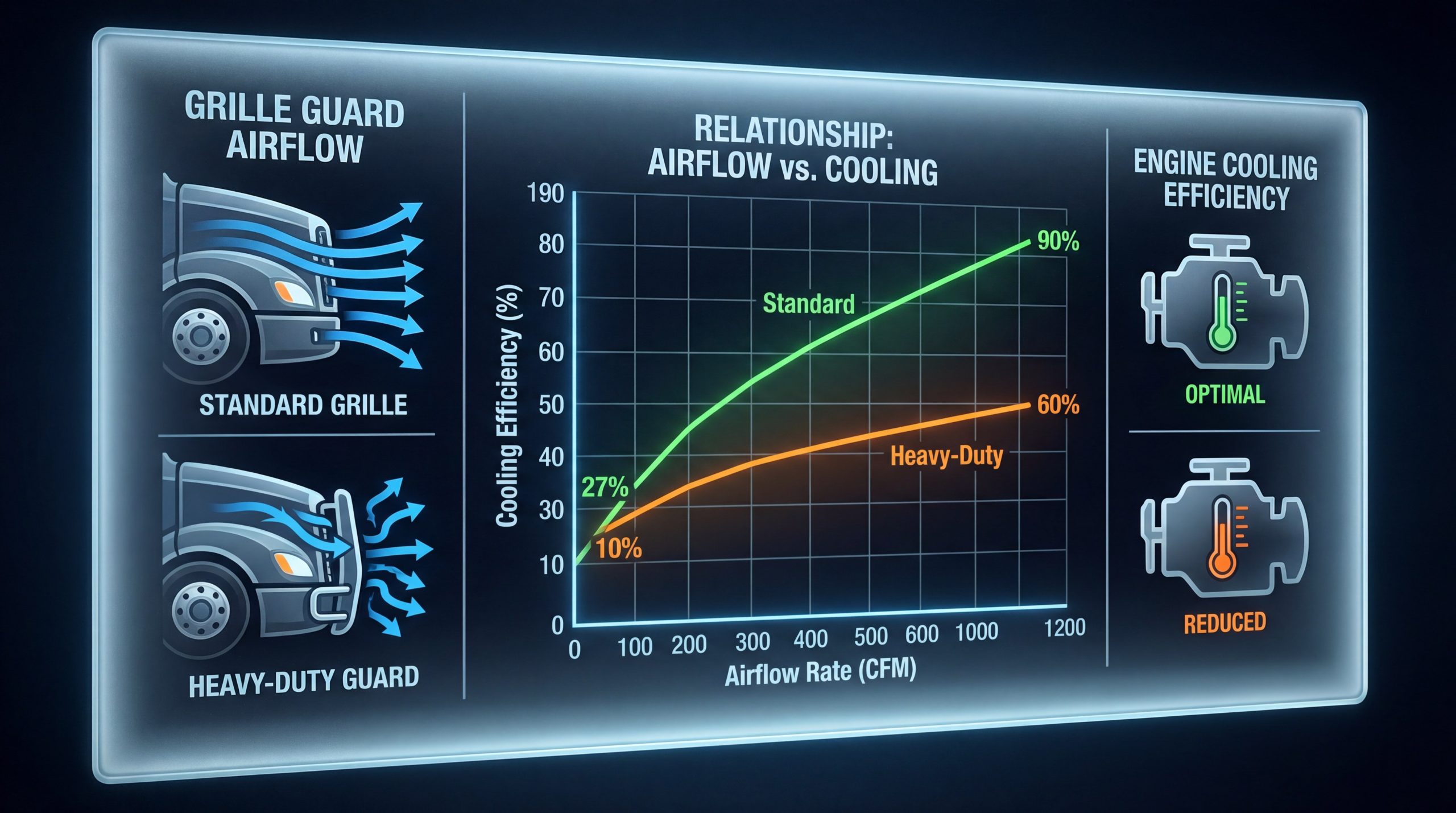
No, a professionally engineered guard does not negatively impact cooling because it is designed to maximize grille guard airflow into the radiator. Engineers use computational fluid dynamics to ensure that the placement of horizontal bars does not create dead zones in front of the cooling stack.
Aerodynamic Precision
While it might look like a solid wall of steel, the open-area ratio of a grille guard is carefully calculated. Most guards maintain over 80% of the factory intake area, which is more than sufficient for the engine’s thermal needs.
You might be wondering: Does the added weight of the guard make the engine run hotter? In reality, the thermal mass is negligible, and the airflow remains consistent even at high highway speeds.
- Ventilation Slots: Strategically placed to align with the truck’s OEM intake paths.
- Mesh Grilles: Allow high-velocity air to pass while stopping small stones and insects.
- Tube Diameter: Optimized to provide strength without creating a massive aerodynamic block.
Performance Under Load
Trucks towing heavy trailers require maximum cooling efficiency. High-quality guards are tested in extreme heat to ensure the engine stays within its optimal operating temperature regardless of the external hardware.
Key Takeaway: Modern guard designs prioritize thermal management as much as physical protection, ensuring your engine breathes freely.
| Airflow Factor | Design Solution | Result | |
|---|---|---|---|
| Intake Obstruction | CAD-Aligned Bar Spacing | 95% + Thermal Efficiency | |
| Debris Blocking | Fine-Gauge Steel Mesh | Protected Cooling Fins | |
| Turbulence | Rounded Tubular Profiles | Laminar Airflow to Radiator |
Thermal testing confirms that engine temperatures remain stable with or without a high-quality guard installed.
What are the different levels of protection available?
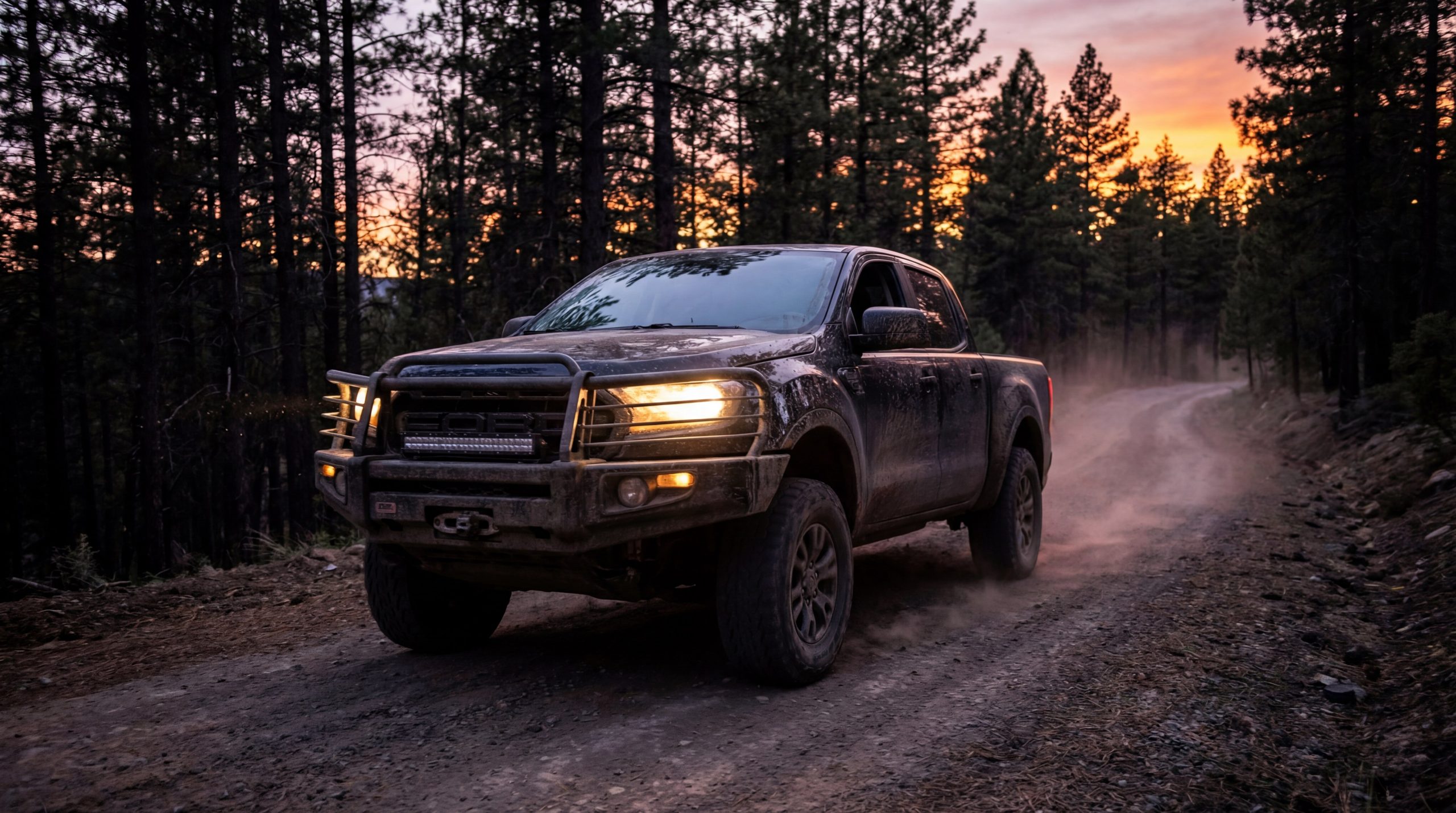
The levels of protection range from cosmetic light bars to heavy-duty “moose bumpers” that provide full-perimeter grille guard airflow and structural defense. Choosing the right level depends on whether you are navigating city streets or dense forest trails.
Lightweight vs. Heavy-Duty
Lightweight guards are often made from 2-inch tubing and focus on protecting the center grille from parking lot bumps. Heavy-duty options utilize 3-inch or 4-inch plate steel and can withstand significant animal impacts without bending.
The best part? You don’t have to sacrifice style for safety. Modern manufacturers offer “stealth” guards that provide high-level protection while blending seamlessly into the truck’s original design lines.
- Bull Bars: Low-profile, center-only protection, often including skid plates.
- Center Guards: Covers the main radiator area but leaves headlights exposed for a cleaner look.
- Full-Wrap Guards: The gold standard, protecting the entire front end including the fenders.
Application-Specific Design
For extreme environments like logging or oil fields, “Moose Bumpers” are used. These are full-replacement bumpers that offer the highest level of shielding available in the automotive aftermarket.
Key Takeaway: Tailoring your protection level to your actual driving environment ensures you don’t carry unnecessary weight while maintaining maximum safety.
| Protection Level | Best For | Typical Impact Rating | |
|---|---|---|---|
| Bull Bar | Urban/City Driving | Low (Parking Nudges) | |
| Grille Guard | Highway/Rural Roads | Medium (Debris/Small Game) | |
| Moose Bumper | Off-Road/Wilderness | High (Heavy Wildlife) |
Selecting the appropriate guard ensures your truck is prepared for the specific risks it faces daily.
How do full grille guards protect your headlights and fascia?
Full grille guards protect your headlights and fascia by using side-wings and headlight cages to block large objects from shattering delicate glass or plastic components. These wings are contoured to the vehicle’s shape to ensure that grille guard airflow is not restricted while the lighting remains fully shielded.
Headlight Cage Design
Headlights are one of the most expensive parts to replace on a modern truck, often costing over $1,000 for a single LED unit. The small vertical bars over the lights, known as headlight cages, are spaced to allow full light output while stopping branches or rocks.
That’s not all. Full guards also protect the plastic fascia and fender flares. These cosmetic parts are easily cracked by road debris, leading to a “worn out” look that decreases the vehicle’s aesthetic appeal and value.
- Contoured Wings: Follow the curve of the truck for a precise, “factory” fit.
- Rubber Strips: Prevent metal-on-metal contact between the guard and the body.
- Removable Cages: Allow for easy headlight maintenance without removing the entire guard.
Fascia Preservation
The lower section of the guard often incorporates a brush guard or skid plate. This prevents tall grass, brush, or snow piles from scratching the painted plastic surfaces of the lower bumper.
Key Takeaway: Comprehensive coverage ensures that every square inch of the truck’s front “face” is behind a steel barrier.
| Component Protected | Repair Cost (Est.) | Guard Feature | |
|---|---|---|---|
| LED Headlight | 800−1,500 | Protective Caging | |
| Plastic Fascia | 400−900 | Lower Crossbar | |
| Front Fender | 500−1,200 | Side Wings |
Full-wrap protection effectively eliminates the risk of high-cost lighting and cosmetic repairs.
Are partial guards or brush guards right for your needs?
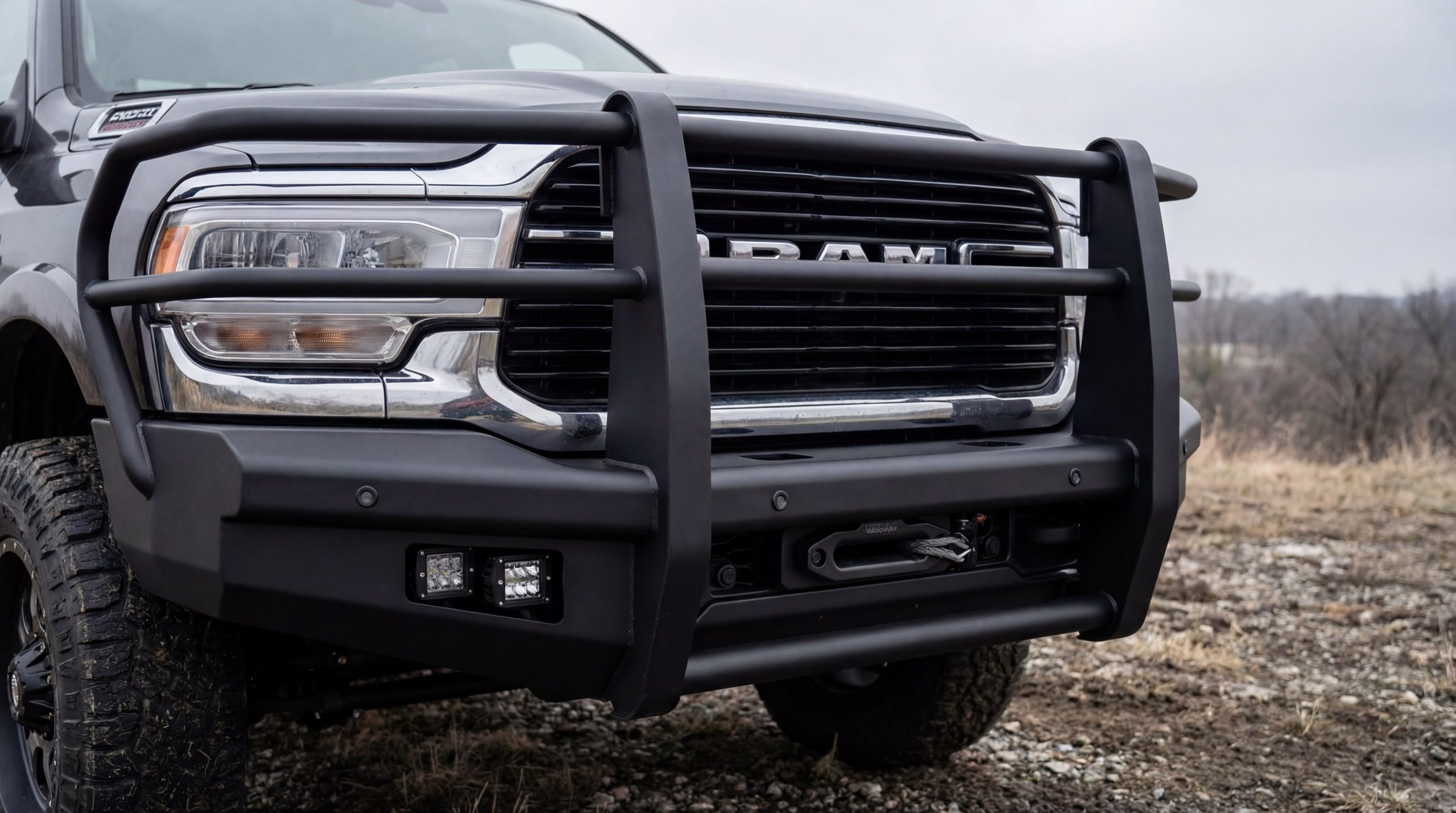
Yes, partial guards are often the ideal choice for operators who need targeted protection without the weight of a full-perimeter system, provided they maintain grille guard airflow standards. These units are perfect for urban fleets or vehicles that rarely leave paved roads.
Targeted Protection Zones
A partial guard focuses solely on the “kill zone”—the center of the truck where the radiator and intercooler reside. By leaving the headlights open, these guards are lighter, easier to install, and often more aerodynamic.
But there’s a catch. While partial guards are great for center impacts, they leave your expensive headlights vulnerable to side-swiping branches or road spray from other vehicles. You must weigh the weight savings against the potential risk.
- Bull Bars: Excellent for mounting auxiliary lighting and winches.
- Skid Plates: Protect the under-engine components from road debris and rocks.
- Modular Designs: Allow you to add side wings later if your protection needs change.
Maintaining OEM Sensors
Many modern trucks have radar and parking sensors located in the bumper. Partial guards are often designed to sit between these sensors, ensuring that your safety technology continues to function without interference.
Key Takeaway: Partial guards offer a “middle ground” solution that balances weight, cost, and essential component protection.
| Guard Type | Weight Profile | Main Advantage | |
|---|---|---|---|
| Bull Bar | Light (30-50 lbs) | Sensor Compatibility | |
| Brush Guard | Medium (60-90 lbs) | Center Intake Defense | |
| Light Bar Mount | Minimal (10-20 lbs) | Auxiliary Lighting Only |
For many city-based fleets, a partial guard provides sufficient protection without affecting payload capacity.
What makes a low-profile bumper guard effective?
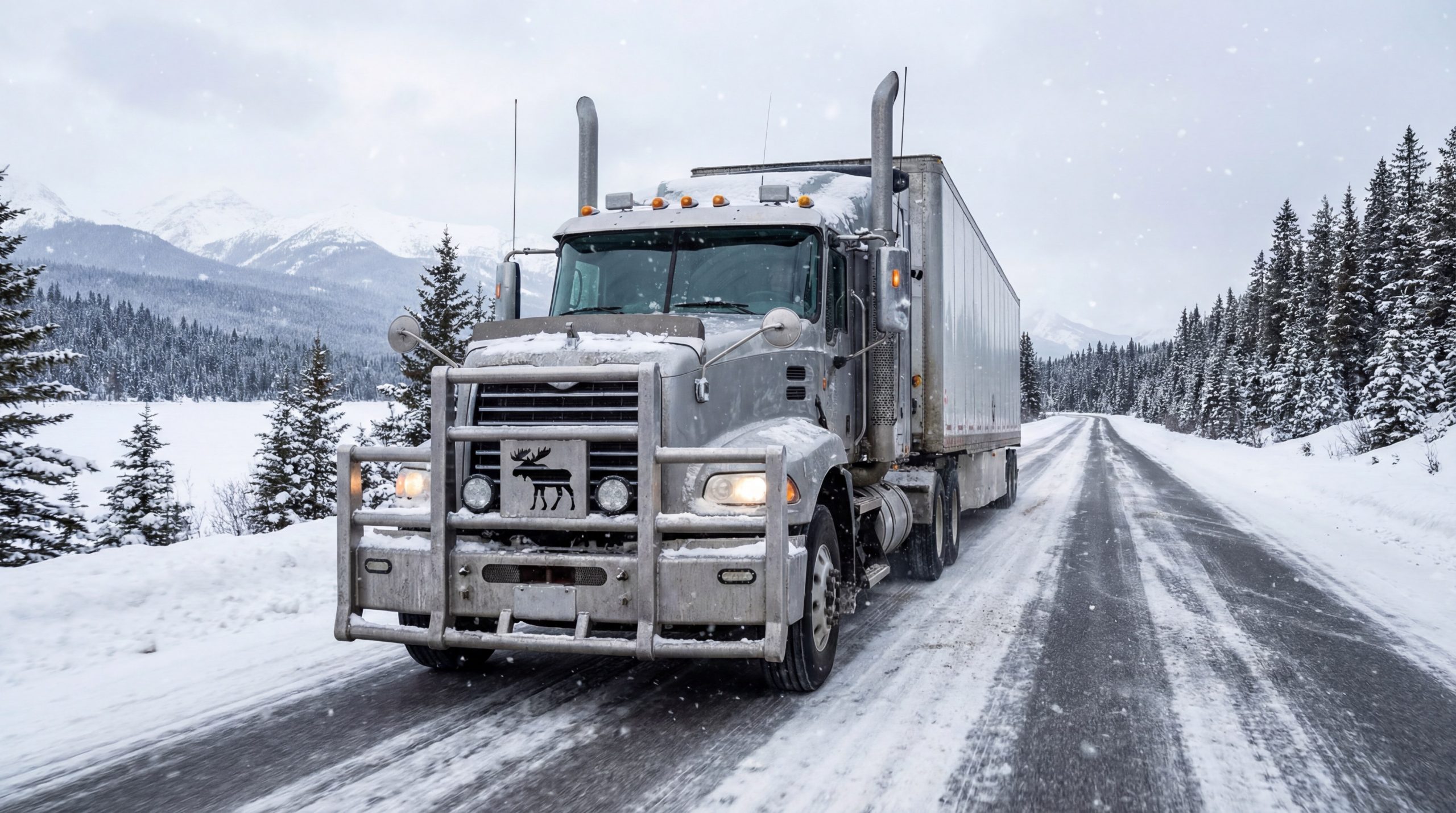
Low-profile bumper guards are effective because they offer high-strength protection while maintaining the vehicle’s original approach angles and grille guard airflow characteristics. These are particularly popular for owner-operators who want a clean look without the bulk of traditional “cow catchers.”
Aesthetic and Functional Balance
Low-profile guards often replace the factory plastic bumper entirely or sit very close to the fascia. They are made from plate steel rather than tubing, providing a “flat” surface that is incredibly strong against direct frontal impacts.
In fact: Low-profile designs are often more aerodynamic than traditional tubular guards. This can result in better fuel economy over long distances while still providing a robust shield for the truck’s vital cooling systems.
- Integrated Winch Mounts: Most low-profile guards allow for hidden winch installations.
- Improved Approach Angles: Essential for off-road navigation or steep loading docks.
- Sleek Integration: Often color-matched to the truck’s paint for a premium, custom appearance.
Urban Maneuverability
Because they don’t add significant length to the vehicle, low-profile guards are easier to live with in tight parking garages and city traffic. You get the peace of mind of steel protection without the bulkiness that makes parking a chore.
Key Takeaway: Low-profile guards prove that you don’t need a massive structure to achieve industrial-grade front-end security.
| Design Element | Benefit | Trade-off | |
|---|---|---|---|
| Plate Steel | High Puncture Resistance | Slightly More Expensive | |
| Flush Mounting | Better Aerodynamics | Less Side Protection | |
| Color Matching | Factory Look | High Maintenance Finish |
The low-profile approach is perfect for those who prioritize a modern aesthetic alongside heavy-duty functionality.
Can these guards handle off-road and job site hazards?
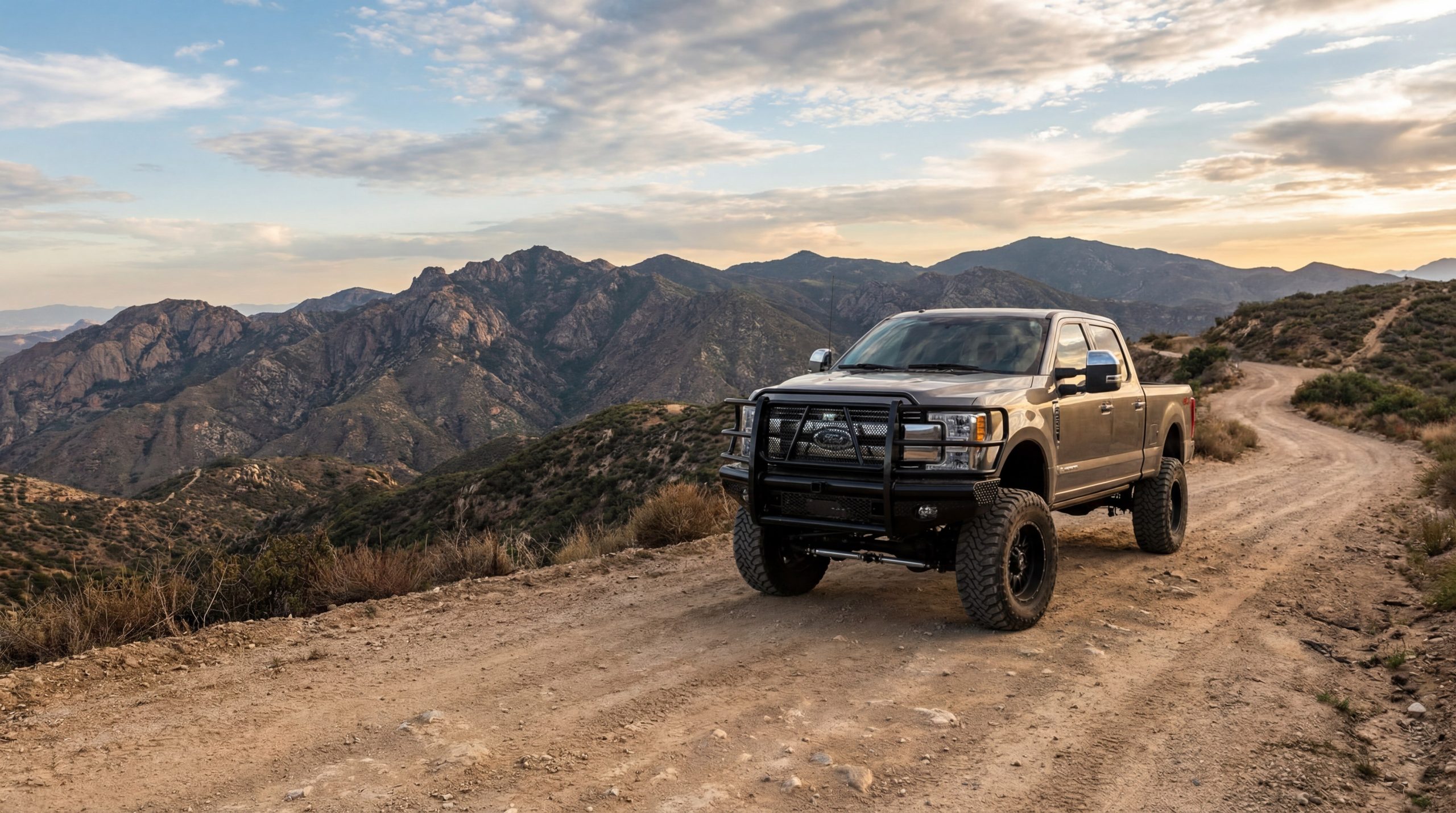
Yes, these guards are specifically engineered to handle the extreme vibration and debris impacts common on construction sites and off-road trails while ensuring grille guard airflow remains unobstructed. On a job site, a truck isn’t just transport—it’s a tool that must withstand daily abuse.
Resistance to Heavy Debris
From kicked-up gravel to falling lumber, a job site is full of hazards that can puncture a radiator in seconds. A heavy-duty guard acts as a physical shield that keeps these objects away from the engine bay.
It gets even better: Guards also provide a secure point for pushing open gates or nudging trailers into place. Without a guard, these simple tasks would result in cracked plastic and bent metal on the factory bumper.
- Heavy-Gauge Steel: Resists denting even when impacted by rocks or tools.
- Secure Mounting: Prevents the guard from shifting during rough off-road travel.
- Corrosion Protection: Zinc-rich primers ensure the guard doesn’t rust despite being scratched on the job.
Off-Road Durability
Off-roading subjects the front end to constant vibration and “brushing” against vegetation. A guard prevents branches from scratching the paint and stops tall grass from clogging the intake vents.
Key Takeaway: For any truck operating in an industrial or wilderness environment, a front-end guard is a mandatory upgrade for reliability.
| Hazard Type | Protection Mechanism | Operational Result | |
|---|---|---|---|
| Falling Debris | Steel Top Plate | Zero Engine Damage | |
| Brush/Vegetation | Tubular Wings | Clean Paint/Intake | |
| Trailer Nudges | Center Uprights | No Bumper Deformation |
A guard ensures that your truck stays on the job rather than sitting in the body shop.
How difficult is the installation process for these guards?
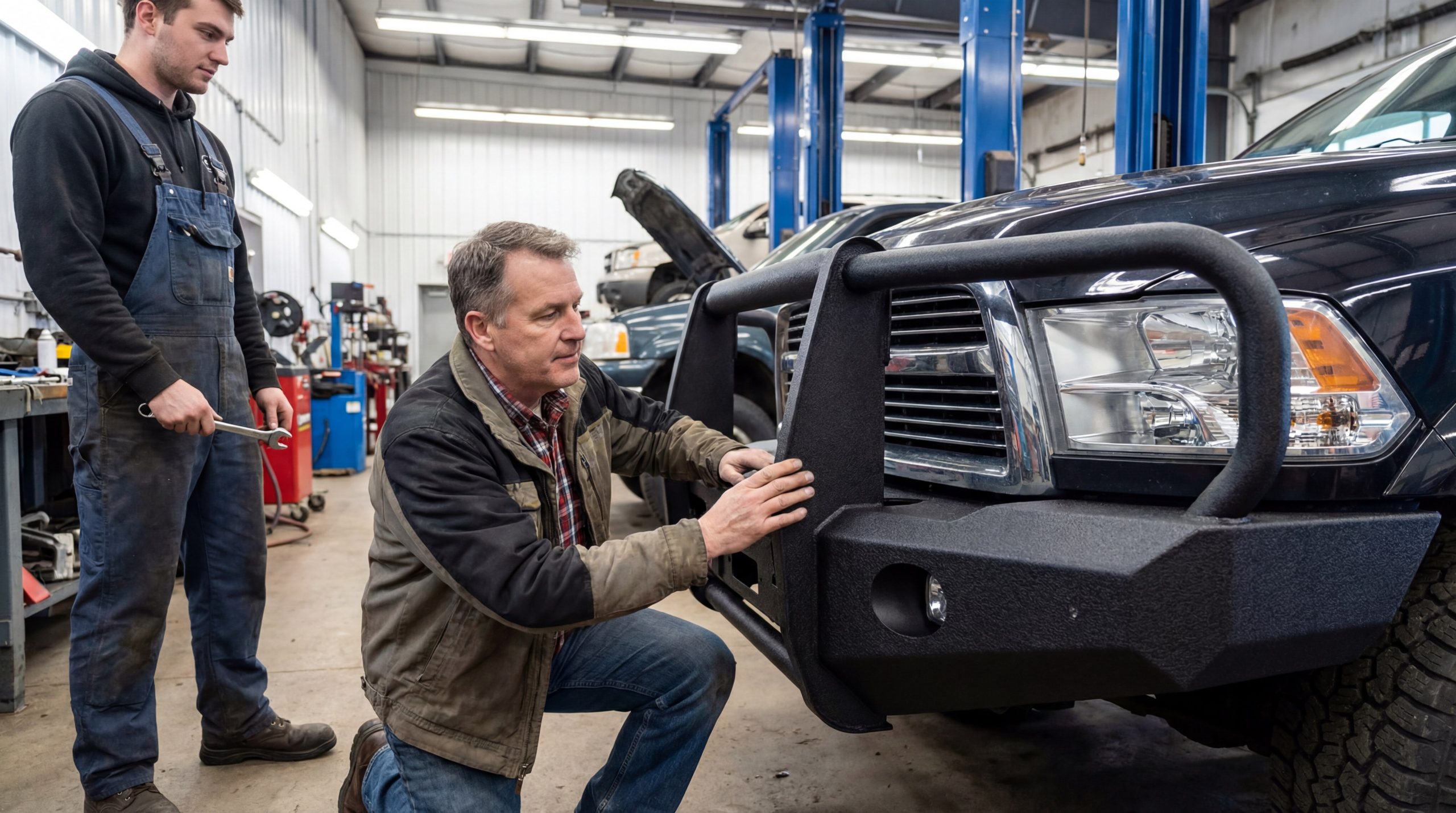
The installation process is straightforward because most high-quality guards are designed as “no-drill,” bolt-on systems that don’t compromise the grille guard airflow or structural integrity. Most truck owners can complete the installation in their own driveway with basic hand tools.
Bolt-On Convenience
Engineers use the truck’s existing frame holes—originally intended for tow hooks—to secure the guard’s mounting brackets. This ensures a “perfect fit” every time and eliminates the risk of weakening the frame with new drill holes.
Simply put: If you can operate a socket wrench, you can install a grille guard. The process typically involves removing the factory tow hooks, attaching the new brackets, and bolting the guard to those brackets.
- Precision Jigs: Manufacturers use CMM-verified templates to ensure every hole aligns perfectly.
- Hardware Kits: High-tensile, Grade 8 bolts are included to ensure the mounting never fails.
- Illustrated Manuals: Step-by-step guides make the process foolproof even for beginners.
Time and Labor Requirements
For most standard pickups, the installation takes between one and two hours. It is recommended to have a second person help you lift and balance the guard while you start the bolts to prevent any accidental scratches.
Key Takeaway: The ease of installation means you can upgrade your truck’s protection quickly without professional labor costs.
| Step | Complexity | Time (Min) | |
|---|---|---|---|
| Bracket Assembly | Low | 20 | |
| Frame Attachment | Medium | 40 | |
| Final Torque/Alignment | Low | 15 |
A simple afternoon project provides your truck with a lifetime of front-end security and peace of mind.
Summary of Front-End Protection Value
Protecting your truck’s front end is a critical operational decision that impacts safety, finance, and longevity. Whether you are avoiding a multi-thousand-dollar wildlife strike or simply preserving the resale value of your fleet, a grille or bumper guard is the most cost-effective solution available. By choosing a professionally engineered system, you ensure that your engine’s cooling remains optimal while its structural defense is absolute. To find the perfect shield for your specific application, browse our selection and see how we can help you safeguard your investment.
Frequently Asked Questions
Can I still use my tow hooks after installing a guard?Yes, most guards are designed to either work with your existing tow hooks or include integrated tow points in the mounting brackets. This ensures you never lose the ability to recover your vehicle or help others in the field.
Will a grille guard interfere with my front parking sensors?It depends on the specific design of the guard and your truck model. Many modern guards include relocation kits or “sensor-friendly” mesh patterns that allow the radar and ultrasonic sensors to see through or around the metal bars.
Does adding a heavy steel guard hurt my fuel economy?No, for the average driver, the impact on fuel economy is negligible. While the guard adds weight and changes the aerodynamic profile slightly, the difference is usually less than 1-2%, which is often offset by the peace of mind and protection provided.
Is stainless steel worth the extra cost over black powder coat?Yes, if you live in a region that uses road salt during the winter or near the ocean. While powder coating is durable, any deep scratch can lead to rust in a carbon steel guard; stainless steel remains corrosion-resistant even if the surface is damaged.
Can a grille guard stop a deer at highway speeds?Yes, in many cases, a heavy-duty guard can prevent a total loss during a wildlife strike. While the guard itself may bend or need replacement, it typically stops the animal from penetrating the radiator and engine block, allowing the truck to remain drivable.