
Installing heavy-duty front-end protection is a strategic decision to preserve the structural and mechanical integrity of your Class 8 assets over their entire operational lifecycle. You likely view your trucks as high-value investments, yet one minor collision can lead to a cascade of expensive repairs and crippling downtime. When a single “fender bender” in a yard or a stray piece of highway debris can puncture a radiator or shatter a composite hood, the financial risk is simply too high to ignore. Professional grille guards offer a proactive solution that acts as a first line of defense, keeping your equipment on the road and your revenue flowing without interruption.
Why are grille guards more than just deer protection?
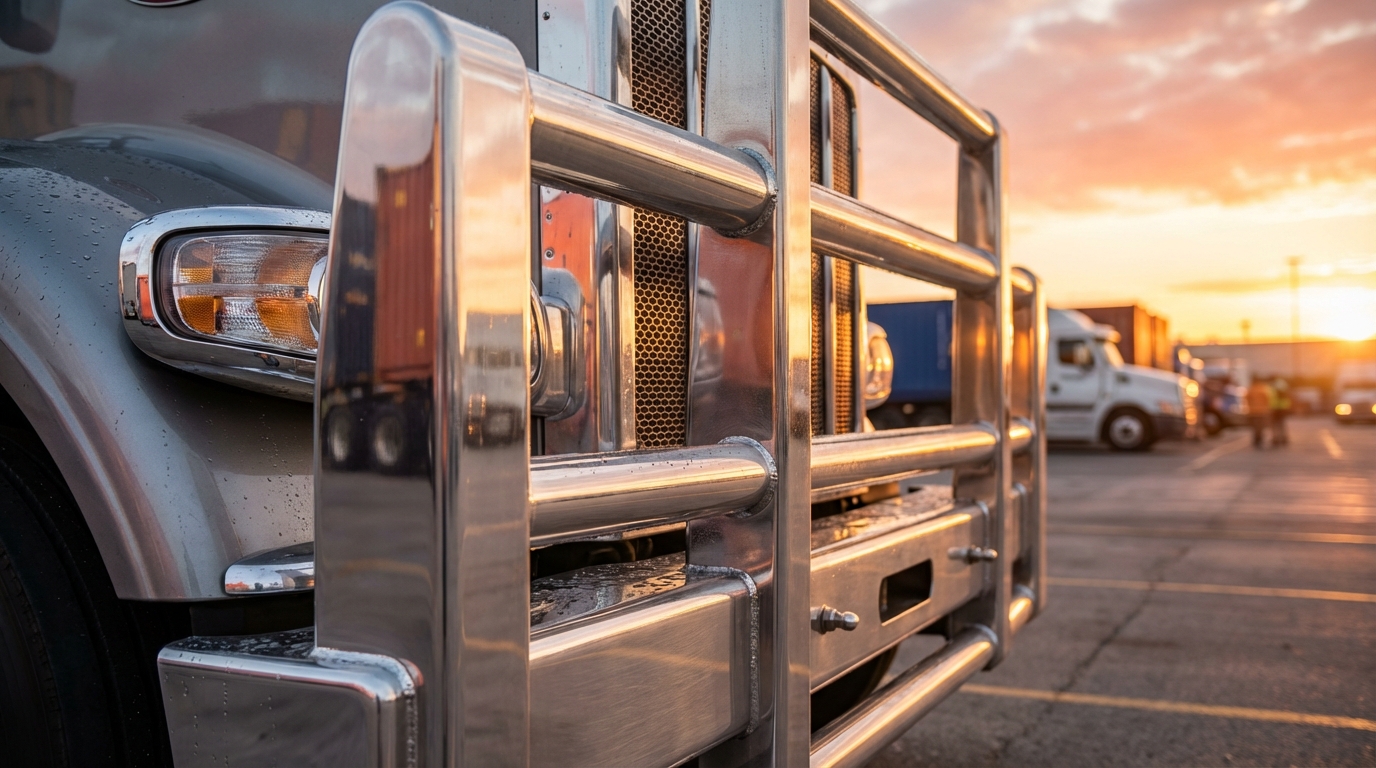
Grille guards provide a comprehensive shield against a wide spectrum of operational hazards that go far beyond occasional wildlife strikes. While often called “deer guards,” these units are actually multi-functional armor systems for your vehicle’s most vulnerable components.
Is wildlife the only threat to your front end?
Think about it: the highway is an unpredictable environment where debris is a constant menace. From loose tire treads (road gators) to construction remnants, high-velocity impacts can cause immediate radiator failure.
- Punctured condensers
- Cracked headlight housings
- Dented bumper assemblies
- Shattered fiberglass hoods
Are you overlooking common “yard” accidents?
Many of the most frequent front-end incidents actually occur at low speeds within logistics terminals and loading docks. Tight maneuvering in congested yards often results in contact with guard rails or parked trailers.
Key Takeaway: Extending equipment life starts with defending against the high-frequency, low-speed impacts that occur in daily yard operations.
| Incident Source | Unprotected Result | Guarded Result | |
|---|---|---|---|
| Highway Debris | Radiator Puncture | Deflection & Safety | |
| Loading Docks | Cracked Hood | Structural Absorption | |
| Yard Hazards | Bumper Deformation | Zero Component Damage |
This data illustrates how diverse environmental risks necessitate a robust physical barrier to prevent cumulative equipment degradation.
Can grille guards actually lower your total repair costs?
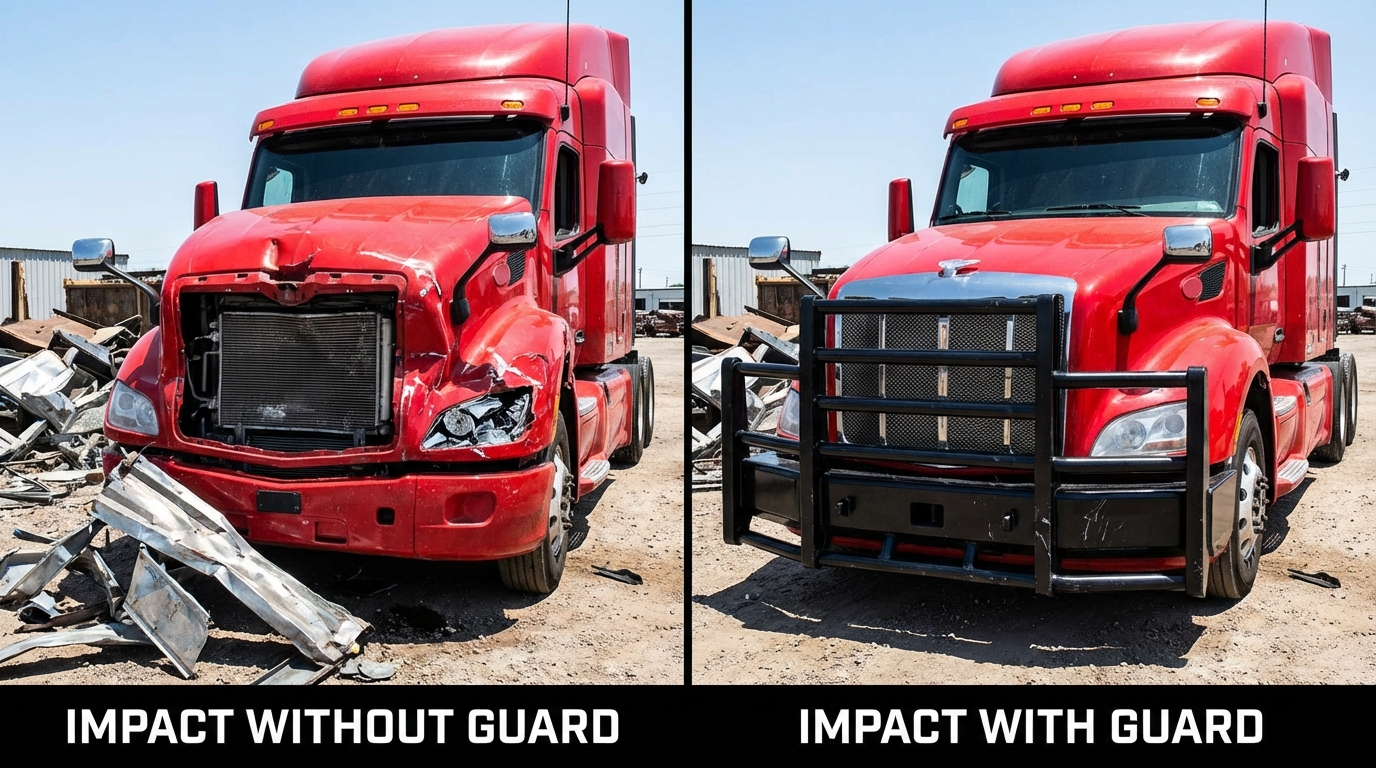
Investing in high-quality grille guards directly reduces your maintenance budget by absorbing impact forces that would otherwise destroy expensive OEM components. By serving as a sacrificial or rigid barrier, these systems prevent a
500incidentfromturningintoa
15,000 catastrophe.
How much does a standard front-end collision cost?
Look: a typical front-end repair involves far more than just a new bumper. You are often looking at replacing the radiator, the charge air cooler, and performing extensive fiberglass work on the hood.
Are replacement parts becoming too expensive to risk?
Supply chain volatility and rising material costs have made OEM replacement parts more expensive than ever. By protecting these assets, you effectively lock in your equipment’s value and avoid the “inflation tax” of emergency repairs.
- Avoid high-cost radiator swaps
- Prevent expensive hood repainting
- Shield high-value cooling modules
- Eliminate emergency part surcharges
Key Takeaway: The cost of one avoided major repair often pays for the installation of protection across multiple units in your fleet.
| Component | Replacement Cost (Est.) | Protection Benefit | |
|---|---|---|---|
| OEM Radiator | 3,500−5,000 | Impact Shielding | |
| Fiberglass Hood | 6,000−8,000 | Structural Guarding | |
| Cooling Module | 4,000−6,000 | Debris Deflection |
The financial math shows that proactive guarding is a form of self-insurance that yields immediate dividends upon the first impact.
Do grille guards destroy your truck’s fuel efficiency?
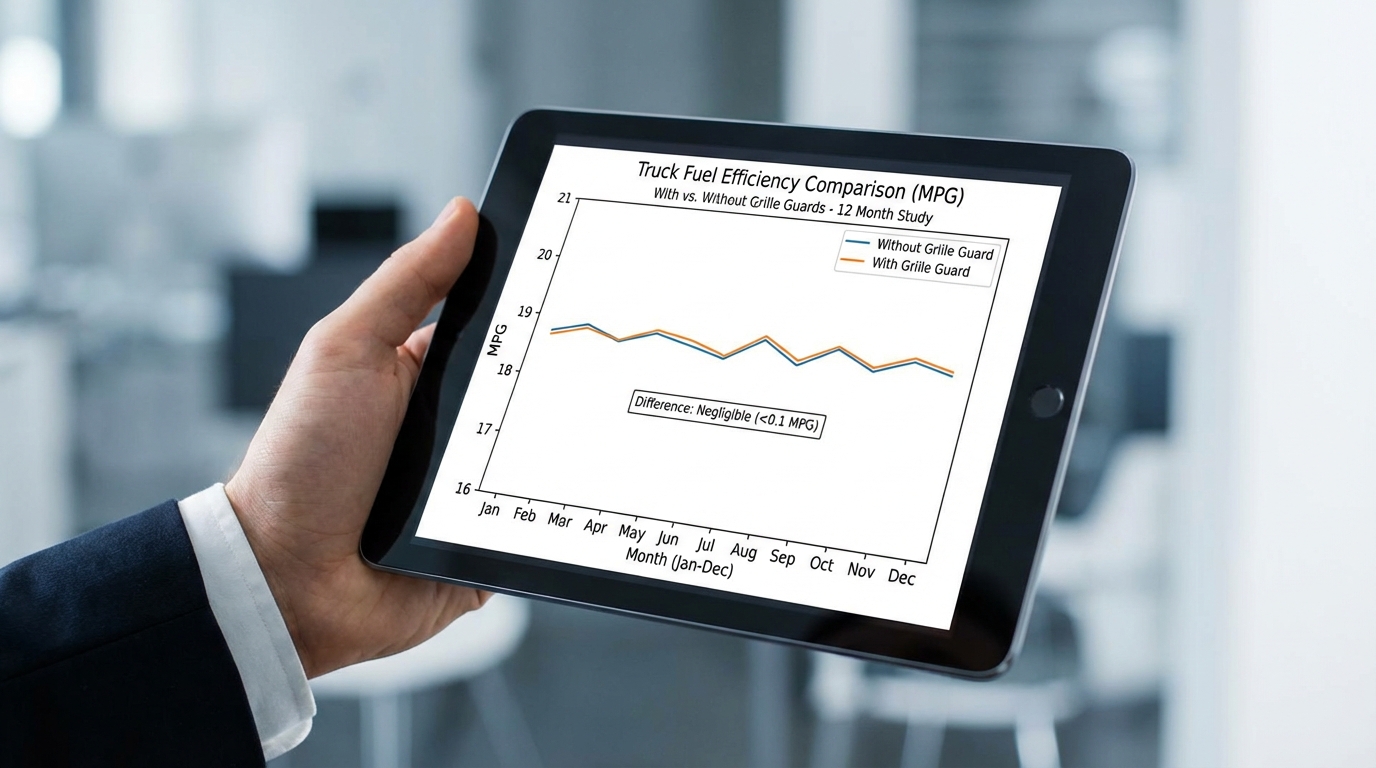
Modern grille guards are specifically engineered to have a negligible impact on a vehicle’s aerodynamic profile and overall fuel consumption. In fact, real-world testing shows that the drag penalty is often less than what you would experience from an improperly inflated set of tires.
What is the real-world impact on fuel consumption?
The best part? Professional-grade guards are designed to allow air to pass through to the cooling system without creating significant turbulence. You can expect a fuel variance of less than 0.4 gallons per 1,000 miles in most Class 8 applications.
- Rounded tube designs
- Aerodynamic mounting brackets
- Optimized bar spacing
- Lightweight alloy materials
Does tubing shape affect your aerodynamic drag?
Engineering matters when it comes to maintaining your miles-per-gallon (MPG) targets. Unlike the “cow catchers” of the past, today’s designs use curved frames that complement the sleek lines of modern aero-tractors.
Key Takeaway: You do not have to sacrifice fuel economy to gain the structural protection required for long-haul equipment longevity.
| Design Feature | Aero Benefit | Fuel Impact | |
|---|---|---|---|
| Round Tubing | Reduced Air Resistance | Negligible | |
| Curved Frame | Matches OEM Profile | Minimal Drag | |
| Vented Bars | Maintained Airflow | Zero Overheating |
These engineering choices ensure that your operational efficiency remains high while your vulnerability to physical damage stays low.
How do grille guards safeguard expensive ADAS sensors?
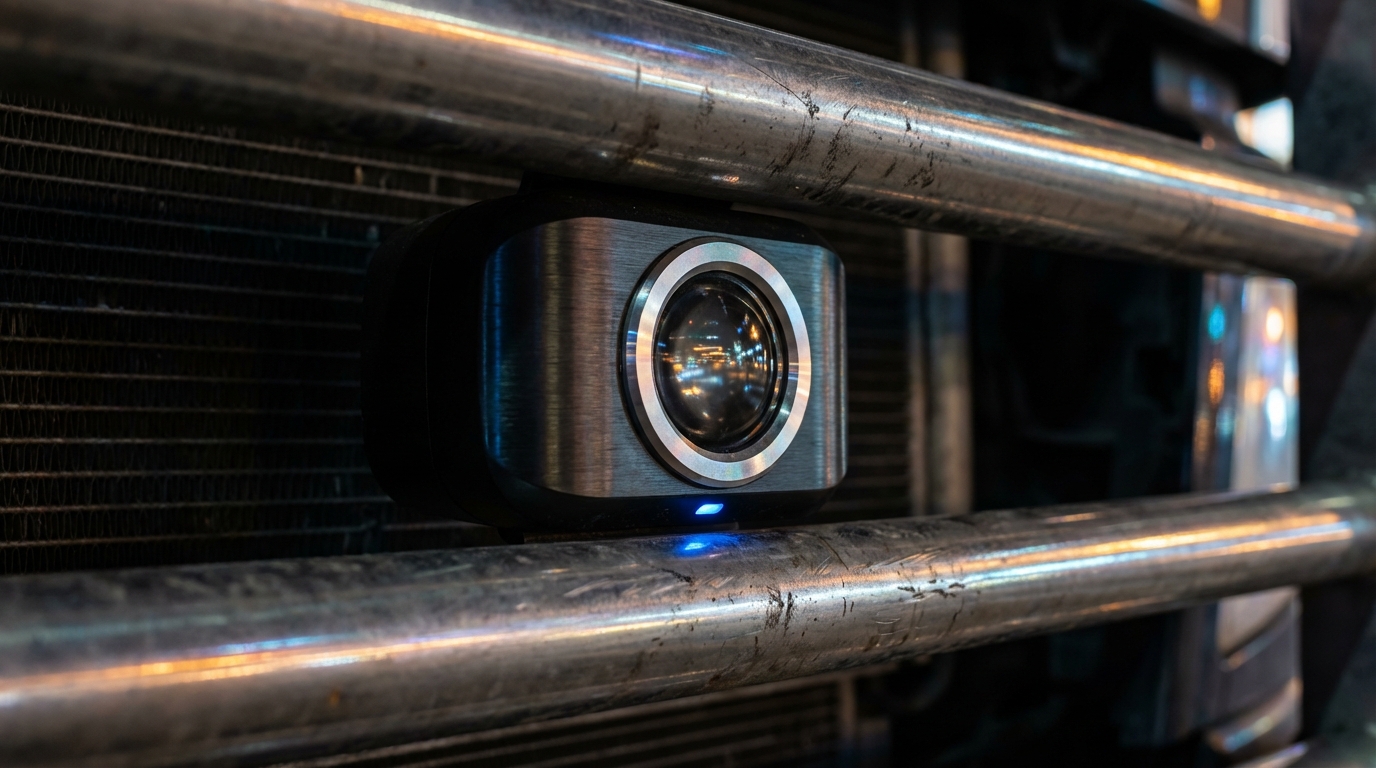
Protecting the sensitive electronics of Advanced Driver Assistance Systems (ADAS) is a primary reason to spec grille guards on newer fleet models. These radar and camera units are often mounted in the most exposed areas of the front bumper, making them highly susceptible to damage.
Why is collision-mitigation technology so fragile?
The reality is that even a small nudge can knock a radar sensor out of alignment or crack its mounting bracket. When these systems fail, the truck’s safety features are disabled, requiring specialized recalibration that is both slow and expensive.
Can a minor bump disable your safety systems?
Here is the kicker: a simple tap at a stoplight can cost you thousands in sensor replacement fees. A robust guard provides a rigid perimeter that keeps external objects away from these delicate “eyes” of the vehicle.
- Radar sensor housing protection
- Mounting bracket stability
- Wiring harness shielding
- Field-of-view clearance
Key Takeaway: Protecting your ADAS technology is essential for maintaining both driver safety and the high resale value of modern trucks.
| System Part | Replacement Fee | Calibration Cost | |
|---|---|---|---|
| Radar Unit | $2,500+ | $1,200+ | |
| ADAS Camera | $1,500+ | $800+ | |
| Mounting Kit | $400+ | Included in Tech Time |
Maintaining the integrity of these safety systems prevents the “hidden costs” of electronic failures that frequently follow front-end contact.
Why do urban fleets need heavy-duty grille guards?
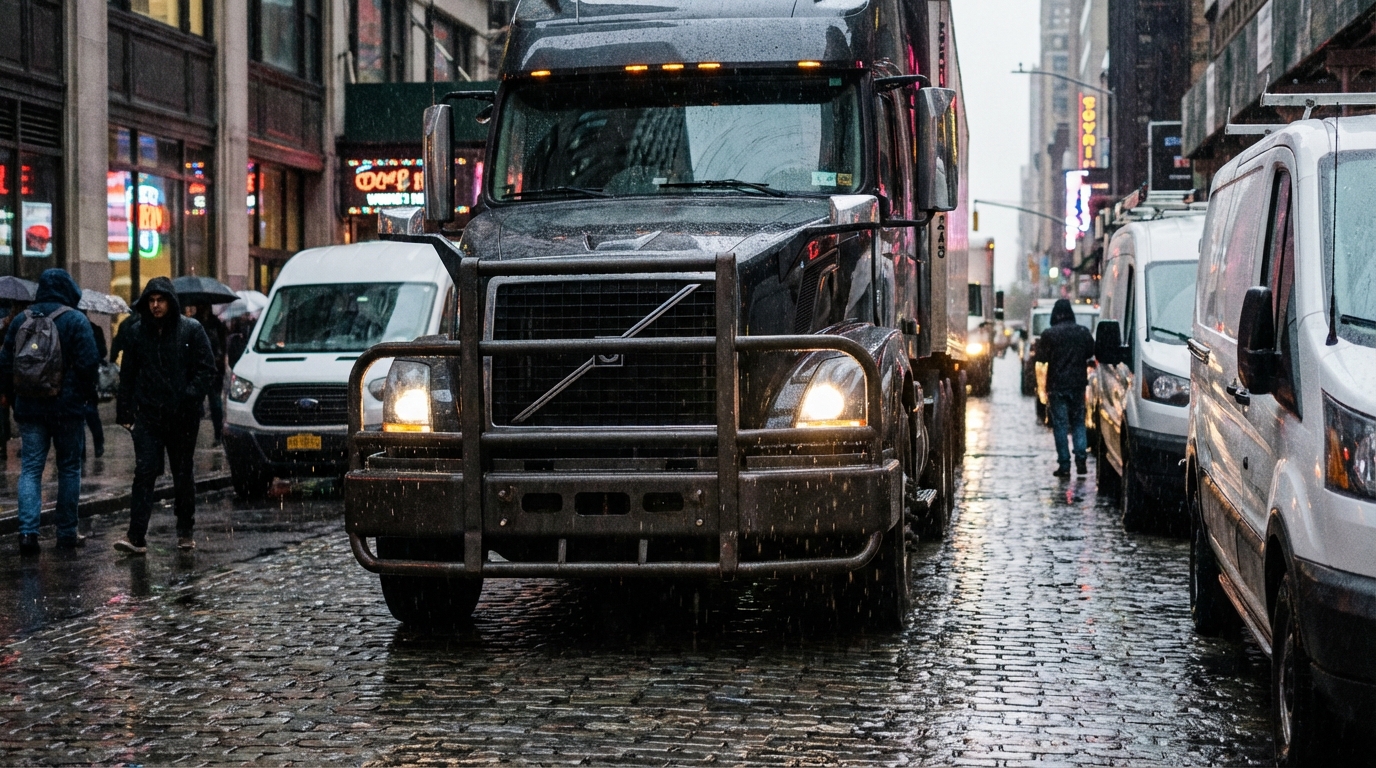
Urban environments present a high-frequency risk profile where grille guards act as a vital buffer against the daily grind of city traffic. Constant interactions with delivery vans, tight alleys, and impatient motorists make front-end contact an statistical inevitability for city-bound trucks.
Is the city more dangerous than the open highway?
Believe it or not, the frequency of “nuisance” damage is much higher in metropolitan areas than on long-haul routes. Stop-and-go traffic increases the likelihood of minor rear-end collisions that can sideline a truck for cosmetic repairs.
Do dock strikes account for most minor damage?
In tight urban distribution centers, backing into narrow docks often leads to corner-to-corner contact between vehicles. A guard with side-wrap protection prevents these encounters from crushing headlights or crumpling bumper ends.
- Alleyway maneuvering protection
- Congested traffic buffers
- Pedestrian/Cyclist safety clearance
- Loading dock impact absorption
Key Takeaway: City fleets benefit most from the “bump-and-go” resilience that a heavy-duty guard provides in high-density traffic.
| Urban Hazard | Damage Frequency | Guard Solution | |
|---|---|---|---|
| Tight Alleys | Very High | Side-Wrap Bars | |
| Traffic Taps | High | Center Section Shield | |
| Dock Misalignment | Moderate | Energy-Absorbing Mounts |
Focusing on these urban-specific risks allows fleet managers to justify protection even for trucks that never see a rural highway.
Can grille guards help extend your vehicle’s service life?
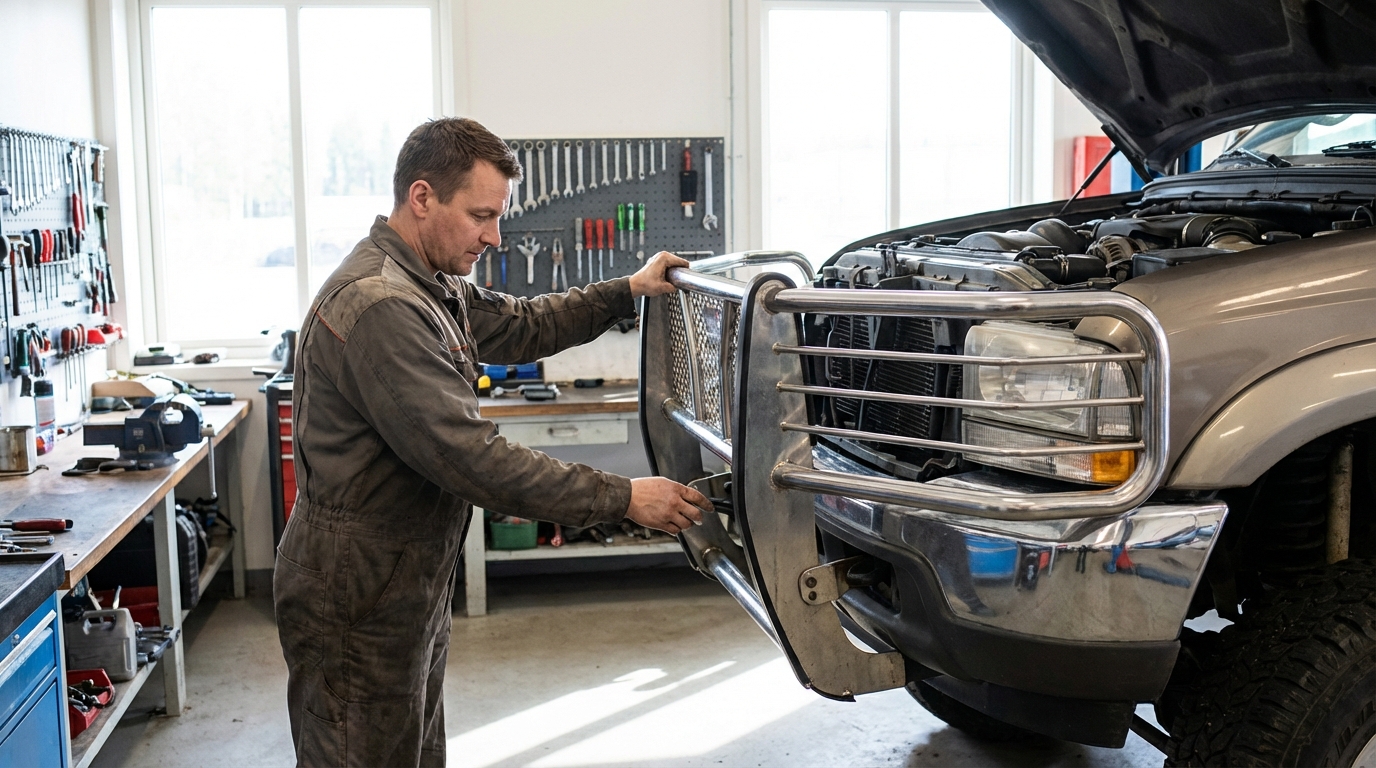
By preventing cumulative structural stress, grille guards play a direct role in extending the total years a truck can remain in active service. Equipment longevity isn’t just about the engine; it’s about maintaining the “tightness” and integrity of the entire front-end assembly.
Does front-end integrity prevent frame fatigue?
Look: constant small vibrations and minor impacts lead to micro-fractures in radiator mounts and hood hinges. A guard provides a stable outer structure that absorbs these stresses, keeping the internal components in factory-new condition for longer.
Can protection keep your truck on the road longer?
The math is simple: a truck that hasn’t undergone three major front-end rebuilds is fundamentally more reliable. You avoid the “cascading failure” effect where one repair leads to future rattles, leaks, and electrical gremlins.
- Preserve radiator mounting points
- Reduce hood hinge vibration
- Maintain air cooler seal integrity
- Protect core support structures
Key Takeaway: Long-term equipment health is the result of preventing the thousands of small “insults” the front end faces every year.
| Lifecycle Factor | Without Guard | With Brontec Guard | |
|---|---|---|---|
| Radiator Life | 3-5 Years (Exposed) | Full Vehicle Life | |
| Hood Integrity | Prone to stress cracks | Reinforced/Shielded | |
| Mounting Points | Wear from vibration | Protected from impact |
Investing in protection today ensures that your assets are still performing at peak levels when they hit the 500,000-mile mark.
How do grille guards impact your truck’s resale value?
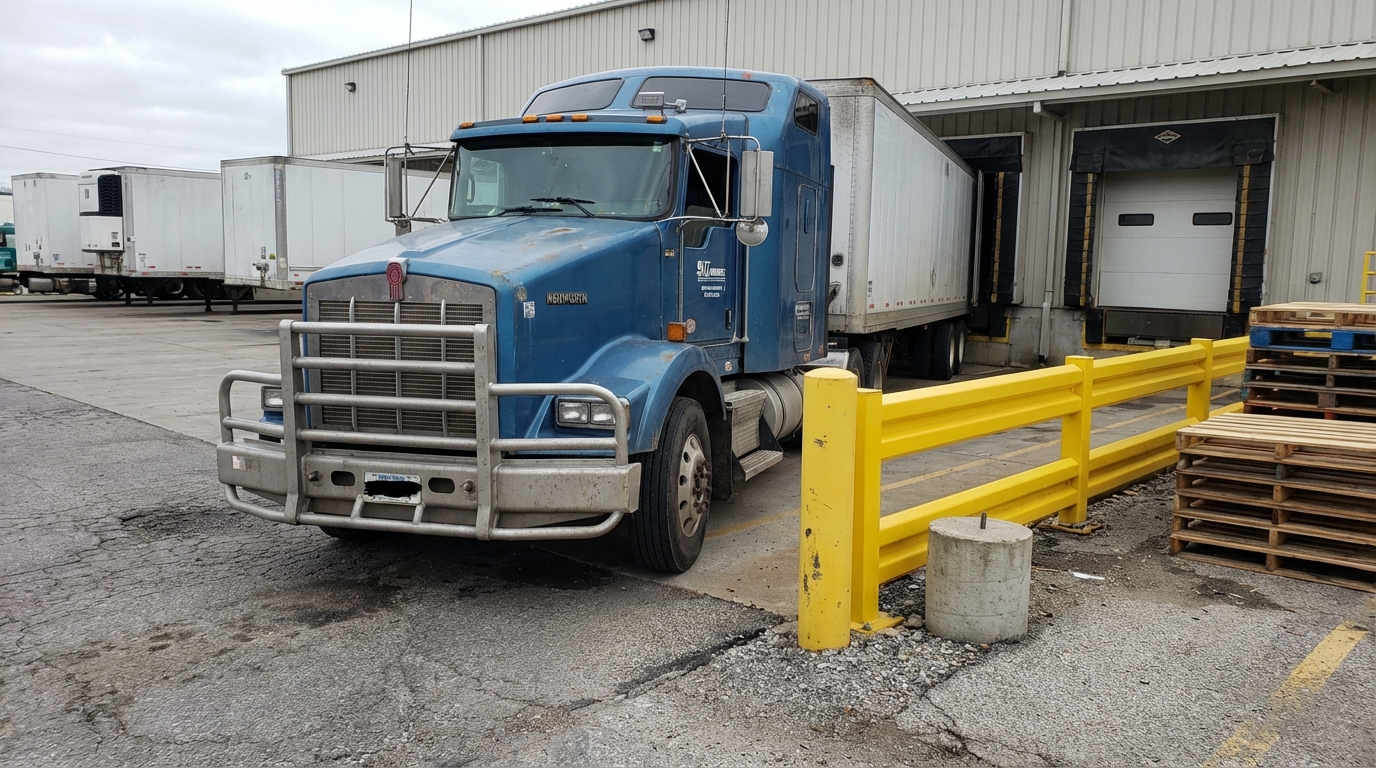
A truck equipped with professional front-end armor commands a higher price on the secondary market because it signals a history of diligent maintenance. Buyers recognize that a protected front end likely means the engine and cooling systems have been spared from impact-related trauma.
Do buyers pay more for protected equipment?
It’s a fact: a used truck with a pristine, original hood and bumper is a rare find in the Class 8 market. When your equipment looks well-cared for, you can often recoup a significant portion of the guard’s cost during the final sale.
Can you transfer your guard to a newer model?
The best part? Professional guards are often designed to outlast the truck itself. If you stay within the same make and model family, you can simply move the protection to your new unit, doubling your return on investment.
- Better “curb appeal” for buyers
- Clean insurance/accident history
- Documentation of asset care
- Transferable hardware value
Key Takeaway: Front-end protection is a “liquid” asset that retains value both as a functional component and as a resale enhancer.
| Resale Factor | Impact of Protection | Value Increase (Est.) | |
|---|---|---|---|
| Exterior Condition | No dents or fiberglass cracks | 2,000−4,000 | |
| Mechanical History | No radiator/cooler swaps | 1,500−2,500 | |
| Buyer Confidence | Signals high maintenance | Faster Sale |
Choosing to protect your front end is a savvy move that pays off at both the beginning and the end of the vehicle’s lifecycle.
Will grille guards reduce your fleet’s annual downtime?

The primary enemy of fleet profitability is unscheduled downtime, which grille guards are specifically designed to eliminate. When a truck is in the shop for a week awaiting a backordered radiator, you aren’t just losing the repair cost—you’re losing thousands in daily revenue.
What is the daily cost of a sidelined truck?
Think about it: the average Class 8 truck generates roughly
1,300to
1,500 in revenue every single day. A “minor” five-day repair actually costs you over $7,000 in lost opportunity before you even pay the mechanic.
Can you avoid towable incidents with armor?
Statistics show that fleets using heavy-duty guards can reduce towable front-end incidents by as much as 80%. Instead of waiting for a recovery vehicle in a remote area, your driver can often finish the route and schedule a simple inspection later.
- Avoid “out of service” status
- Eliminate emergency towing fees
- Maintain delivery schedule reliability
- Reduce driver idle time
Key Takeaway: Reliability is the foundation of customer trust; guards ensure that a small accident doesn’t result in a failed delivery.
| Downtime Driver | Estimated Delay | Prevention by Guard | |
|---|---|---|---|
| Radiator Leak | 3-7 Days | Impact Blocked | |
| Hood Structural | 5-10 Days | Force Distributed | |
| Headlight Fail | 1-2 Days | Housing Protected |
By keeping your trucks out of the body shop and on the highway, you maximize the earning potential of every driver in your fleet.
Are all grille guards engineered for aerodynamic flow?
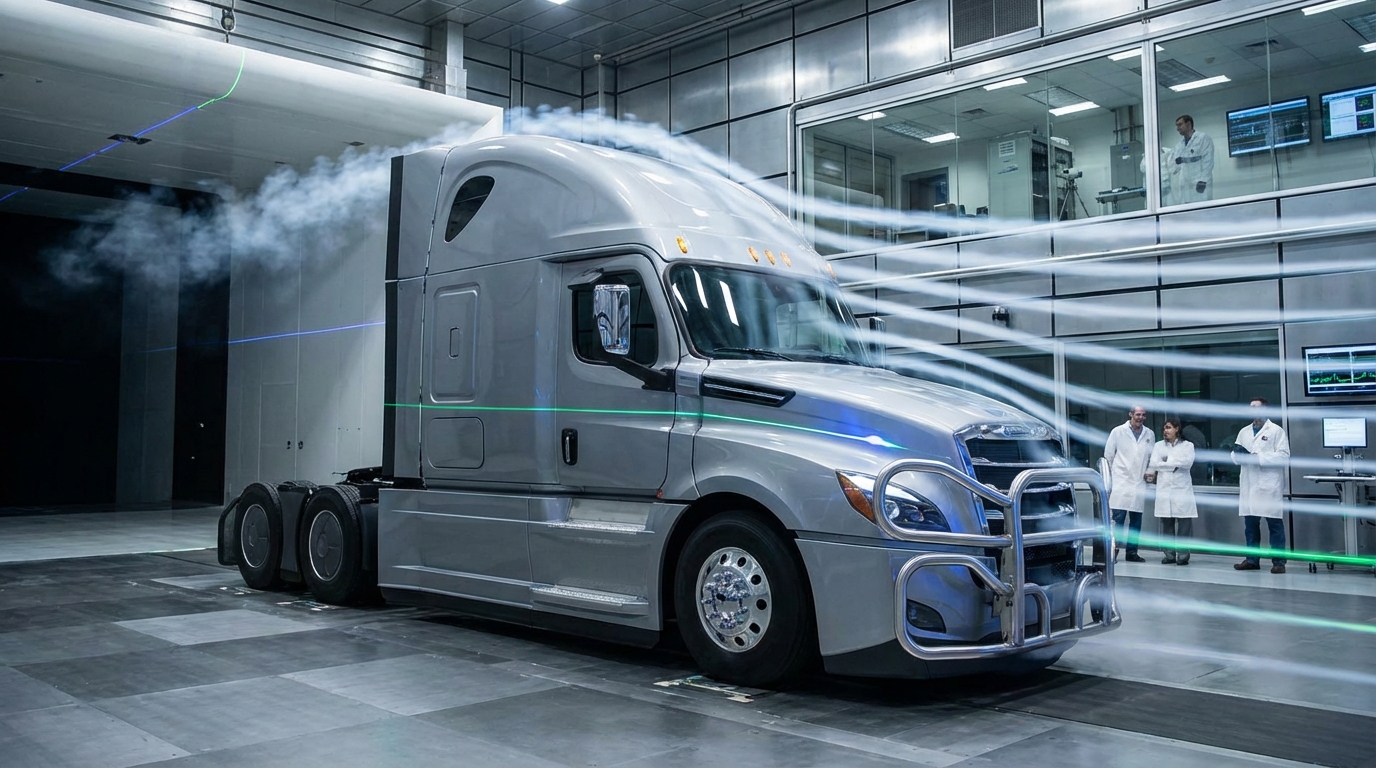
High-performance manufacturers use computational fluid dynamics and wind tunnel testing to ensure their guards do not negatively impact your operating costs. The goal is to create a “laminar flow” where air moves smoothly around the protection system rather than hitting it like a wall.
Is weight as important as wind resistance?
Make no mistake: every pound of dead weight on the front axle is a pound of payload you can’t carry. Using high-strength, lightweight materials allows you to gain maximum protection without sacrificing your legal load capacity.
Why do rounded bars perform better in tests?
Bottom line: air hates sharp corners. Round or oval tubing allows the wind to wrap around the bars, maintaining the aerodynamic “bubble” that truck manufacturers work so hard to create.
- Aero-profile mounting plates
- Slotted bars for engine cooling
- Tapered ends to reduce drag
- Low-profile hinge mechanisms
Key Takeaway: Engineering excellence ensures that you get the armor you need without the fuel penalties you fear.
| Aero Element | Functional Benefit | Efficiency Result | |
|---|---|---|---|
| Slim Profile | Minimal Cross-Section | Low Drag | |
| Strategic Venting | High Airflow to Radiator | Stable Temps | |
| Precision Fit | No Wind Noise/Vibration | Driver Comfort |
This technical approach to design proves that protection and efficiency are no longer mutually exclusive goals for modern carriers.
What is the real ROI of installing grille guards?
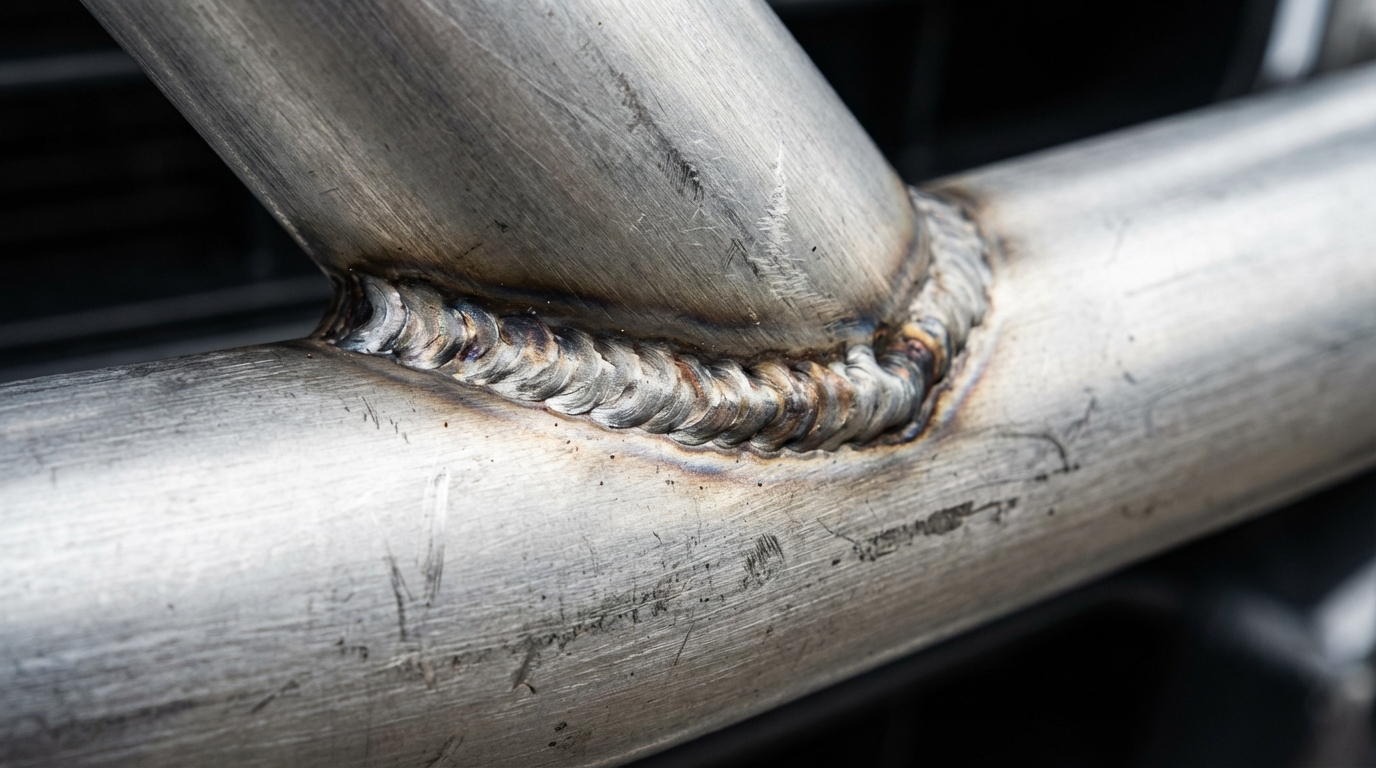
The return on investment for grille guards is often realized within the first year of operation, frequently after just a single avoided incident. When you compare the one-time purchase price to the recurring costs of accidents and downtime, the financial benefit becomes undeniable.
How quickly does the equipment pay for itself?
Look at it this way: if a
2,500guardpreventsone
12,000 repair, you have already achieved a 480% return. Even if you never have a major strike, the reduction in small “nuisance” repairs and the boost in resale value create a steady, predictable ROI.
Are you ready to view protection as an investment?
The question isn’t whether you can afford to install guards, but whether you can afford the risk of going without them. Protecting your equipment is a proactive business strategy that separates the industry leaders from the fleets that are constantly playing catch-up.
- Immediate post-impact savings
- Long-term maintenance reduction
- Enhanced asset liquidation value
- Operational continuity insurance
Key Takeaway: True ROI is measured not just in dollars saved, but in the peace of mind that comes from a resilient, protected fleet.
| ROI Metric | 1-Year Impact | 5-Year Lifecycle | |
|---|---|---|---|
| Repair Savings | $5,000+ (Avg) | $15,000+ (Avg) | |
| Downtime Avoided | 3-5 Days | 15+ Days | |
| Asset Value | Stabilized | +$3,000 Premium |
Evaluating these metrics shows that front-end protection is one of the most cost-effective upgrades available to the modern trucking industry.
The Strategic Choice for Your Fleet
Extending the life of your equipment requires more than just regular oil changes; it requires a physical commitment to protecting your assets from the unpredictable realities of the road. At Brontec, we specialize in high-durability protection systems that blend engineering precision with rugged performance. Our goal is to ensure that your trucks remain on the highway, your sensors stay calibrated, and your repair bills stay at a minimum.
By shifting your perspective from simple “deer guards” to comprehensive “equipment life extension,” you position your fleet for long-term success and higher profitability. Don’t wait for a costly accident to prove the value of protection.
Ready to safeguard your investment? Contact Us today to find the perfect protection solution for your fleet.
Frequently Asked Questions
Can I install a grille guard on a truck with ADAS radar?Yes, modern guards are designed with specific cutouts and bar spacing to ensure they do not interfere with the radar’s field of view or camera functionality.
How do grille guards affect my truck’s factory warranty?As long as the guard is a bolt-on accessory that uses existing factory mounting points and does not require frame modification, it typically has no effect on your OEM warranty.
What is the best material for a long-haul grille guard?High-strength aluminum is often the preferred choice for long-haulers as it provides a superior strength-to-weight ratio and is naturally resistant to corrosion from road salt.
Do I need special tools to remove the guard for engine service?No, most professional guards feature a “tilt” or “quick-release” mechanism that allows a single person to lower the guard in seconds without specialized tools.
Can these guards be customized to match my fleet’s branding?Absolutely, guards are available in various finishes, including polished stainless steel, chrome, and custom powder-coated colors to match your company’s aesthetic.