
Custom off-road bumpers are made through a precise multi-stage engineering cycle involving digital 3D design, high-pressure metal fabrication, and industrial-strength finishing. You often find that stock bumpers are inadequate, leaving your vehicle’s expensive front end vulnerable to wildlife strikes or trail obstacles. This structural weakness can lead to devastating repair costs and safety risks during your off-road excursions. By choosing a custom truck bumper manufacturer, you ensure your fleet or personal vehicle is equipped with a mechanical shield designed for maximum impact resistance.
How does a custom truck bumper manufacturer start the design?
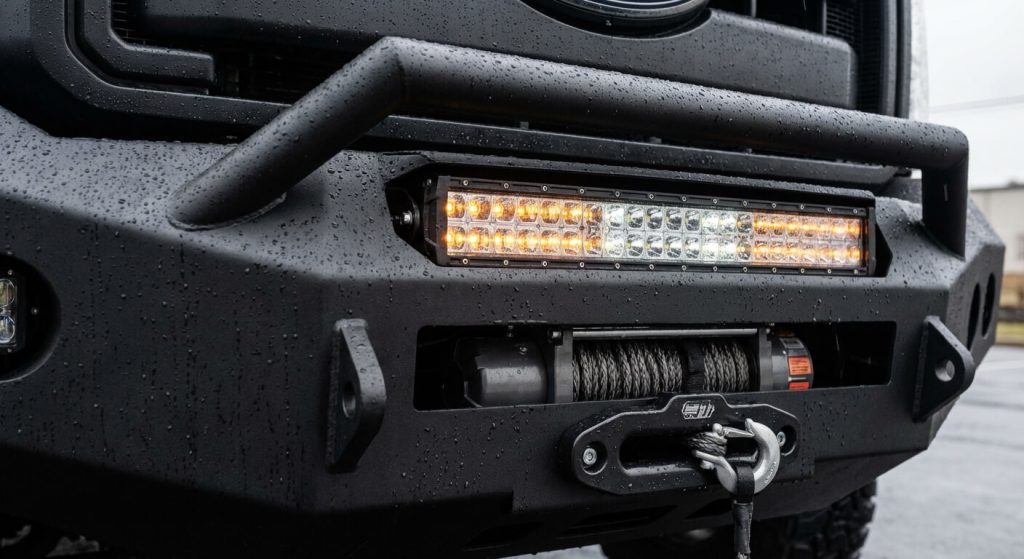
A custom truck bumper manufacturer starts the process by performing a high-resolution 3D laser scan of the vehicle’s front-end geometry. This ensures that every mounting bracket and sensor port aligns perfectly with the factory frame. You need this level of precision to maintain the vehicle’s safety systems while adding superior protection.
Why is 3D scanning essential for fitment?
3D scanning allows the engineering team to create a digital twin of your truck. This eliminates the guesswork associated with manual measurements. You get a bumper that follows the body lines of your vehicle with zero gap issues.
Think about it:
- Captures millimeter-accurate frame data.
- Maps internal cooling and sensor clearances.
- Identifies ideal structural mounting points.
What role does CAD software play?
Computer-Aided Design (CAD) software transforms the raw scan data into a functional blueprint. You can simulate stress points and impact zones before a single piece of metal is cut. This phase optimizes the balance between weight and structural integrity.
Look at it this way:
- Enables virtual impact simulations.
- Automates material usage for cost efficiency.
- Finalizes aesthetic design with functional venting.
Key Takeaway: Digital precision during the design phase is the only way to guarantee a true bolt-on fit and long-term durability.
| Design Element | Technology Used | Primary Benefit |
|---|---|---|
| Surface Mapping | 3D Laser Scanning | Millimeter Accuracy |
| Structural Build | CAD Modeling | Stress Distribution |
| Fitment Check | Virtual Assembly | Zero-Drill Install |
The following analysis details how these digital blueprints translate into a physical product through a rigorous manufacturing workflow.
What is the process for a custom truck bumper manufacturer?
The process for a custom truck bumper manufacturer follows a linear path from raw material intake to final quality inspection. Each stage is designed to add strength and refined aesthetics to the heavy-gauge steel or aluminum. You benefit from a workflow that prioritizes structural longevity over mass production speed.
How are the manufacturing stages organized?
Every stage of the build is handled by specialized stations to ensure high-quality standards. You will see the material move from cutting and bending to welding and coating. This compartmentalized approach prevents cross-contamination and ensures expert focus at each step.
Simply put:
- Station 1: Precision laser cutting.
- Station 2: CNC press brake bending.
- Station 3: Structural AWS welding.
Why is a linear workflow important?
A linear workflow ensures that every component is prepared correctly for the next phase. You won’t have to worry about fitment issues during assembly if the cutting and bending are verified early. This systematic approach is what allows for a 100% fitment guarantee.
Here is the deal:
- Reduces waste and manufacturing errors.
- Ensures consistent weld penetration.
- Facilitates multi-stage quality control.
Key Takeaway: A structured manufacturing process ensures that each bumper meets strict heavy-duty standards for fleet protection.
| Process Stage | Core Activity | Result |
|---|---|---|
| Fabrication | Laser & Bending | Precise Components |
| Union | Certified Welding | Structural Integrity |
| Finishing | Coating & QC | Environmental Resistance |
This workflow ensures that your vehicle protection starts with a foundation of high-grade engineering and elite craftsmanship.
How does a custom truck bumper manufacturer cut raw steel?
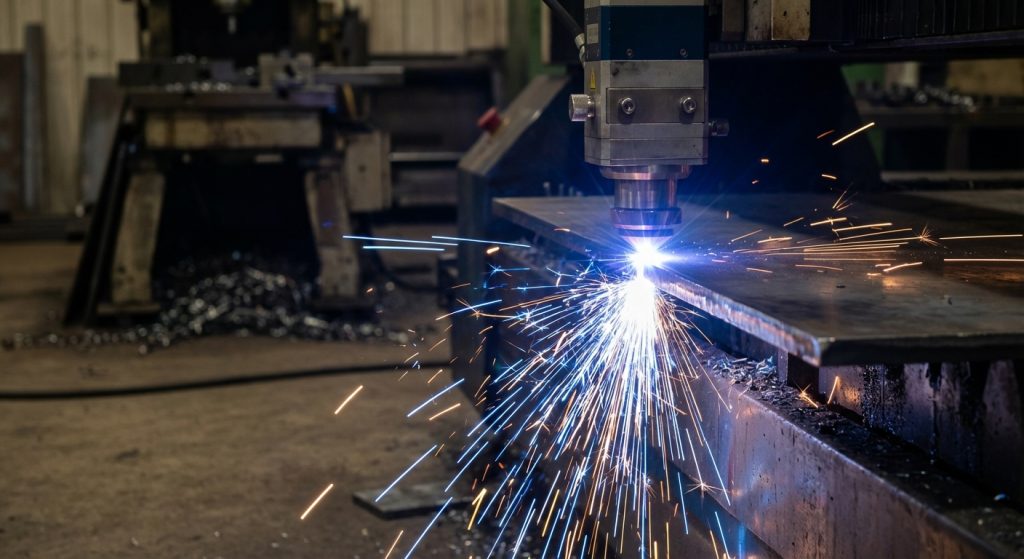
A custom truck bumper manufacturer cuts raw steel using high-powered fiber laser systems to achieve clean, burr-free edges. You need these precise cuts to ensure that the individual plates fit together perfectly for welding. By using a custom truck bumper manufacturer, you gain access to equipment that maintains ±0.5mm tolerances.
What are the benefits of fiber laser cutting?
Fiber lasers provide the highest level of detail for light ports and winch cutouts. You won’t find the jagged edges or heat distortion typical of older plasma cutting methods. This precision keeps the steel’s structural integrity intact from the start.
But wait, there’s more:
- No mechanical stress on the metal.
- Perfect alignment for sensor mounting holes.
- High-speed production for faster lead times.
How is material waste minimized?
Software nesting allows the operator to fit as many parts as possible onto a single metal sheet. You save money on materials because the laser can cut intricate shapes with minimal spacing. This efficiency is passed down to you in the form of competitive pricing.
It gets better:
- Maximizes sheet utilization.
- Reduces industrial scrap footprint.
- Lowers the overall part cost.
Key Takeaway: Precision cutting is the baseline for a professional bumper that looks as good as it performs.
| Cutting Spec | Fiber Laser Standard | Impact on Product |
|---|---|---|
| Edge Quality | Smooth / Burless | Superior Weld Surface |
| Accuracy | ±0.5mm | Perfect Hole Alignment |
| Heat Distortion | Minimal | No Metal Weakening |
Analyzing the cutting phase shows that high-tech machinery is required to meet modern vehicle fitment expectations.
Is CNC bending vital for a custom truck bumper manufacturer?
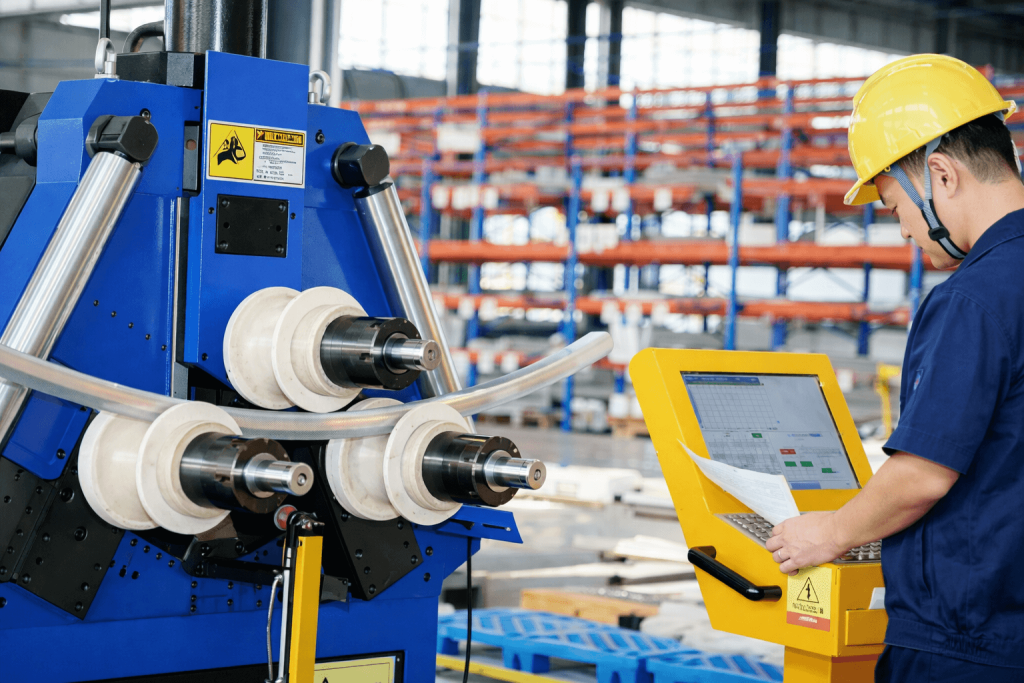
CNC bending is vital for a custom truck bumper manufacturer because it creates strength through geometry rather than just relying on welded joints. You will notice that a single piece of bent steel is significantly more resilient than two pieces joined at an angle. This process allows the bumper to wrap around your vehicle’s contours while maintaining maximum rigidity.
How does a press brake work?
The CNC press brake uses tons of hydraulic pressure to force the steel plate into a specific die. You get repeatable angles that are identical across every bumper in a production run. This consistency is crucial for fleet managers who need standardized protection.
Look at it this way:
- Ensures uniform angles for aerodynamics.
- Creates structural “ribs” in the shell.
- Reduces the number of necessary welds.
Why are radius bends important?
Radius bends allow the bumper to absorb impact energy more effectively than sharp corners. You need these smooth transitions to prevent the metal from cracking under extreme stress. They also provide a more refined, modern look to your heavy-duty equipment.
In short:
- Distributes impact force evenly.
- Enhances the bumper’s aesthetic appeal.
- Prevents localized stress fractures.
Key Takeaway: Geometric strength created by CNC bending is the secret to a bumper that survives heavy-impact collisions.
| Bending Type | Machine | Structural Benefit |
|---|---|---|
| Angle Bending | CNC Press Brake | Frame Rigidity |
| Radius Bending | Mandrel Tube | Impact Dispersion |
| Compound Bending | Hydraulic Brake | Vehicle Contour Match |
The following section explains how these bent components are unified into a single, unbreakable protective unit.
Why is welding quality key for a custom truck bumper manufacturer?
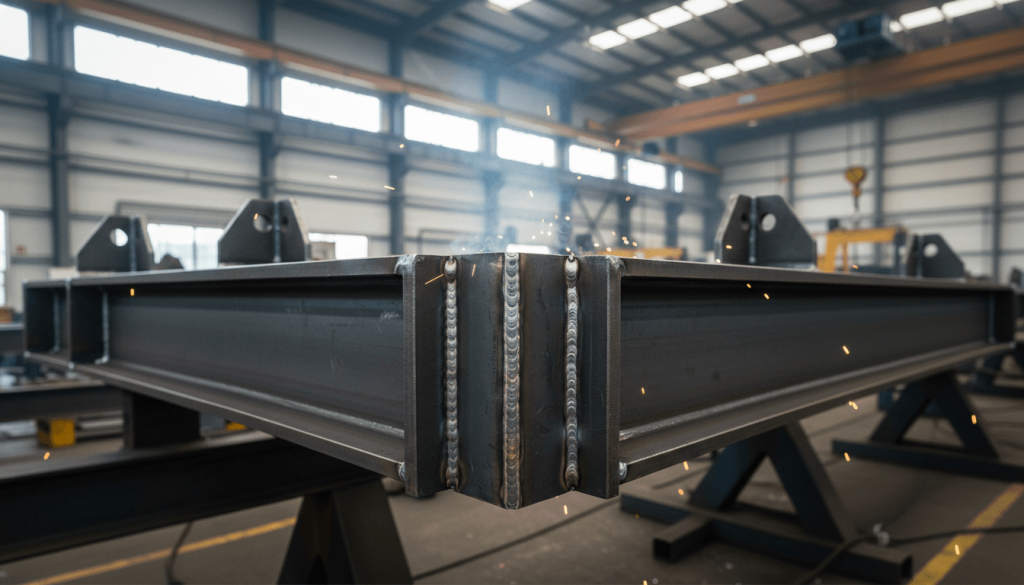
Welding quality is key for a custom truck bumper manufacturer because the joints are the primary points of failure during a recovery or collision. You need deep-penetration welds that fuse the metal plates into a monolithic structure. A professional custom truck bumper manufacturer employs AWS-certified welders to ensure your safety isn’t compromised by poor workmanship.
What is the advantage of MIG welding?
Metal Inert Gas (MIG) welding allows for fast, high-strength bonds on thick steel plates. You get a clean bead that requires minimal cleanup and provides excellent structural integrity. This is the industry standard for heavy-duty off-road gear.
Look at it this way:
- Provides high-speed structural bonding.
- Deep penetration for maximum strength.
- Consistent bead profile for durability.
Why are internal gussets welded?
Internal gussets are hidden reinforcements that prevent the bumper from twisting under winch loads. You need these welded supports to ensure the bumper stays true even during extreme recovery angles. This “invisible” work is what defines a truly heavy-duty product.
The best part?
- Bolsters winch mount stability.
- Prevents frame-mount deformation.
- Extends the lifespan of the bumper.
Key Takeaway: Expert welding by certified professionals transforms individual steel plates into a life-saving safety device.
| Weld Type | Application | Performance Metric |
|---|---|---|
| Structural MIG | Main Shell Seams | 100% Penetration |
| Internal Gusset | Support Brackets | Rigidity Under Load |
| Fillet Weld | Accessory Mounts | Vibration Resistance |
This structural foundation must then be refined to ensure the bumper remains safe to handle and ready for coating.
How does a custom truck bumper manufacturer finish the metal?
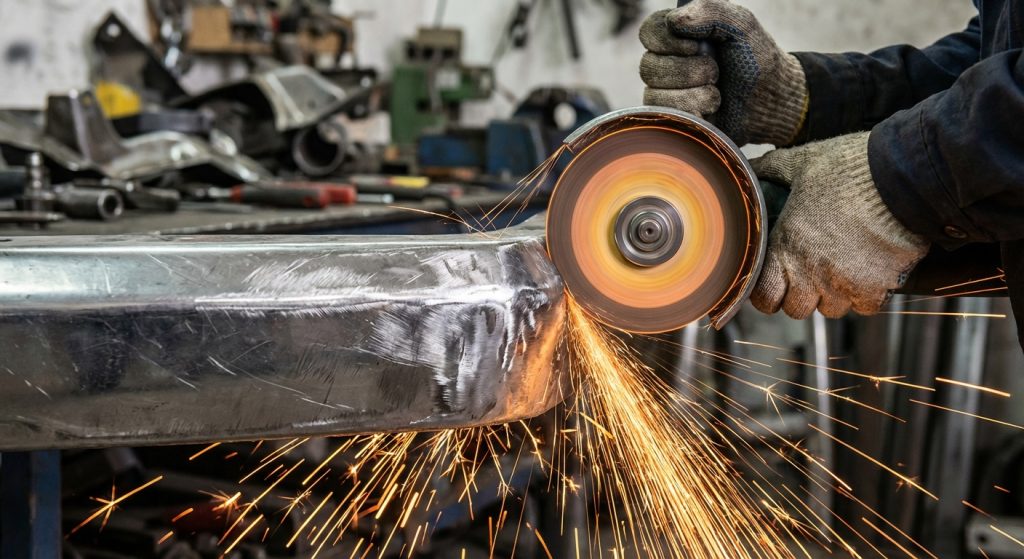
A custom truck bumper manufacturer finishes the metal by using industrial grinding wheels to smooth out weld seams and deburr sharp edges. You need a flush surface to ensure the subsequent coating adheres perfectly to the steel. This stage is where the raw fabrication is transformed into a sleek, retail-ready product that won’t cut your hands during installation.
Why is deburring a priority?
Deburring removes small metal fragments and sharp corners left over from the cutting and welding phases. You want a safe product that is easy to handle and maintain. Proper grinding also prevents the “thinning” of powder coating on sharp edges, which is where rust usually starts.
Make no mistake:
- Ensures user safety during install.
- Provides a professional, smooth finish.
- Improves long-term coating adhesion.
How are surfaces leveled for aesthetics?
Experienced grinders level the weld crowns until they are flush with the surrounding metal. You get a bumper that looks like it was cast from a single piece of steel. This attention to detail is a hallmark of high-end custom manufacturing.
Here is the deal:
- Creates a seamless “one-piece” look.
- Prepares the metal for uniform coating.
- Removes surface imperfections and slag.
Key Takeaway: Precision grinding is essential for both the professional appearance and the rust-resistance of the final bumper.
| Finishing Tool | Purpose | Final Result |
|---|---|---|
| Flap Disc | Surface Leveling | Seamless Seams |
| Wire Wheel | Slag Removal | Clean Metal Surface |
| Hand File | Edge Deburring | User Safety |
Once the metal is smooth and safe, it must be thoroughly cleaned to prepare for its defensive outer layer.
Is cleaning a priority for a custom truck bumper manufacturer?
Cleaning is a top priority for a custom truck bumper manufacturer because any leftover oil, mill scale, or dust will cause the final finish to fail. You must have a chemically pure surface to ensure that the protective coating bonds at a molecular level. By contacting a custom truck bumper manufacturer, you ensure your equipment goes through an industrial-grade cleaning process.
What is the role of sandblasting?
Sandblasting uses high-pressure abrasive media to strip away surface contaminants and create a “profile” on the metal. You get a textured surface that gives the powder coating something to grab onto. This mechanical cleaning is far superior to simple chemical wiping.
In short:
- Strips mill scale and oxidation.
- Creates a high-adhesion surface.
- Reaches into every weld crevice.
How do chemical pre-treatments help?
Manufacturers often use phosphate baths to create a corrosion-resistant layer before the final coating. You benefit from this secondary defense because it prevents rust from spreading even if the bumper is scratched. This dual-layer approach is critical for northern climates.
Simply put:
- Provides a chemical rust barrier.
- Neutralizes surface acids and oils.
- Increases coating lifespan significantly.
Key Takeaway: Industrial cleaning is the “invisible” step that determines if your bumper’s finish will last five years or five months.
| Cleaning Stage | Method | Core Benefit |
|---|---|---|
| Degreasing | Chemical Wash | Removes Factory Oils |
| Abrasive | Sandblasting | Maximizes Adhesion |
| Pre-Treatment | Phosphate Bath | Active Corrosion Inhibition |
A clean surface is now ready for the most durable finishing method available in the automotive industry.
Why does a custom truck bumper manufacturer use powder coating?
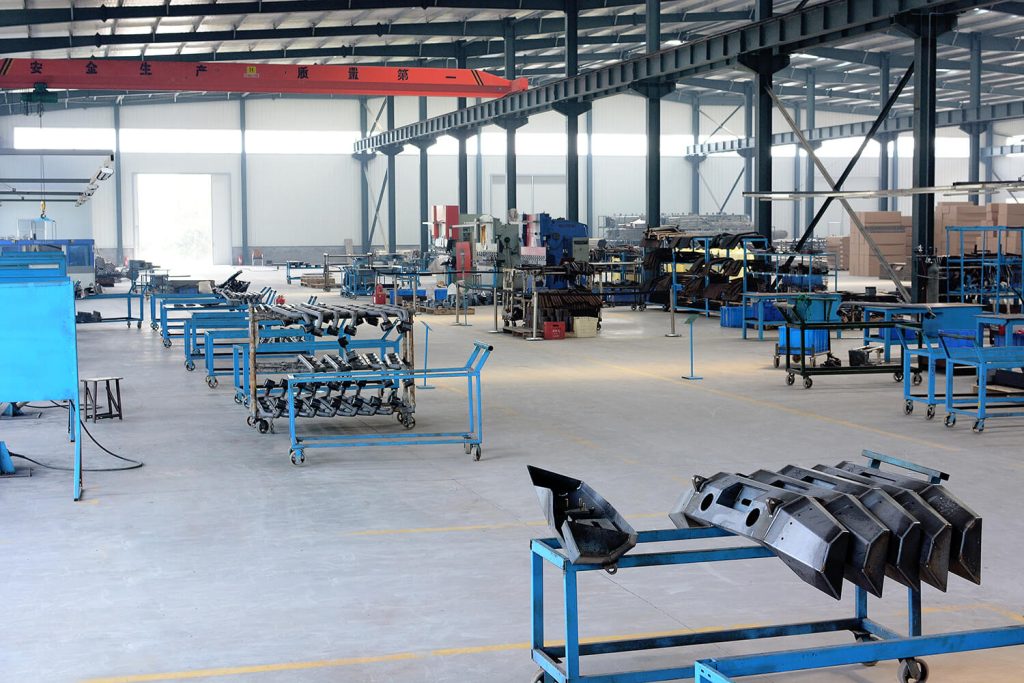
A custom truck bumper manufacturer uses powder coating because it provides a much thicker, more resilient barrier than traditional liquid paint. You need a finish that can withstand the constant bombardment of rocks, salt, and debris found on off-road trails. By working with a custom truck bumper manufacturer, you get a product baked at over 400 degrees to ensure a permanent bond.
How is the powder applied?
The powder is applied using an electrostatic charge that pulls the particles into every corner and interior cavity. You get an even coat that is impossible to achieve with a spray can. This ensures that hidden surfaces are just as protected as the visible ones.
The best part?
- Uniform thickness across the whole unit.
- Reaches deep into light and winch ports.
- Highly resistant to UV fading and chalking.
What happens during the curing process?
The bumper enters a massive industrial oven where the powder melts and flows into a hard, plastic-like shell. You get a finish that is incredibly difficult to chip or scratch. This thermal bond is what keeps your bumper looking new after years of hard use.
Think about it:
- Creates an unbreakable thermal bond.
- Hardens the finish against impacts.
- Provides a high-end, professional look.
Key Takeaway: Powder coating is the gold standard for protecting off-road equipment from the harsh North American environment.
| Coating Attribute | Powder Coat | Liquid Paint |
|---|---|---|
| Impact Resistance | Extremely High | Low to Moderate |
| UV Protection | High | Moderate |
| Surface Adhesion | Molecular Bond | Surface Only |
With the protective shell complete, the bumper moves to the final stage where all functional accessories are integrated.
How does a custom truck bumper manufacturer handle assembly?
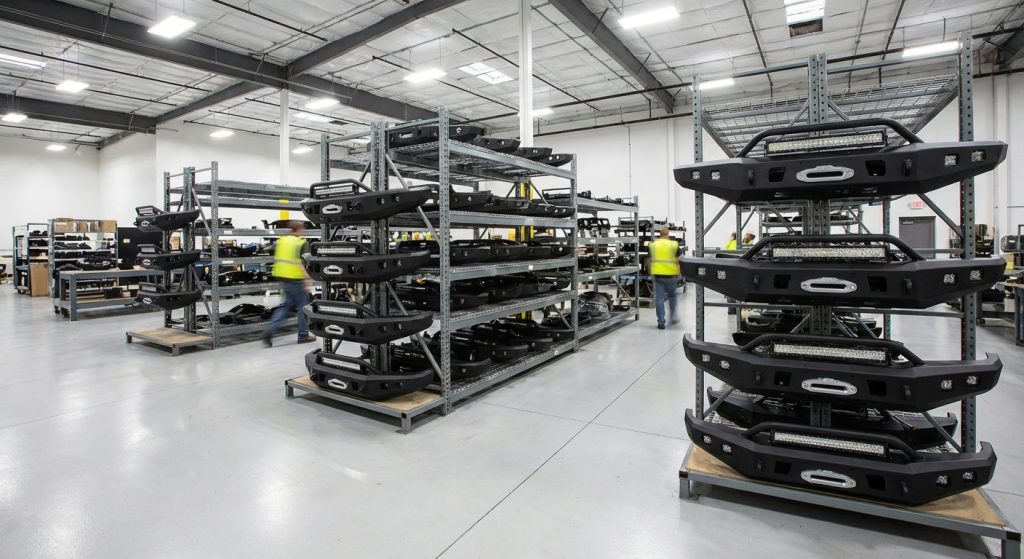
A custom truck bumper manufacturer handles final assembly by integrating hardware, lighting, and reinforcement brackets into the finished shell. You receive a complete unit that is ready for immediate installation onto your vehicle. This stage is where the raw metal shell truly becomes a functional tool for your off-road adventures.
What components are added during assembly?
The assembly team installs heavy-duty winch plates, D-ring mounts, and auxiliary light pods. You want a product that arrives with all the necessary hardware to avoid trips to the hardware store. Every bolt is torqued to spec to ensure nothing rattles loose on the trail.
But wait, there’s more:
- Integrated LED light bar mounting.
- Pre-drilled winch and shackle points.
- High-grade mounting bolts and washers.
Why is an assembly check performed?
Every accessory is checked for proper alignment and clearance before the bumper is crated for shipping. You won’t have to worry about lights not fitting or winch bolts being misaligned. This final manual check ensures that the “custom” in the name truly means perfection.
It gets better:
- Verifies all accessories fit as designed.
- Ensures all hardware is included in the kit.
- Performs a final visual aesthetic review.
Key Takeaway: Final assembly is the unification of protection and functionality, ensuring your bumper is trail-ready from day one.
| Assembly Item | Importance | Benefit |
|---|---|---|
| Winch Plate | High | Safe Recovery Points |
| Light Pods | Moderate | Night Trail Visibility |
| Mounting Kit | Critical | Safe & Secure Installation |
The final barrier between the factory and the customer is a rigorous verification of the entire build process.
Does a custom truck bumper manufacturer perform inspections?
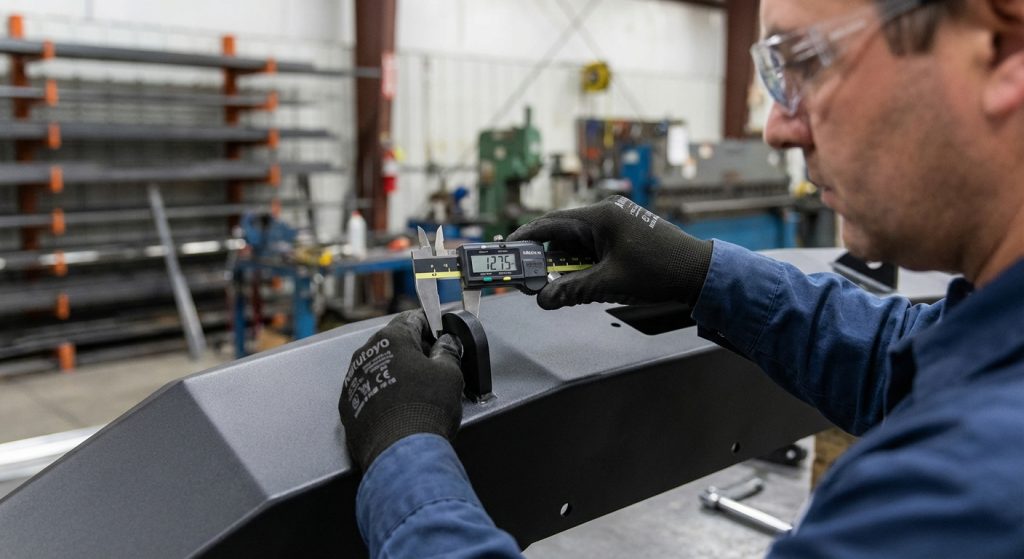
A custom truck bumper manufacturer performs multi-stage inspections using precision tools like digital calipers and alignment jigs to verify structural integrity. You deserve a product that has been scrutinized by a quality control expert for even the smallest defects. This final gate ensures that every unit leaving the facility meets the high-performance standards required for heavy-duty protection.
How are mounting points verified?
Quality control teams use master jigs that mimic your truck’s frame to ensure the bumper will bolt on without any modification. You can be confident that the ±0.5mm tolerance was maintained throughout the fabrication process. This “first-time-fit” guarantee is what separates professional builders from hobbyists.
You might be wondering:
- Are the bolt holes perfectly centered?
- Does the bumper sit level on the frame?
- Are all sensor ports unobstructed?
What is the role of visual inspection?
A final visual inspection checks for any powder coating imperfections or weld inconsistencies. You want a bumper that is aesthetically flawless as well as structurally superior. This is the last chance for the manufacturer to ensure their brand reputation is upheld with every shipment.
Simply put:
- Checks for chips or thin coating spots.
- Verifies all weld beads are uniform.
- Confirms all ordered accessories are present.
Key Takeaway: Rigorous quality control is the final assurance that your bumper will perform as a life-saving device when you need it most.
| Inspection Point | Method | Goal |
|---|---|---|
| Bolt Alignment | Master Fitment Jig | 100% Fitment Guarantee |
| Weld Integrity | Visual / NDT | Structural Safety |
| Finish Quality | Mil-Thickness Gauge | Maximum Rust Protection |
The evidence shows that professional manufacturing creates a level of safety and reliability that stock equipment simply cannot match.
Conclusion
The journey from a digital concept to a heavy-duty bumper involves elite engineering, precision fabrication, and industrial-grade finishing. By choosing a professional manufacturer, you aren’t just buying a piece of steel; you are investing in a safety system designed to protect your vehicle and its occupants from the unpredictable nature of the road. Don’t leave your truck’s most vulnerable areas exposed to stock inadequacies that lead to downtime and costly repairs. Take the first step toward superior vehicle protection and contact us today to find the perfect shield for your off-road or fleet requirements.
Frequently Asked Questions
Can I install a custom bumper by myself at home?
Yes, most custom bumpers are designed for a direct bolt-on installation using factory mounting points. However, because steel bumpers can weigh over 200 pounds, it is highly recommended that you have at least one assistant or a floor jack to help support the unit while you secure the bolts.
What is the best material for an off-road bumper?
Steel is generally considered the best for heavy-duty protection and recovery due to its extreme strength and ability to take hits without cracking. Aluminum is a better choice if you are concerned about weight savings and natural corrosion resistance, though it may not be as resilient during high-speed impacts with wildlife.
Will a new bumper affect my truck’s fuel economy?
You may notice a slight decrease in fuel economy due to the added weight and changed aerodynamics of a heavy-duty bumper. To mitigate this, many manufacturers design low-profile or aluminum options that provide protection with minimal impact on your vehicle’s performance and efficiency.
Can I still use my parking sensors with a custom bumper?
A professional manufacturer includes precision-cut sensor ports that are designed to house your factory parking and proximity sensors. You should verify that the bumper you select is specifically listed as “sensor-compatible” for your exact vehicle year and trim level to ensure they function correctly.
How do I maintain the finish on my powder-coated bumper?
The best way to maintain your bumper is to wash it regularly with mild soap and water to remove road salt and mud. If you notice a deep scratch that goes through to the metal, you should clean the area and apply a small amount of matching touch-up paint to prevent rust from forming under the coating.