
A single animal strike or front-end impact can turn a working truck into days of downtime and thousands of dollars in unexpected repairs. For off-road and job-site vehicles, the real risk isn’t the impact itself — it’s choosing the wrong bumper or supplier before it happens. This off-road bumper sourcing guide explains how to evaluate materials, structural design, and manufacturing quality so you can select protection that performs reliably in real-world conditions.
High-quality off-road bumpers are not just products — they are engineered through a precise multi-stage process involving CAD design, CNC laser cutting, structural welding, and industrial-grade protective finishing. Understanding how these stages affect strength, fitment, and durability is essential when sourcing a bumper that can withstand real-world impacts and keep your vehicle operational.
Why start with an off-road bumper sourcing guide?
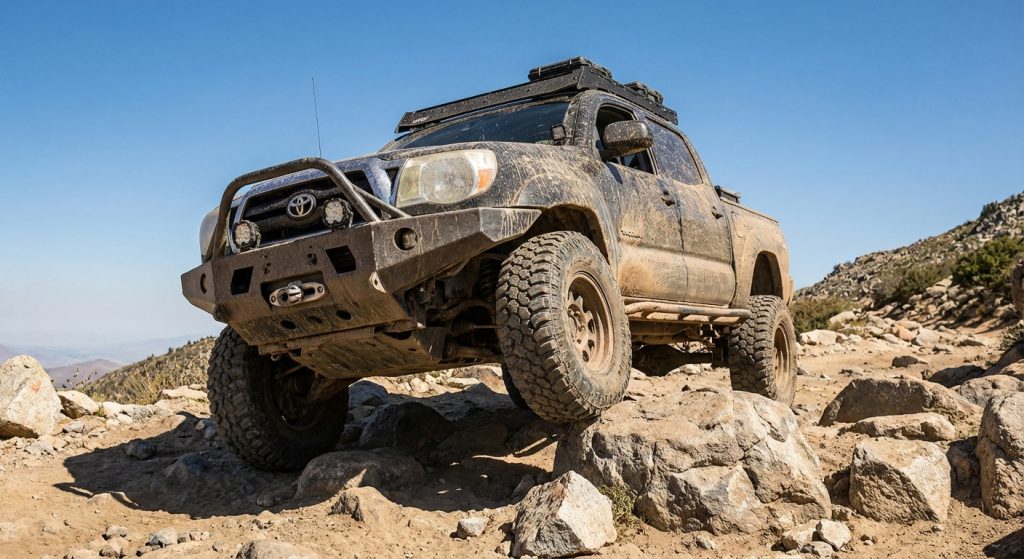
You need a sourcing guide to identify quality indicators and ensure your vehicle receives maximum protection against wildlife and terrain hazards. Understanding the manufacturing stages helps you distinguish a premium structural component from a mere decorative accessory. This off-road bumper sourcing guide serves as your roadmap for balancing rugged protection needs with specific vehicle dimensions.
Identifying vehicle vulnerabilities
Standard factory bumpers often lack the structural integrity required for serious trail work or commercial hauling. One minor collision can lead to thousands in repair costs and significant downtime for your operation.
Here is the kicker:
- Factory bumpers are designed for aesthetics and minor low-speed impacts.
- Wildlife strikes can bypass thin materials and damage the radiator.
- Heavy-duty replacements protect the engine cooling system and frame.
Custom-engineered solutions ensure your vehicle remains operational even after a significant impact in the field.
Key Takeaway: Starting with a strategic guide ensures that you select a bumper built for real-world survival rather than just visual appeal.
| Stage | Focus | Outcome |
|---|---|---|
| Initial Assessment | Vulnerability Mapping | Identification of critical impact zones |
| Component Selection | Heavy-Duty Specs | Choosing materials that withstand wildlife strikes |
This initial planning phase establishes the protection requirements needed for your specific environment.
Is design the first step in this sourcing guide?
Yes, every build begins in a digital environment where engineers use CAD software to ensure a 100% fitment guarantee. This digital stage allows for virtual testing of airflow and ground clearance before any metal is ever cut. Following an off-road bumper sourcing guide helps you appreciate the meticulous drafting required to align every bolt hole with your truck’s chassis.
The power of CAD modeling
Modern manufacturing relies on sophisticated modeling to map out every plate, gusset, and mounting point. This virtual assembly prevents fitment issues that often plague lower-quality, hand-measured products.
But wait, there’s more:
- Digital simulations test for interference with vehicle sensors and lights.
- Designers optimize angles for maximum approach and departure clearance.
- Precision mapping ensures the bumper integrates seamlessly with OEM frames.
By focusing on “form following function,” engineers create a product that enhances vehicle performance while providing a precision fit.
Key Takeaway: Digital design is the foundation of quality, ensuring that your heavy-duty bumper requires no drilling or welding during final installation.
| Design Element | Method | Benefit |
|---|---|---|
| Frame Mapping | Digital Prototyping | Eliminates installation errors and chassis drilling |
| Airflow Testing | Computational Analysis | Ensures engine cooling remains optimal under load |
Virtual precision at this stage dictates the reliability of the physical product when it reaches the production floor.
How does material choice impact our sourcing guide?
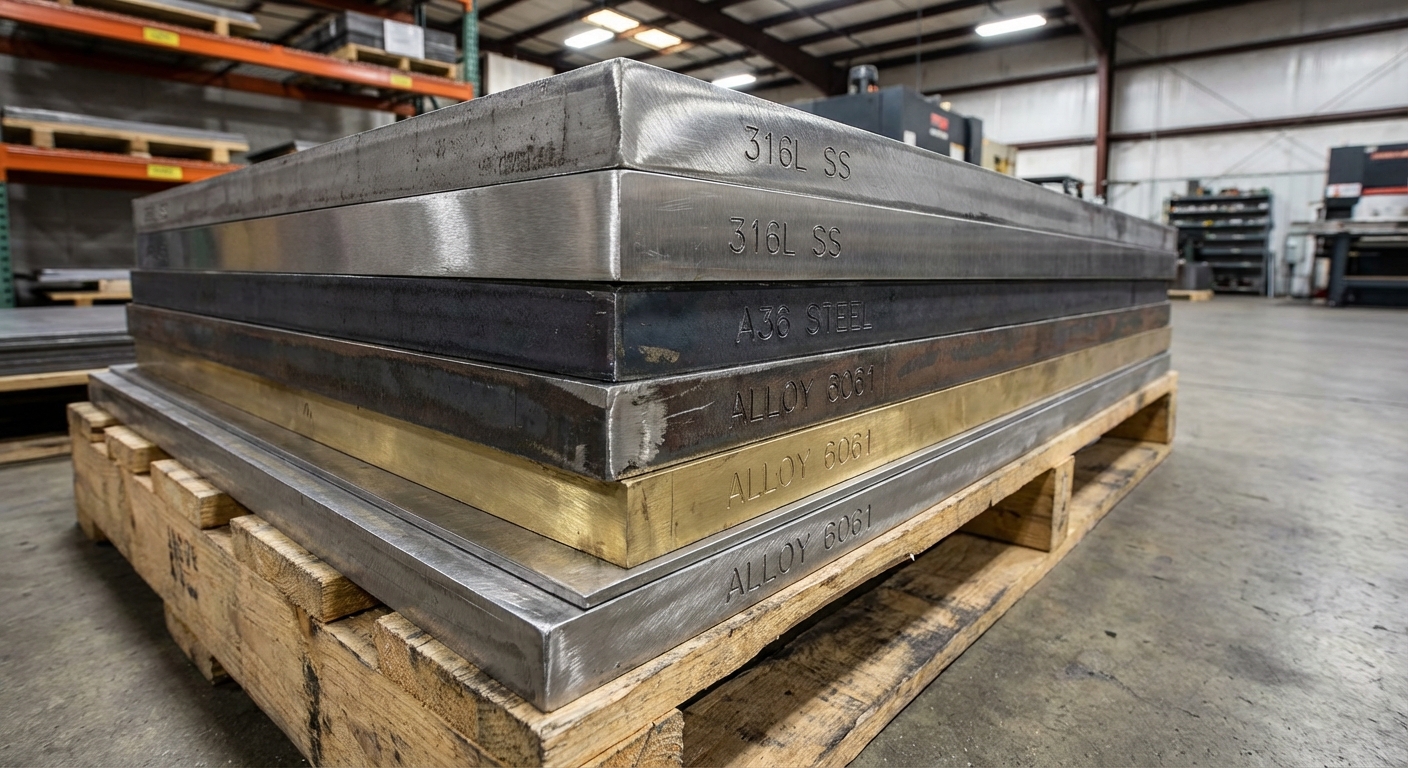
The choice between steel and aluminum dictates the bumper’s impact resistance and the overall payload capacity of your truck. High-grade steel provides the density needed for extreme impact protection, while aluminum offers a lightweight alternative for specific fleets. Using an off-road bumper sourcing guide ensures you select the alloy and thickness best suited for your terrain and hauling needs.
Steel versus aluminum performance
Steel is the industry standard for maximum protection and withstanding high winch forces during recovery. Aluminum alloys are often preferred for lighter trucks to maintain payload capacity without sacrificing front-end rigidity.
Let’s dive deeper:
- Steel provides superior durability during high-speed animal strikes.
- Aluminum reduces front-axle weight to improve fuel economy and tire wear.
- Most heavy-duty bumpers utilize 5mm to 8mm plate for primary structures.
Selecting the right material involves balancing the need for ultimate strength with the weight limitations of your vehicle’s suspension.
Key Takeaway: Material selection is a strategic decision that affects everything from collision survival to the long-term maintenance costs of your vehicle.
| Material | Primary Advantage | Recommended Use Case |
|---|---|---|
| Heavy-Duty Steel | Maximum Impact Strength | Wildlife areas and heavy winch recovery |
| Aluminum Alloy | Weight Savings | Light-duty fleets and payload-sensitive tasks |
Identifying the correct alloy during the sourcing process prevents premature wear on your vehicle’s front suspension components.
Why is precision cutting vital in a sourcing guide?
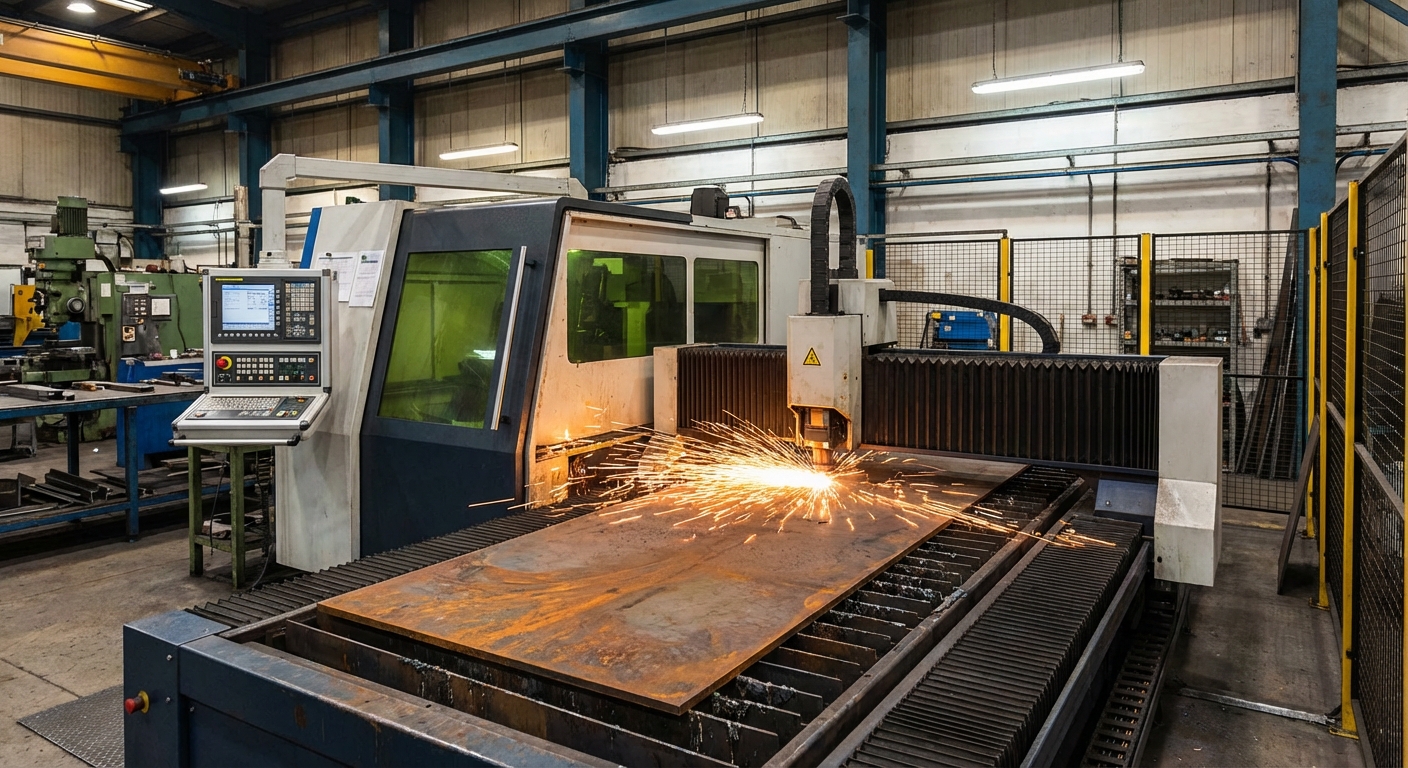
Precision cutting using CNC fiber lasers ensures that every component has clean edges and perfectly aligned mounting points for a professional fit. Fiber laser systems cut through thick steel plates with extreme accuracy, leaving burr-free edges that facilitate stronger weld penetration. Your off-road bumper sourcing guide should prioritize CNC technology over manual cutting to guarantee repeatability across large fleet orders.
The role of CNC technology
Traditional manual cutting cannot match the repeatability and edge quality required for heavy-duty protection products. CNC press brakes then allow for complex bends with tolerances of ±0.5mm to follow vehicle bodywork.
You might be wondering:
- How do these clean edges affect the final strength of the bumper?
- Why is repeatability so important for commercial fleet managers?
- Does precision cutting reduce the time required for final assembly?
Clean, laser-cut edges allow the welder to create a stronger bond by ensuring parts fit together with zero gaps.
Key Takeaway: CNC precision ensures that every bumper produced is a perfect replica of the digital design, providing consistent safety across your entire fleet.
| Cutting Method | Edge Quality | Fitment Tolerance |
|---|---|---|
| Fiber Laser | Burr-free / Pristine | ±0.1mm |
| CNC Press Brake | Consistent Bends | ±0.5mm |
High-precision fabrication techniques are what separate professional-grade protection from garage-built alternatives.
Does welding quality define this sourcing guide?
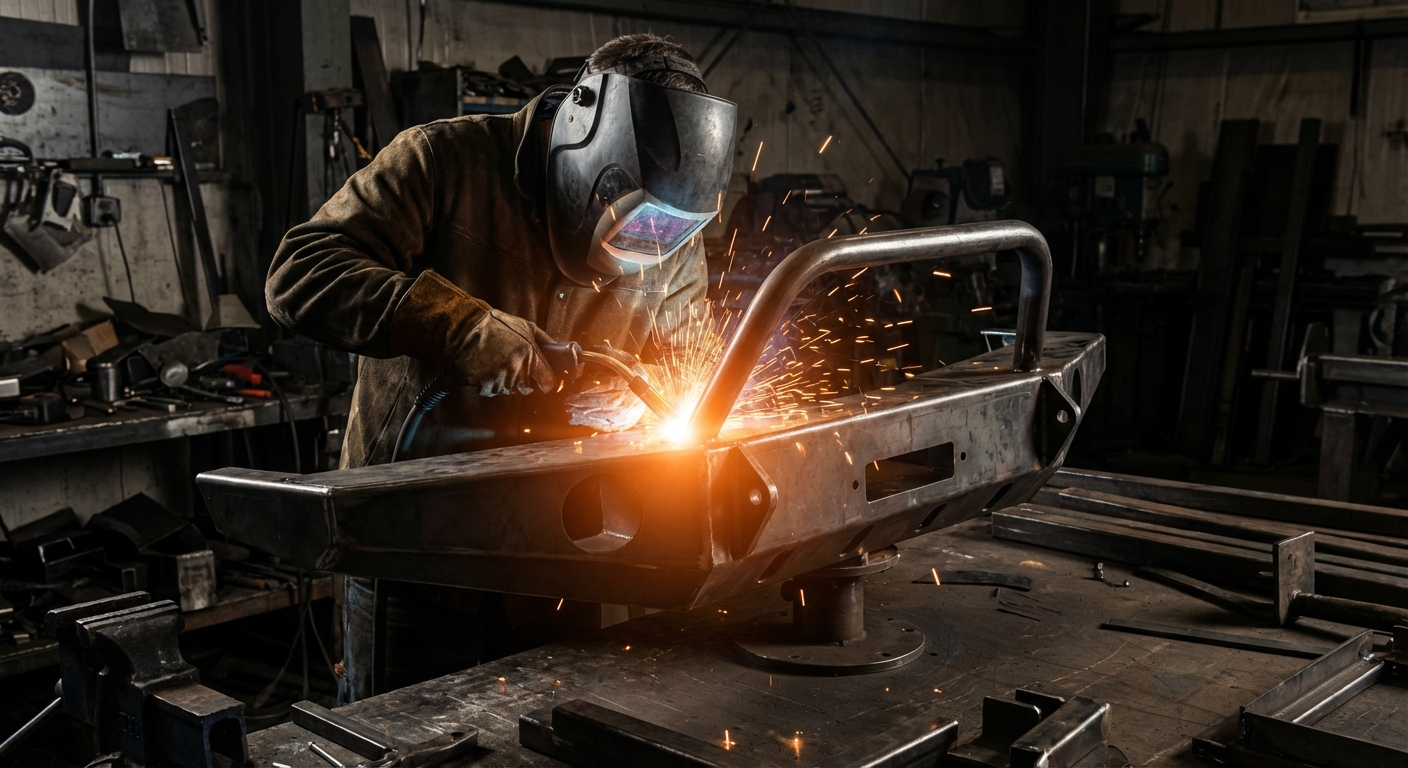
Welding quality is the foundation of structural integrity, as the strength of the bumper depends entirely on full-penetration joints executed by certified craftsmen. A bumper is only as strong as its weakest joint, making certified craftsmanship a non-negotiable requirement for extreme environments. This off-road bumper sourcing guide emphasizes that deep weld penetration is critical for managing the sudden stress of a collision.
Structural integrity and AWS standards
MIG welding is typically used for heavy-duty structural steel due to its deep penetration and speed. If a weld does not penetrate the full thickness of the metal, the joint can fail under winch tension.
Think about this:
- Structural welds must absorb the energy of a thousand-pound impact.
- Certified welders follow strict protocols to prevent joint porosity and slag.
- Full-penetration welds ensure the bumper acts as a single, unified shield.
A properly welded bumper distributes force across the entire mounting system, protecting the vehicle’s frame from buckling during an accident.
Key Takeaway: Welding is the most critical human element in manufacturing; without certified craftsmanship, even the best materials can fail under load.
| Welding Type | Application | Key Safety Benefit |
|---|---|---|
| MIG Welding | Structural Steel | High-penetration strength for winch loads |
| Certified Craft | Human Expertise | Zero-defect joints for maximum collision safety |
Investing in high-quality welding ensures that your protection equipment performs reliably when you need it most.
Is buffing crucial for an off-road bumper sourcing guide?
Buffing and grinding are essential steps to remove surface slag and imperfections that could otherwise trap moisture and lead to premature corrosion. Surface preparation is about more than just aesthetics; it ensures a uniform surface for the protective coatings to bond correctly. An off-road bumper sourcing guide must present buffing as a vital stage for ensuring the long-term durability of the finish.
Surface preparation and longevity
Skilled technicians use grinding wheels to strip away welding residue and sharp edges that could cause injury or finish failure. Individually running bumpers through cleaning tanks draws off loose materials that could compromise later stages.
Here’s the catch:
- Micro-imperfections on the metal surface can trap corrosive salt and mud.
- Slag left on welds will eventually cause the powder coat to flake off.
- A smooth, debris-free surface is required for maximum coating adhesion.
Proper surface preparation prevents rust from bubbling up under the paint, which would eventually compromise the bumper’s structural integrity.
Key Takeaway: Meticulous surface preparation is an insurance policy for the bumper’s finish, extending the equipment’s lifespan by decades in harsh climates.
| Cleaning Stage | Method | Result |
|---|---|---|
| Manual Grinding | Slag Removal | Smooth surfaces for optimal coating bond |
| Chemical Wash | Debris Removal | Eliminates contaminants that cause oxidation |
A perfectly prepared surface ensures that the final protective layer stays intact through years of trail use.
How does coating fit in an off-road bumper sourcing guide?
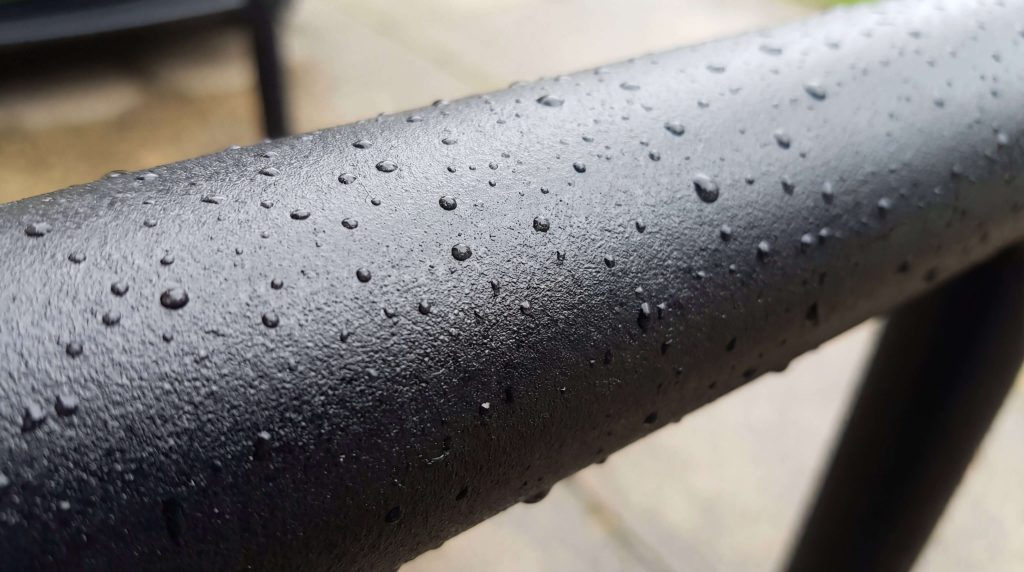
Professional powder coating provides a durable, electrically charged “skin” that protects the raw steel from oxidation and harsh trail debris. Without this barrier, a steel bumper would begin to oxidize within days of being exposed to salt, water, or mud. This off-road bumper sourcing guide highlights powder coating as the ideal choice for serious truck owners who demand durability.
Powder coating vs traditional paint
Powder coating involves spraying electrically charged particles that cling to the metal before being cured in an industrial oven. This process creates a non-porous barrier that is much harder and more flexible than standard liquid paint.
Check this out:
- Cured finishes resist chipping and flaking during off-road excursions.
- The even coverage ensures that internal corners and edges are protected.
- Powder coating is highly resistant to chemical corrosion from road salt.
The heat-curing process bonds the coating to the metal, creating a finish that can withstand the brutal vibrations of corrugated remote roads.
Key Takeaway: Finishing is your first line of defense; a high-quality powder coat preserves the structural steel and keeps your truck looking professional.
| Finish Type | Durability | Corrosion Resistance |
|---|---|---|
| Powder Coat | Extreme | High (Non-porous skin) |
| Standard Paint | Moderate | Low (Prone to chipping) |
A robust coating ensures that the raw steel underneath remains unaffected by the elements for the life of the vehicle.
Are accessories part of our off-road bumper sourcing guide?
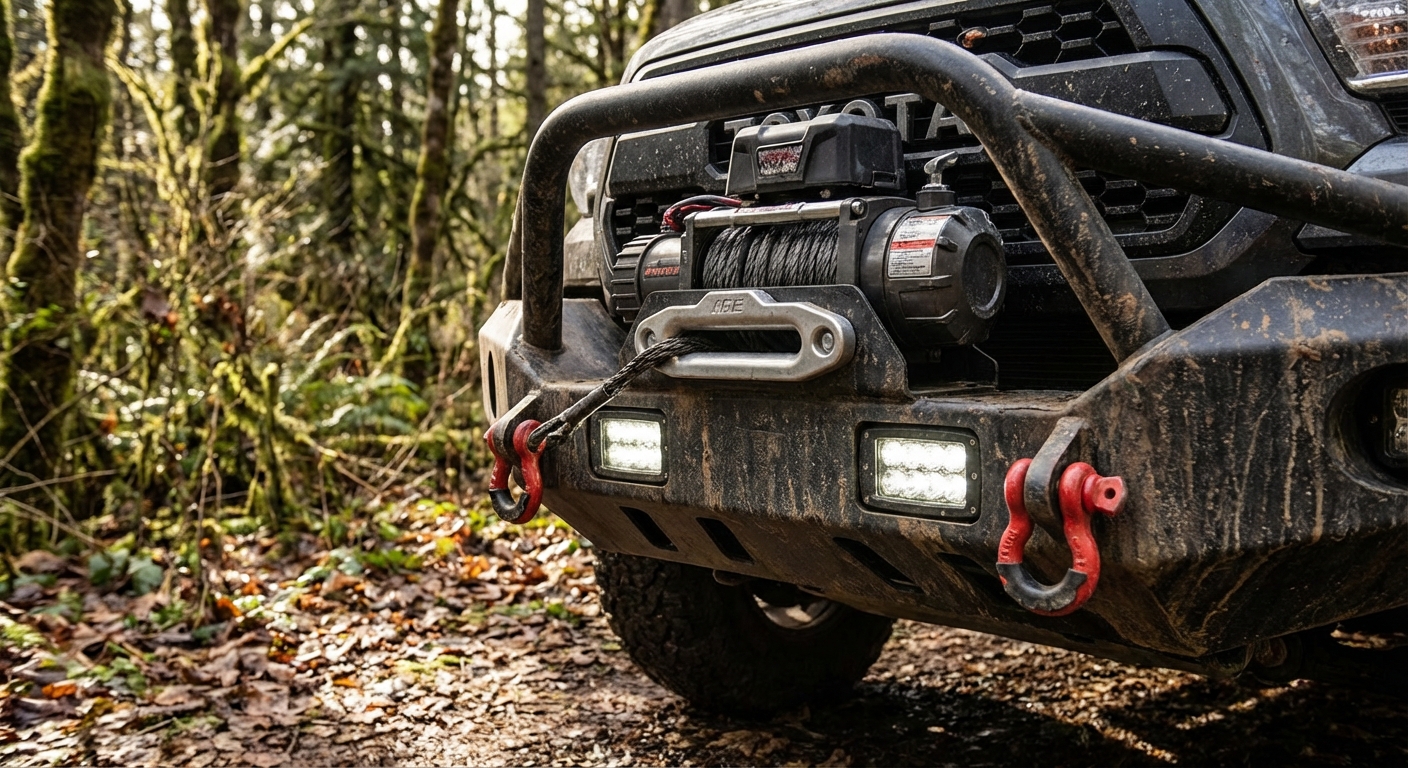
Accessories are integrated during the final fabrication stages to add critical utility like internal winch mounts, fog lamps, and reinforced recovery points. A custom bumper is a platform for additional tools that enhance your truck’s capability in remote environments. Your off-road bumper sourcing guide should account for these integrations to avoid needing external, non-reinforced brackets later.
Maximizing vehicle utility
Engineered bumpers often feature internal winch trays that are tied directly into the vehicle’s frame for maximum pulling power. Light pockets and license plate holders are added to keep your vehicle compliant and functional on and off the road.
The best part?
- Internal mounts protect expensive winches from debris and theft.
- Light cutouts allow for high-output LED bars without blocking airflow.
- Reinforced D-ring mounts provide safe recovery points for stuck vehicles.
Mounting brackets are typically reinforced with extra gussets to handle the thousands of pounds of force generated during a winch recovery.
Key Takeaway: Integrated accessories transform a simple guard into a comprehensive recovery and lighting tool for extreme conditions.
| Accessory Type | Integration | Utility Benefit |
|---|---|---|
| Winch Mount | Internal Tray | Secure, high-strength recovery point |
| LED Cutouts | Flush Mounting | Protected high-output trail lighting |
Incorporating utility features during manufacturing ensures they are as structurally sound as the bumper itself.
Why is inspection key for an off-road bumper sourcing guide?
Rigorous inspection ensures that every unit meets strict safety standards and that dimensional accuracy matches the original CAD design within a fraction of a millimeter. Manufacturers must verify that the energy transfer during a collision is managed correctly to protect the vehicle’s frame. This off-road bumper sourcing guide presents inspection as the final gatekeeper for both ethical business and driver safety.
Safety testing and quality control
Every design should undergo rigorous impact testing to simulate real-world collision scenarios and verify structural integrity. Dimensional verification ensures that hole positions match approved samples so your installation is purely bolt-on.
Don’t overlook this:
- CMM verification confirms hole positions match vehicle specifications.
- Visual inspections catch any minor flaws in the powder coat finish.
- Torque verification on hardware ensures all components are secure.
Thorough inspections protect the end-user by ensuring the bumper will do its duty—keeping you and your vehicle safe—when an accident occurs.
Key Takeaway: Quality control is the final guarantee that your investment will perform exactly as engineered during a critical impact event.
| Inspection Type | Tool Used | Tolerance Check |
|---|---|---|
| Dimensional | CMM Machine | ±0.5mm Accuracy |
| Weld Integrity | NDT Testing | Full Penetration Verification |
Rigorous quality checks eliminate the risks associated with manufacturing defects and fitment inconsistencies.
How to use an off-road bumper sourcing guide for fleets?
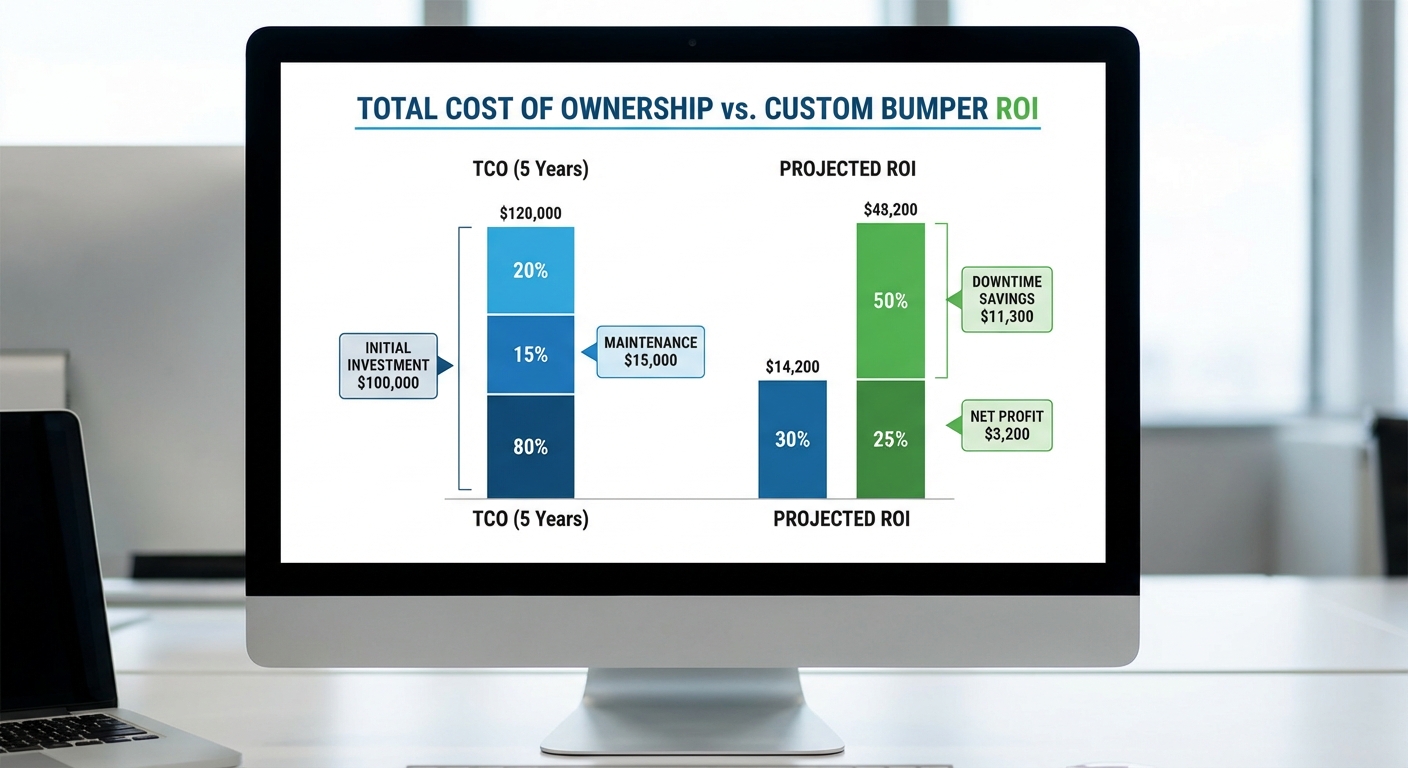
Fleet operators use sourcing guides to standardize protection across multiple vehicles, significantly reducing downtime costs caused by front-end damage. For commercial operations, sourcing the right protection is a strategic move to reduce the Total Cost of Ownership (TCO). A standard off-road bumper sourcing guide helps fleets establish OEM partnerships for consistent supply chains and standardized designs.
Reducing total cost of ownership
By absorbing the impact of animal strikes, heavy-duty bumpers protect the radiator and engine components, allowing the truck to remain operational. This prevents expensive mechanical repairs and weeks of lost revenue while a truck sits in a body shop.
Here’s the bottom line:
- Standardized bumpers simplify maintenance and replacement across the fleet.
- Reducing downtime pays for the initial investment after just one strike.
- OEM partnerships offer volume discounts and guaranteed supply continuity.
Protection is an insurance policy that pays for itself by preventing catastrophic front-end damage and keeping your drivers safe on remote routes.
Key Takeaway: For professional fleets, a custom bumper is not an accessory; it is a critical business tool that maximizes vehicle uptime.
| Business Factor | With Custom Protection | With Factory Bumper |
|---|---|---|
| Collision Downtime | Minimal (Drive away) | Extensive (Towed/Repaired) |
| Long-term ROI | High (Reduced repairs) | Low (Constant vulnerability) |
Strategic sourcing for fleets focuses on long-term operational efficiency rather than just the initial purchase price.
*
Custom off-road bumpers represent a fusion of advanced engineering and rugged craftsmanship designed to solve your vehicle’s vulnerability to trail damage and wildlife strikes. By moving from a conceptual design to a powder-coated shield, we provide the ultimate front-end protection for the most demanding environments. We stand as your partner in vehicle safety, committed to delivering protection that is engineered for extreme conditions and built for lasting performance. To secure your vehicle’s future and eliminate downtime, contact us today for a custom quote.
FAQ
Can I install a custom off-road bumper by myself?
Yes, you can, provided you have a basic set of hand tools and a second person to help with the lifting. Most premium bumpers are engineered for a 100% bolt-on fitment, meaning no drilling or welding is required to secure them to your vehicle’s frame.
What is the best material for extreme wildlife protection?
Heavy-duty steel is the best option for maximum impact resistance in wildlife-prone regions. While aluminum offers weight savings, steel’s superior density and strength provide the highest level of protection for your radiator and engine during high-speed animal strikes.
How do I know if a bumper will fit my specific truck model?
You should look for products that utilize CAD-based design and CMM verification to guarantee fitment. Reputable manufacturers maintain extensive databases of North American truck specifications to ensure every mounting point aligns perfectly with your chassis.
Will a custom bumper affect my truck’s cooling system?
No, a properly engineered bumper will not compromise your cooling system. Quality designs include specific air vents and cutouts that are computationally tested to ensure airflow to the radiator remains optimal, even under heavy towing loads.
How long do custom-made bumpers usually last?
A professionally manufactured bumper can easily last the entire lifespan of your vehicle. By utilizing industrial-grade powder coating and high-quality alloys, these bumpers are built to resist corrosion, vibrations, and trail impacts for decades of service.