
To get your rig ready for the road after a punishing winter, you must implement a comprehensive spring semi-truck maintenance checklist that targets structural integrity and mechanical efficiency. Months of ice and salt have likely corroded your vehicle’s most vital components, creating hidden risks that could jeopardize your fleet. Ignoring these microscopic fractures or fluid leaks now will lead to catastrophic roadside failures during the peak summer hauling season. By inspecting everything from your engine filters to your semi truck bumper, you protect your bottom line and ensure driver safety.
Are your tires and semi truck bumper road-ready?
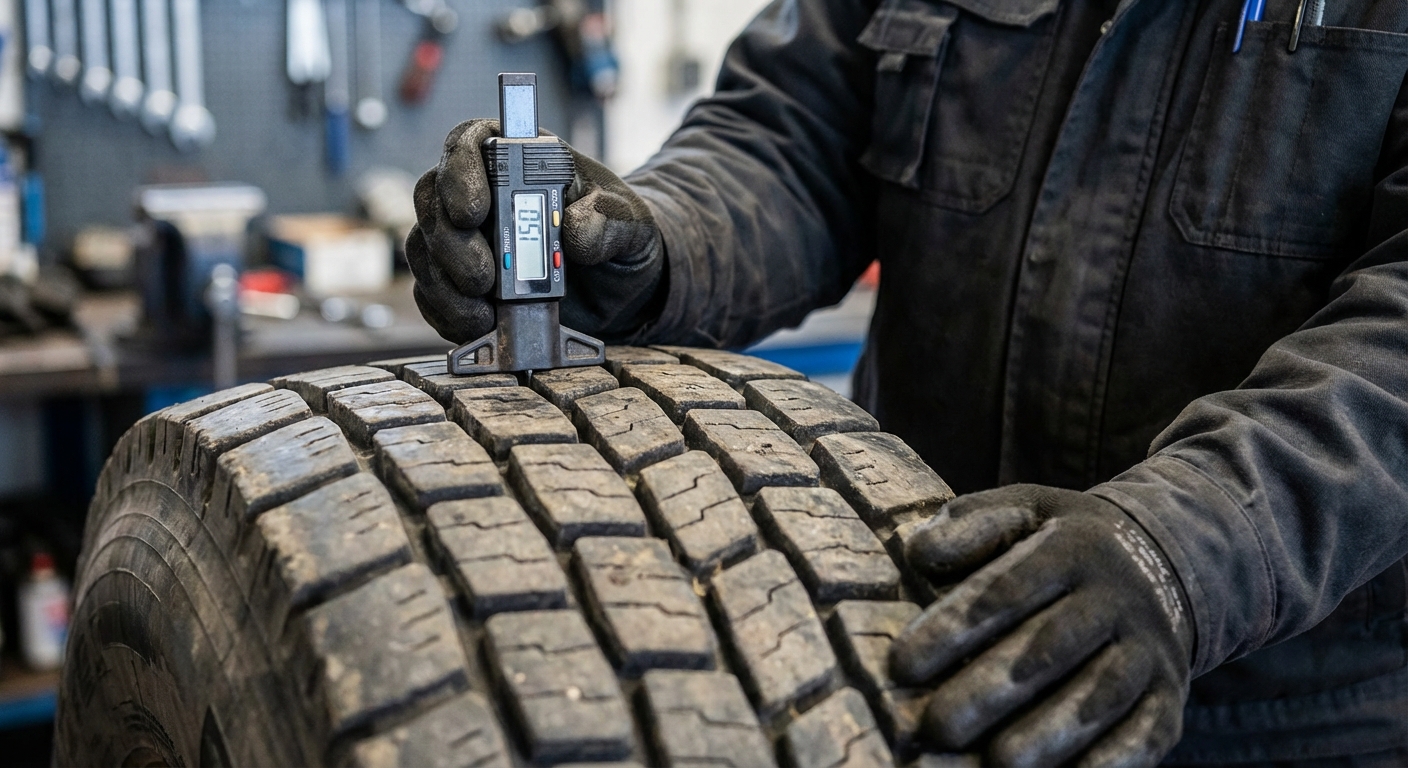
You must inspect tire pressure and tread depth immediately to ensure your vehicle handles correctly alongside your semi truck bumper. Fluctuating spring temperatures cause PSI levels to shift, leading to uneven wear and reduced fuel economy.
Proper tire maintenance reduces the lateral stress on your front-end components. You should check for “cupping” patterns which indicate that winter potholes have knocked your alignment out of specification.
Why does tread depth matter?
Deep treads are essential for maintaining traction during unpredictable spring rainstorms and muddy delivery sites. Here is the deal: if your treads are below 4/32 of an inch, you are risking a major safety violation and a blowout.
- Measure depth at three points.
- Look for sidewall bulges.
- Check valve stem integrity.
How do you manage PSI?
You should calibrate your tire pressure based on the manufacturer’s recommendations for the specific loads you are hauling. Consistent inflation prevents the tire from overheating and disintegrating under heavy pressure.
Key Takeaway: Consistent tire monitoring ensures maximum traction and prevents the vibrations that can damage your front-end protection.
| Component | Target Spec | Frequency |
|---|---|---|
| Steering Tires | 4/32″ Minimum | Weekly |
| Drive Tires | 2/32″ Minimum | Weekly |
| Air Pressure | 100-110 PSI | Daily |
This data illustrates how monitoring tread depth prevents unexpected transit delays.
Is your suspension affecting your semi truck bumper?
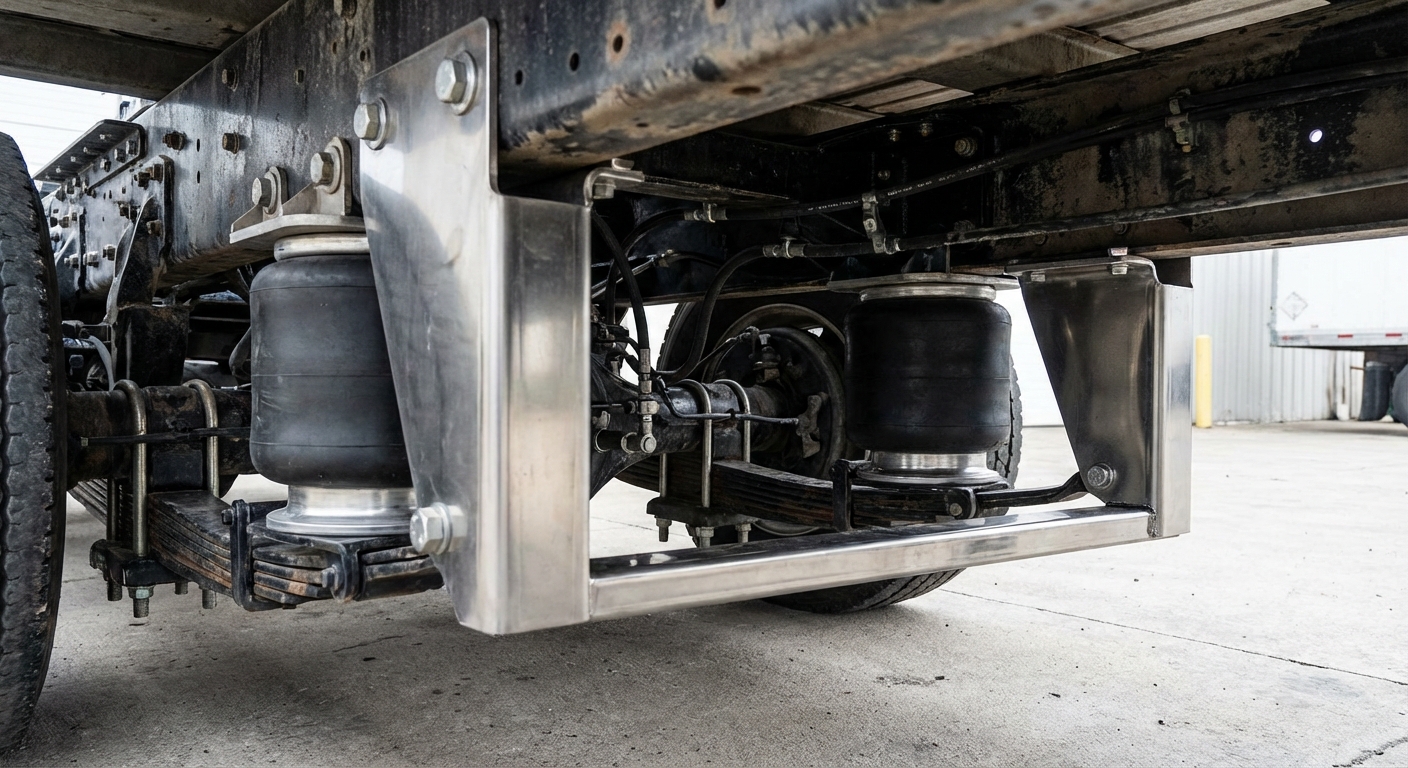
A failing suspension system causes excessive vibrations that can rattle your semi truck bumper loose over time. Salt-heavy winter roads often degrade air springs and shock absorbers faster than any other chassis component.
You must look for signs of hydraulic fluid leaking down the casing of your shocks. If the truck leans to one side, your air bags may be leaking air, which forces the rest of the frame to compensate for the imbalance.
Can you see visual damage?
Inspect the rubber air springs for dry rot or “heat cracks” that typically form after extreme cold cycles. Make no mistake: a single ruptured air bag can ground your entire rig and cause significant frame damage.
- Check shock mounting bolts.
- Inspect U-bolts for tightness.
- Verify air bag alignment.
Is the air pressure equal?
Ensure your leveling valve is functioning correctly to keep the truck at a consistent ride height across all axles. This balance is critical for maintaining the aerodynamic efficiency of your front-end components.
Key Takeaway: A healthy suspension preserves the structural alignment of the entire chassis and prevents secondary damage to engine mounts.
| Suspension Part | Common Fault | Severity |
|---|---|---|
| Air Springs | Audible leaks | High |
| Shock Absorbers | Oil leakage | Medium |
| Bushings | Metal contact | Medium |
Proper alignment through these checks mitigates the risk of frame fatigue.
Does your semi truck bumper need point lubrication?
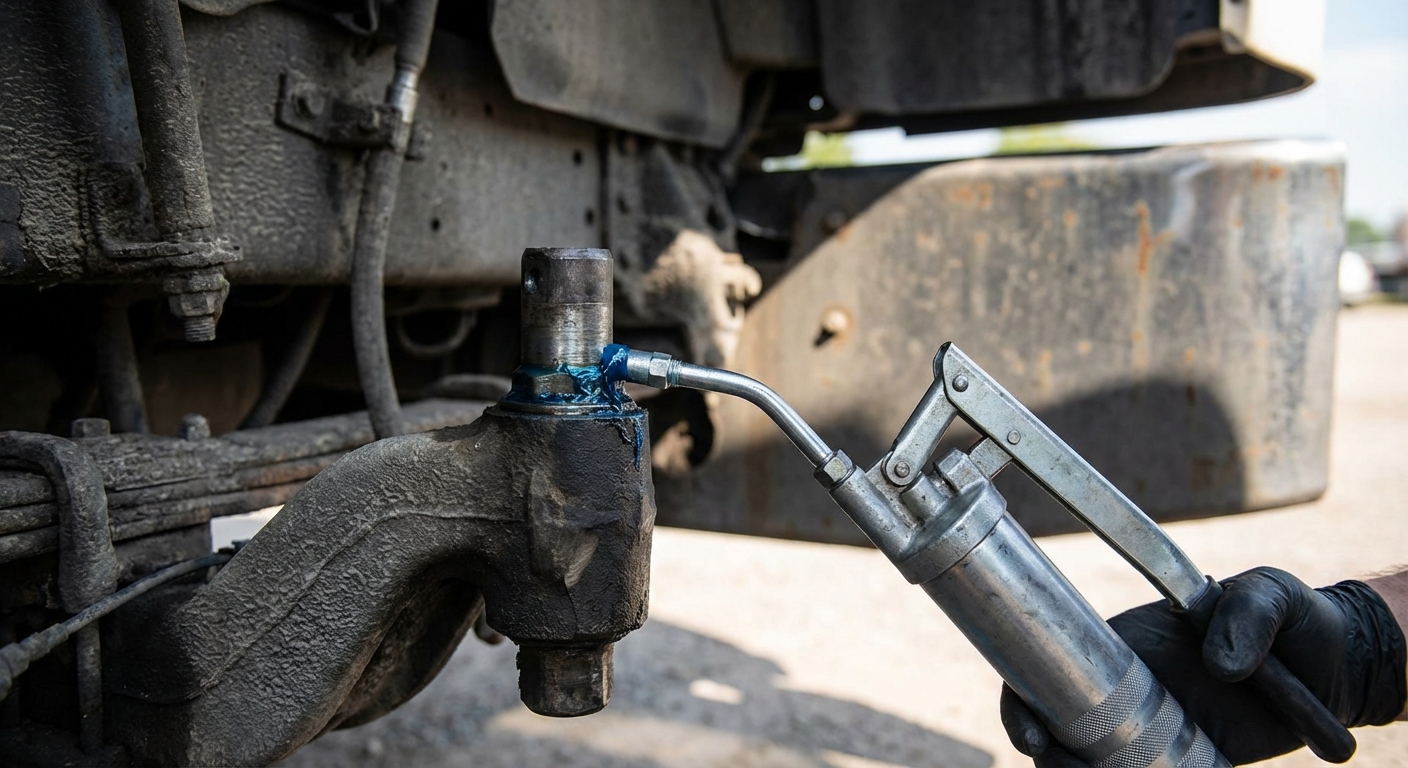
You need to apply fresh grease to all pivot points, including those near the semi truck bumper, to prevent metal-on-metal seizing. Winter moisture and road chemicals strip away protective lubricants, leaving joints vulnerable to corrosion.
Focus your efforts on the steering knuckles and the fifth wheel plate to ensure smooth trailer articulation. Re-lubricating these points in the spring is the most cost-effective way to extend the life of your steering gear.
What are the key grease points?
You must ensure that the kingpins and tie-rod ends receive high-quality, waterproof grease to withstand spring rains. The bottom line is: grease is significantly cheaper than replacing a seized steering box.
- Flush old grease out.
- Wipe away excess debris.
- Use a heavy-duty grease gun.
Should you check door hinges?
Don’t overlook the small moving parts like hood latches and door hinges that often bind after salt exposure. A small amount of spray lubricant can prevent the metal fatigue that leads to handle failures.
Key Takeaway: Systematic lubrication minimizes friction and prevents the premature wear of critical steering and coupling components.
| Grease Point | Lubricant Type | Benefit |
|---|---|---|
| Kingpins | Lithium Complex | Steering Ease |
| Fifth Wheel | Graphite Grease | Coupling Safety |
| U-Joints | High-Temp Grease | Driveline Life |
Regular lubrication cycles significantly reduce the total cost of ownership per mile.
Are hoses clear of your semi truck bumper mounts?
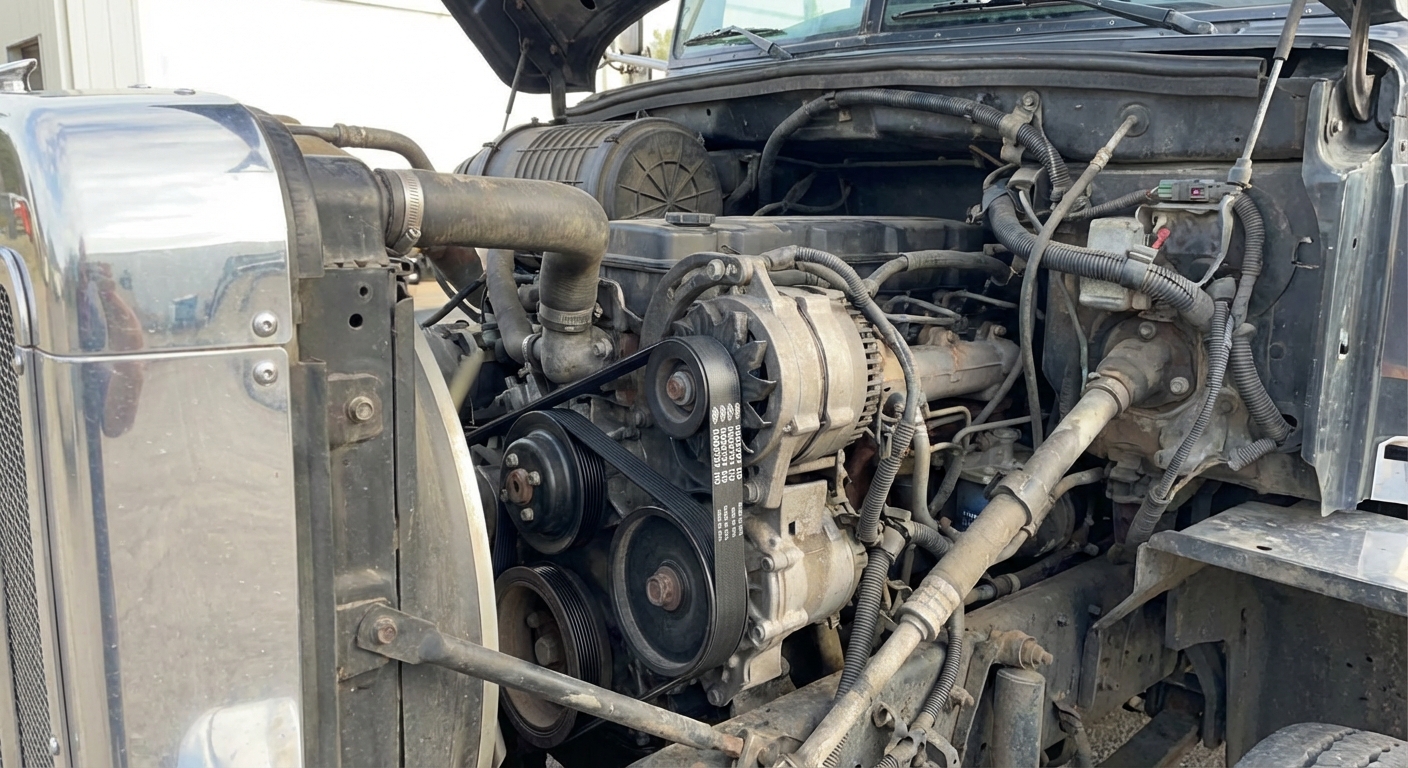
You should check that all belts and hoses are free from cracks and are not rubbing against internal semi truck bumper supports. Brittle rubber is a common casualty of sub-zero temperatures, leading to sudden bursts as the weather warms.
Examine the serpentine belt for glazing or fraying along the edges which indicates a pulley misalignment. Proactive replacement of these components prevents the engine from overheating during high-temperature spring hauls.
Are there signs of fraying?
You need to inspect the underside of your belts for small cracks or “chunking” where the rubber has begun to fail. Think of it this way: a fifty-dollar belt can save you a five-thousand-dollar tow bill.
- Check for belt glazing.
- Inspect hose clamps.
- Look for mushy spots.
Is it time for a replacement?
If your hoses feel soft or “mushy” when squeezed, the internal lining has likely collapsed or degraded from chemical exposure. You should replace any rubber component that has been in service for more than five years regardless of visual status.
Key Takeaway: Identifying brittle belts and hoses during a shop inspection eliminates the risk of catastrophic engine failure on the highway.
| Cooling Part | Warning Sign | Life Expectancy |
|---|---|---|
| Serpentine Belt | 3+ cracks per inch | 75,000 Miles |
| Radiator Hoses | Swelling or softness | 5 Years |
| Hose Clamps | Rust or loose grip | Annual |
Preventative hose replacement eliminates the high cost of emergency roadside service.
Are fluids topped off behind the semi truck bumper?
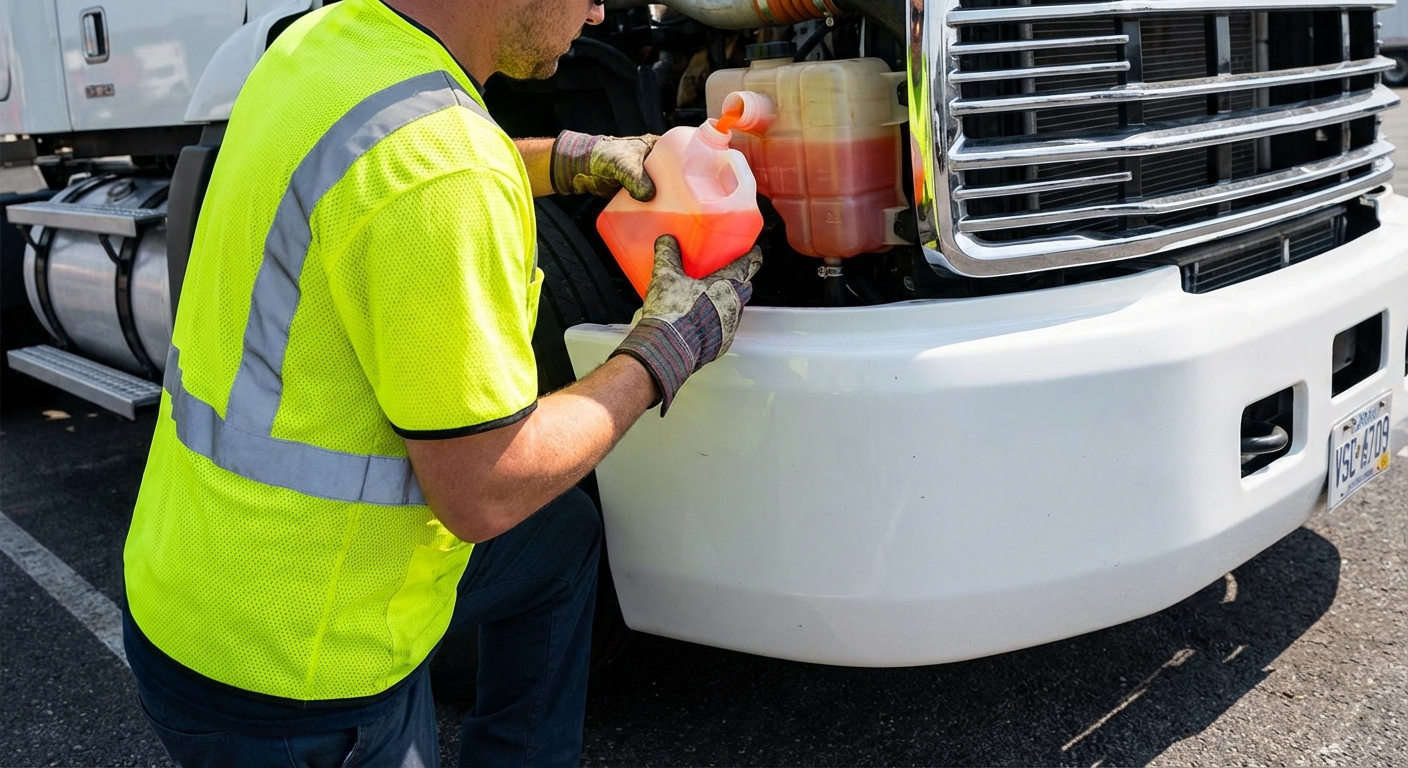
You must verify that your coolant and oil levels are sufficient to support the engine cooling systems located behind the semi truck bumper. Contaminated fluids can lead to severe engine cavitation and internal component failure.
Spring is the ideal time to perform a full oil change to remove the moisture and fuel dilution caused by winter idling. Clean oil ensures that your turbochargers and pistons remain lubricated during long-distance hauls.
Why check the antifreeze?
Your cooling system must work significantly harder as the ambient temperature rises during the spring months. It is a fact that low coolant levels lead to hot spots in the cylinder head, causing expensive cracking.
- Check fluid PH levels.
- Look for oil in coolant.
- Top off the reservoir.
Is your oil contaminated?
You should analyze your used oil for metal shavings or a milky appearance that suggests a coolant leak. Catching these contaminants early allows you to repair head gaskets before they lead to a complete engine rebuild.
Key Takeaway: Maintaining fluid purity and volume is the primary defense against internal engine wear and thermal stress.
| Fluid Type | Inspection Metric | Action |
|---|---|---|
| Engine Oil | Color and Viscosity | Change if dark |
| Coolant | Freeze Point/PH | Flush if acidic |
| Power Steering | Fluid Level | Top off to max |
Maintaining fluid purity is the most effective way to ensure engine longevity.
Do lights on the semi truck bumper work?

You are required to test all illumination sources, specifically the fog lights and markers integrated into the semi truck bumper. Visibility is your best defense against spring rainstorms and low-light dawn driving conditions.
Check for moisture buildup inside the headlight housings which can short out your electrical connections. You should polish any yellowed or foggy lenses to ensure your beam pattern remains sharp and effective.
Have you checked signals?
You must verify that all turn signals, brake lights, and hazard flashers operate without delay or intermittent flickering. Here is the deal: a single burnt-out bulb is an open invitation for a DOT inspection.
- Test high and low beams.
- Check trailer connections.
- Clean all reflectors.
Are your lenses clear?
Oxidized lenses can reduce your light output by as much as fifty percent, making night driving significantly more hazardous. You can use a restoration kit to clear up the plastic and improve your safety profile instantly.
Key Takeaway: Functional and bright lighting reduces the likelihood of collisions and ensures compliance with federal safety regulations.
| Lighting Zone | Success Criteria | Priority |
|---|---|---|
| Front Headlights | No fogging; aligned | High |
| Marker Lights | 100% illumination | High |
| Signal Lights | Correct flash rate | Medium |
Operational lighting is the primary factor in reducing DOT inspection violations.
Is the air filter protecting the semi truck bumper?
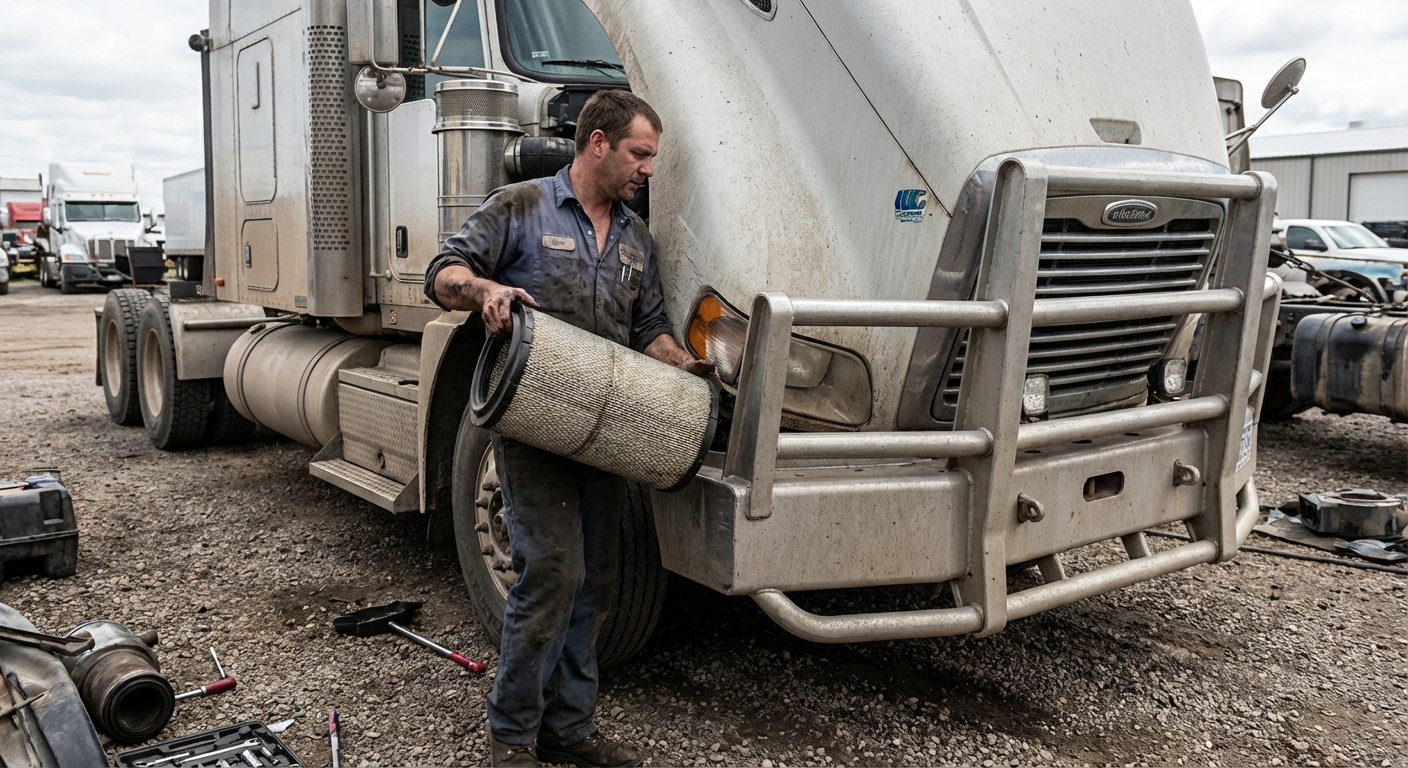
You need a clean air filter to maintain the fuel efficiency necessary for a truck equipped with a heavy-duty semi truck bumper. Clogged filters starve the engine of oxygen and force the turbocharger to work harder than designed.
Replace your air filters if they show signs of moisture damage or excessive dust accumulation from winter road sand. A clean intake system is vital for achieving the high MPG figures required for profitable operations.
How does air flow impact MPG?
Restricted airflow creates an imbalance in the combustion chamber, leading to unburned fuel being wasted through the exhaust system. You should realize that a dirty filter can cost you hundreds of dollars in lost fuel efficiency every week.
- Check restriction gauge.
- Tap out loose debris.
- Inspect filter housing seals.
Should you check cabin filters?
You must replace the cabin air filter to ensure that the driver remains comfortable and alert during long shifts. Musty smells or reduced airflow from the HVAC system are clear indicators that the filter is spent.
Key Takeaway: Regular air filter replacement is a low-cost maintenance task that yields high returns in fuel savings and engine health.
| Filter Type | Replacement Interval | Primary Impact |
|---|---|---|
| Primary Engine | 15,000 – 30,000 Miles | Fuel Economy |
| Secondary Engine | Every other change | Engine Life |
| Cabin Air | 6 Months | Driver Health |
Airflow efficiency is the most direct lever for improving fleet fuel economy.
Has winter drained the battery near the semi truck bumper?
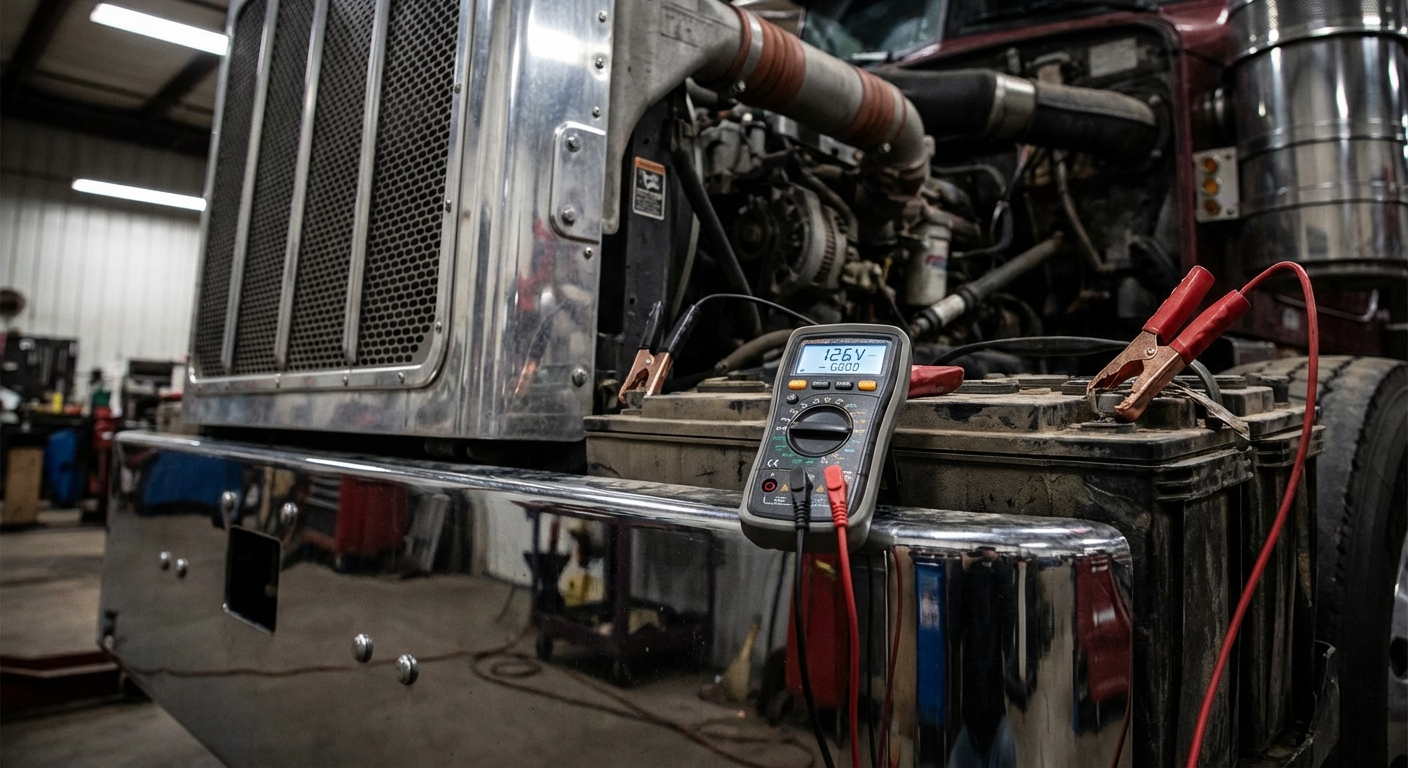
You should perform a load test on your batteries to ensure they weren’t permanently weakened by winter cycles or vibrations near the semi truck bumper. Cold starts place immense strain on the chemical plates inside the casing.
Clean any white or blue corrosion from the terminals using a wire brush and a neutralizing solution. Proper electrical contact is essential for the alternator to maintain a full charge during your spring routes.
Is there terminal corrosion?
Corrosion acts as an insulator, preventing the starter from receiving the full amperage needed to turn over a heavy diesel engine. Make no mistake: neglected terminals are the number one cause of “no-start” service calls.
- Clean with soda/water.
- Tighten terminal nuts.
- Apply protector spray.
Should you test voltage?
You need to verify that your batteries hold at least 12.6 volts when the engine is off and the system is at rest. A battery that drops below 10 volts during cranking is a candidate for immediate replacement before the summer heat.
Key Takeaway: Testing and cleaning your electrical system in the spring prevents the frustration of roadside power failures.
| Battery Test | Acceptable Range | Recommended Action |
|---|---|---|
| Static Voltage | 12.4V – 12.7V | Charge if low |
| Cranking Volts | >9.6V | Replace if lower |
| Age | <36 Months | Monitor closely |
Testing battery health proactively prevents missed delivery windows during the summer.
Should you replace a damaged semi truck bumper?
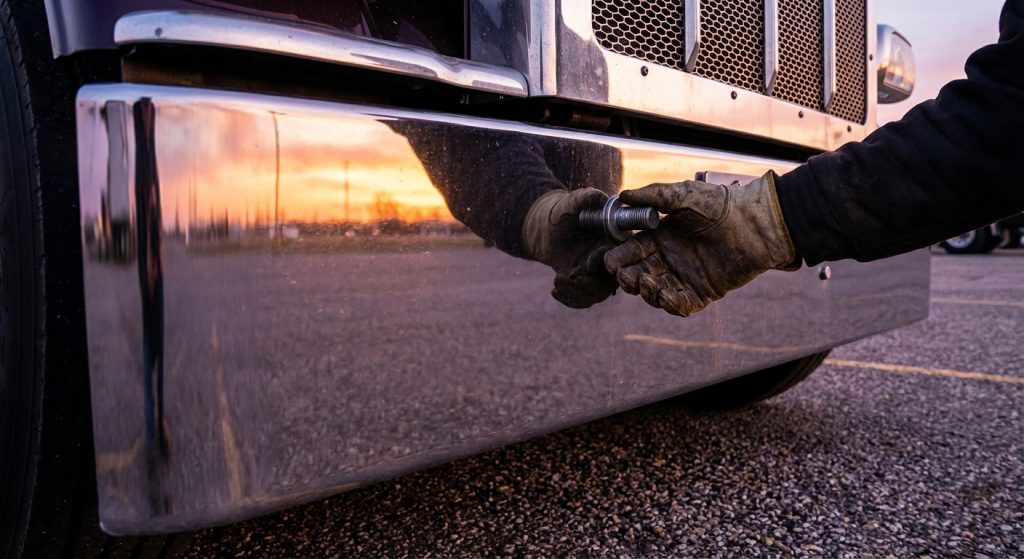
You must evaluate if a cracked or rusted semi truck bumper needs immediate replacement to restore your rig’s aerodynamic profile and safety. Aesthetic damage often masks deeper structural issues that compromise your front-end protection.
A damaged bumper fails to distribute impact forces correctly during a wildlife strike or minor collision. You should prioritize the replacement of any body component that shows signs of stress fractures or mounting bracket fatigue.
You should inspect the fiberglass or metal behind the main face of the bumper for signs of stress that developed during winter freezes. The bottom line is: structural integrity is non-negotiable when it comes to front-end collisions.
- Inspect mounting plates.
- Check for deep rust.
- Verify guard alignment.
Is it time for an upgrade?
If your current equipment is showing significant wear, you should consider upgrading to a high-durability moose bumper or grille guard. These professional-grade solutions provide superior protection compared to standard factory plastic components.
Key Takeaway: Proactive replacement of damaged body parts maintains the professional image of your fleet and ensures maximum driver protection.
| Body Component | Type of Damage | Action |
|---|---|---|
| Main Bumper | Cracks/Dents | Replace immediately |
| Hood Latches | Tension loss | Replace pair |
| Grille Guard | Bent tubes | Inspect welds |
Structural repairs protect the residual value of your heavy-duty fleet assets.
How do you plan maintenance for a semi truck bumper?
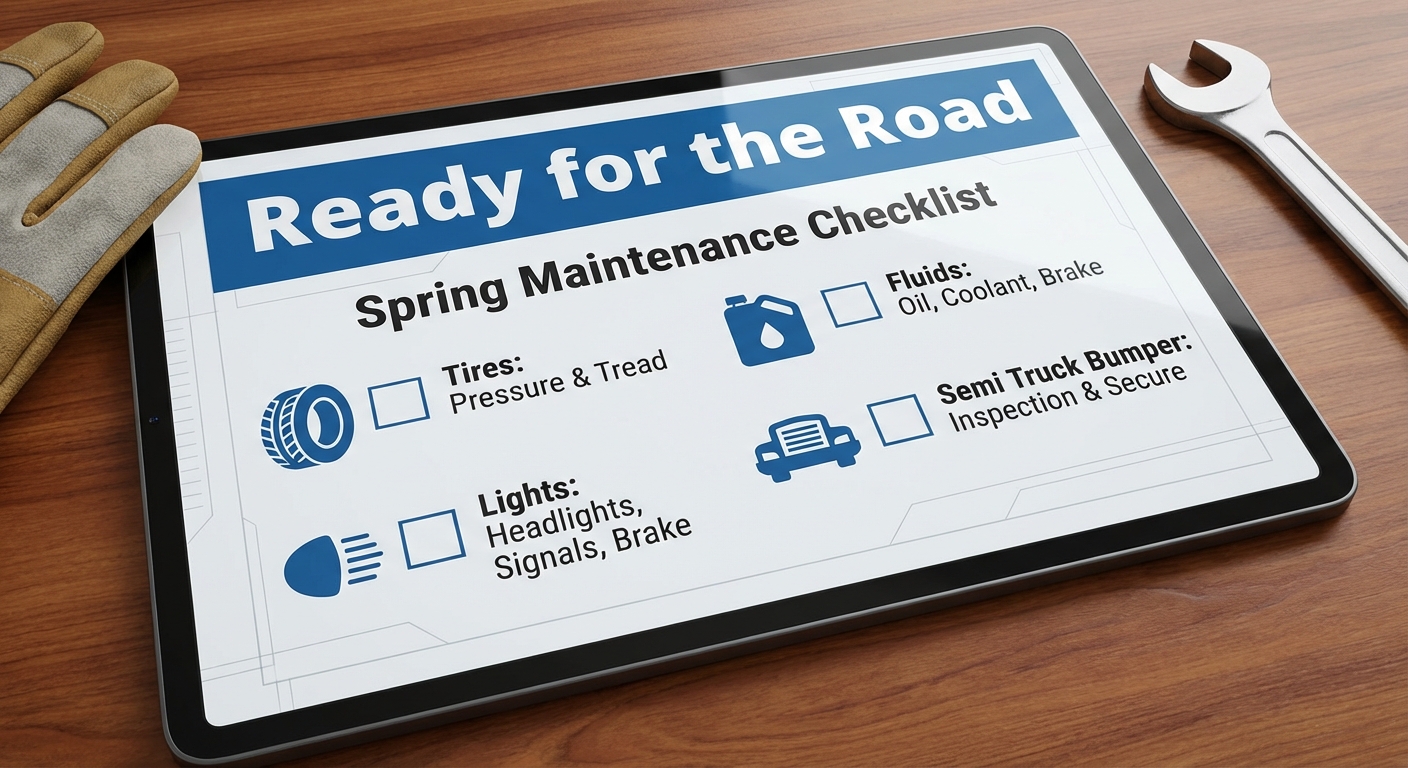
You should develop a strict documentation schedule that tracks every inspection and repair involving your semi truck bumper and mechanical systems. Consistency is the key to fleet longevity and passing high-stakes safety audits.
Use a digital logbook to record the date and mileage of every fluid change and part replacement. This data allows you to identify patterns in component failure and adjust your maintenance intervals accordingly.
Should you hire a pro?
While you can handle basic inspections like lights and tires, you should consult a professional for engine diagnostics and suspension alignments. Think of it this way: an expert eye can catch a failing part that a driver might miss.
- Use a digital tracker.
- Set calendar reminders.
- File all receipts.
How do you track tasks?
You must ensure that your maintenance records are easily accessible for roadside inspections or insurance reviews. A well-organized file proves that you are committed to the highest standards of safety and operational excellence.
Key Takeaway: A comprehensive maintenance plan transforms your vehicle from a liability into a reliable, profit-generating asset.
| Planning Tool | Primary Use | Output |
|---|---|---|
| Maintenance Log | Data Tracking | Audit Trail |
| Digital Calendar | Scheduling | No Missed Tasks |
| Inspection Sheet | Daily Checks | Risk Mitigation |
A structured log provides the necessary audit trail for safety compliance.
Spring is your opportunity to reset your vehicle’s health after a taxing winter season. By addressing small issues now—from tire tread to the integrity of your front-end protection—you prevent expensive downtime and protect your drivers. At Brontec, we are dedicated to providing the heavy-duty solutions that keep North American fleets moving forward safely. To ensure your rig is fully protected for the road ahead, contact us today for a consultation on premium bumper and guard systems.
Spring Maintenance FAQ
Can I perform a spring inspection myself?
Yes, you can, but you should focus on visual checks like fluid levels and lights while leaving internal engine work to a certified mechanic.
What’s the best way to clean road salt?
The best way is to use a high-pressure undercarriage wash combined with a salt-neutralizing solution to prevent hidden corrosion.
How do I know if my bumper needs replacement?
You know it needs replacement if you see visible cracks in the structural mounts or deep rust that has compromised the metal’s thickness.
Can I skip the air filter change?
No, you cannot, because a dirty filter directly increases your fuel consumption and places unnecessary stress on your turbocharger.
What’s the best interval for grease points?
The best interval is every 10,000 to 15,000 miles, but you should lubricate your chassis more frequently if you operate in wet spring conditions.