
Installing a high-quality semi truck grille guard acts as a critical insurance policy for your vehicle’s most vulnerable front-end components. Imagine driving through a remote corridor at night when a large animal suddenly enters your lane. The resulting impact can shatter radiators and headlights, causing weeks of operational downtime and thousands in repair costs. A durable semi truck grille guard provides the essential defense needed to stay on the road and keep your cargo moving.
Why is front-end protection vital for semi trucks?
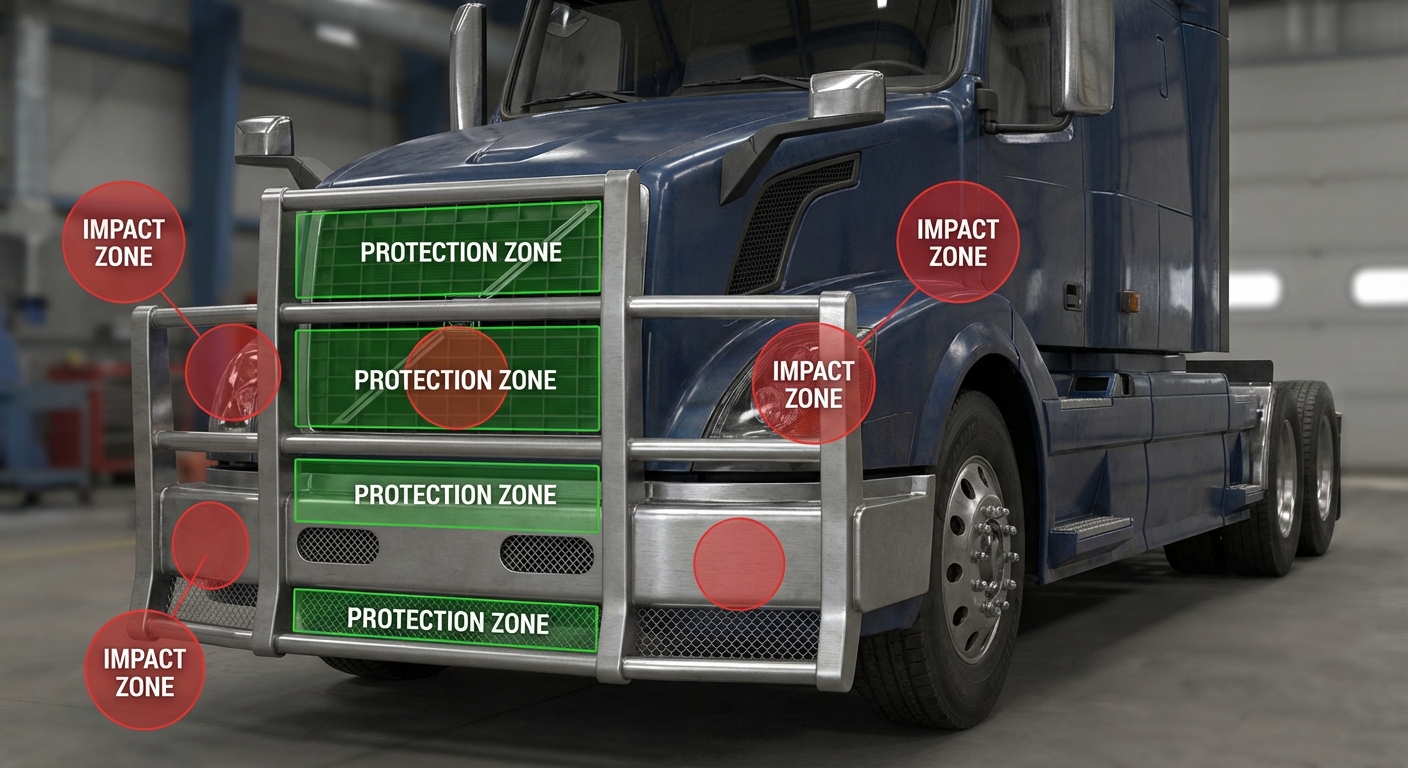
Front-end protection is vital because it shields critical engine components, radiators, and headlights from catastrophic impact damage. A semi truck grille guard serves as the first line of defense against unexpected road hazards. These units are engineered to absorb energy that would otherwise destroy the truck’s cooling system.
Defining Class 8 Front-End Vulnerabilities
The cooling package of a modern truck is exceptionally fragile and expensive to replace. Think about it: a single stone or animal strike can puncture a radiator in seconds. Protecting these zones is a primary requirement for any long-haul operator.
- Radiators and intercoolers
- Headlight assemblies
- Fiberglass hoods and fenders
Absorbing Energy During High-Impact Events
Engineered guards are designed to distribute force across the truck’s chassis. This prevents localized damage from crushing delicate engine parts.
Key Takeaway: Grille guards transform a total-loss collision into a manageable repair by shielding the truck’s heart.
| Component | Protection Level | Impact Result without Guard |
|---|---|---|
| Radiator | Critical | Immediate engine overheating |
| Headlights | High | Loss of visibility and safety |
| Bumper | Medium | Structural frame damage |
Maintaining the structural integrity of the front end ensures the truck remains operational after minor incidents.
Will a guard protect the radiator from road debris?
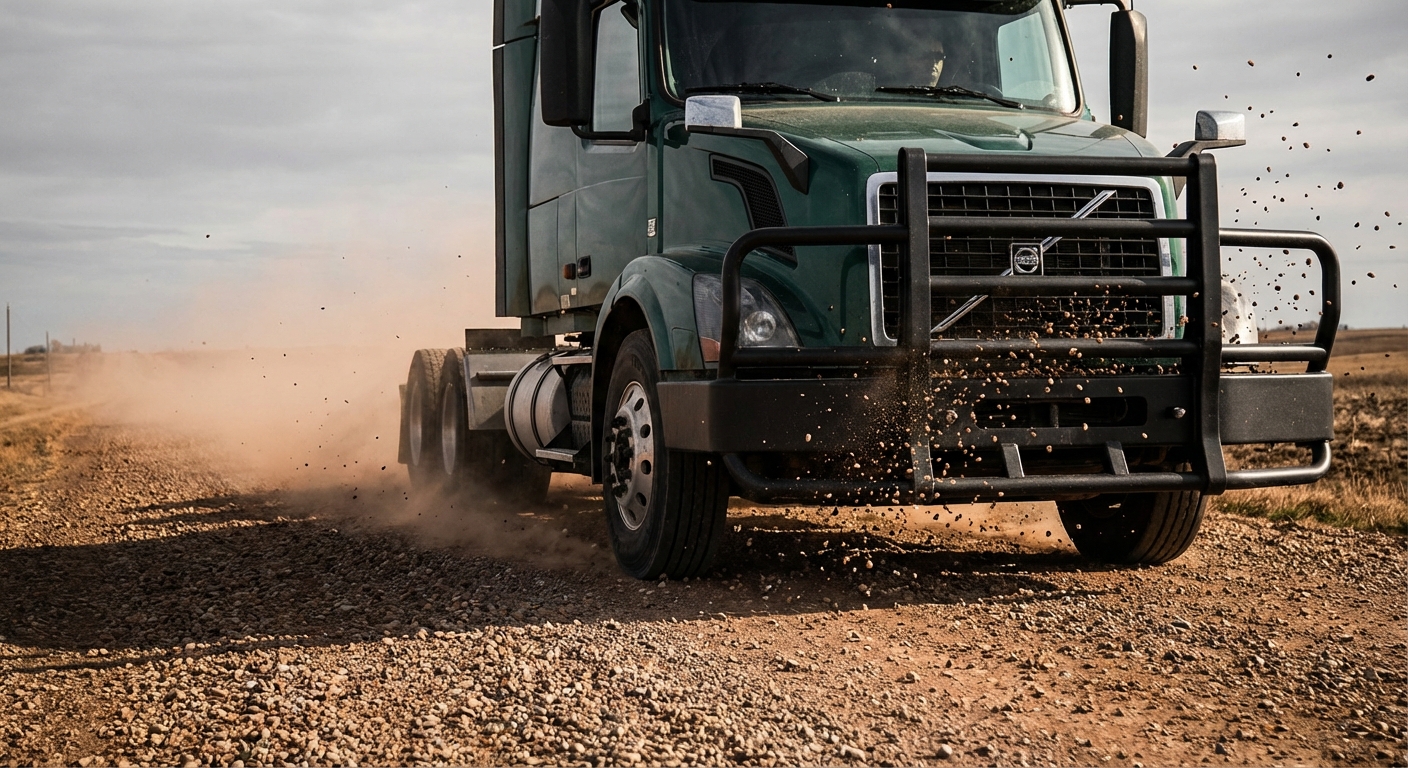
Grille guards act as a physical barrier against flying rocks, metal fragments, and ice chunks that puncture unprotected radiators. Investing in a semi truck grille guard prevents micro-punctures that lead to overheating miles down the road. These projectiles are common in construction zones and industrial routes.
Defending Against Highway Projectiles
Small pieces of metal or gravel can be kicked up by vehicles ahead. Here is the kicker: even a tiny hole in the cooling system can strand a driver for days. A heavy-duty mesh or bar setup stops these objects in their tracks.
- Road salt and corrosive chemicals
- Flying gravel and loose stones
- Discarded tire treads (road gators)
Reducing the Risk of Debris-Induced Leaks
Debris protection is essential for maintaining the long-term health of the engine. Think about this: proactive defense is always cheaper than an emergency tow on the shoulder of a highway.
Key Takeaway: Deflecting small projectiles prevents “hidden” damage that causes mechanical failure during transit.
| Hazard Type | Guard Defense | Operational Benefit |
|---|---|---|
| Gravel/Rocks | Mesh Barrier | Prevents radiator fin damage |
| Tire Treads | Heavy-Duty Bars | Shields the entire lower bumper |
| Ice Chunks | Structural Frame | Prevents winter-related downtime |
Defending the cooling system from constant debris bombardment is a fundamental requirement for highway fleet reliability.
How do grille guards reduce wildlife collision damage?
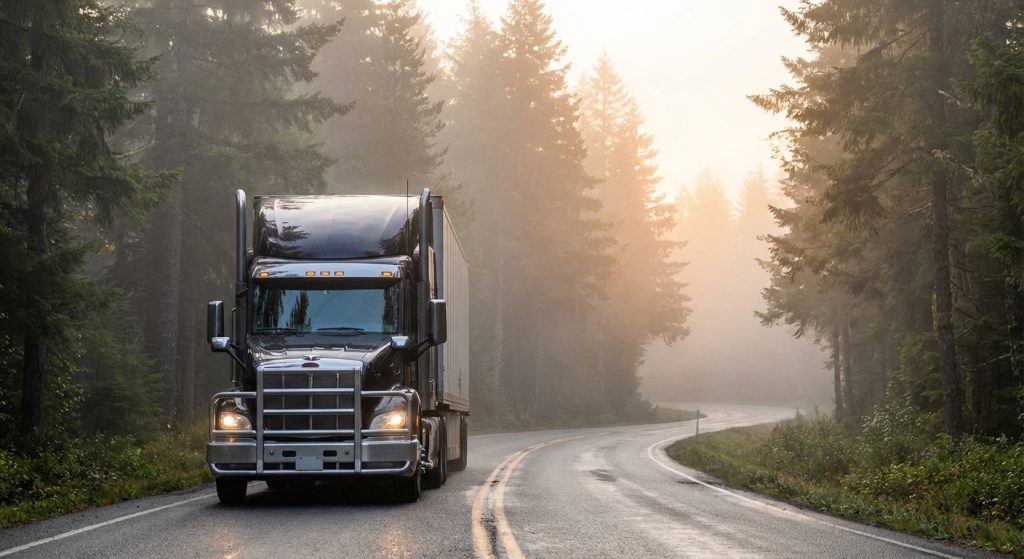
Grille guards minimize wildlife damage by distributing the force of impact across a heavy-duty frame rather than fragile body panels. Every semi truck grille guard is designed to stop large animals from rolling into the engine compartment. This allows the driver to maintain steering control during a strike.
Managing Moose and Deer Encounters
Wildlife encounters create significant operational disruptions for commercial fleets. You see: large animals often strike at the height of the grille, making the radiator highly vulnerable. A guard absorbs the brunt of this force, sparing the engine.
- Deflecting animal weight downward
- Protecting cooling fan blades
- Preserving the truck’s steering geometry
Preventing Internal Engine Damage from Strikes
A strike without protection often results in a total loss of the cooling package. Maintaining the truck’s ability to limp to a shop is a massive logistical victory.
Key Takeaway: Strategic weight distribution prevents animals from penetrating the grille and destroying the internal cooling fans.
| Animal Type | Impact Force | Guard Primary Role |
|---|---|---|
| Deer | Moderate | Deflection from hood/headlights |
| Moose | High | Energy absorption and cab safety |
| Livestock | High | Preventing radiator penetration |
Reducing the severity of animal collisions is the most common reason for installing heavy-duty front protection.
Are guards compatible with modern radar safety systems?
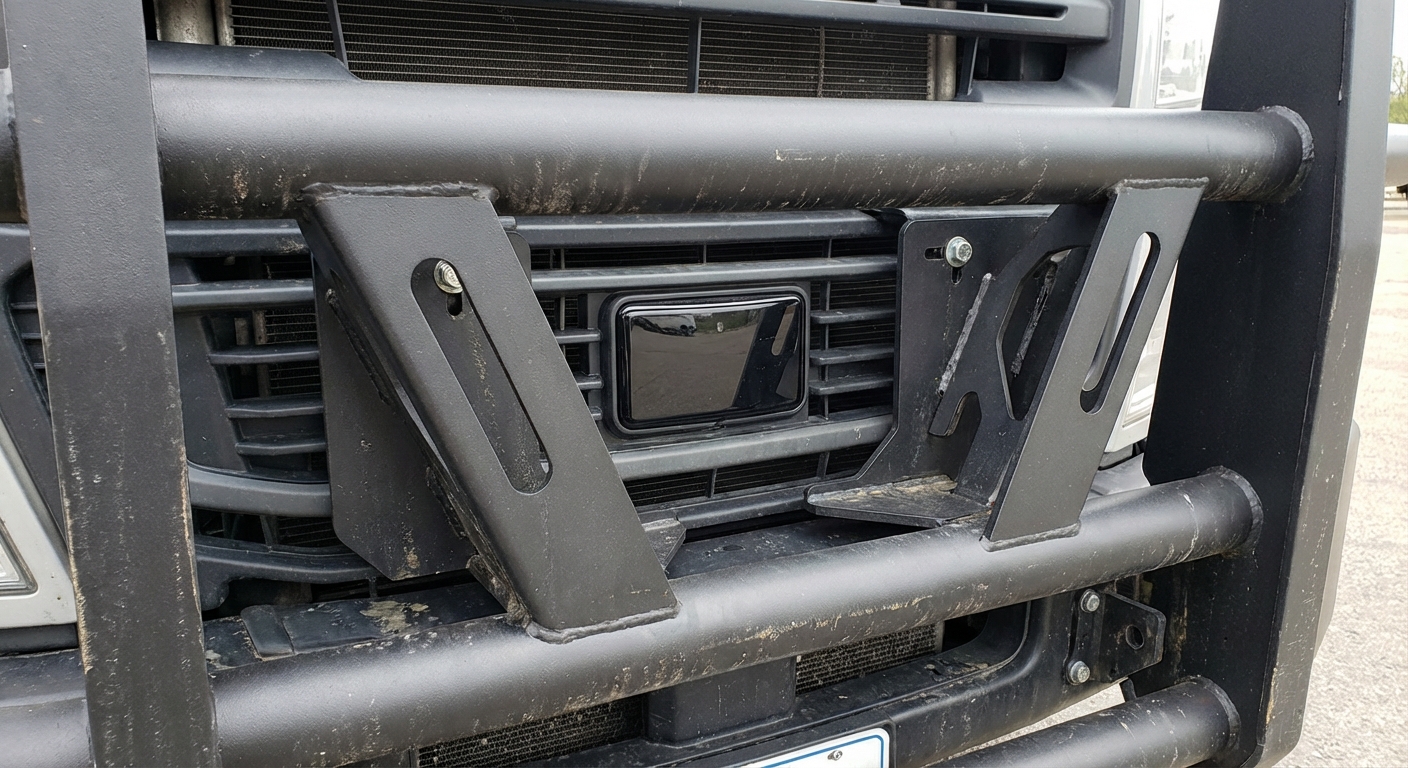
Professionally engineered grille guards are specifically designed with mounting brackets that do not interfere with radar-based collision avoidance systems. Choosing a semi truck grille guard ensures that your adaptive cruise control remains fully functional. Engineering for safety system transparency is a priority for modern fleets.
Maintaining Adaptive Cruise Control Functionality
The radar sensor must have a clear line of sight to the road. Believe it or not: modern guards use specialized brackets to position the sensor precisely where the manufacturer intended. This prevents false alarms or system failures.
- Precision-cut sensor windows
- Adjustable mounting brackets
- Anti-vibration sensor housing
Engineering for Safety System Transparency
Safety technology and physical protection must work in harmony. You do not have to sacrifice active safety for passive hardware durability.
Key Takeaway: Radar-compliant designs allow fleets to utilize advanced driver assistance systems without risking front-end damage.
| System Type | Guard Feature | Performance Result |
|---|---|---|
| Radar | Integrated Bracket | Uninterrupted road scanning |
| Cameras | Low-Profile Bars | Clear field of view for lane assist |
| Proximity | Accurate Offsets | Normal parking sensor operation |
Ensuring compatibility with your truck’s electronic safety suite is critical for maintaining OEM performance standards.
Can a grille guard minimize minor collision repair costs?
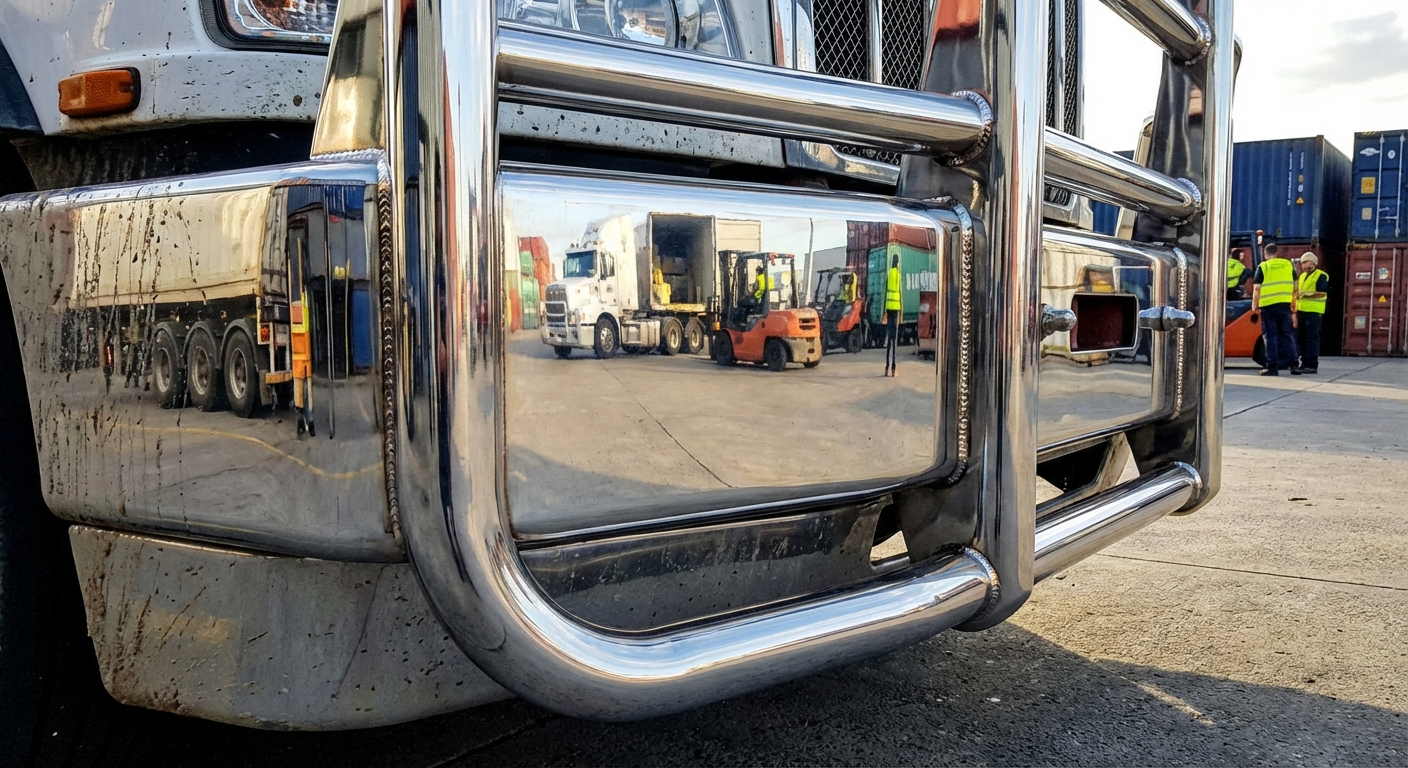
A grille guard can prevent expensive bodywork by absorbing the shock of low-speed parking lot or loading dock collisions. A semi truck grille guard acts as a structural buffer during minor fender-benders. This helps you avoid the “Big Three” repair costs: radiators, fans, and headlights.
Saving the Radiator and Headlight Assemblies
Minor impacts in tight spaces can lead to massive repair bills. The best part? A guard often costs less than a single headlight assembly replacement on a modern truck.
- Absorbing low-speed shocks
- Preventing cosmetic paint damage
- Shielding chrome finishes and trim
Protecting Against Common Transportation Accidents
Parking lot incidents account for nearly 20% of all insurance claims in the trucking industry. Using a guard can turn a potentially expensive day in the shop into a non-event.
Key Takeaway: Front-end guards serve as a mechanical barrier that prevents minor impacts from causing expensive structural repairs.
| Impact Location | Guard Benefit | Estimated Cost Savings |
|---|---|---|
| Corner Bumper | Deflection | $1,500 – $3,000 |
| Center Grille | Cooling Protection | $5,000 – $10,000 |
| Headlight | Impact Shielding | $2,000+ |
Investing in front-end durability significantly reduces the frequency of small but costly body shop visits.
Do grille guards offer extra mounting for accessories?
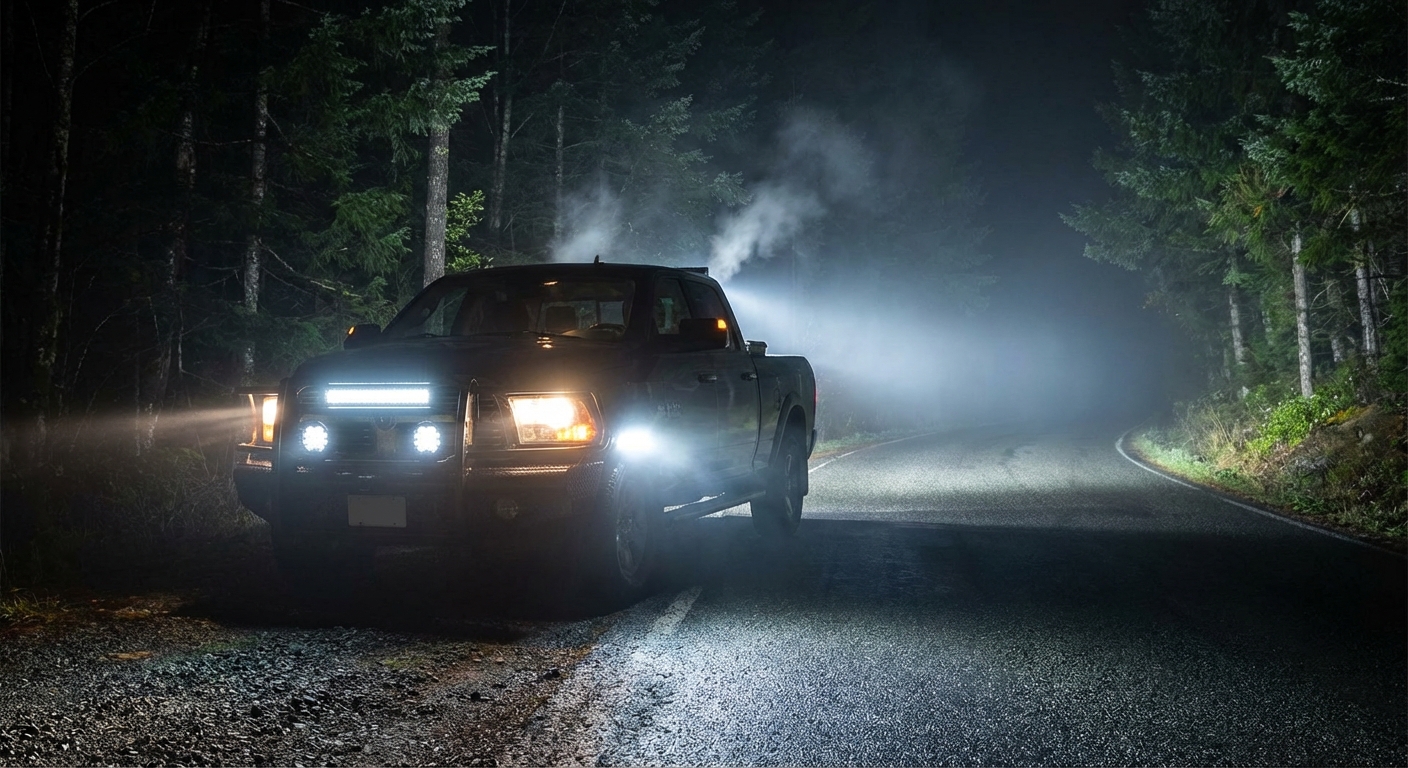
Grille guards provide a stable and convenient platform for mounting auxiliary lighting, tow hooks, and license plate brackets. A semi truck grille guard allows you to customize your vehicle without drilling into the factory bumper. This enhances both the utility and safety of your truck during night driving.
Enhancing Visibility with LED Strip Integration
Extra lighting is essential for navigating dark rural roads or snowy mountain passes. Wait, there’s more: the guard provides a rigid frame that minimizes light vibration for a steadier beam.
- LED light bars and fog lamps
- High-visibility amber strobes
- Standardized mounting tabs
Simplifying Recovery with Integrated Tow Points
Heavy-duty guards often feature tow-through capabilities for emergency recovery operations. This makes it safer for service vehicles to pull the truck without damaging the chassis.
Key Takeaway: Accessory mounting points add functional value to the truck while improving the driver’s environment and safety.
| Accessory Type | Mounting Benefit | Driver Advantage |
|---|---|---|
| LED Fog Lights | Enhanced Low-Level Light | Better road edge visibility |
| Tow Hooks | Frame-Direct Support | Safer emergency recovery |
| License Plate | Standard Brackets | Ease of legal compliance |
Expanding the truck’s functional capabilities through accessory mounting points provides a better return on your hardware investment.
Is professional installation necessary for fleet units?
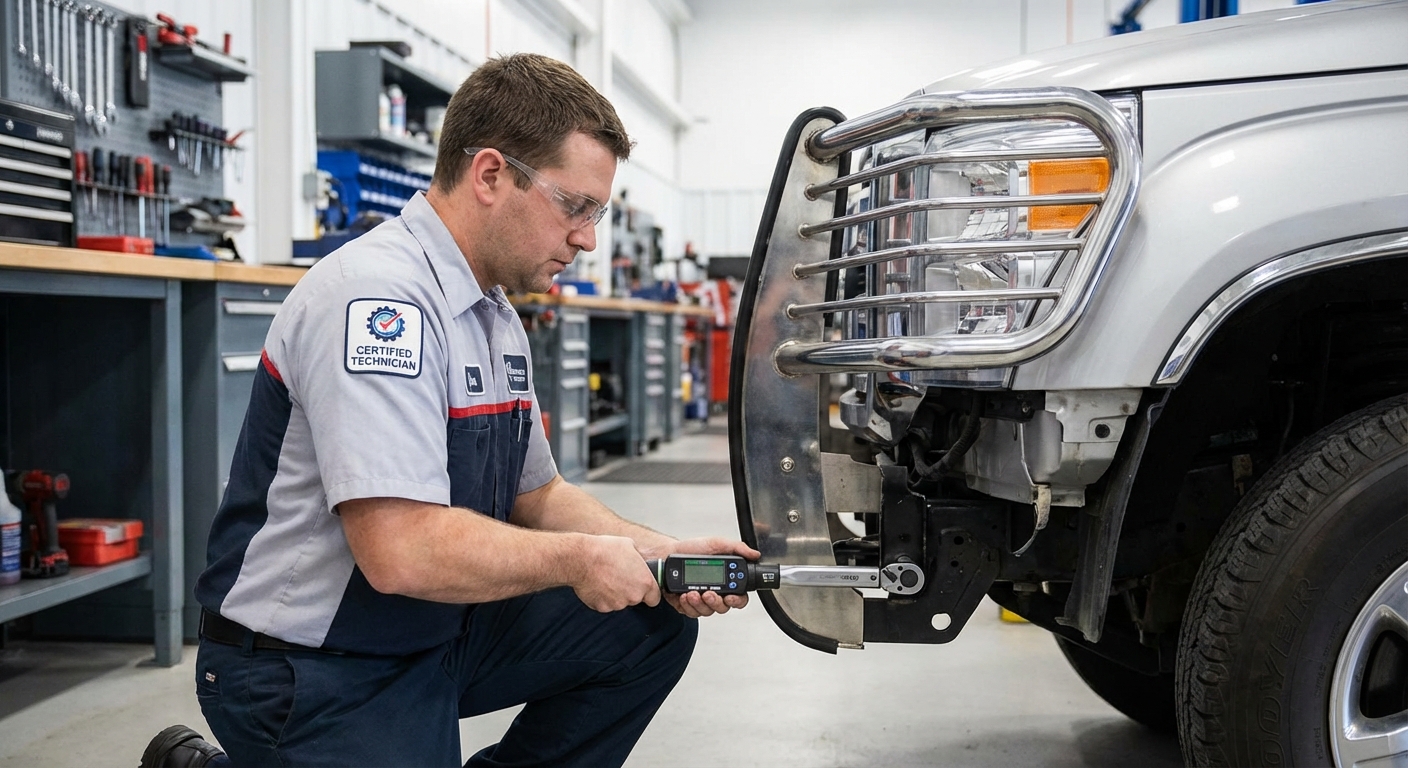
Professional installation ensures perfect fitment and maintains the manufacturer’s warranty while guaranteeing proper impact energy distribution. Every semi truck grille guard must be securely fastened to the truck’s tow receivers for maximum effectiveness. This ensures that the guard does not vibrate loose during long-haul operations.
Precision Mounting into Tow Receivers
Certified technicians understand the torque requirements and clearance needs for your specific truck model. That is not all: they can also verify that all electronics and sensors are calibrated correctly after the install.
- Heavy-gauge steel mounting brackets
- Hardware torque verification
- Perfect alignment with the hood
Why Warranty Coverage Matters for Long-Haulers
Proper installation protects the structural integrity of both the guard and the truck frame. A professional setup ensures that you are covered if any component fails during normal service.
Key Takeaway: Secure, professional mounting is the only way to ensure the guard performs as intended during a high-speed collision.
| Install Factor | DIY Risk | Professional Benefit |
|---|---|---|
| Alignment | Hood interference | Guaranteed 100% fitment |
| Torque | Loose hardware | Structural safety compliance |
| Electronics | Sensor blockage | Calibrated radar function |
Utilizing expert technicians for the installation process maximizes the safety and lifespan of your front-end protection.
Why is 304 stainless steel the best material choice?
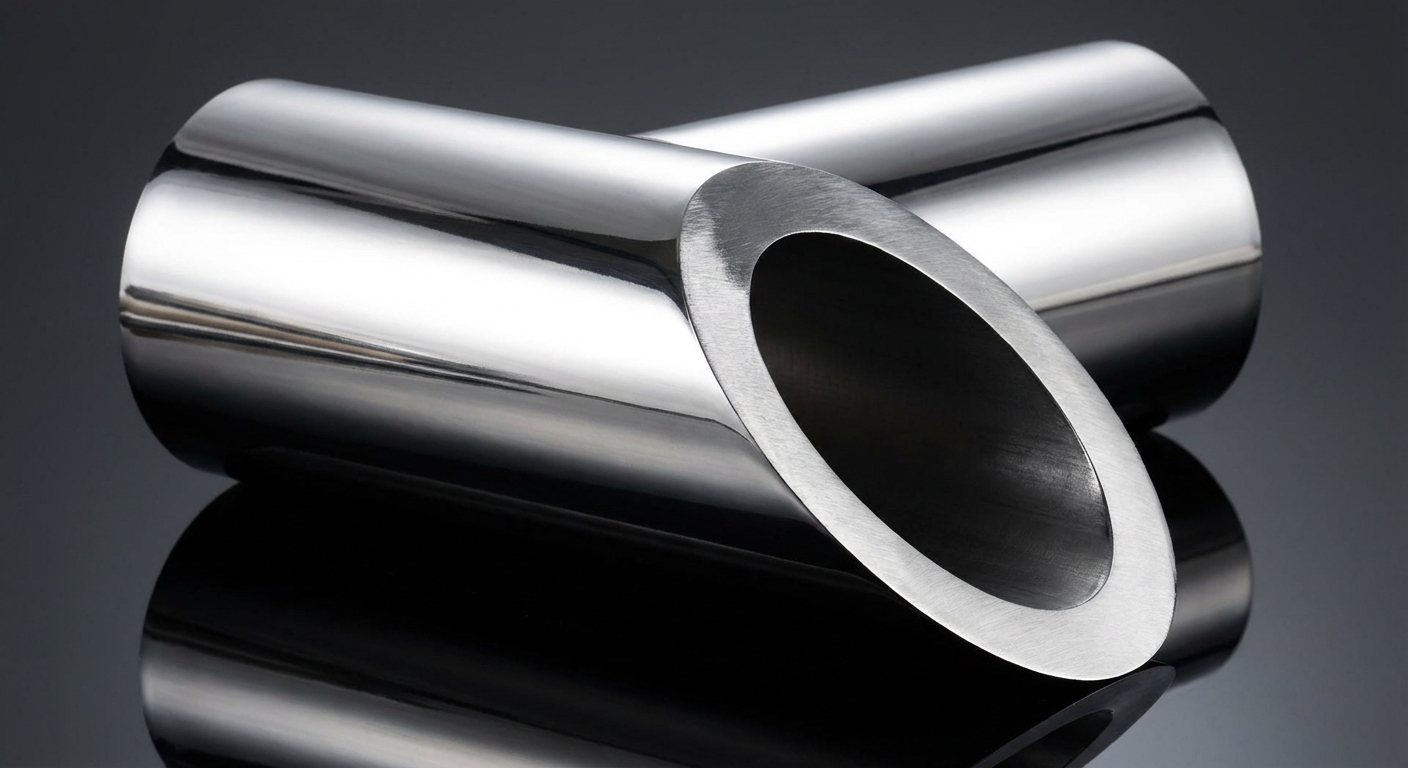
304 stainless steel is the premier material choice because it offers the highest levels of strength combined with exceptional corrosion resistance. Selecting a semi truck grille guard made from this material ensures the guard will not rust over time. Premium materials maintain their professional finish despite exposure to salt and harsh road chemicals.
Comparing Stainless Steel to Aluminum
Stainless steel provides much higher impact resistance than aluminum alternatives. Think about this: while aluminum is lighter, it often cracks or deforms under forces that stainless steel can easily withstand.
- Superior tensile strength
- Extreme corrosion resistance
- Minimal long-term maintenance
The Gold Standard of Resilience
The mirror-polished finish of 304 stainless steel looks professional and resists scratching. It is the most durable choice for trucks operating in winter conditions where road salt is prevalent.
Key Takeaway: Choosing high-grade stainless steel ensures your investment lasts the entire lifespan of the truck without deteriorating.
| Material Property | Aluminum | 304 Stainless Steel |
|---|---|---|
| Strength | Moderate | Superior |
| Rust Resistance | High | Exceptional |
| Finish Durability | Low (Scratches easily) | High (Mirror Polish) |
Using the highest quality materials prevents premature failure and keeps the fleet looking pristine for years.
How do grille guards maintain truck resale value?
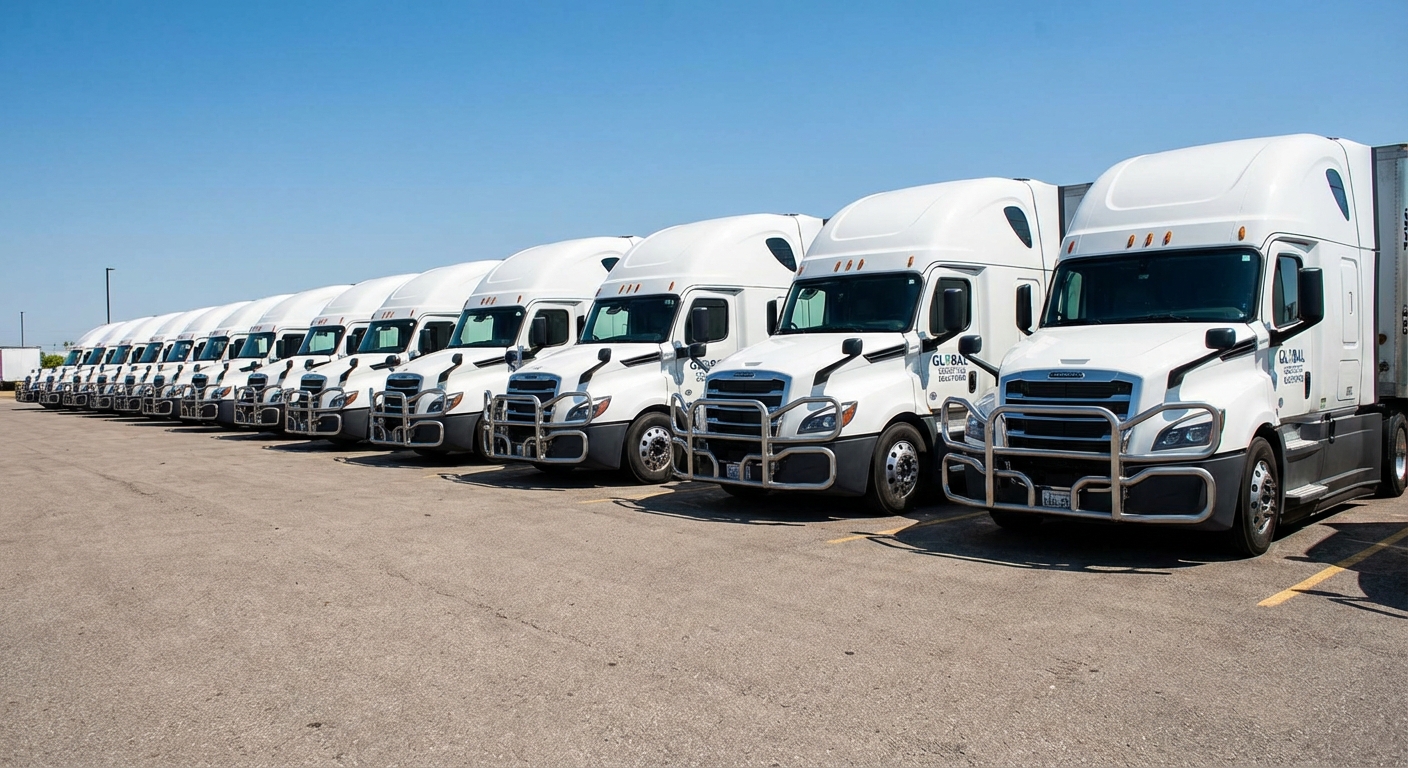
Grille guards preserve resale value by preventing the cosmetic and structural deterioration that typically occurs at the truck’s front end. A semi truck grille guard keeps body panels in “like-new” condition throughout the vehicle’s service life. This signals to future buyers that the truck has been meticulously maintained and protected.
Signaling Proactive Maintenance to Buyers
A clean front end with no history of major repairs is a massive selling point on the secondary market. It gets better: trucks equipped with protection systems are often viewed as lower-risk assets by procurement specialists.
- No “hidden” radiator repairs
- Clean, damage-free headlights
- Intact fiberglass hood panels
Keeping the Fleet Aesthetic Professional
Matching guards across a fleet create a cohesive and professional appearance. This aesthetic appeal translates into a higher perceived value when it comes time to trade in or sell.
Key Takeaway: Protecting the truck’s exterior today ensures a much higher return on investment when you upgrade your fleet.
| Resale Factor | Unprotected Truck | Protected Truck |
|---|---|---|
| Front Appearance | Pitted and Chipped | Like-New Condition |
| Repair History | Frequent Bodywork | Minimal Front-End Claims |
| Market Appeal | Average | High (Proactive Care) |
Maintaining the physical condition of the truck is the most effective way to protect its equity over hundreds of thousands of miles.
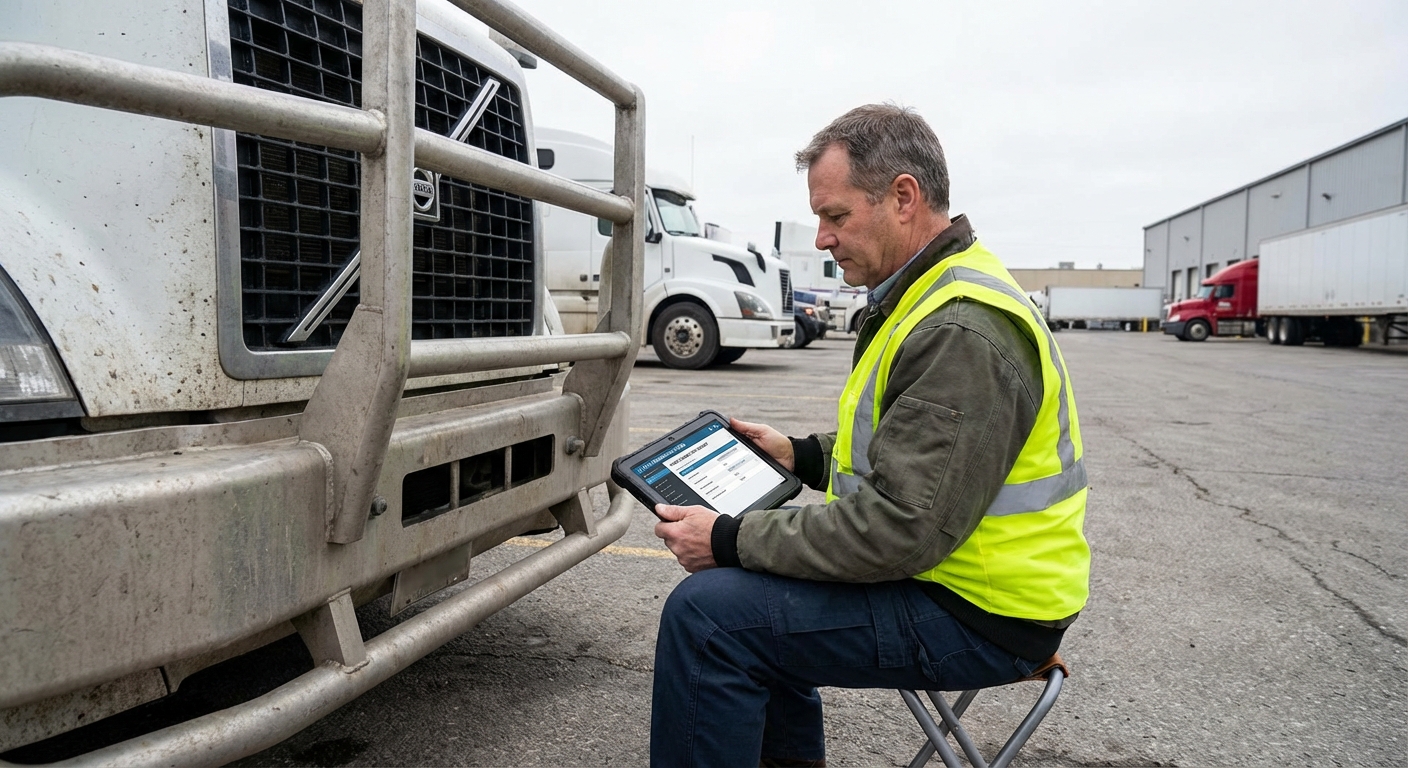
Installing a grille guard can lower insurance premiums by demonstrating a commitment to risk management and reducing the likelihood of expensive claims. Many underwriters view a semi truck grille guard as a safety enhancement that prevents total-loss engine damage. This reduces the overall risk profile for the insurance provider.
Mitigating Risk for Insurance Underwriters
Insurance companies track the frequency and severity of animal-related claims. Here is the deal: fewer total-loss incidents lead to better safety ratings and lower long-term premiums for the entire fleet.
- Fewer unscheduled maintenance claims
- Reduced severity of wildlife impacts
- Proven safety equipment installation
The Long-Term Impact on Claim Frequency
Consistent use of front-end protection results in a documented history of safety. This data is vital during yearly insurance reviews to negotiate better rates for the operator.
Key Takeaway: Proactive safety hardware reduces the financial burden on insurance carriers, which can lead to lower operating costs for you.
| Fleet Metric | Without Guards | With Guards |
|---|---|---|
| Claim Severity | High (Total Loss) | Low (Part Repair) |
| Safety Rating | Standard | Enhanced |
| Premium Potential | Increasing | Stable/Decreasing |
Demonstrating a professional approach to risk management helps secure the financial future of your trucking operation.
Frequently Asked Questions
- Can I install a grille guard myself?
Yes, but professional installation is highly recommended to ensure the guard is correctly torqued and aligned with the truck’s sensors and hood. - What’s the best material for a grille guard?
304 stainless steel is the industry gold standard due to its high strength, impact absorption, and resistance to corrosion. - Can I use a guard with adaptive cruise control?
Absolutely, as long as you choose a model with specific radar-compatible brackets designed for your truck’s safety system. - What’s the best way to maintain the finish?
Regular washing with mild soap and occasional polishing with a stainless steel cleaner will keep the mirror finish looking new for years. - Can I add tow hooks to my guard?
Yes, most heavy-duty guards feature integrated mounting points specifically designed for tow-through recovery operations.
Protecting your investment is about more than just avoiding the shop; it is about ensuring long-term profitability and safety. Our engineering team builds the most durable front-end protection in the industry, designed to withstand the harshest North American conditions. Contact us today to find the perfect guard for your fleet.