
Selecting the right material for your truck depends on balancing your specific needs for impact protection, weight savings, and budget. Protecting your front-end assets is a constant battle against wildlife and road debris that threatens to sideline your operations. You know that a single collision can cost thousands in repairs and even more in lost transit time. By choosing the optimal semi truck grille guards material, you secure your fleet against these unpredictable risks.
Why pick a semi truck grille guards material?
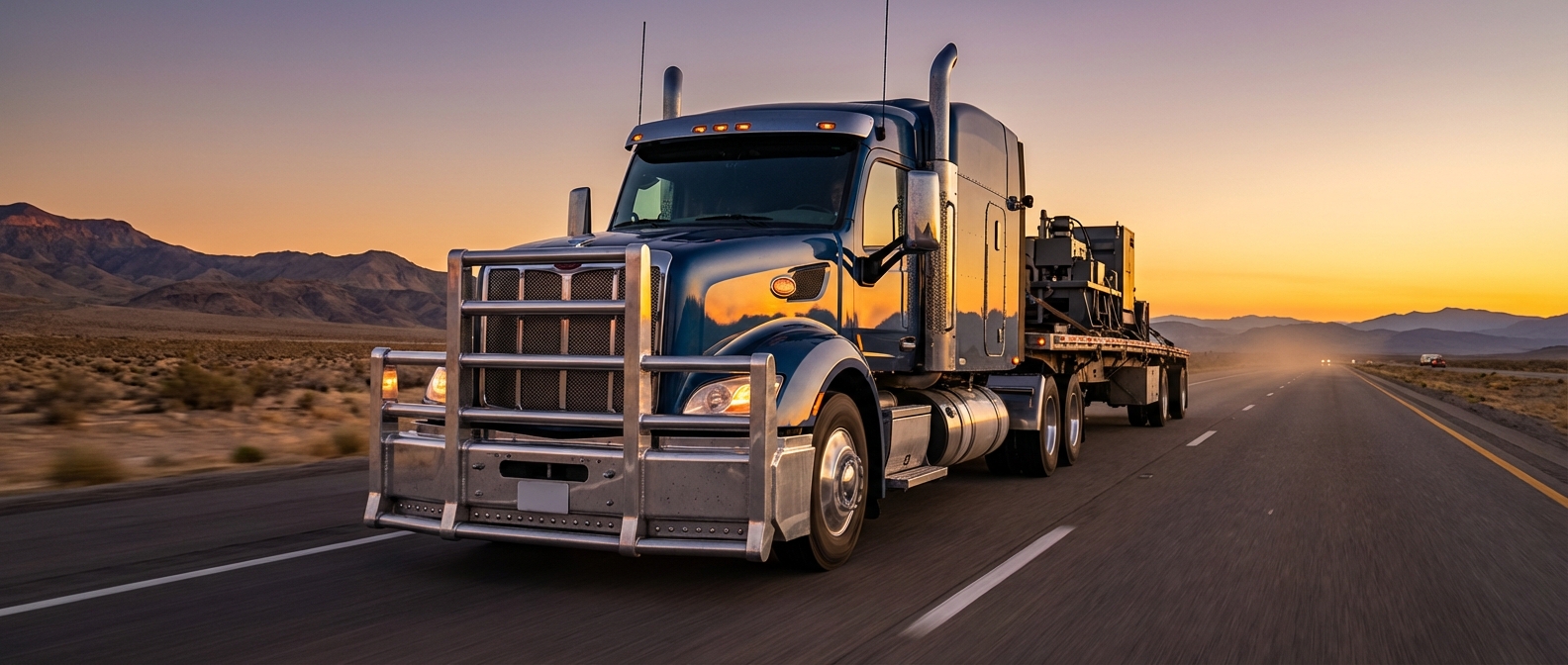
Balancing Strength and Weight
You must evaluate how each semi truck grille guards material affects your fuel economy and front-axle load. Choosing a material that is too heavy might reduce your payload capacity, while one that is too light might fail during a deer strike.
Think about it.
Professional fleet managers prioritize materials that offer a high strength-to-weight ratio to ensure maximum ROI.
Why does impact resistance matter?
Impact resistance is the primary reason you invest in front-end protection to begin with. The right material absorbs the kinetic energy of a collision, preventing it from reaching the radiator or engine components.
Consider these factors:
- Tensile strength of the alloy.
- Yield point under stress.
- Thickness of the metal plating.
- Quality of the weld points.
Is steel the toughest semi truck grille guards material?
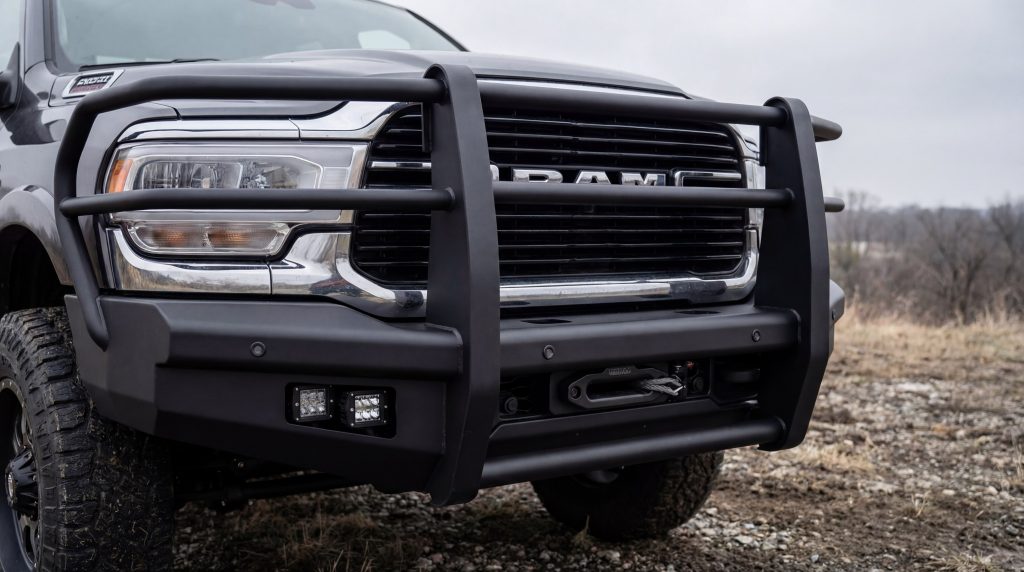
Heavy-Gauge Steel Construction Benefits
Steel is the undisputed leader when you require the highest possible level of structural integrity for heavy-duty applications. This semi truck grille guards material is engineered to withstand massive force without deforming or cracking.
Here is the kicker.
While it is the heaviest option, its sheer mass provides a physical barrier that lighter metals simply can’t match.
Is steel better for wildlife protection?
When you are operating in regions with high moose or elk populations, steel provides the “stop-dead” capability you need. It manages the energy of large animal strikes by utilizing its high density and structural rigidity.
Steel features include:
- High-tensile carbon content.
- 5mm or thicker gauge options.
- Superior weld penetration.
- Long-term structural memory.
| Feature | Steel Performance |
|---|---|
| Impact Strength | Exceptional |
| Weight | High |
| Durability | Exceptional |
| Repairability | Excellent |
Steel remains the standard for extreme environments where physical mass is the only thing standing between a deer and your radiator.
Key Takeaway: Steel is the best material for maximum protection in high-risk wildlife areas where weight is a secondary concern to stopping power.
Why choose aluminum as a semi truck grille guards material?
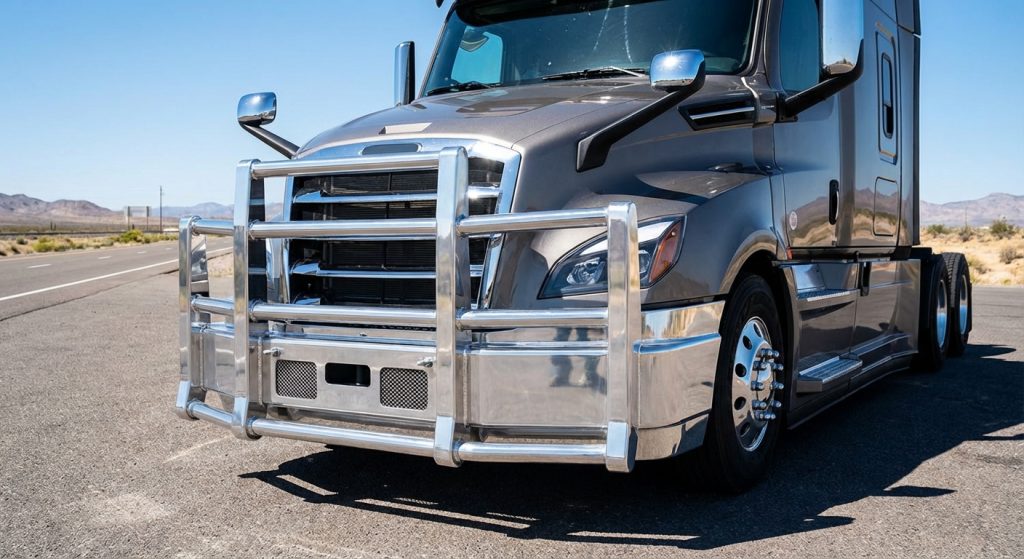
Lightweight Efficiency for Long-Haul Fleets
Aluminum is the ideal semi truck grille guards material when you need to maintain fuel efficiency over thousands of highway miles. It significantly reduces the weight on your front axle compared to traditional steel guards.
You might be wondering.
Modern reinforced aluminum alloys offer a surprising amount of strength while keeping your truck’s curb weight low for better payload management.
Can aluminum handle heavy impacts?
High-quality guards use reinforced aluminum which is much stronger than standard consumer-grade alloys. These are specifically designed to deflect debris and survive strikes from animals without compromising the vehicle’s operation.
Aluminum advantages:
- Corrosion resistance.
- Lower fuel consumption.
- Easier installation process.
- Non-magnetic properties.
| Feature | Aluminum Performance |
|---|---|
| Impact Strength | Moderate to High |
| Weight | Very Low |
| Durability | Good |
| Aesthetic | Modern/Sleek |
Aluminum offers the best compromise for highway fleets that need protection but can’t afford the weight penalty of steel.
Key Takeaway: Choose reinforced aluminum if your priority is fuel economy and payload capacity without leaving your front end completely exposed.
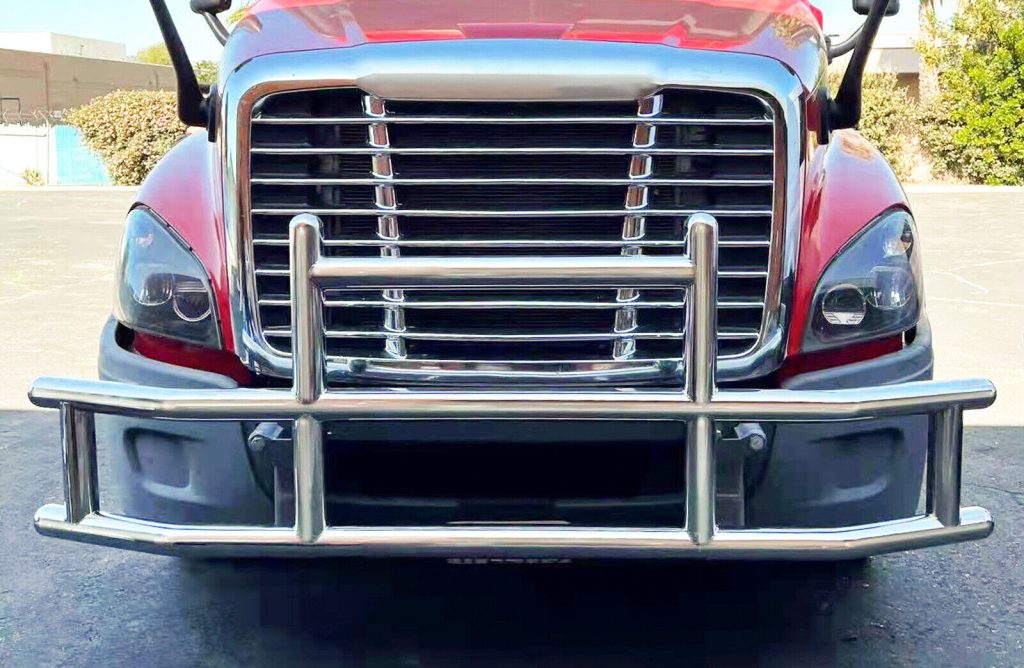
Corrosion Resistance of Stainless Steel
Stainless steel serves as a premium semi truck grille guards material because it combines the strength of steel with natural resistance to rust. You won’t have to worry about road salt or harsh weather eating away at the structure over time.
It gets better.
The chromium content in the alloy creates a self-healing layer that prevents oxidation even if the surface is scratched.
Is stainless steel worth the investment?
For owner-operators and show-truck fleets, the high-end aesthetic of polished stainless steel is often worth the higher initial price point. It maintains a mirror-like finish for years with minimal maintenance compared to chrome-plated alternatives.
Stainless benefits:
- High luster finish.
- Zero rust concerns.
- Great impact durability.
- High resale value.
| Feature | Stainless Performance |
|---|---|
| Impact Strength | Very High |
| Weight | Moderate |
| Durability | Maximum |
| Maintenance | Low |
Stainless steel provides the ultimate longevity for trucks operating in coastal or winter environments where salt is prevalent.
Key Takeaway: Stainless steel is the best long-term investment for durability and aesthetics, particularly in corrosive environments.
Which semi truck grille guards material is most affordable?
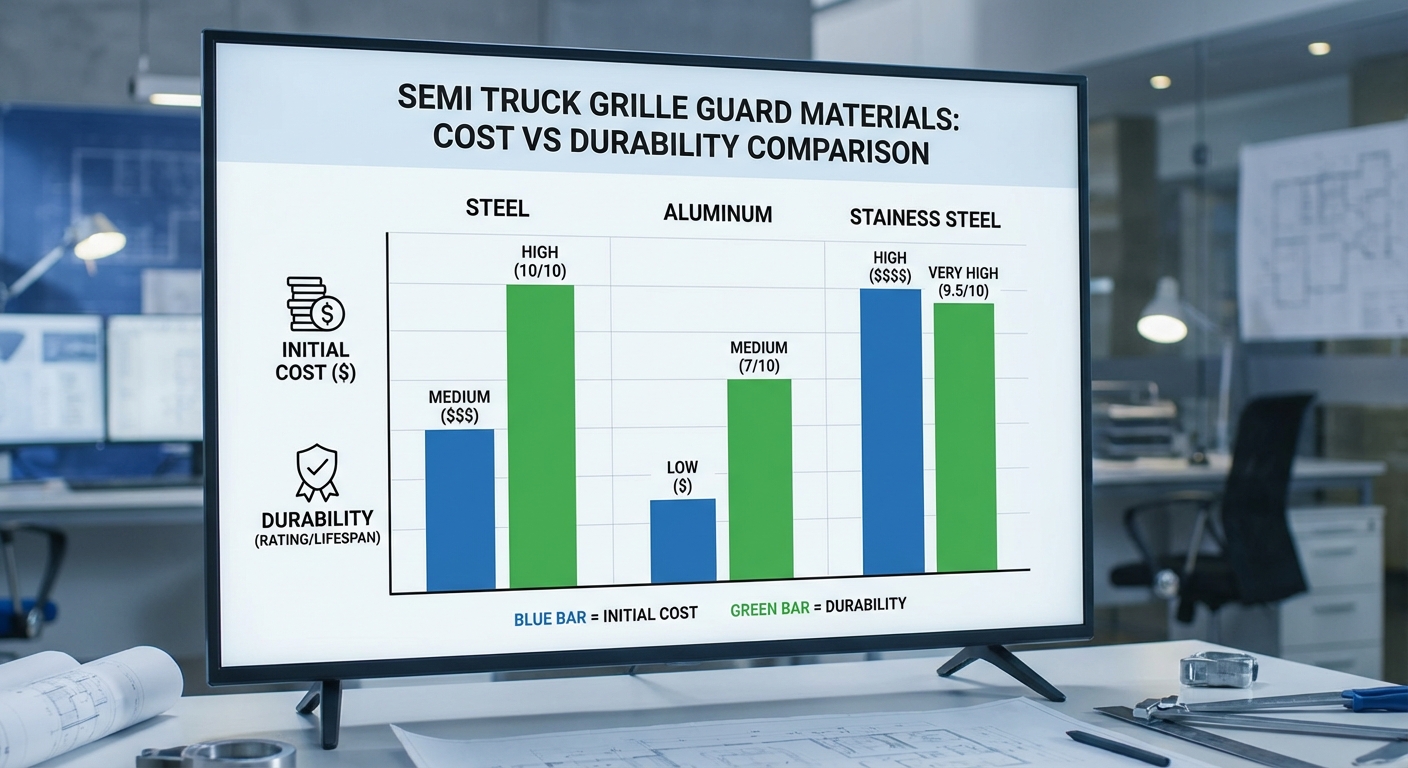
Cost-Effectiveness of Powder-Coated Steel
Powder-coated steel is typically the most budget-friendly semi truck grille guards material available on the market today. It provides a high level of protection at a price point that makes fleet-wide implementation feasible.
But wait, there’s more.
The initial savings allow you to outfit more trucks, reducing the overall risk profile of your entire operation simultaneously.
Does lower cost mean lower quality?
A lower price for steel usually reflects the lower cost of the raw material rather than a compromise in defensive capability. When properly treated with a high-quality finish, these guards perform just as well as more expensive options in a collision.
Affordability factors:
- Low raw material cost.
- Efficient manufacturing.
- Standardized designs.
- Scalability for fleets.
| Feature | Cost-Effective Steel |
|---|---|
| Initial Price | Lowest |
| Impact Rating | High |
| Finish Life | Moderate |
| Total ROI | Very High |
Selecting powder-coated steel allows you to maximize your safety budget while providing excellent protection against road hazards.
Key Takeaway: Powder-coated steel is the best choice for large fleets looking to standardize front-end protection without excessive capital expenditure.
Does semi truck grille guards material affect weight?
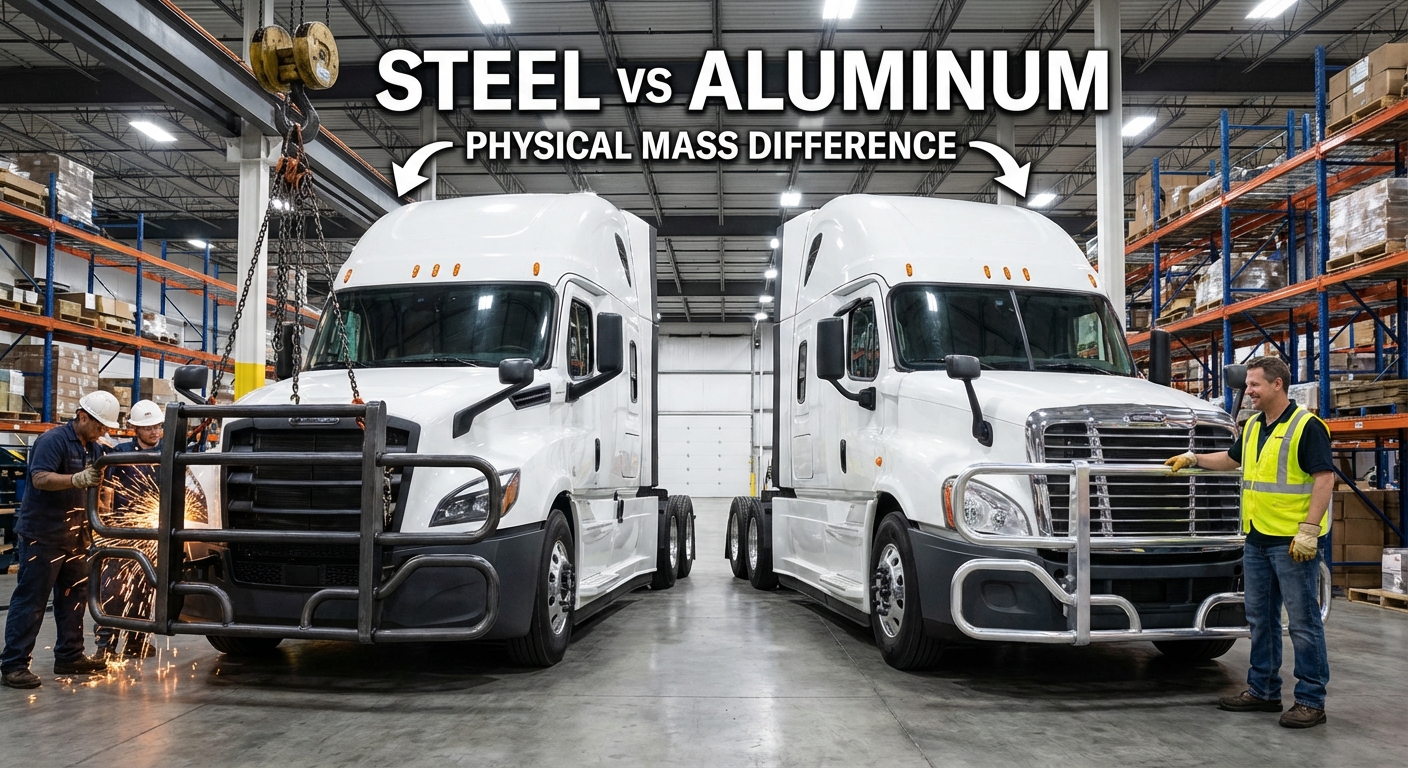
Fuel Efficiency and Payload Considerations
The weight of your semi truck grille guards material has a direct impact on your daily operating costs and legal weight limits. Heavy guards can weigh several hundred pounds, which may push a loaded truck over its front-axle rating.
Let that sink in.
Every pound of protection you add is a pound of revenue-generating freight you might have to leave behind.
How much weight can you save?
Switching from heavy steel to a reinforced aluminum guard can save over 100 pounds per vehicle in many cases. This weight reduction helps maintain the factory handling characteristics of your truck and reduces wear on the front suspension.
Weight considerations:
- Front-axle weight limits.
- Tire wear patterns.
- Steering responsiveness.
- Suspension longevity.
| Material | Relative Weight |
|---|---|
| Steel | 100% (Baseline) |
| Stainless | ~95% |
| Aluminum | ~40-50% |
| Composite | ~30% |
Reducing front-end weight through smart material selection improves the overall efficiency and handling of your commercial vehicle.
Key Takeaway: Aluminum is the superior choice when weight savings and fuel efficiency are your primary operational goals.
How does semi truck grille guards material impact finish?
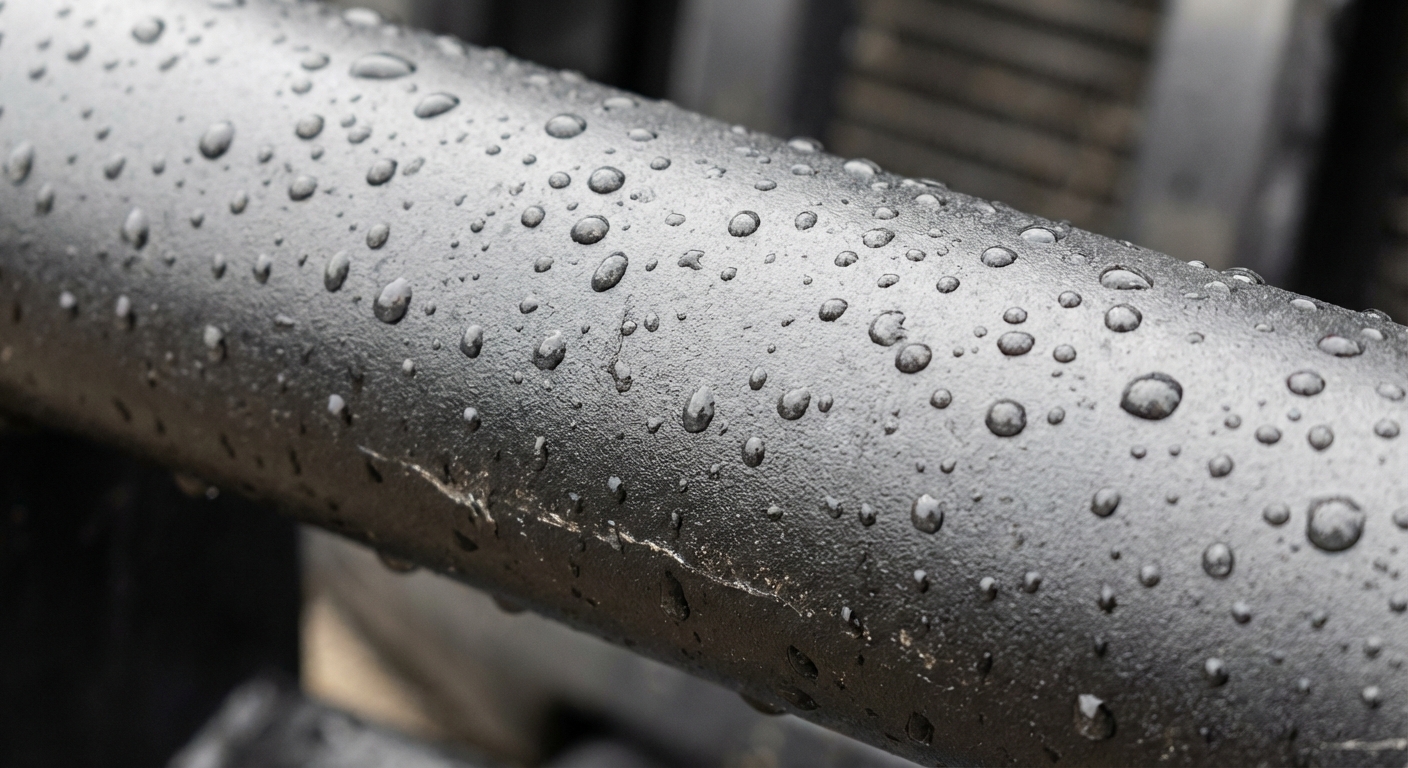
Powder Coating and Industrial Finishes
The finish applied to your semi truck grille guards material determines how well the guard resists the elements and maintains its professional appearance. Powder coating is the industry standard for steel, providing a thick, durable barrier against moisture.
The results are clear.
A high-quality finish prevents the underlying metal from oxidizing, ensuring the structural integrity of the guard remains intact for years.
What about polished finishes?
If you prefer a bright look, you must choose between chrome plating on steel or polishing the base metal of aluminum and stainless. While chrome looks great initially, it can flake or peel if the guard is impacted by rocks or debris.
Finish options:
- Textured powder coat.
- High-gloss black.
- Mirror-polished metal.
- Brushed matte finish.
| Finish Type | Durability | Aesthetic |
|---|---|---|
| Powder Coat | Very High | Professional |
| Chrome | Moderate | Flashy |
| Polished | High | Premium |
The material you choose dictates the available finishes and the amount of maintenance required to keep the truck looking its best.
Key Takeaway: Powder coating on steel offers the best durability-to-cost ratio, while polished stainless offers the best long-term look.
Which semi truck grille guards material fits off-road?
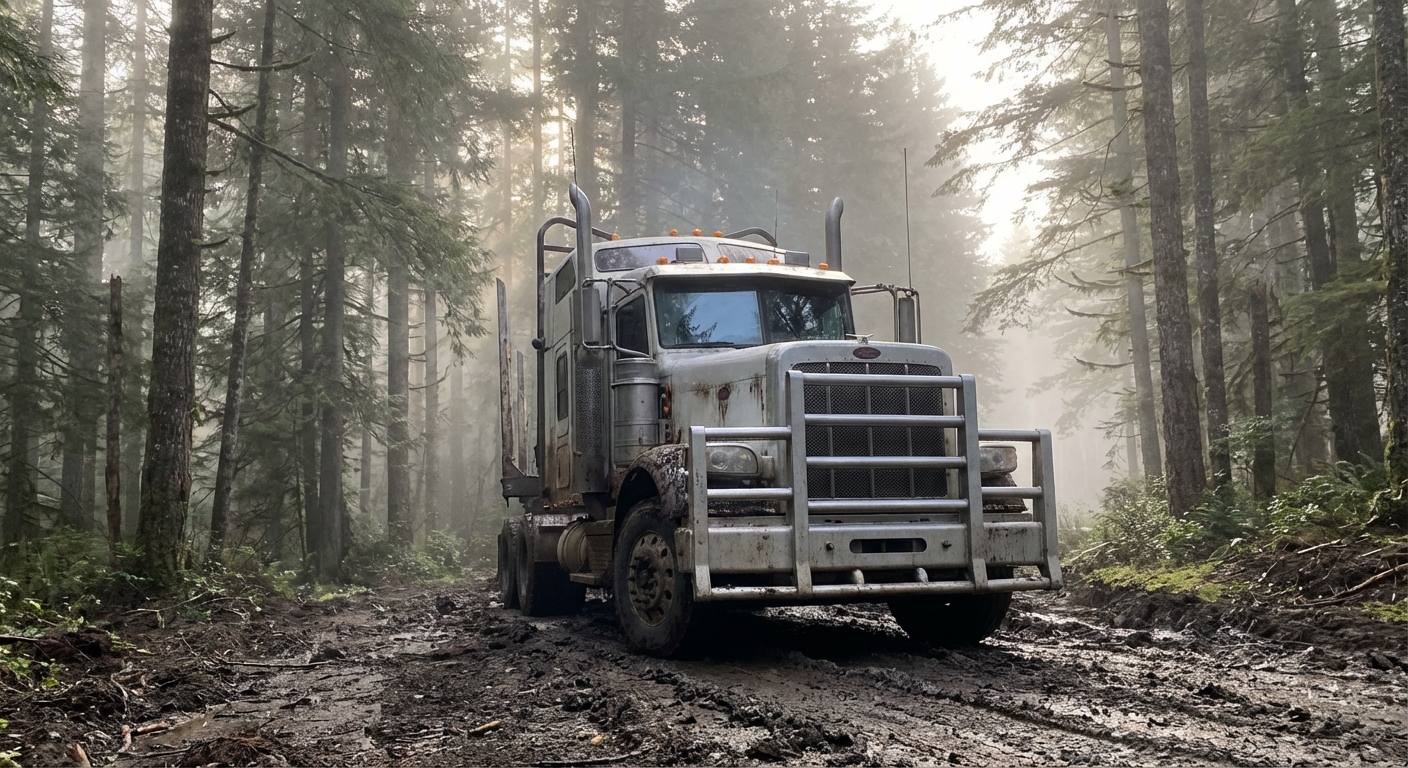
Durability for Logging and Northern Routes
Off-road environments require a semi truck grille guards material that can handle constant vibration and frequent impacts from brush or rocks. Steel is often the preferred choice here because it can be easily straightened or welded if it sustains damage.
Think about this.
In remote logging sites, you need a guard that can act as a push-bar or a recovery point without snapping under tension.
Can aluminum survive the bush?
While reinforced aluminum is tough, it can be more prone to cracking under the extreme, repetitive stress of unpaved roads. Steel’s natural elasticity allows it to absorb the “thumping” of off-road driving more effectively over a long service life.
Off-road requirements:
- High vibration resistance.
- Field-repairable material.
- Maximum impact thickness.
- Reinforced mounting brackets.
| Environment | Best Material |
|---|---|
| Logging | Heavy Steel |
| Mining | Heavy Steel |
| Construction | Steel/Reinforced Alum |
For the toughest jobs off the pavement, steel provides the ruggedness and repairability that your drivers demand in the field.
Key Takeaway: Heavy-gauge steel is the only logical choice for off-road, logging, or northern routes where severe impacts are expected.
Can semi truck grille guards material stop rust?
Weathering Salt and Winter Environments
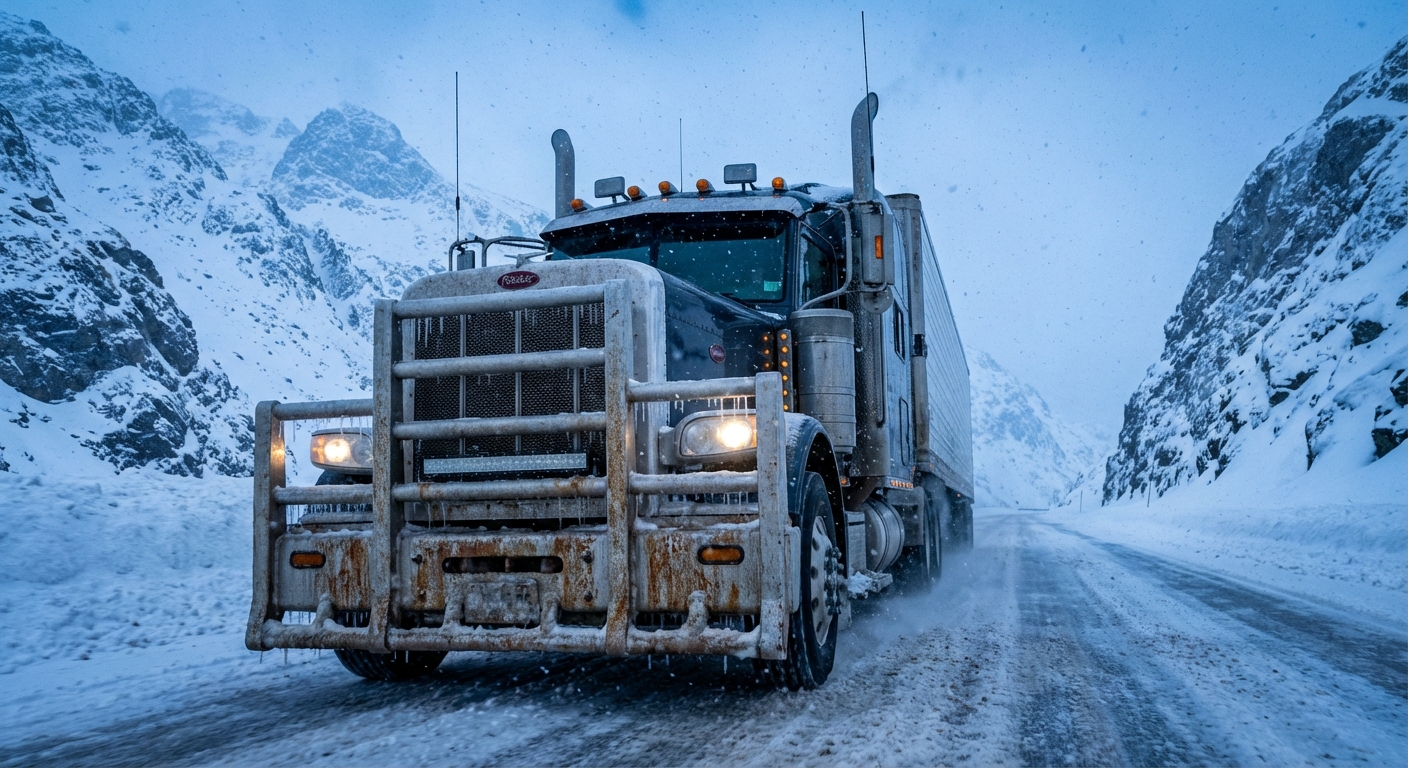
To stop rust, you need a semi truck grille guards material that is inherently non-corrosive or protected by an impermeable barrier. Aluminum and stainless steel are the best choices for regions where road salt is used heavily throughout the winter months.
Believe it or not.
Even a small chip in the paint of a standard steel guard can lead to “rust bleed” that quickly spreads and weakens the metal.
How do surface treatments help?
Galvanization or high-zinc primers can be added to steel guards to provide an extra layer of cathodic protection against the environment. However, if you want a “set it and forget it” solution, nothing beats the natural properties of stainless or aluminum alloys.
Rust prevention tips:
- Choose 304-grade stainless.
- Use aluminum for salt air.
- Inspect powder coating regularly.
- Wash off road salt weekly.
| Material | Rust Resistance |
|---|---|
| Aluminum | High |
| Stainless Steel | Exceptional |
| Coated Steel | Moderate |
Proper material selection is your first line of defense against the corrosive cocktail of snow, ice, and chemical de-icers.
Key Takeaway: Aluminum and stainless steel are the premier choices for preventing rust and maintaining structural integrity in winter climates.
What is the best semi truck grille guards material?
Selecting Based on Application and Fleet Needs
The “best” material is ultimately the one that solves your specific operational challenges while fitting within your budget. If you face heavy wildlife, steel is best; if you need fuel savings, aluminum wins; and if you want total longevity, stainless is the answer.
Don’t settle for less.
By matching the material properties to your typical route and cargo, you ensure that your investment pays for itself through reduced downtime.
Why partner with an OEM manufacturer?
An experienced manufacturer like Brontec can provide about us insights into which material suits your truck platform best. We utilize CNC precision and AWS-certified welding to ensure that whatever material you choose is built to the highest North American standards.
Summary Checklist:
- Assess wildlife risk levels.
- Calculate payload weight limits.
- Evaluate regional rust factors.
- Review total lifecycle costs.
At Brontec, we solve the problem of front-end vulnerability by offering a complete range of heavy-duty protection products. We can do everything from custom design to mass OEM production, ensuring your fleet stays on the road and out of the repair shop. Our brand stands for engineering excellence and 100% fitment guarantees. To secure your fleet with the industry’s toughest protection, contact us today.
Frequently Asked Questions
Can I install a steel grille guard on my own?
Yes, most of our guards are designed for a 100% bolt-on fitment that requires no drilling or specialized tools. You will likely need a second person or a mechanical hoist to help position the guard due to the weight of the steel components.
What’s the best material for a truck operating in Canada?
Stainless steel or heavy-duty reinforced aluminum is generally the best for northern climates because they resist the corrosive effects of road salt. These materials maintain their structural integrity even after years of exposure to harsh winter de-icers.
How do I know if my guard needs to be replaced after a strike?
You should inspect the mounting brackets and weld points for any cracks or significant deformation immediately following an impact. If the guard has bent significantly enough to touch the bodywork or if the structural welds are compromised, it has done its job and should be replaced.
Can I get a custom finish on an aluminum guard?
Yes, aluminum can be powder-coated in various colors or polished to a high-luster finish depending on your brand’s aesthetic requirements. Powder coating also adds an extra layer of protection against pitting and surface oxidation.
What’s the most durable material for off-road logging?
Heavy-gauge steel is the most durable choice because it offers the highest resistance to the jagged impacts and high vibrations typical of logging roads. It also provides the necessary rigidity to be used for minor pushing or recovery tasks if necessary.