
Are grille guards worth the investment for owner-operators? Yes, investing in a robust grille guard is absolutely worth the money for owner-operators who can’t afford sudden, business-ending downtime. Imagine cruising down a pitch-black highway at midnight when a sudden wildlife collision shatters your radiator, instantly crushing your lone business asset. When your single rig goes down, everything stops, and your fixed operational expenses continue to pile up while your cash flow completely vanishes. The smartest solution is to insulate your business from these catastrophic road surprises by installing premium semi truck front protection that absorbs destructive kinetic forces before they ever reach your critical engine components.
Why Is Single-Rig Operation Under Constant Threat?
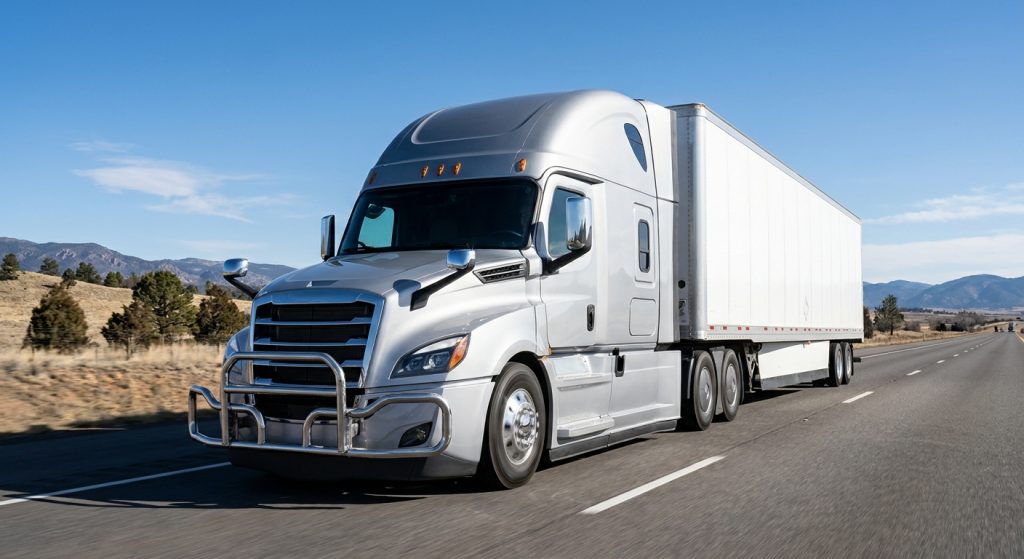
Single-rig operations are under constant threat because they lack the fleet safety net to absorb unexpected collision downtime. For an independent driver, your truck is not just a vehicle; it is your entire revenue generator. Protecting your front end with semi truck front protection is the most effective way to guarantee your business remains operational through unforeseen road hazards.
Unlike large carrier fleets that can easily shift loads to spare units, solo operators face severe financial penalties if their only truck sits idle. A single accident can shut down your cash flow for weeks.
Is Your Cash Flow Protected Against Accidents?
Think about it: how long can your business survive if your truck is sitting in a repair bay waiting for replacement parts? When an unexpected front-end strike occurs, the immediate repairs are only a fraction of the total economic loss.
- Fixed Truck Payments: Your lease or financing payments never pause for repairs.
- Insurance Costs: Monthly premium obligations remain active even if the truck is parked.
- Permit and License Fees: Ongoing administrative overhead continues to drain your business accounts.
- Contractual Penalties: Shippers may charge late fees or terminate contracts for missed delivery windows.
Protecting your engine ensures you stay on the road, preserving your business cash flow.
What Are the Real Operational Uptime Risks?
Look: any damage to your radiator or charge air cooler instantly disables your engine and leaves you stranded on the shoulder. These sensitive aluminum components are positioned right at the nose of your truck, leaving them highly vulnerable to impacts.
- Coolant Loss: Even a tiny crack in the radiator core leads to rapid engine overheating.
- Turbocharger Failure: Punctured charge air coolers drop boost pressure and destroy fuel efficiency.
- Sensor Protection: Modern front-end radar units are expensive and easily destroyed by minor impacts.
Securing your front end prevents these minor strikes from escalating into major operational disasters.
Key Takeaway: For solo owner-operators, maintaining maximum vehicle uptime is a non-negotiable requirement for business survival. A premium front guard serves as your physical defense against catastrophic operational downtime.
| Operational Risk Factor | Unprotected Severity | Protected Outcome | Business Impact |
|---|---|---|---|
| Cooling System Breach | High (Immediate Engine Shutdown) | Prevented (Guard Absorbs Energy) | Continuous Operation |
| Active Sensor Damage | High (Costly Radar Replacement) | Shields (Deflects Direct Impacts) | Zero Sensor Calibrations |
| Frame Alignment Twisting | Severe (Potential Total Write-off) | Distributes (Directs Force to Mounts) | Preserves Structural Value |
This clear contrast in operational outcomes highlights how physical armor shifts the odds back in favor of independent drivers.
How Do Wildlife Collisions Devastate Your Balance Sheet?
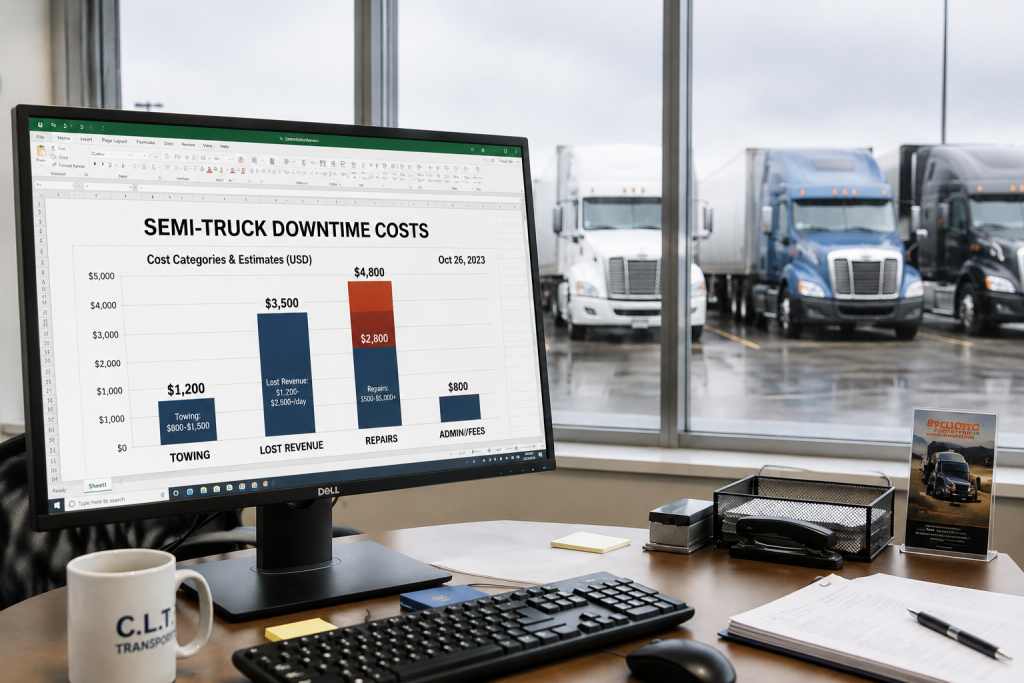
Wildlife collisions devastate your balance sheet by forcing thousands of dollars in sudden repair bills and heavy-duty towing fees. Installing semi truck front protection prevents animal impacts from crushing your engine compartment.
When a large animal strikes your truck at highway speeds, the damage spreads far beyond the fiberglass hood. Without armor, the entire cooling module is crushed back into the engine fan.
What Happens When a Deer Strikes Your Radiator?
Here is the kicker: a standard deer strike at 65 mph transfers over 50,000 foot-pounds of energy directly into your radiator. This immense force easily obliterates plastic OEM bumpers and tears through aluminum cooling tubes.
- Destroyed Fans: The radiator gets pushed back, shattering the engine fan blades.
- Severed Belts: Broken fan blades tear through serpentine belts, disabling water pumps and alternators.
- Cracked Blocks: Sudden coolant loss under heavy load can warp cylinder heads or crack engine blocks.
These compound failures transform a simple collision into a major overhaul.
Can You Survive Sudden Towing and Repair Bills?
But that is not all: the direct cost of the repair is just the beginning of your financial headache. Towing a disabled Class 8 truck from a remote rural highway can cost thousands before the shop even opens your hood.
- Heavy Recovery Fees: Specialized rotator trucks charge premium hourly rates for highway towing.
- Out-of-Pocket Deductibles: Insurance deductibles require substantial upfront cash payments at the shop.
- Premium Part Markups: Roadside repair shops often charge inflated prices for emergency OEM parts.
Avoiding these surprise expenses keeps your hard-earned profits inside your business bank account.
Key Takeaway: A single wildlife collision can easily drain your cash reserves and force you into high-interest debt. Physical armor prevents these catastrophic balance sheet events by taking the impact for your truck.
| Incident Expense Category | Unprotected Cost Range | Protected Cost Range | Realized Savings |
|---|---|---|---|
| Heavy-Duty Towing | $1,500 – $4,000 | $0 (Drive Away Safely) | Up to $4,000 |
| Radiator & Fan Assembly | $3,500 – $6,500 | $0 (Zero Core Damage) | Up to $6,500 |
| OEM Fiberglass Hood | $5,000 – $8,000 | $0 – $1,200 (Minor Cosmetic) | Up to $6,800 |
Reviewing these real-world collision costs demonstrates why physical front-end protection is a highly practical business investment.
Can Heavy-Duty Steel Absorb Violently Fast Impacts?
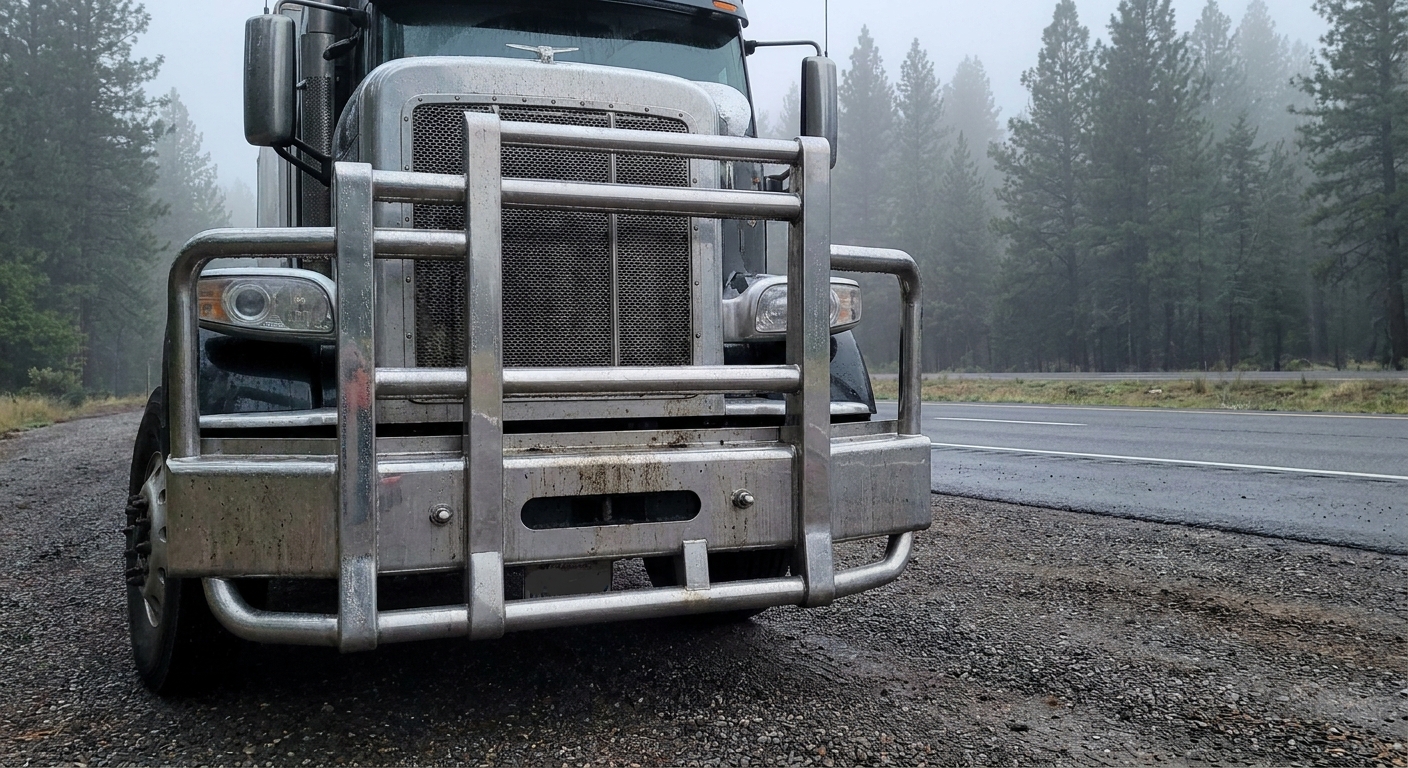
Heavy-duty steel and premium aluminum alloys are engineered to absorb violently fast impacts by transferring kinetic energy into the frame rails. Investing in robust semi truck front protection ensures that high-speed collisions do not compromise your vehicle’s structural core.
Modern protective systems are carefully designed to act as energy-absorbing shields. They prevent localized forces from crushing critical mechanical assemblies.
How Does Structural Metal Deflect Heavy Animals?
Think about it: the geometry of a premium guard is specifically designed to deflect large animals downward and outward. This structured deflection prevents the mass of the animal from rolling up over your hood and striking your windshield.
- Tapered Tubes: Deflect impacts away from the center line of the truck.
- Welded Gussets: Support structural uprights, preventing them from bending backward.
- Thick-Walled Alloys: Resist tearing and puncture under extreme localized pressure.
This active deflection keeps both your engine components and your cabin workspace safe.
Why Does Frame Mounting Prevent Radiator Crushing?
Look: a guard is only as strong as its mounting points, which is why premium designs bolt directly to the chassis. By utilizing your truck’s heavy steel frame rails, the guard distributes impact forces across the entire vehicle structure.
- Tow Receiver Mounting: Connects directly into the strongest structural points of the truck.
- High-Tensile Fasteners: Grade 8 bolts prevent the brackets from shearing under load.
- Force Distribution: Spreads localized impact energy safely along both frame rails.
This ensures the delicate aluminum components behind the guard experience zero physical stress.
Key Takeaway: True impact survival relies on direct-to-frame mounting and engineered energy distribution. High-quality structural materials ensure your guard acts as a rigid shield rather than bending into your hood.
| Structural Component | Premium Engineering | Cheap Retail Standard | Operational Result |
|---|---|---|---|
| Tube Construction | 3.0″ Heavy-Gauge Structural Alloy | 2.0″ Thin-Walled Pipe | Resists collapse under extreme impact |
| Mounting Style | Direct-to-Frame Tow Receiver | Universal bumper-lip clamps | Transfers force directly to chassis |
| Structural Welding | AWS Certified robotic welds | Uncertified hand-welding | Eliminates joint failure during stress |
This comparison shows how premium manufacturing standards ensure your guard performs flawlessly when an impact occurs.
Does Highway Debris Cause Constant Micro-Damages?
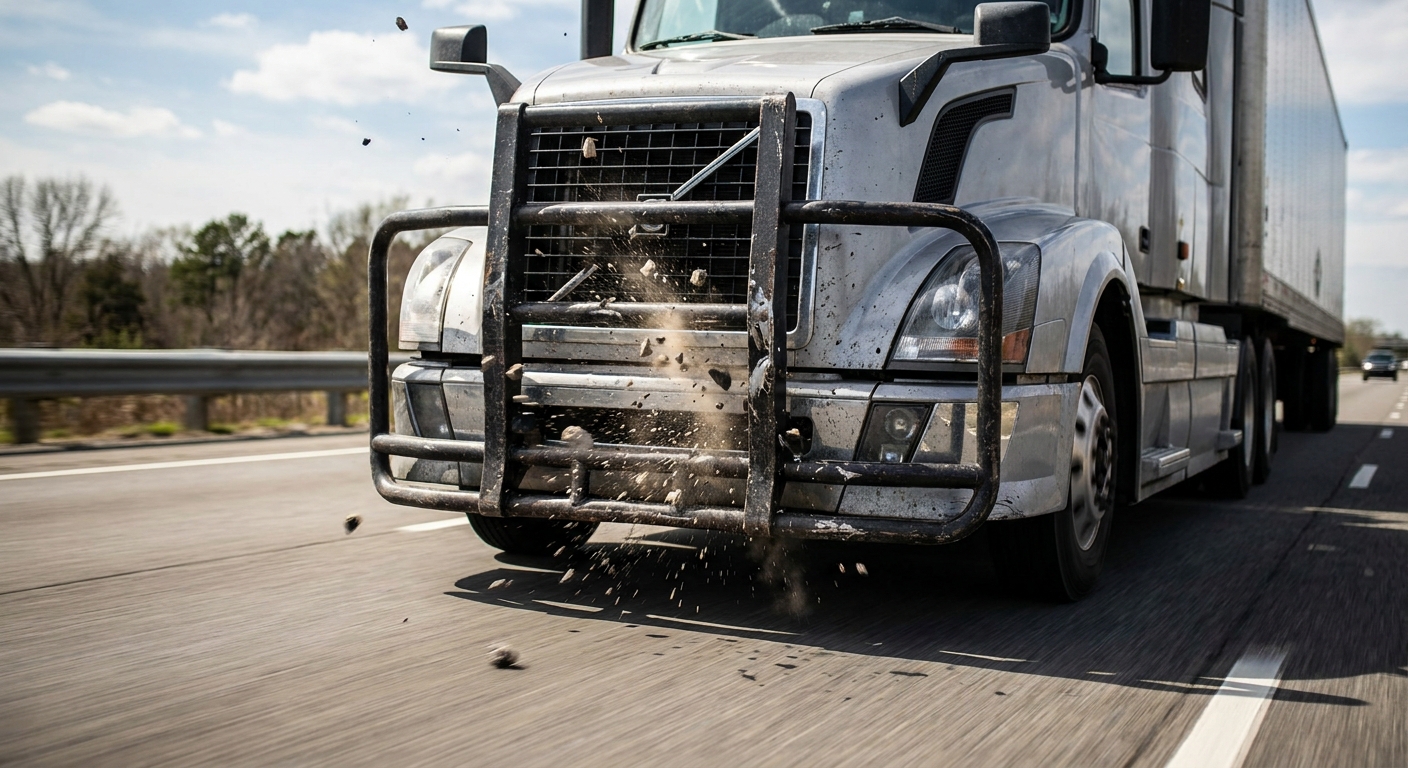
Highway debris causes constant micro-damages to unprotected rigs, leading to slow radiator leaks and unexpected sensor failures. Equipping your vehicle with premium semi truck front protection prevents road debris from slowly wearing down your cooling systems.
While wildlife strikes are dramatic, the daily barrage of rocks, road gators, and construction debris causes more cumulative downtime. Protecting against these everyday threats is essential for long-haul survival.
Are Road Gators and Stray Stones Destructive?
But that is not all: a shredded trailer tire resting on the highway can weigh up to 100 pounds and act like a physical battering ram at 70 mph. Striking a road gator without protection can easily tear off your bumper and sever vital cooling lines.
- Punctured Radiators: Small, sharp stones kicked up by other trucks slowly chip away at aluminum radiator fins.
- Severed Wiring: Flying debris can easily cut exposed electrical harnesses for lights and sensors.
- A/C Condenser Damage: Debris can puncture your air conditioning condenser, leading to uncomfortable cab conditions.
A continuous steel barrier blocks these daily projectiles, preserving your cooling efficiency.
How Do Low-Speed Yard Maneuvers Harm Your Nose?
Here is the kicker: some of the most frustrating front-end damage occurs at low speeds in crowded shipper yards or tight truck stops. A misjudged backup maneuver from an adjacent trailer can easily crush your expensive fiberglass hood.
- Corner Protection: Wrap-around guard wings shield your vulnerable fiberglass fender corners.
- Docking Collisions: Absorbs the impact if your truck accidentally contacts a hidden obstacle while maneuvering.
- Bumper Scrapes: Prevents low-speed rubbing from scraping paint or cracking chrome bumpers.
These heavy-duty metal barriers provide a physical buffer zone that absorbs everyday warehouse scuffs.
Key Takeaway: Daily road debris and yard maneuvers pose a constant, costly threat to your truck’s front end. Continuous physical armor defends your rig against these minor, profit-draining incidents.
| Debris Threat | Unprotected Damage Outcome | Protected Defense Result | Operational Cost Saved |
|---|---|---|---|
| Road Gator (Tire) | Cracked bumper, cut sensor wires | Deflected under the frame rails | $1,200 – $2,800 |
| Stray Stones / Gravel | Punctured radiator, micro-leaks | Blocked by high-density vertical bars | $1,500 – $3,500 |
| Low-Speed Yard Scrapes | Torn fiberglass fender panel | Absorbed by wrap-around outer tubes | $3,000 – $5,500 |
These daily operational savings prove why continuous physical protection is vital for maintaining a clean, professional truck.
Will Active Safety Systems Work Behind Heavy Guards?
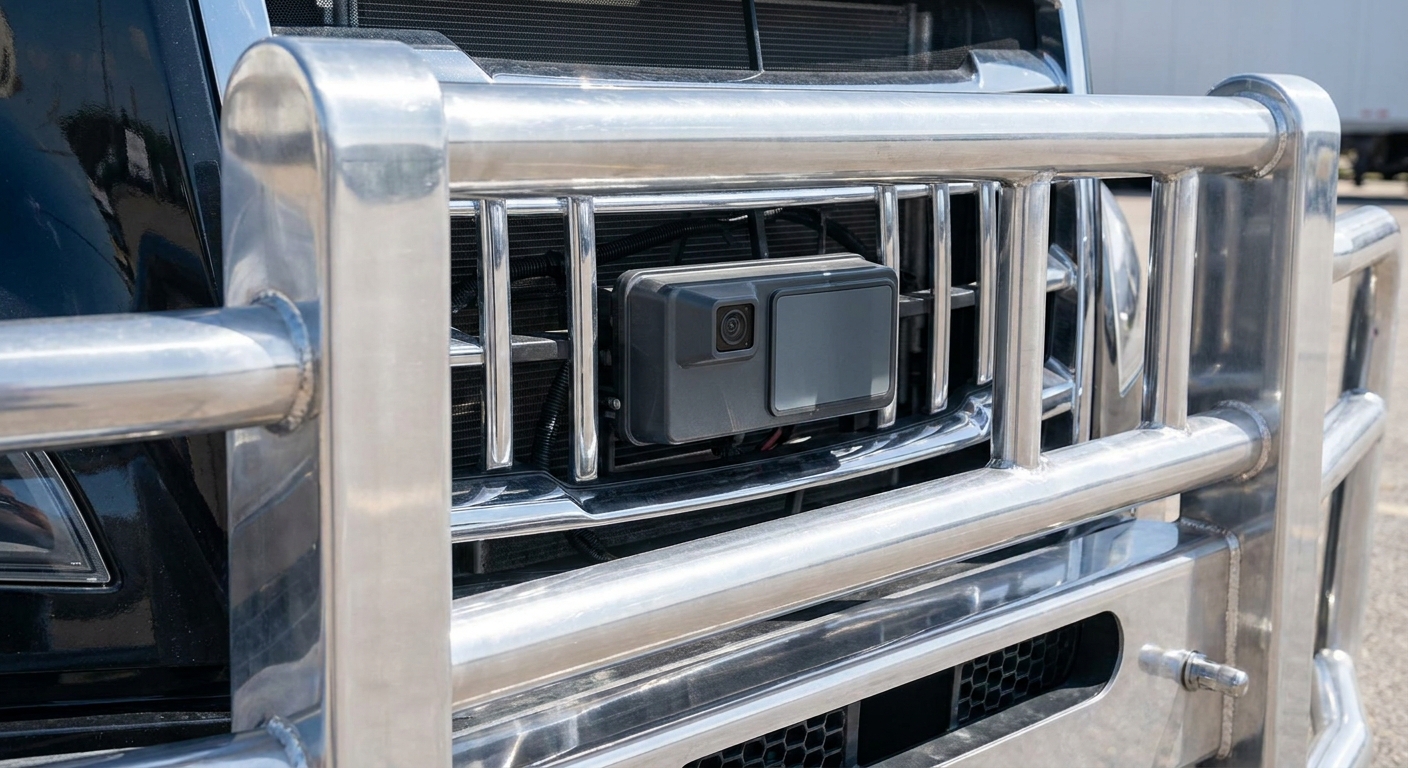
Active safety systems function perfectly behind premium guards that feature pre-engineered, radar-compatible window openings. Integrating advanced semi truck front protection ensures you never have to choose between digital driver assistance and physical armor.
Modern Class 8 trucks rely on front-mounted radar sensors to power advanced collision avoidance systems (CAS) and adaptive cruise control. Premium manufacturers design their guards to integrate seamlessly with these vital systems.
Do Radar Beams Face Unobstructed Paths?
Look: radar systems operate by sending high-frequency waves straight ahead of your truck to detect potential collision hazards. If a metal bar is placed directly in front of the radar, it blocks the beam and triggers system errors.
- Radar Window Openings: Specifically aligned cutouts allow the radar signal to pass through cleanly.
- Zero Interference: Keeps your adaptive cruise control tracking vehicles accurately on the highway.
- Sensor Protection: Rigid steel frame prevents road vibrations from throwing the radar sensor out of alignment.
This ensures your electronic safety networks operate exactly as the manufacturer intended.
How Does CAS Integration Keep Drivers Safe?
Think about it: automatic emergency braking systems require clear sensor data to prevent devastating high-speed rear-end collisions. Having a guard that respects these sensors keeps your active safety systems fully armed and ready to intervene.
- Forward Collision Warnings: Delivers timely alerts on your dashboard without false alarms.
- Active Braking Support: Allows the truck to apply emergency braking forces when a hazard is detected.
- Fleet Compliance: Keeps your truck compliant with corporate safety mandates and insurance regulations.
This integration provides the ultimate combination of digital and physical security.
Key Takeaway: Modern premium guards are engineered to be fully compatible with advanced safety radar systems. You can enjoy the benefits of active collision avoidance while having a heavy-duty physical shield out front.
| Safety System | Unprotected Vulnerability | Protected Compatibility | Driver Benefit |
|---|---|---|---|
| Collision Avoidance (CAS) | High risk of expensive sensor destruction | Perfect operation via radar window | Keeps automatic emergency braking active |
| Adaptive Cruise Control | Sensor alignment easily lost to vibration | Stabilized by rigid mounting brackets | Consistent, hassle-free highway cruising |
| Lane Departure Warning | Unaffected (camera-based) | Unaffected (camera-based) | Fully preserved active safety assist |
This seamless integration of electronics and physical armor provides complete peace of mind during long highway hauls.
How Fast Do Heavy-Duty Guards Pay for Themselves?
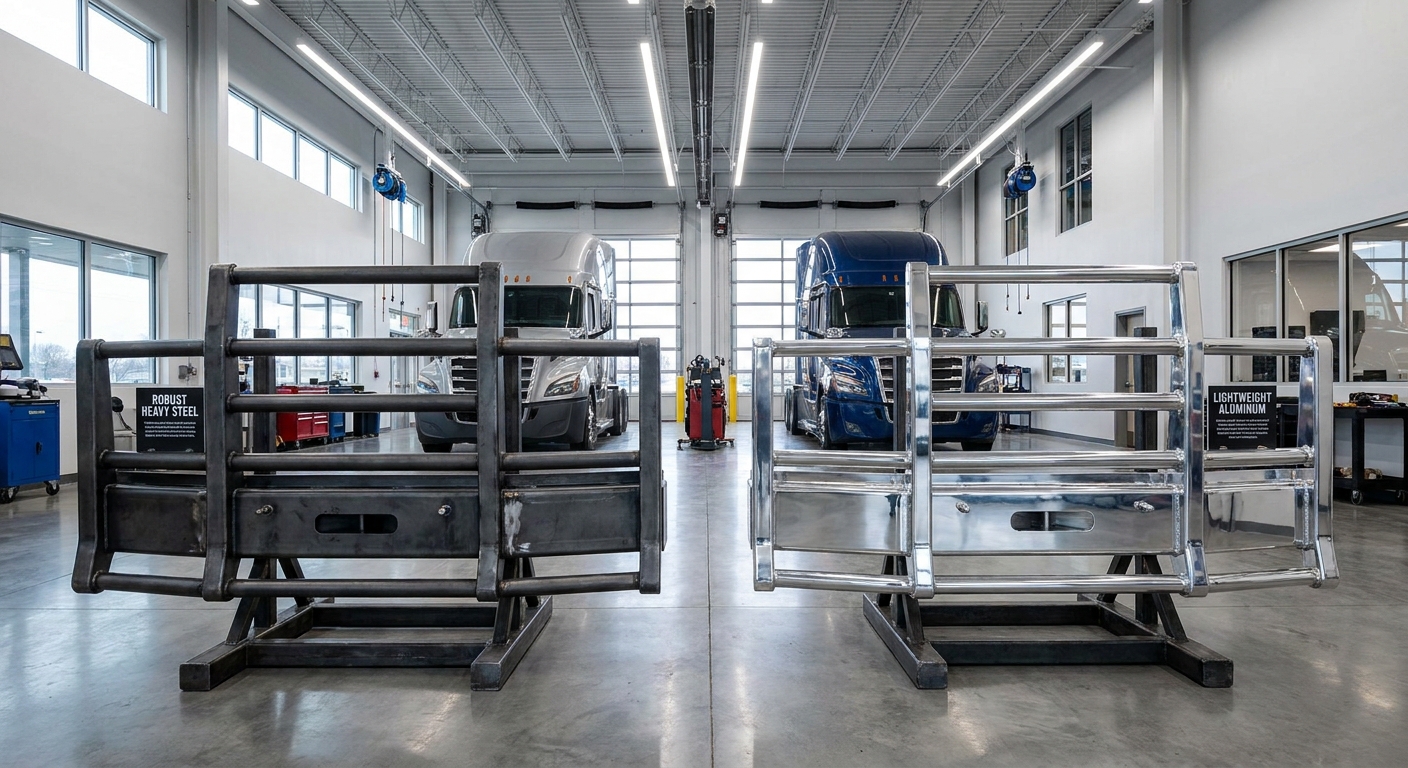
Heavy-duty guards pay for themselves immediately during their very first road collision by keeping your truck on the road. Investing in premium semi truck front protection shields your balance sheet from expensive collision bills and long-term business losses.
Analyzing the financial return of a grille guard shows it is one of the most cost-effective upgrades an owner-operator can make. Protecting your single income-generating asset is simply smart business.
Does One Saved Incident Cover the Initial Expense?
Here is the kicker: a premium guard costs a fraction of what you would pay for a single replacement radiator and fiberglass hood. If you hit a deer without a guard, you are looking at thousands of dollars in repairs and towing.
- Average Guard Cost: Ranges from $1,500 to $2,800 depending on your model and finish.
- Average Unprotected Collision Cost: Easily exceeds $10,000 when factoring in parts and labor.
- Instant Payback: The guard pays for itself the very first time it absorbs an impact that would have disabled your rig.
This direct savings makes front-end protection a highly practical financial decision.
Can You Reduce Long-Term Insurance Premium Costs?
But that is not all: keeping your insurance claims history clean prevents your monthly premium rates from skyrocketing. A single major accident claim can cause your insurance rates to double, costing you thousands in extra premiums over the next three years.
- Fewer Claims: Avoiding minor physical damage claims keeps your loss-run history clean.
- Lower Deductibles: Some insurance carriers offer lower deductibles for trucks equipped with certified guards.
- Higher Resale Value: Keeping your original OEM hood and bumper free of cracks increases your truck’s trade-in value.
These long-term operational savings continue to pay off long after the initial purchase.
Key Takeaway: A front-end guard is a highly effective asset protection strategy that pays for itself during its first major impact. Preserving your insurance record and resale value adds long-term profit back to your business.
| Financial Scenario (Over 3 Years) | Unprotected Operation | Protected Operation (Brontec Guard) | Realized Profit Difference |
|---|---|---|---|
| Upfront Guard Purchase | $0 | $2,200 (Guard & Install) | -$2,200 |
| Collision Out-of-Pocket | $8,500 (1 Deer Strike) | $0 (Zero Core Damage) | +$8,500 |
| Heavy Recovery Towing | $2,500 | $0 (Drive Away Safely) | +$2,500 |
| Downtime Revenue Loss | $5,000 (5 Days Idle) | $0 (Continuous Operation) | +$5,000 |
| Total Financial Position | -$16,000 Net Loss | -$2,200 Initial Capital | +$13,800 Retained Capital |
These compelling numbers prove why physical armor is a logical business decision that pays massive dividends over the life of your truck.
Which Guard Style Matches Your Regional Route Risks?
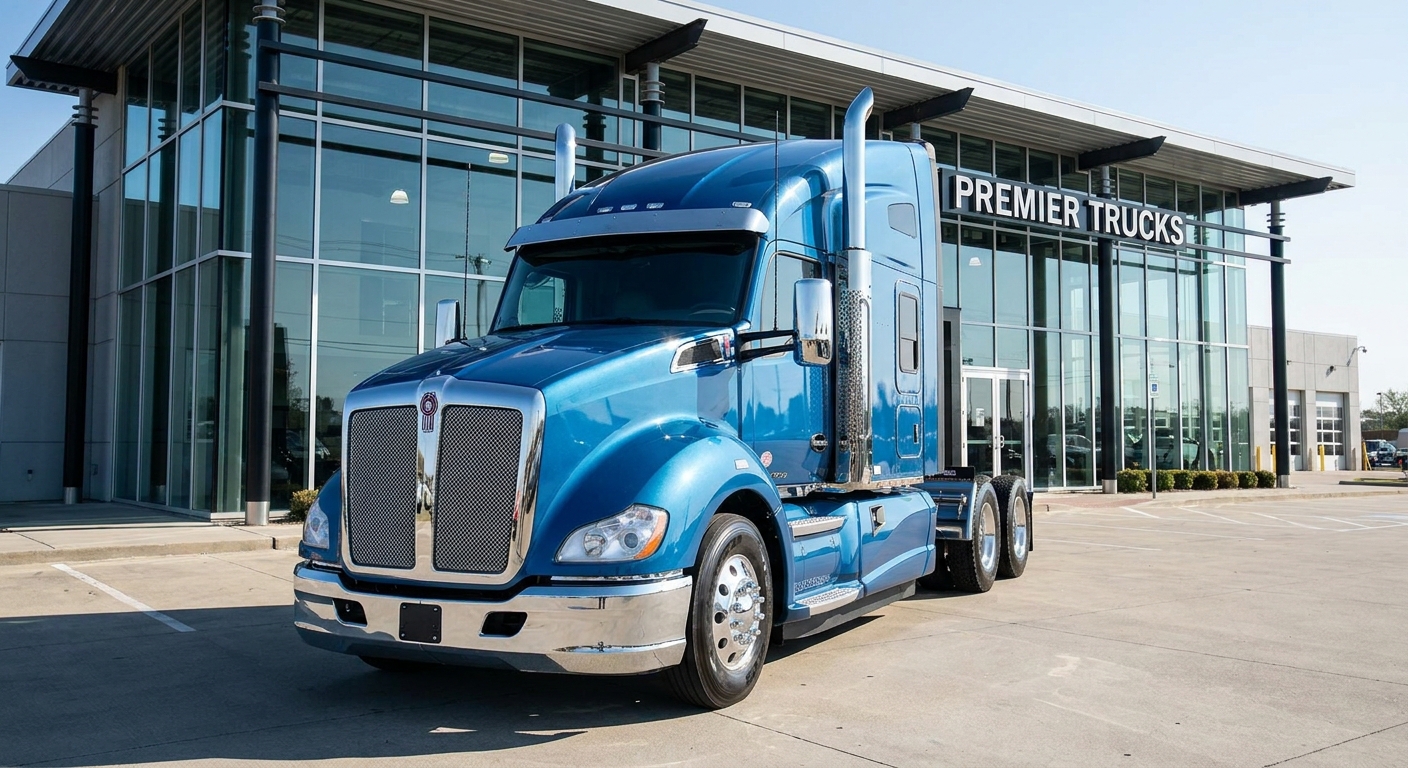
Matching your guard style to your regional route risks requires evaluating the specific wildlife density and highway hazards you face. Selecting custom-tailored semi truck front protection optimizes your vehicle’s safety profile without adding unnecessary dead weight to your steer axle.
Different driving environments present unique operational challenges. Understanding your lanes allows you to choose the perfect defense setup for your business.
Should You Buy Tubular Guards or Full Moose Bumpers?
Look: if you run the flat interstate highways of the Midwest, an aerodynamic tubular grille guard provides excellent protection against common whitetail deer. However, if your regular routes take you through the heavy timber of northern logging lanes, you need a full-replacement bumper.
- Tubular Grille Guards: Lightweight and highly aerodynamic, making them perfect for long-haul highway operators.
- Full Moose Bumpers: Heavy-duty, full-replacement assemblies designed to absorb impacts from the largest animals on the continent.
- Wrap-Around Wings: Provide extra side protection for trucks that frequently navigate tight shipper yards.
Choosing the right style ensures you are never under-protected on your daily runs.
How Do You Optimize Weight and Aerodynamic Drag?
Think about it: every pound of extra weight on your steer axle is a pound of payload you cannot legally haul. Premium guards utilize high-strength aluminum alloys to provide maximum impact resistance while minimizing weight.
- Weight Savings: High-grade aluminum alloys deliver the strength of steel at a fraction of the weight.
- Aerodynamic Profiles: Swept-back designs minimize wind resistance, helping you maintain optimal fuel economy.
- Axle Load Balance: Keeps your steer axle weight well within legal DOT limits.
This optimization ensures your safety equipment does not hurt your daily operating efficiency.
Key Takeaway: Always match your physical armor to the actual terrain and regional hazards you encounter on your routes. Optimizing your guard’s weight and aerodynamics preserves both your fuel economy and payload capacity.
| Operating Lane Region | Primary Highway Hazard | Recommended Guard Style | Material Recommendation |
|---|---|---|---|
| Southern & Midwest Interstates | Road gators, whitetail deer | Tubular Grille Guard with radar window | High-grade polished stainless steel |
| Northeast & Great Lakes | High-density deer zones, ice | Full-width guard with wrap-around wings | High-tensile structural aluminum |
| Northwest, Canada, & Alaska | Moose, elk, logging debris | Full-Replacement Moose Bumper | Thick-plate marine-grade aluminum |
Selecting the ideal equipment for your geographical region keeps your operations running smoothly, safely, and efficiently.
What Manufacturing Standards Ensure Reliable Armor?
Reliable armor requires AWS certified structural welding and high-tensile mounting brackets to survive extreme highway impacts. Investing in premium semi truck front protection guarantees that your safety equipment will perform flawlessly when your livelihood is on the line.
You must look beyond the surface shine to understand why premium guards survive impacts that leave cheap retail knockoffs folded in half. The difference lies in precision engineering and high-quality manufacturing standards.
Why Does Marine-Grade Metal Resist Stress Fractures?
But that is not all: the constant vibration of commercial trucking can cause cheap, thin-walled retail guards to develop structural metal fatigue over time. Premium guards utilize heavy-gauge marine-grade stainless steel or structural aluminum alloys that are naturally resistant to stress cracking.
- Structural Integrity: Heavy-gauge materials resist bending and tearing under intense pressure.
- Corrosion Resistance: Premium alloys naturally resist rust and corrosion from harsh winter road chemicals.
- Weld Penetration: AWS certified welding guarantees that every joint is as strong as the metal tubes themselves.
This premium construction ensures your guard remains structurally sound year after year.
How Important Are Precision CNC Mounting Jigs?
Here is the kicker: even the strongest metal guard is completely useless if the mounting brackets twist or shear during an impact. Premium manufacturers utilize CNC precision machining and heavy-duty gusseted brackets to secure the guard directly to your truck’s frame.
- Zero-Drill Installation: CNC-machined brackets mount directly into your truck’s existing tow receiver holes.
- Grade 8 Fasteners: High-tensile bolts ensure the mounting hardware refuses to shear under sudden impact loads.
- Gusseted Brackets: Prevent bracket twisting or shearing during an offset diagonal collision.
This robust mounting system ensures the guard acts as a seamless extension of your truck’s chassis.
Key Takeaway: True commercial-grade protection relies on AWS certified welding, premium structural alloys, and precision-engineered frame mounts. Cheap retail guards will fold into your hood during an impact, causing more damage than they prevent.
| Build Feature | Premium Manufacturing Standards | Cheap Competitor Standards | Real-World Impact |
|---|---|---|---|
| Material Quality | Marine-Grade Stainless / 5052 Aluminum | Low-grade carbon steel / Thin chrome | Prevents cracking and corrosion |
| Welding Protocol | AWS Certified, multi-stage NDT tested | Uncertified manual welds, high porosity | Guaranteed joint strength under load |
| Fitment Accuracy | CNC Jig Verified (±0.5mm Tolerance) | Hand-measured, slot-gapped brackets | Perfect bolt-on fit without drilling |
Investing in premium structural engineering guarantees that your protective guard will perform flawlessly when you need it most.
How Easy Is Routine Engine Maintenance with Guards?
Routine engine maintenance is remarkably easy when utilizing dual-action hinge systems that allow the guard to tilt down in seconds. Equipping your vehicle with premium semi truck front protection does not have to complicate your daily pre-trip inspections or fluid top-offs.
A major concern for many owner-operators is whether adding a front guard will make accessing the engine compartment difficult. Premium designs solve this issue with clever, tool-free quick-release latches.
Can You Access Hoods Fast Without Special Tools?
Look: checking your engine oil, coolant levels, and belts is a daily routine that should never require reaching for a toolbox. Premium guards feature integrated latching mechanisms that allow you to tilt the guard forward in seconds.
- Dual-Action Latches: Securely lock the guard in the upright position while driving down the highway.
- Easy Pivot Points: Allow the entire guard to swing forward smoothly, clearing your truck’s hood path.
- One-Person Operation: Balanced design ensures a single driver can easily open and close the guard.
This means you can perform your pre-trip checks quickly and get back on the road without hassle.
Do Quick-Release Latches Stop Road Vibrations?
Think about it: a loose, rattling guard is incredibly annoying during long hauls and can wear down your mounting brackets over time. Premium designs utilize heavy-duty spring pins and anti-vibration bumpers to keep the guard locked solid.
- Spring-Loaded Pins: Provide a tight, positive lock that resists opening even under heavy vibration.
- Urethane Dampeners: Absorb road shock and prevent annoying metal-on-metal rattles.
- Long-Term Durability: Rugged latching mechanisms are built to survive millions of miles on rough highways.
This ensures a quiet, comfortable cab ride while preserving the lifespan of your mounting hardware.
Key Takeaway: You never have to choose between advanced front-end physical armor and fast, convenient engine bay access. Dual-action hinge systems ensure your daily pre-trip checks remain fast, simple, and tool-free.
| Maintenance Task | Traditional Guard Access | Brontec Tilting Guard Access | Time Saved |
|---|---|---|---|
| Daily Oil Check | Difficult clearance or full guard removal | Tilts down in under 10 seconds | 15 Minutes |
| Adding Windshield Fluid | Requires unbolting heavy brackets | Simple latch release, swings forward | 10 Minutes |
| Routine Belt / Hose Service | Complete guard uninstallation required | Swings completely out of the technician’s way | 45 Minutes |
Preserving fast, convenient engine bay access ensures your truck stays simple, safe, and legal to service.
What Are the Common Questions About Truck Armor?
Common questions about truck armor focus on installation complexity, sensor calibrations, winter durability, and overall return on investment. Equipping your vehicle with premium semi truck front protection is a straightforward process when you have the right technical details.
Can I install a heavy-duty grille guard by myself?
Yes, you can absolutely install a standard grille guard on your own if you have a basic set of hand tools and a helping hand. Since these guards utilize your truck’s existing tow receiver ports, the installation is a true bolt-on process that requires zero drilling or welding of your frame. However, because premium stainless steel or heavy aluminum guards are quite heavy, having a friend or using a shop hoist to support the guard’s weight while you align the mounting pins will make the job much safer and easier.
What’s the best finish for salt-heavy winter environments?
If you frequently haul through northern states or Canadian provinces that use heavy road salt and liquid de-icers, black powder coat or high-grade polished stainless steel are your absolute best choices. Cheap chrome plating will quickly pit, rust, and peel under salt exposure, whereas premium stainless steel naturally resists corrosion and can easily be polished back to a brilliant shine. For vocational trucks or harsh environments, a multi-stage black powder coat finish provides an exceptionally durable barrier that shrugs off chemical road spray, rock chips, and moisture.
How do I know if my safety sensors need re-calibration after install?
Generally, if you choose a model-specific, CAS-compatible guard designed specifically for your truck’s VIN, your collision avoidance systems will continue to function perfectly without requiring any sensor re-calibration. However, if your truck’s front radar sensor is ever nudged, bumped, or slightly misaligned during the installation process, you may see a sensor warning light pop up on your dashboard. If you experience any persistent CAS warnings or false alerts after mounting your guard, you should have an authorized dealer verify the sensor’s physical alignment and perform a standard digital calibration.
Can I run a front guard with a custom painted bumper?
Yes, you can easily run a front guard with a painted bumper, and doing so is actually a smart way to protect that expensive paint job from ugly stone chips and road rash. Since premium guards are designed to sit slightly forward of your factory bumper and mount directly into the frame-level tow receivers, there is no direct contact between the guard’s structure and your painted surfaces. Just make sure to choose a guard with high-quality anti-vibration bumper pads to prevent the guard from rubbing against your custom paint during heavy vibrations on rough roads.
What’s the best way to clean and polish my stainless steel guard?
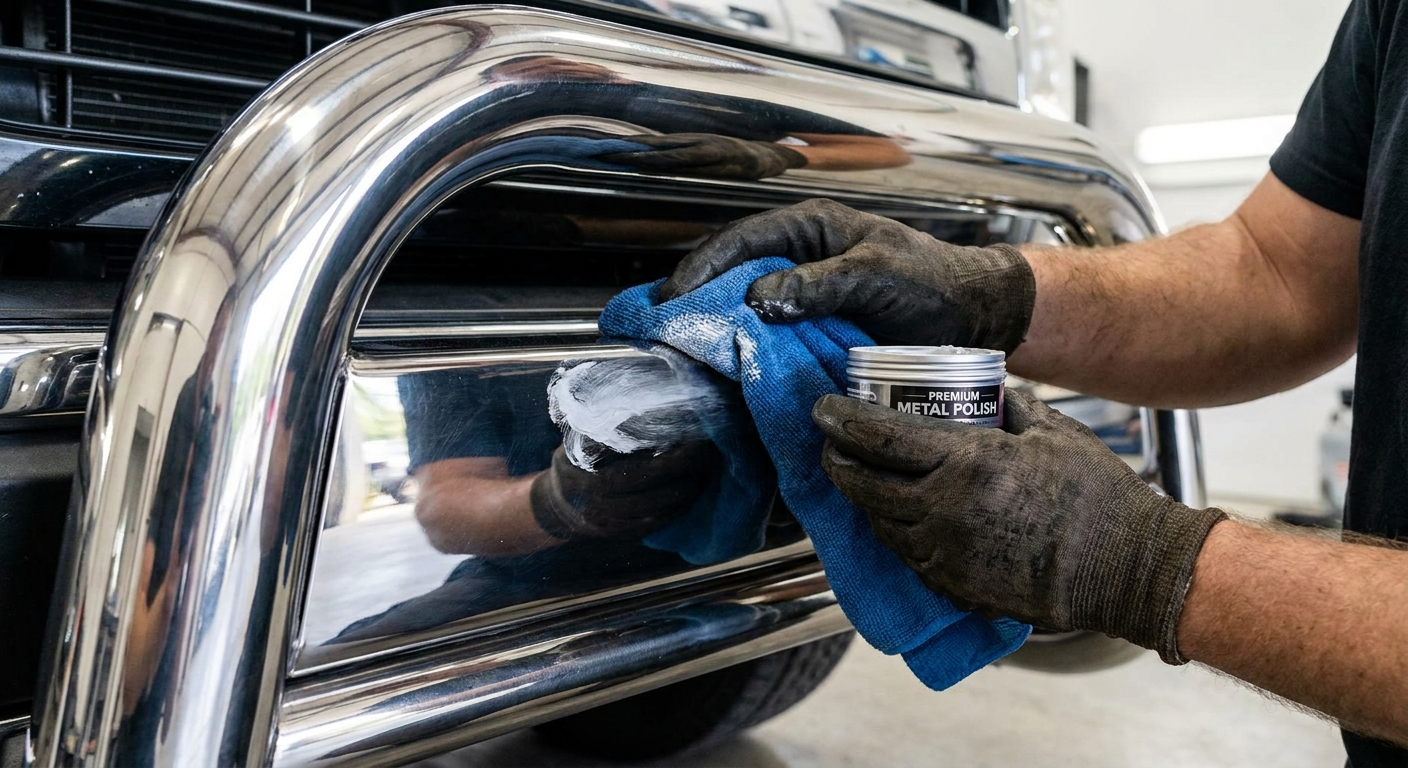
To keep your polished stainless steel guard looking brand new, you should wash it regularly with standard truck wash soap and warm water to remove road grime, salt, and bug splatter before they can bake onto the metal. For deep cleaning and removing light oxidation, apply a high-quality metal polish using a soft microfiber pad or a rotating polishing wheel. Avoid using steel wool or harsh abrasive pads, as these can leave micro-scratches on the surface that will dull your guard’s mirror-like shine and trap dirt over time.
Secure Your Business Future on the Road
Running a successful single-rig trucking operation requires keeping your vehicle on the road and making miles. When your truck takes a major hit from wildlife or road debris, the consequences of running unprotected are devastating: long-term repair delays, expensive towing bills, and lost revenue that can threaten your business survival.
We are dedicated to helping independent owner-operators protect their livelihoods with premium, American Welding Society (AWS) certified truck armor. Our heavy-duty grille guards and moose bumpers are engineered for extreme highway conditions, ensuring that unexpected road hazards never sideline your business or drain your hard-earned profits. We build our protective systems with precise, model-specific brackets that mount directly into your truck’s frame rails, preserving your advanced driver assistance sensors while providing convenient, tool-free engine bay access.
Do not wait for a catastrophic collision to realize the value of premium front-end protection. To safeguard your vehicle, preserve your business cash flow, and secure your future on the highway, contact us today for a custom-tailored quote on the perfect armor package for your truck.