
Maintaining wildfire safety for truck drivers requires a combination of real-time monitoring, specialized front-end protection, and disciplined roadside protocols to navigate North America’s volatile fire seasons. For long-haulers operating in high-risk regions, a single wrong turn into a fire zone can escalate from a minor delay to a life-threatening emergency. Smoke-choked highways and sudden road closures threaten not just your schedule, but your physical health and your rig’s mechanical integrity. This guide provides the essential tactics and equipment considerations needed to protect your cargo and your life when the heat is on.
1. Why is respecting roadblocks critical for wildfire safety?
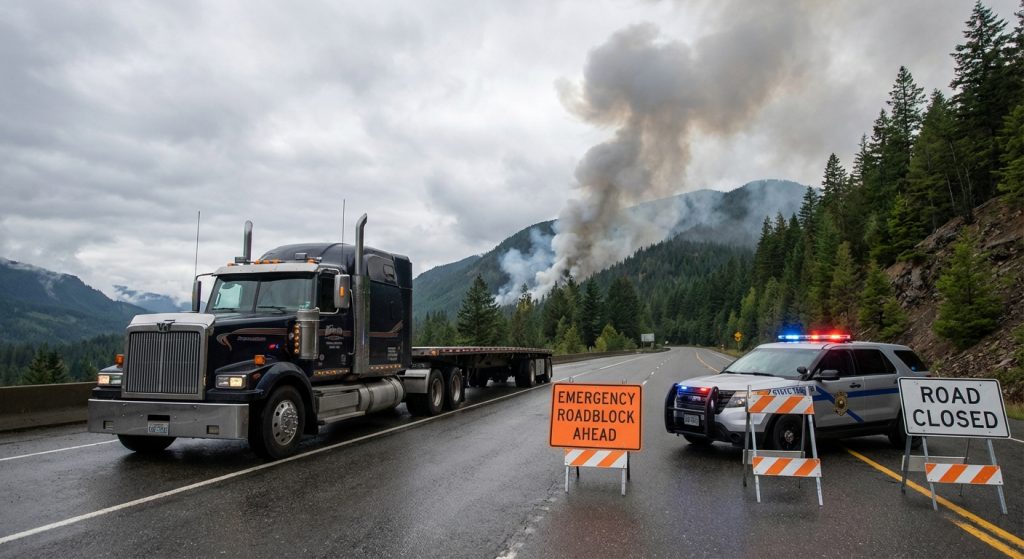
Respecting roadblocks is critical because authorities establish these perimeters to keep you clear of active fire-fighting zones and unpredictable “dead-end” traps. When you encounter a barrier, it signifies that the path ahead is no longer viable for heavy commercial traffic. Prioritizing wildfire safety for truck drivers means trusting that emergency crews have more information about fire leaps than your GPS does.
Trusting Official Perimeters
Emergency personnel position roadblocks miles ahead of visible flames to account for rapid atmospheric changes. Never attempt to bypass these markers, as fire can jump the highway behind you, cutting off your only escape route.
- Always follow the specific detour routes provided by state or provincial flaggers.
- Avoid using “shortcuts” on unverified secondary roads that may not support Class 8 weight limits.
- Maintain constant communication with your dispatcher when forced to deviate from your original lane.
Key Takeaway: Roadblocks are strategic survival tools designed to prevent drivers from becoming trapped in rapidly advancing fire fronts where visibility and oxygen are scarce.
| Security Measure | Purpose | Risk Level | |
|---|---|---|---|
| Roadblocks | Prevent entry into active fire zones | Extreme | |
| Official Detours | Provide maneuvers for heavy rigs | Moderate | |
| GPS Shortcuts | Unverified and potentially dangerous | High |
The integrity of a roadblock is the first line of defense in managing fleet safety during a regional crisis.
2. How should you manage your truck’s cabin air during a fire?
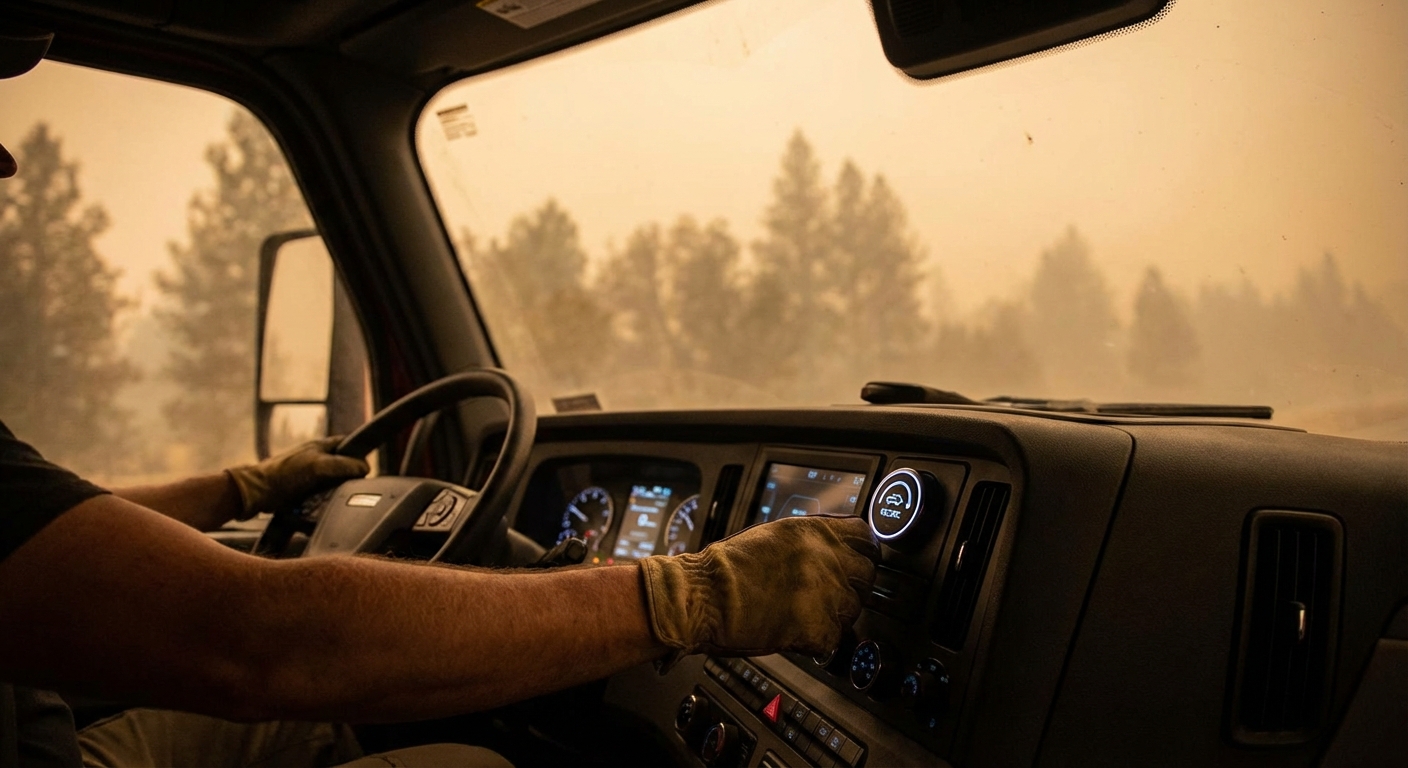
You must manage your cabin air by sealing all windows and switching your HVAC system to “Recirculation” mode to block toxic smoke particulates. Wildfire smoke contains fine ash and hazardous chemicals that can cause immediate respiratory distress. Consistent wildfire safety for truck drivers relies on maintaining a breathable micro-environment inside the cab while transiting through hazy corridors.
Activating Recirculation Mode
Think about it. Standard air intake pulls external pollutants directly into your lungs. By switching to the recirculation setting, you loop existing cabin air through internal filters, significantly reducing your exposure to outdoor irritants.
Ensuring Proper Seal Integrity
Check your door seals and window gaskets regularly before heading into fire-prone territories. Even a small gap can allow enough smoke to enter the sleeper berth to make resting dangerous or impossible.
Key Takeaway: Your truck cab is your primary atmospheric shelter; keeping it sealed prevents the accumulation of soot and hazardous gases in your workspace.
| System Setting | Function | Protective Benefit | |
|---|---|---|---|
| Recirculation On | Loops internal air | High particulate blocking | |
| Windows Sealed | Physical barrier | Blocks ash and embers | |
| HEPA Cabin Filter | Advanced filtration | Removes microscopic toxins |
A properly sealed cabin is essential for driver stamina when navigating hours of smoky conditions.
3. What visibility measures are necessary in smoky conditions?
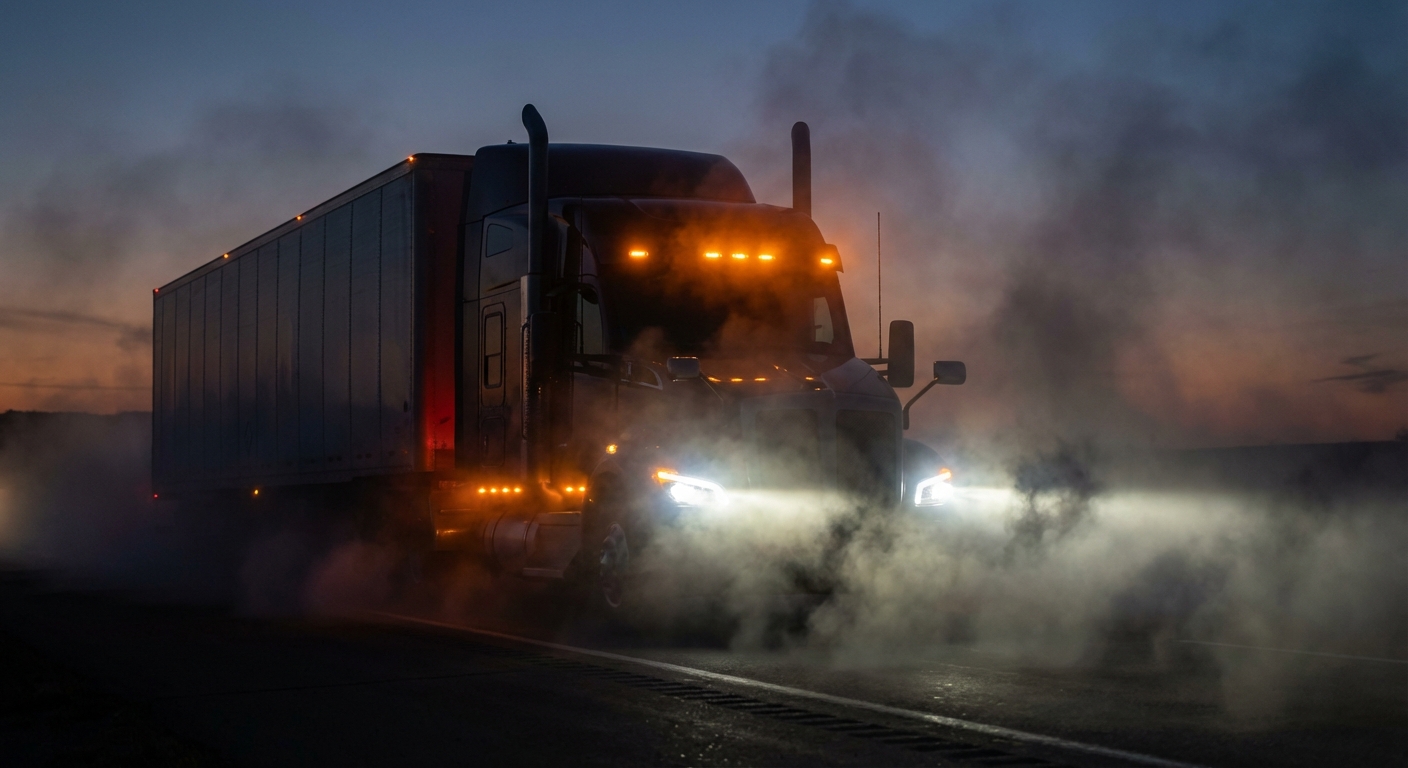
Visibility measures include activating all exterior lighting and reducing your speed to account for “grey-out” conditions where depth perception is compromised. Smoke density can fluctuate in seconds, hiding stalled vehicles or debris on the roadway. Enhancing wildfire safety for truck drivers requires an aggressive approach to being seen by other motorists and emergency responders.
Full Lighting and Hazard Activation
Turn on your low-beam headlights and all amber marker lights to create a clear visual silhouette for oncoming traffic.
- Avoid high beams, as the light will reflect off the smoke particles and decrease your own visibility.
- Use hazard lights if your speed drops significantly below the posted limit.
- Ensure all lenses are clean of ash buildup at every stop.
Speed and Following Distance
Reduce your speed immediately upon entering a smoke plume to allow for extended braking distances. Maintain at least double your usual following distance to ensure you have time to react if the driver ahead hits a sudden obstacle.
Key Takeaway: In a fire zone, your lighting is a communication tool that prevents collisions in environments where standard road markings often disappear.
| Visibility Tool | Proper Use | Effect | |
|---|---|---|---|
| Low-Beam LED | Constant on | Improved road surface view | |
| Marker Lights | All conditions | Clear vehicle perimeter | |
| Hazard Flashers | Slow speed | Warning to rear traffic |
Visibility is the most volatile variable in a fire zone, requiring constant adjustment of your driving style.
4. Why should you keep your engine running in fire zones?
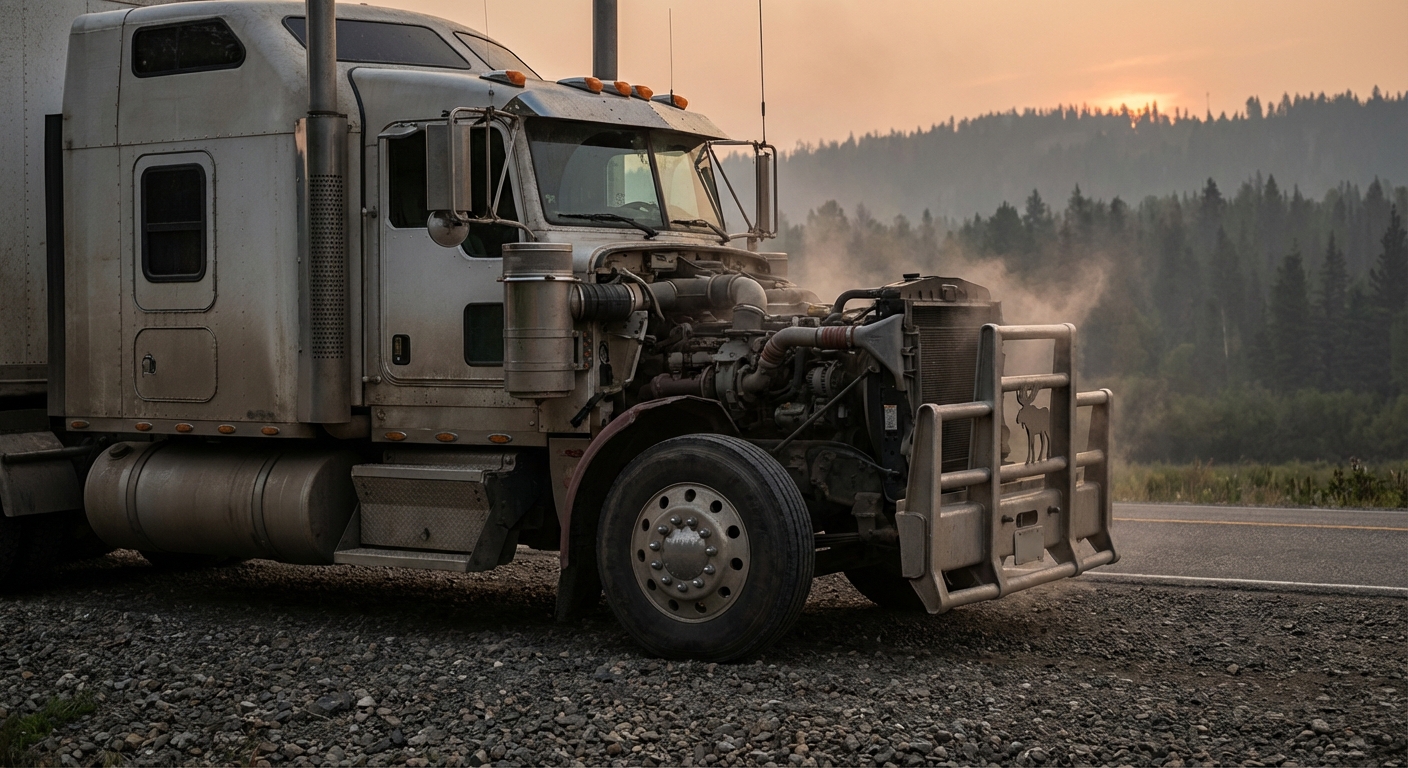
Keeping your engine running is vital because ash and high heat can make a restart difficult, potentially leaving you stranded in the path of a fire. While idling is usually discouraged, wildfire scenarios demand immediate mobility to escape shifting winds. Professional wildfire safety for truck drivers prioritizes mechanical readiness over fuel economy when the risk of entrapment is present.
Protecting the Air Intake
Wildfire ash is highly abrasive and can quickly clog a filter if the engine isn’t maintaining a steady, filtered flow. Keeping the engine idling helps prevent the “settling” of fine particulates that could choke the system during a cold start.
Maintaining Evacuation Readiness
The situation is simple. Fires change direction without warning. If you are parked and the wind shifts, having a running engine allows you to move your moose bumpers and the rest of your rig out of harm’s way instantly.
Key Takeaway: An idling engine ensures that your cooling systems and air intakes remain active, providing the mechanical insurance needed for a rapid exit.
| Engine Status | Benefit | Risk of Shutting Off | |
|---|---|---|---|
| Constant Idle | Immediate movement | Engine “choking” on restart | |
| Cooling System | Active heat management | Thermal soak and line damage | |
| Air Flow | Filters particulates | Filter collapse or blockage |
Mechanical failure in a fire zone is a survival threat that can be mitigated through constant idling.
5. How can staying inside your cab protect you from heat?
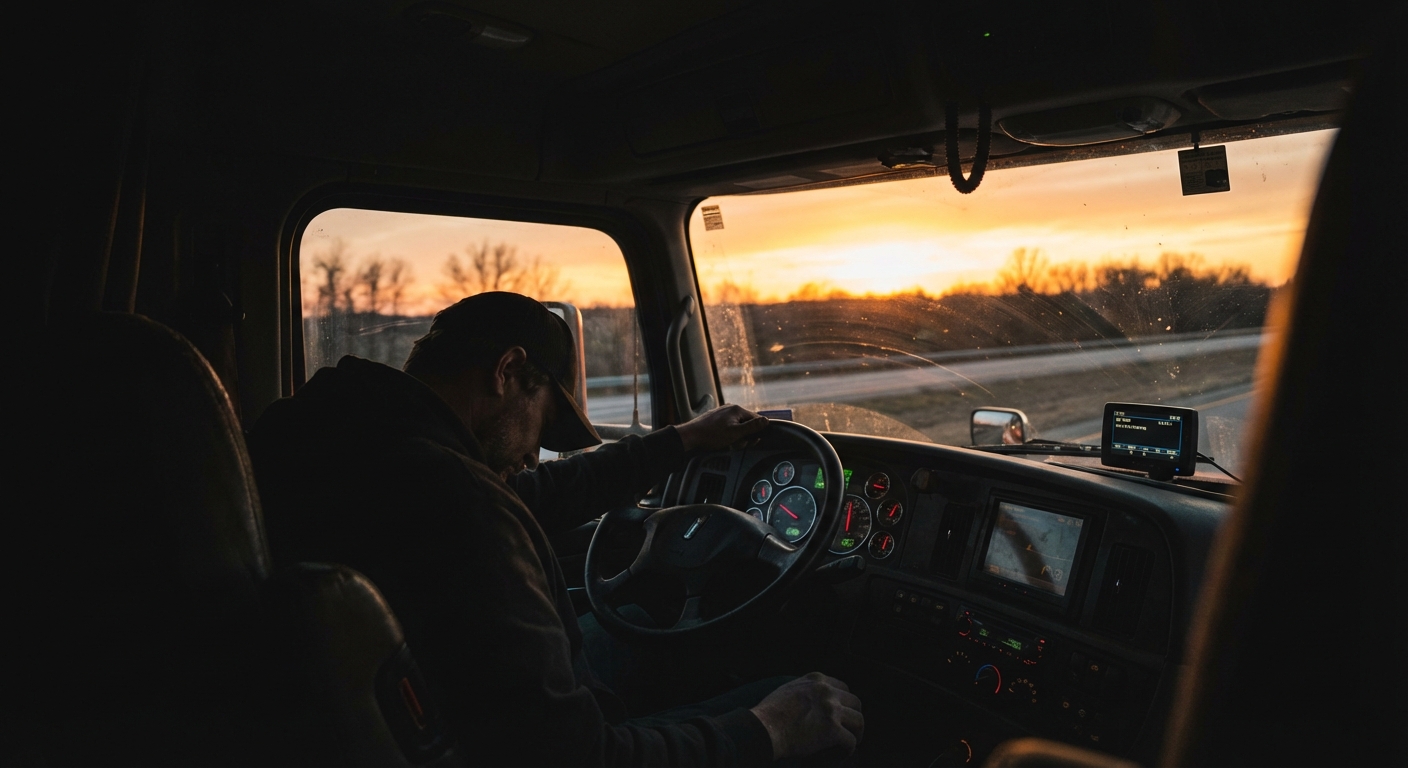
Staying inside the cab protects you from intense radiant heat and flying embers that can cause severe burns or ignite clothing. Modern truck cabs are built with materials that offer significant thermal resistance compared to the human body. Integrating wildfire safety for truck drivers means treating your vehicle as a secondary fire shelter when external conditions become extreme.
Shielding from Radiant Heat
A steel and aluminum cab acts as a heat shield, reflecting a portion of the thermal radiation away from the driver.
- Sit as low as possible on the floor to stay beneath the highest temperatures.
- Keep the sleeper curtains closed to provide an extra layer of insulation.
- Avoid touching metal surfaces that may have heated up from external fire proximity.
Avoiding Flying Projectiles
The wind speeds near a fire can carry burning branches and embers that act like incendiary projectiles. Staying behind heavy-duty glass protects your eyes and skin from these high-velocity hazards.
Key Takeaway: Your truck’s structure is your best defense against the thermal energy of a fire, providing a critical buffer between you and the flames.
| Defense Layer | Protective Role | Recommended Action | |
|---|---|---|---|
| Glass Windshield | Embers/Debris block | Stay away from glass edges | |
| Metal Shell | Radiant heat shield | Stay centered in the cab | |
| Interior Trim | Minor insulation | Avoid contact with hot metal |
Thermal protection is maximized when you minimize your profile and utilize the cab’s structural density.
6. Where is the safest place to park near an active wildfire?
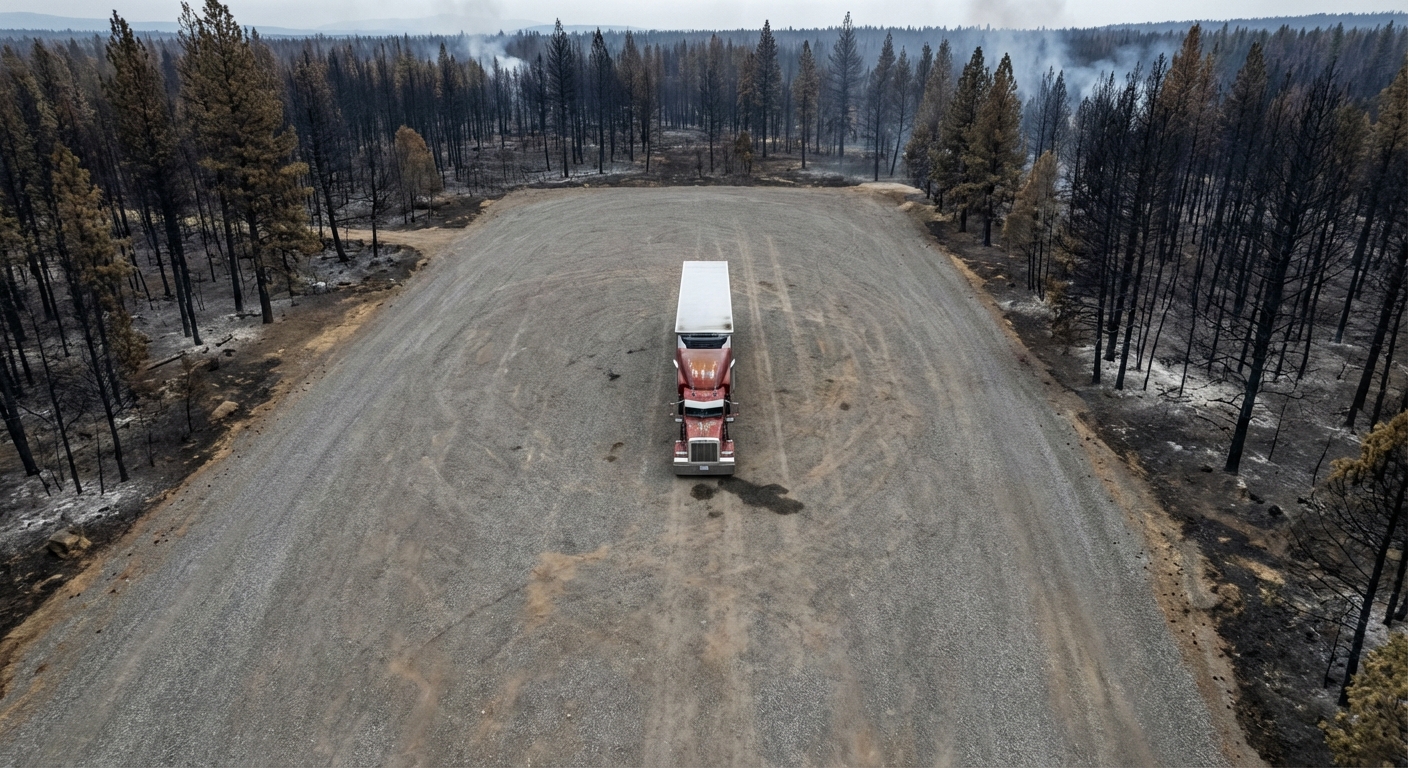
The safest place to park is in a large, cleared area like a gravel pit, paved lot, or a wide highway shoulder away from thick vegetation. These “firebreaks” lack the fuel necessary for a fire to reach your vehicle. Strategic wildfire safety for truck drivers involves scouting for locations where the fire cannot physically jump to your rig.
Utilizing Natural Firebreaks
Look for areas with no grass, brush, or trees for at least 30 to 50 feet around your truck.
- Parking on wide asphalt surfaces is preferred as it offers zero fuel for the fire.
- Avoid parking near coniferous trees, which burn with extreme intensity and height.
- Ensure your grille guards are pointed toward a clear exit path.
Parking in the “Black”
If directed by fire crews, parking in an area that has already been burned can be a viable survival tactic. Since the fuel in that zone is already consumed, the fire is unlikely to return to that specific location.
Key Takeaway: Distance from flammable fuel is your greatest asset; always prioritize wide, barren terrain over scenic or shaded rest areas during fire season.
| Safe Zone Type | Fuel Availability | Safety Rating | |
|---|---|---|---|
| Paved Parking Lot | Zero | Excellent | |
| Gravel Shoulder | Low | Good | |
| Grassy Field | High | Dangerous |
Proper site selection can mean the difference between a safe wait and an emergency evacuation.
7. How do wind and fire behavior dictate your driving route?
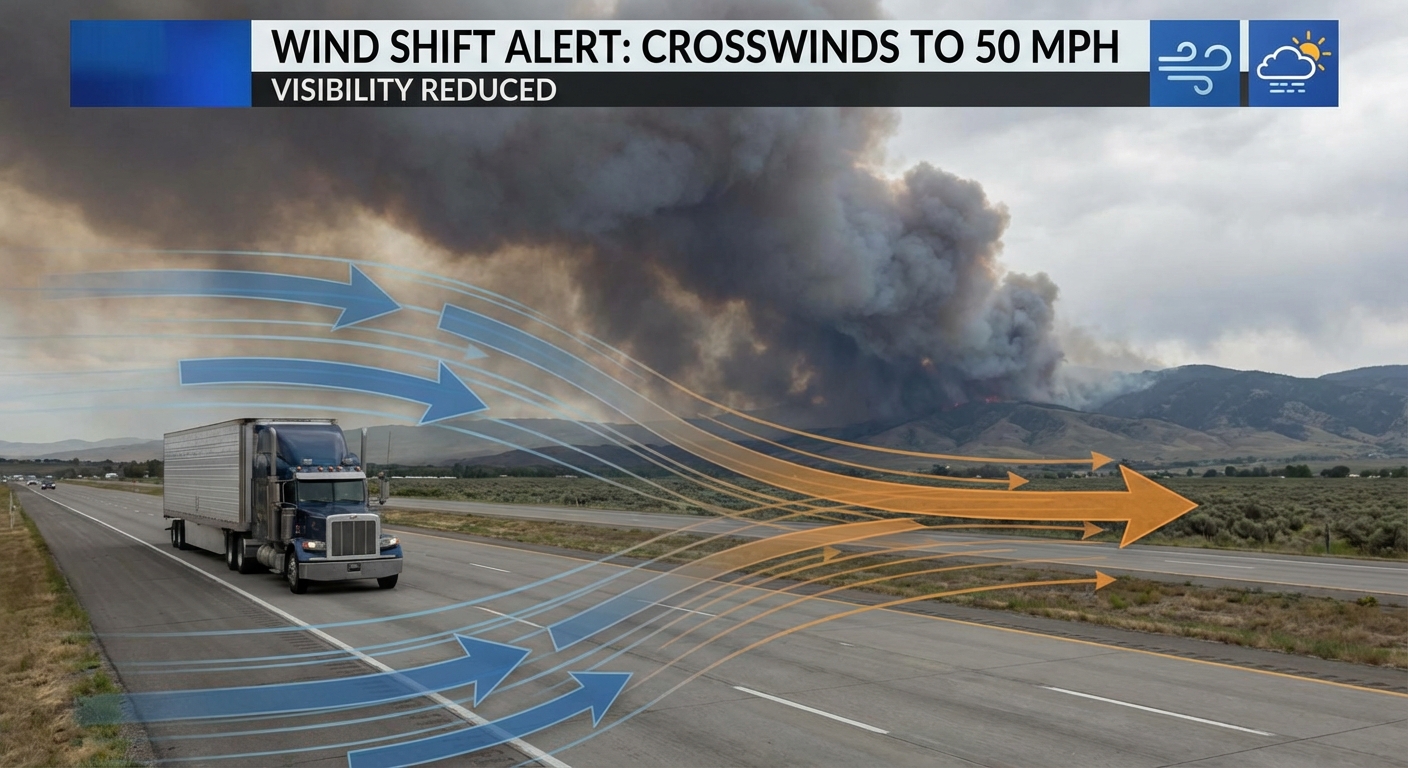
Wind behavior dictates your route by determining the direction of smoke plumes and the speed at which the fire will cross the highway. Fires move significantly faster when traveling uphill or when pushed by strong tailwinds. Monitoring these patterns is a core part of wildfire safety for truck drivers to ensure you aren’t trapped by a sudden “spot fire” ahead of your position.
Monitoring Wind Direction
The direction the smoke is leaning is where the fire is heading next.
- Check flags, smoke plumes, and weather apps frequently to anticipate wind shifts.
- Avoid routes that put you directly downwind of an active blaze.
- Be aware that fires can create their own local wind systems, drawing air toward the heat.
Understanding Uphill Speed
Fire moves rapidly up steep terrain because the heat pre-dries the vegetation above it. If your route involves mountain passes, be extremely cautious of fires burning in the valleys below your path.
Key Takeaway: Predictive driving based on wind and terrain allows you to adjust your course before the fire reaches the roadway.
| Weather Factor | Fire Impact | Driver Response | |
|---|---|---|---|
| High Winds | Fast fire spread | Increase speed or reroute | |
| Uphill Terrain | Rapid acceleration | Avoid high-altitude passes | |
| Wind Shift | Directional change | Immediate course correction |
Understanding the physics of fire allows a driver to stay several steps ahead of a developing emergency.
8. What gear protects you if flames or heat get too close?
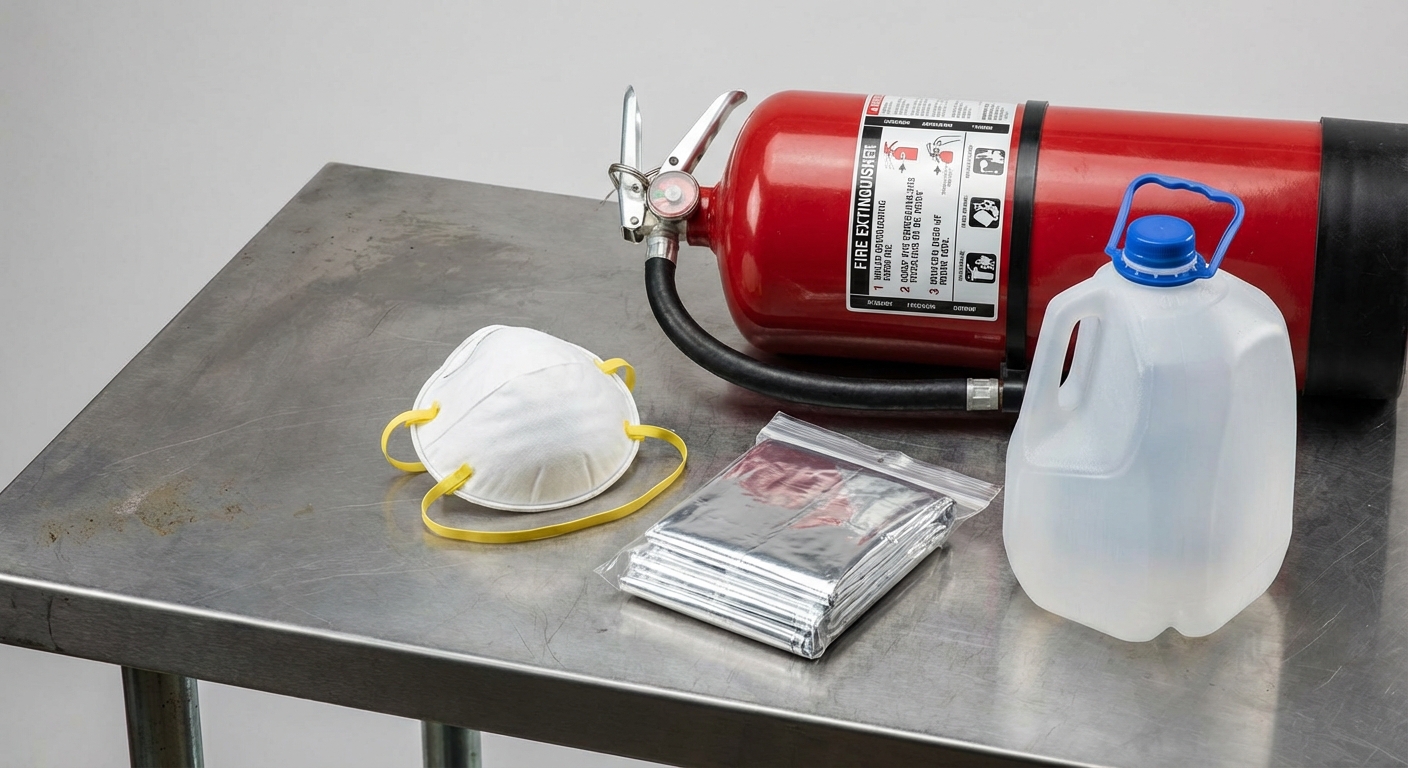
Protective gear includes fire-resistant wool blankets, N95 or P100 respirators, and a fully charged fire extinguisher rated for chemical and fuel fires. Having this equipment ready is a non-negotiable aspect of wildfire safety for truck drivers. These tools serve as your final line of defense if you are forced to exit the vehicle or if heat penetrates the cab.
Specialized Fire Blankets
Here is the reality. Synthetic blankets made of polyester or nylon will melt onto your skin in a high-heat scenario. You must use heavy wool or aluminum-backed fire blankets that provide actual thermal insulation without melting.
Respiratory Protection
Standard cloth masks are insufficient for filtering the microscopic ash found in wildfire smoke. You need a NIOSH-approved N95 or P100 respirator to prevent permanent lung damage while performing outside inspections.
Key Takeaway: Survival gear is only effective if it is kept in an accessible location within the cab, rather than buried in a locked external storage box.
| PPE Item | Protection Type | Essential Feature | |
|---|---|---|---|
| P100 Respirator | Lung protection | Filters 99.9% of particulates | |
| Wool Blanket | Thermal barrier | Does not melt under heat | |
| Fire Extinguisher | Small fire suppression | Rated ABC for all fires |
Investing in high-grade PPE is a critical insurance policy for any driver entering high-risk forest zones.
9. What post-fire inspection steps are vital for your rig?
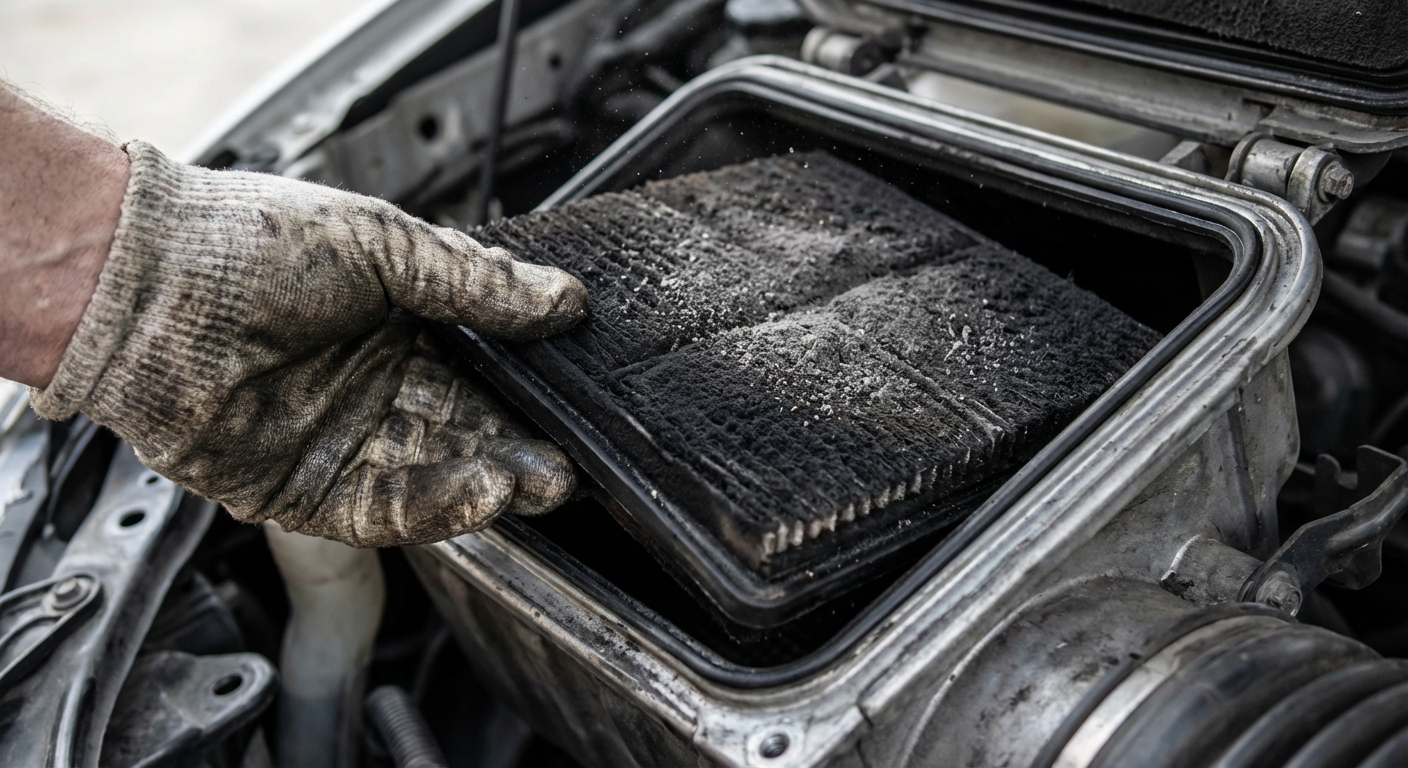
Post-fire inspections must prioritize your air filtration system, tire sidewalls, and plastic air lines that may have been damaged by extreme heat. Ash buildup can “choke” an engine miles after you’ve left the smoke behind. Comprehensive wildfire safety for truck drivers extends to the maintenance checks performed once you reach a safe staging area.
Air Filter Maintenance
Check your air filter immediately after transiting through smoke; ash is incredibly fine and will load a filter quickly.
- Look for a grey or black coating on the filter media that restricts airflow.
- Replace the filter if you notice a sudden drop in fuel economy or power.
- Check the pre-cleaner housing for accumulated debris that could ignite later.
Checking Rubber and Plastic
Radiant heat can bake the rubber in your pickup bumpers and tires, leading to premature failure. Inspect all external air and brake lines for signs of melting, bubbling, or unusual brittleness that could cause a breakdown on the highway.
Key Takeaway: Hidden damage from smoke and heat can cause catastrophic failures days after the event; a thorough inspection is your bridge back to standard operations.
| Inspection Point | Damage Symptom | Action Required | |
|---|---|---|---|
| Air Filter | Ash caking | Immediate replacement | |
| Tire Sidewalls | Bubbling/Cracking | Professional assessment | |
| Air Lines | Brittleness | Replacement of compromised sections |
A rig that has survived a fire zone is a compromised machine until it has been professionally cleared for long-haul service.
10. How do you build a complete wildfire emergency kit?
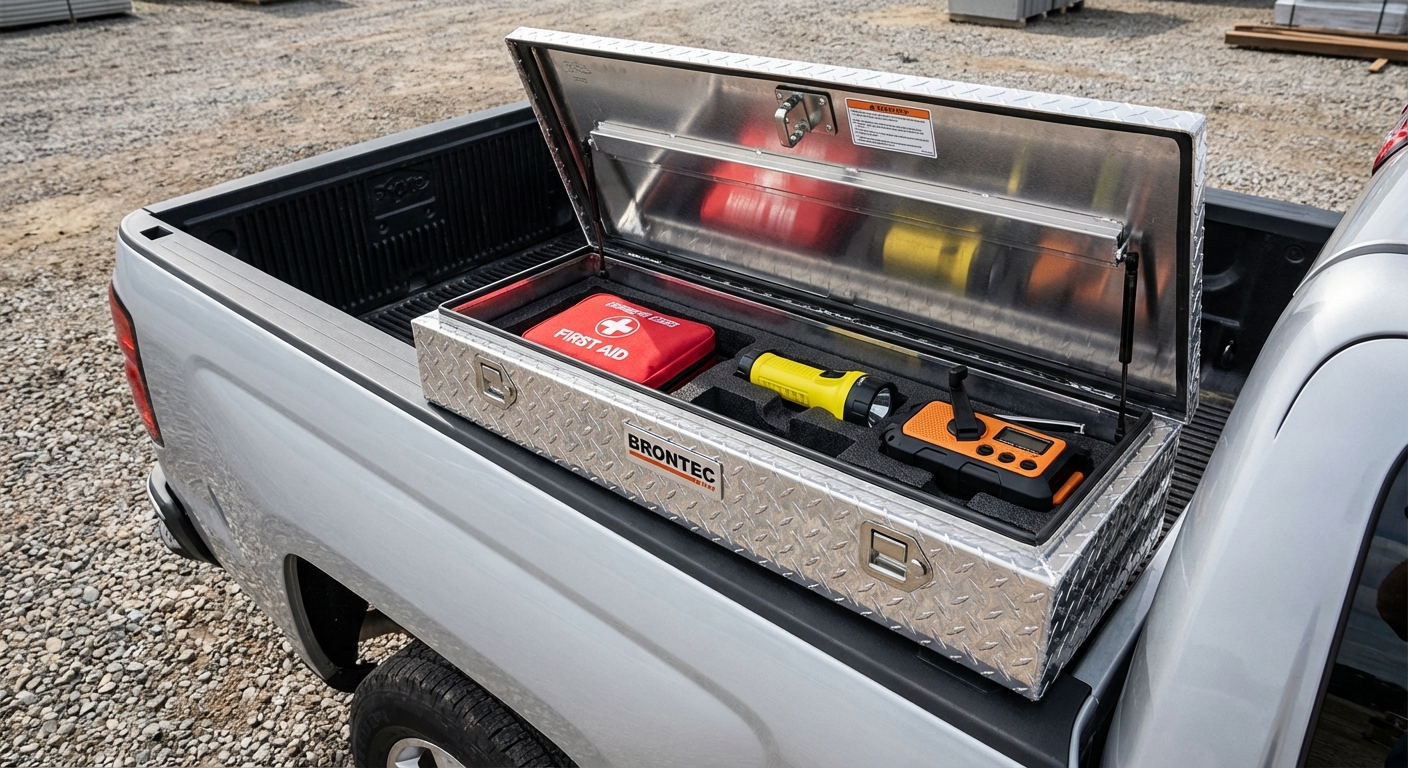
You build a wildfire emergency kit by consolidating hydration, communication tools, and PPE into an accessible, weather-resistant storage unit. This kit should sustain you for at least 72 hours if you are trapped by road closures. Robust wildfire safety for truck drivers begins with a well-organized tool boxes solution that keeps your survival gear protected and ready.
Critical Kit Components
- At least three gallons of water and non-perishable food to manage dehydration and hunger.
- A battery-powered or hand-crank radio, as cell towers often fail during major wildfires.
- Physical maps of the area to navigate around closures when digital systems are offline.
- Flashlights with extra batteries to manage visibility during ash-induced darkness.
Organized Storage Solutions
A kit is only useful if you can find the items in a panic. Use a high-quality aluminum box with internal dividers to separate medical supplies from heavy tools like fire extinguishers.
Key Takeaway: Preparedness is the only factor you can fully control in a wildfire scenario; a complete kit ensures you remain a survivor rather than a statistic.
| Kit Category | Essential Items | Purpose | |
|---|---|---|---|
| Survival | Water, Food, Radio | Long-term isolation support | |
| Medical | Eye wash, Burn cream | Treatment of smoke/heat injuries | |
| Tools | Extinguisher, Flashlight | Active hazard management |
Your emergency kit is the physical manifestation of your commitment to professional driver safety.
Conclusion
Navigating a wildfire zone is one of the most stressful challenges a professional driver can face. By combining these safety protocols with heavy-duty equipment, you ensure your rig is prepared for the debris and hazards of the burning road. At Brontec, we believe in engineering “Upfront Armour” that stands up to the most extreme North American conditions, from logging trails to fire-threatened highways.
Don’t leave your safety to chance this fire season—protect your fleet and your drivers today. To learn more about our heavy-duty moose bumpers and custom protection solutions, contact us for a custom quote and consultation.
Wildfire Safety FAQ
Can I drive through active flames if they are crossing the road?No. Never attempt to drive through active flames, as the heat can melt tires, shatter glass, and deprive your engine of the oxygen it needs to function.
How do I know if the road ahead is closed due to fires?Use official state or provincial 511 systems and emergency management apps, as commercial GPS systems often lack the real-time data needed for active fire fronts.
What should I do if my truck stalls in a smoke-heavy area?Stay inside the cab, keep all exterior lights on, and immediately contact emergency services or your dispatcher with your exact coordinates.
Does wildfire ash damage my truck’s paint and finish?Yes, ash is often acidic and abrasive; you should wash your truck thoroughly as soon as possible after exiting a fire zone to prevent permanent finish damage.
How often should I check my air filter during wildfire season?In smoky conditions, perform a visual check daily, as ash can saturate a filter far faster than standard road dust or desert sand.