
Successful OEM truck accessories manufacturing starts with accurate drawings and ends with consistent, production-ready components. For North American truck accessory brands and distributors, turning custom designs into reliable products requires more than cutting, bending, and welding metal. Material selection, mounting accuracy, weld quality, dimensional inspection, and export packaging all play a role in the final result. This guide explains how build-to-print OEM manufacturing works, from reviewing customer drawings and preparing samples to managing mass production, quality control, and final delivery.
What Is OEM Truck Accessories Manufacturing Today?
OEM truck accessories manufacturing today is a specialized contract production process where heavy-duty vehicle accessories are designed, fabricated, and finished to match exact original equipment manufacturer standards. This end-to-end manufacturing approach combines advanced CAD engineering, automated metalworking, and strict quality control to yield components ready for immediate vehicle installation.
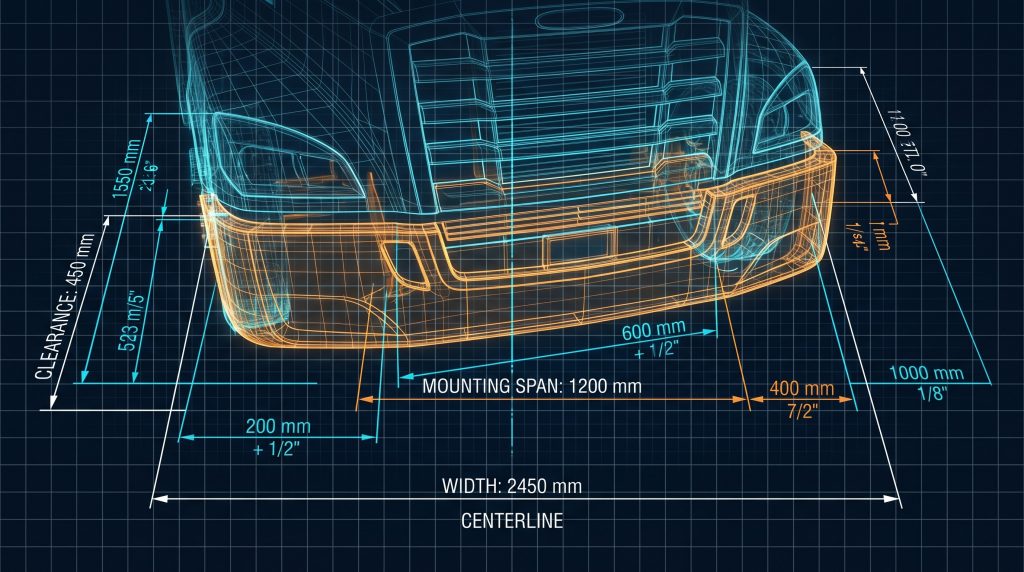
How Does Contract Manufacturing Differ From Aftermarket?
Contract OEM fabrication differs significantly from standard retail aftermarket production in build quality and repeatability. While generic aftermarket suppliers produce one-size-fits-all accessories with broad tolerance ranges, contract manufacturers work directly from precise engineering drawings and chassis specs.
Here’s the deal: commercial truck fleets cannot afford off-by-a-quarter-inch mounting errors during installation. Dedicated original equipment manufacturing provides customized material grades, exact bolt-hole placement, and complete batch consistency across your entire vehicle lineup.
Which Core Components Define Commercial Truck Protection?
Commercial truck protection encompasses a broad category of structural and functional external accessories. OEM manufacturing lines typically produce heavy-duty front-end barriers, utility storage units, and cab structural guards designed for Class 8 platforms.
- Moose Bumpers & Deer Guards: Heavy-gauge aluminum or steel structures engineered to absorb impact energy during animal strikes.
- Grille Guards & Bumper Caps: Aerodynamic front-end shields that safeguard radiators and cooling systems against road debris.
- Storage Tool Boxes & Truck Bodies: Weatherproof, corrosion-resistant enclosures engineered for tool organization and maximum payload capacity.
- Chain Hangers & Frame Step Bars: Heavy-duty frame accessories designed for secure rigging storage and safe driver cab access.
Key Takeaway: Partnering with an experienced OEM manufacturer guarantees that every structural component matches your fleet’s exact platform requirements from day one.
| Manufacturing Aspect | OEM Contract Manufacturing | Generic Aftermarket Production |
|---|---|---|
| Dimensional Accuracy | High Precision ($\pm 0.5\text{ mm}$) | Variable ($\pm 3.0\text{ mm}$) |
| Material Verification | Full Mill Test Certificates | Unverified Commercial Stock |
| Fitment Consistency | 100% Direct Bolt-On | Requires Shop Modifications |
Analytical guidance: Direct OEM manufacturing eliminates installation guesswork by locking in sub-millimeter tolerances across all structural mounting points.
Why Choose OEM Truck Accessories Manufacturing?
Choosing OEM truck accessories manufacturing ensures perfect vehicle fitment, reduced fleet downtime, and lower total cost of ownership compared to generic aftermarket products. By aligning production directly with vehicle chassis CAD models, manufacturers build structural guards that fit seamlessly onto major North American truck platforms.
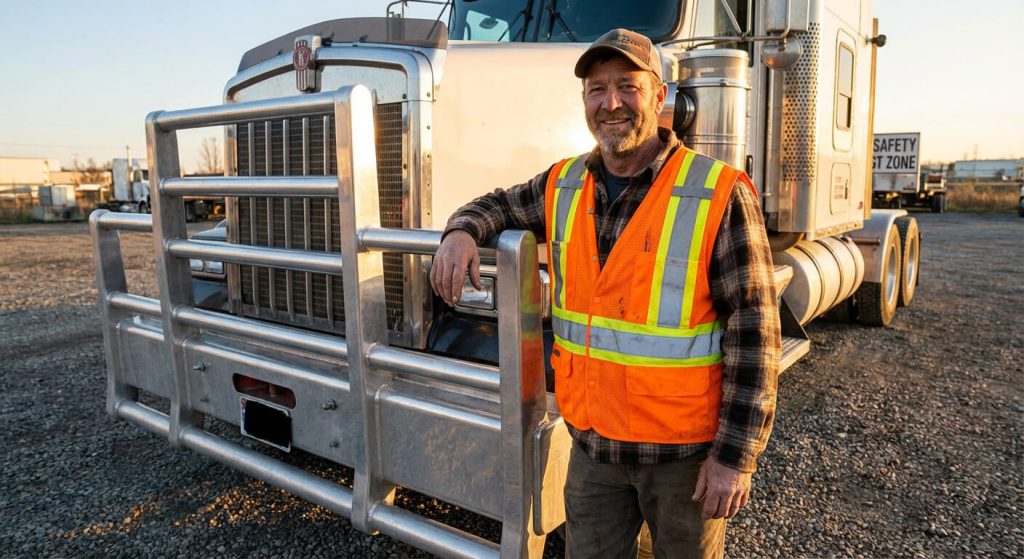
How Does Precision Fitment Reduce Fleet Downtime?
Precision fitment dramatically shortens the time required to mount accessories across commercial vehicle fleets. When mounting brackets match truck frame rail patterns exactly, mechanics can complete bolt-on installations in minutes without custom cutting or drilling.
Look: shop hours spent modifying ill-fitting bumpers add up quickly across fifty or a hundred trucks. Precision manufacturing ensures that every unit fits right out of the box, keeping your commercial fleet on the highway generating revenue.
Why Is Scalable Manufacturing Critical for Fleets?
Scalable production capacity ensures that large fleet operations receive consistent accessories on schedule during multi-vehicle rollouts. Commercial fleet buyers need supply partners capable of transitioning smoothly from low-volume prototyping to full-scale mass manufacturing.
- Modern production facilities utilize automated cellular manufacturing to scale output rapidly.
- Dedicated capacity planning prevents delivery delays during peak transport seasons.
- Flexible tooling designs allow rapid configuration shifts between truck models.
Key Takeaway: Precision OEM fitment saves valuable mechanic labor hours and prevents costly operational delays during commercial fleet deployments.
| Efficiency Metric | Custom OEM Solution | Standard Aftermarket |
|---|---|---|
| Installation Time per Truck | 30–45 Minutes | 2–4 Hours |
| Frame Modification Rate | 0% | Up to 35% |
| Fleet Rollout Speed | Accelerated | Delayed by Retrofits |
Analytical guidance: Investing in direct OEM fitment cuts vehicle installation labor costs while eliminating risky frame modifications during fleet integration.
How Does OEM Truck Accessories Manufacturing Begin?
OEM truck accessories manufacturing begins with comprehensive engineering analysis, 3D CAD modeling, and rigorous Design for Manufacturability (DFM) evaluations. The initial design phase transforms physical truck measurements or conceptual client sketches into fully realized digital assemblies.
What Role Does 3D CAD Modeling Play in Prototyping?
3D CAD modeling allows design engineers to construct precise virtual prototypes long before raw metal is cut on the factory floor. Engineers map out tube bend angles, plate cutouts, and structural gussets to verify structural integrity under load.
Think about it: identifying dynamic weight distribution problems in software costs a fraction of fixing a failed physical prototype. Digital modeling ensures that weight distribution, airflow requirements, and collision clearance zones meet vehicle operational standards.
How Does DFM Review Prevent Engineering Bottlenecks?
Design for Manufacturability (DFM) reviews bridge the gap between initial mechanical drawings and practical factory floor execution. Manufacturing engineers analyze CAD models to streamline laser cutting paths, simplify tube bending operations, and optimize welding access.
- DFM reviews identify unnecessary weld seams to reduce cycle times and structural distortion.
- Standardized hole sizes reduce machine tool changes during automated CNC milling operations.
- Optimized bend radii prevent material cracking in heavy-gauge aluminum channels.
Key Takeaway: Thorough initial DFM engineering prevents expensive production delays and material waste before mass manufacturing starts.
| Engineering Stage | Primary Focus | Key Deliverable |
|---|---|---|
| Conceptual Design | Customer Specifications & Truck Geometry | Initial 3D CAD Solid Model |
| DFM Review | Fabrication Optimization & Cost Reduction | Approved Production Blueprints |
| Prototyping | Physical Fitment & Load Verification | CMM-Verified First Article Part |
Analytical guidance: Rigorous early-stage engineering ensures physical accessories retain structural durability while maximizing factory production speed.
Which Materials Power OEM Truck Accessories Manufacturing?
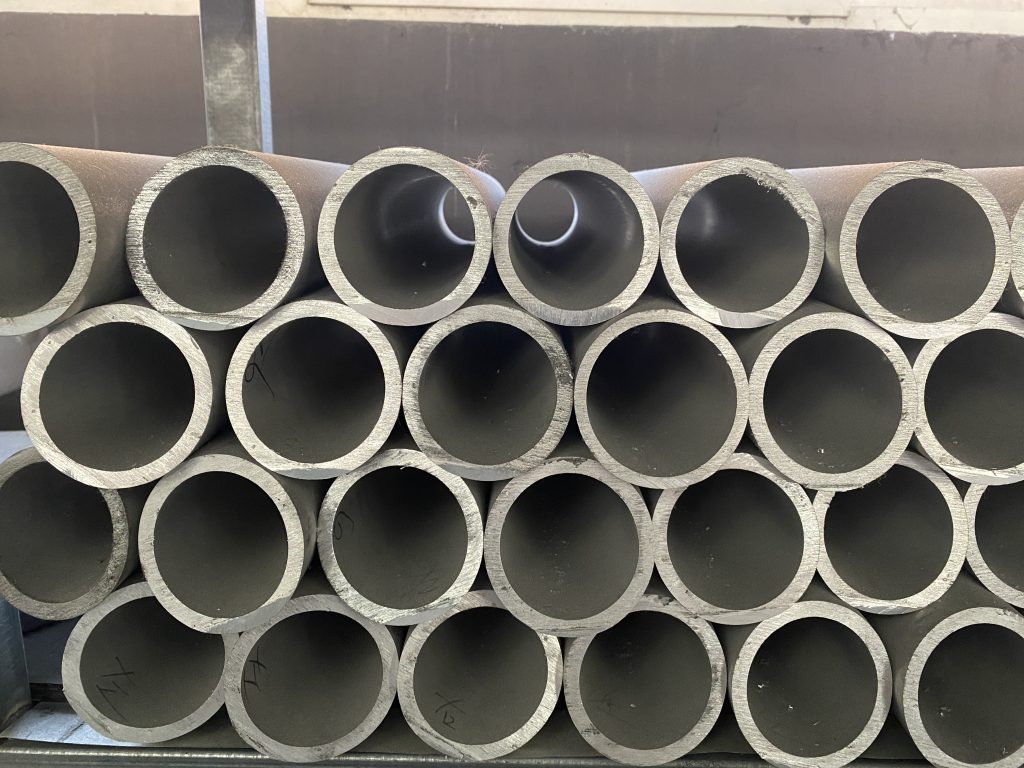
The primary materials that power OEM truck accessories manufacturing are high-tensile structural aluminum alloys and heavy-gauge carbon steel, selected based on weight efficiency and collision resistance. Selecting the optimal alloy balance directly affects vehicle fuel efficiency, front-axle payload distribution, and corrosion protection over long-haul service lives.
Why Structural Aluminum Leads Commercial Truck Upgrades
High-strength marine-grade and structural aluminum alloys (such as 6061-T6 and 5052-H32) have become the premier choice for commercial truck front-end protection. Aluminum delivers exceptional impact strength while weighing roughly 45% less than structural steel assemblies.
Here’s why: lighter front bumpers reduce front-axle weight burdens, allowing commercial carriers to haul heavier cargo without exceeding legal limits. Furthermore, aluminum’s natural oxide layer provides outstanding corrosion resistance in salt-heavy winter driving conditions.
When Carbon Steel Is Recommended for Heavy Duty Guards
Heavy-gauge carbon steel remains an essential material choice for extreme off-road, logging, and heavy-haul truck applications. Steel guards provide unmatched yield strength and impact resistance when operating in harsh off-road timber or mining sites.
- Carbon steel offers higher ultimate tensile strength for maximum energy absorption.
- Heavy-duty steel plates provide superior resistance to gouging and rock abrasion.
- Steel structures are readily repairable using conventional field welding equipment.
Key Takeaway: Choosing high-tensile aluminum maximizes payload and rust resistance, whereas carbon steel delivers maximum toughness for extreme off-road service.
| Property Comparison | Structural Aluminum (6061-T6) | Heavy Carbon Steel (Q235/Q345) |
|---|---|---|
| Weight Efficiency | High (2.70 $g/cm^3$) | Moderate (7.85 $g/cm^3$) |
| Corrosion Resistance | Superior (Natural Oxide) | Requires Protective Coating |
| Yield Strength | High ($\approx 275\text{ MPa}$) | Exceptional ($\approx 345\text{ MPa}$) |
Analytical guidance: Aluminum offers the best balance of fuel savings and impact resistance for highway fleets, while steel remains king for heavy off-road logging operations.
How Are Dies Used in OEM Truck Accessories Manufacturing?
Precision dies and hydraulic stamping presses are used in OEM truck accessories manufacturing to shape heavy metal sheet stock into complex structural contours with repeatable accuracy. Industrial stamping processes convert high-strength plate steel and aluminum sheets into structural bumper channels, upright guards, and bracket assemblies.
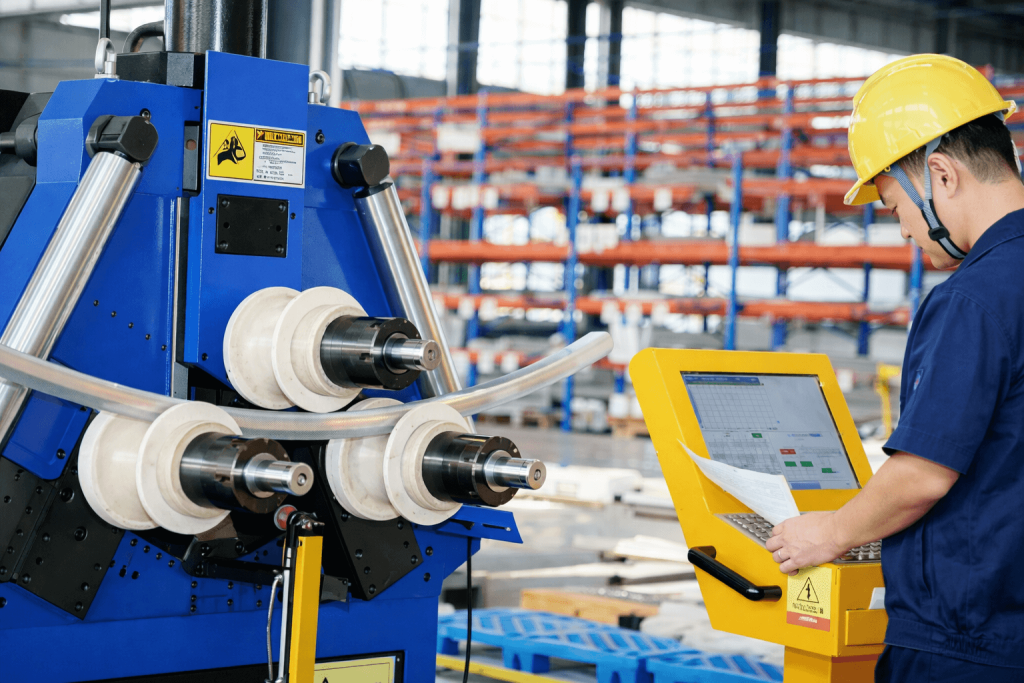
How Metal Stamping Differs From CNC Press Bending
Metal stamping relies on dedicated male and female die sets mounted in large tonnage hydraulic presses to form complex shapes in a single stroke. CNC press brake bending, by contrast, uses versatile v-dies and automated ram depth controls to form sequential bends along a straight line.
Consider this: high-volume OEM components benefit immensely from dedicated press tooling due to rapid cycle speeds. For medium-volume custom accessory runs, CNC press brakes offer unmatched flexibility without high upfront tooling costs.
Why Precision Tooling Delivers Batch Consistency
Hardened alloy steel dies ensure that thousands of stamped components retain identical dimensions throughout extended production runs. Precision tooling prevents material springback variations, keeping mounting holes aligned across large batches.
- Hardened tool steel inserts resist wear when forming high-strength alloys.
- Integrated progressive dies perform blanking, punching, and forming in continuous operations.
- Automated sheet feeders maintain tight tolerances during continuous press operations.
Key Takeaway: Investing in high-precision die tooling delivers rapid unit production while ensuring perfect component repeatability across large orders.
| Tooling Process | Hydraulic Metal Stamping | CNC Press Brake Bending |
|---|---|---|
| Production Speed | Extremely Fast (High Volume) | Medium Speed (Flexible) |
| Initial Tooling Cost | Higher Initial Investment | Low to Minimal Tooling Cost |
| Complex Geometry | Excellent for 3D Curves | Ideal for Linear Bends |
Analytical guidance: High-volume accessory lines achieve lower per-unit costs with die stamping, whereas short-run custom accessories perform best on CNC press brakes.
How Does Welding Impact OEM Truck Accessories Manufacturing?
Automated robotic welding directly impacts OEM truck accessories manufacturing by producing deep-penetration, high-integrity joints that withstand severe road vibration and heavy frontal impacts. Welded structural joints form the structural backbone of moose bumpers, utility bodies, and heavy-duty grille guards.
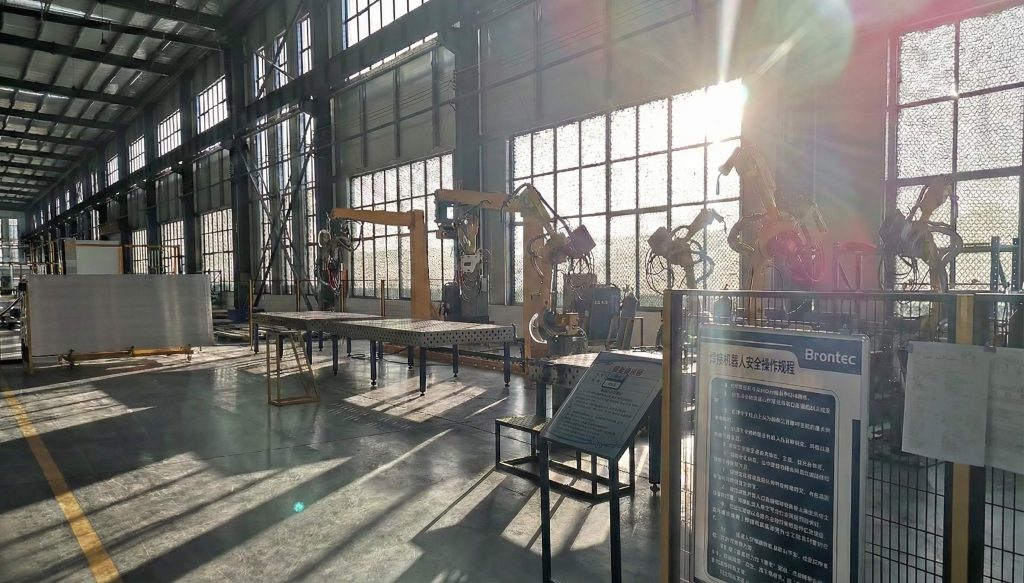
Why Robotic Welding Superiority Protects Structural Integrity
Robotic MIG and TIG welding systems deliver consistent heat input, travel speed, and wire feed rates across every structural joint. This consistency eliminates human fatigue errors, internal porosity, and cold-lap defects that undermine bumper strength.
The best part? Automated multi-axis robotic arms effortlessly trace complex 3D tubular curves, creating uniform weld beads that distribute impact forces evenly across the bumper framework.
How AWS Weld Standards Ensure Long Haul Reliability
Strict adherence to American Welding Society (AWS) standards guarantees that structural accessory welds perform under stress. Certified welding engineers establish qualified welding procedure specifications (WPS) tailored specifically for heavy aluminum extrusions and structural steel plates.
- AWS D1.2 standards govern structural aluminum welding protocols and shielding gas mixtures.
- AWS D1.1 standards define structural steel welding penetrations and joint preparations.
- Non-destructive testing (NDT) verifies weld integrity without compromising finished parts.
Key Takeaway: Robotic welding executed under AWS standards prevents joint fatigue fractures during prolonged severe-duty highway service.
| Welding Metric | Automated Robotic Welding | Manual Hand Welding |
|---|---|---|
| Joint Consistency | 99.8% Defect-Free | Varies by Operator Skill |
| Thermal Distortion | Minimal (Controlled Heat Input) | Higher (Variable Heat Input) |
| Production Throughput | 3x to 5x Faster | Standard Manual Rates |
Analytical guidance: Automated robotic welding ensures uniform structural joint strength while preventing thermal distortion on critical aluminum bumpers.
Why Is CMM Key in OEM Truck Accessories Manufacturing?
Coordinate Measuring Machine (CMM) inspection is key in OEM truck accessories manufacturing because it provides sub-millimeter 3D dimensional verification against client CAD files. Utilizing laser scanning and touch-probe CMM technology guarantees that production parts match critical geometric tolerances before leaving the facility.
How First-Article Inspection Prevents Fitment Issues
First-article inspection (FAI) requires rigorous CMM scanning of the initial production part off a new manufacturing setup. Quality technicians verify frame mounting distances, hole diameters, and overall guard curvature against the master CAD model.
Here’s the deal: catching a $0.5\text{ mm}$ bracket offset during first-article inspection prevents an entire shipping container of bumpers from arriving with fitment defects. Production only proceeds once the FAI report receives formal quality sign-off.
What Advanced Quality Audits Deliver for OEM Buyers
Comprehensive quality management extends beyond dimensional scanning to include structural non-destructive testing and material certification checks. Multi-stage quality audits ensure that every completed truck accessory meets demanding fleet quality criteria.
- Ultrasonic testing verifies weld penetration on thick structural uprights.
- Hardness testing confirms that heat-treated aluminum retains its T6 structural temper.
- CMM touch-probing confirms mounting hole locations to within $\pm 0.5\text{ mm}$.
Key Takeaway: Rigorous CMM inspection and first-article verification eliminate fitment defects before volume production begins.
| Quality Protocol | Verification Method | Quality Objective |
|---|---|---|
| CMM 3D Inspection | Laser Scanning / Touch Probe | $\pm 0.5\text{ mm}$ Hole & Bracket Accuracy |
| Material Hardness | Webster / Brinell Hardness Tester | Verifies Alloy Temper (e.g., T6) |
| Weld NDT Inspection | Ultrasonic / Dye Penetrant | Ensures Zero Internal Weld Porosity |
Analytical guidance: CMM verification provides mathematical proof that complex bumper assemblies will bolt onto chassis frames without shop adjustments.
How Does Coating Finish OEM Truck Accessories Manufacturing?
Automated powder coating and industrial finishing protocols provide the critical final protective layer in OEM truck accessories manufacturing. Applying continuous thermosetting coatings protects metal surfaces against aggressive road salts, gravel impacts, UV degradation, and chemical exposure.
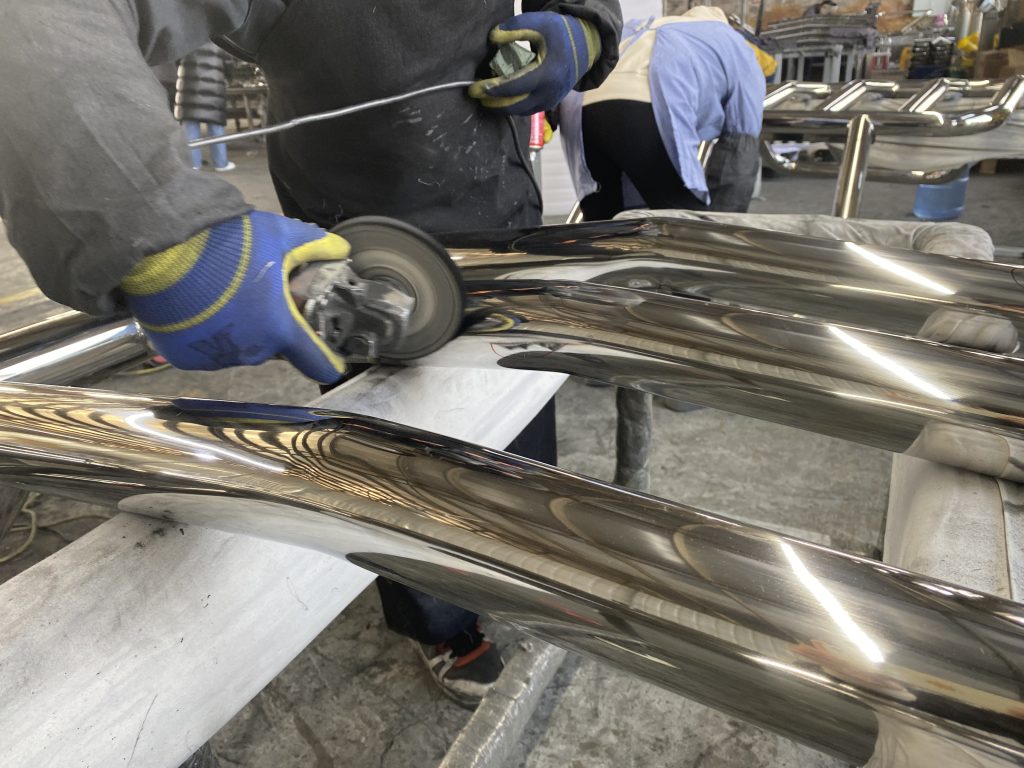
Why Powder Coating Superiority Prevents Corrosion
Electrostatic powder coating provides a thicker, more durable protective barrier than traditional liquid paints. Charged powder particles adhere uniformly to all metal surfaces, including sharp edges and recessed mounting pockets, before curing in high-temperature ovens.
Look: liquid spray paint often sags or thins along sharp structural edges, leading to premature rust spots. Electrostatic powder coating forms a cross-linked polymer film that resists impact chipping and chemical corrosion.
How Surface Pre-Treatment Extends Accessory Lifespan
Proper surface preparation is crucial for long-term finish adhesion. Automated multi-stage wash lines clean, etch, and chemical-passivate raw aluminum and steel components before coating application.
- Shot blasting removes mill scale and surface oxides to establish an ideal anchor profile.
- Zirconium or phosphate pre-treatment washes enhance chemical paint bonding.
- Deionized water rinses remove trace contaminants to prevent premature blistering.
Key Takeaway: Multi-stage surface pre-treatment combined with automated powder coating prevents rust creep and maintains fleet appearance over years of highway service.
| Finish Characteristic | Electrostatic Powder Coating | Traditional Liquid Paint |
|---|---|---|
| Chipping Resistance | Superior Impact Toughness | Moderate to Low |
| Edge Coverage | Uniform Thickness Across Edges | Prone to Thinning/Runs |
| Environmental Safety | Zero VOC Emissions | High Solvent VOCs |
Analytical guidance: Pre-treated powder coating systems extend accessory service lives by creating an impenetrable barrier against harsh road salt environments.
How Is Logistics Managed in OEM Truck Accessories Manufacturing?
Logistics in OEM truck accessories manufacturing is managed through custom export crating, protective packaging protocols, and synchronized transport scheduling to prevent ocean and overland transit damage. Heavy metal accessories require specialized packaging designs to preserve painted finishes and mounting geometry during international transit.
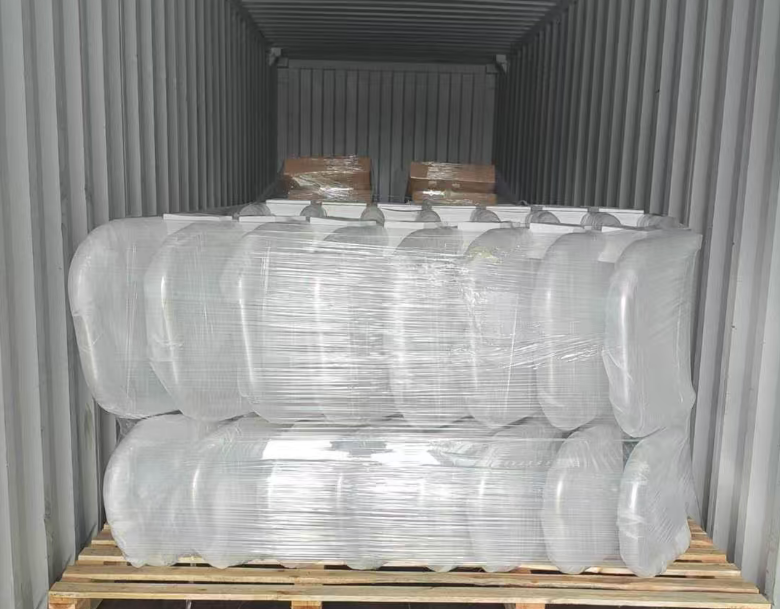
How Protective Export Packaging Prevents Transit Damage
Heavy structural bumpers and aluminum truck bodies require custom wooden crating, corner edge protectors, and heavy-gauge protective film wrap. Secure steel strapping holds components motionless on reinforced wooden pallets to prevent metal-on-metal rubbing.
Think about it: ocean freight containers experience significant rolling motion and humidity fluctuations. Custom moisture-barrier wraps and vapor-corrosion-inhibitor (VCI) bags preserve mirror-polished aluminum finishes across long ocean journeys.
Why Delivery Synchronization Streamlines OEM Orders
Synchronized production schedules align factory output directly with client assembly schedules or regional distributor stocking cycles. Streamlined manufacturing workflows shorten turnaround times to 20-30 days, keeping fleet expansion projects on target.
- Custom pallet dimensions maximize sea container space, lowering per-unit freight costs.
- Barcode labelling speeds warehouse intake and inventory tracking upon delivery.
- Dedicated shipping accounts simplify customs clearance and port logistics.
Key Takeaway: Engineered export packaging protects finished accessories during transit, delivering pristine components directly to your assembly location.
| Packaging Component | Protective Purpose | Fleet Advantage |
|---|---|---|
| VCI Protective Film | Sealed Corrosion Prevention | Eliminates Moisture & Salt Damage |
| Custom Heavy Pallets | Reinforced Structural Base | Prevents Forklift Damage |
| Corner Edge Guards | Impact Absorption | Preserves Finished Powder Coating |
Analytical guidance: Specialized export crating eliminates transit damage claims and ensures accessories arrive clean and ready for immediate mounting.
Is OEM Truck Accessories Manufacturing Fleet Ready?
Yes, OEM truck accessories manufacturing is fleet ready when finished products clear strict quality protocols, bolt directly to OEM mounting points, and carry full compliance certification. Delivering installation-ready accessories enables commercial transport operators to upgrade entire truck lines without installation friction.
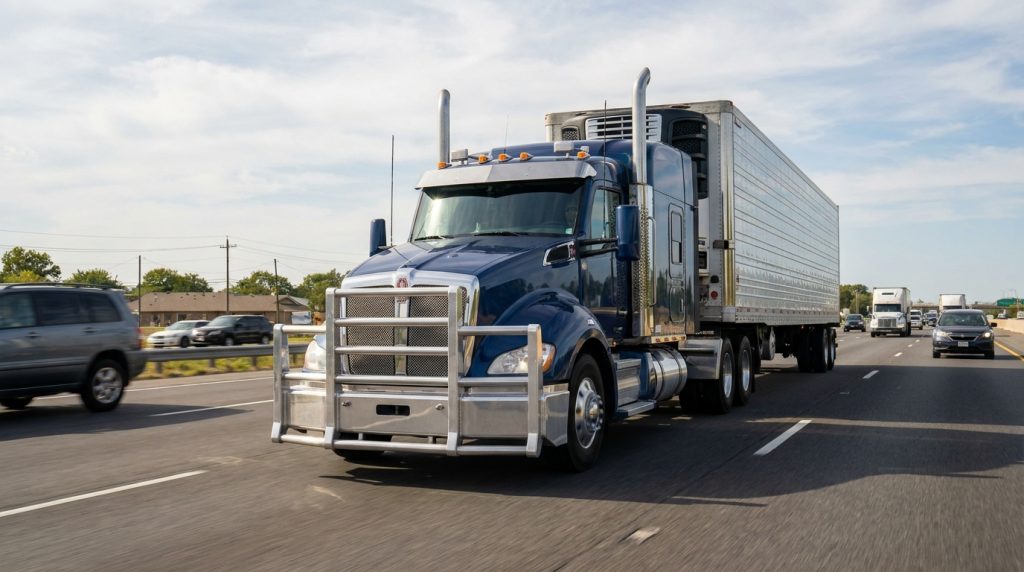
How Bolt-On Installation Speeds Fleet Deployment
Direct bolt-on accessory designs utilize factory frame rail holes engineered by major truck manufacturers like Freightliner, Kenworth, Peterbilt, Volvo, and Mack. Eliminating on-site frame drilling preserves original vehicle frame warranties and structural integrity.
Consider this: drilling extra holes into hardened truck frame rails compromises steel temper and increases shop installation time. Direct bolt-on mounting brackets allow technicians to install heavy-duty front bumpers using basic shop hand tools.
What Fleet Standardization Programs Achieve Long Term
Establishing standardized accessory programs across commercial fleets simplifies inventory management, driver training, and spare parts procurement. Operating a uniform fleet design improves brand presence while reducing long-term maintenance inventory requirements.
- Standardized mounting hardware reduces replacement parts inventory across repair depots.
- Fleet-wide bumper protection minimizes costly radiator and engine downtime following animal strikes.
- Uniform vehicle aesthetic builds brand recognition across long-haul highway routes.
Key Takeaway: Standardizing on fleet-ready OEM accessories cuts installation overhead, protects vital cooling systems, and maximizes fleet uptime.
| Deployment Factor | Standardized OEM Protection | Unstandardized Mixed Accessories |
|---|---|---|
| Spare Parts Inventory | Streamlined Common Hardware | Complex Multi-Vendor Stock |
| Fleet Aesthetics | Uniform Professional Appearance | Mismatched Vehicle Finishes |
| Maintenance Training | Single Installation Protocol | Multiple Variable Procedures |
Analytical guidance: Fleet standardization programs streamline ongoing repair logistics and lower parts inventory overhead across multi-regional maintenance depots.
Comprehensive Manufacturing Excellence for Fleet Protection
Navigating commercial vehicle upgrades requires an OEM partner capable of overcoming common industry headaches like ill-fitting brackets, poor weld quality, and slow delivery schedules. By combining advanced 3D CAD engineering, precision CNC machining, robotic welding, and CMM quality assurance, modern manufacturing processes transform client technical drawings into ultra-durable protection products built for extreme transport environments.
Whether you need high-strength aluminum moose bumpers, stylish grille guards, weather-tight tool boxes, or custom aluminum truck bodies, dedicated contract manufacturing ensures exact fitment and outstanding field durability across North American truck platforms. Partnering with a proven, ISO-certified production facility elevates your fleet’s protection standards while lowering overall operational costs.
Ready to upgrade your fleet operations with precision-engineered truck protection? Contact us today to discuss your technical drawings, request prototype quotes, and discover how our advanced manufacturing capabilities can streamline your production pipeline.
Frequently Asked Questions
Can I request custom design modifications for specific truck models?
Yes, you can easily customize accessory dimensions, mounting bracket patterns, and tube profiles to match specific truck chassis requirements. Design engineers review your vehicle specifications and CAD models to create tailored accessories that align perfectly with factory mounting points.
What’s the best way to choose between aluminum and steel bumpers?
The best approach is to evaluate your fleet’s operating environment and payload requirements. Aluminum is ideal for highway fleets seeking weight savings, fuel efficiency, and corrosion resistance, while heavy steel is recommended for severe off-road, mining, or logging applications where maximum abrasion resistance is required.
How do I know if the accessories will fit my fleet’s mounting points?
Verification is guaranteed through 100% CMM dimensional testing and physical fitment trials during the first-article inspection stage. Detailed 3D CAD modeling matches factory frame rail specs across major truck platforms to ensure exact direct bolt-on compatibility without on-site frame drilling.
Can I order sample units before committing to full volume production?
Yes, you can order sample units for physical vehicle test-fitting and quality evaluation prior to initiating mass production. Prototype samples undergo complete quality inspection and CMM scanning to confirm design accuracy before full-scale manufacturing begins.
What’s the best method to protect accessory finishes during ocean transport?
The best protection strategy involves multi-layer export packaging utilizing VCI anti-corrosion wrap, heavy foam padding, corner edge protectors, and reinforced wooden crating. This engineered packaging shields finished powder-coated surfaces from ocean salt spray, humidity fluctuations, and transit vibration.