
To measure your semi truck for proper protection equipment, you must record the exact ground-to-bumper heights, frame rail center-to-center spans, overall bumper widths, and hood swing clearances. Imagine walking out to your commercial yard only to find one of your Class 8 trucks with a shattered radiator, a crushed fiberglass hood, and an active coolant leak from a highway wildlife strike. The repair bills, towing charges, and lost cargo revenue are already mounting, making you wish you had installed proper front-end protection before dispatching the route. Measuring your vehicle’s physical specs is the first critical step to finding the perfect defense for your capital investments. Achieving an accurate semi truck grille guard fitment guarantees a seamless bolt-on installation, protecting your drivers and keeping your vehicles out of the repair shop.
By establishing a standardized measurement routine, you eliminate human error and ensure complete equipment compatibility across your entire multi-brand commercial fleet. These physical measurements act as a blueprint that allows engineers to align structural brackets with your truck’s factory chassis. Taking the time to verify these specs prevents costly returns and installation delays that eat into your weekly operating ratio. Ultimately, a properly measured guard is your best defense against unpredictable highway hazards and rising maintenance costs.
Why is semi truck grille guard fitment so vital?
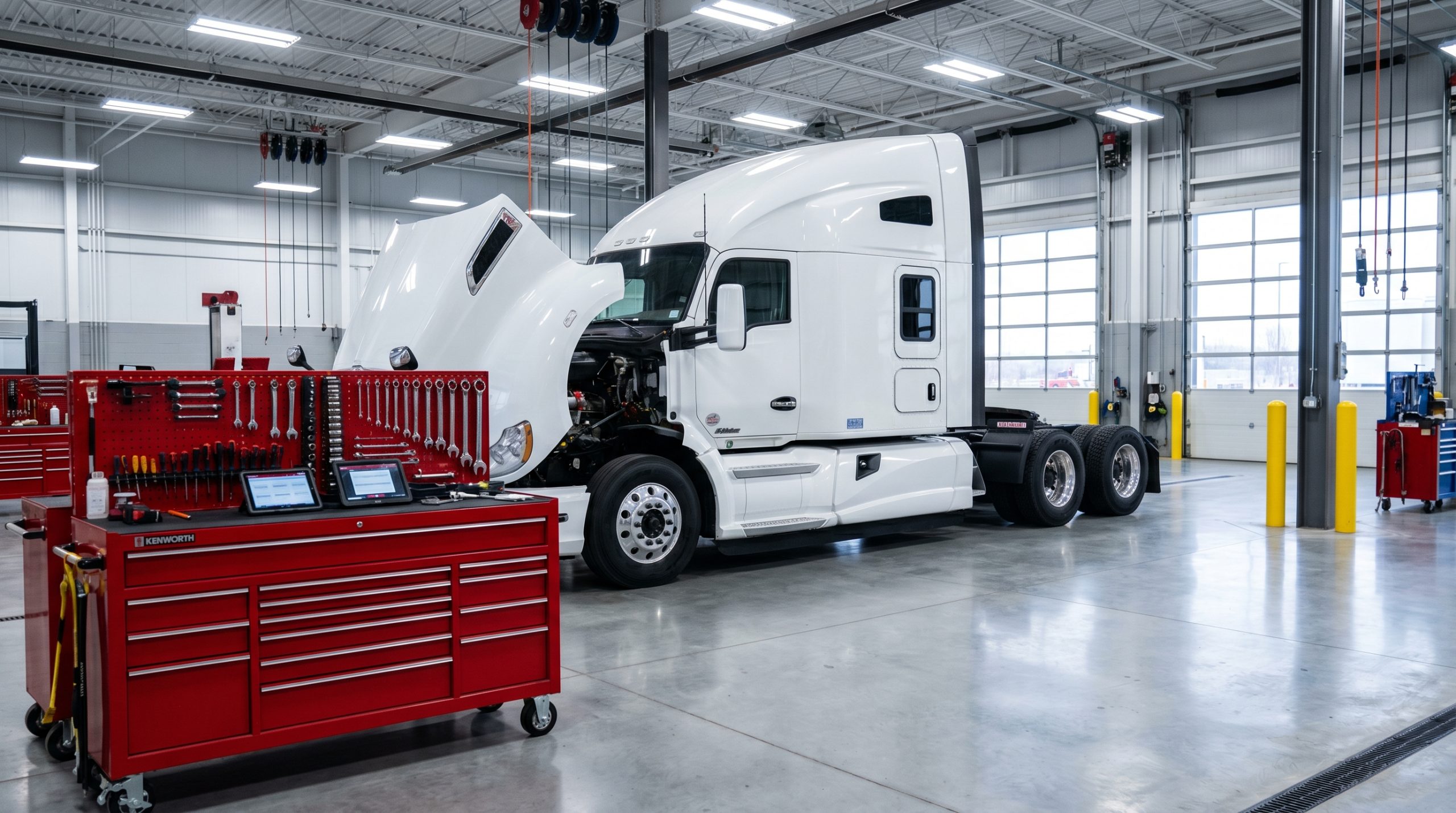
Achieving a precise semi truck grille guard fitment is vital because it preserves your truck’s structural integrity by transferring impact loads directly into the heavy-duty chassis during a collision. When a guard is poorly aligned or loose, even a minor debris strike can bypass the protective tubes and destroy sensitive cooling systems. This solid connection shields your radiator, charge air cooler, and engine block from severe mechanical damage on long-haul highway routes. Choosing a high-tolerance guard is the smartest way to maintain continuous uptime and protect your fleet’s profitability.
Furthermore, an improperly sized guard will create massive vibration and rubbing issues against your fiberglass hood and headlight lenses. Over time, these micro-vibrations lead to structural fatigue, cracked welds, and cosmetic body wear that require constant shop maintenance. Verifying your measurements before purchasing ensures your equipment bolts on cleanly without custom field drilling or frame modifications. This careful approach maintains your OEM truck warranties and guarantees a quiet, rattle-free ride for your drivers.
How do wildlife collisions threaten your fleet uptime?
Wildlife strikes on remote shipping corridors represent one of the most volatile and expensive hazards for long-haul fleet operations. A single moose or deer impact can instantly write off a truck’s front end, leaving your driver stranded and your cargo delayed on the highway. Think about this: the actual cost of a collision goes far beyond body repairs when towing fees, cargo spoilage, and missed delivery penalties are calculated. Implementing a rugged, custom-fit bumper shield is a proactive strategy to mitigate these operational risks.
- Shields fragile radiator cores and engine cooling systems from severe intrusion.
- Minimizes the risk of driver injury from windshield impacts.
- Avoids expensive towing fees and cargo delays in remote highway zones.
By deflecting massive impact forces directly into the truck’s structural frame rails, your guard behaves as an impenetrable safety shield. This structural bypass allows your driver to maintain steering control and park the rig safely after an accident. Protecting these vital mechanical zones keeps your fleet running consistently.
Can incorrect dimensions escalate your operating costs?
Ordering poorly sized front-end protection products leads to a destructive cycle of unexpected installation costs and mechanical issues. When your shop technicians encounter mismatched brackets, they are often forced to drill new frame holes or weld custom adapters on-site. Make no mistake: these forced field modifications weaken your truck’s chassis and void valuable manufacturer structural warranties. This added labor and tool wear can quietly drain your weekly maintenance budget.
- Inflates assembly hours due to complex manual bracket modifications.
- Accelerates wear on surrounding hood hinges, latches, and headlights.
- Increases road vibration, causing premature metal fatigue in mounting bolts.
Key Takeaway: Utilizing a high-tolerance guard that matches your exact truck model prevents expensive field modifications, protects your driver from hazards, and ensures your vehicles remain profitable on the highway.
| Fitment Concern | Operational Impact | Cost Prevention |
|---|---|---|
| Severe Misalignment | Radiator crushing, engine frame damage | Saves up to $10,000 in repair bills |
| Vibration Rubbing | Cracked fiberglass hoods, broken lights | Eliminates recurring body shop visits |
| Incorrect Brackets | On-site drilling, voided OEM warranties | Prevents structural frame weakening |
To guarantee these financial savings, you must first equip your maintenance team with the correct precision measuring instruments.
What tools prove semi truck grille guard fitment?
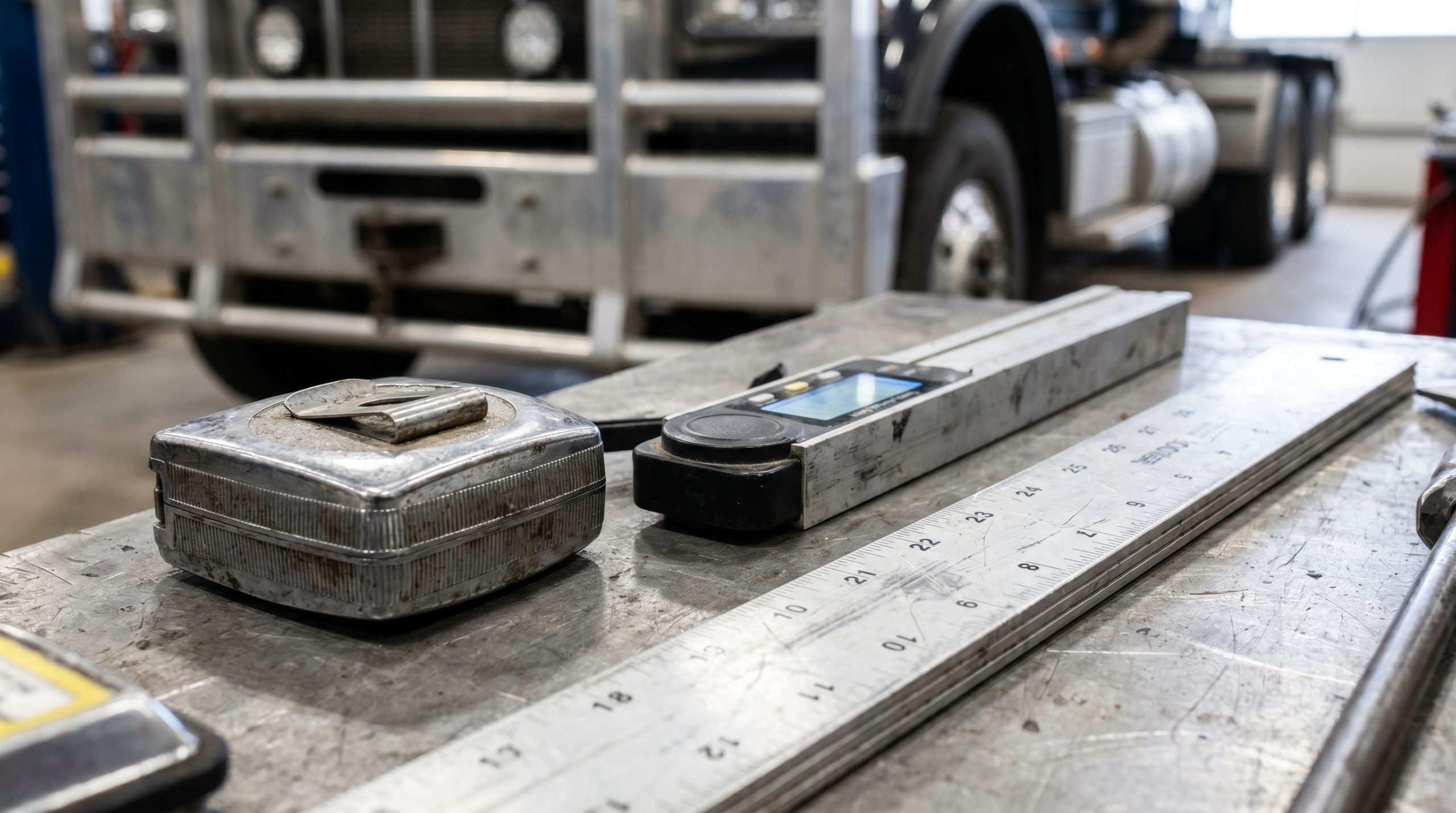
Using high-quality, calibrated measuring instruments like rigid steel tapes, digital angle finders, and digital calipers is the only way to prove a secure semi truck grille guard fitment. Relying on flexible fabric tapes or visual approximations introduces minor errors that lead to bracket misalignment and loose connections. These professional-grade tools enable your technicians to capture both wide chassis dimensions and micro-level bracket metrics with perfect accuracy. Having the right tools on hand ensures that your raw data matches professional manufacturing blueprints.
Furthermore, utilizing standardized measurement tools across your maintenance network ensures data consistency between different shop locations. When every technician uses the same high-precision hardware, human error is virtually eliminated from your equipment procurement pipeline. This technical alignment allows your manufacturing partner to build brackets that fit perfectly on the first try. In short, investing in a professional toolkit is the easiest way to prevent ordering mistakes and speed up fleet deployment.
Why is a rigid steel tape measure essential for spans?
A heavy-duty steel tape measure is the absolute backbone of front-end truck dimensioning over wide horizontal spans. Unlike fabric or fiberglass tapes, a rigid steel tape will not stretch or sag under its own weight when measuring across a wide bumper face. Here is the deal: even a tiny one-eighth inch sag can ruin your clearance calculations and lead to a mismatched guard. Utilizing a tape with a magnetic tip allows a single operator to capture long dimensions accurately without helper assistance.
- Ensures 100% flat horizontal measurements over wide distances.
- Features a magnetic tip for easier solo operator usage in busy shops.
- Provides clear, readable fractional markings in high-contrast print.
Keeping your tape perfectly level and parallel to the ground ensures that your width dimensions reflect the truck’s true physical profile. This simple practice prevents you from ordering a guard that overlaps your headlights or blocks air intake vents.
How do digital calipers prevent mounting errors?
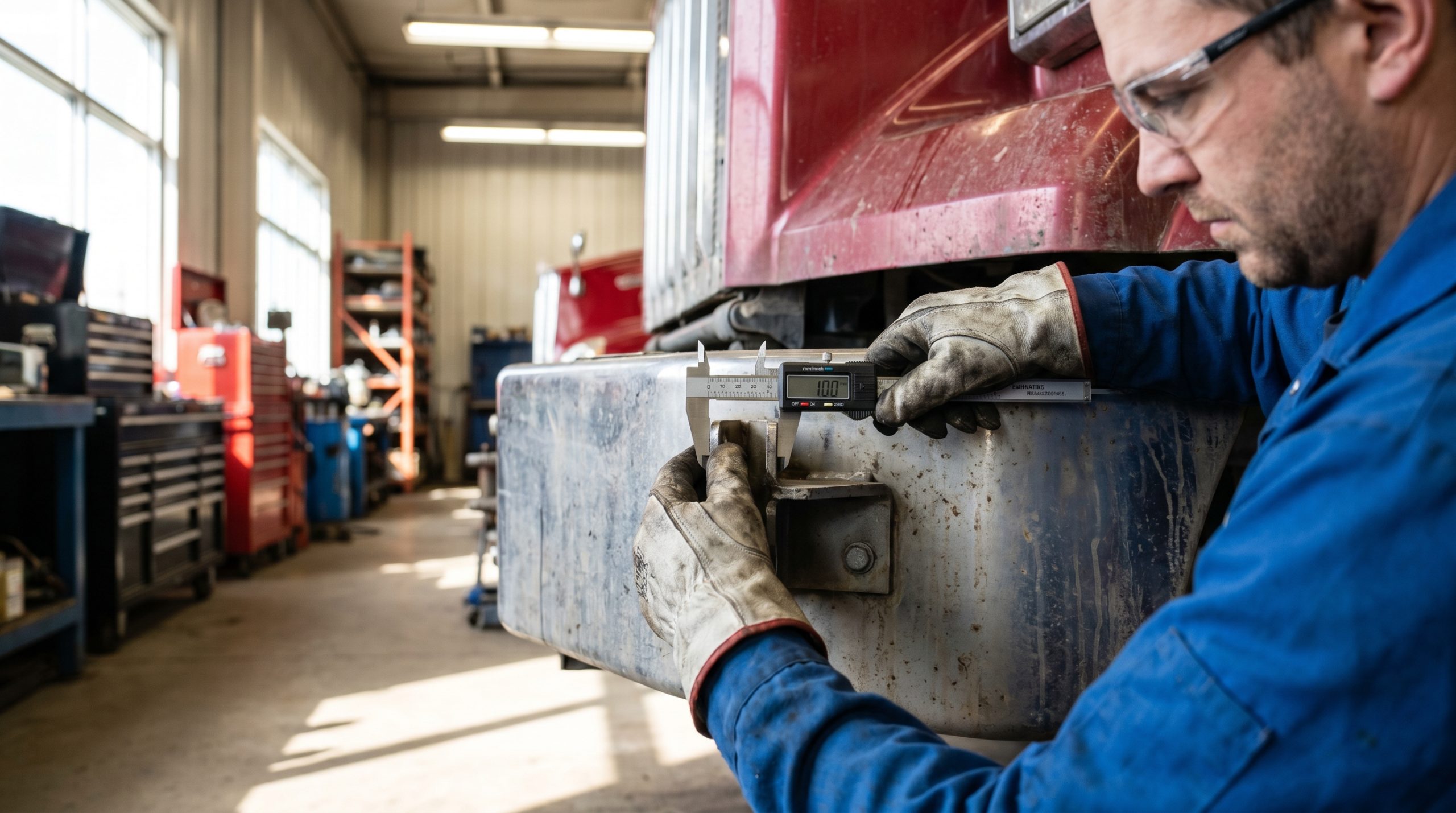
Digital calipers are vital for capturing the highly precise measurements required for frame holes and mounting bracket spacing. While a standard tape measure is fine for broad bumper widths, it is far too coarse for validating bolt hole diameters. Think about this: digital calipers provide instant LCD readouts down to a fraction of a millimeter, leaving zero room for technician guesswork. This exact precision is what guarantees that the guard’s steel brackets slip smoothly over your frame extensions.
- Measures frame rail steel thickness within 0.01mm.
- Validates inner bolt hole diameters for mounting compatibility.
- Determines exact lateral bracket clearances on tight chassis spaces.
Key Takeaway: Equipping your technicians with digital calipers and rigid steel tapes guarantees that your physical measurements match high-precision manufacturing prints, saving your shop hours of manual modification labor.
| Tool Type | Primary Measurement Function | Target Precision Standard |
|---|---|---|
| Steel Tape Measure | Bumper widths, overall heights, clearance spans | Within 1/16 inch |
| Digital Calipers | Bolt hole diameters, frame steel thickness | Within 0.01 mm |
| Digital Angle Finder | Bumper slope, hood angle profiling | Within 0.1 degree |
Once you have assembled your precision tools, the next step is prepping the vehicle to eliminate environmental variables.
How does prep affect semi truck grille guard fitment?
Proper vehicle preparation directly affects semi truck grille guard fitment by removing physical skewing factors like uneven shop floors, shifting suspension bags, and dirty frame surfaces. If a truck is parked on an incline or has an uncalibrated air ride system, your height and clearance metrics will be completely inaccurate. This preparation stage ensures that all subsequent measurements are taken from a stable, standardized baseline. Establishing a strict prep protocol in your shop is the easiest way to prevent ordering errors.
Additionally, cleaning road grime, grease, and surface rust off your mounting extensions allows your calipers to contact bare structural metal. This ensures that your thickness and hole diameter readings are 100% accurate. Taking the time to properly prep the chassis prevents the minor installation misalignments that cause rattles on the highway. Ultimately, a clean, level truck is the secret to a fast, successful bolt-on installation.
Why must you park on level concrete bay floors?
Parking on a certified level concrete floor is the only way to establish a true vertical reference plane for your height measurements. Outdoor asphalt or gravel lots often contain subtle depressions that cause the truck’s chassis to twist slightly. Here is the kicker: a minor twist at the rear axles can translate into a significant tilt at the front bumper, throwing off your clearances. Locking down your vehicle on a flat surface ensures your vertical dimensions remain completely true.
- Prevents chassis twisting and uneven weight distribution.
- Establishes a reliable ground-level vertical reference point.
- Improves technician safety by stabilizing the Class 8 vehicle.
Make sure to engage the parking brakes, shut off the engine, and place heavy wheel chocks before starting. This basic step ensures a safe, stable working environment for your maintenance crew.
How does suspension level alter your readings?
Your truck’s air suspension system must be set to its standard highway ride height before you begin taking vertical measurements. A deflated or over-inflated suspension completely alters the bumper’s distance to the ground, skewing your guard height calculations. Believe it or not, a standard truck’s ride height can fluctuate by several inches depending on air bag pressure. Cycling the suspension ensures you are measuring the truck in its actual highway operating posture.
- Standardizes bumper-to-ground vertical clearance measurements.
- Matches the guard’s real-world highway position for aerodynamics.
- Ensures consistent values across different trucks in your fleet.
Key Takeaway: Standardizing your truck’s suspension ride height during the preparation phase ensures that your guard will maintain perfect ground clearance, preventing scraping on highway ramps and loading docks.
| Prep Action | Skewing Risk If Ignored | Fitment Impact |
|---|---|---|
| Level Ground Park | Chassis twist, sloped bumper face | Misaligned mounting brackets |
| Suspension Cycle | Incorrect vertical bumper height | Scraping or insufficient ground clearance |
| Frame De-griming | Dirt buildup adding false thickness | Loose bolts and bracket vibration |
With the truck stabilized and properly prepped, you are ready to identify the critical physical points on the vehicle’s front end.
Where do you map semi truck grille guard fitment?
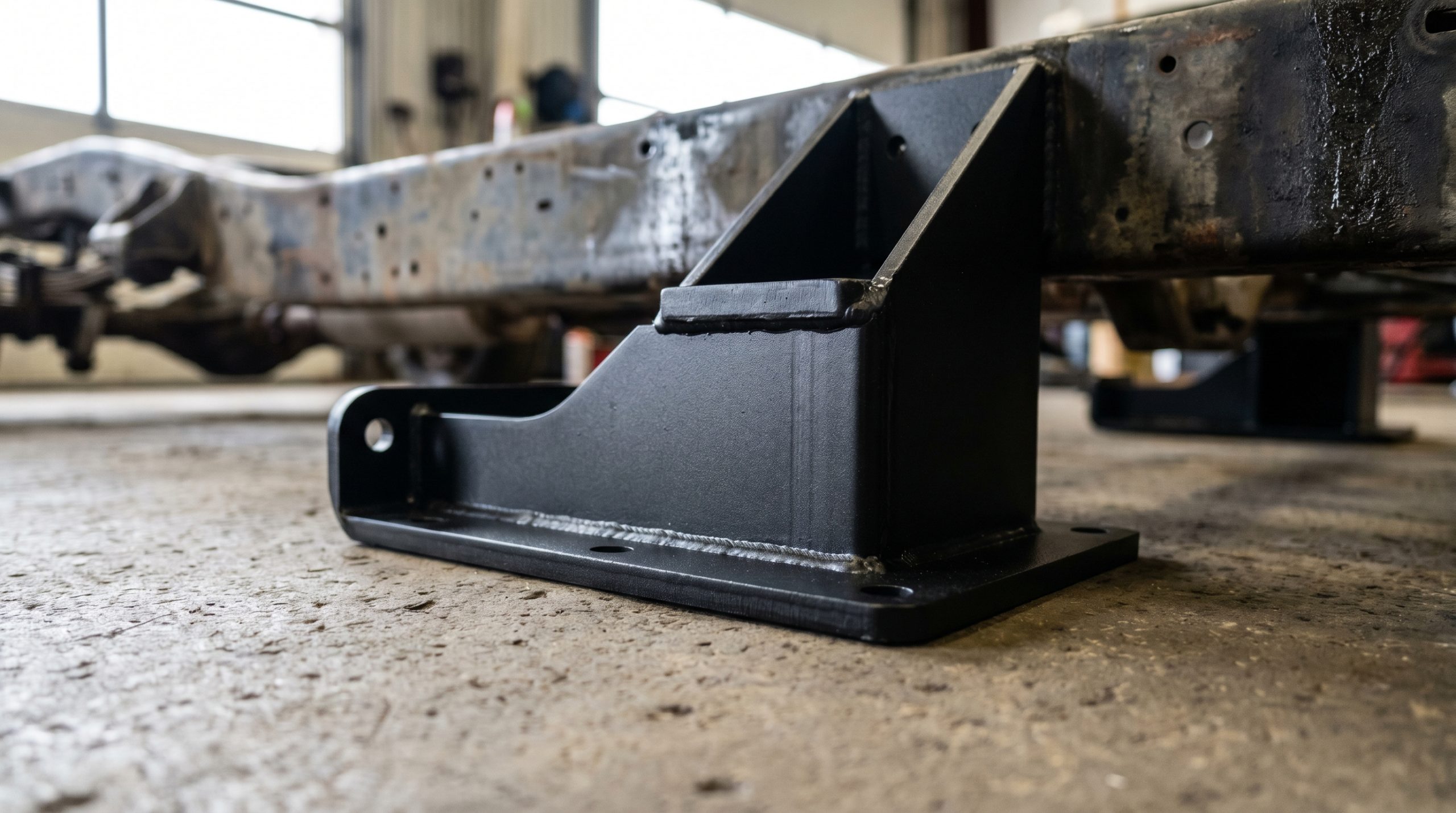
You must map your semi truck grille guard fitment at the structural frame rails, the bumper width extremes, the hood tilt arc, and the headlight clearance zones. Focusing solely on cosmetic plastic panels or bumper trim will result in a weak, misaligned installation. By locating and measuring these factory-defined structural areas, you ensure that impact loads are transferred directly to the truck’s steel core. This strategic mapping guarantees maximum durability and a perfect, rattle-free fit.
Furthermore, mapping these points helps you maintain full access to your engine bay for routine service. A well-designed guard must clear the forward tilt path of your hood completely. By measuring these dynamic paths, you keep your maintenance routines fast and uninterrupted. In short, precision mapping of these clearance zones is the foundation of long-term operational success.
How do you identify load-bearing frame extensions?
Locating the factory-drilled tow receiver holes on the main frame rails is critical for establishing a solid mounting foundation. These structural extensions are engineered to handle extreme forces, making them the only safe anchor point for a heavy guard. Think about this: attempting to mount a protective guard to non-structural cosmetic brackets will cause catastrophic failure during an impact. Finding these frame holes ensures your guard behaves as a true safety barrier.
- Look for the heavy steel extensions behind the front bumper.
- Locate the large factory-drilled tow pin or mounting holes.
- Clean the surrounding metal to inspect for any existing hairline cracks.
Once identified, measure the horizontal distance between the left and right frame rails from center to center. This primary metric determines the exact spacing of your guard’s mounting brackets.
Why must you trace the hood opening swing path?
Tracing the forward tilt path of your fiberglass hood prevents costly clearance interference after your guard is installed. When checking engine components, your hood swings forward and downward, requiring a clear, unobstructed arc. Here is the kicker: a guard that sits too close to the bumper face will block the hood from opening, forcing your technicians to remove the guard for simple oil checks. Measuring this clearance ensures your daily pre-trip inspections remain fast and easy.
- Measures the furthest forward point of the hood’s tilt arc.
- Ensures the guard sits outside this opening path or folds down smoothly.
- Prevents accidental scratching of expensive custom paint or fiberglass.
Key Takeaway: Mapping the structural mounting holes and hood swing clearances guarantees that your heavy-duty guard provides maximum collision protection without obstructing routine engine maintenance.
| Mapping Zone | Primary Measurement Point | Operational Tolerance |
|---|---|---|
| Frame Extensions | Center-to-center hole span | ± 1/16 inch accuracy |
| Hood Clearance | Furthest forward hood tilt arc | Minimum 2-inch buffer |
| Airflow Gap | Distance from OEM grille face | Minimum 3-inch clearance |
Now that you know exactly where to measure, let us walk through the physical step-by-step measurement sequence.
How do you check semi truck grille guard fitment?
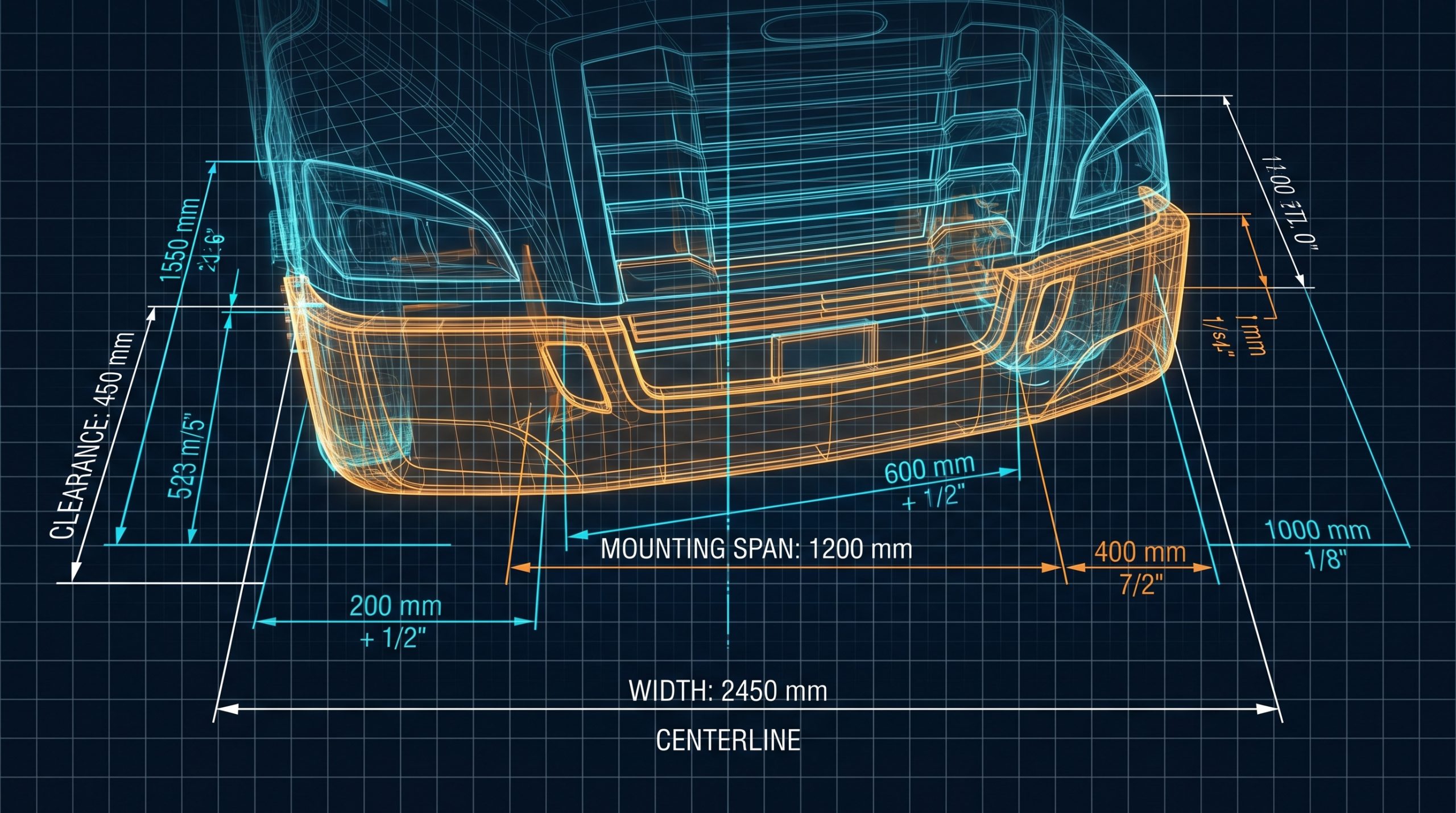
You must check your semi truck grille guard fitment by following a structured, three-dimensional measurement sequence from the ground up and the centerline outward. This systematic progression guarantees that you capture width, height, and depth metrics without skipping critical variables. By establishing a clear vertical centerline first, you ensure that your lateral dimensions are perfectly symmetrical on both sides of the chassis. Following this disciplined routine eliminates dimensional errors and ensures a seamless manufacturing process.
Additionally, having a second technician independently verify each measurement on a separate worksheet prevents transcription mistakes. If your two sets of numbers differ by more than one-eighth of an inch, re-measure that point immediately. This dual-verification step is standard in professional fleet maintenance environments. In the end, clean, verified data leads to a perfect bolt-on match for your Class 8 trucks.
How do you establish a perfect vertical centerline?
Establishing a precise vertical centerline is the critical first step for verifying your truck’s front-end symmetry. Mark the exact midpoint between your frame rails on the front bumper using temporary masking tape or chalk. Believe it or not, all of your lateral measurements to the left and right must be measured from this single reference point to ensure balance. If your mounting points are not perfectly symmetrical to the centerline, your guard will sit crookedly on the highway.
- Locate the exact midpoint between the main steel frame rails.
- Mark this center point clearly on the face of the bumper.
- Verify symmetry by measuring from the center to both headlight edges.
Using this center point prevents lateral drift when recording your outer bumper width dimensions. It ensures your guard aligns perfectly with the truck’s OEM grille bars.
What is the step-by-step width and height sequence?
Begin by measuring the overall width of your bumper from the furthest tip on the driver’s side to the passenger’s side. After securing this width, measure the vertical height from the level floor to the top of your bumper, followed by the top of the grille. But that is not all: you must also measure the horizontal depth from the bumper face to the mounting brackets to ensure proper guard standoff. Following this precise sequence captures the complete physical envelope of your truck’s front end.
- Step 1: Record overall front bumper width.
- Step 2: Measure ground-to-bumper and ground-to-grille heights.
- Step 3: Document horizontal bracket-to-bumper depth.
Key Takeaway: Following a disciplined, centerline-outward measurement sequence ensures that your new grille guard fits with mathematical perfection, maintaining optimal aerodynamics and balanced weight distribution.
| Sizing Step | Start Reference Point | End Reference Point | Required Spec |
|---|---|---|---|
| Bumper Width | Driver-side bumper tip | Passenger-side bumper tip | Full outer dimension |
| Mounting Span | Center of left frame rail | Center of right frame rail | Within ± 1/16 inch |
| Guard Height | Level shop concrete floor | Top of factory truck grille | Maximum ground clearance |
With your physical dimensions securely recorded, you must now compare them against recognized manufacturing standards to ensure long-term durability.
Which specs govern semi truck grille guard fitment?
Strict engineering standards like AWS D1.1 weld certifications, ISO quality standards, and precise hole tolerances govern semi truck grille guard fitment. Commercial Class 8 vehicles are subjected to intense road vibration, extreme temperature swings, and severe physical impacts on a daily basis. To survive these harsh highway conditions, your guard’s brackets must be manufactured to extremely tight tolerances. Aligning your measurements with these professional specs ensures your guard remains stable and secure for millions of miles.
Furthermore, working with a manufacturer that utilizes CNC precision machining ensures that every guard matches these specs. A guard built with loose tolerances will suffer from premature rattling, loose bolts, and stress fractures. Insisting on high-precision manufacturing protects your capital equipment investment and keeps your trucks running smoothly. In short, engineering standards are the difference between decorative accessories and true structural safety barriers.
Why do mounting brackets require millimeter precision?
Mounting bracket hole alignments must be held to a microscopic tolerance of plus or minus half a millimeter to ensure a seamless bolt-on fit. If bracket holes are off by even a tiny fraction of an inch, your technicians will be forced to modify the connection on-site. Here is the kicker: forcing a mismatched bolt weakens the structural integrity of the frame rail, compromising your safety barrier. High-precision laser-cut brackets slip onto your chassis smoothly, preserving the full strength of the mounting assembly.
- Holds hole positions to a strict ±0.5mm engineering tolerance.
- Eliminates the need for field drilling or structural modifications.
- Distributes impact loads evenly across all mounting bolts.
Using CNC press brakes and dedicated assembly jigs during manufacturing ensures this level of accuracy is maintained across every production run. It guarantees a flawless, tool-free alignment during your shop installation.
How do you verify frame rail symmetry using diagonal checks?
Performing diagonal cross-measurements, or “X-measuring,” is the industry standard for verifying that your truck’s frame rails are perfectly straight and symmetric. Measure from the front edge of the left frame rail to a fixed bolt on the right side of the chassis, then repeat this process in reverse. Think about this: a minor previous collision can warp your truck’s frame rails without any visible exterior damage. Identifying a twisted frame before ordering your guard prevents severe fitment issues down the line.
- Measure diagonally from left frame tip to right chassis reference point.
- Measure diagonally from right frame tip to left chassis reference point.
- Compare both measurements; any variance over 1/4 inch indicates a warped frame.
Key Takeaway: Verifying frame symmetry and demanding millimeter-precision mounting tolerances ensures your guard integrates seamlessly with your truck’s chassis, preventing loose bolts and premature fatigue on the highway.
| Quality Standard | Target Metric | Fleet Benefit |
|---|---|---|
| Bracket Hole Tolerance | Within ± 0.5 mm | Zero field drilling required during installation |
| Frame Symmetry Spec | Under 1/4 inch variance | Perfect lateral alignment and balanced aerodynamics |
| Weld Quality Certification | AWS D1.1 structural certified | Prevents cracking under heavy road vibrations |
Even with perfect frame alignment, modern vehicle technologies can present unique physical obstructions that you must plan for.
Do ADAS sensors block semi truck grille guard fitment?
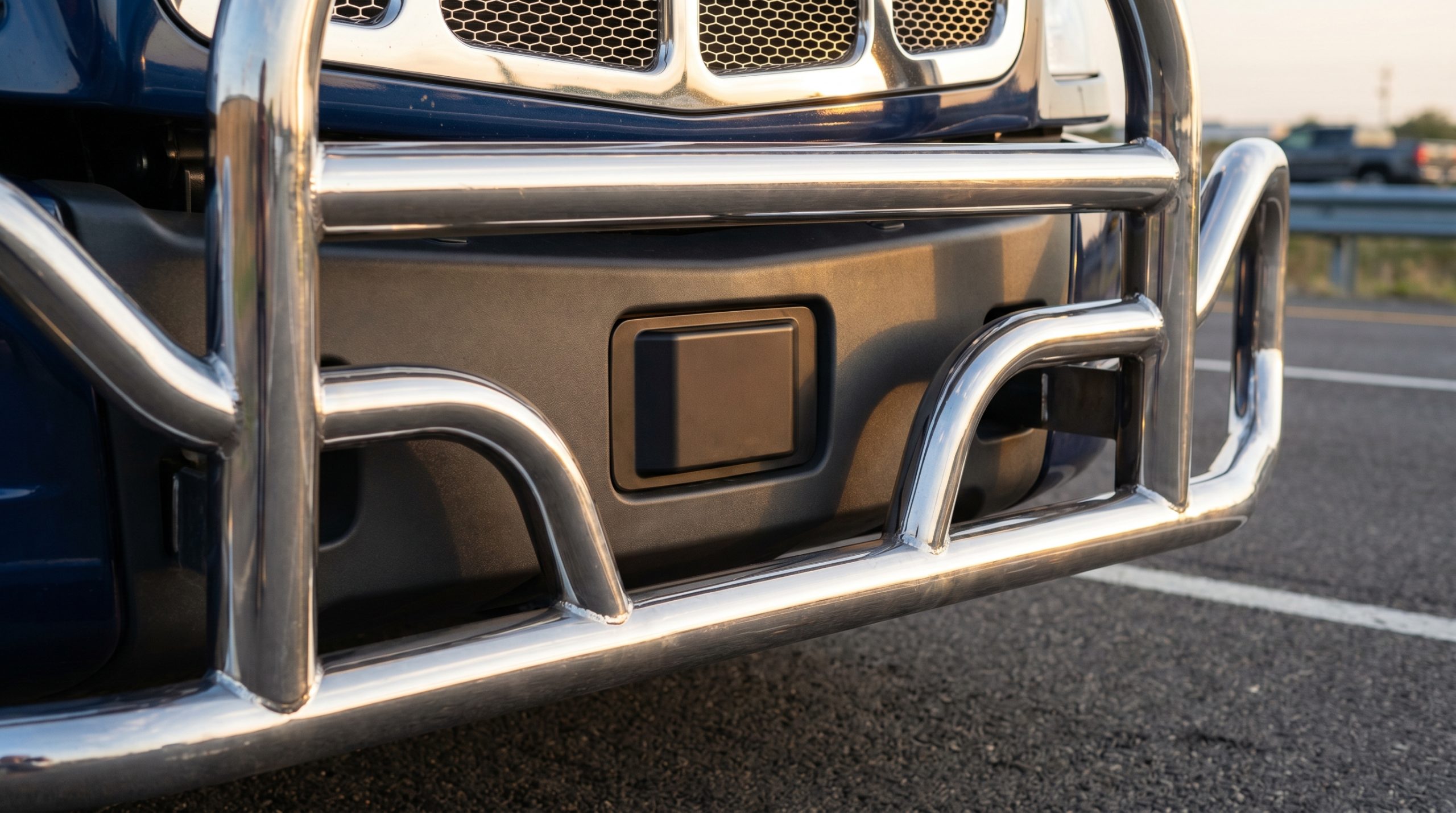
Advanced safety radar units and lane assist cameras will block your semi truck grille guard fitment if your guard’s steel tubes pass directly in front of their field of view. Most modern Class 8 trucks rely on front-mounted radar systems for automatic emergency braking and adaptive cruise control. If a thick steel bar obstructs these high-frequency radar waves, it will disable your truck’s safety features and trigger dashboard error codes. Planning for these technological components during your measurement phase is absolutely critical.
To avoid disabling your safety systems, you must select a guard with integrated radar-compatible cutouts or mesh patterns. These engineered spaces allow radar signals to pass through unimpeded while maintaining full front-end protection. Measuring the exact location of your sensors ensures your guard coexists perfectly with your truck’s electronics. In the end, protecting your physical truck must never come at the cost of disabling its advanced safety technology.
How do you map front-mounted radar dimensions?
You must measure the exact height, width, and centerline offset of your truck’s radar sensor housing before finalizing your guard order. These sensors are typically located in the center of the lower bumper or behind a plastic cover on the grille. Make no mistake: even a slight overlap of a guard rail can scatter the radar’s signal beam, causing false alarms or system failures. Documenting this sensor’s precise location allows your manufacturer to align their protective bars around the radar’s path.
- Measure the vertical distance from the ground to the sensor’s center.
- Measure the horizontal distance from the bumper’s edge to the housing.
- Verify if the sensor sits flush with or protrudes from the bumper face.
Providing these dimensions to your engineering team ensures they can select or manufacture a guard with the appropriate sensor cutout. This keeps your drivers protected and your advanced safety systems fully operational.
Do aftermarket bumpers alter your clearance paths?
Retrofitting your Class 8 truck with a custom aftermarket bumper will often shift your standard clearances and mounting paths. These custom bumpers frequently feature thicker plate steel, unique profiles, or integrated winch mounts that differ significantly from OEM specs. Here is the deal: a guard designed for a standard factory bumper will rarely fit a truck equipped with an aftermarket assembly. You must measure the clearance around these modified bumpers with extreme care.
- Document the make and model of any non-OEM bumper currently installed.
- Measure the thickness of the bumper steel at the primary mounting locations.
- Verify if the custom bumper blocks access to your factory frame extensions.
Key Takeaway: Mapping ADAS sensors and aftermarket bumper modifications ensures your new grille guard integrates flawlessly with your truck’s existing technology and body panels, avoiding costly electronics errors and fitting delays.
| Potential Obstruction | Detection Method | Required Solution |
|---|---|---|
| ADAS Radar Dome | Central lower bumper housing | Integrated radar-compatible cutout or mesh |
| Aftermarket Bumper | Non-standard thick plate metal | Custom mounting brackets with extra depth |
| OEM Fog Lights | Built-in bumper light cutouts | Guard tubes designed to wrap around light path |
To keep these complex dimensions organized, you must establish a professional system for documenting your fitment data.
How do you log your semi truck grille guard fitment?
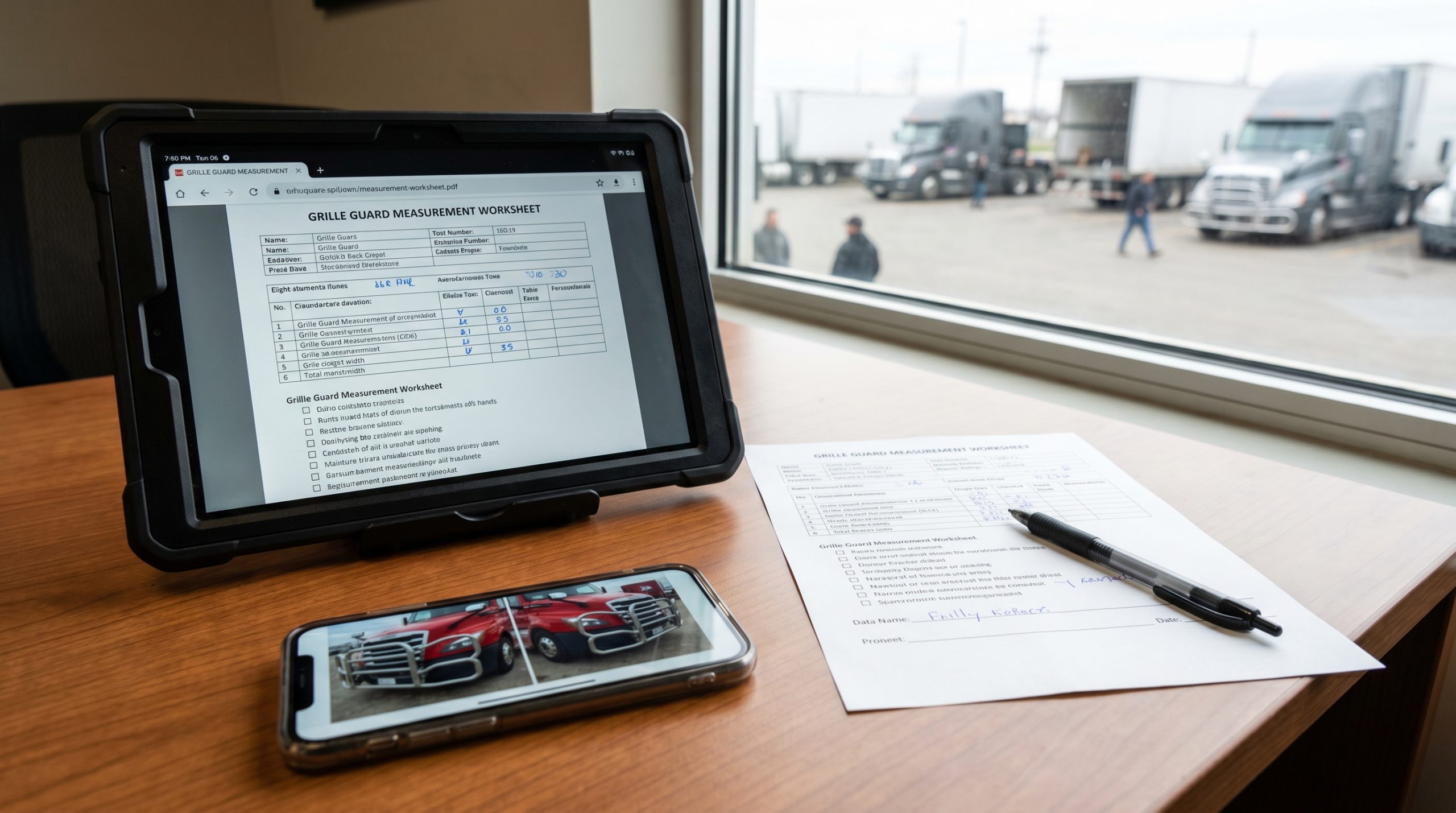
You must log your semi truck grille guard fitment by recording all physical dimensions on a structured digital worksheet and pairing them with high-resolution, multi-angle reference photos. Relying on hand-written notes scribbled on scrap paper is a major source of translation errors that can ruin your order. By using a standardized form, you ensure that your technicians capture every single required dimension in a uniform format. This organized documentation package serves as a clear contract of accuracy between your shop and the manufacturer.
Additionally, storing these records digitally makes it easy to manage your fleet’s equipment history over the long term. If a guard is damaged in a future accident, you can instantly pull up the original specs to order a perfect replacement. This proactive tracking drastically reduces your administrative overhead and keeps your fleet deployment schedules on time. In short, professional data logging is the final administrative bridge to a successful hardware procurement.
Why is a digital measurement worksheet superior?
A digital measurement sheet completely eliminates the messy handwriting and missing fields that plague traditional shop paperwork. Our standard template features pre-set fields for all critical width, height, and depth metrics, ensuring no step is missed. Think about this: a single illegible number can result in a mismanufactured guard, costing your fleet weeks of shipping delays and returned freight fees. Transitioning to digital worksheets guarantees that your engineering team receives clean, readable data every single time.
- Ensures all critical fields are completed before submission.
- Eliminates transcription errors caused by messy handwriting.
- Allows for instant sharing with manufacturing engineers via email.
Digital worksheets also allow you to quickly cross-reference specifications against your truck’s official VIN profile. This double-check verifies that the recorded dimensions match the vehicle’s factory blueprint.
How does multi-angle photography clarify dimensions?
Capturing high-contrast, multi-angle photos of your truck’s front end provides vital visual context that numbers alone cannot express. Take a full-frame frontal shot to show the overall bumper shape, followed by tight close-ups of your frame mounting points. Believe it or not, a photo showing a tape measure held against the frame rail can instantly resolve a design engineer’s questions. These visual guides allow our technical staff to quickly spot potential clearance issues before your guard enters production.
- Full-frame frontal shot showing the entire bumper and grille layout.
- Close-up photos of left and right frame rail mounting holes with a ruler.
- Side-profile shots showing the hood’s forward swing and bumper overhang.
Key Takeaway: Combining structured digital worksheets with multi-angle photos creates an ironclad reference package that guarantees engineering accuracy, eliminating costly ordering errors and shipping delays.
| Document Type | Required File Format | Essential Information to Include |
|---|---|---|
| Sizing Worksheet | Digitally filled PDF | VIN, model year, 12 core dimensions, technician name |
| Chassis Photos | High-res JPEG (300 dpi) | Clear views of tow hook holes and frame rail extensions |
| Profile Images | High-res JPEG | Side view showing hood swing path and bumper clearance |
Once your documentation package is compiled, you must engage the right professionals to verify your findings.
Who should verify your semi truck grille guard fitment?
Your fleet manager, shop foreman, and the manufacturer’s certified design engineers should jointly verify your semi truck grille guard fitment data before production. Relying on a single person’s measurements without a second set of eyes introduces an unnecessary risk of human error. By implementing a collaborative, multi-layered verification review, you guarantee that any subtle chassis variations are identified early. This professional oversight acts as an insurance policy, ensuring that your custom-engineered guards bolt on seamlessly on delivery day.
At Brontec, our in-house engineering team specializes in partnering with fleet clients to validate their front-end dimensions against our extensive CAD database. We review your worksheets, inspect your photos, and confirm that your specifications match North American Class 8 platform standards. This thorough process eliminates installation surprises and ensures your protection systems are ready to perform. Ultimately, professional verification is the secret to achieving a 100% fitment guarantee for your commercial fleet.
How do CAD database checks prevent assembly errors?
Cross-referencing your shop’s measurements with official factory CAD blueprints is the ultimate defense against model year discrepancies. Truck manufacturers often introduce subtle chassis changes mid-generation that alter mounting hole positions without changing the model’s outward appearance. You see: our engineering team can import your dimensions directly into our 3D CAD software to simulate the guard’s fitment on your specific truck platform. This virtual test-fitting identifies mounting clashes and clearance issues before a single piece of steel is cut.
- Compares physical shop measurements against factory-original CAD blueprints.
- Simulates the guard’s mounting bracket fitment on your specific truck frame.
- Identifies potential clearance clashes with steering shafts or radiators.
This electronic verification allows our design team to make precise modifications to your brackets on the screen. It guarantees that the manufactured hardware matches your truck’s chassis perfectly.
Should you self-measure or hire a professional technician?
Deciding whether to collect measurements in-house or hire a certified field technician depends on your fleet’s size and project complexity. Self-measurement is highly practical and cost-effective for standard fleets with access to calibrated tools and a level concrete bay. But that is not all: for large-scale fleet standardization programs or highly customized vehicles, hiring a B2B specialist is the smartest route. A certified technician assumes all liability for accuracy, providing a complete fitment guarantee for your entire order.
- Self-Measurement: Cost-effective, fast, ideal for standard truck configurations.
- Technician Measurement: Perfect for large fleets, complex modifications, or custom designs.
- Joint Verification: Combines your shop’s hands-on data with our engineering expertise.
Key Takeaway: Collaborating with certified design engineers to verify your dimensions against official CAD blueprints guarantees a perfect, zero-defect installation, saving your fleet weeks of shipping and labor delays.
| Verification Stage | Responsible Personnel | Deliverable Output |
|---|---|---|
| Primary Data Collection | Fleet Maintenance Technician | Completed physical and digital worksheet |
| Internal Quality Review | Fleet Shop Foreman / Manager | Signed-off data package with photos |
| Blueprinting & Simulation | Brontec Design Engineer | 3D CAD simulation and official approval drawing |
Now that you understand the complete measurement and verification process, let us wrap up with the final step to secure your fleet’s protection.
Ready to finalize your semi truck grille guard fitment?
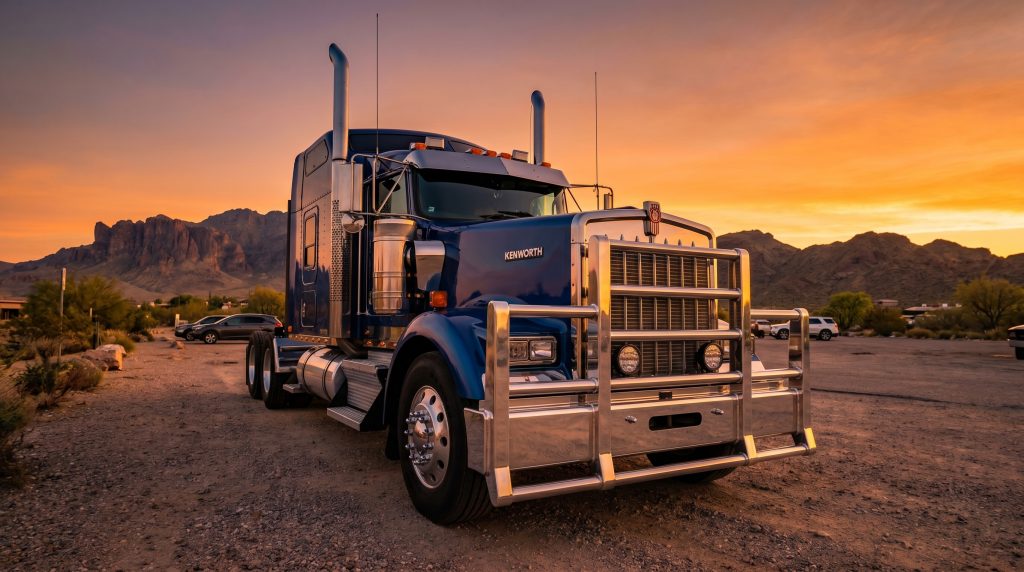
You can finalize your semi truck grille guard fitment by compiling your verified measurements, photos, and truck profile into an inquiry and sending it to our engineering team today. Taking this final step is the bridge between theoretical planning and physical, heavy-duty front-end protection for your commercial fleet. By working with a certified OEM manufacturer, you ensure that your custom guards are manufactured to the highest standards of quality and precision. This simple procurement process protects your drivers, reduces vehicle downtime, and keeps your operations highly profitable.
Furthermore, investing in high-strength, precision-engineered protection systems is a proactive strategy to safeguard your fleet’s long-term operating ratio. When a severe wildlife collision or road debris strike occurs on the highway, a high-quality guard absorbs the impact, allowing your truck to continue its route safely. Do not wait for a costly front-end collision to expose the vulnerabilities in your fleet’s safety equipment. Partnering with a trusted manufacturer guarantees that your trucks remain on the road and out of the repair bay.
How do precision guards secure your fleet’s highway uptime?
Deploying custom-fit grille guards is a proven, high-ROI strategy to eliminate the devastating mechanical repair and towing costs associated with front-end collisions. When your vehicles are equipped with a perfectly fitting structural shield, the risk of radiator and cooling system failure is virtually eliminated. Here is the deal: maintaining a consistent highway delivery schedule is the lifeblood of your commercial shipping contracts. Minimizing collision-related delays directly improves your customer satisfaction ratings and protects your brand’s reputation for reliability.
- Shields sensitive cooling systems and expensive LED headlight assemblies.
- Minimizes mechanical and towing expenses during unexpected highway strikes.
- Improves driver confidence and retention by prioritizing highway safety.
A robust safety barrier allows your drivers to navigate challenging northern shipping lanes with peace of mind. It ensures your business can fulfill its delivery promises, no matter the road conditions.
How can you secure a perfect fitment guarantee today?
Securing a flawless front-end protection system for your Class 8 trucks is simple when you partner with a high-tolerance manufacturing expert. Our streamlined process combines advanced fiber laser cutting, CNC tube bending, and multi-stage CMM quality inspections to deliver zero-defect guards. Make no mistake: protecting your fleet’s capital investments requires a level of engineering excellence that generic aftermarket guards simply cannot provide. Our team is standing by to help you design, manufacture, and deploy the ultimate protection systems for your commercial vehicles.
- Utilizes advanced laser cutting and CNC bending for ±0.5mm bracket precision.
- Offers 20-30% faster production lead times than overseas manufacturers.
- Guarantees 100% vehicle fitment compatibility across all Class 8 platforms.
To learn more about our engineering standards, request a custom quote, or explore our complete lineup of heavy-duty bumpers, we invite you to contact us today today. Our experts will guide you through the measurement process and verify your specs before production starts.
Key Takeaway: Partnering with Brontec for your heavy-duty protection needs guarantees an exact, tool-free installation and superior collision defense, keeping your drivers safe and your fleet profitable on every haul.
Frequently Asked Questions
- Can I measure my semi truck’s front end alone without any help?
Answer: Yes, you can. However, using a two-person team is highly recommended for capturing long horizontal bumper spans with perfect accuracy. One technician can hold the magnetic tip of the steel tape measure firmly against the reference point while the second technician extends and reads the tape, eliminating any physical sag or error. - What’s the best way to double-check my truck’s frame rail symmetry?
Answer: Perform diagonal cross-measurements. You must measure diagonally from the left frame tip to a fixed bolt on the right side, then repeat this process in reverse from the right tip to the left side. If these two diagonal measurements differ by more than one-quarter of an inch, your truck’s frame may be twisted from a previous road impact and will require professional alignment before installing a guard. - How do I know if my truck has an ADAS radar collision sensor?
Answer: Look closely at the center of your front bumper. If you see a small, rectangular plastic dome, box, or protective cover integrated into the middle bumper or lower grille area, your truck features a front-mounted radar sensor. You must record this sensor’s exact measurements to ensure your new guard features a compatible cutout that will not block the radar’s safety signal. - Can I use flexible cloth measuring tapes for capturing bolt hole spacing?
Answer: No, you cannot. Flexible cloth tapes can easily stretch, bend, or sag, which introduces significant dimensional errors in tight spaces. You must use high-precision digital calipers to validate mounting bolt hole diameters and bracket metal thicknesses, as these dimensions require strict millimeter accuracy to ensure a smooth, bolt-on fit. - How do I know if my aftermarket bumper will block standard brackets?
Answer: You must check the bumper’s mounting access. Custom aftermarket bumpers are often significantly thicker and feature different profiles compared to standard factory bumpers, which can block access to the OEM frame extensions. Documenting the brand of your bumper and taking multi-angle photographs allows our engineering team to design custom-offset brackets for your specific chassis configuration.