
Different styles of semi truck grille guards include full-coverage, center-only, and modular designs tailored to specific fleet needs and operational environments. Every fleet manager understands that a single wildlife strike can lead to thousands of dollars in radiator repairs and devastating downtime. You cannot afford to leave your heavy-duty assets vulnerable to the unpredictable hazards of the open road. Fortunately, modern types of semi truck grille guards offer a robust solution by absorbing impacts and preserving the structural integrity of your vehicle’s front end.
What are the primary types of semi truck grille guards?
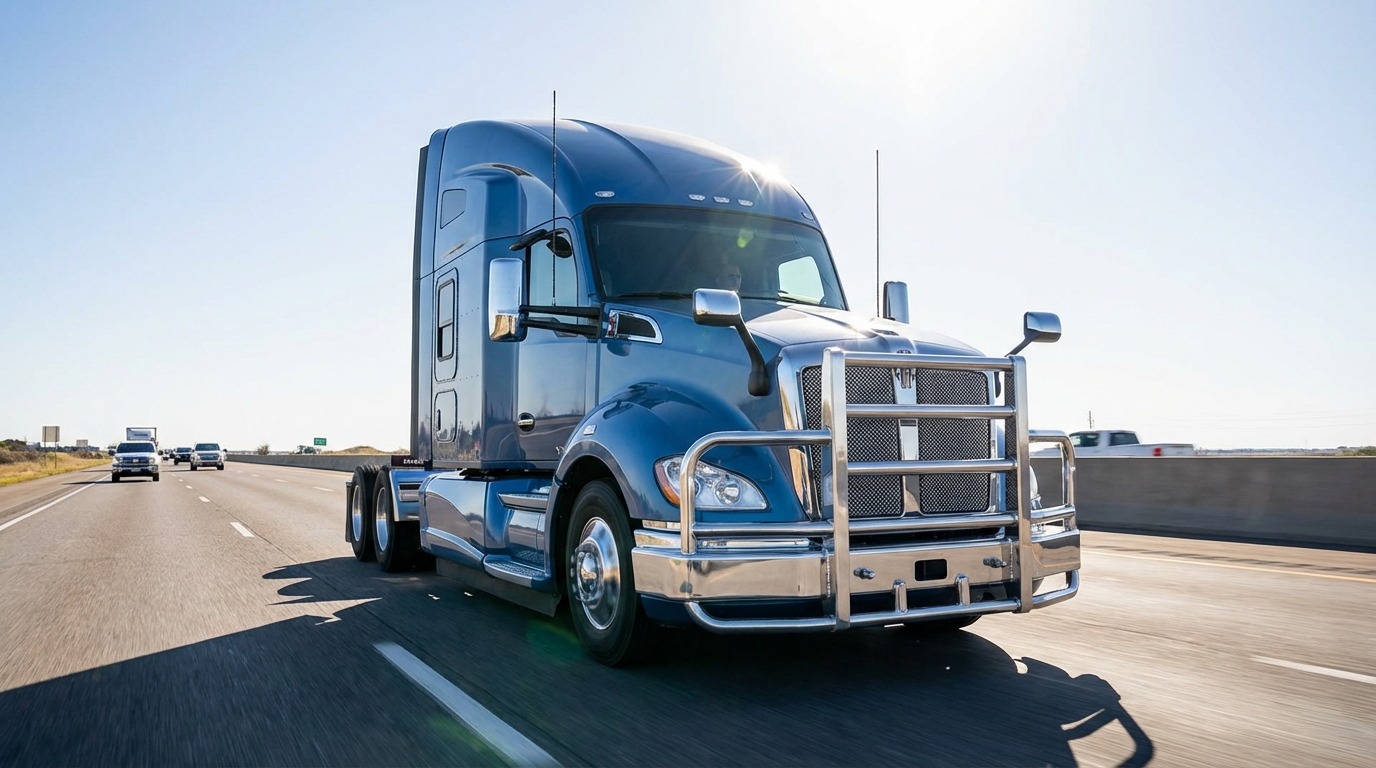
The primary categories for these safety components include coverage-based, mounting-specific, and industry-targeted designs. Selecting the right types of semi truck grille guards depends heavily on the specific terrain your fleet traverses. These guards act as a sacrificial barrier, ensuring that the truck’s engine and cooling system remain functional after an impact.
How do basic designs differ?
Are you looking for a balance between weight and protection? Most basic designs fall into two categories: standard bars and reinforced mesh. Here is the truth: while standard bars provide a sleek look, mesh inserts offer superior protection against smaller road debris that might otherwise penetrate the radiator.
- Bar Guards: Focus on structural rigidity against large animal strikes.
- Mesh Guards: Add a secondary layer to block rocks and smaller objects.
What about fleet scalability?
Can these guards be standardized across a diverse fleet? Scalability is a major concern for B2B operations managing multiple truck brands. Many manufacturers now offer universal base designs that adapt to different brackets, simplifying maintenance and replacement parts inventory.
Key Takeaway: Identifying the core operational risks of your route allows you to select a primary guard style that maximizes uptime while minimizing unnecessary weight.
| Guard Category | Primary Benefit | Best Environment |
|---|---|---|
| Coverage-Based | Maximum Surface Protection | Wildlife-heavy corridors |
| Mounting-Specific | Ease of Engine Access | Frequent maintenance routes |
| Industry-Targeted | Severe Duty Durability | Logging and mining sites |
This classification helps fleet managers narrow down their search based on the most pressing physical risks to their equipment.
How do coverage styles impact types of semi truck grille guards?
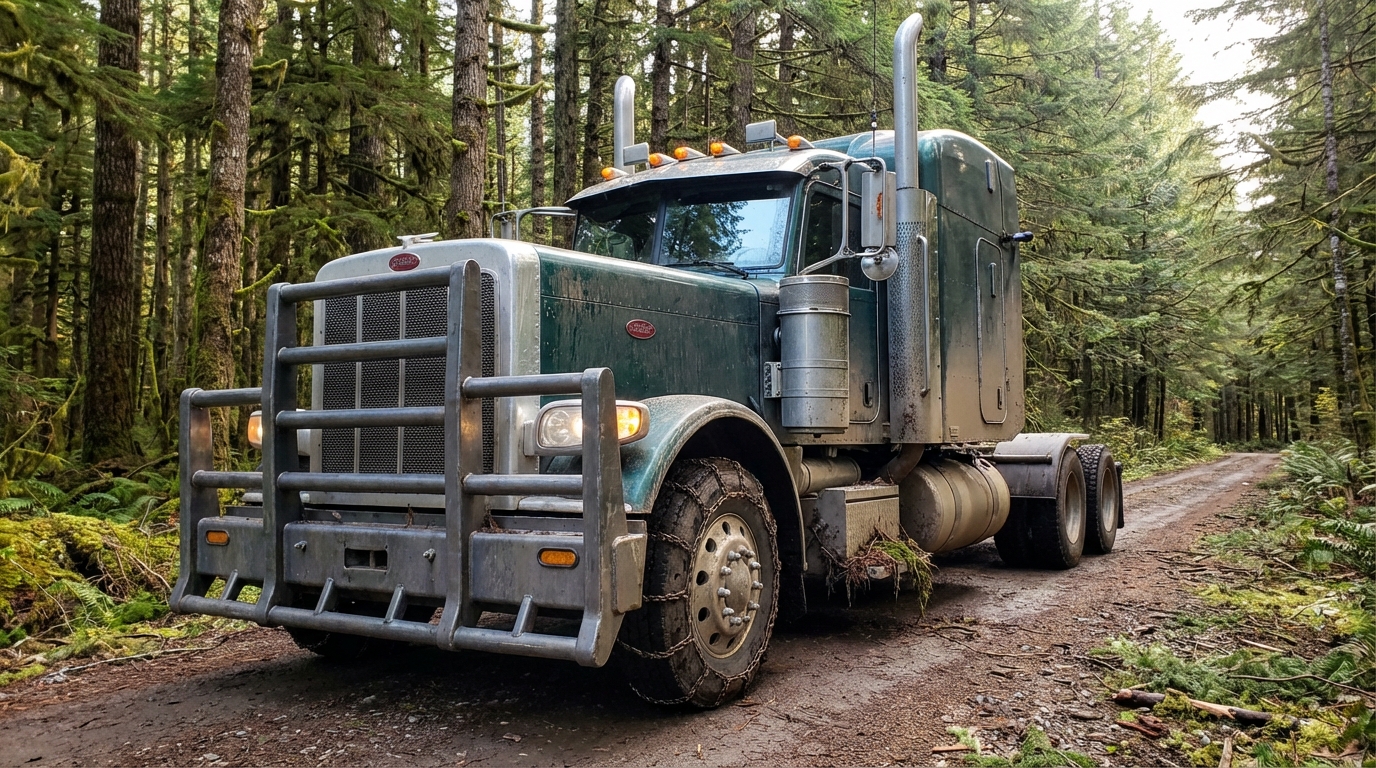
Coverage styles determine exactly which front-end components, such as headlights or the bumper, are protected during a collision. Understanding these types of semi truck grille guards is essential because different regional hazards require varying levels of surface area protection. A guard that covers the entire width of the truck offers the highest level of insurance against unexpected animal strikes.
Is full coverage always better?
Does every truck need a massive bumper-to-bumper guard? Full-coverage guards protect the grille, headlights, and the lower bumper area simultaneously. But wait, there is more: while they offer the best protection, they also add the most weight to the front axle, which can slightly affect fuel efficiency over millions of miles.
- Headlight Wraps: Protect expensive LED lighting systems from cracking.
- Bumper Guards: Prevent the lower plastic or metal bumper from crumpling into the tires.
What are center-only options?
Are you operating mainly in urban environments with low wildlife risks? Center-only guards, often referred to as push bars, focus purely on the radiator area. These are lighter and more aerodynamic than their full-width counterparts.
Key Takeaway: Choose full-coverage styles for long-haul routes through rural areas and center-only styles for city-bound delivery trucks to optimize the weight-to-protection ratio.
| Coverage Style | Area Protected | Impact Level |
|---|---|---|
| Full-Width | Grille, Headlights, Bumper | High (Moose/Deer) |
| Center-Only | Central Grille Only | Moderate (Debris/Light Impact) |
| Modular | Customizable Zones | Variable |
The choice between these coverage levels directly correlates with the statistical likelihood of high-impact collisions in your specific operating region.
Which mounting systems define types of semi truck grille guards?
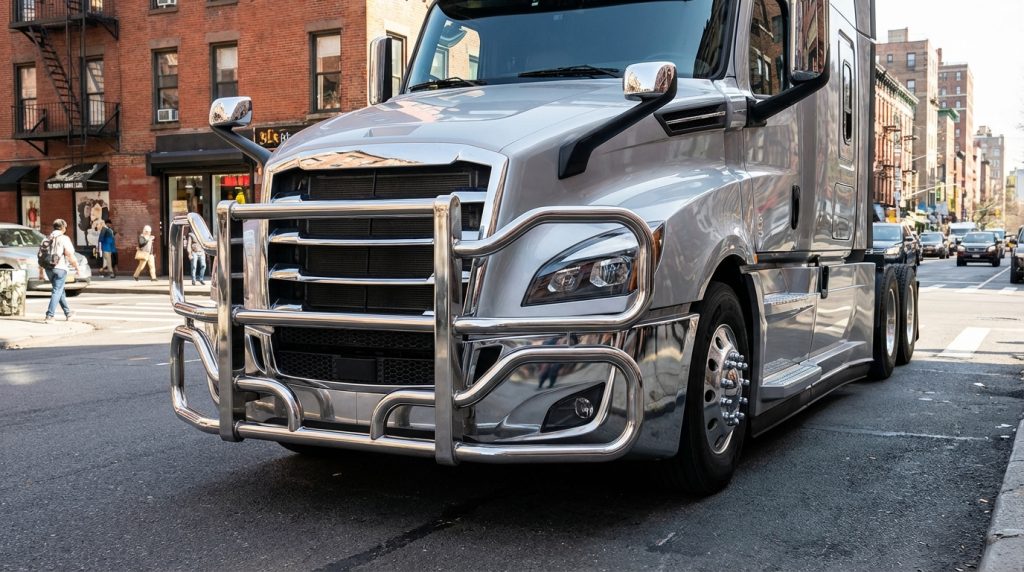
Mounting systems for these guards are defined by how they attach to the frame and how they allow mechanics to access the engine compartment. These types of semi truck grille guards are critical because a guard that is difficult to move can significantly increase labor costs during routine service intervals. Most professional-grade guards utilize either a fixed, fold-down, or tilt-mount mechanism.
How does a tilt-mount work?
Why is the tilt-mount the preferred choice for many long-haul fleets? This system uses a hinge and a locking pin to allow the guard to swing forward and down. Here is the truth: a high-quality tilt-mount allows a single technician to access the hood in seconds without needing specialized tools or heavy lifting.
- Quick-Release Pins: Allow for rapid movement during pre-trip inspections.
- Safety Latches: Ensure the guard stays upright and secure during high-speed travel.
Is a fixed mount still viable?
Can a permanently bolted guard be efficient? Fixed mounts are incredibly strong because they eliminate moving parts that could eventually rattle or wear out. However, they are usually reserved for trucks that do not require frequent “hood-open” maintenance or for specific off-road applications where absolute rigidity is the only priority.
Key Takeaway: Selecting a tilt or fold-down mounting system is an investment in maintenance efficiency that prevents your safety equipment from becoming a hindrance to your mechanics.
| Mounting Type | Access Speed | Structural Strength |
|---|---|---|
| Tilt-Mount | Very Fast | High |
| Fold-Down | Fast | Moderate |
| Fixed Frame | Slow (Requires Removal) | Maximum |
Mechanics generally prefer tilt-mount systems as they provide the best balance between front-end security and ease of engine service.
Why consider material-based types of semi truck grille guards?
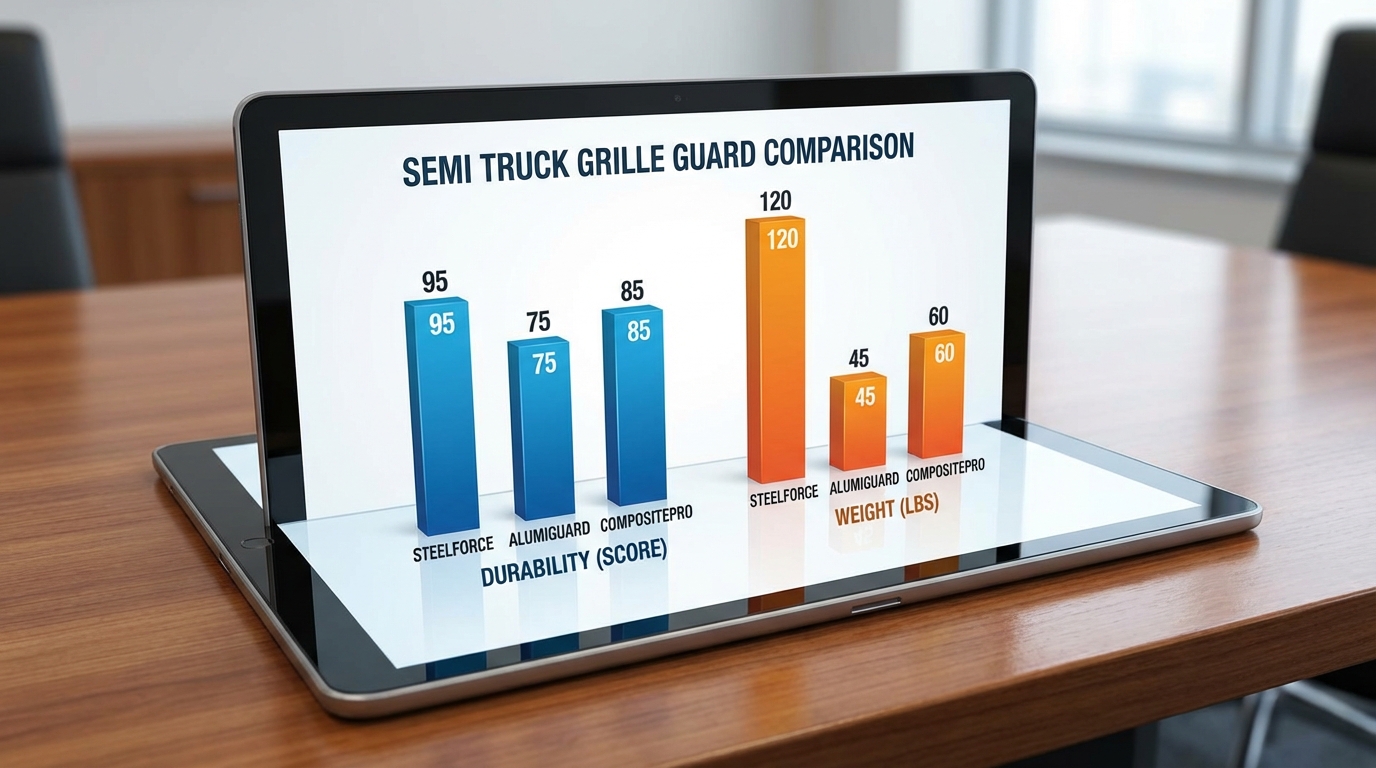
Material-based categories are divided primarily between high-tensile steel and lightweight aluminum alloys. Selecting these types of semi truck grille guards involves a trade-off between the maximum impact force the guard can withstand and the total weight added to the vehicle. While steel is the traditional choice for sheer strength, advanced aluminum alloys are gaining popularity for their corrosion resistance and fuel-saving properties.
When is steel the right choice?
Are you dealing with extreme northern environments or heavy logging operations? Stainless steel or powder-coated carbon steel provides the density needed to stop large animals in their tracks. But wait, there is more: steel is also much easier to weld and repair in the field if it sustains minor damage during a strike.
- 304 Stainless Steel: Offers the best balance of strength and rust prevention.
- Carbon Steel: The most cost-effective option for large-scale fleet deployments.
Is aluminum strong enough?
Can a lighter metal truly protect a Class 8 truck? High-grade 6061-T6 aluminum offers surprising durability while weighing up to 40% less than steel. This reduction in weight helps keep your truck within legal axle limits even when carrying heavy payloads.
Key Takeaway: Use steel for the highest impact protection in severe-duty environments, but opt for aluminum if your primary goals are fuel economy and corrosion resistance in salty coastal regions.
| Material Type | Weight | Corrosion Resistance | Impact Rating |
|---|---|---|---|
| Stainless Steel | Heavy | High | Maximum |
| Aluminum Alloy | Lightweight | Very High | Moderate/High |
| Carbon Steel | Heavy | Moderate (Needs Coating) | Maximum |
The analytical data suggests that aluminum is often sufficient for highway use, while steel remains the king of off-road and extreme-impact scenarios.
Are there industry-specific types of semi truck grille guards?
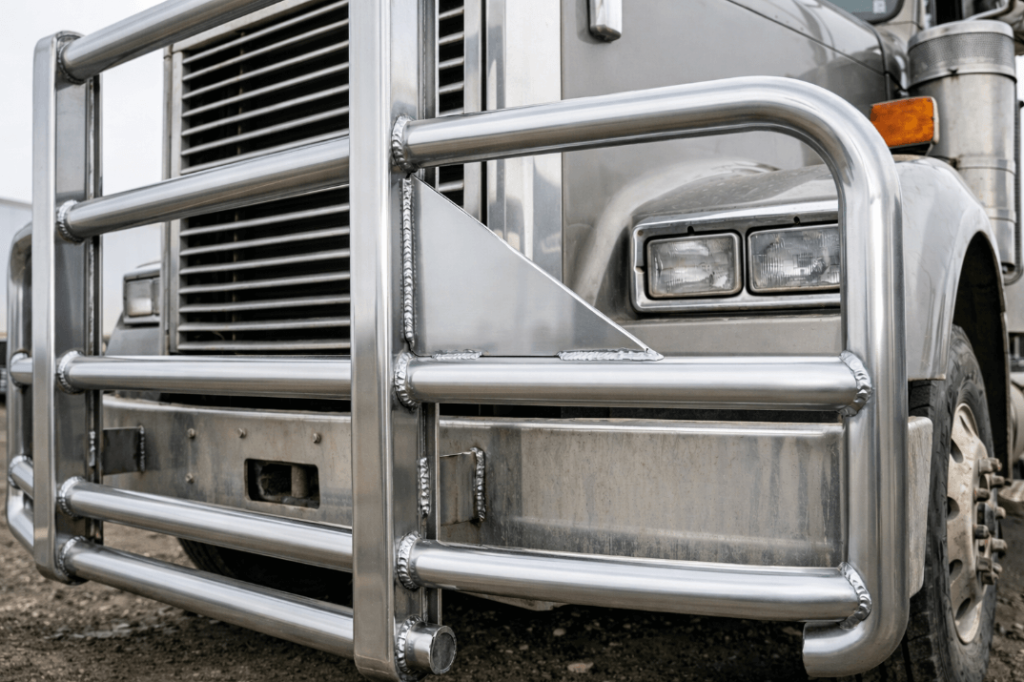
Industry-specific styles are specialized designs built to handle the unique stresses of sectors like logging, mining, or livestock hauling. These types of semi truck grille guards often feature reinforced “moose bumpers” or road train bars that are common in regions like Australia and Canada. They are engineered not just for a single strike, but for continuous operation in environments where impacts are a statistical certainty.
What defines a moose bumper?
Why are these guards so much thicker than standard highway versions? Moose bumpers utilize heavy-wall tubing and oversized box sections to prevent the hood from being crushed. Here is the truth: in the logging industry, these guards also serve as a “push point” if a truck needs assistance on a muddy trail.
- Four-Post Designs: Offer maximum vertical and horizontal structural support.
- Internal Bracing: Prevents the tubes from collapsing under extreme point-pressure.
Are there “Road Train” styles?
What happens when you are pulling multiple trailers in the outback? Road train guards are the pinnacle of front-end protection, featuring massive lower plates and extended widths. They are designed to keep the truck moving even after multiple high-speed animal encounters.
Key Takeaway: If your fleet operates in high-risk industries like forestry or mining, standard guards are insufficient; you require specialized, industry-rated bumpers to ensure vehicle survival.
| Industry Style | Key Feature | Primary Application |
|---|---|---|
| Moose Bumper | Thick-wall 4-post tubing | Northern logging / Canada |
| Road Train | Massive impact plates | Australian Outback / Heavy Haul |
| Logging Guard | Integrated tow/push points | Forestry and extraction |
Investing in industry-specific guards ensures your equipment is over-engineered for the specific mechanical stresses of your niche market.
How do aerodynamic needs shape types of semi truck grille guards?
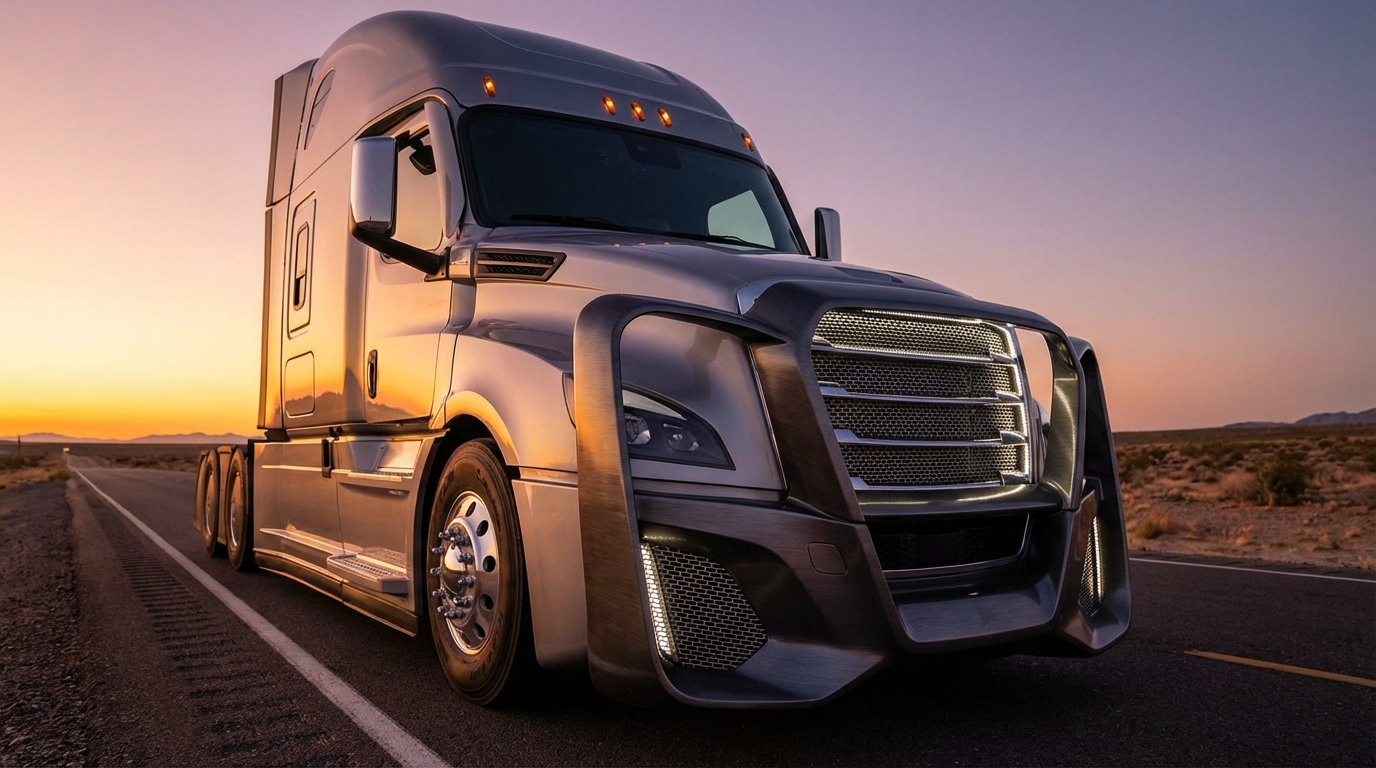
Aerodynamic styles are shaped to complement the streamlined profiles of modern aerodynamic trucks like the Freightliner Cascadia or Volvo VNL. These types of semi truck grille guards are designed to minimize wind resistance, which is a critical factor for long-haul carriers focused on fuel efficiency. By following the contours of the truck’s front end, these guards reduce the “parachute effect” that older, flat-faced designs often created.
Do curves improve fuel economy?
How much can a curved design actually save you over a year? While the savings per mile are small, for a truck running 100,000 miles annually, an aerodynamic guard can save hundreds of gallons of fuel. But wait, there is more: these contoured shapes also tend to be quieter at highway speeds, reducing driver fatigue caused by wind whistle.
- V-Shape Profiles: Cut through the air more efficiently than flat bars.
- Contoured Wraps: Hug the headlights to maintain the factory airflow path.
Can they handle high impacts?
Does the sleek look compromise the guard’s strength? Modern engineering allows for aerodynamic guards to be just as strong as traditional boxy versions. By using high-strength alloys and strategic bracing, manufacturers create guards that look fast but act like a fortress.
Key Takeaway: For modern highway fleets, aerodynamic guards provide the best of both worlds by protecting the asset without significantly increasing the operational cost of fuel.
| Design Element | Aerodynamic Impact | Protection Level |
|---|---|---|
| Flat Surface | High Drag | High |
| Curved Tubing | Low Drag | High |
| Integrated Mesh | Moderate Drag | Maximum |
Selecting an aerodynamic guard is the smart choice for any B2B operation where profit margins are tightly coupled with fuel consumption.
Can custom designs lead to new types of semi truck grille guards?
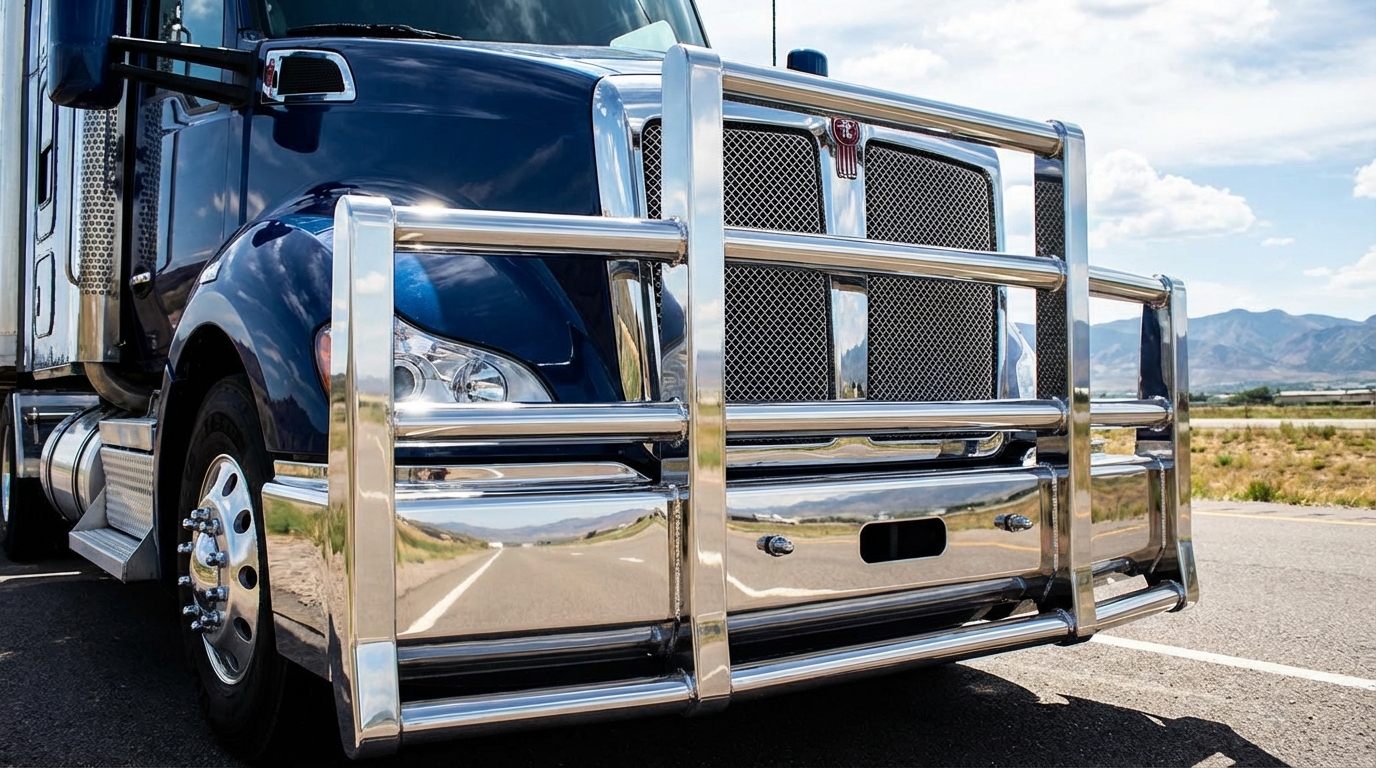
Custom designs allow fleets to integrate specific branding, lighting, or sensor requirements into their front-end protection. These types of semi truck grille guards often emerge when a company has a unique operational need that off-the-shelf products cannot satisfy. Whether it is adding built-in winch mounts or laser-cut company logos, custom guards turn a safety component into a multi-functional tool.
Why integrate LED lighting?
Is it better to have lights built into the guard or mounted on top? Integrated lighting protects the lamps from vibration and road salt. Here is the truth: a custom guard with built-in light bars significantly improves nighttime visibility, which is a major factor in preventing accidents before they happen.
- Recessed Light Ports: Keep expensive LEDs safe from flying rocks.
- Wiring Channels: Protect electrical lines from the elements.
How does branding affect the design?
Can a grille guard also serve as a marketing tool? Many fleets use laser-cut nameplates or custom powder-coat colors to match their corporate identity. This creates a professional, unified look across the entire fleet while still providing the necessary protection.
Key Takeaway: Custom-designed guards allow you to solve specific logistical challenges, such as extra lighting or specialized towing needs, while maintaining a consistent brand image.
| Custom Feature | Functional Benefit | Aesthetic Value |
|---|---|---|
| Built-in LED Bars | Improved Night Safety | High-Tech Look |
| Laser-Cut Logos | Brand Consistency | Professionalism |
| Winch Mounts | Self-Recovery Capability | Rugged Appearance |
Customization turns a standard piece of hardware into a bespoke solution tailored to your company’s specific operational identity.
Do specific truck brands require types of semi truck grille guards?
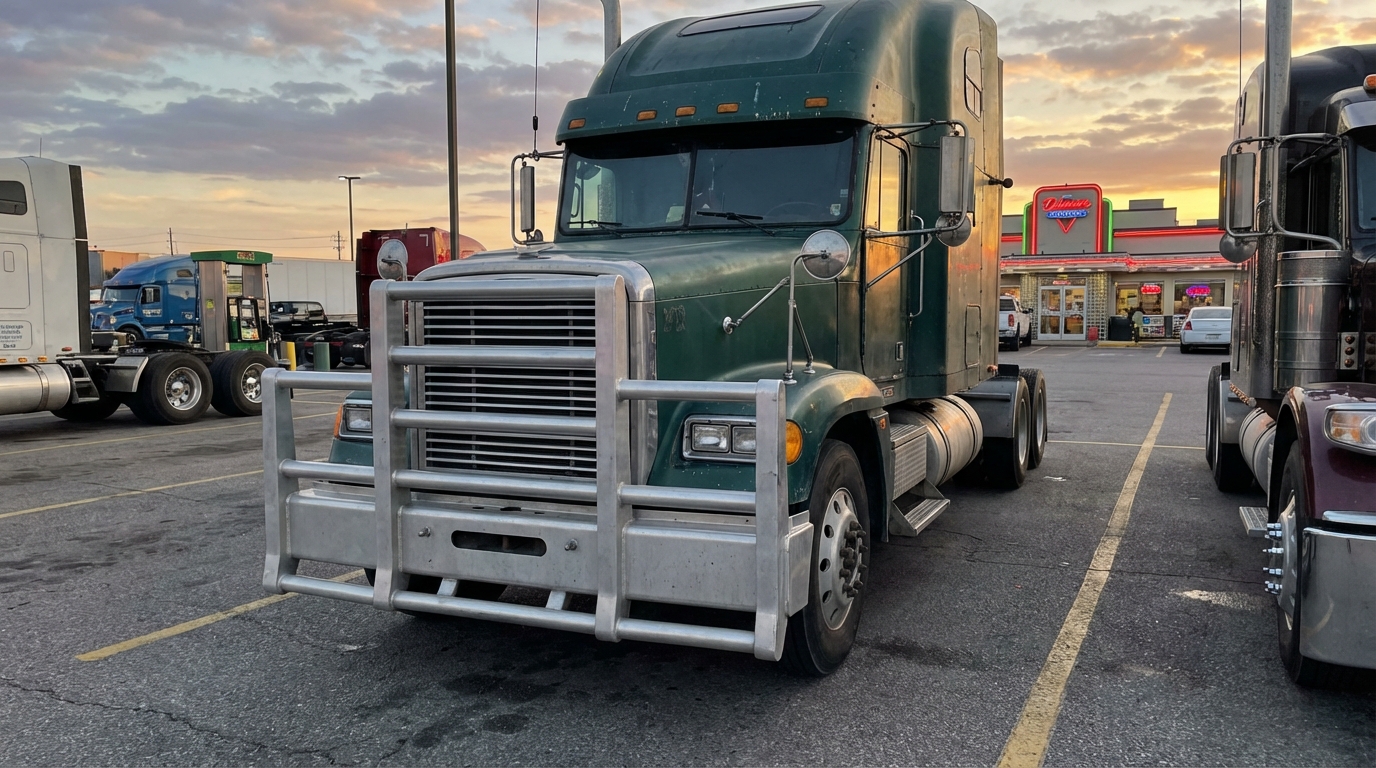
Brand-specific guards are engineered to fit the exact mounting points and sensor locations of particular truck models like Peterbilt, Kenworth, or Freightliner. These types of semi truck grille guards are vital because modern trucks are equipped with advanced driver-assistance systems (ADAS) that cannot be obstructed. A guard that is not perfectly aligned with radar or camera sensors can cause the truck’s safety systems to malfunction.
What about radar compatibility?
Can you put a metal guard in front of a collision-avoidance radar? Most brand-specific guards feature “radar-compliant” windows or spacing. But wait, there is more: using a guard that isn’t certified for your specific truck model could void your warranty or lead to dangerous phantom braking events.
- Sensor Windows: Clear paths for radar waves to pass through.
- Camera Offsets: Ensure the guard doesn’t block the driver’s forward-facing view.
How does fitment affect vibration?
Does a generic guard rattle more than a brand-specific one? Guards designed for a specific chassis use precision brackets that eliminate the need for drilling or modification. This results in a much tighter fit, reducing the vibrations that can lead to metal fatigue over time.
Key Takeaway: Always verify that your chosen grille guard is officially compatible with your truck’s specific ADAS and sensor package to ensure safety systems remain fully operational.
| Truck Brand | Common Guard Requirement | Sensor Sensitivity |
|---|---|---|
| Freightliner | Aerodynamic Contours | High (Radar) |
| Peterbilt | Traditional Polished Look | Moderate |
| Kenworth | Heavy-Duty Frame Mounts | High |
Brand-specific engineering ensures that your protection hardware works in harmony with the truck’s sophisticated electronics.
What safety features differentiate types of semi truck grille guards?
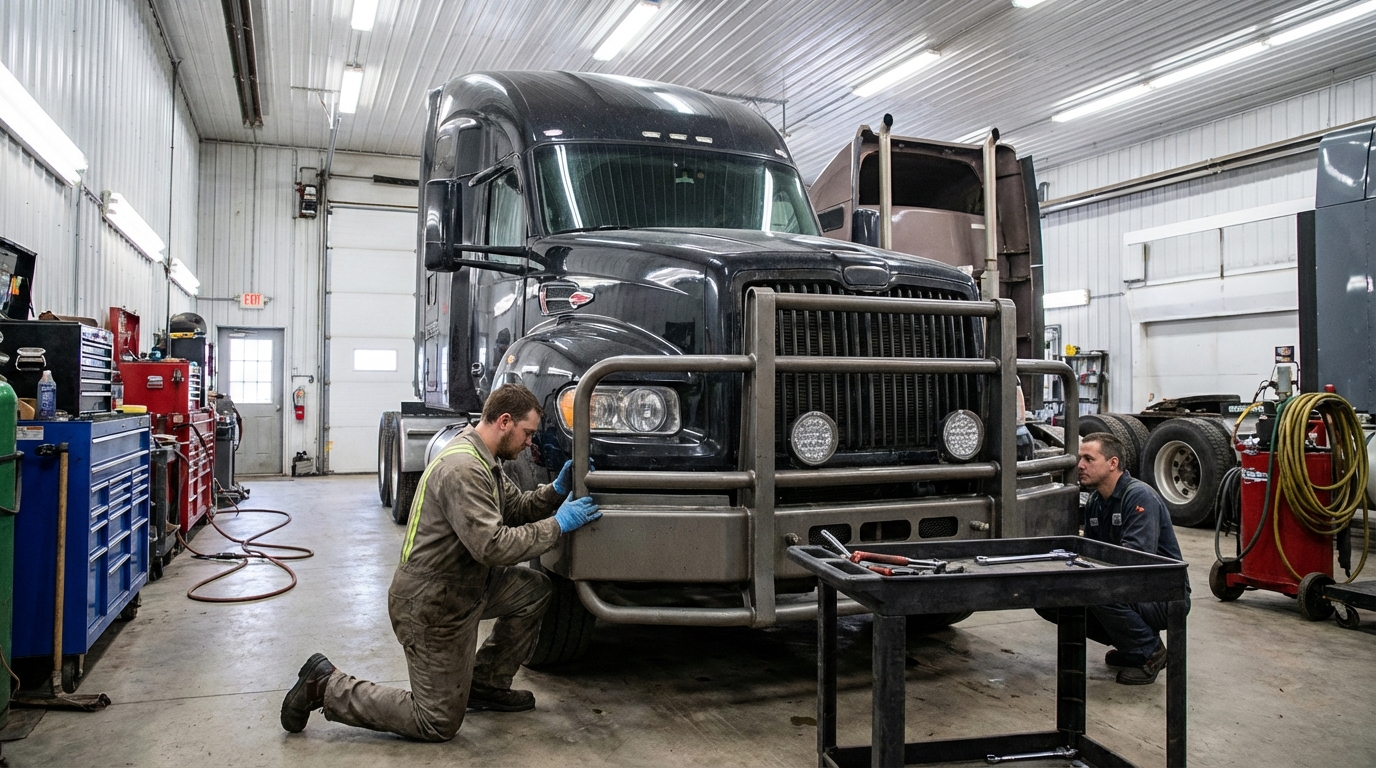
Safety features such as impact-absorbing zones and anti-rattle technology distinguish premium guards from entry-level alternatives. These types of semi truck grille guards are more than just “cow catchers”; they are sophisticated safety devices designed to manage the energy of a collision. By controlling how the force is transferred to the truck’s frame, these guards help prevent secondary damage to engine mounts and cab structures.
What are energy-absorbing mounts?
Can a guard actually “soften” the blow of a moose strike? High-end guards use specialized bushings or crumple-zones in the brackets. Here is the truth: these components take the initial shock, protecting the frame from bending or cracking under extreme stress.
- Polyurethane Bushings: Dampen road vibrations and minor impacts.
- Shear Bolts: Designed to break at specific force levels to protect the chassis.
How does anti-rattle tech help?
Is a noisy guard a sign of a safety issue? Constant rattling is not just annoying for the driver; it indicates that the hardware is slowly loosening itself. Anti-rattle systems use tensioning latches to keep the guard perfectly still, even on the roughest washboard roads.
Key Takeaway: Investing in guards with advanced safety features like energy-absorbing mounts protects not just the grille, but the structural longevity of the entire truck chassis.
| Safety Feature | Primary Function | Long-Term Benefit |
|---|---|---|
| Energy Bushings | Impact Dampening | Reduced Frame Stress |
| Anti-Rattle Latches | Vibration Control | Less Hardware Wear |
| Reflective Strips | Night Visibility | Fewer Side Collisions |
Analytical reviews show that guards with integrated safety technology have a significantly lower total cost of ownership due to reduced wear on the vehicle.
How do finishes distinguish between types of semi truck grille guards?
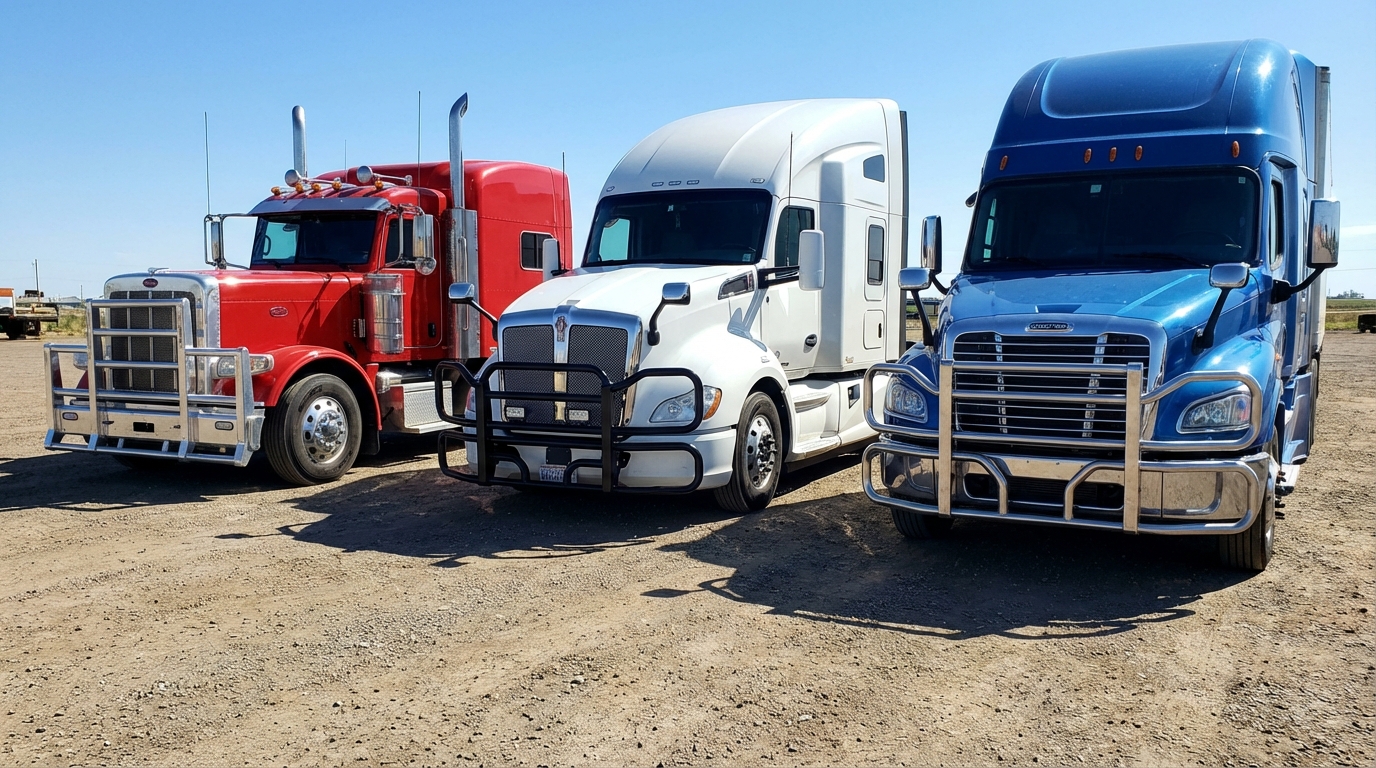
Finishes like mirror-polished stainless steel or textured black powder coating define the aesthetic and the maintenance requirements of the hardware. These types of semi truck grille guards can be chosen to match the truck’s existing trim or to provide the maximum possible protection against salt spray and chemicals. A high-quality finish is the first line of defense against the “pitting” and rust that can degrade metal over several winters.
Is powder coating better than paint?
Why does everyone seem to choose powder coating these days? Powder coating is baked onto the metal, creating a bond that is much harder and more flexible than traditional liquid paint. But wait, there is more: it is highly resistant to “spider-web” cracking, which is where rust usually starts on lower-quality guards.
- Textured Black: Hides road grime and small stone chips effectively.
- Gloss Black: Provides a sleek, modern look for “blacked-out” fleet themes.
Does polishing require more work?
Can you keep that mirror shine without constant scrubbing? While polished stainless steel looks incredible, it does require periodic cleaning to prevent road film from dulling the surface. However, it will never chip or peel like a coated guard, making it a “lifetime” finish if properly cared for.
Key Takeaway: Choose powder-coated finishes for low-maintenance “work” trucks and polished stainless steel for flagship vehicles where a premium appearance is part of your company’s image.
| Finish Type | Maintenance Level | Durability | Aesthetic |
|---|---|---|---|
| Powder Coat | Low | High | Industrial |
| Mirror Polish | Moderate | Very High | Premium |
| Brushed Metal | Moderate | High | Professional |
The finish you choose should align with your fleet’s maintenance schedule and your desired level of public-facing professionalism.
*
Secure Your Fleet’s Future Today
Protecting your heavy-duty assets is not just about avoiding repairs; it is about ensuring that your drivers return home safely and your deliveries arrive on time. By understanding the diverse styles of guards—from aerodynamic shapes to heavy-duty moose bumpers—you can tailor your equipment to meet the exact demands of your routes. We specialize in providing the structural integrity and precision fitment that modern fleets require to stay competitive in a high-risk environment. If you are ready to eliminate the threat of costly downtime and preserve your vehicle’s value, contact our team for a consultation. Let us build a protection strategy that keeps your trucks on the road and your business moving forward.
*
Frequently Asked Questions
Can I install a grille guard on a truck with radar sensors?
Yes, you can. You must ensure the guard is specifically designed with a radar-compliant window or bracket system that does not obstruct the factory-installed sensors or cameras.
What’s the best material for a guard in northern climates?
It depends on your truck and your priorities. Stainless steel is often the best choice for extreme northern environments because it handles the combination of high-impact risks and corrosive road salt better than standard carbon steel.
How do I know if a guard is truly aerodynamic?
It depends on the design. Look for guards with curved tubing that follows the contour of your specific truck model’s headlights and grille, as these are engineered to minimize wind resistance at highway speeds.
Can a grille guard void my vehicle warranty?
No, it generally won’t. As long as the guard is installed using approved mounting points and does not interfere with the truck’s safety or cooling systems, it is considered an aftermarket accessory that does not void the manufacturer’s warranty.