
Upgrading to a heavy-duty steel bumper provides your vehicle with the ultimate defense against high-energy impacts, protecting vital engine components, preserving frame integrity, and ensuring passenger safety during severe collisions. Stock plastic and thin-gauge aluminum OEM bumpers offer minimal structural resistance, leaving commercial utility fleets and private trucks highly vulnerable to catastrophic front-end damage from wildlife strikes, worksite hazards, and low-speed collisions. A single unexpected animal strike on a remote route can instantaneously crush a stock bumper, puncture the radiator, destroy the steering linkage, and warp the vehicle frame. This leads to thousands of dollars in repairs, complete vehicle write-offs, and devastating operational downtime for your fleet. Upgrading to a custom-engineered steel bumper provides a robust protective shield. These heavy-duty modifications absorb major kinetic energy, deflect debris, and ensure that your vehicles remain operational under the most punishing conditions.
How much force can a steel bumper survive?
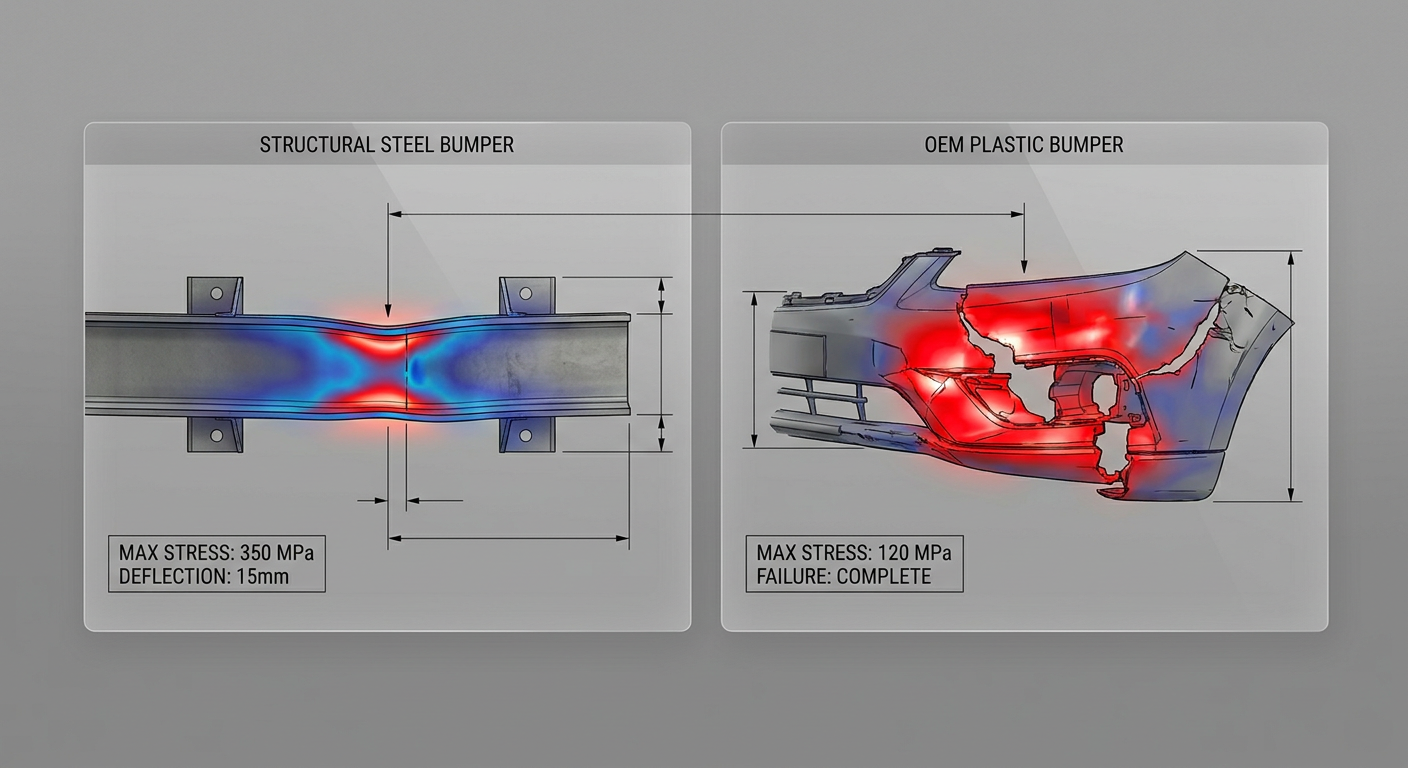
A heavy-duty steel bumper can survive tens of thousands of foot-pounds of dynamic impact force without suffering structural failure. When high-energy collisions occur, a premium steel bumper distributes extreme mechanical stress across its heavy-duty plates. This structural design is engineered to handle dynamic loads that would easily crush factory components. By focusing on metallurgical yield strength, industrial designs ensure your truck absorbs kinetic energy efficiently.
What is the physics behind bumper impacts?
Think about it: when your commercial truck collides with an obstacle, the physics of deceleration dictate how much kinetic energy is transferred to your vehicle. You must understand that the force of an impact is determined by factors that multiply rapidly at higher highway speeds. If you do not have adequate protection, this raw physical energy will immediately destroy your engine bay.
- Mass of the Vehicle: The overall weight of the truck plus payload directly amplifies the kinetic energy during an impact.
- Velocity at Impact: Force scales exponentially with speed, making high-speed highway collisions exponentially more destructive than low-speed trail dings.
- Angle of Incidence: Straight-on impacts distribute force evenly, whereas offset or angled impacts concentrate immense stress on a single mounting point.
- Duration of Impact Pulse: Steel’s rigidity alters the deceleration curve, shifting energy dissipation away from the engine bay.
How does material yield strength influence protection?
When you compare different materials, yield strength is the key metric that dictates how much impact you can sustain before permanent damage occurs. Let’s look at the numbers because they highlight why factory components fail so catastrophically. By choosing materials with high tensile properties, you guarantee that your fleet vehicles stay on the road instead of the scrap yard.
- Yield Strength: The point at which a metal begins to deform permanently.
- Tensile Strength: The maximum stress a material can withstand before breaking.
- Deformation Profile: How the material behaves when crushed under heavy load.
| Material Class | Yield Strength (PSI) | Tensile Strength (PSI) | Deformation Profile | |
|---|---|---|---|---|
| Molded OEM Plastic | 3,000 – 6,000 | 5,000 – 8,000 | Brittle fracturing and tearing | |
| Standard Grade Aluminum | 15,000 – 25,000 | 25,000 – 35,000 | Immediate plastic crumpling and folding | |
| Heavy-Duty Structural Steel | 36,000 – 50,000 | 58,000 – 80,000 | High elastic resistance, minimal deflection |
This comparative data demonstrates that structural steel offers up to ten times the yield strength of plastic, ensuring that the bumper frame remains intact and absorbs maximum impact energy before transferring kinetic force to critical engine components.
Key Takeaway: High-tensile structural steel possesses a yield strength that prevents permanent plastic deformation under forces that would instantly crumple, tear, or shatter standard factory-grade plastic or aluminum shells.
Why does a steel bumper beat plastic OEM?
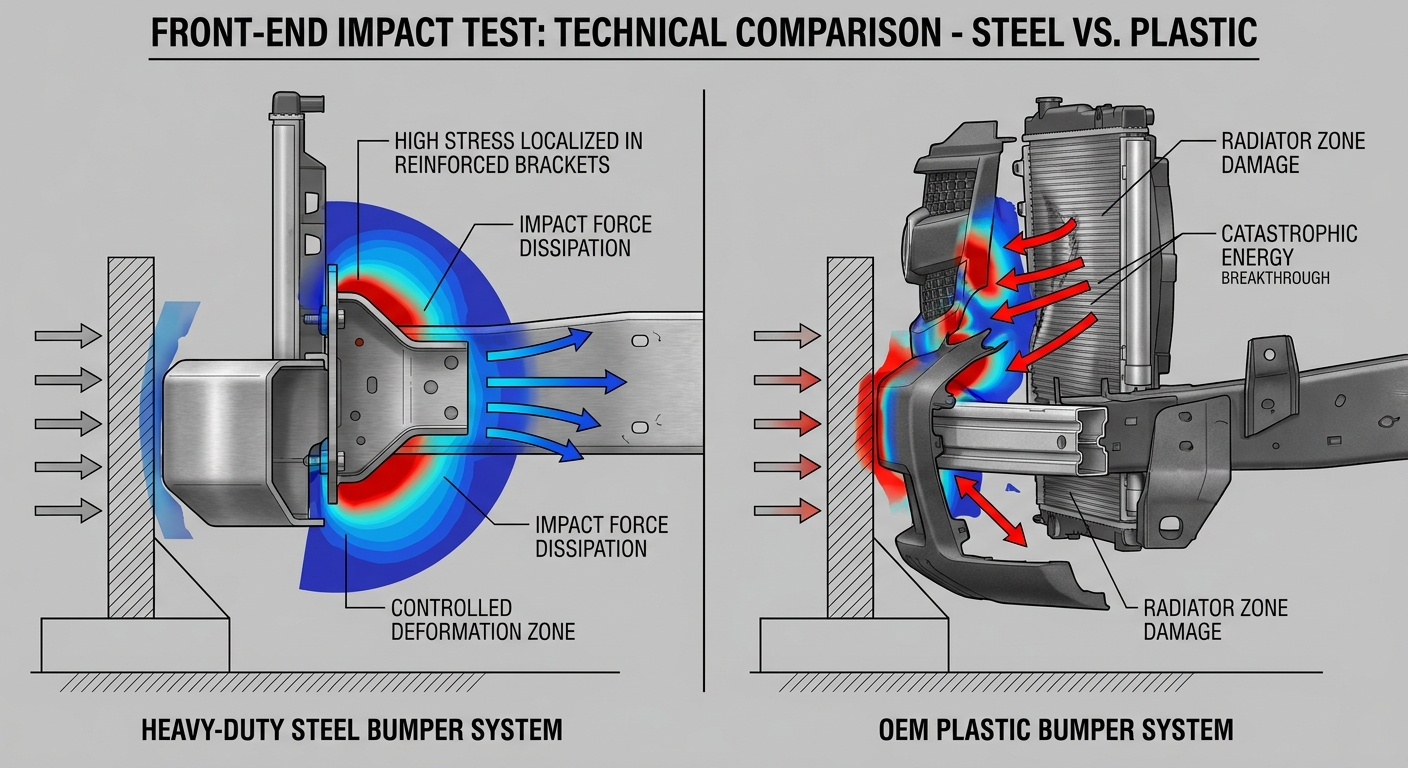
A heavy-duty steel bumper beats plastic OEM by providing real structural protection that shields your engine bay rather than shattering on impact. Standard factory-installed plastic bumpers are primarily designed to meet basic low-speed pedestrian safety standards and aerodynamic targets, rather than defending the vehicle from major structural impacts. Upgrading your fleet to a high-strength steel bumper provides a robust barrier that shrugs off off-road obstructions and worksite hazards. This heavy-duty modification ensures your vehicles remain fully operational even after severe collisions.
The physical limitations of standard plastic bumpers
Let’s face it: standard plastic setups are incredibly fragile when you put them to work in demanding commercial environments. If you expose these plastic bumper covers to extreme cold or UV radiation, they lose what little elasticity they had and fracture instantly. You cannot expect cheap molded plastic to keep your fleet safe when real impacts occur.
- Lack of Structural Rigidity: Thermoplastic materials cannot resist severe shear forces.
- Environmental Degradation: Exposure to UV rays and freezing temperatures makes plastic brittle and prone to shattering on impact.
- Single-Use Design: OEM plastic bumper covers are designed to deform permanently during minor parking lot bumps, requiring complete, expensive replacements.
Can structural steel prevent crumple zone collapse?
When you experience a crash, your vehicle’s frame crumple zones are designed to collapse to protect the cabin, but minor impacts shouldn’t trigger this total loss. By installing high-grade steel, you establish an ultra-rigid shield that manages localized force without letting the impact buckle your frame. This means you protect both your drivers and your physical capital.
- Energy Shielding: The solid steel face halts intrusion into the engine block.
- Controlled Energy Dissipation: Force is guided directly to strong frame mounts rather than soft body panels.
- Repetitive Durability: Unlike single-use crumple components, high-quality steel stands up to multiple moderate impacts.
| Bumper Material Type | Impact Resistance (Joules) | Repair/Restoration Method | Post-Impact Structural Integrity | |
|---|---|---|---|---|
| Factory Molded Plastic | Low (< 1,500 J) | Full replacement of outer fascia and inner core | 0% (Completely destroyed) | |
| Structural Steel Plate | High (> 15,000 J) | Minor paint touch-ups or bracket adjustment | 95% + (Remains structurally sound) |
The analysis confirms that upgrading to structural steel isolates collision energy at the front edge of the vehicle, avoiding the chain-reaction cabin and engine bay damage common with weak OEM plastic setups.
Key Takeaway: While modern vehicle crumple zones are vital for passenger safety in severe crashes, an upgraded bumper prevents unnecessary frame crumpling during moderate off-road or animal-related collisions, saving the vehicle from being written off.
Can a steel bumper handle wildlife collisions?
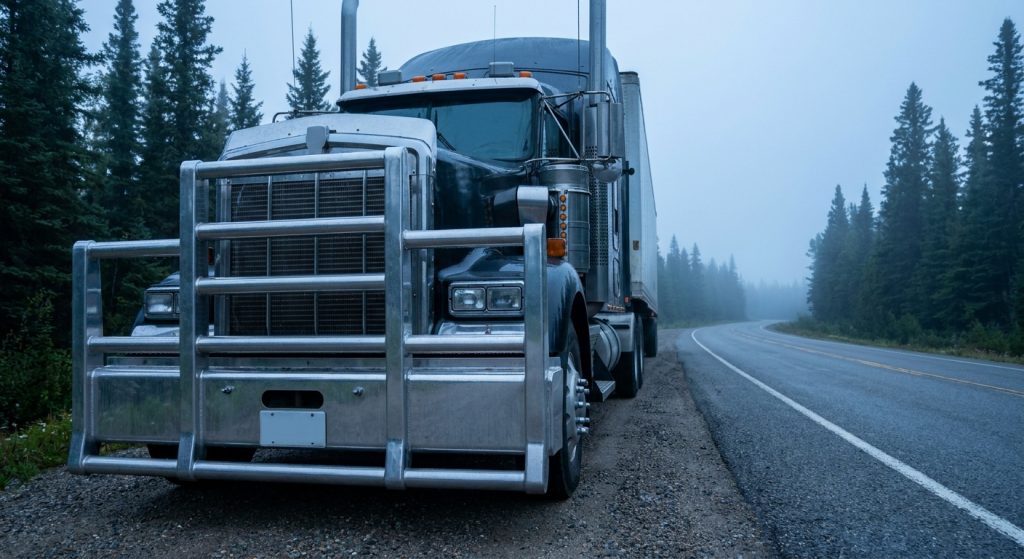
A steel bumper is highly capable of surviving a wildlife collision, acting as an impenetrable shield that deflects the animal and protects vital engine parts. Animal strikes represent one of the most common and destructive hazards for trucks on remote, rural roads. Installing a heavy-duty steel bumper ensures that the immense kinetic energy of a deer or moose strike is absorbed before it can puncture your radiator. This rugged upgrade is essential for any fleet operating in high-risk wildlife areas.
Mitigating high-speed kinetic energy from moose and deer
Here is the truth: a high-speed collision with a large animal will completely destroy your truck if you rely on factory plastic. When you are traveling down a dark highway, you need an engineering solution that deflects the animal’s mass away from your windshield. This protective shield keeps your engine running and ensures your drivers make it home safely.
- Mass Deflection: The sloped, reinforced face of a premium brush guard is engineered to slide animal mass downward or outward, keeping it away from the windshield.
- Radiator Shielding: Integrated uprights and heavy-duty steel mesh screen the delicate cooling fins from fatal punctures.
- Headlight Protection: Outer steel wings shield sensitive LED headlight assemblies, ensuring post-impact night visibility is preserved.
Why do traditional grilles shatter on animal impacts?
Think about it: standard plastic grilles and thin aluminum inserts offer absolutely no resistance when hit by a heavy object at highway speeds. If you hit a deer with an unprotected front end, the entire assembly will fold directly into your cooling system, leaving you stranded in the middle of nowhere. You must choose robust metal protection to prevent these catastrophic mechanical failures.
- Zero Impact Resistance: Plastic grilles provide cosmetic appeal but zero structural defense.
- Component Intrusiveness: Broken shards of plastic and aluminum often puncture the radiator or cut belts.
- High Replacement Costs: Repairing the cascade of front-end damage after a strike can easily exceed thousands of dollars.
| Collision Scenario (50 MPH) | OEM Plastic Grille Damage | Heavy-Duty Steel Guard Damage | Vehicle Operational Status | |
|---|---|---|---|---|
| Whitetail Deer Strike | Total destruction of radiator, grille, lights | Superficial powder coat scratches, minor dent | Fully Operational (Driveable) | |
| Large Moose/Elk Strike | Engine block pushed back, frame write-off | Slight bending of outer tubes, brackets absorb load | Towing required, but passenger cabin remains safe |
This comparative evaluation highlights that steel protection systems successfully turn catastrophic engine-destroying animal strikes into manageable, non-disabling cosmetic incidents.
Key Takeaway: OEM plastic grilles offer zero structural resistance; a deer strike at highway speeds will instantly push the grille back into the radiator, disabling the vehicle’s cooling system and leaving you stranded.
How does a steel bumper protect truck frames?
A steel bumper protects truck frames by distributing impact forces across both frame rails through thick, engineered mounting brackets. Connecting a heavy defensive upgrade directly to your vehicle’s chassis frame is critical to structural performance. When you install a professional steel bumper , you ensure that the energy of a crash is distributed evenly across the vehicle’s strongest components. This careful integration prevents localized frame bending and maintains the long-term structural alignment of your commercial truck.
The transfer of force from impact to mounting brackets
Think about it: the mounting system is the true foundation of your front-end defense because it bears the brunt of every collision. If you use poor brackets, even the thickest plate steel will tear away from your frame rail under stress. You must rely on double-plated brackets and grade-8 fasteners to keep the assembly securely anchored.
- Direct Frame Rail Integration: Securely mounting directly to the frame rails utilizes the truck’s engineered structural backbone to manage forces.
- Impact Load Distribution: Heavy-duty gussets and cross-members spread single-point impacts across both frame rails evenly.
- Shear Bolt Technology: Specifically rated fasteners act as a safety release, preventing frame bending under extreme, catastrophic forces.
Preventing secondary body damage during heavy collisions
When a heavy object strikes your vehicle, you want the bumper to stand its ground instead of bending backward into your hood. If you choose a weak aftermarket guard, it can easily crush your own fenders and radiator support under impact. You need a design that remains perfectly rigid to prevent this expensive secondary body shop damage.
- Bumper Stiffness: High-tensile steel plates hold their shape under immense shear forces.
- Generous Body Clearance: Engineered gaps between steel and sheet metal allow minor elastic flexing without body contact.
- Solid Multi-Point Anchor System: Side-wing braces prevent the outer corners from twisting into your front tires.
| Force Distribution Method | Frame Rail Stress Level | Body Panel Deflection | Frame Warping Risk | |
|---|---|---|---|---|
| Unreinforced Direct Mount | High (Localized) | Moderate (Bumper pushes into fender) | Moderate | |
| Gusseted Double-Plate Mount | Low (Distributed) | Zero (No deflection toward body) | Minimal |
The structural comparison shows that distributing impact energy across double-plated mounting brackets is critical to preventing frame warping while protecting adjacent body panels from secondary damage.
Key Takeaway: Rigidity in your front-end protection prevents the bumper itself from bending backward into your fenders, hood, and steering linkages during an impact, saving thousands in secondary body shop labor.
Is a heavy steel bumper safe in an accident?
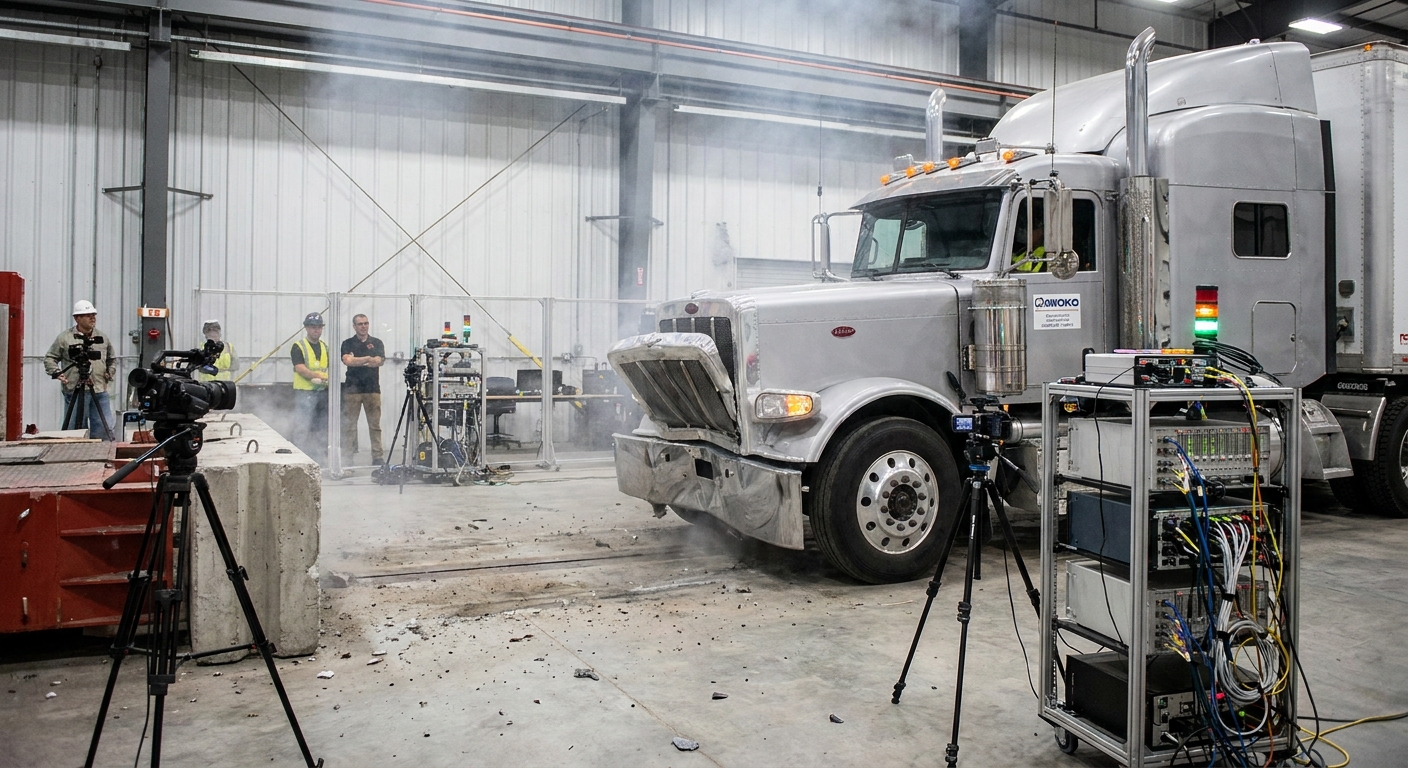
A heavy steel bumper is highly safe in an accident because it works in perfect harmony with your vehicle’s airbag sensors and safety crumple zones. Many fleet operators wonder if adding extra metal mass to the front end of a commercial vehicle will negatively affect occupant safety. A modern, professionally engineered steel bumper is designed to absorb massive impact energy without altering the factory deceleration pulse required to trigger your airbags. This ensures that your drivers remain fully protected by active cabin safety systems while the truck’s front end is heavily shielded.
Do heavy bumpers interfere with airbag sensors?
But wait, there’s more: you do not have to worry about your truck’s airbag deployment being delayed or compromised by a heavy steel front end. When you hit an obstacle, your truck’s internal accelerometers measure the deceleration force at the frame, not the crush rate of the bumper shell. This means your safety bags will deploy exactly when they are supposed to, keeping you secure inside the cabin.
- Sensor Calibration Preservation: Airbag sensors measure deceleration forces at the chassis level, not within the bumper shell itself.
- Deceleration Pulse Alignment: The rapid deceleration required to trigger airbags is still easily read by internal accelerometer sensors.
- Airbag Compatibility Certification: Leading aftermarket steel upgrades are engineered to match factory crash-pulse characteristics perfectly.
Balancing vehicle weight and braking distance safely
If you are adding substantial metal armor to your front axle, you must consider how it affects your stopping distances on the road. You can easily maintain your truck’s original handling and braking efficiency by choosing a design that respects the vehicle’s axle load ratings. Balancing this extra weight properly guarantees you get maximum protection without sacrificing active road safety.
- Axle Weight Limits: Keeps the vehicle weight well below its front Gross Axle Weight Rating (GAWR).
- Suspension Maintenance: Upgrading to heavier front springs or a leveling kit preserves factory ride height.
- Braking System Integrity: Heavy-duty brake pads handle the slightly increased front-end momentum with ease.
| Added Front-End Mass | Stopping Distance Impact (60-0 mph) | Front Suspension Wear Rate | Airbag Deployment Response | |
|---|---|---|---|---|
| + 100 to 150 lbs (Standard Steel) | Negligible (+ <1 foot) | Normal | Factory timing preserved | |
| + 250 to 300 lbs (Heavy Fleet/Winch) | Minor (+ 2 to 3 feet) | Slightly elevated (Heavier springs recommended) | Factory timing preserved |
The test metrics confirm that as long as the bumper’s weight is balanced with appropriate suspension components, overall braking safety and airbag response remain well within factory-approved limits.
Key Takeaway: While heavy-duty steel front-ends add weight, choosing an engineered design ensures the added mass remains well within your vehicle’s Gross Axle Weight Rating (GAWR) to preserve optimal braking and handling.
Does a custom steel bumper improve off-road safety?
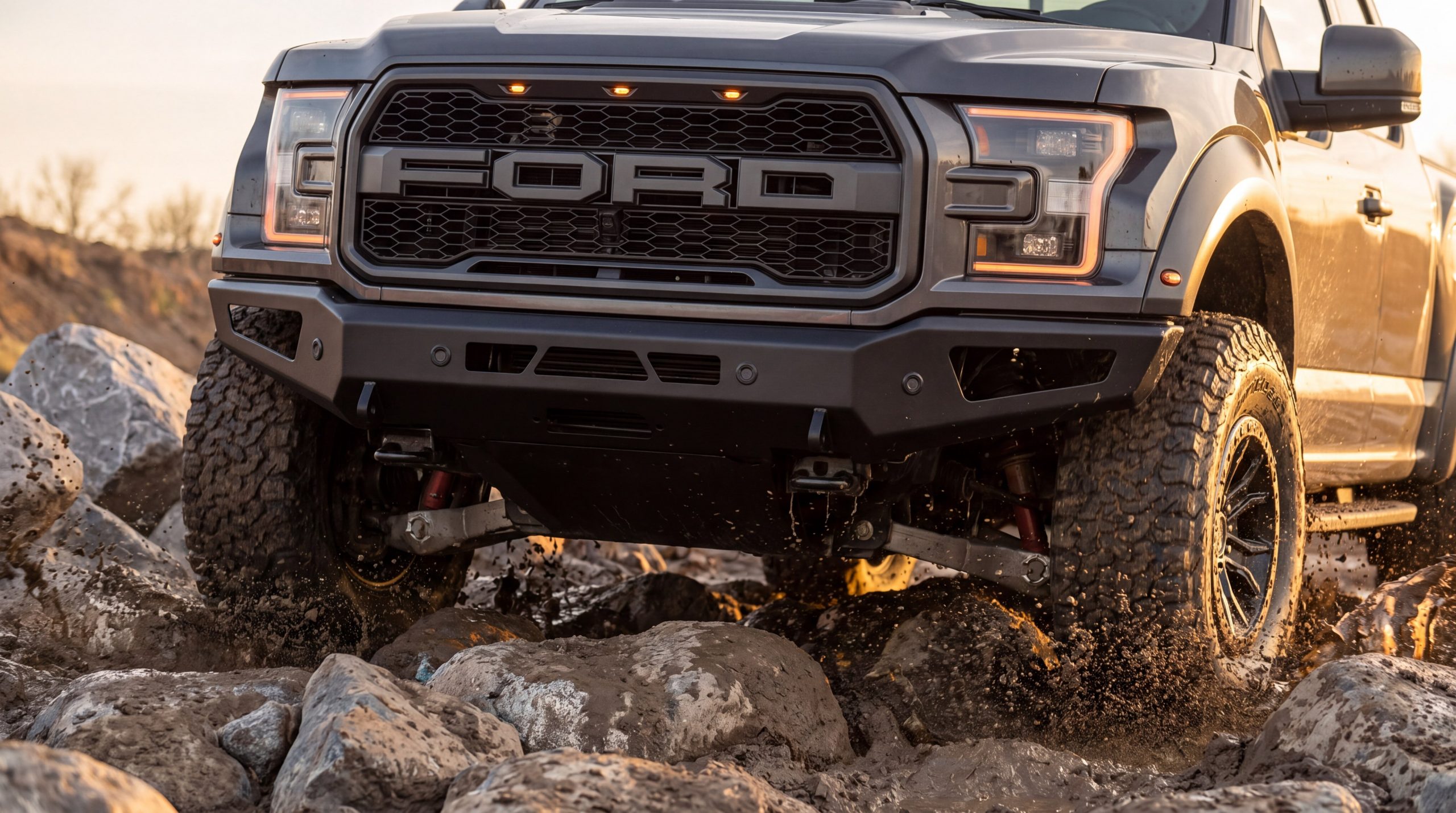
A custom steel bumper significantly improves off-road safety by increasing approach angles and offering ultra-strong recovery points to prevent vehicles from getting stranded. Off-road driving exposes commercial utility trucks and heavy machinery to severe terrain challenges like deep ruts, rocks, and steep approach angles. Equipping your vehicle with a premium steel bumper provides the extra ground clearance you need to clear steep trail ledges safely. Furthermore, these reinforced setups are built to withstand heavy-duty recovery loads, making them indispensable for remote industrial operations.
Approach angles and trail obstacle protection
Mind you: navigating a steep incline can easily tear off your factory plastic valance if you do not have sufficient front-end clearance. When you upgrade to a high-clearance design, you allow your front tires to climb steep obstacles without dragging the bumper face. This protective profile ensures you do not get hung up or damage steering components on remote job sites.
- High-Clearance Cutouts: Sloped bottom plates allow the front tires to reach obstacles before the bumper does, dramatically improving approach angles.
- Undercarriage Slide Protection: Heavy plate steel skid integration lets the vehicle slide over trail obstacles rather than catching and hanging up.
- Outer Wing Tapering: Tapered ends protect critical steering knuckles and sway bar links from direct impact with tree stumps and rocks.
Shackle mounts and recovery point load capacities
When you get stuck in deep mud or sand, you need recovery points that will not shear off under the immense strain of a winch. Standard factory tow hooks are simply bolted to the frame and can fail catastrophically when you apply heavy kinetic loads. Choosing a heavy-duty system with welded shackle tabs ensures you can pull your truck out of any situation safely.
- Welded Recovery Tabs: Heavy steel tabs are welded to both the front face and back frame bracket for maximum strength.
- Winch Mount Integration: Reinforced internal winch trays accept high-capacity winches for self-recovery.
- D-Ring Compatibility: Thick shackle mounts accommodate standard commercial 3/4-inch D-ring shackles.
| Recovery Point Type | Max Load Capacity (WLL) | Mounting Configuration | Safety Profile | |
|---|---|---|---|---|
| OEM Bolt-On Tow Hook | 5,000 – 8,000 lbs | Single-shear frame bolt | Risk of shearing under kinetic loads | |
| Integrated Dual-Pass Welded Tab | 12,000 – 20,000 lbs | Welded inside and outside of bumper face plate | Exceptional safety; handles extreme winch angles |
This analysis establishes that integrating heavy-duty recovery tabs directly into the bumper’s structural frame guarantees safe, high-load extraction capabilities in challenging off-road conditions.
Key Takeaway: Standard tow hooks can fail under heavy winching loads; dual-pass welded shackle mounts integrated directly into a steel bumper provide rock-solid anchoring for safe vehicle recoveries.
Will a steel bumper reduce vehicle repair costs?
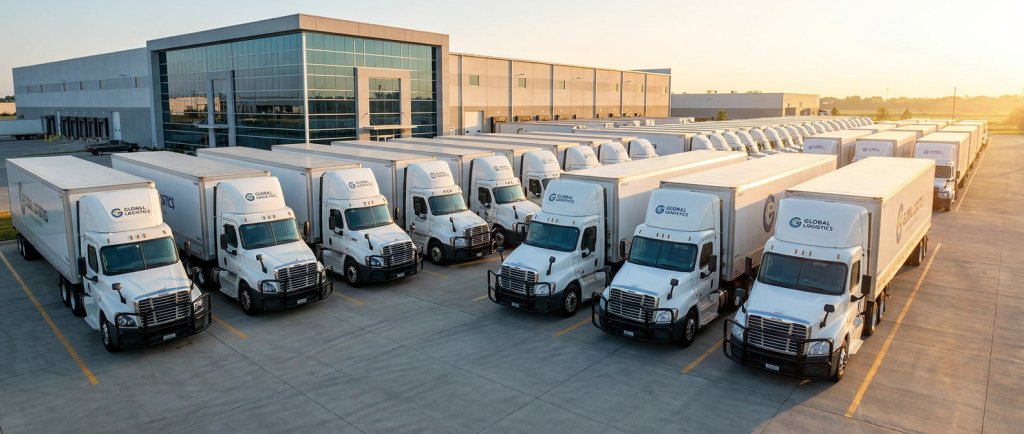
A steel bumper reduces vehicle repair costs by completely eliminating the need for expensive professional bodywork and replacing shattered plastic parts after minor collisions. Operating a commercial or municipal utility fleet requires a strict focus on minimizing maintenance expenses and maximizing vehicle uptime. When you invest in a professional steel bumper for your fleet trucks, you construct a defensive barrier that effectively deflects worksite impacts. This proactive upgrade helps businesses reduce their total cost of ownership by avoiding recurring body shop repair bills.
Calculating the ROI of upgrading your front-end guard
Here is the bottom line: a cheap factory bumper will cost you thousands of dollars in repairs after even a minor collision at a job site. If you calculate the lifetime cost of replacing plastic covers and broken radiators, you will see that upgrading pays for itself almost immediately. You protect your capital investment and keep your insurance premiums from skyrocketing after minor fender benders.
- Elimination of Body Work Costs: Steel bumpers absorb minor impacts with zero damage, bypassing the need for expensive professional paint matching and dent removal.
- Insurance Premium Optimization: Preventing structural frame claims helps fleets maintain lower commercial insurance rates and avoid costly deductibles.
- Extended Vehicle Lifespan: Shielding the engine bay from damage ensures that high-mileage fleet trucks stay on the road longer.
Preventing downtime for working B2B utility vehicles
When your work truck is sitting in a repair shop for weeks, you are losing money every single day that vehicle is out of service. If you install heavy metal protection, your driver can simply brush off a minor worksite bump and keep working. This constant operational readiness is the single most important financial benefit for any serious B2B utility fleet.
- Zero Repair Downtime: Minor bumps do not require taking the vehicle out of service for cosmetic repairs.
- On-Site Serviceability: Bumper scratches can be quickly touched up in-house without professional assistance.
- Critical System Protection: Prevents punctures to radiators, cooling lines, and steering links, keeping the truck driveable.
| Bumper Setup Type | Average Damage from Low-Speed Ding | Average Repair Cost | Estimated Vehicle Downtime | |
|---|---|---|---|---|
| Stock OEM Plastic | Broken bumper, damaged radiator, headlight | 2,500–4,500 | 5 to 10 business days | |
| Aftermarket Heavy Steel | Minor powder coat scratch | $0 (Self-repair with spray paint) | 0 days (Remains in service) |
The financial comparison demonstrates that a heavy-duty steel front-end pays for itself after just a single minor impact by completely eliminating body shop repair costs and operational vehicle downtime.
Key Takeaway: For commercial fleets, the largest cost of an accident is not the physical repair bill, but the lost revenue and operational delays caused by having a critical work truck out of service.
How does steel bumper thickness influence impact?
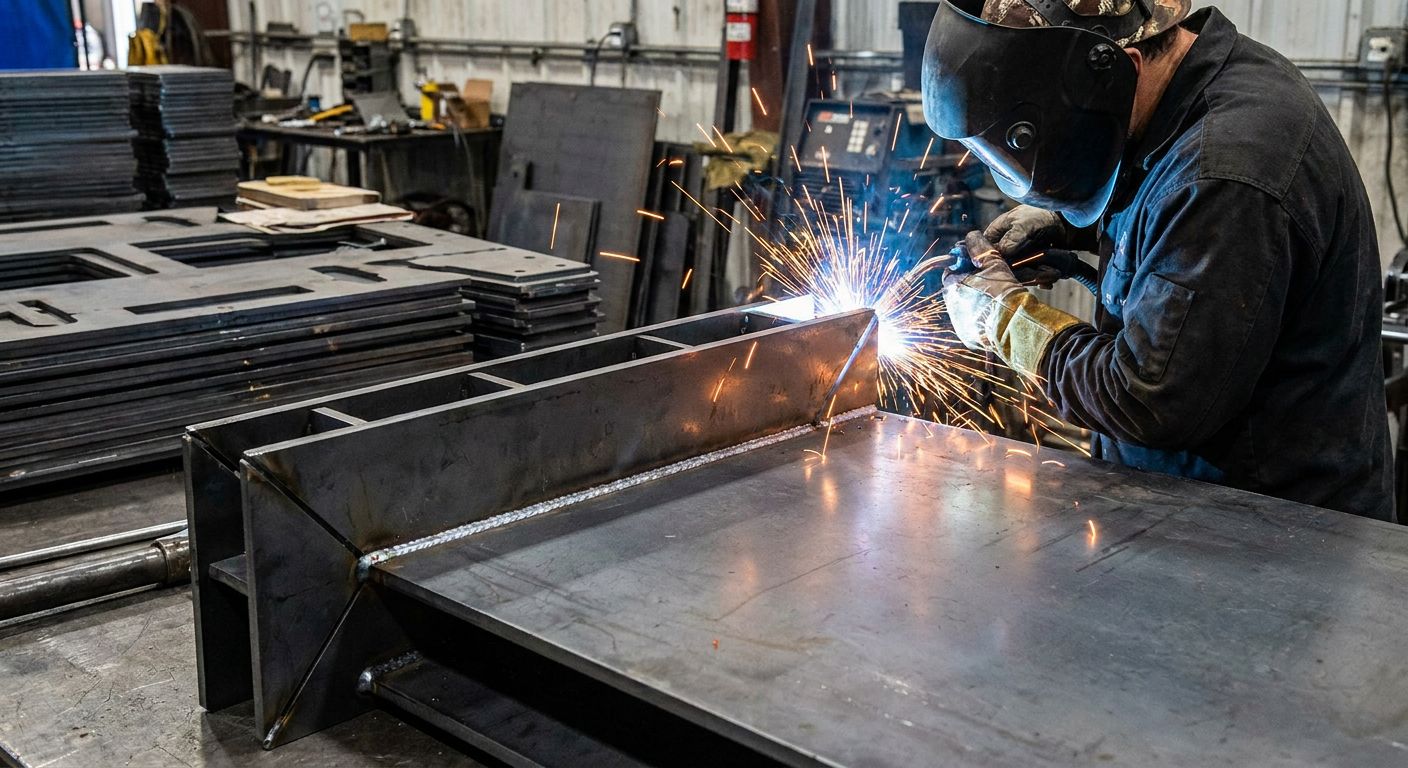
Steel bumper thickness directly influences impact absorption by determining the rigidity, overall strength, and resistance of the outer wings and central mounting plate. Choosing the correct metal plate thickness is a critical balancing act between maximizing impact strength and managing vehicle axle weight. When choosing a custom-engineered steel bumper , you must consider how different gauge thicknesses perform under dynamic loads. Proper material optimization ensures that high-stress mounting zones are heavily reinforced while the outer wings remain relatively lightweight.
The difference between 3/16″ and 1/4″ structural steel
Think about it: the ideal heavy-duty front-end upgrade does not use the same metal thickness throughout its entire structure. When you select a premium design, you get heavy-duty 1/4-inch steel for the core winch mount and lighter 3/16-inch steel for the outer wings. This smart engineering gives you extreme strength right where you need it without making your truck front-heavy.
- 3/16-Inch Plate (Standard Duty): The optimal balance of high-impact strength and weight management, perfect for half-ton and three-quarter-ton light commercial work trucks.
- 1/4-Inch Plate (Extreme Duty): Unmatched rigidity for mounting points, winch plates, and heavy-duty center sections on heavy-duty commercial vehicles and logging trucks.
- Structural Geometry Reinforcement: Precise CNC-folded gussets and multi-angle bends increase structural rigidity without adding unnecessary, dead weight.
Weight optimization: Maximizing strength without overload
If you choose a front guard that is too heavy, you will quickly ruin your front suspension and wear out your steering components. You must select a manufacturer that uses advanced CNC laser cutting and precise forming to maximize strength without adding dead weight. This modern design approach keeps your truck handling beautifully while still offering armor-plated protection.
- CNC Laser Cutting: Eliminates weak spots and ensures perfect fitment and load paths.
- Strategic Gusseting: Places reinforcement plates exactly where high-energy impacts concentrate force.
- Balanced Weight Distribution: Protects your steering box and ball joints from premature mechanical wear.
| Material Thickness Profile | Primary Application Zone | Impact Energy Absorption Cap | Weight Contribution Per Bumper | |
|---|---|---|---|---|
| 3/16-Inch Plate (7-Gauge) | Outer bumper wings and styling plates | Moderate-High | 90 – 120 lbs | |
| 1/4-Inch Plate (3-Gauge) | Center section, winch plate, mounts | Extreme | 140 – 200 lbs |
This thickness analysis reveals that combining thick steel mounting centers with lighter outer wings provides maximum structural strength exactly where it is needed, without overloading the front suspension.
Key Takeaway: The strongest bumpers combine different material thicknesses—using heavy-duty 1/4-inch plate for high-stress mounting brackets and lighter 3/16-inch plate for the outer wings.
Should logging fleets install a steel bumper?
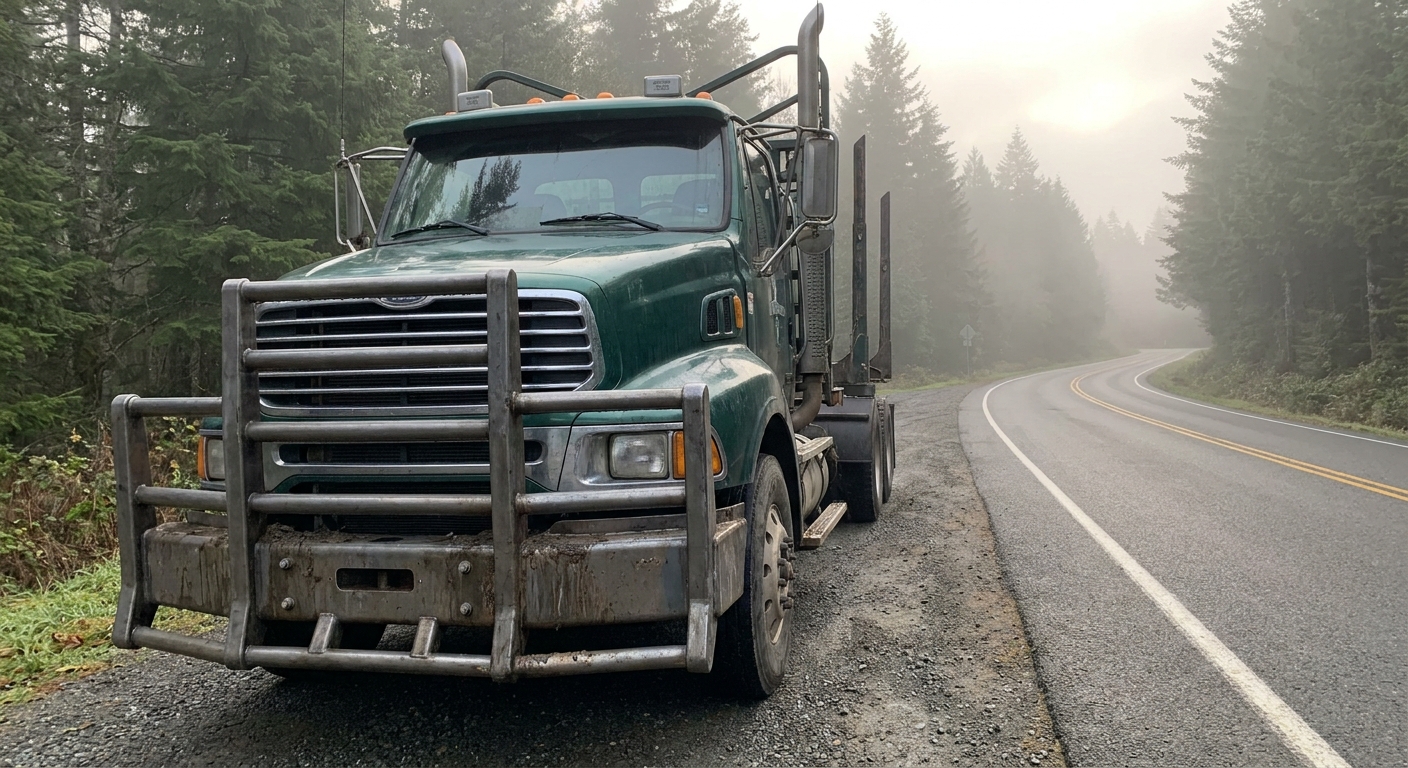
Logging fleets must absolutely install a steel bumper to survive the punishing environmental hazards of forestry roads, heavy brush, and deep mud trails. Forestry and logging sectors represent some of the most demanding operational environments for commercial haul trucks. Equipping these hard-working logging rigs with a heavy-duty steel bumper provides critical protection against stray tree logs and heavy debris on unpaved forestry roads. This heavy metal shield ensures that high-value logging operations never grind to a halt due to preventable front-end damage.
Demanding environmental challenges of forestry trails
Here is the harsh reality: a single low-hanging branch or hidden tree stump on a narrow forestry trail can easily puncture your truck’s radiator. When you are operating deep in the wilderness, you cannot afford to have a vehicle disabled by loose timber or heavy flying gravel. You must shield your radiator, grille, and headlights with heavy metal plate to ensure continuous, safe transport.
- Debris Deflection: Thrown branches, mud clumps, and flying gravel from heavy timber trailers can instantly destroy unprotected grilles and lights.
- Off-Road Towing Assistance: Reinforced steel bumpers feature heavy-duty tow points, making it easy to pull stuck logging rigs through deep mud or snow.
- Brush Clearing: Heavy steel construction allows trucks to push past overgrown brush and fallen limbs without damaging critical engine components.
Protecting heavy-duty equipment investments
When you invest hundreds of thousands of dollars in commercial logging trucks, you cannot let cheap plastic parts compromise your fleet’s productivity. If you choose robust steel protection, you prevent minor bumps from turning into expensive insurance claims and prolonged mechanical downtime. This simple, proactive upgrade is the smartest way to protect your heavy-duty logging fleet’s bottom line.
- Uninterrupted Fleet Productivity: Avoids halting timber hauling due to easily preventable minor frontend damage.
- Chassis-Level Reinforcement: Protects the core truck frame from warping under heavy pulling or dragging operations.
- Lower Total Cost of Ownership: Reduces long-term vehicle maintenance and part-replacement costs significantly.
| Forestry Fleet Threat | Risk with OEM Factory Bumper | Protection Level with Steel Bumper | Fleet Cost Impact | |
|---|---|---|---|---|
| Stray Tree Logs / Branches | Radiator puncture, broken grille, engine damage | Deflected downward with zero damage | High savings on engine repair | |
| Deep Mud Bog Recovery | Damaged plastic fascia, broken tow hooks | Solid anchor point for safe, high-load pulling | Faster recovery, zero body damage |
The data confirms that outfitting logging vehicles with heavy-duty steel guards effectively shields delicate cooling systems from wilderness hazards, keeping your crew moving and productive.
Key Takeaway: In the forestry industry, a disabled logging truck can halt entire harvesting operations; protecting your engine with heavy-duty steel guards is a smart, proactive way to ensure constant fleet productivity.
How do you maintain a heavy-duty steel bumper?
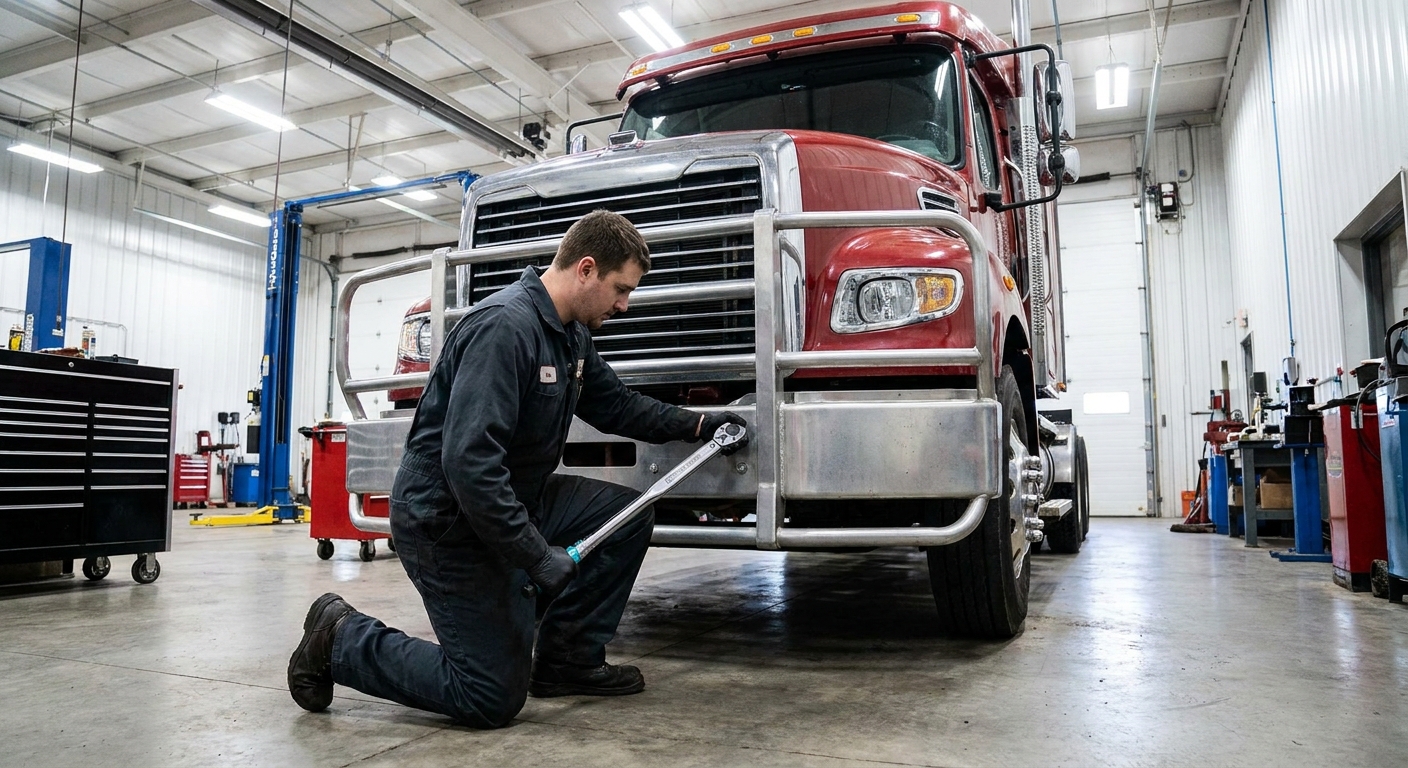
Maintaining a heavy-duty steel bumper requires washing off road salt regularly, applying a zinc-rich primer to any deep scratches, and verifying bolt torque specs periodically. While high-tensile structural steel is extremely rugged, keeping it in top condition requires standard, proactive maintenance to prevent cosmetic corrosion. When you install a professional steel bumper , you must protect its powder-coated finish from winter road salt and moisture. Taking care of your heavy-duty front guard ensures it remains structurally sound and continues to look great for the entire lifespan of your commercial vehicle.
Preventing oxidation and rust in harsh climates
Think about it: road salt and winter brine can slowly eat through your bumper’s finish if you let them sit on the metal for too long. If you operate your fleet in cold northern climates, you must wash down your steel front-ends regularly with high-pressure fresh water. Taking this simple step prevents rust from taking hold and keeps your vehicles looking highly professional.
- Salt Washdown Protocols: Rinsing the bumper thoroughly after driving on winter roads prevents salt and road brine from eating through the finish.
- Zinc-Rich Primers: Applying a zinc-rich base coat creates a sacrificial barrier that blocks moisture and prevents rust from creeping under the outer coat.
- Powder Coating Inspections: Periodically checking for chips or scratches keeps moisture from getting trapped beneath the powder coat layer.
Inspecting weld points and mounting hardware
When you subjected your truck to extreme off-road conditions or minor collisions, you must inspect the structural integrity of your mounting brackets. If you check your mounting bolts and weld joints periodically, you ensure that the entire assembly remains completely safe and secure. Keeping your structural connections tight means your truck is always prepared to handle the next high-energy impact.
- Bolt Torque Audits: Verifying that all mounting fasteners are tightened to their specific torque ratings.
- Weld Crack Inspections: Checking structural weld joints for fine stress lines after a significant trail collision.
- Bracket Alignment Verification: Making sure the bumper maintains its proper distance from adjacent body panels.
| Maintenance Task | Recommended Schedule | Materials Needed | Expected Lifespan Impact | |
|---|---|---|---|---|
| Surface Wash & Salt Flush | Weekly (During Winter Season) | High-pressure fresh water, mild car wash soap | Prevents cosmetic rust spots | |
| Mounting Bolt Torque Check | Every 10,000 miles / Post-Impact | Torque wrench, grade-8 replacement hardware | Prevents loose joints and vibration wear | |
| Scratch & Chip Touch-Ups | As needed (Immediate post-scratch) | Zinc-rich spray primer, matching topcoat paint | Stops rust from creeping under powder coat |
Regular, basic maintenance ensures that your steel protection system remains structurally sound and completely rust-free, preserving both its protective strength and trade-in value for years to come.
Key Takeaway: Periodically checking mounting bolt torque and weld joints after heavy off-road use or minor impacts ensures the bumper remains securely attached and ready for the next impact.
Summary of Fleet Solutions
Standard plastic and thin aluminum bumpers simply cannot protect your commercial vehicles from the devastating impact of wildlife strikes, worksite debris, and trail hazards. Upgrading your fleet to heavy-duty, engineered steel front-ends completely solves this vulnerability, preventing frame warping, radiator punctures, and costly operational vehicle downtime.
At Brontec Trailer, we stand firmly behind uncompromising strength, precision American engineering, and heavy-duty custom fabrication. Our products are built to perform reliably in the most demanding commercial fleet, off-road, and heavy industrial environments across the globe. Do not wait for a costly wildlife collision or job site accident to disable your vehicle and drain your company’s profits. Upgrade your fleet’s protection and secure your vehicles today. Please contact us to custom-build your next heavy-duty front-end upgrade.
Reader-Focused FAQs
Can I install a steel bumper on my truck without modifying the stock suspension?
Yes, absolutely. Most standard-duty steel bumpers (weighing between 80 to 120 pounds) can be safely installed on factory suspension setups without causing noticeable front-end sag. However, for extremely heavy setups featuring built-in winches, heavy-duty grille guards, or 1/4-inch steel plate, installing heavy-duty front leveling kits or upgraded coil springs is highly recommended to maintain original ride height and factory steering geometry.
What’s the best steel bumper style for maximum deer and moose protection?
The best option is a full-coverage steel bumper with integrated, welded grille guards and wrap-around headlight brush guards. This solid, one-piece construction prevents the headlight wings and center tubes from bending back into your hood and fenders, deflecting the animal’s mass downward and away from your radiator and windshield.
How do I know if my new steel bumper will affect my vehicle’s airbag deployment?
It will not affect airbag deployment at all. A high-quality, professionally engineered steel bumper will not interfere with your vehicle’s airbag deployment. Airbag systems rely on complex electronic accelerometer sensors mounted deep inside the vehicle’s frame and cabin. These sensors measure sudden deceleration forces rather than physical bumper deformation, meaning the airbag system will still deploy as intended during a severe collision.
Can I custom-paint or powder-coat my steel bumper to prevent rust?
Yes, you certainly can. Steel bumpers can be custom powder-coated or painted to match your truck’s factory color code perfectly. For the best defense against rock chips and rust, it is highly recommended to apply a professional zinc-rich primer coat beneath a durable, polyester powder coat finish. This dual-layer system seals out moisture and prevents rust from spreading if the outer finish gets scratched.
How do I know if my steel bumper needs maintenance after a minor trail collision?
You can easily tell by conducting a close visual and mechanical inspection. After any impact, wash the bumper thoroughly with high-pressure water to remove mud, road salt, and debris. Once dry, carefully inspect the main welds for fine stress cracks, check the mounting brackets for bent steel, and ensure the grade-8 mounting bolts are torqued to factory specifications. Immediately clean any paint chips and touch them up with a quality primer to prevent rust from forming.