
Determining the total commercial truck collision repair cost requires looking far beyond the physical damage to include mechanical recalibration, specialized labor, and the significant financial drain of vehicle downtime. A single collision involving a heavy-duty asset is more than just a dent in the bumper; it is a massive financial disruption that can derail your quarterly budget. You might look at an initial estimate and assume that is the final price tag, only to be blindsided by mounting expenses. When your assets are off the road, the “meter is running” in the wrong direction, and a $10,000 repair can easily morph into a $50,000 loss in revenue and reliability. Fortunately, understanding the true architecture of these expenses allows you to make strategic decisions that protect your fleet, ensuring your bottom line remains resilient even after an accident.
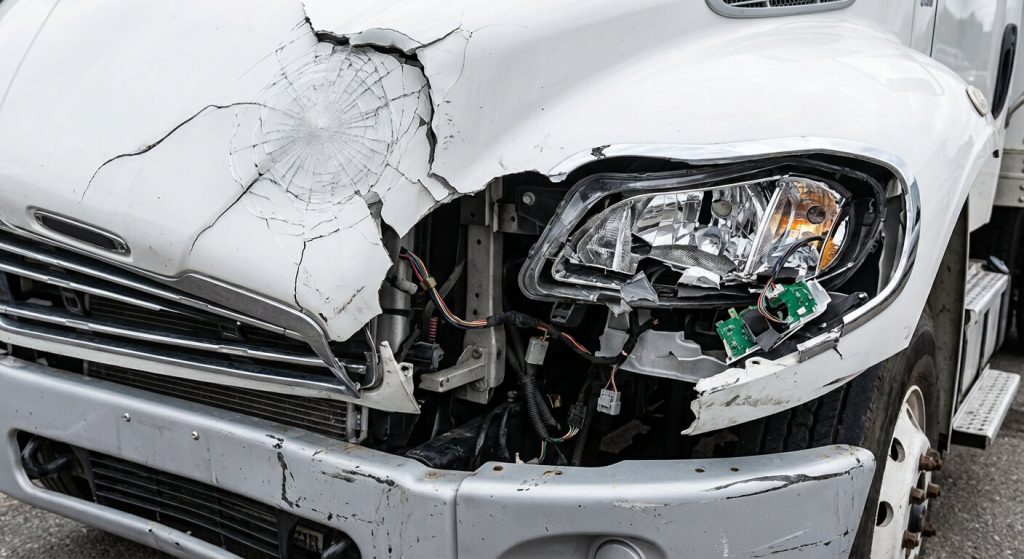
Hidden costs escalate because the initial estimate rarely accounts for the secondary damage found once the vehicle is fully disassembled. To accurately project your commercial truck collision repair cost, you must understand the complete breakdown of total repair expenses.
Consider this: initial visual inspections often overlook hairline cracks in the chassis or stressed engine mounts.
Beyond the Initial Repair Estimate
The teardown process frequently reveals compromised wiring harnesses or hydraulic leaks that are invisible from the exterior. These discoveries necessitate supplemental claims and more shop hours than originally anticipated.
Long-Term Financial Implications
Poorly executed repairs decrease the resale value of your asset and increase the frequency of future maintenance requirements.
- Reduced trade-in value due to non-standard parts.
- Increased potential for electrical gremlins in sensors.
- Higher risk of uneven tire wear from slight misalignments.
Key Takeaway: Identifying hidden costs early prevents budget overruns and ensures the asset returns to the fleet in pre-accident condition.
| Type of Cost | Description | Impact Level |
|---|---|---|
| Visual Damage | Obvious body work and exterior parts | High |
| Supplemental | Damage found during disassembly | Moderate to High |
| Valuation Loss | Depreciation due to accident history | Long-term |
Proper assessment requires a deep dive into the mechanical integrity of the truck frame and engine.
What are the risks of low commercial truck collision repair cost?
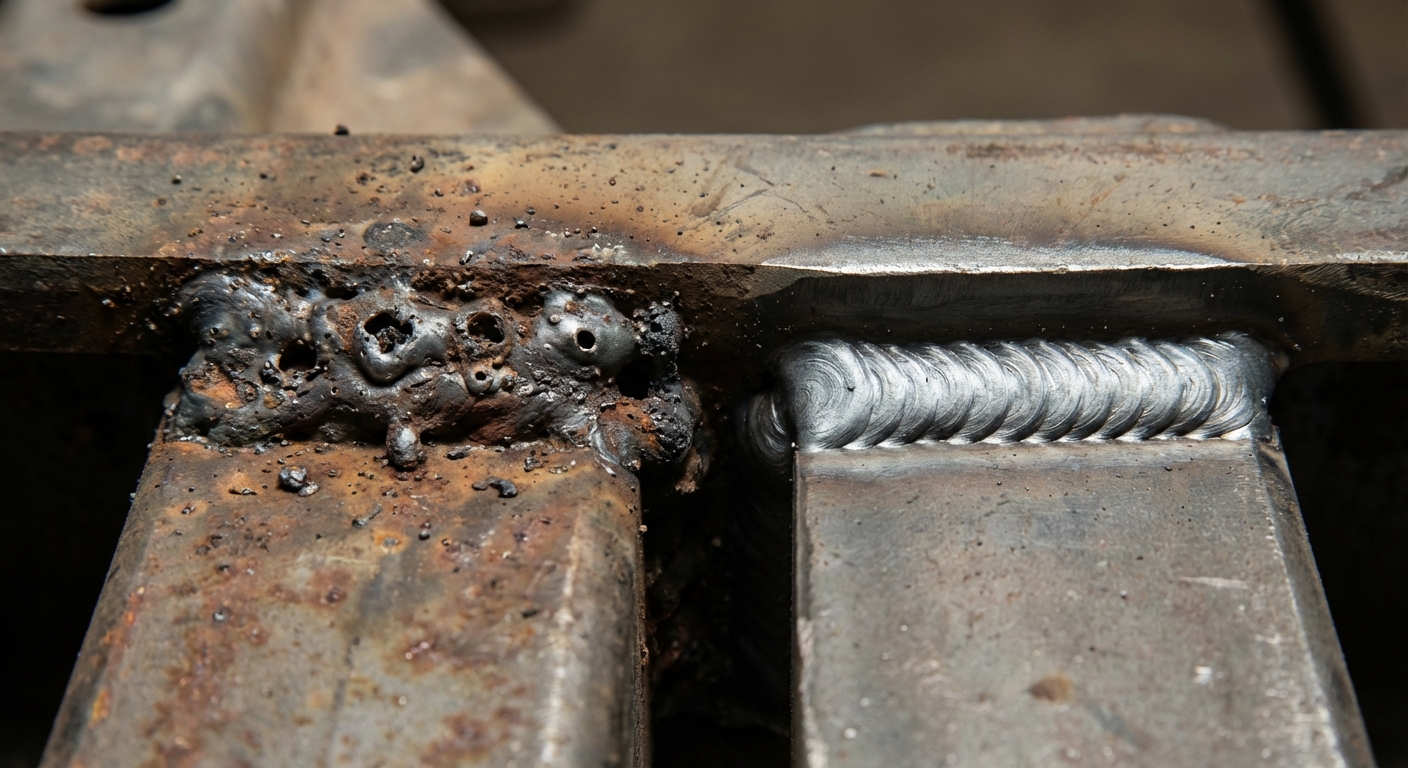
Low estimates often signify that the shop is cutting corners on safety protocols or structural standards to provide a cheaper commercial truck collision repair cost. Choosing the lowest bidder can lead to recurring failures and significant liability exposure.
Here is the truth: A structural weld is only as strong as the technician’s certification and the equipment used.
Compromising Structural Integrity
Budget shops may use heat to “pull” frames back into place, which actually crystallizes and weakens the steel. This can lead to catastrophic failure under the heavy load conditions typical of long-haul trucking.
Liability and Safety Exposures
If a repair fails on the highway, your company faces immense legal risks. Ensuring a high standard of work protects your drivers and your brand reputation.
- Legal ramifications of equipment failure.
- Increased insurance premiums after a second incident.
- Employee safety and retention concerns.
Key Takeaway: Investing in quality repairs reduces the risk of secondary accidents and long-term litigation costs.
| Risk Factor | Budget Repair Result | Professional Repair Result |
|---|---|---|
| Weld Quality | Porous and weak | Consistent and structural |
| Frame Alignment | “Close enough” via heat | Precision laser alignment |
| Safety Compliance | Minimal | Exceeds DOT standards |
Prioritizing structural integrity over initial savings is the only way to guarantee driver safety.
How does downtime impact your commercial truck collision repair cost?
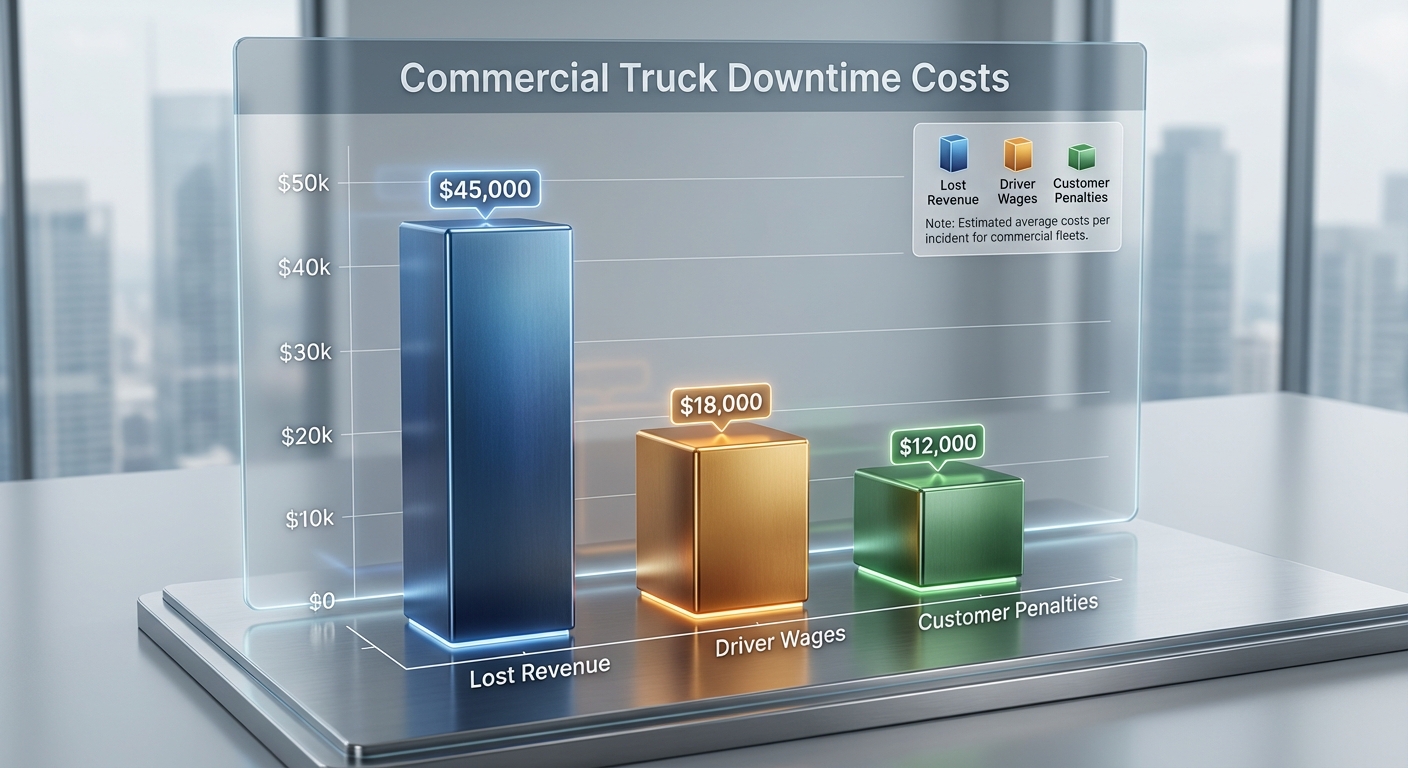
Downtime represents an “invisible” addition to your total commercial truck collision repair cost that often exceeds the price of parts and labor. Every day your truck is in the shop, you are losing billable miles and revenue.
Think about this: lost productivity is a daily tax on your company’s potential growth.
Calculating Lost Productivity Costs
You must calculate the daily revenue generation of that specific asset to see the true cost of a two-week repair. Beyond the lost freight revenue, you are still paying for insurance and fixed overhead for an idle vehicle.
Impact on Customer Relationships
Late deliveries and missed windows can result in contractual penalties or the loss of a major client. Reliability is the cornerstone of the logistics industry.
- Missed delivery windows leading to fines.
- Cost of cross-docking or sub-contracting loads.
- Damage to corporate reputation in a competitive market.
Key Takeaway: Minimizing the time between the accident and the return to service is critical for maintaining cash flow.
| Downtime Component | Estimated Daily Loss | Cumulative Weekly Impact |
|---|---|---|
| Lost Revenue | $700 – $1,200 | $4,900 – $8,400 |
| Driver Retention | $200 – $400 | $1,400 – $2,800 |
| Fixed Overhead | $150 | $1,050 |
Tracking downtime metrics helps fleet managers justify the use of specialized, faster repair facilities.
Why do labor rates vary for commercial truck collision repair cost?
Labor rates vary because modern vehicles require specialized technicians who understand complex labor rates and parts pricing in the current market. These experts manage the high-tech systems that define your total commercial truck collision repair cost.
Consider this: a general mechanic is not qualified to recalibrate the advanced safety sensors on a 2025 model tractor.
Specialized Technician Certifications
Certification from manufacturers ensures that the technician follows specific repair procedures that preserve the vehicle’s safety ratings. High-skill labor reduces the likelihood of a truck returning for the same issue twice.
Increased Complexity of Modern Trucks
Advanced Driver Assistance Systems (ADAS) require time-consuming software calibration after any bodywork. This labor is highly technical and requires expensive, proprietary diagnostic tools.
- Radar and Lidar sensor recalibration.
- Electronic Stability Control (ESC) testing.
- Collision avoidance system integration.
Key Takeaway: Paying for certified expertise ensures that the high-tech safety features you purchased continue to work effectively.
| Labor Type | Skill Level | Tooling Required |
|---|---|---|
| Body/Structural | Certificated Welder | Frame Racks / Welding Bay |
| Mechanical | Diesel Technician | Heavy Lifting Gear |
| Diagnostic | Software Specialist | OEM Level Tablets/Software |
The complexity of contemporary fleets demands a higher caliber of technical proficiency during restoration.
Are OEM parts worth the commercial truck collision repair cost?
Original Equipment Manufacturer (OEM) parts are essential for a reliable commercial truck collision repair cost because they guarantee fitment and durability. While aftermarket options may seem cheaper, they often lack the precision of factory-specified components.
Here is the truth: saving $500 on an aftermarket radiator can cost you $5,000 in engine damage if it fails on a steep grade.
OEM vs. Aftermarket Durability
OEM parts are built to the exact tolerances required by the vehicle manufacturer. This means less time spent “modifying” parts to fit, which ultimately lowers the labor portion of your bill.
Maintaining Manufacturer Warranties
Using non-certified parts can void your powertrain or chassis warranties, leaving you vulnerable to future expenses. Standardized parts ensure that your existing coverage remains intact.
- Exact fit reduces installation time.
- Higher grade materials for thermal resistance.
- Integrated warranty support across dealer networks.
Key Takeaway: OEM components provide the lowest cost of ownership over the remainder of the truck’s lifecycle.
| Part Category | OEM Benefit | Aftermarket Risk |
|---|---|---|
| Structural | Perfect load distribution | Stress fractures |
| Mechanical | Reliable performance | Premature wear |
| Electrical | Plug-and-play compatibility | Signal interference |
High-quality parts are the foundation of a repair that lasts until the vehicle’s scheduled retirement.
Does professional paint increase commercial truck collision repair cost?
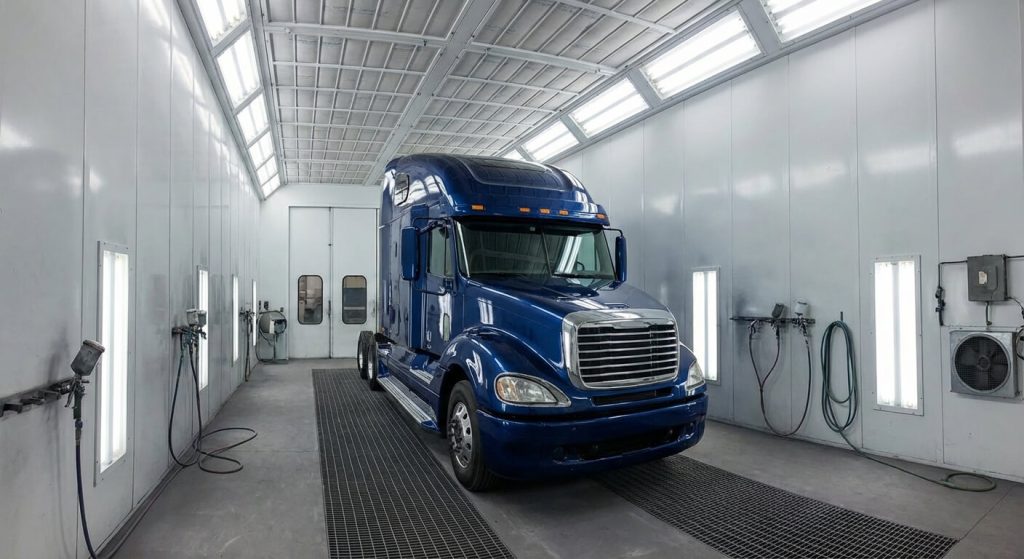
Professional paint and finishing are necessary components of a commercial truck collision repair cost because they prevent corrosion and maintain your professional image. A quality finish is not just about aesthetics; it is a critical protective layer for the metal bodywork.
Consider this: a poor paint job allows moisture to seep into seams, leading to rust within months of the repair.
Protecting Your Fleet Brand Image
Your trucks are rolling billboards for your business. Mismatched colors or “orange peel” textures signal a lack of attention to detail to both customers and DOT inspectors.
Preventing Corrosion and Body Decay
Modern industrial coatings are engineered to withstand road salt, UV exposure, and extreme temperatures. Professional application in a controlled booth ensures these chemicals bond correctly to the surface.
- High-solids clear coats for UV protection.
- Anti-corrosive primers on raw metal.
- Computerized color matching for fleet consistency.
Key Takeaway: Quality paint work acts as a barrier that prevents expensive moisture-related structural decay.
| Finish Type | Durability | Brand Impact |
|---|---|---|
| Standard Enamel | Low | Poor professional look |
| Polyurethane | Moderate | Average |
| Fleet Specification | High | Professional and consistent |
Maintaining a pristine fleet appearance directly influences customer trust and vehicle longevity.
How do claims affect commercial truck collision repair cost?
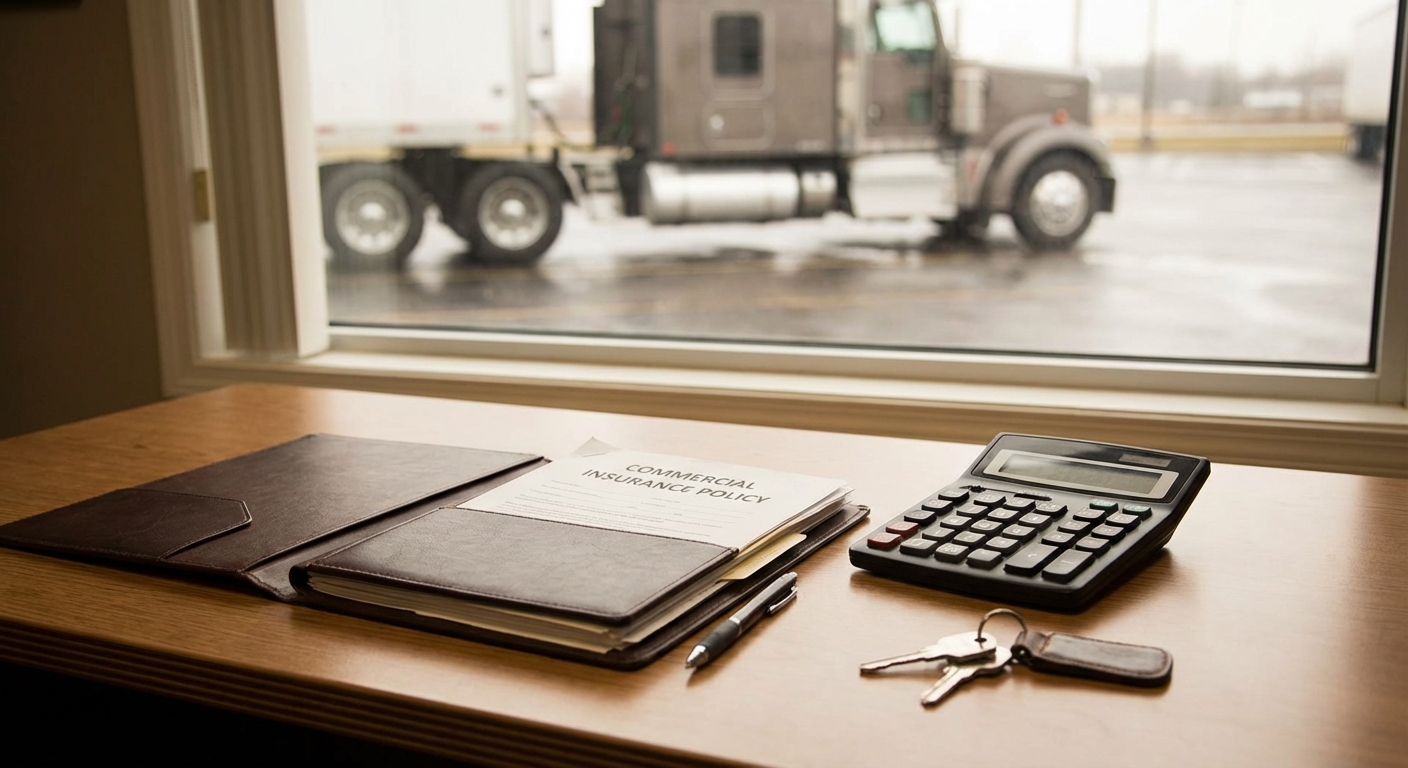
Insurance claims play a massive role in your commercial truck collision repair cost as they cover the bulk of the expense while dictating the repair timeline. You must manage high deductibles and provide meticulous documentation of ongoing maintenance and repair costs.
Here is the truth: insurance adjusters are looking to minimize payouts, so your documentation must be airtight.
Managing Higher Fleet Deductibles
Commercial policies typically involve much higher deductibles than passenger vehicles. You must have a cash reserve specifically for these out-of-pocket costs to avoid stalling the start of the repair.
Streamlining Claim Documentation
Detailed photos, dashcam footage, and maintenance records are essential for proving the value of your asset. The more information you provide, the faster the approval process moves.
- Inventory of specialized aftermarket equipment.
- Detailed service history pre-collision.
- Photographic evidence of all damaged components.
Key Takeaway: Clear documentation ensures the insurance company covers the actual cost of returning the vehicle to the road.
| Claim Phase | Essential Requirement | Typical Goal |
|---|---|---|
| Reporting | Accuracy and speed | Early file opening |
| Adjustment | Detailed evidence | Full valuation |
| Settlement | Final inspection | Payment release |
Navigating the insurance landscape requires a proactive approach to data management and shop selection.
What helps find the right commercial truck collision repair cost?
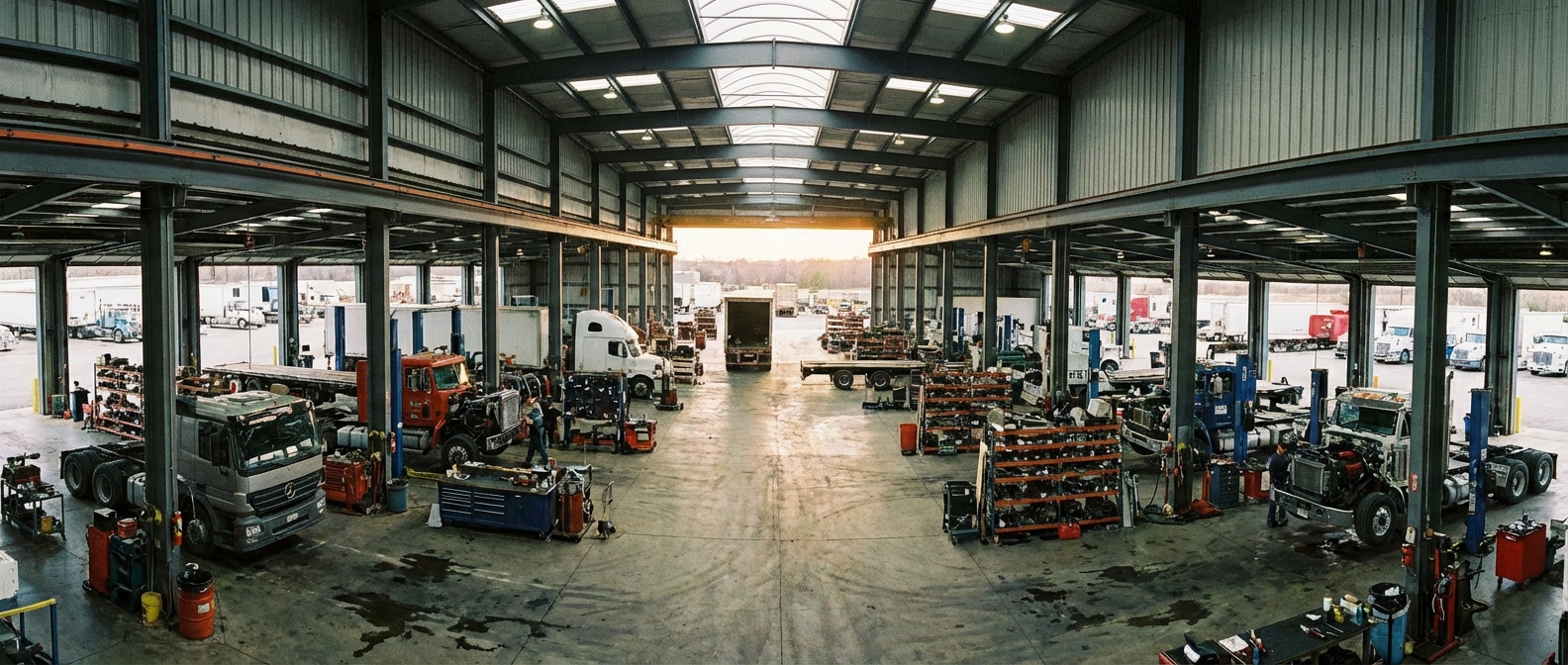
Finding a shop that balances quality and commercial truck collision repair cost requires verifying their specialized equipment and heavy-duty certifications. A facility that primarily handles passenger cars cannot safely address the complexities of a Class 8 vehicle.
Consider this: the frame of a semi-truck requires thousands of tons of hydraulic pressure to realign correctly.
Verifying Specialized Equipment
Look for shops with heavy-duty frame straighteners, high-capacity lifts, and specialized painting booths. The right tools significantly reduce the labor hours needed to perform difficult structural tasks.
Experience with Major Collision Damage
A shop with 50 years of experience in heavy-duty repair will have the relationships with parts suppliers needed to get your truck back on the road faster. Experience equates to efficiency and fewer “comebacks.”
- Verification of I-CAR or ASE certifications.
- Availability of computerized laser measuring systems.
- References from other major fleet managers.
Key Takeaway: Partnering with a specialized facility ensures the repair is done efficiently and correctly the first time.
| Shop Feature | Why It Matters | Benefit to You |
|---|---|---|
| Heavy Frame Rack | Ensures straight tracking | Prevents tire wear |
| OEM Data Access | Provides exact specs | Guaranteed fitment |
| Large Parts Inventory | Reduces wait times | Faster turnaround |
Choosing the right partner is the most important decision a fleet manager makes following an accident.
When does damage exceed the commercial truck collision repair cost?
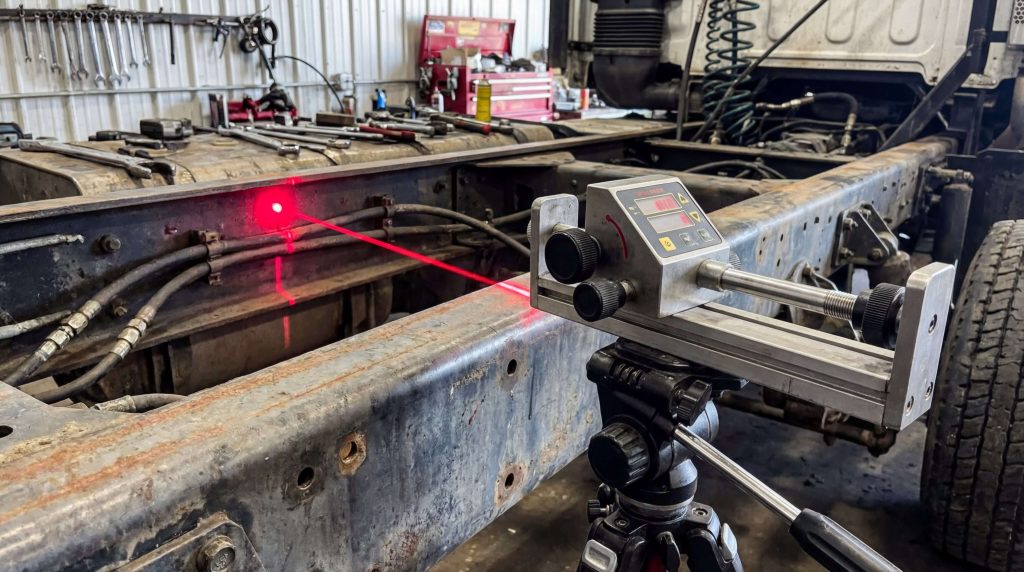
There is a point where the commercial truck collision repair cost exceeds the vehicle’s market value, rendering it a “total loss.” You must use precision metrics to determine if a chassis can be restored or if it is safer to replace the unit entirely.
Here is the truth: A “bent” truck that isn’t perfectly straight will never be profitable or safe again.
Assessing Structural Alignment
Using laser alignment technology, a technician can determine if the frame rails have been twisted beyond their elastic limit. If the metal has “kinked,” the structural integrity is permanently compromised.
Total Loss vs. Restoration Value
You have to weigh the cost of the repair against the current market price of a replacement vehicle and the estimated downtime. Sometimes, receiving an insurance payout and moving to a newer asset is the better financial move.
- Cost of repair vs. Actual Cash Value (ACV).
- Potential for future mechanical reliability issues.
- Lead time for a new truck replacement.
Key Takeaway: Knowing when to stop spending on a damaged asset protects your company’s long-term capital.
| Metric | Total Loss Indication | Restoration Indication |
|---|---|---|
| Repair Ratio | >70% of vehicle value | <50% of vehicle value |
| Frame Status | Kinked or heat-stressed | Minor sway or diamond |
| Engine Health | Block cracked or moved | Radiator/Component damage |
Structural integrity is a binary state; if it cannot be made perfect, it should not be on the road.
How can you minimize future commercial truck collision repair cost?

You can minimize your long-term commercial truck collision repair cost by focusing on driver education and understanding the average maintenance cost for a semi-truck. Preventing accidents is significantly more cost-effective than managing the most efficient repair.
Consider this: many collisions are the result of deferred maintenance on brakes or tires.
The Role of Preventative Maintenance
Regularly scheduled inspections can catch worn steering components or failing brake pads before they contribute to a collision. A well-maintained truck is a safer truck for everyone on the road.
Driver Training and Safety Protocols
Investing in ongoing driver training and telematics software allows you to identify risky behaviors before they result in an insurance claim. Safety-conscious drivers are your best defense against high repair bills.
- Implementation of “Defensive Driving” courses for all staff.
- Real-time feedback via telematics and dashcams.
- Incentive programs for accident-free miles.
Key Takeaway: A culture of safety and proactive maintenance is the most effective way to lower fleet operating costs.
| Prevention Method | Cost Level | Benefit |
|---|---|---|
| Driver Training | Low / Moderate | Reduced accident frequency |
| Telematics | Moderate | Behavioral improvements |
| Proactive Maintenance | Scheduled Monthly | Avoids mechanical failure accidents |
The synergy between maintenance and training creates a resilient fleet that maximizes uptime and profit.
Conclusion
Reducing commercial truck collision repair cost starts with preventing damage before it reaches critical components like the radiator, sensors, and frame. Heavy-duty grille guards and moose bumpers serve as structural protection systems, absorbing impact energy and minimizing costly secondary damage. For fleets operating in wildlife zones or high-risk routes, this proactive approach can reduce repair costs by 60–80% while significantly lowering downtime and protecting operational continuity. If you’re looking to safeguard your fleet and control long-term costs, contact us today to explore protection solutions tailored to your equipment and routes.
FAQ
Can I choose my own repair facility for an insurance claim?
Yes, most commercial insurance policies grant you the right to select the shop that handles your equipment, provided that the facility meets standard professional requirements. Choosing a shop specializing in heavy-duty logistics ensures your truck is handled by technicians who understand commercial-grade components.
What’s the best way to reduce downtime during a repair?
The best way is to partner with a shop that maintains a parts inventory and has the capacity for simultaneous mechanical and body repairs. This parallel processing significantly cuts down the number of days the vehicle remains out of service.
How do I know if my truck frame is permanently damaged?
You should rely on a certified facility using laser alignment tools to measure the frame against the manufacturer’s original factory specifications. If the frame is “kinked” rather than merely bent, the metal has likely reached its yield point and may not be safe to repair.
Can I use aftermarket parts to save money on repairs?
While it is possible to use aftermarket parts, it is generally ill-advised for business-critical components as they can void your manufacturer warranty and may wear more quickly. Using OEM parts usually results in a lower total cost of ownership over the truck’s life.
What’s the best way to estimate the total cost of a collision?
The best way is to aggregate the visual repair bid, a 15% supplemental contingency for hidden damage, and the daily revenue loss for the estimated duration of the shop visit. This holistic view provides a realistic picture of the collision’s impact on your cash flow.