
You perform a semi-truck maintenance checklist by systematically inspecting critical mechanical, electrical, and structural components at scheduled intervals to identify wear before failure occurs. Unscheduled downtime is the silent killer of fleet profitability, often resulting in thousands of dollars in towing fees and lost shipping contracts. Imagine your heavy-duty truck stranded during a critical long-haul run due to a burst coolant hose or a worn brake pad that could have been identified weeks ago. By implementing a rigorous semi truck maintenance schedule, you can transition from reactive repairs to proactive care, ensuring every mile driven is both safe and profitable.
Why start a semi truck maintenance schedule?

You start a semi truck maintenance schedule to transform your fleet operations from reactive firefighting to proactive management, significantly reducing unplanned downtime. Consistent inspections catch small leaks and minor wear before they escalate into catastrophic roadside breakdowns. This disciplined approach protects your bottom line from the high costs of emergency logistics.
Reducing Unplanned Downtime
Proactive inspections identify components on the verge of failure during scheduled shop time. The reason is simple: it is always cheaper to replace a part in the garage than on the shoulder of a highway.
- Early detection of seal leaks.
- Identification of fraying belts.
- Discovery of loose mounting bolts.
Think about it. Addressing these issues early prevents the “domino effect” where one failed component destroys several others.
Enhancing Driver Safety
Ensuring the mechanical integrity of a Class 8 vehicle is a fundamental responsibility to the operator and the public. A well-maintained truck handles more predictably and responds better in emergency situations.
- Verification of steering linkage stability.
- Confirmation of suspension bushing health.
- Testing of emergency signaling devices.
Look at this: safety isn’t just a metric; it’s a culture built on the foundation of mechanical reliability.
Key Takeaway
| Benefit | Primary Outcome | Impact Level | |
|---|---|---|---|
| Downtime Reduction | Fewer roadside repairs | High | |
| Safety Assurance | Reduced accident liability | Critical | |
| Financial Stability | Predictable repair budgets | High |
This data demonstrates that the initial investment in inspection time pays dividends by preventing the most expensive types of fleet failure.
What is a semi truck maintenance schedule?
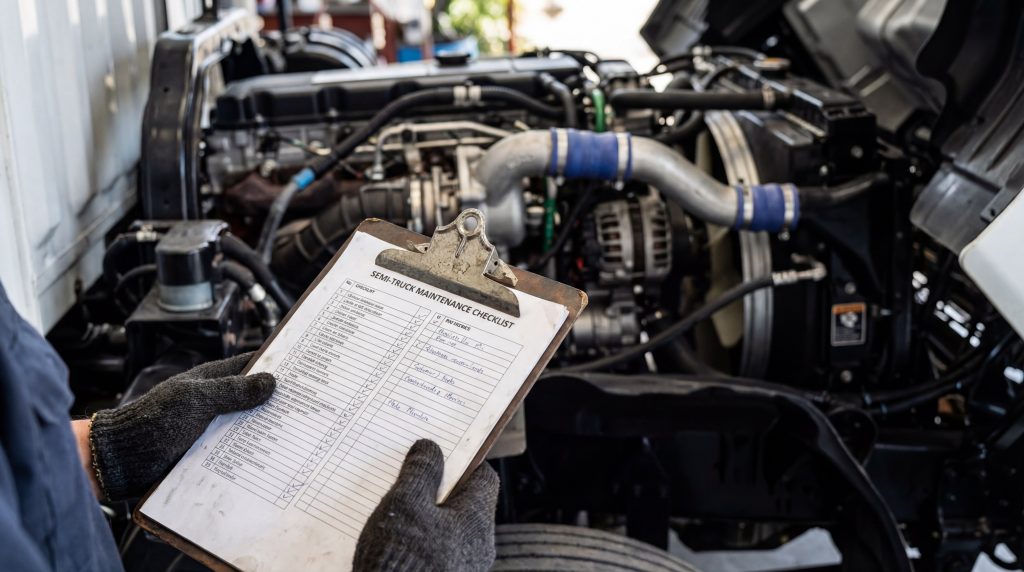
This document is a standardized set of inspection protocols and service tasks designed to ensure the continuous operational integrity of heavy-duty vehicles. A professional semi truck maintenance schedule categorizes tasks into daily pre-trip, weekly, and mileage-based service intervals. It serves as the master record for your vehicle’s health and regulatory compliance.
Definition of Preventive Care
Preventive care is the continuous upkeep and servicing of your commercial vehicle to maximize its lifespan. It involves moving beyond “fixing what is broken” to “maintaining what is working.”
- Standardized fluid sampling protocols.
- Mandatory bolt torque verifications.
- Systematic visual inspections.
Consider this perspective: a checklist is essentially a roadmap for the long-term survival of your capital investment.
Routine Inspection Cycles
Categorizing tasks into specific intervals ensures that high-wear items are checked frequently while long-term components aren’t forgotten. These cycles are typically divided by mileage or hours of operation.
- Daily pre-trip and post-trip walkarounds.
- Monthly deep-dive mechanical reviews.
- Annual comprehensive system overhauls.
The logic is clear: frequent checks on safety items like lights and tires prevent the most common DOT violations.
Key Takeaway
| Interval | Focus Areas | Responsibility | |
|---|---|---|---|
| Daily | Safety, Fluids, Tires | Driver | |
| Monthly | Brakes, Suspension, Battery | Mechanic | |
| Annual | Engine Tune-up, Frame Integrity | Certified Tech |
Implementing a tiered inspection schedule ensures that no component, regardless of its service life, is overlooked by the maintenance team.
How does a checklist save you money?

It saves money by preventing catastrophic engine or transmission failures that cost thousands in emergency repairs and roadside assistance. By using a semi truck maintenance schedule, you identify minor issues like a
20hosebeforeitcausesa
20,000 engine seizure. Proactive care also helps maintain the resale value of your fleet assets over time.
Avoiding Emergency Repairs
The cost difference between a planned shop visit and an emergency roadside call is often ten-fold. Beyond the repair itself, the hidden costs of towing and lost service hours can cripple a small fleet.
- Elimination of emergency towing fees.
- Reduced reliance on expensive “out-of-network” mechanics.
- Avoidance of late-delivery penalties and contract losses.
Here is the thing: a small leak today is a massive repair bill tomorrow if it is ignored.
Improving Fuel Efficiency
Well-maintained engines and properly calibrated tires significantly reduce rolling resistance and optimize combustion. A truck that is “running right” consumes less fuel per mile, which is your largest variable expense.
- Optimization of air-to-fuel ratios through clean filters.
- Reduction of drag from properly aligned axles.
- Maintenance of optimal tire rolling resistance.
Think about it. A mere 1% increase in fuel efficiency can save thousands of dollars across a fleet annually.
Key Takeaway
| Expense Type | Proactive Cost | Reactive Cost | |
|---|---|---|---|
| Fluid Leak | $150 (Seal) | $5,000+ (Failure) | |
| Tire Issue | $500 (Replace) | $2,000+ (Blowout/Towing) | |
| Brake Wear | $300 (Pads) | $1,500+ (Drum/S-Cam) |
Comparing proactive versus reactive costs highlights that neglect is the most expensive way to operate a heavy-duty transportation business.
Does the checklist cover vital fluids?

Yes, a professional semi truck maintenance schedule prioritizes the monitoring of oil, coolant, power steering, and transmission fluids to prevent thermal damage. Monitoring these levels prevents engine seizure and transmission slippage under heavy loads. Fluid analysis can also reveal internal engine wear that is not visible to the naked eye.
Vital Engine Fluids
Engine oil and antifreeze are the lifeblood of your powertrain, responsible for lubrication and thermal regulation. Without proper levels, friction and heat will destroy internal components within minutes.
- Oil level and contamination checks.
- Coolant pH and freeze point testing.
- Power steering fluid level verification.
Look at this: the color and smell of your oil can tell you more about engine health than any computer sensor.
Detecting Silent Leaks
Inspecting the undercarriage for pooling or dripping helps identify transmission and air system vulnerabilities. Many leaks only occur under pressure, making a post-trip inspection just as vital as a pre-trip one.
- Checking transmission seals for seepage.
- Verifying differential oil levels and vent health.
- Inspecting wiper fluid reservoirs and lines.
The reason is simple: a “silent leak” can empty a critical reservoir over a long-haul run, leading to total system failure.
Key Takeaway
| Fluid Type | Inspection Frequency | Critical Indicator | |
|---|---|---|---|
| Engine Oil | Daily | Level and Viscosity | |
| Coolant | Weekly | Clarity and pH Level | |
| Power Steering | Monthly | Aeration or Darkness |
Maintaining fluid integrity is the single most effective way to prevent the high-cost “major failures” that typically end a truck’s service life.
Are tires included in the inspection?
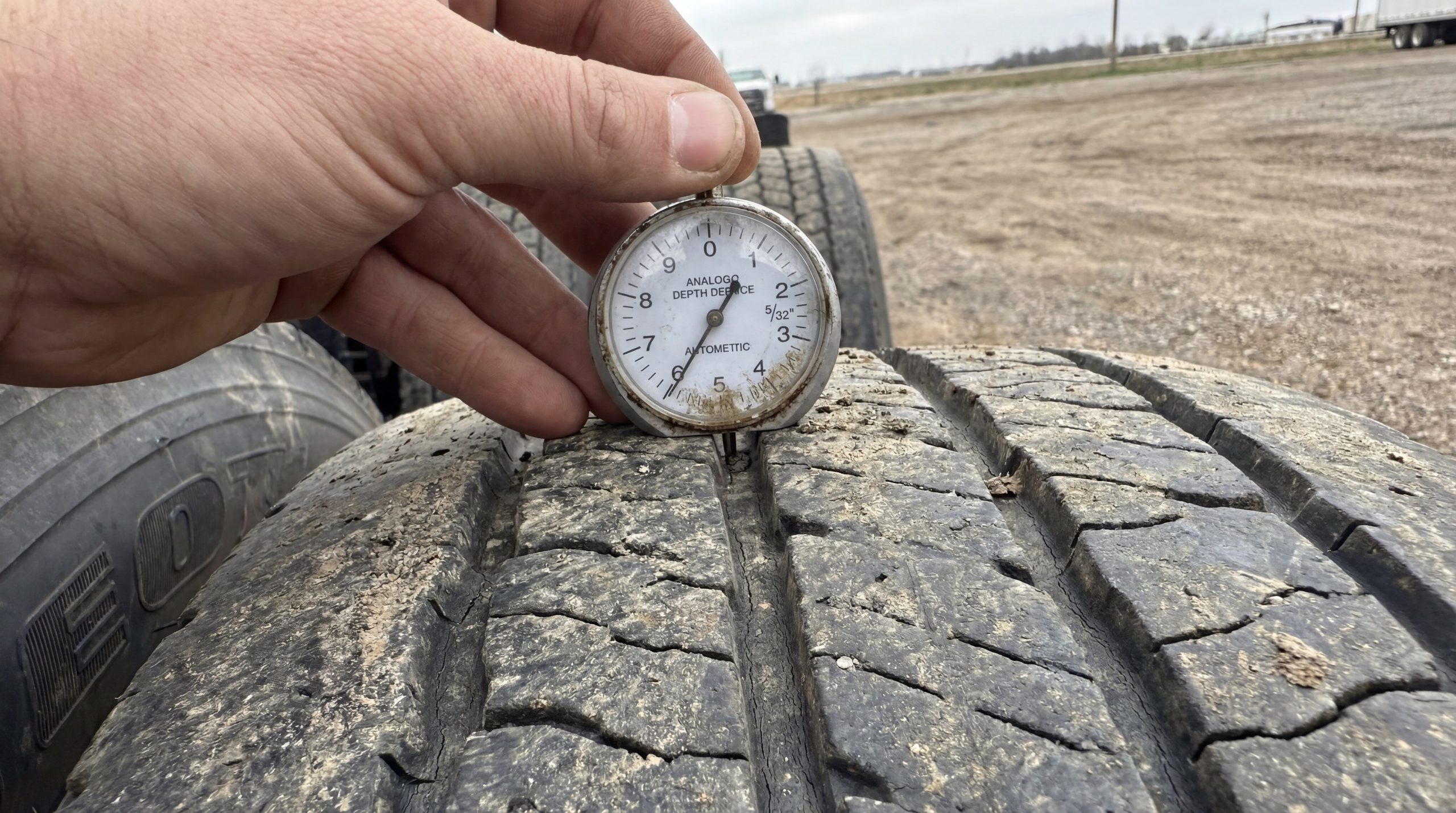
Tires are central to the semi truck inspection schedule, focusing on tread depth, sidewall integrity, and pressure calibration for safety and efficiency. Degraded tires pose major risks to the driver and the public, especially during heavy-load highway runs. Regular calibration prevents blowouts and ensures the vehicle handles correctly under varying weather conditions.
Monitoring Tread Depth
Federal regulations are very specific about how much rubber must remain on your tires to stay street-legal. Using a tread depth gauge is the only way to ensure compliance and wet-weather traction.
- Steer tires must have 4/32 of an inch.
- Drive and trailer tires require 2/32 of an inch.
- Inspection for uneven wear patterns (cupping/feathering).
Consider this perspective: tires are the only part of your 80,000-pound rig that actually touches the road.
Managing Air Pressure
Underinflated tires generate excessive heat and increase fuel consumption, while overinflated tires are prone to impact damage. Proper pressure management extends the life of the tire casing for future retreading.
- Check pressure when tires are cold.
- Verify valve stem caps are present and tight.
- Inspect for sidewall bulges or deep cuts.
Here is the thing: a tire blowout isn’t just a delay; it’s a high-velocity event that can damage the truck’s body and fenders.
Key Takeaway
| Tire Position | Min Tread Depth | Pressure Goal | |
|---|---|---|---|
| Steer Axle | 4/32″ | 100-110 PSI | |
| Drive Axles | 2/32″ | 95-105 PSI | |
| Trailer Axles | 2/32″ | 95-105 PSI |
Proper tire maintenance ensures that your fleet remains compliant with federal safety standards while maximizing the return on your rubber investment.
Is the braking system checked thoroughly?
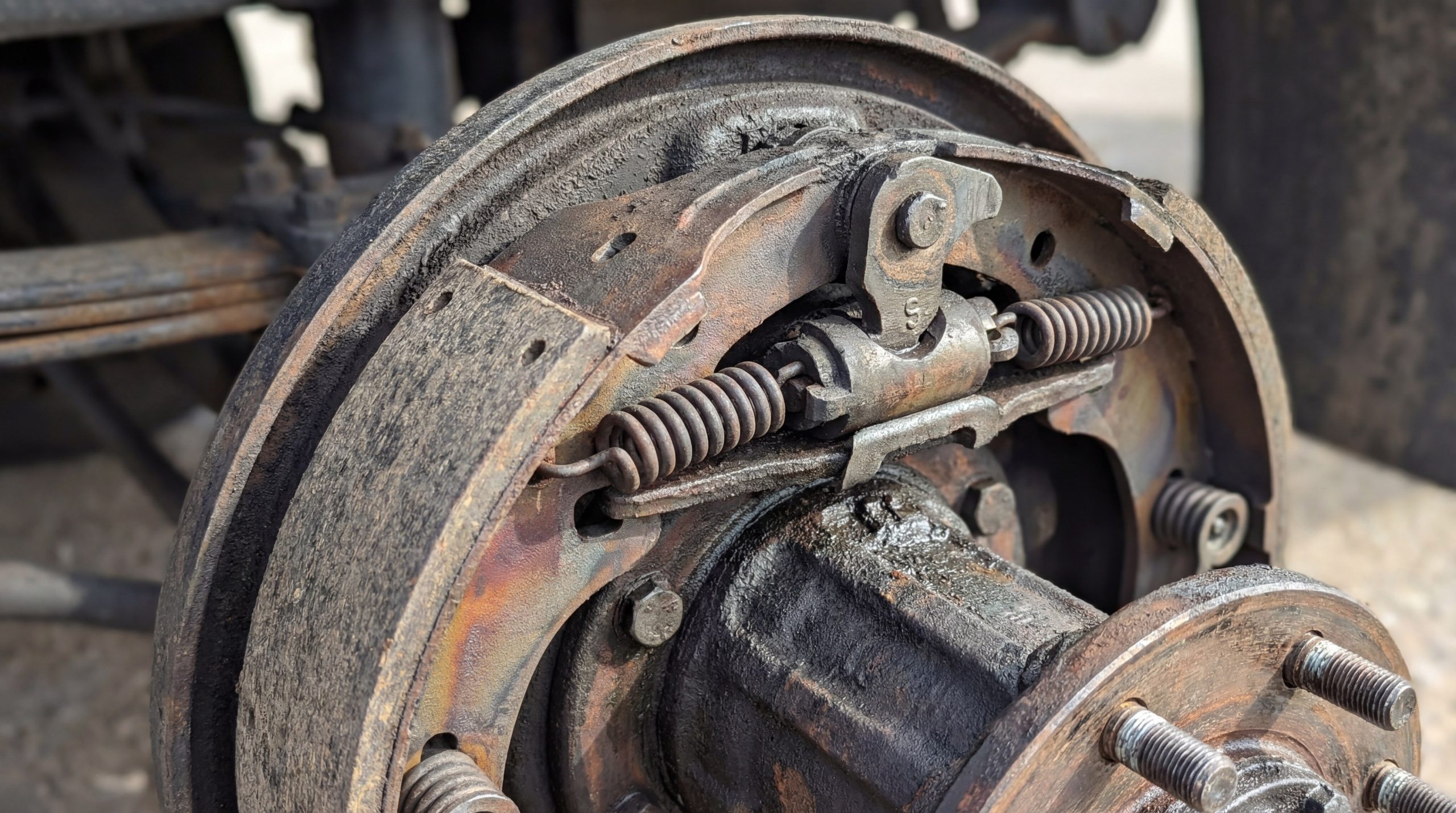
A thorough semi truck maintenance schedule includes detailed inspections of brake pads, drums, and pneumatic lines to ensure the vehicle meets federal stopping distance requirements. Brakes see heavy use and can wear out quickly under the stress of mountain descents and heavy cargo. Ensuring mechanical integrity protects the operator and reduces the risk of fatal accidents.
Brake Pad and Drum Health
Inspecting lining material for wear is essential to meet regulatory minimum widths and maintain stopping power. Heat-cracked drums or glazed pads can lead to “brake fade” during critical maneuvers.
- Measurement of pad lining thickness.
- Visual check for drum heat cracks or blue spots.
- Inspection of slack adjusters for proper travel.
Think about it. If you can hear your brakes squealing, the damage to the drums has likely already begun.
Air Line Leak Detection
Testing the pneumatic system for audible leaks is a critical step in verifying that the truck can maintain pressure during repeated braking. A failing air line can lead to the trailer brakes locking up unexpectedly or failing to engage.
- Listen for hissing at the glad hands.
- Check hoses for dry rot or abrasions.
- Verify air compressor buildup time is within spec.
Look at this: air leaks are one of the most common reasons for a truck to be placed “out of service” during a roadside inspection.
Key Takeaway
| Component | Warning Sign | Action Required | |
|---|---|---|---|
| Brake Pads | Thinning under 1/4″ | Immediate Replacement | |
| Air Lines | Audible Hissing | Seal or Hose Swap | |
| Slack Adjuster | Excessive Travel | Adjustment/Service |
Consistent braking system oversight is the most vital safety habit a fleet manager can instill in their drivers and maintenance crews.
Why prioritize engine air filters?
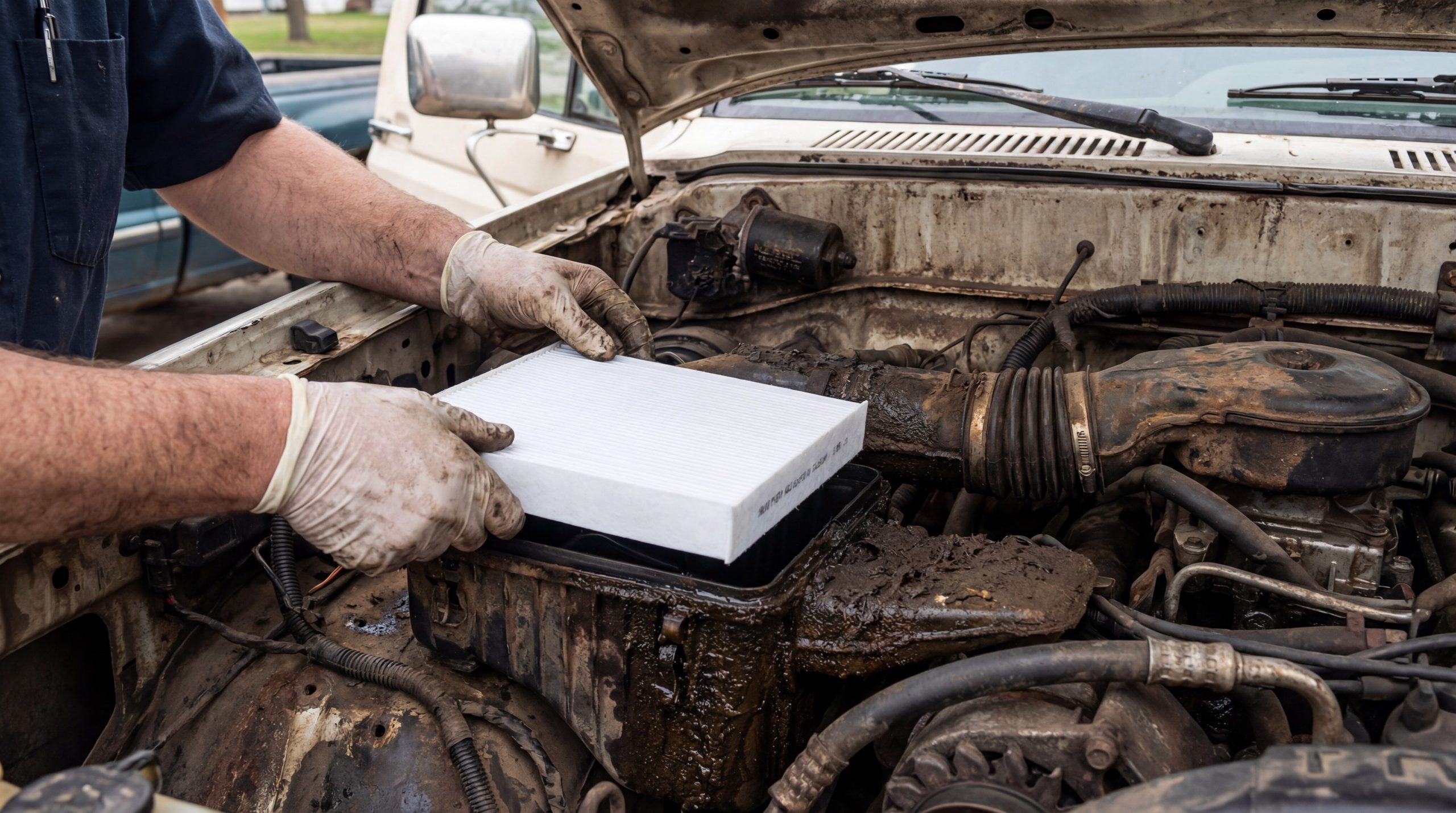
Air filters are prioritized on a semi truck inspection checklist because they prevent engine “suffocation” and soot buildup, directly impacting fuel economy. Clean filters ensure a steady flow of oxygen, which is required for efficient diesel combustion. Neglecting the air intake system can lead to premature turbocharger wear and decreased horsepower.
Engine Performance Gains
A clean filter allows the turbocharger to work less to provide the necessary boost pressure for the engine. When the engine breathes easily, it produces less exhaust soot, which extends the life of your DPF system.
- Improved throttle response.
- Lower exhaust gas temperatures.
- Reduced strain on the induction system.
The reason is simple: an engine is essentially a giant air pump; if you restrict the intake, performance suffers immediately.
Replacement Intervals
The ideal timeframe between air filter changes depends heavily on your route and the local environment. Dusty rural roads will clog a filter much faster than clean, paved interstates in high-humidity areas.
- Check for filter discoloration (gray/brown).
- Inspect intake housing for debris or water.
- Monitor dashboard “filter restriction” gauges.
Consider this perspective: a
50airfilteristheprimarybodyguardfora
30,000 engine.
Key Takeaway
| Driving Condition | Filter Life | Inspection Trigger | |
|---|---|---|---|
| Highway/Clean | 30,000 Miles | Visual Check | |
| Construction/Dust | 10,000 Miles | Restriction Gauge | |
| Urban/Polluted | 20,000 Miles | Performance Drop |
Frequent air filter replacement is a low-cost maintenance task that provides one of the highest returns on investment for engine longevity.
Are electrical systems on the list?
Electrical systems are included in every semi truck maintenance schedule to verify that all safety lighting and charging components are fully operational. Checking battery banks for corrosion ensures the alternator maintains a steady charge throughout long hauls. Reliable lighting is non-negotiable for road visibility and avoiding “fix-it” tickets from law enforcement.
Electrical System Integrity
The battery bank and alternator are the heart of your truck’s electronic controls and comfort systems. Corroded terminals or loose grounds can cause intermittent sensor failures that are difficult and expensive to diagnose.
- Cleaning battery terminals of acid buildup.
- Testing alternator output voltage under load.
- Inspecting the main wiring harness for chaffing.
Think about it. A single loose ground wire can cause a dashboard to light up like a Christmas tree, causing unnecessary panic.
External Lighting Checks
Verifying that turn signals, hazards, and brake lights are fully operational is a primary safety requirement. Many modern LED systems are more durable but still require checks for cracked housings that allow moisture in.
- Walkaround check of all marker lights.
- Verification of high and low beam headlights.
- Testing of the 7-way trailer connection plug.
Look at this: a single burnt-out taillight is enough for a DOT officer to pull you over and start a full Level 1 inspection.
Key Takeaway
| Electrical Component | Service Interval | Common Failure | |
|---|---|---|---|
| Batteries | 6 Months | Terminal Corrosion | |
| Alternator | Annual | Diode Failure | |
| Safety Lights | Every Shift | Cracked Lens/Moisture |
Proactive electrical maintenance ensures that your vehicle remains visible and that critical computer systems have the stable power they need to operate.
What cab items require regular checks?
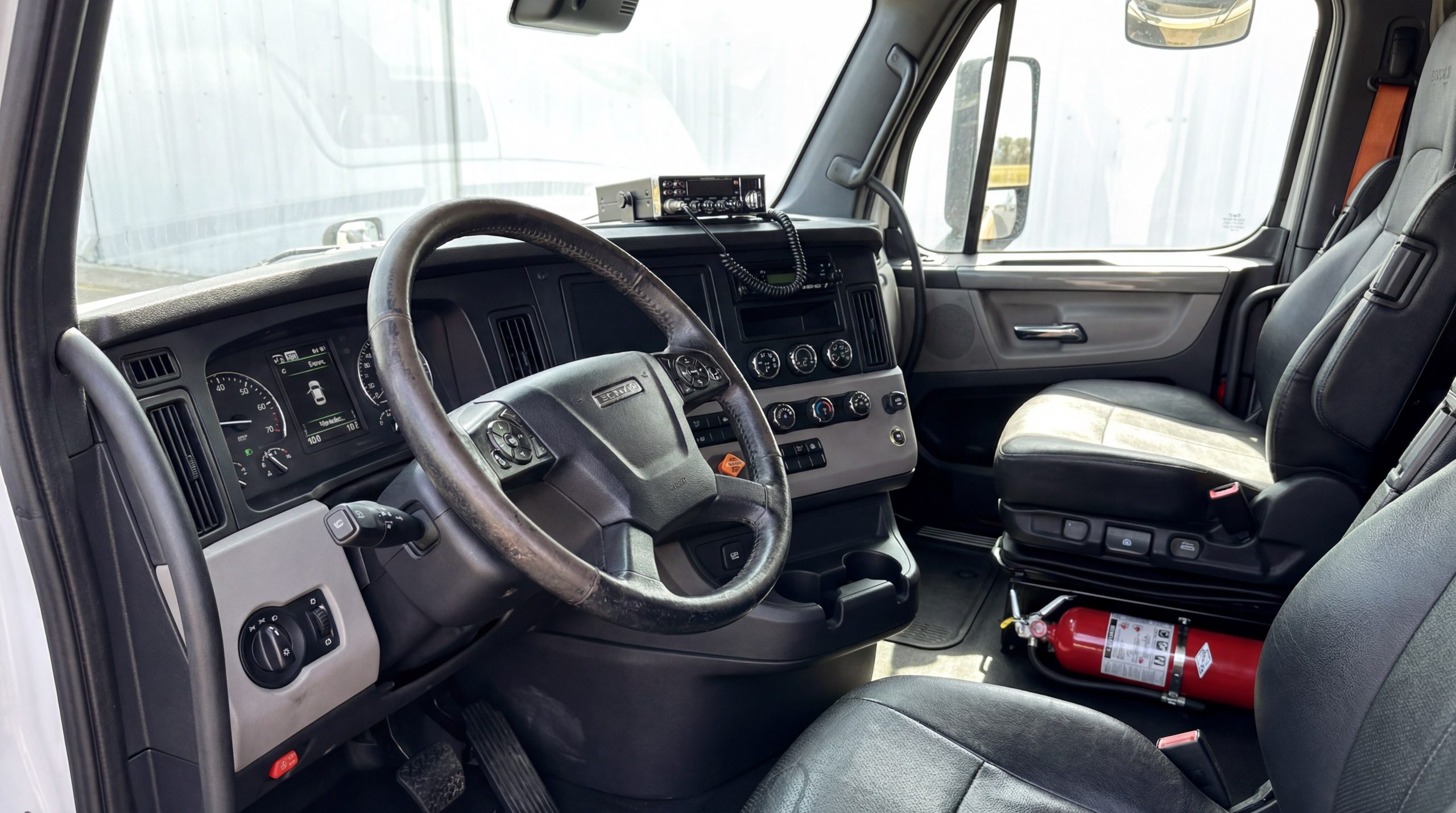
Inside the cab, a semi truck maintenance checklist requires you to inspect seat belts, dashboard gauges, climate control, and emergency equipment. This ensures operator comfort and control, which are vital for reducing driver fatigue on long-distance routes. A functional cab environment is not just about comfort; it is a regulatory requirement for safe operation.
Operator Comfort and Control
Testing the ergonomic and control features of the cab keeps the driver focused on the road rather than distracted by mechanical annoyances. Items like mirrors and wiper blades must be in perfect condition to ensure visibility in poor weather.
- Verification of seat belt tension and latching.
- Testing of AC, heat, and defrost functionality.
- Inspection of steering wheel play and horn.
The logic is clear: a comfortable driver is a safer and more productive driver.
Emergency Equipment
Your cab must be equipped with the necessary tools to handle a roadside incident safely. If these items are missing or expired, you face immediate fines and increased liability during an accident.
- Checking fire extinguisher charge and date.
- Verification of three reflective triangles.
- Testing of dash warning lights and buzzers.
Think about it. You never want to reach for a fire extinguisher only to find it is empty or buried under gear.
Key Takeaway
| Cab Category | Priority Item | Inspection Goal | |
|---|---|---|---|
| Safety | Seat Belts | No Fraying/Solid Latch | |
| Emergency | Fire Extinguisher | Pressure in Green Zone | |
| Visibility | Wiper Blades | No Streaking/Tearing |
Maintaining the interior of the vehicle is as important as the engine, as it directly impacts the human element of the transportation equation.
How do you update your maintenance list?

You update your fleet maintenance schedule by incorporating seasonal adjustments and analyzing real-world wear data from post-trip reports. As technology changes and your fleet ages, your inspection protocols must evolve to address new vulnerabilities. This data-driven approach ensures your maintenance resources are focused on the areas with the highest risk of failure.
Adapting to Seasonal Changes
Winter weather requires a specialized focus on battery health, air dryer filters, and fuel heaters to prevent “gelled” diesel. Conversely, summer inspections should prioritize the cooling system and air conditioning to prevent overheating.
- Winterization of air systems and batteries.
- Summer pressure testing of the radiator.
- Seasonal adjustment of tire pressures.
Look at this: the issues you face in January are rarely the same ones that will ground your fleet in July.
Incorporating Fleet Feedback
Drivers spend the most time with the machines and often notice subtle changes in vibration or sound before a sensor does. Using their post-trip reports to update your checklist ensures that real-world observations drive your maintenance priorities.
- Analysis of recurring driver complaints.
- Adjustment of intervals based on part failure rates.
- Refinement of inspection steps for specific truck models.
The reason is simple: data from the field is the most accurate predictor of where your next breakdown will happen.
Key Takeaway
| Update Source | Frequency | Primary Benefit | |
|---|---|---|---|
| Seasonal Change | Twice Yearly | Prevents Weather Failure | |
| Driver Reports | Weekly | Catch Sub-threshold Wear | |
| Parts Analysis | Annually | Optimizes Shop Spending |
Continuous improvement of your maintenance protocols is the only way to stay ahead of the rising costs of heavy-duty transportation.
Summary Guidelines for Fleet Success
A disciplined approach to vehicle care is the foundation of a successful logistics operation. By following a structured maintenance strategy, you protect your drivers, your cargo, and your capital from the hazards of the road. Brontec believes that superior protection is not an option but a prerequisite for the modern logistics industry. To learn more about high-performance protection products for your fleet, please contact us today .
Frequently Asked Questions
How often should a semi-truck maintenance checklist be performed?
Daily for basic safety. While pre-trip and post-trip walkarounds are mandatory daily, deeper mechanical inspections should follow mileage-based intervals, typically every 10,000 to 20,000 miles.
What is the best way to prevent common maintenance downtime?
Proactive fluid and tire monitoring. Most unscheduled stops are caused by preventable issues like tire blowouts or cooling system leaks that a simple visual check would have caught.
How do I know if my brakes need immediate service?
Listen and measure. If you hear screeching, feel a vibrating pedal, or measure pad thickness under 1/4 inch, you must take the truck in for professional servicing immediately.
Can I perform these maintenance checks myself?
Yes, for visual and basic fluid checks. Drivers are expected to handle daily inspections, but complex diagnostics, engine work, and internal brake repairs should always be handled by certified technicians.
What’s the best approach for winter maintenance?
Focus on the air system and batteries. Cold weather is brutal on pneumatic lines and battery chemistry; ensuring your air dryer is fresh and terminals are clean is the best defense against winter stalls.