
You should keep a comprehensive inventory of mechanical tools, emergency recovery gear, winter equipment, and personal survival supplies in your truck toolbox. Facing the open road without these essentials is a massive gamble that often results in expensive towing fees and dangerous delays. If you are caught in a remote area with a simple mechanical failure and no way to fix it, your delivery schedule and your safety are immediately compromised. Investing in a professional-grade tool box for semi truck drivers provides the secure, weatherproof environment you need to maintain a mobile workshop that solves problems before they become disasters.
1. What are the absolute essential supplies for daily operations?
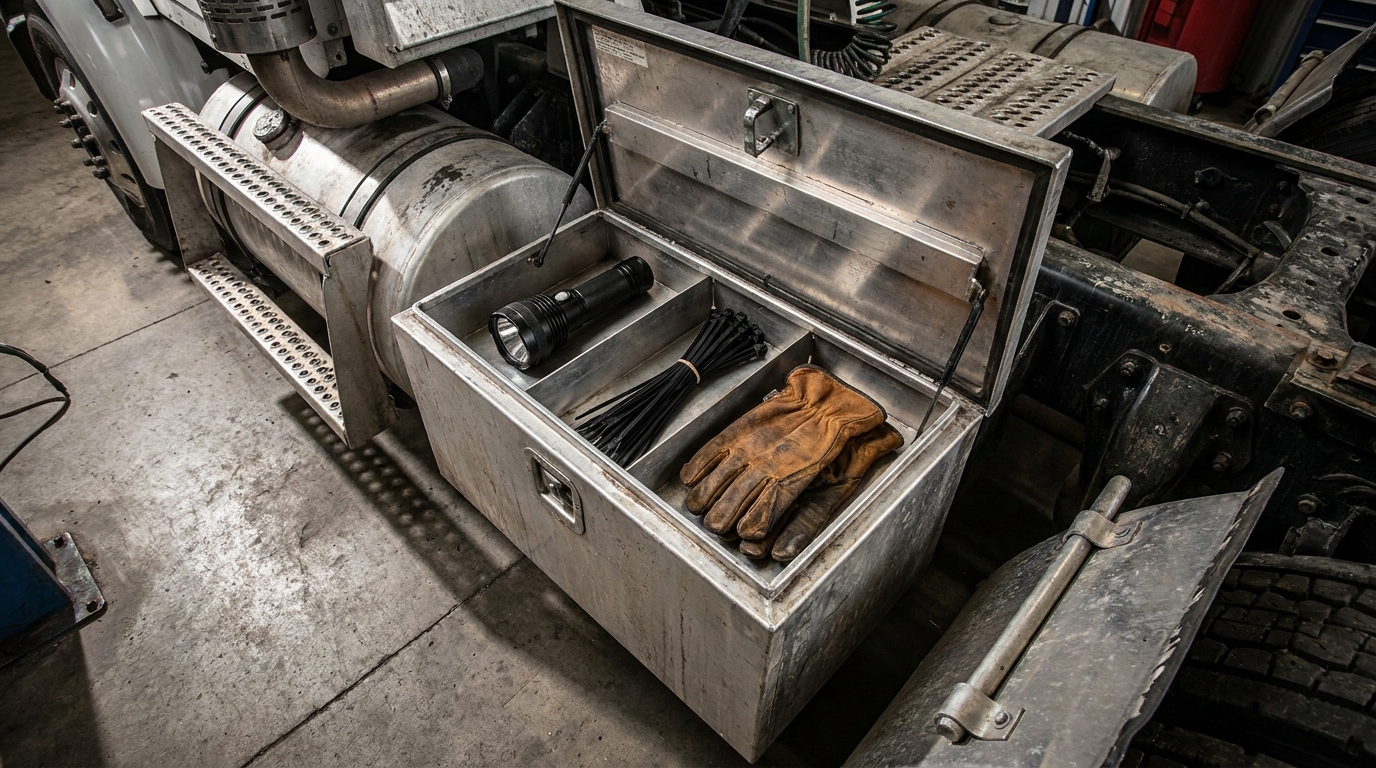
Daily essentials include high-visibility LED flashlights, industrial-strength zip ties, duct tape, and reinforced work gloves. Maintaining a tool box for semi truck drivers effectively requires you to prioritize items used during every pre-trip inspection and minor adjustment. Believe it or not, these small consumables often prevent major mechanical issues from grounding your rig during a tight delivery window.
Which consumables offer the most versatility?
Zip ties and duct tape act as the ultimate temporary fasteners for loose wiring or vibrating components. You should keep a multi-pack of ties in various sizes to ensure you can secure anything from a mudflap to an air line. Think about it: a five-cent plastic tie can save you from a thousand-dollar DOT fine during a roadside check.
- High-lumen LED flashlight
- Spare batteries
- Heavy-duty zip ties
- Duct tape rolls
Key Takeaway: Keeping a stocked supply of daily consumables ensures you can handle the “nuisance” repairs that occur during every long-haul trip.
| Item | Quantity | Primary Purpose |
|---|---|---|
| Zip Ties | 50 Pack | Securing loose lines |
| Duct Tape | 1 Roll | Temporary seals |
| Flashlight | 1 Unit | Low-light inspection |
Effective management of these small assets is the cornerstone of a professional driver’s maintenance routine.
2. Which hand tools provide the most utility on the road?
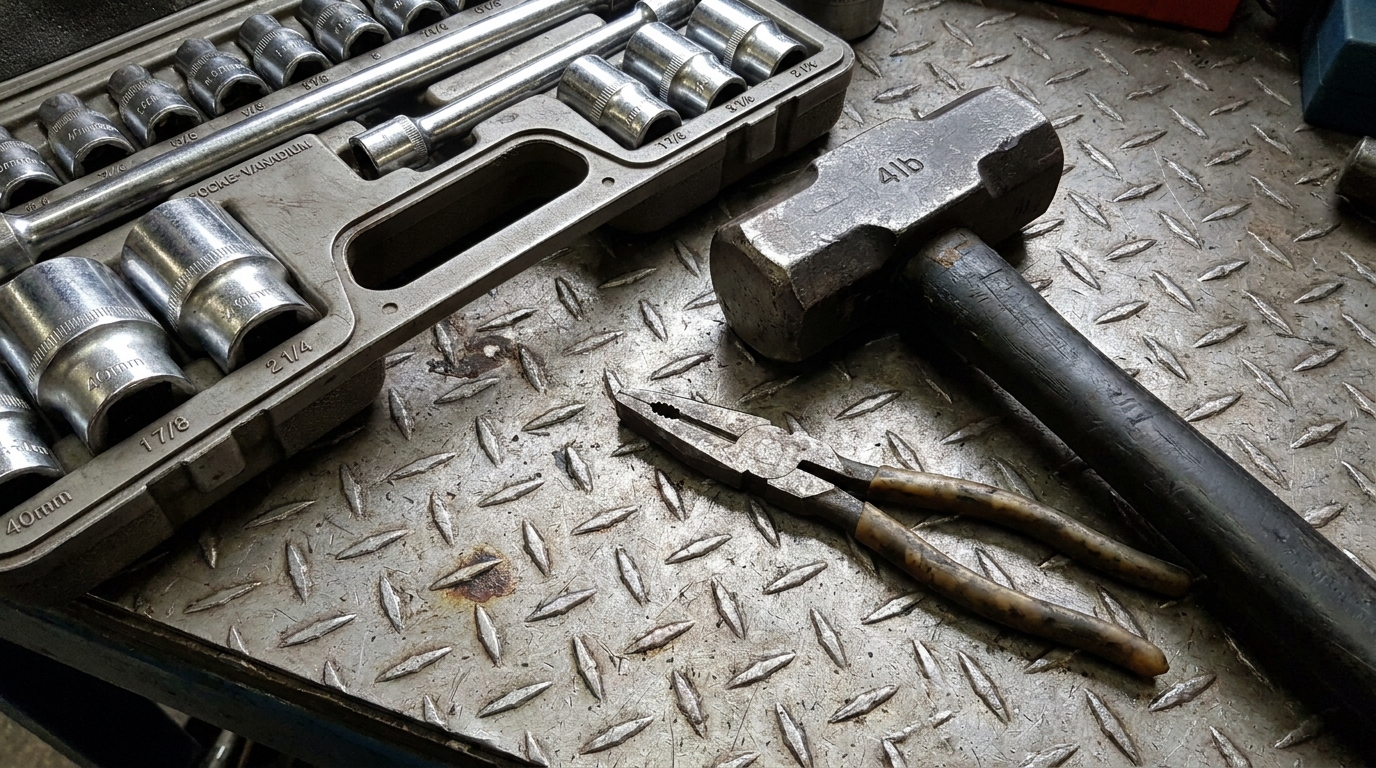
A high-torque socket set, adjustable wrenches, a 4-pound sledgehammer, and heavy-duty pliers provide the most utility for a tool box for semi truck drivers. You need tools that are specifically designed to handle the scale and torque requirements of Class 8 vehicle components. Here is the kicker: using standard consumer-grade tools on a semi truck often leads to stripped bolts and broken equipment.
Should you carry a full mechanic’s set or a multitool?
A complete 1/2-inch drive socket set is necessary for structural chassis work and engine bay adjustments. While a multitool is convenient for cab interiors, it lacks the leverage required for exterior hardware. You should also include a pry bar and bolt cutters to deal with stubborn sliding tandems or damaged security seals.
- 1/2-inch drive socket set
- 4lb Sledgehammer
- Large adjustable wrench
- Heavy-duty pry bar
Key Takeaway: Carrying heavy-duty hand tools allows you to perform structural adjustments and repairs that would otherwise require a service truck.
| Tool Category | Key Items | Application |
|---|---|---|
| Striking | 4lb Hammer | Sliding tandems |
| Torque | Socket Set | Chassis bolts |
| Gripping | Vise-grips | Rusted fasteners |
High-quality iron tools are an investment that pays for itself the first time you avoid a roadside assistance call.
3. How should you prepare for mechanical emergencies?
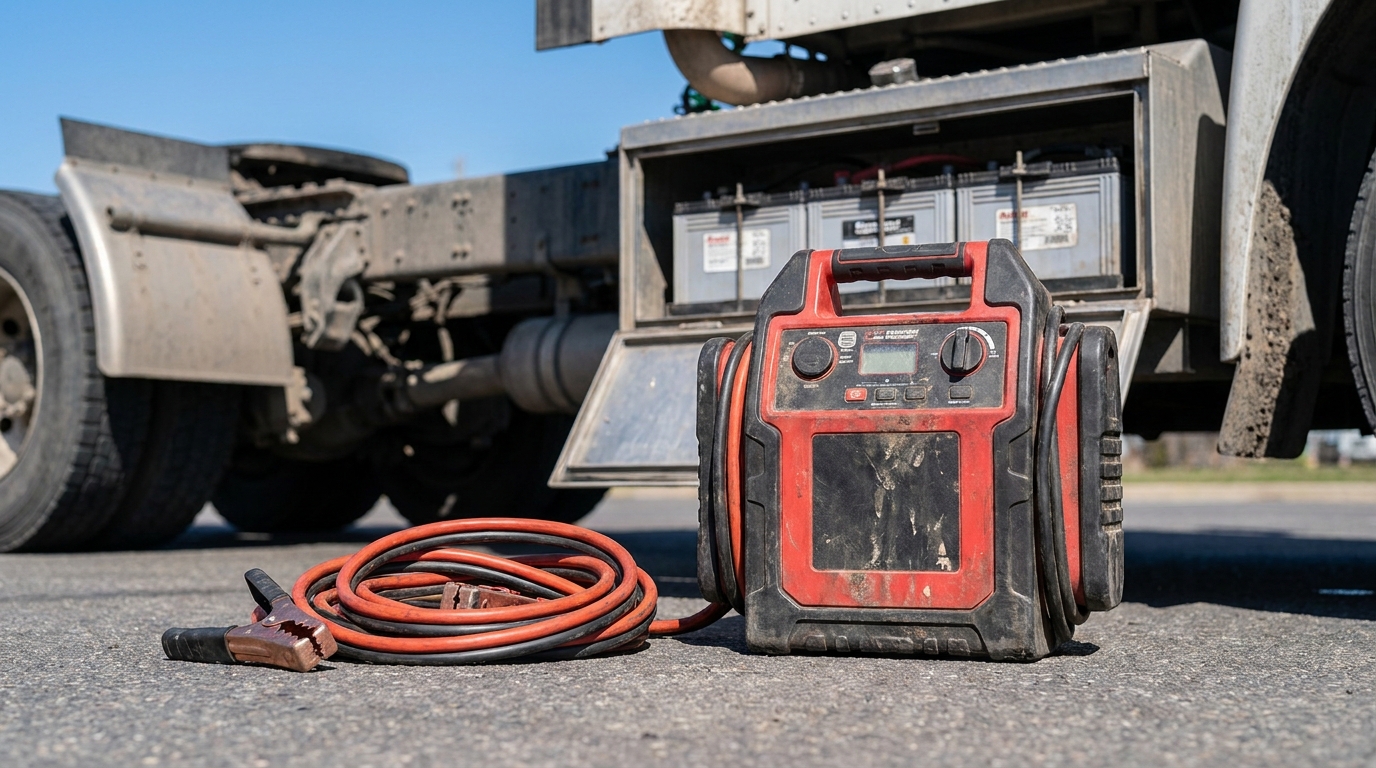
Emergency preparation requires you to carry heavy-duty jumper cables, a portable jump starter, and a complete set of replacement air line seals. Equipping your tool box for semi truck drivers for sudden failures is the only way to maintain your independence on the highway. But wait, there is more to emergency readiness than just having the parts; you must know where they are.
What air system components are most critical?
Glad-hand seals and spare air hoses are non-negotiable items for any driver pulling a trailer. You should also keep a tire sealant kit and a portable air inflator that can tap into your truck’s existing tanks. These small items allow you to fix air leaks that would otherwise trigger an automatic fail during a safety inspection.
- Heavy-gauge jumper cables
- Glad-hand seals
- Spare fuses (Assorted)
- Portable jump starter
Key Takeaway: Mechanical emergency gear transforms your toolbox into a survival kit that keeps your wheels turning despite component failures.
| Emergency Item | Frequency of Use | Criticality |
|---|---|---|
| Jump Starter | Low | Extreme |
| Air Seals | Moderate | High |
| Spare Fuses | Moderate | High |
Maintaining these specific emergency backups ensures that a minor part failure does not end your work week prematurely.
4. What equipment is vital for surviving winter weather?
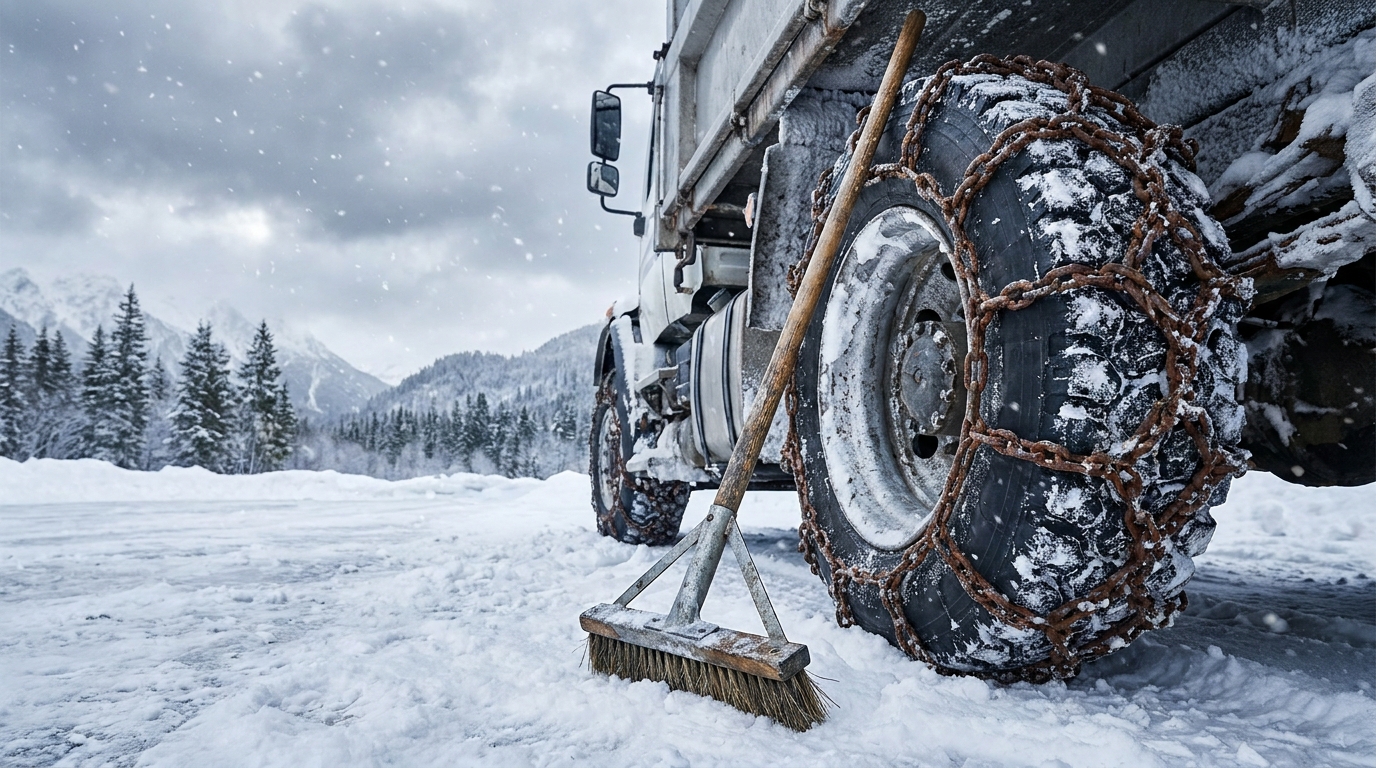
Winter survival depends on having tire chains, extendable snow brushes, ice scrapers, and traction aids stored in your tool box for semi truck drivers. When the temperature drops and visibility vanishes, your ability to maintain traction is the only thing keeping you on the road. In plain English, if you don’t have chains in the mountains, you are likely staying put for the duration of the storm.
How do you maintain visibility and grip in ice?
Traction boards or bags of sand provide immediate grip when you are stuck in a frozen loading dock or parking lot. You should also carry de-icer spray for frozen locks and windshield wiper fluid rated for sub-zero temperatures. The truth is, a simple frozen lock can delay your entire schedule if you aren’t prepared with the right chemicals.
- steel tire chains for winter hauls
- Extendable snow brush
- Lock de-icer spray
- Bag of traction sand
Key Takeaway: Specialized winter equipment is a seasonal necessity that prevents you from becoming stranded during North American winter hauls.
| Winter Gear | Priority | Storage Location |
|---|---|---|
| Tire Chains | High | Bottom of box |
| Ice Scraper | High | Top of box |
| Sand/Traction | Moderate | External mount |
Preparation for cold-weather extremes is the hallmark of an experienced driver who respects the power of the elements.
5. Why are fluid maintenance items necessary in your inventory?
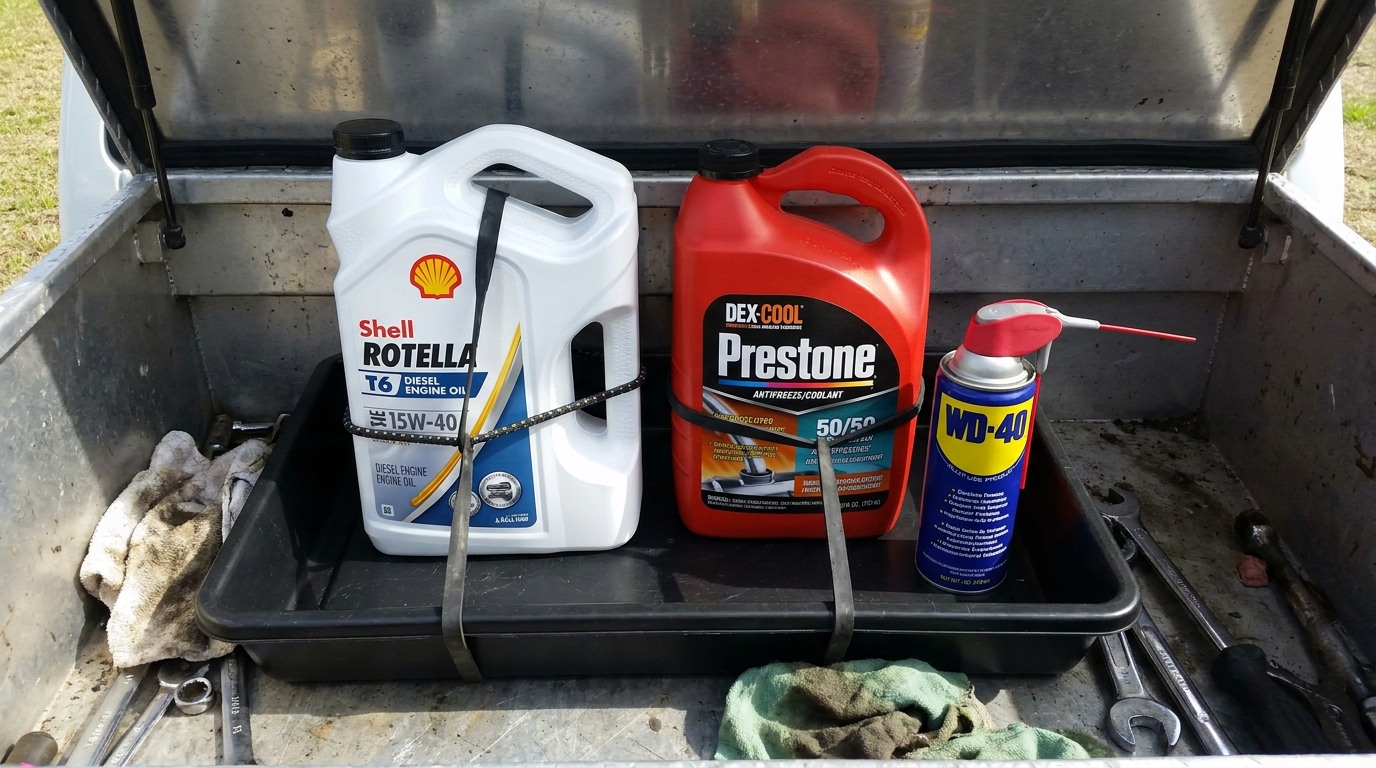
Fluid maintenance items like engine oil, coolant, and penetrating lubricants are necessary in a tool box for semi truck drivers to prevent catastrophic engine damage. You must monitor your levels constantly, as high-mileage hauls can lead to unexpected consumption or small leaks. It gets better: carrying your own fluids allows you to top off at your convenience rather than paying inflated prices at truck stops.
What fluids should you prioritize for long hauls?
A gallon of 15W-40 engine oil and a jug of pre-mixed coolant should always have a dedicated space in your storage. You should also include brake cleaner and WD-40 to help clean greasy parts or loosen hardware that has been exposed to road salt. Why does this matter? Because running an engine dry or overheating in the desert is an avoidable disaster.
- 15W-40 Engine Oil
- 50/50 Pre-mixed Coolant
- WD-40 Lubricant
- Brake Cleaner
Key Takeaway: Having a ready supply of essential fluids allows you to manage minor leaks and consumption without interrupting your route.
| Fluid | Quantity | Function |
|---|---|---|
| Engine Oil | 1 Gallon | Lubrication |
| Coolant | 1 Gallon | Heat Management |
| WD-40 | 12oz Can | Rust penetration |
Consistent fluid management is the easiest way to extend the lifespan of your powertrain and avoid heat-related failures.
6. How can cargo management tools protect your trailer load?
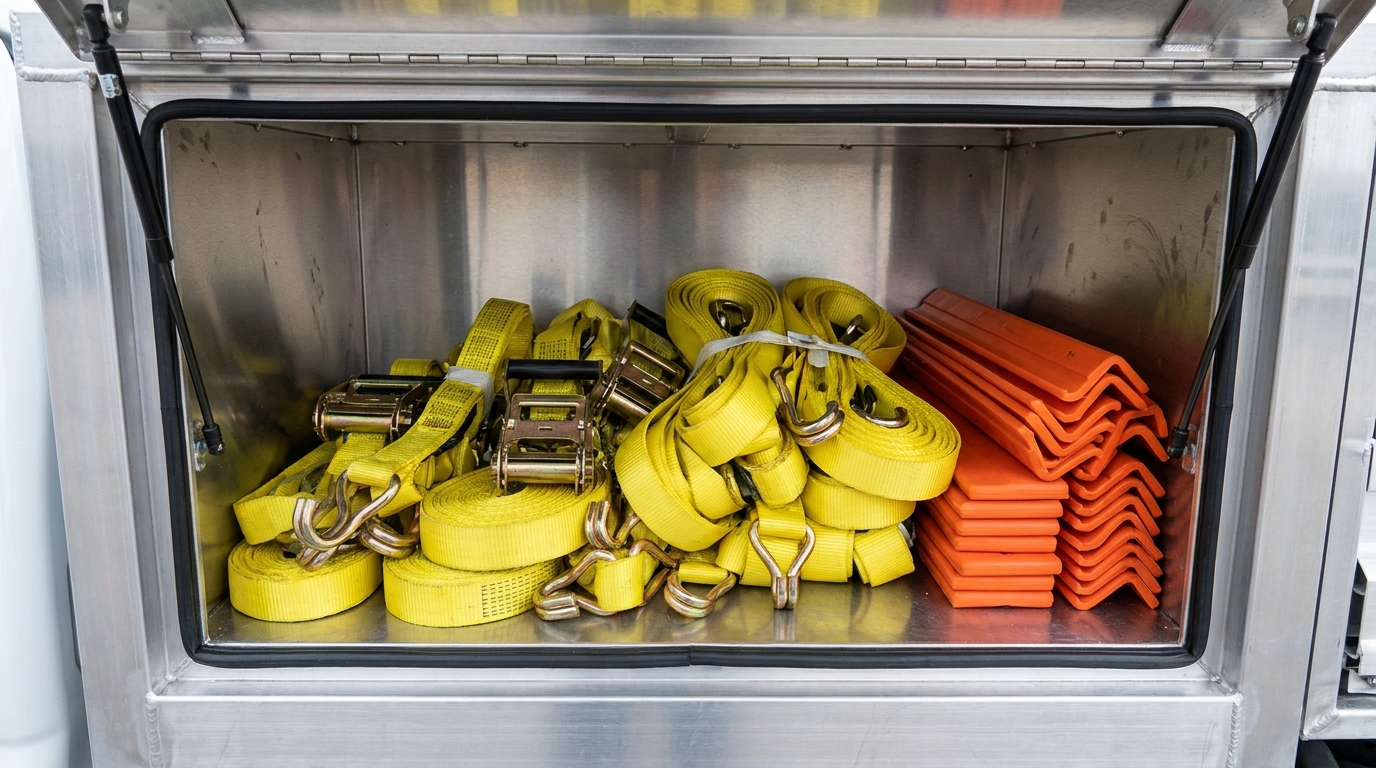
Cargo management tools like ratcheting straps, bungee cords, and edge protectors are vital for the tool box for semi truck drivers to ensure load security. You are legally responsible for the stability of your cargo, and insufficient securement can lead to heavy fines or dangerous load shifts. The best part? Having extra straps on hand allows you to assist other drivers or double-secure a particularly difficult load.
Are ratcheting straps better than bungees?
Ratcheting straps are the industry standard for heavy securement, while bungees are best used for tarping and light interior items. You should inspect your straps for frays and tears every time you use them to ensure they meet load-bearing requirements. In plain English, a single compromised strap can cause a chain reaction that destroys an entire trailer of goods.
- 2-inch ratcheting straps
- Assorted bungee cords
- Plastic edge protectors
- Heavy-duty load bars
Key Takeaway: Professional cargo securement tools protect your reputation, your load, and the safety of everyone sharing the road with you.
| Securement Tool | Best Use | Inspection Interval |
|---|---|---|
| Ratchet Straps | Heavy loads | Every use |
| Bungee Cords | Tarping | Monthly |
| Edge Protectors | Strap longevity | Every use |
Investing in high-capacity straps is a small price to pay for the peace of mind that your cargo will arrive intact.
7. What electrical and diagnostic gadgets save time?
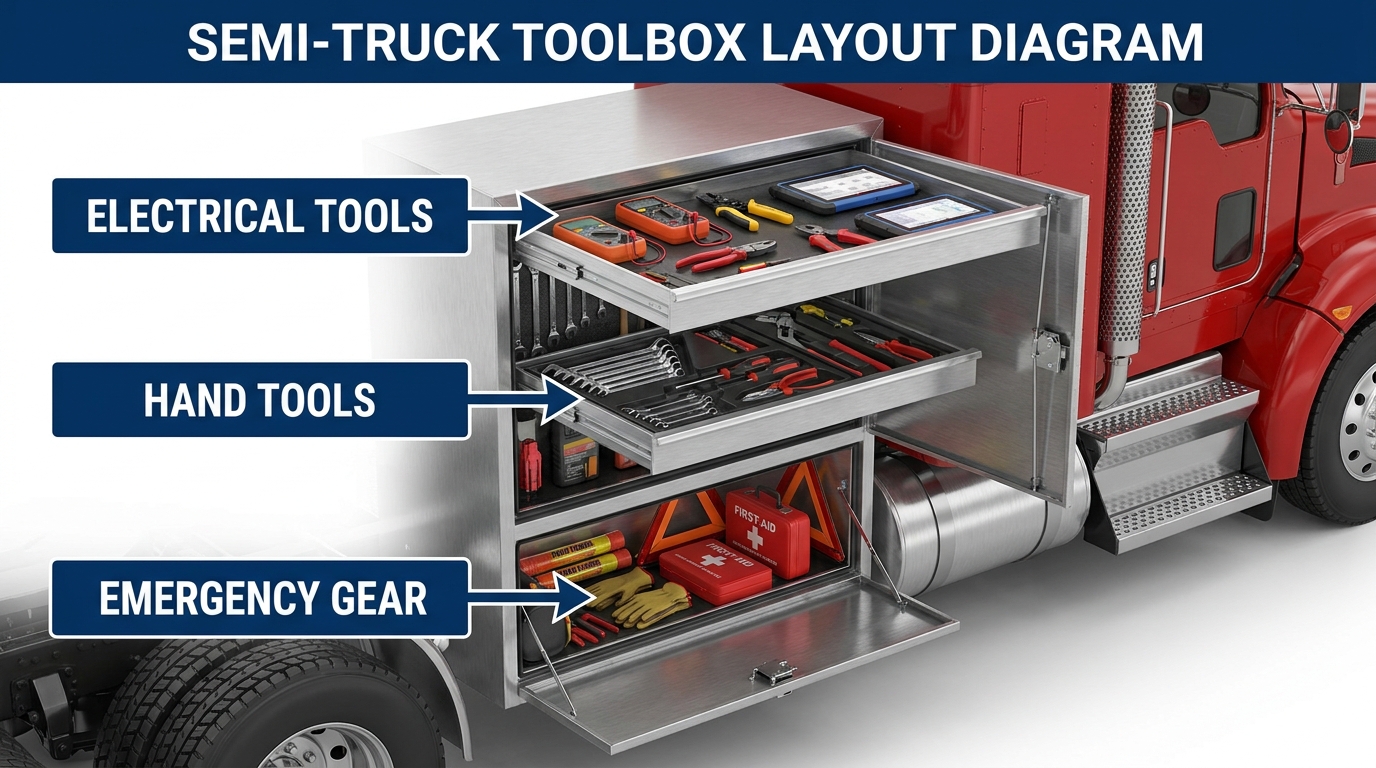
Electrical diagnostic gadgets like multimeters and circuit testers save hours of troubleshooting time in a tool box for semi truck drivers. You can quickly identify if a lighting issue is a simple blown bulb or a complex wiring ground problem. What does this mean for you? It means you can fix the problem yourself and get back on the road in minutes rather than hours.
Is a digital multimeter worth the space?
A multimeter is indispensable for checking battery health and verifying that your trailer’s pigtail is receiving proper power. You should also carry a basic OBD-II code reader to understand the specific fault codes being thrown by your truck’s computer. The truth is, knowing the “why” behind a check engine light helps you make informed safety decisions.
- Digital multimeter
- Circuit tester (12V)
- OBD-II code reader
- Electrical tape
Key Takeaway: Modern diagnostic tools allow you to communicate more effectively with maintenance crews and perform your own electrical repairs.
| Diagnostic Tool | Skill Level | Benefit |
|---|---|---|
| Multimeter | Intermediate | Precise troubleshooting |
| Circuit Tester | Basic | Quick power checks |
| Code Reader | Basic | Engine data access |
Electronic gadgets bridge the gap between traditional mechanical skill and the requirements of modern Class 8 technology.
8. Which safety and visibility items are non-negotiable?

Safety and visibility items like reflective triangles, fire extinguishers, and high-visibility vests are non-negotiable for a tool box for semi truck drivers. These items are federally mandated for a reason: they are your first line of defense during a roadside emergency. Believe it or not, many drivers forget to check the expiration dates on their fire extinguishers until it is too late.
How should you deploy visibility gear?
You must deploy three reflective triangles behind your vehicle whenever you are stopped on the shoulder of a high-speed road. You should also wear a high-visibility vest the moment you exit the cab to ensure you are seen by passing motorists in all light conditions. Think about it: your visibility is the only thing preventing a secondary collision while you are working.
- DOT reflective triangles (Set of 3)
- ABC-rated fire extinguisher
- ANSI Class 2 safety vest
- Emergency road flares
Key Takeaway: Maintaining high-quality safety gear is a legal requirement and a personal survival necessity for every professional driver.
| Safety Item | DOT Mandate | Inspection Cycle |
|---|---|---|
| Triangles | Yes | Annual |
| Fire Extinguisher | Yes | Monthly |
| Safety Vest | Recommended | Ongoing |
Rigorous attention to safety equipment ensures you are prepared for the worst-case scenarios on the highway.
9. How do specialized heavy-duty accessories improve fleet efficiency?
Specialized heavy-duty accessories like recovery straps and industrial shackles improve fleet efficiency in the tool box for semi truck drivers. These tools allow you to recover your own vehicle or assist a fellow driver in remote locations where service trucks are unavailable. But wait, there is more; having your own recovery gear means you don’t have to wait hours for a tow in hazardous conditions.
What recovery gear can handle a Class 8 truck?
A heavy-duty recovery strap rated for 80,000 pounds or more is required for the weight of a loaded semi truck. You should pair these straps with forged steel shackles that are tested to withstand the extreme forces of a heavy-duty pull. Why does this matter? Because using a light-duty strap on a semi is an invitation for a lethal snap-back.
- 80k lb Recovery strap
- 12-ton Steel shackles
- Heavy-duty snatch block
- Work lights (Magnetic)
Key Takeaway: Professional-grade recovery equipment gives you the power to manage off-road or inclement weather stuck-calls without external help.
| Recovery Tool | Capacity | Material |
|---|---|---|
| Tow Strap | 80,000+ lbs | Reinforced nylon |
| Shackles | 12+ Tons | Forged steel |
| Snatch Block | Variable | Cast iron |
Investing in high-capacity recovery gear is a strategic move for any driver operating in logging, mining, or northern routes.
10. What personal comfort items belong in a professional’s kit?
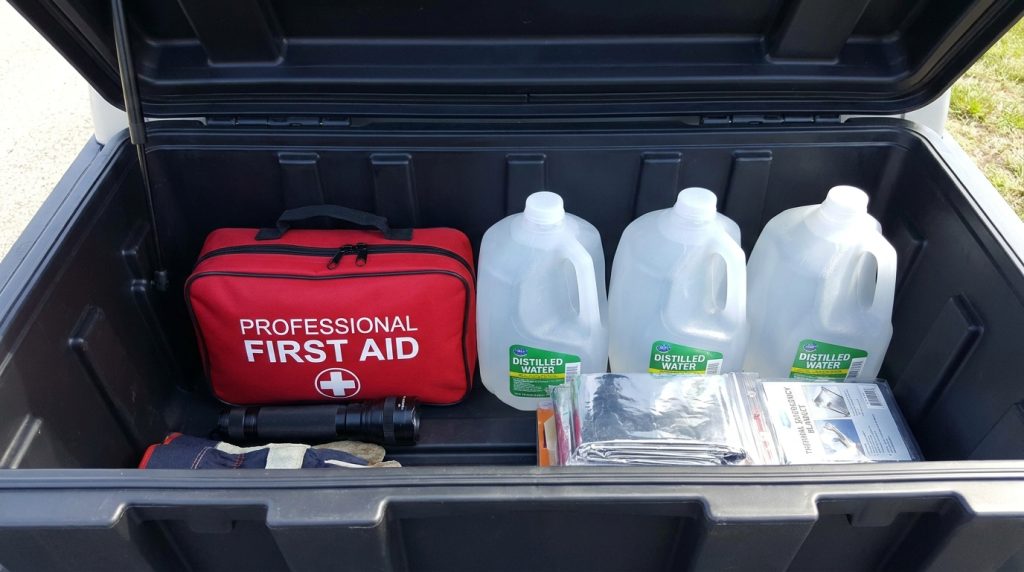
Personal comfort and survival items like first aid kits, emergency food, and water belong in every tool box for semi truck drivers. You may find yourself stranded for days in extreme weather, and your physical wellbeing depends on the supplies you have on hand. It gets better: a well-stocked first aid kit allows you to treat minor injuries on-site before they become infected or serious.
How much water and food should you store?
You should keep at least three gallons of unopened water and a 48-hour supply of non-perishable food in your external storage. Include a warm wool blanket and an extra set of dry clothes to prevent hypothermia if your truck’s heater fails. The truth is, your toolbox isn’t just for the truck; it is for the human being operating it.
- Trauma-rated first aid kit
- Non-perishable food bars
- 3 Gallons of water
- Heavy wool blanket
Key Takeaway: Personal survival gear ensures that you can withstand long-duration delays in remote environments with your health intact.
| Survival Item | Quantity | Shelf Life |
|---|---|---|
| Water | 3 Gallons | 1 Year |
| Food Bars | 10 Pack | 5 Years |
| First Aid Kit | 1 Full Kit | Check expiry |
Prioritizing your own survival needs is the final step in building a truly comprehensive and professional truck toolbox.
Frequently Asked Questions
Can I organize my toolbox to prevent tools from rattling?
Yes, you should use foam inserts or magnetic tool rails to secure heavy items and reduce noise during transit.
What’s the best material for a semi truck toolbox?
Heavy-gauge aluminum is the industry standard because it provides maximum corrosion resistance without adding significant weight to your payload.
Can I install a toolbox on any truck model?
Most toolboxes are designed for universal mounting, though specific models like Freightliner or Peterbilt may require custom brackets for the best fit.
What’s the best way to prevent my tools from rusting?
You should apply a light coat of oil to steel tools and include moisture-absorbing silica packets inside your storage box.
Can I lock my toolbox with a single key?
Yes, most professional-grade storage solutions feature high-security latches that can be keyed-alike for your entire fleet.
Investing in Your Roadside Independence
Building a comprehensive inventory for your truck toolbox is an investment in your safety, your schedule, and your professional reputation. By carrying the right mix of mechanical tools, emergency gear, and personal supplies, you eliminate the fear of the unknown that comes with long-haul trucking. Our mission is to provide North American fleets with the rugged, high-performance protection they need to conquer the most demanding routes on the continent. We take pride in our precision engineering and our commitment to the men and women who keep our economy moving. To upgrade your rig’s storage and protection, contact us today and let us help you find the perfect heavy-duty solution for your specific application.