
Commercial truck operators typically choose between aluminum and steel tool boxes based on three factors: weight, corrosion resistance, and long-term durability.
Steel tool boxes offer high structural strength and lower upfront cost, while aluminum tool boxes reduce payload weight and resist corrosion far better in harsh operating environments.
For fleets operating in northern climates, logging routes, or high-mileage highway applications, the material choice can directly affect maintenance costs, fuel efficiency, and equipment lifespan.
This guide compares aluminum and steel truck tool boxes based on real heavy-duty trucking applications, including winter performance, impact resistance, maintenance requirements, and total ownership cost.
Aluminum vs Steel Tool Boxes: Which Is Better for Payload Weight?
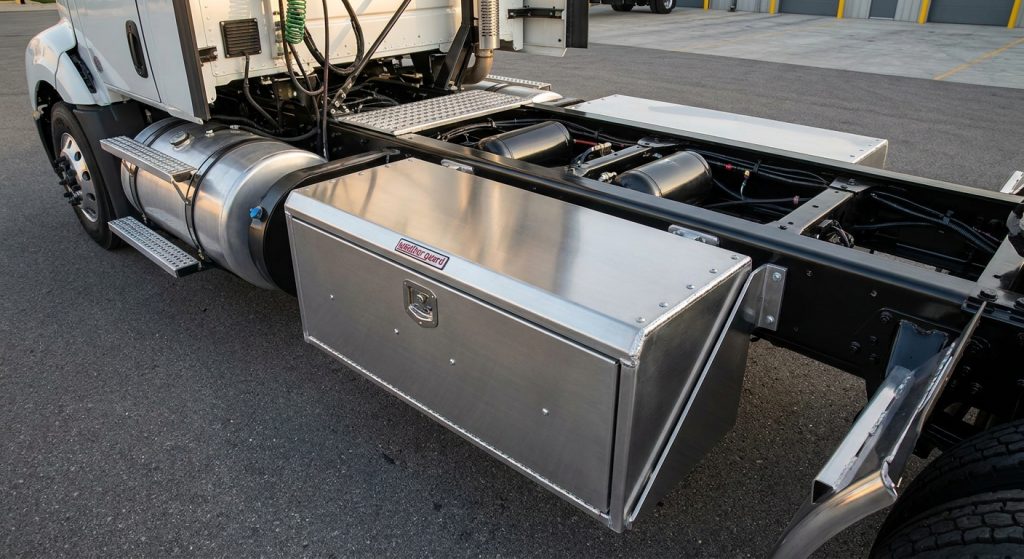
Aluminum is approximately one-third the weight of steel, making it the preferred choice for weight-conscious fleet managers. A lightweight aluminum toolbox helps maximize legal payload capacity while reducing unnecessary vehicle weight. Every pound saved on your chassis is a pound you can add to your billable freight.
Reducing dead weight also contributes to better overall vehicle handling and less wear on suspension components. Over long-haul operations, even small reductions in equipment weight can contribute to measurable fuel savings across an entire fleet.
Improving Your Fuel Efficiency
Lighter equipment directly correlates to lower rolling resistance and better aerodynamics for your rig. Lowering the total vehicle weight allows the engine to operate more efficiently during acceleration and uphill climbs.
Reducing overall equipment weight can lower fuel consumption over long-haul operations while also reducing wear on tires, brakes, and suspension components across high-mileage fleets.
Even modest weight reductions can significantly reduce operating costs when applied across large commercial fleets.
Maximizing Legal Payload Capacity
For high-mileage highway fleets, reducing unnecessary equipment weight can improve payload flexibility and help operators stay within axle weight limits at DOT inspection scales.
This is especially important for fleets hauling refrigerated freight, bulk materials, or long-distance cargo where every additional pound of legal payload capacity directly affects profitability.
For most highway freight applications, modern aluminum tool boxes provide more than enough structural durability while reducing unnecessary vehicle weight, corrosion concerns, and long-term maintenance costs.
| Metric | Aluminum Tool Box | Steel Tool Box |
|---|---|---|
| Material Density | ~2.7 g/cm³ | ~7.8 g/cm³ |
| Weight Impact | Minimal | Significant |
| Payload Capacity | Maximized | Reduced |
This comparison shows that aluminum is the clear winner for any operation where weight and fuel economy are top priorities.
Does a steel vs aluminum semi truck tool box resist rust?

Aluminum is naturally resistant to corrosion because it forms a protective oxide layer when exposed to the atmosphere. Aluminum tool boxes are widely used in northern fleet applications because they resist long-term corrosion far better than painted steel boxes. This durability is essential for trucks operating in the “rust belt” or coastal regions.
Steel requires constant maintenance of its powder coating to prevent moisture from reaching the base metal. Once a rock chip breaches the paint, oxidation spreads rapidly beneath the surface.
The Problem with Steel Oxidation
In northern U.S. states and Canadian provinces, underbody tool boxes are constantly exposed to calcium chloride, magnesium chloride, and liquid road brine during winter operations.
These chemicals collect around hinges, mounting brackets, weld seams, and latch areas where moisture remains trapped for extended periods. Once the powder coating on a steel tool box is chipped by road debris, corrosion can spread rapidly beneath the surface.
For this reason, corrosion resistance and mounting durability become especially important when selecting materials for underbody fleet applications.
Aluminum’s Self-Healing Properties
Many fleet maintenance departments in northern climates apply silicone protectant to rubber seals before winter to reduce freezing and gasket cracking.
However, steel tool boxes still require regular inspection around hinges, latch mechanisms, and chipped coating areas to prevent corrosion from spreading during freeze-thaw cycles.
Aluminum tool boxes generally require less seasonal maintenance because the material itself does not rust when exposed to moisture and road chemicals.
Aluminum does not rust; instead, it develops a thin, hard layer of aluminum oxide that prevents further corrosion. This layer is transparent and keeps the box looking clean even after years of salt exposure.
Because aluminum does not rust like carbon steel, fleets often experience lower repainting costs, longer service life, and better long-term resale value in harsh operating environments.
In many fleet applications, aluminum tool boxes remain serviceable long enough to be transferred to replacement trucks.
Long-term durability also depends heavily on manufacturing quality, welding consistency, and reinforcement design used by a reliable semi truck tool box manufacturer.
For fleets operating in winter climates or high-moisture environments, aluminum tool boxes generally require far less corrosion-related maintenance over the long term.
| Environment | Aluminum Performance | Steel Performance |
|---|---|---|
| Winter Road Salt | Highly Resistant | High Risk of Corrosion |
| Coastal Air | No Oxidation Issues | Rapid Surface Rusting |
| Maintenance | Basic Washing | Frequent Paint Touch-ups |
Which Truck Tool Box Material Handles Heavy-Duty Use Better?
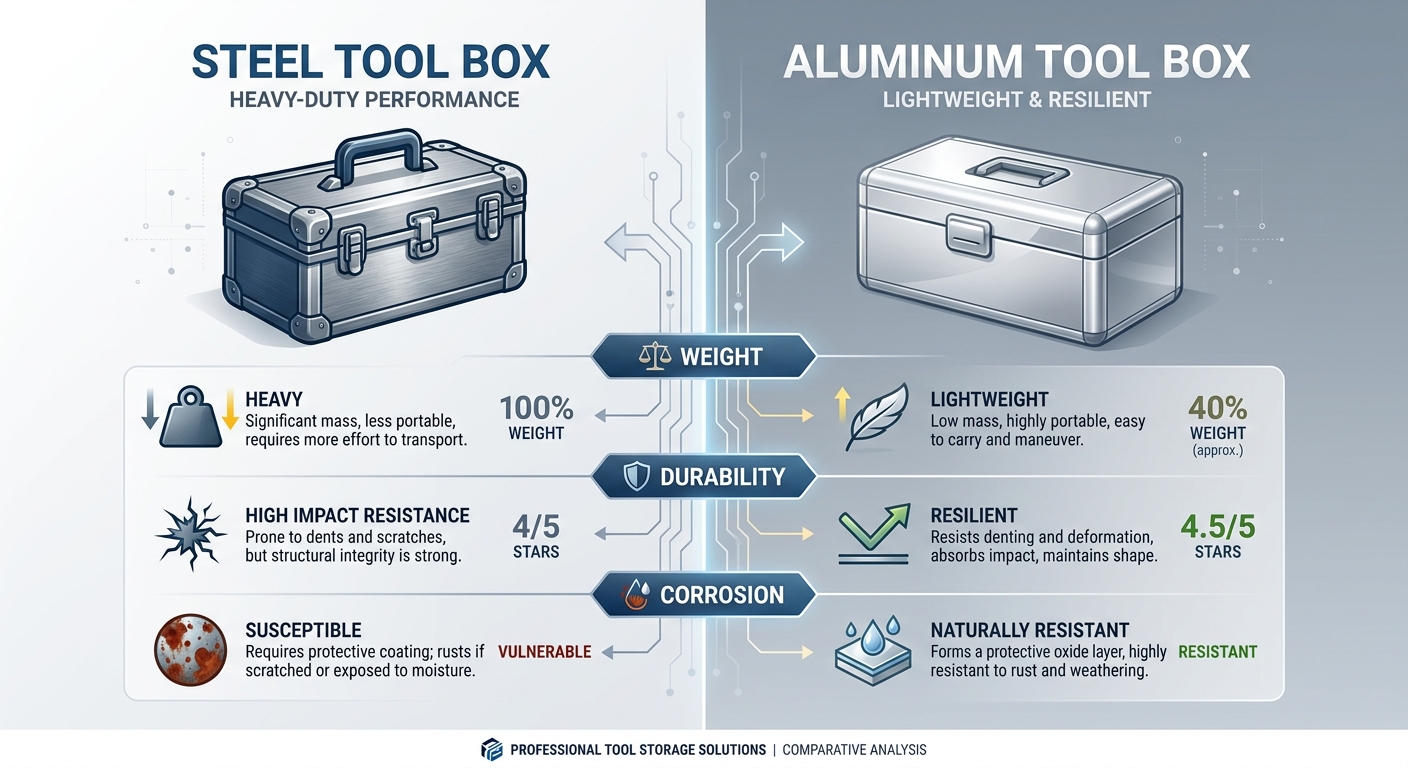
Steel tool boxes are traditionally used in severe-duty industries because they better resist repeated heavy impacts from chains, binders, tools, and off-road debris.
However, modern aluminum truck tool boxes are engineered to provide excellent structural durability while significantly reducing overall vehicle weight. For most highway freight and fleet applications, aluminum offers more than enough strength for daily commercial use.
The best material depends less on laboratory strength ratings and more on the operating environment of the truck.
Why Some Severe-Duty Fleets Still Prefer Steel
Steel tool boxes are still commonly used in industries such as logging, mining, oilfield service, and heavy construction.
These applications regularly expose underbody tool boxes to heavy chains, rough terrain, off-road debris, and repeated vibration from severe-duty operations.
In these environments, steel provides excellent rigidity and better resistance to gouging or puncture damage.
Some operators also prefer steel boxes when the toolbox doubles as a step platform or supports additional mounted equipment.
Why Aluminum Is Strong Enough for Most Semi Truck Applications
Modern aluminum truck tool boxes are far more durable than many operators expect.
High-quality aluminum boxes use reinforced corners, thicker wall sections, and internal structural supports to handle daily commercial trucking use without excessive flexing.
For highway freight fleets and owner-operators, aluminum tool boxes typically provide the best balance between durability, corrosion resistance, payload efficiency, and long-term maintenance requirements.
In many cases, reducing equipment weight is more valuable than maximizing raw impact resistance.
| Application Factor | Aluminum Tool Box | Steel Tool Box |
|---|---|---|
| Highway Freight | Excellent weight savings | Heavier but durable |
| Logging & Gravel Roads | Good durability | Better impact resistance |
| Corrosion Resistance | Excellent | Requires coating maintenance |
| Winter Road Salt | Highly resistant | Higher corrosion risk |
| Payload Capacity | Maximizes payload | Reduces payload slightly |
| Chain & Binder Storage | Suitable for most fleets | Preferred for severe-duty use |
| Fuel Efficiency | Better due to lower weight | Lower due to added mass |
| Long-Term Maintenance | Low maintenance | More repainting and rust control |
The trade-off between absolute strength and weight savings usually favors aluminum for highway transport, while steel serves niche heavy-industry needs.
What Usually Damages a Semi Truck Tool Box in Real Operations?
In real fleet operations, most tool box failures are caused by corrosion around hinges and seams, mounting fatigue from constant vibration, overloaded chain storage, poor installation practices, and long-term road spray exposure.
How does a steel vs aluminum semi truck tool box handle cold?

Aluminum remains ductile and maintains its structural integrity even in extreme sub-zero temperatures. For fleets operating in logging and northern applications, Choosing the right semi truck toolbox material prevents the stress cracking often seen in cold-soaked steel. Aluminum does not become brittle when the mercury drops.
Ductility in Arctic Conditions
In real winter fleet operations, maintenance issues are often caused not by catastrophic impacts, but by repeated freeze-thaw cycles and constant exposure to liquid road brine.
Fleet technicians commonly inspect latch mechanisms, rubber door seals, and mounting hardware during winter preventive maintenance intervals because repeated freeze-thaw cycles can gradually weaken underbody storage systems over time.
Aluminum tool boxes generally require less winter maintenance because corrosion does not spread beneath the surface coating the way it does with steel.
The Risk of Brittle Steel
Repeated freeze-thaw cycles can accelerate wear around weld seams, mounting hardware, latch systems, and rubber door seals, especially on trucks operating in northern oilfield, logging, or snow-removal applications.
In extremely cold environments, steel becomes less flexible and more vulnerable to cracking under repeated impact and vibration. This makes mounting brackets and seams vulnerable to failure during high-vibration winter hauls.
In severe winter conditions, repeated vibration and low temperatures can increase the risk of weld cracking, mounting failure, and material fatigue on poorly protected steel tool boxes.
Structural failures during winter operations can create safety risks and lead to unexpected equipment downtime.
Because aluminum remains more stable in sub-zero environments and resists corrosion from winter road chemicals, many northern fleets prefer aluminum underbody tool boxes for long-haul winter operations.
For winter reliability, aluminum provides the ductility necessary to withstand the punishing vibrations and impacts of northern routes.
What steel vs aluminum semi truck tool box takes impacts best?
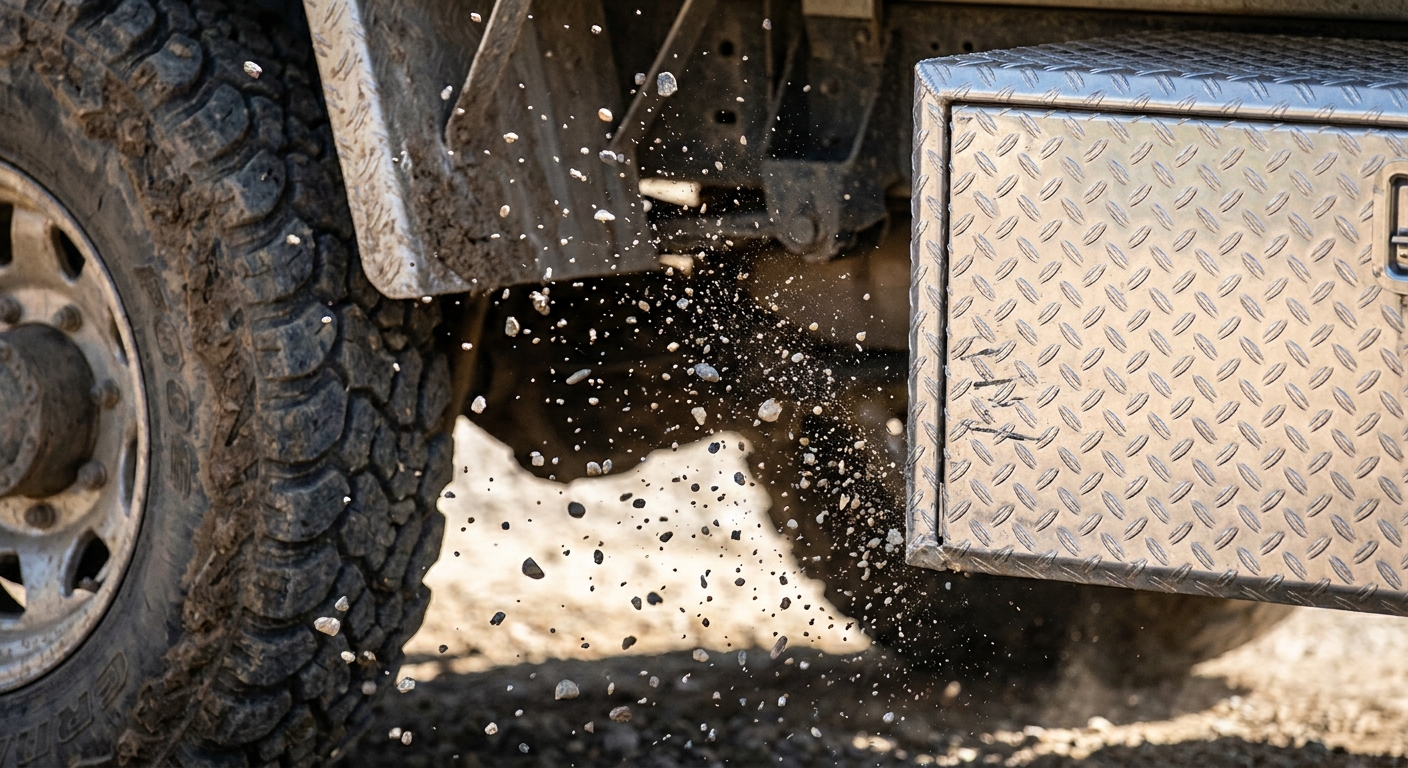
Most impact damage to truck tool boxes occurs from gravel roads, uneven terrain, loading dock contact, chain handling, and road debris thrown by commercial truck tires.
Underbody-mounted boxes used in logging, construction, and oilfield applications typically experience the highest level of abrasion and impact exposure.
Steel generally resists gouging and scraping better than aluminum, while aluminum tends to absorb impacts through localized denting instead of cracking.
Deflecting High-Velocity Debris
Steel tool boxes are still commonly used in logging, oilfield, and gravel-haul operations where boxes are regularly exposed to flying rocks, chains, binders, and severe off-road vibration.
In these environments, the harder surface of steel can better resist gouging, scraping, and repeated impact damage from heavy equipment and loose cargo tools.
Energy Absorption and Repair
When a major impact occurs, aluminum deforms locally. This localized denting often leaves the rest of the box’s geometry intact, making it easier to open and close the door after an accident.
Aluminum typically absorbs impacts through localized denting, which can help preserve door operation and overall structural usability after moderate impacts.
For most commercial fleets, long-term corrosion resistance and mounting durability are usually more important than minor cosmetic dents caused by gravel or road debris.
Many fleets operating in wildlife zones, logging routes, or gravel-haul environments also invest in front-end protection systems such as grille guards and moose bumpers to reduce downtime caused by road debris and collision damage.
| Impact Type | Aluminum Response | Steel Response |
|---|---|---|
| Flying Gravel | Pitting/Denting | Surface Scratches |
| Major Collision | Energy Absorption | Rigid Deflection/Cracking |
| Repairability | Moderate | High (if not rusted) |
Choosing between these two involves weighing the frequency of minor cosmetic dings against the need for overall structural survival in a crash.
Is a steel vs aluminum semi truck tool box more cost-effective?
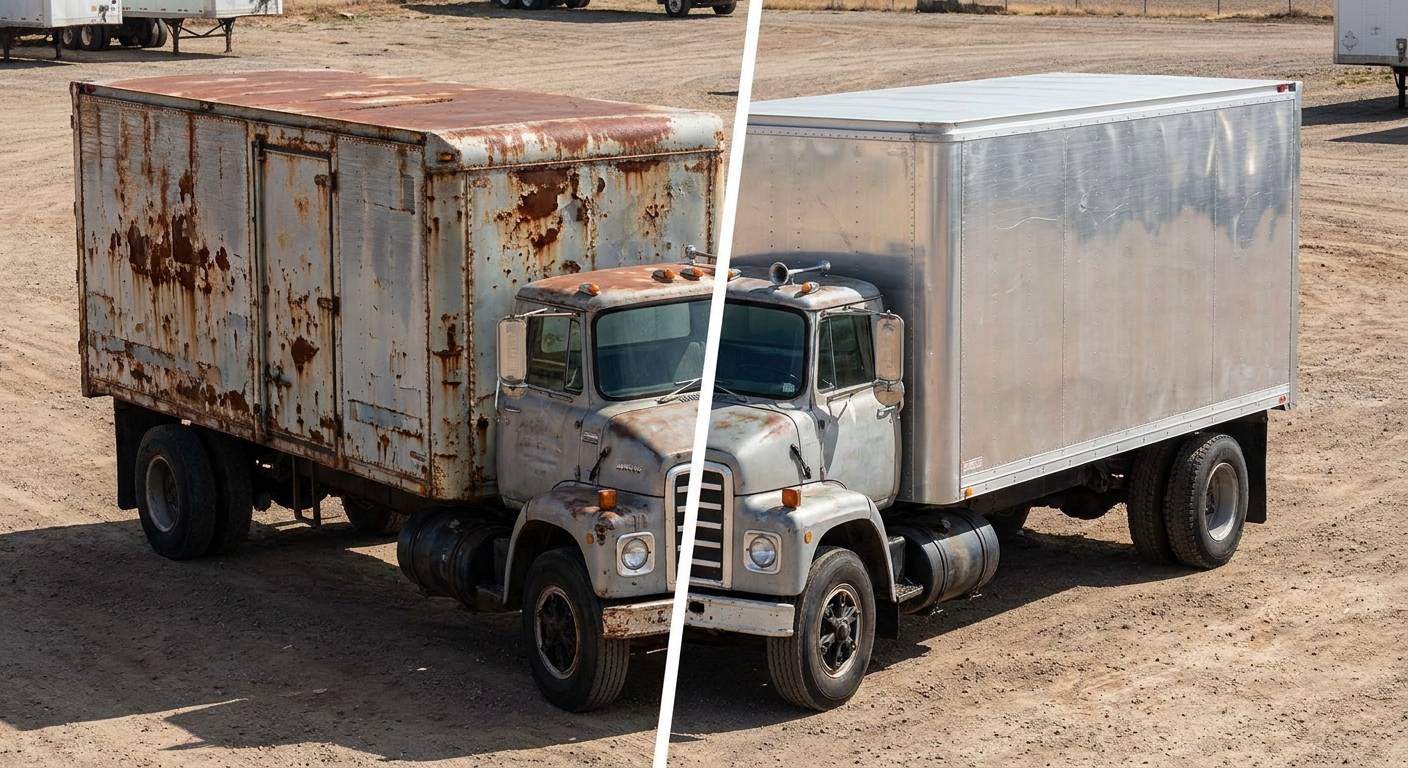
For many large fleets, the decision is less about initial purchase price and more about long-term operating cost.
Replacing rusted steel boxes, repairing seized latches, and repainting corroded surfaces can create additional maintenance downtime across an entire fleet.
As a result, many highway fleets standardize aluminum tool boxes to reduce maintenance labor and extend equipment replacement intervals.
Aluminum typically offers a lower total cost of ownership (TCO) because it eliminates maintenance expenses and improves fuel economy. While a steel vs aluminum semi truck tool box might be cheaper to purchase initially, the long-haul cost reductions of aluminum far outweigh the upfront savings. You must look at the five-to-ten-year horizon when making procurement decisions.
Steel units require periodic repainting and rust-proofing to remain functional. These hidden costs, combined with the fuel penalty of carrying extra weight, make steel more expensive in the long run.
Analyzing the Initial Investment
Steel is a less expensive raw material to produce and fabricate. For a budget-strapped owner-operator, the lower entry price of a steel box can be tempting for a short-term solution.
Steel tool boxes are generally less expensive to manufacture and easier to source, which makes them attractive for short-term fleet purchases and budget-sensitive owner-operators.
For most commercial fleets, long-term operating cost is usually more important than initial purchase price.
Calculating Long-Term ROI
For many commercial fleets, the biggest expense is not the toolbox itself, but the labor and downtime associated with maintenance and replacement.
Repainting corroded steel boxes, replacing seized hardware, and repairing rusted mounting points all increase maintenance hours over the service life of the truck.
As a result, many high-mileage fleets standardize aluminum tool boxes to simplify maintenance planning and reduce long-term equipment replacement cycles.
| Cost Factor | Aluminum Box | Steel Box |
|---|---|---|
| Purchase Price | Higher | Lower |
| Maintenance Cost | Near Zero | Recurring |
| Fuel Impact | Savings | Penalty |
While steel is cheaper at the dealership, aluminum is significantly more profitable for the business owner across the entire lifecycle of the equipment.
Which steel vs aluminum semi truck tool box looks better?
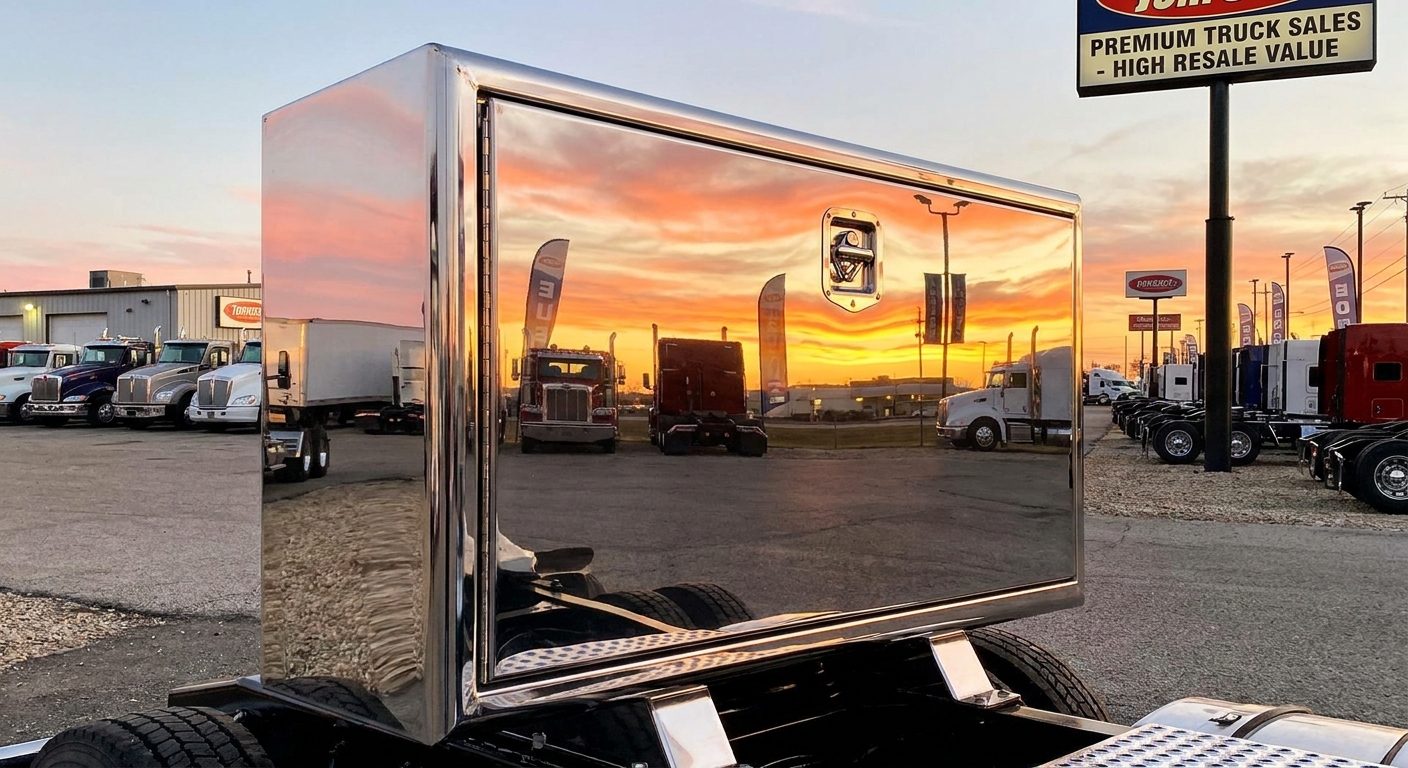
Aluminum maintains a premium, professional appearance with very little effort. Polished or diamond-plate aluminum tool boxes are commonly associated with well-maintained commercial fleets and professional equipment standards. Even after years of use, aluminum can be brightened back to a mirror-like finish with basic metal polish.
Steel boxes tend to look “tired” once the paint begins to fade or rust spots appear. For fleets that use their trucks as moving billboards, the aesthetic decline of steel is a significant branding drawback.
Maintaining a Professional Image
In the B2B world, the appearance of your equipment signals the quality of your service. Shiny aluminum accessories suggest a well-maintained, profitable operation that values attention to detail.
Aluminum tool boxes are easier to clean and generally maintain a more professional appearance over time, especially for fleets that prioritize branding consistency and long-term visual durability.
Finishes and Custom Coatings
Steel must be painted, which allows for color matching to the truck’s cab. However, modern aluminum boxes can also be powder-coated, giving you the best of both worlds: custom colors and rust-proof metal.
Modern aluminum tool boxes are available in brushed, polished, or powder-coated finishes, allowing fleets to match equipment appearance while maintaining corrosion resistance.
For fleets that prioritize branding consistency and long-term visual durability, aluminum tool boxes generally maintain a cleaner and more professional appearance over time.
The visual longevity of aluminum ensures your fleet looks newer for longer, protecting your brand reputation on every highway.
Can you custom a steel vs aluminum semi truck tool box easily?
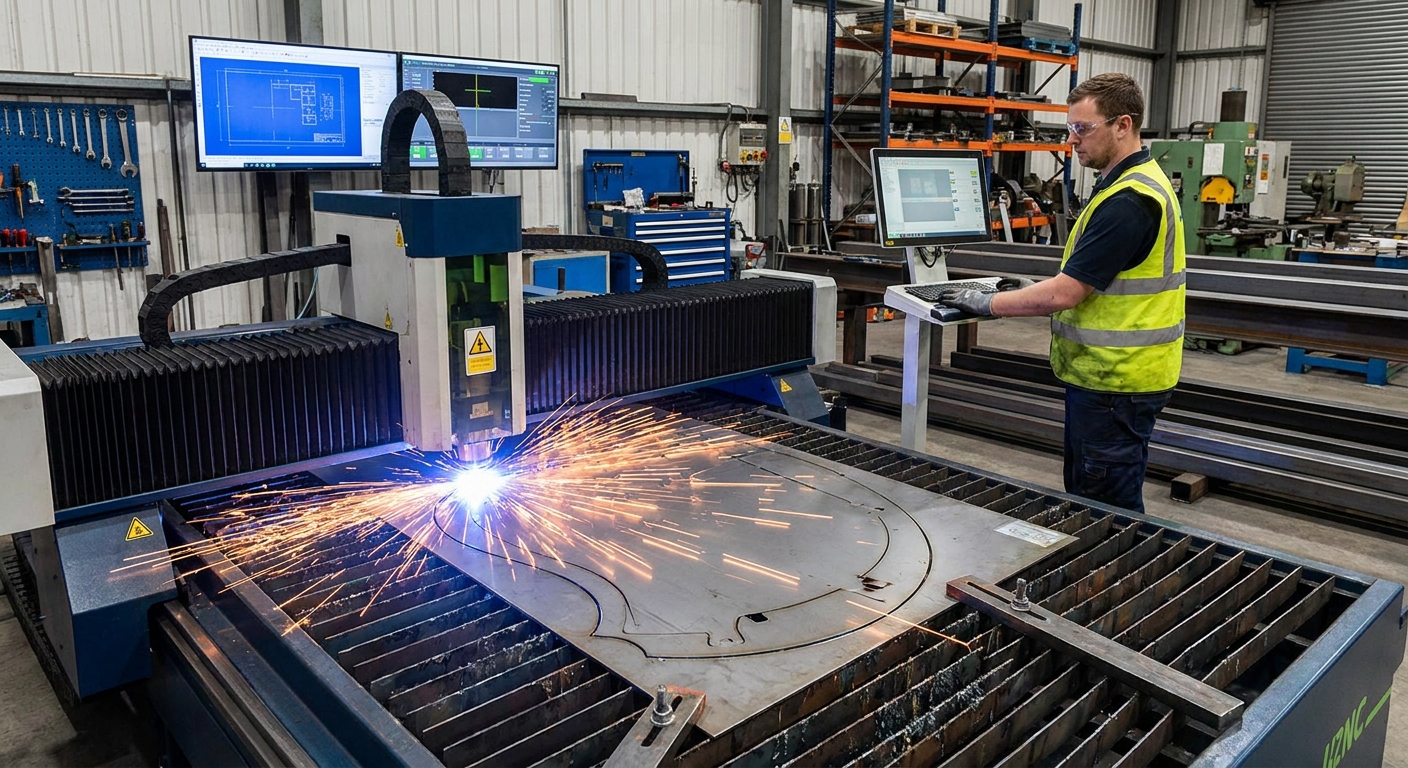
Aluminum is highly workable, allowing for complex geometries and specialized internal configurations. Using advanced OEM manufacturing capabilities, we can create a steel vs aluminum semi truck tool box tailored to your exact chassis dimensions. Aluminum’s lower melting point and ductility make it easier to weld and form into intricate shapes.
Steel is also highly customizable, but its weight limits how large or complex a custom unit can be. Large custom steel boxes often require heavy-duty cranes for installation and can negatively impact the truck’s balance.
Precision Engineering with Aluminum
Aluminum sheets can be laser-cut and CNC-bent with extreme precision. This allows for integrated features like sloped tops, internal shelving, and custom dividers without adding significant mass.
Aluminum fabrication also allows manufacturers to integrate internal dividers, ladder steps, and custom storage layouts while maintaining manageable overall equipment weight.
Because aluminum is easier to machine and handle, custom fabrication lead times are often shorter than comparable heavy steel assemblies.
Structural Customization in Steel
Steel is excellent for “one-off” structural modifications where welding on extra brackets or heavy plates is required. If your customization involves supporting external hydraulic tanks, steel’s rigidity is a benefit.
Steel fabrication is often preferred for highly specialized applications that require reinforced mounting points or support for heavy auxiliary equipment.
Aluminum fabrication allows fleets to maximize storage space and customization options without adding excessive weight to the chassis.
| Capability | Aluminum Customization | Steel Customization |
|---|---|---|
| Weight of Custom Unit | Manageable | Very Heavy |
| Precision Shaping | Excellent | Good |
| Structural Modding | Moderate | Superior |
Custom aluminum boxes allow you to maximize every inch of available frame space without overloading your suspension with heavy steel fabrication.
How to mount a steel vs aluminum semi truck tool box safely?
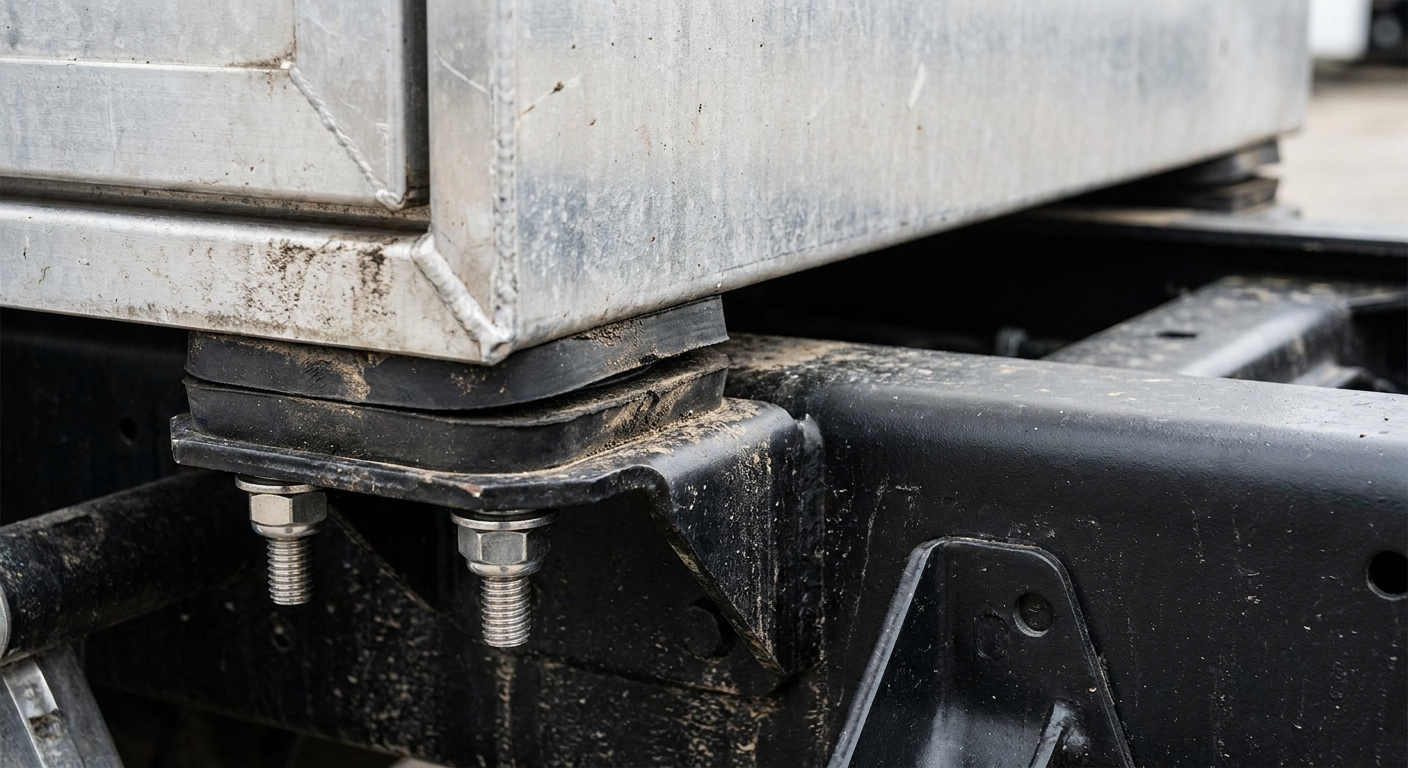
Mounting an aluminum box to a steel truck frame requires specialized isolation hardware to prevent galvanic corrosion. When you install a steel vs aluminum semi truck tool box, you must ensure that dissimilar metals are separated by non-conductive barriers. Using rubber pads and stainless steel fasteners is the industry standard for safe installation.
Steel boxes are simpler to mount because they share the same material properties as the truck frame. However, the sheer weight of a steel unit requires much more robust bracketry and more installers to handle the part.
Preventing Galvanic Corrosion
Underbody tool boxes mounted near the frame rails are continuously exposed to water spray, mud, de-icing chemicals, and road vibration.
Without proper isolation pads or non-conductive mounting spacers, galvanic corrosion can develop between aluminum boxes and steel truck frames, especially in high-moisture winter environments.
Professional fleet installations typically use rubber barriers, stainless steel hardware, and reinforced mounting brackets to improve long-term durability.
Stability and Vibration Control
For long-haul fleets, mounting reliability is just as important as material strength.
Maintenance departments regularly inspect toolbox mounting systems during preventive maintenance intervals because constant highway vibration can loosen brackets, wear isolation pads, and accelerate corrosion around attachment points.
Underbody-mounted boxes operating on rough roads or logging routes typically experience the highest vibration fatigue, which makes reinforced mounting systems and proper isolation hardware critical for long-term durability and safety.
| Mount Requirement | Aluminum Installation | Steel Installation |
|---|---|---|
| Material Isolation | Mandatory | Not Required |
| Installation Weight | Easy (2 People) | Difficult (Requires Lift) |
| Fastener Type | Stainless Steel | Grade 8 Carbon Steel |
Whether you choose steel or aluminum, following strict engineering standards for mounting is the only way to protect your investment and ensure road safety.
What steel vs aluminum semi truck tool box helps ergonomics?
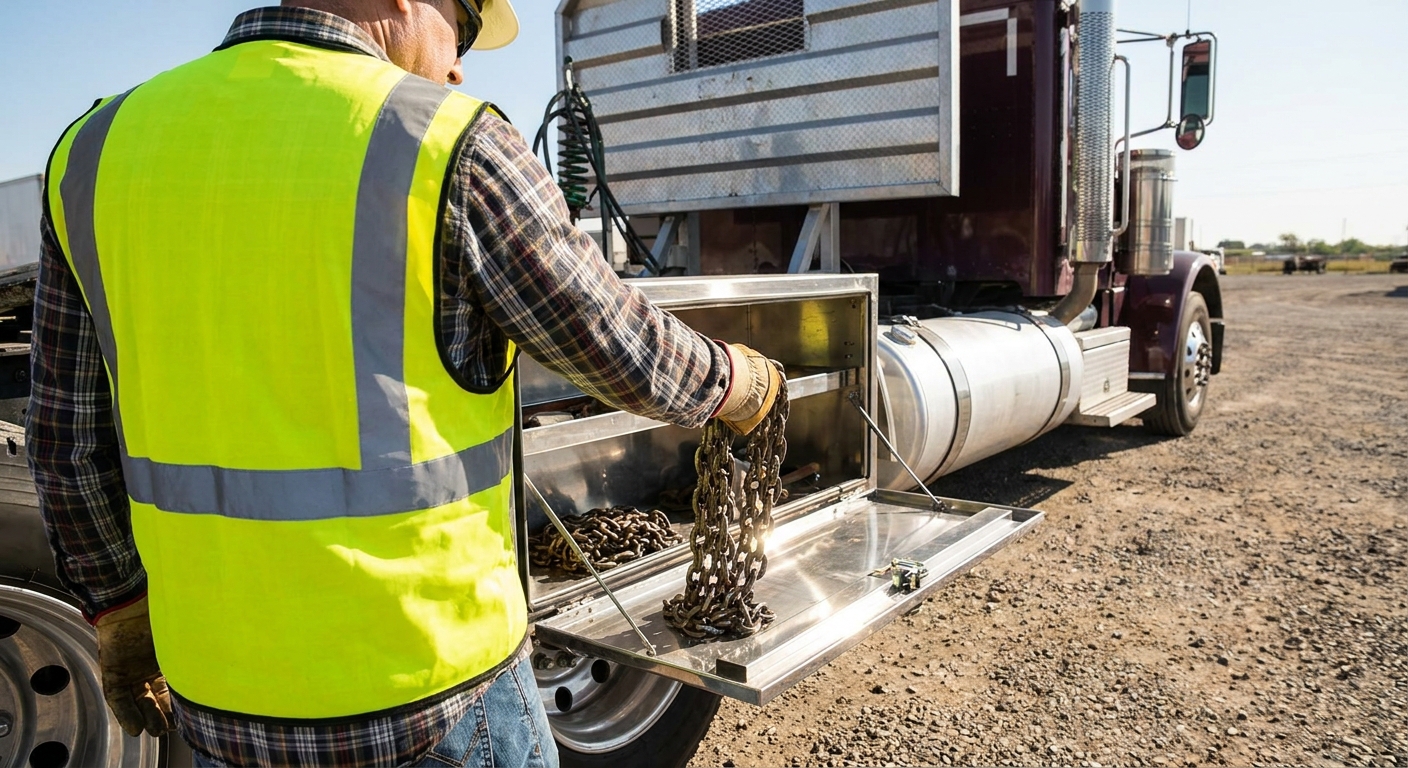
Aluminum doors are significantly lighter and easier for drivers to operate throughout a long shift. Choosing an aluminum truck toolbox with premium accessories reduces the physical strain on your employees. Lightweight doors equipped with gas struts ensure that access to gear is smooth and effortless.
Steel doors are heavy and can become dangerous if a latch fails or a hinge binds due to rust. The physical effort required to lift a large steel lid hundreds of times a year contributes to driver fatigue and potential injury.
Ease of Daily Use
Drivers are more likely to keep their tools organized if the storage units are easy to open and close. Aluminum’s lightweight nature allows for larger door designs that provide better visibility into the box.
Lighter aluminum doors are easier to operate repeatedly throughout a shift and generally place less strain on hinges, latch systems, and drivers handling tools multiple times per day.
Safety and Accessibility
Ergonomic design isn’t just about comfort; it’s about safety. Aluminum boxes can be designed with integrated, non-slip steps that are much safer to use than heavy, slippery steel alternatives.
- Lightweight integrated steps.
- Low-profile latch handles.
- Consistent operation in all weather.
Investing in aluminum storage shows your drivers that you value their safety and comfort, which is critical for retention in today’s competitive labor market.
*
Summary: The Ultimate Storage Solution
Choosing the right material for your truck’s storage is a strategic decision that affects your bottom line every day. For most highway freight and fleet applications, aluminum tool boxes provide the best balance between corrosion resistance, weight reduction, long-term durability, and maintenance efficiency. At Brontec, we are dedicated to providing the high-quality protection and storage solutions that solved problems like rust and excessive weight for fleets across the continent. Brontec focuses on manufacturing durable commercial truck storage and protection systems designed for demanding fleet and heavy-duty operating environments.
If you are ready to upgrade your fleet with equipment that pays for itself through fuel savings and longevity, contact us today for a custom quotation. Our engineering team is standing by to help you design the perfect storage solution for your specific hauling needs.
*
Frequently Asked Questions
Can I use a steel box for logging in the North?
Yes, but it is not recommended. While steel is strong, it becomes brittle in extreme cold and will rust rapidly due to road salt; aluminum is much more resilient in northern climates.
What is the best material for weight savings?
Aluminum is the best choice. It is roughly 1/3 the weight of steel, allowing you to carry more payload and save significantly on fuel costs over the life of the truck.
Can I mount an aluminum box myself?
You can, but you must use isolation pads. Without a non-conductive barrier between the aluminum box and the steel truck frame, galvanic corrosion will quickly destroy the mounting points.
Which material has a better resale value?
Aluminum consistently holds higher resale value. Because it doesn’t rust, used aluminum tool boxes look and function like new much longer than their steel counterparts.