
The primary types of tool box locks include padlocks, cylinder locks, cam locks, tubular locks, combination locks, electronic locks, whale tail locks, and central locking systems. Imagine arriving at a job site only to realize your most expensive power tools have vanished overnight because of a flimsy latch. You’ve invested thousands of dollars in your gear, but without the right security, that investment is sitting in a cardboard box with a “steal me” sign.
It isn’t just about the cost of the tools; it’s the lost wages, the missed deadlines, and the crushing feeling of being targeted. You need a solution that stands up to bolt cutters, weather, and time. This guide breaks down the most effective security options to help you protect your livelihood through professional expertise.
Why choose different types of tool box locks?
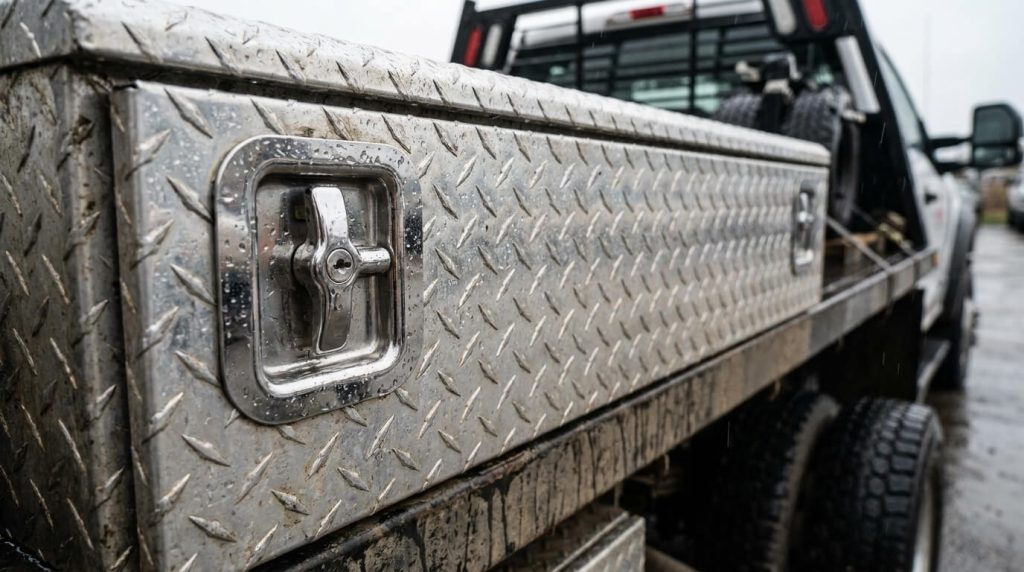
Selecting the right locking mechanism is the first line of defense for any professional professional workspace. Understanding the various types of tool box locks ensures that your hardware matches your specific environmental risks and accessibility needs. A lock does more than stop a thief; it ensures your drawers don’t slide open during transport and keeps moisture from ruining your precision instruments.
Balancing Security and Access?
Security is a spectrum that requires you to weigh theft protection against operational speed. Think about it: a high-security lock that takes five minutes to open will slow you down on every single job. Understanding tool box features to know is vital when matching a lock to your specific storage environment.
- High-security locks offer maximum drill resistance.
- Rapid-access locks allow for quick tool retrieval.
- Integrated handles save space and reduce snagging risks.
Protection Against the Elements?
Locks used on exterior truck boxes must resist road salt, rain, and grime. Specialized heavy-duty hardware and protective coatings such as e-coating help prevent seizing and corrosion, ensuring longevity. Stainless steel components resist rust and oxidation, dust covers prevent debris from clogging the keyway, and gaskets create a watertight seal.
- Stainless steel components resist rust and oxidation.
- Dust covers prevent debris from clogging the keyway.
- Gaskets create a watertight seal against the box body.
Key Takeaway: Choosing the correct lock type prevents costly tool damage from both theft and environmental exposure, ensuring your equipment stays functional and secure.
| Feature | Importance Level | Primary Benefit |
|---|---|---|
| Corrosion Resistance | High | Prevents the lock from seizing in rain/snow. |
| Material Strength | High | Resists drilling and prying attempts. |
| Ease of Use | Medium | Allows for quick tool retrieval on the job. |
This table highlights why environmental resistance is often just as critical as raw physical strength in professional applications.
Are padlocks reliable types of tool box locks?
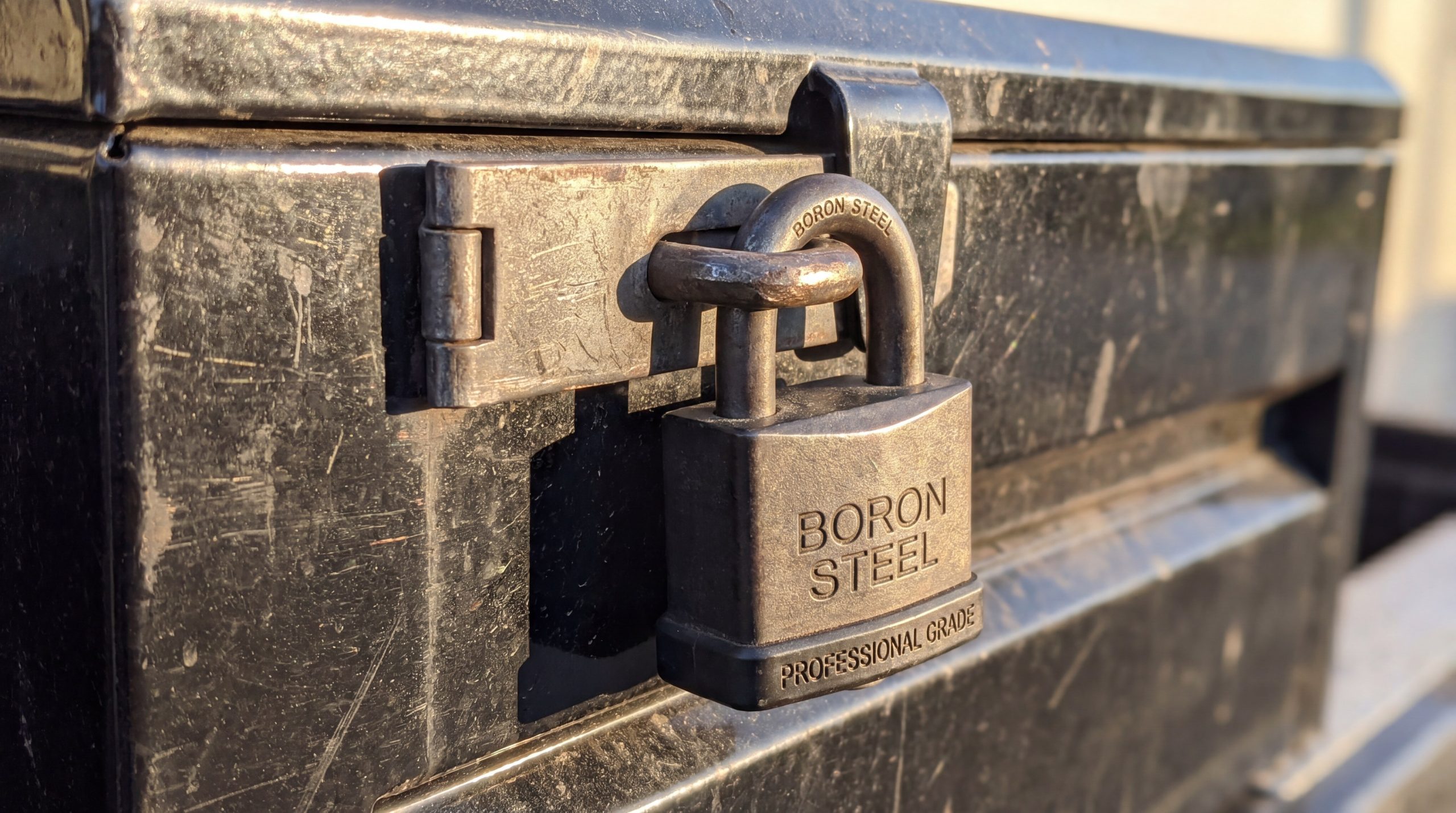
Padlocks are perhaps the most recognizable security measure for mobile storage units. These types of tool box locks are versatile, allowing you to upgrade your security without replacing the entire storage unit. They serve as a powerful visual deterrent while offering a physical barrier against forced entry.
Versatility in the Field?
The primary advantage of a padlock is its portability and ease of replacement. But wait, there is more: if a lock is compromised or the key is lost, you simply cut it off and snap on a new one. This makes them ideal for trailers or job-site chests where you might need to change security levels frequently.
- Compatible with almost any box with a hasp.
- Easy to upgrade to higher security grades.
- Visible deterrence to discourage opportunistic thieves.
Selecting Hardened Materials?
Not all padlocks are created equal for professional use. Best of all, boron alloy shackles offer superior resistance to bolt cutters compared to standard steel. For tool storage, you should look for weather-protected keyways to ensure the lock remains functional in the mud and dust of a construction site.
- Boron alloy shackles resist cutting and sawing.
- Solid brass or steel bodies offer impact protection.
- Shrouded designs hide the shackle from tools.
Key Takeaway: Padlocks provide a flexible and cost-effective security layer that you can easily adapt or replace as your job site risks change.
| Lock Attribute | Padlock Specification | Use Case |
|---|---|---|
| Installation | External (Hasp required) | Job-site chests and trailers. |
| Security Level | Low to Medium | Opportunistic theft prevention. |
| Cost | Budget-Friendly | Multiple security points. |
External padlocks remain a staple for contractors because they offer a visible and replaceable line of defense.
How do cylinder types of tool box locks work?
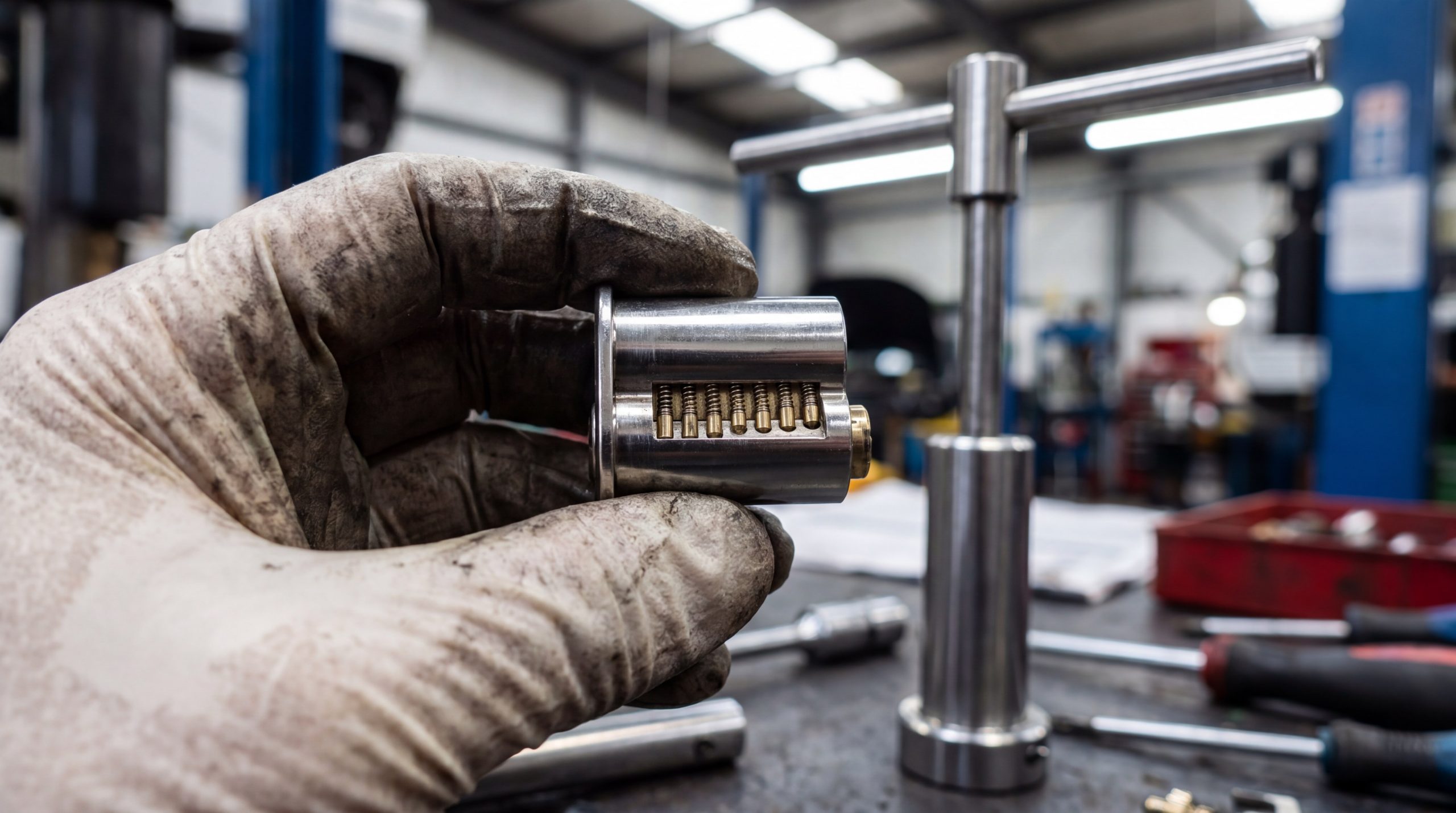
Cylinder locks are the workhorses of the industry, typically found integrated into paddle handles or T-handles. These types of tool box locks utilize a internal pin mechanism to control the latch movement. They provide a streamlined aesthetic while maintaining high levels of physical security.
The Mechanics of Pin Tumblers?
These locks use a series of pins of varying lengths to prevent the plug from turning. Believe it or not, when the correct key is inserted, the pins align at the “shear line,” allowing the cylinder to rotate and retract the latch. This precision mechanism is what keeps your gear safe from basic picking attempts.
- Multiple pins increase picking difficulty for thieves.
- Precision manufacturing ensures smooth daily operation.
- Compact design fits into modern handle assemblies.
Ease of Replacement?
What happens when you lose your key on a busy Tuesday morning? Check this out: with cylinder locks, you can often unscrew the core from the back of the handle and swap it for a new one in minutes. This avoids the need to buy and install a whole new handle assembly, saving you significant time and money.
- Core-swapping simplifies fleet key management.
- Standardized sizes make finding replacements easy.
- No need for heavy tools to perform the swap.
Key Takeaway: Cylinder locks offer integrated security that is easy for you to maintain and repair without replacing the entire housing of your toolbox.
| Component | Function | Material |
|---|---|---|
| Plug | Rotates with the correct key. | Brass or Zinc Alloy. |
| Pins | Prevent unauthorized rotation. | Hardened Steel or Brass. |
| Housing | Mounts the lock to the box. | Chrome-plated Steel. |
Integrated cylinder locks provide a flush finish that reduces the chance of accidental damage during transport.
When to use cam-style types of tool box locks?
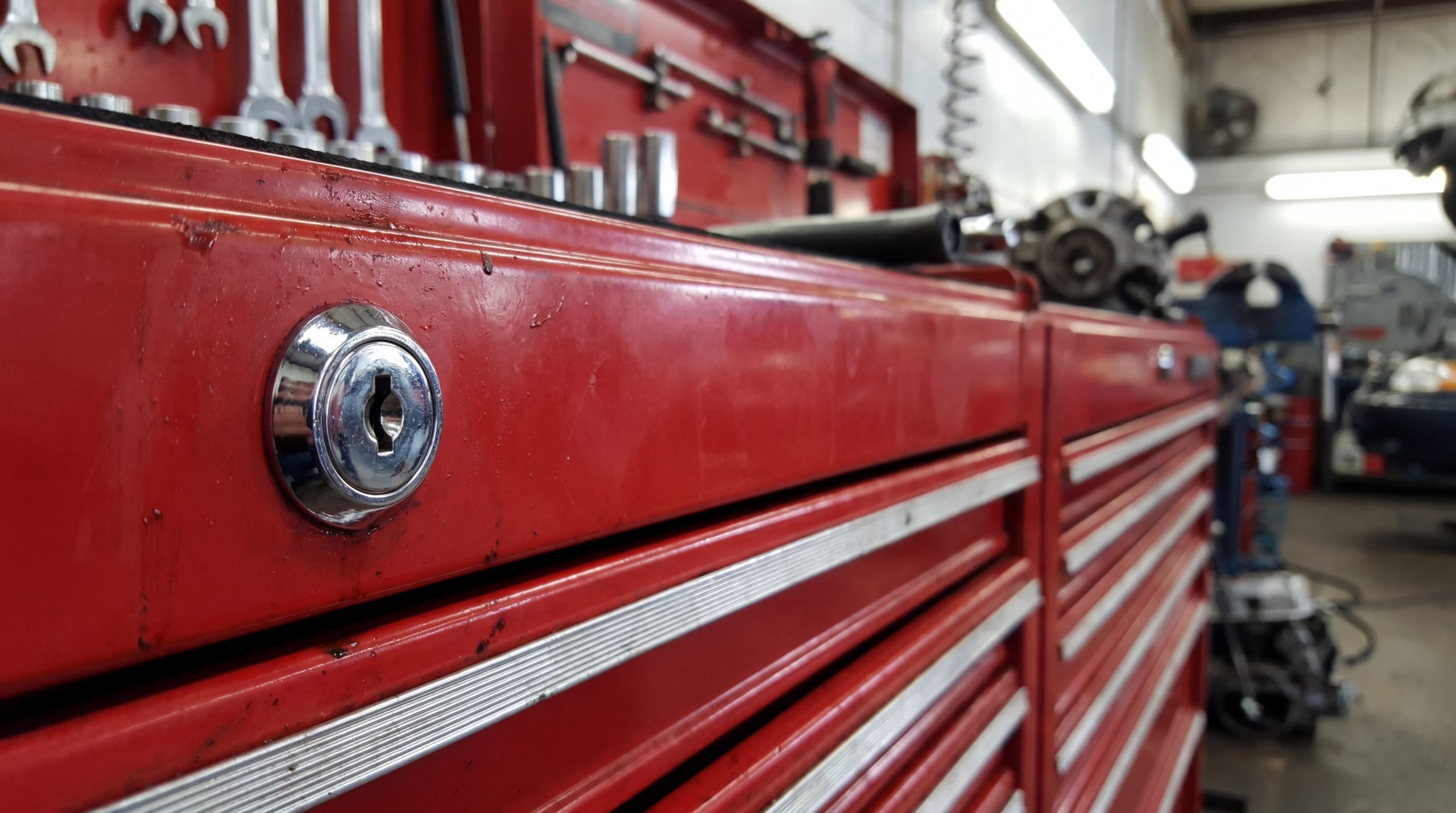
Cam locks are simple, effective mechanisms found on almost every portable chest or drawer cabinet. These types of tool box locks use a rotating metal arm to physically bar the opening of a lid or drawer. They are highly efficient for organizing tools in controlled environments like workshops or garages.
Rotating Security?
The “cam” is a metal tongue attached to the back of the lock assembly. You might be wondering how such a simple piece of metal provides security; it simply rotates behind the frame of the toolbox. This physical barrier is incredibly effective at preventing the drawer from moving until the key is turned.
- Simple mechanics reduce the risk of failure.
- Rotating arm creates a strong physical block.
- Low profile prevents snagging on your clothing.
Best for Indoor Organization?
While not as robust as heavy-duty truck locks, cam locks are perfect for workshop cabinets. Truth be told, they are your best friend for keeping coworkers out of your personal tool stash or ensuring drawers don’t fall out during a move. You can find them in various lengths to fit different thicknesses of metal or wood.
- Ideal for multi-drawer rolling tool chests.
- Cost-effective for securing many small compartments.
- Easy for you to install as a DIY upgrade.
Key Takeaway: Cam locks are the most efficient way for you to secure individual drawers and lids in stationary or indoor tool storage systems.
| Application | Best Lock Type | Primary Benefit |
|---|---|---|
| Top Chests | Small Cam Lock | Keeps lids firmly shut. |
| Drawer Cabinets | Multi-point Cam | Secures multiple drawers. |
| Office Lockers | Standard Cam | Low cost and mass-produced. |
The simplicity of the cam lock makes it a reliable choice for high-frequency use in professional shops.
What makes tubular types of tool box locks secure?
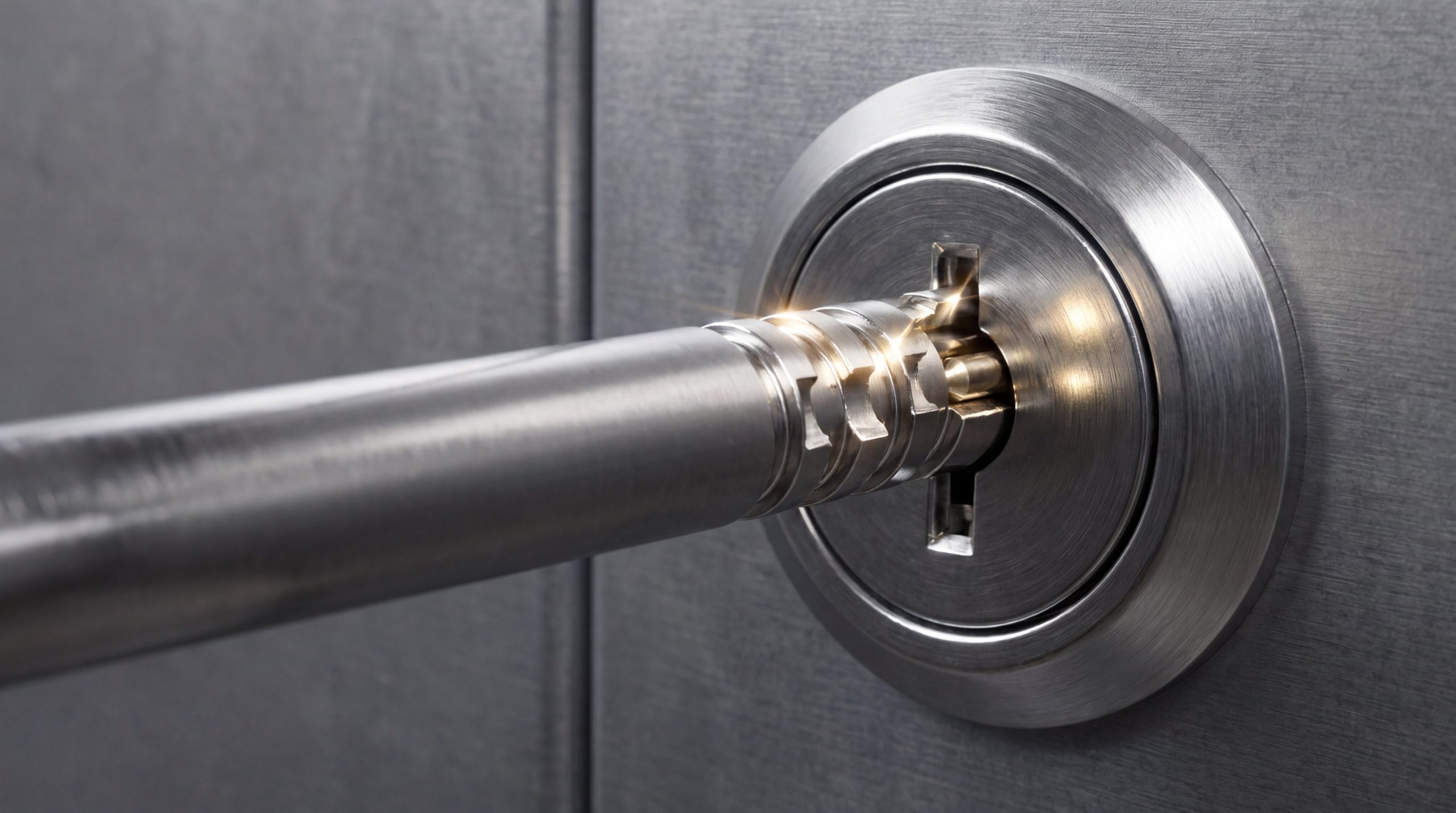
Tubular locks are easily recognized by their distinct circular keyways and round keys. These types of tool box locks, often called “ace locks,” offer a significant step up in security compared to standard flat-key cylinders. They are designed to resist specialized picking tools that thieves often use on traditional locks.
Resistance to Picking?
Standard lock picks struggle with tubular designs because the pins are arranged in a circle. Here is the deal: it requires highly specialized tools and a high level of skill to bypass these mechanisms. For you, this means a much higher level of protection against sophisticated theft attempts in high-risk areas.
- Circular pin arrangement thwarts standard picks.
- Hardened steel centers resist drilling attempts.
- Unique key shape is harder to duplicate.
Durability in High-Use Areas?
The tubular design is less prone to jamming from small debris compared to standard flat-key cylinders. What’s more, the robust nature of the circular key makes it less likely to snap or bend inside the lock. This makes them excellent for high-traffic tool chests that you open and close dozens of times a day.
- Debris is less likely to settle in the keyway.
- Circular keys are physically stronger than flat ones.
- High visual deterrent for professional equipment.
Key Takeaway: Tubular locks provide you with a high-security barrier that is specifically engineered to resist picking and physical wear.
| Security Metric | Performance Rating | User Benefit |
|---|---|---|
| Pick Resistance | High | Prevents non-destructive entry. |
| Drill Resistance | Medium-High | Deters forced mechanical entry. |
| Key Complexity | High | Reduces unauthorized duplication. |
Upgrading to tubular locks is a smart move if you frequently leave your tools in accessible or unsupervised locations.
Are combination types of tool box locks better?
Key management can be a nightmare for fleet managers and busy contractors. Combination types of tool box locks solve this issue by moving security into the user’s mind rather than their pocket. They eliminate the physical vulnerabilities and inconveniences associated with traditional metal keys.
Eliminating the Lost Key Problem?
The best part? You never have to worry about a lockout at 6:00 AM because you left your keys on the kitchen counter. Let’s face it, losing a key can derail an entire workday and cost you hundreds in locksmith fees. With a combination lock, your access code is always with you.
- No physical keys to lose or break.
- Quick entry without fumbling in pockets.
- Resettable codes for security updates.
Multi-User Access?
If you work in a shop where multiple people need access to shared equipment, combination locks are the perfect solution. The best part? You can share the code with your team without having to cut and distribute a dozen physical keys. This simplifies your workflow and keeps the job moving forward.
- Easy to share access with trusted staff.
- No need to manage a massive keyring.
- Master-key overrides are often available.
Key Takeaway: Combination locks remove the hassle of key management, ensuring you always have access to your tools without the risk of a lockout.
| User Type | Preferred Feature | Practical Use |
|---|---|---|
| Solo Tradesman | Personal 4-digit code | Simple, keyless daily use. |
| Fleet Manager | Master-key override | Managerial access to all boxes. |
| DIY Homeowner | Easy-to-reset dials | Flexible family access. |
Moving to combination locks is a strategic choice for teams that need shared access without sacrificing tool security.
How do electronic types of tool box locks help?
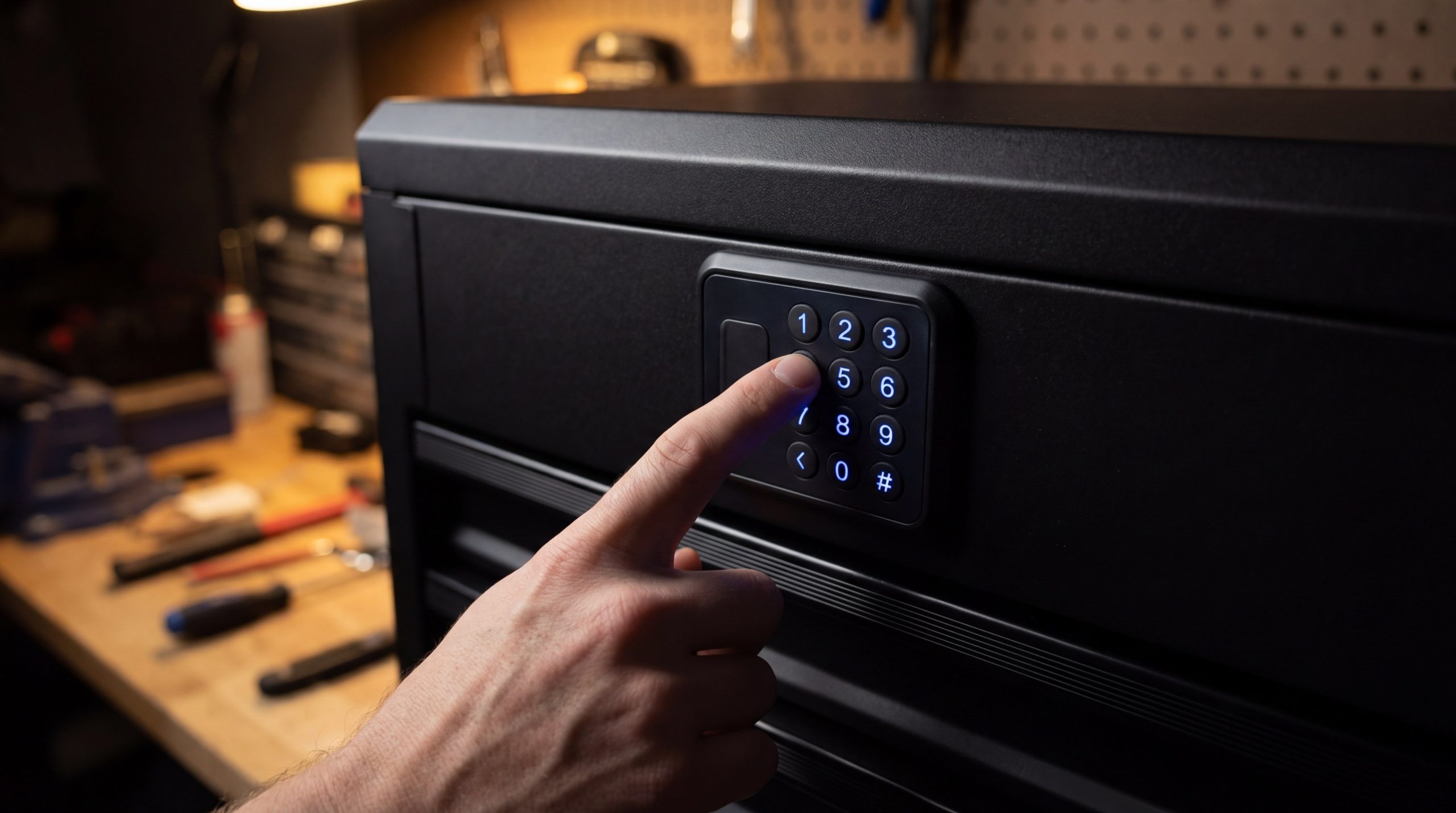
Welcome to the future of job site security through advanced technology. Electronic types of tool box locks bring the convenience of your car’s remote entry to your professional storage. These systems offer unparalleled control and tracking features that traditional mechanical locks simply cannot match.
Keyless Entry and Remotes?
Many modern truck boxes now feature wireless fobs for instant access. As it turns out, with one click, every box on your truck can be locked or unlocked simultaneously. This saves you the tedious walk-around at every stop, ensuring your gear is always protected even when you are in a rush.
- Remote fobs lock all boxes at once.
- Backlit keypads allow for night-time access.
- Proximity sensors can unlock as you approach.
Audit Trails and Biometrics?
Here is the kicker: some high-end electronic systems can track exactly who opened the box and when it happened. For high-value diagnostic equipment or specialized power tools, fingerprint scanners provide the ultimate level of personalized security. You gain total visibility into how your assets are being handled on the job site.
- Biometric scanners prevent unauthorized code sharing.
- Audit logs help you track tool usage patterns.
- Integration with vehicle alarm systems is possible.
Key Takeaway: Electronic locks provide you with the highest level of convenience and accountability, making them ideal for high-value tool management.
| Electronic Feature | Advantage | Tech Level |
|---|---|---|
| RFID Scanning | Tap-and-go access for teams. | Advanced |
| Bluetooth Link | Smartphone app control. | Modern |
| Auto-Lock | Automatic securing after use. | Safety-Focused |
The integration of digital features allows for a more efficient and transparent way to manage your tool security.
Why pick whale tail types of tool box locks?
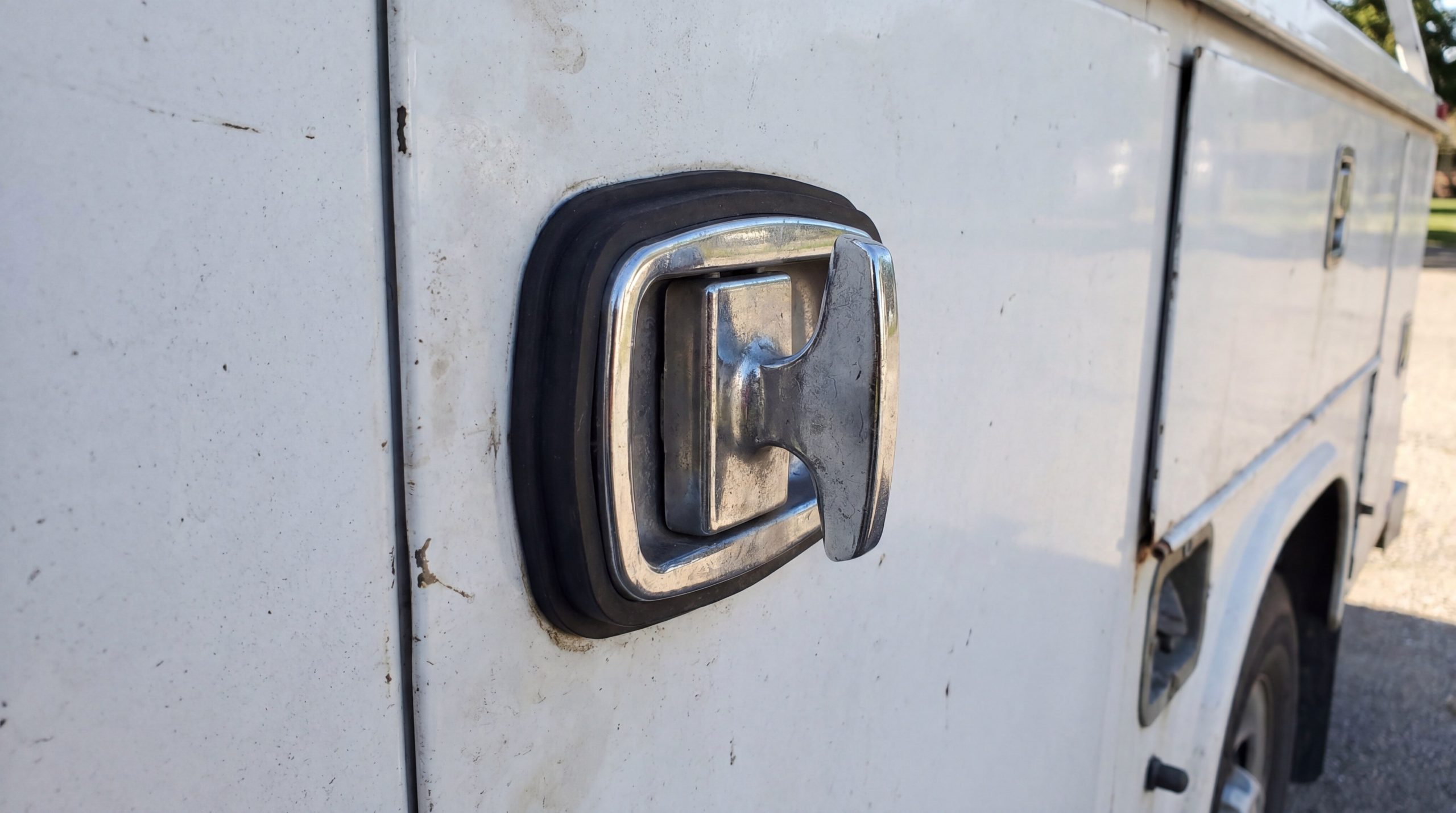
Whale tail locks are the gold standard for heavy-duty canopy and service body applications. These types of tool box locks are specifically engineered for the rigors of off-road travel and extreme weather. They combine massive physical strength with a design that is incredibly easy to use while wearing heavy work gear.
Compression for Weather Sealing?
These locks don’t just “catch” the latch; they pull the door tight against the rubber seal. It gets better: this “compression” action ensures that even in a heavy monsoon or high-pressure car wash, your tools stay bone-dry. For you, this means no more rusty wrenches or water-damaged power tool batteries.
- Compression seals out dust and moisture.
- High-pressure grip prevents rattling on roads.
- Heavy-duty gaskets ensure a long-lasting seal.
Rugged Ergonomics?
The large “whale tail” handle is designed to be operated even while you are wearing thick winter work gloves. Now, consider this: the central lock cylinder is usually protected by a spring-loaded dust cover to prevent ice and grit from entering. This ensures that the lock remains functional in the harshest winter environments.
- Over-sized handle for easy gripping.
- Integrated dust covers protect the cylinder.
- Multi-point locking options for large doors.
Key Takeaway: Whale tail locks offer you superior weather protection and ease of use, making them essential for exterior truck and trailer boxes.
| Environment | Why Whale Tail? | Best Material |
|---|---|---|
| Off-Roading | Vibration-proof compression. | Reinforced Steel |
| Marine/Coastal | Salt-spray resistance. | 304 Stainless Steel |
| Service Vans | Quick-grab handle design. | Die-cast Zinc |
Choosing a whale tail lock ensures your tools remain secure and dry, regardless of where the job takes you.
How do central types of tool box locks operate?
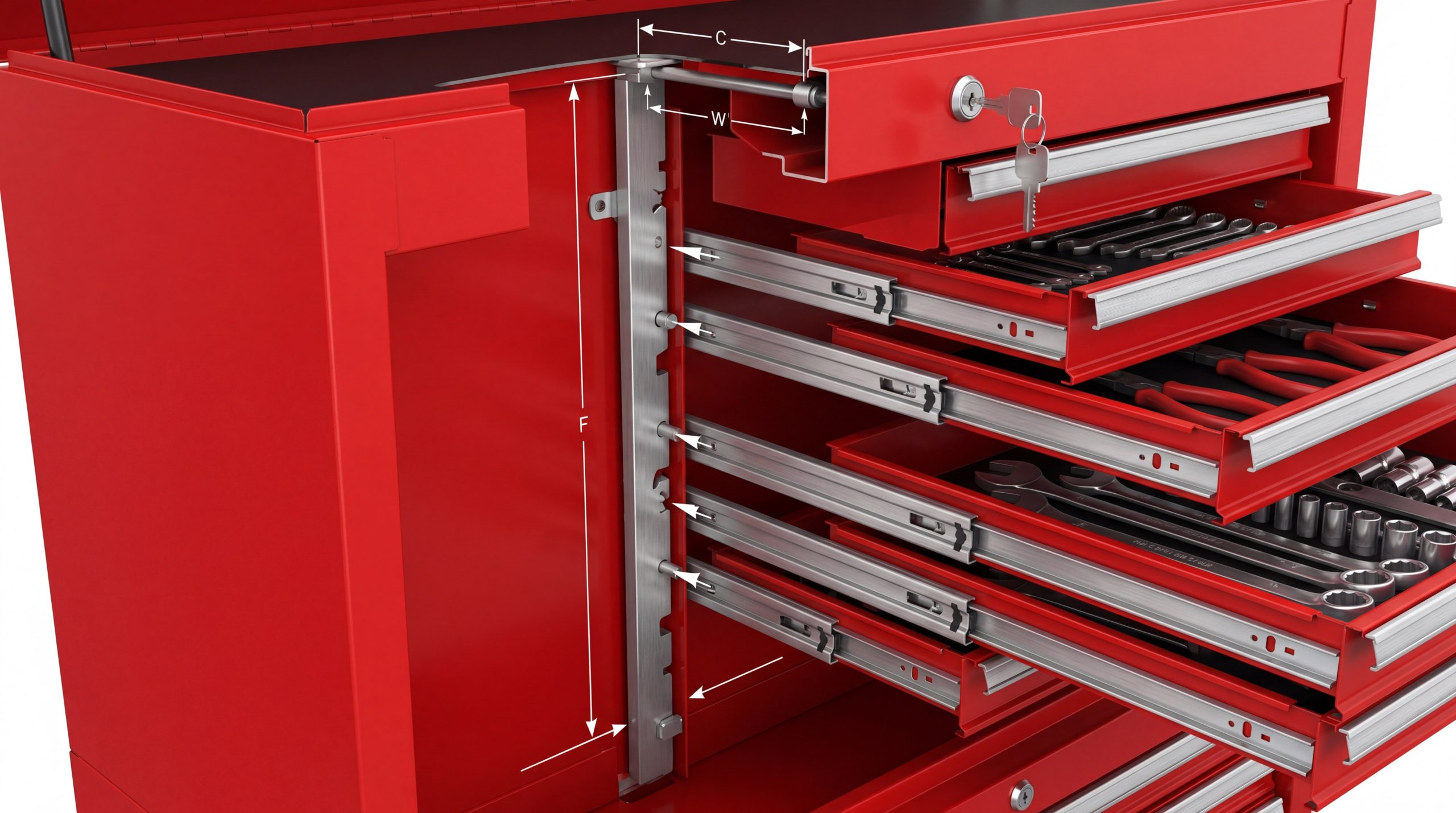
If you have a large tool cabinet with ten or more drawers, you don’t want to manage ten different locks. Central types of tool box locks solve this complexity by using a single mechanism to secure the entire unit. They are the standard for professional mechanic chests and mobile service trolleys.
Single-Point Control?
A single turn of a key moves a long vertical bar inside the cabinet. Bottom line? This bar engages with “fingers” or slots on every single drawer, securing the entire unit instantly. This system is incredibly efficient for you when you need to secure your entire shop at the end of a shift.
- One key secures the entire cabinet.
- Internal mechanics are protected from tampering.
- Reliable steel bars provide high security.
Safety Interlock Systems?
Think about it: a heavy tool chest can actually tip over if too many loaded drawers are opened at once. In a nutshell, many central locking systems include an “interlock” feature that only allows one drawer to open at a time. This protects you from potential workplace injuries and prevents damage to your expensive storage equipment.
- Prevents cabinet tipping for user safety.
- Protects drawer slides from excessive strain.
- Electronic versions can be integrated with keypads.
Key Takeaway: Central locking systems provide you with a fast, safe, and efficient way to secure multiple storage compartments with a single action.
| System Type | Mechanism | Application |
|---|---|---|
| Rear Locking Bar | Vertical rod at the back. | Stationary Chests |
| Side-Bar Locking | Rod along the drawer side. | Mobile Carts |
| Electronic Central | Solenoid-driven bars. | High-Tech Shops |
Centralized systems represent the peak of efficiency for professionals managing large collections of tools.
Which types of tool box locks fit your needs?
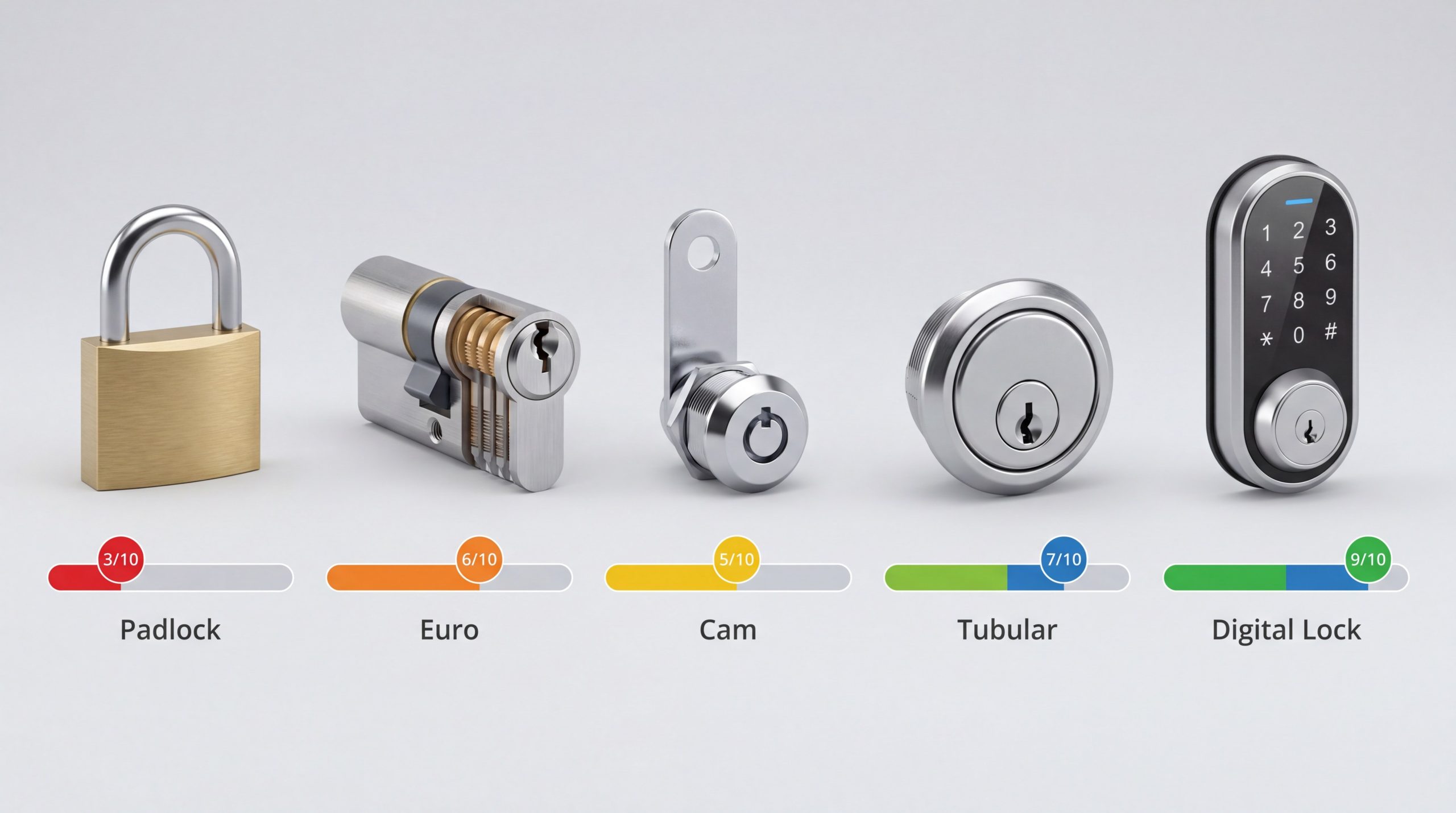
Ultimately, the best lock is the one that fits your specific workflow and environmental risks. You must weigh the value of your tools against the frequency of your access to find the perfect balance. Understanding all the types of tool box locks allows you to make an informed decision that protects your livelihood.
Assessing Your Risk Level?
If your truck is parked in a locked garage, a standard cylinder lock might be sufficient for your daily needs. Look no further than your local crime statistics to decide if you need to upgrade; if you park on the street in a major city, you may need high-security tool box features including tubular locks.
- Evaluate the average value of your tools.
- Consider the crime rate in your work areas.
- Factor in how often you leave tools unattended.
Professional Recommendations?
For most tradespeople working in the field, a high-quality compression lock or an electronic remote system provides the best value. Simply put, these options offer the best balance of weather protection and theft security. Investing in high-quality hardware today can save you thousands of dollars in replacement costs and lost labor tomorrow.
- Compression locks are best for exterior use.
- Electronic locks are best for fleet efficiency.
- Tubular locks are best for high-theft areas.
Key Takeaway: Tailoring your lock choice to your specific risk and usage patterns ensures you get the best protection without sacrificing daily productivity.
| Lock Type | Best For | Security Level |
|---|---|---|
| Tubular | Picking Resistance | High |
| Whale Tail | Weather Sealing | High |
| Combination | Team Access | Medium-High |
This comparison helps you quickly identify which locking technology aligns with your primary operational goals.
Conclusion
Securing your tools is an investment in your career’s future and your daily peace of mind. By understanding the different types of tool box locks, you can move from a position of vulnerability to one of total confidence. From the simplicity of a padlock to the high-tech precision of biometric entry, the right choice depends on your environment, your tools, and your specific workflow. Brontec Trailer is committed to helping you build the most secure and organized mobile workspace in the industry.
Our vision is to provide tradespeople with the most durable and innovative storage solutions available on the market today. Take the next step in securing your gear and ensuring your business stays mobile. Please contact us today to explore high-performance storage solutions that keep your tools safe and your business moving forward.
Frequently Asked Questions
Can I replace the lock on my current toolbox?
Yes, most toolboxes use standardized cylinder or cam locks that can be swapped out with basic hand tools. This is a common practice if you lose your keys or wish to upgrade your security level.
What is the best lock for a truck toolbox?
A compression-style lock is the superior choice for truck-mounted boxes. Mechanisms like whale tails or T-handles with weather covers are designed to seal out water and resist the constant vibrations of the road.
Can I have all my toolboxes keyed the same?
Absolutely. Professional manufacturers can “key alike” multiple cylinders so that one single key opens every box on your truck. This significantly simplifies your daily routine and reduces the size of your keyring.
Are electronic toolbox locks waterproof?
Yes, most professional-grade electronic locks are rated IP65 or higher. This means they are protected against dust and water spray, though you should always verify the manufacturer’s specific rating for exterior mounting.
What is the best way to prevent a lock from freezing in winter?
A graphite-based lubricant is the most effective preventative measure. Avoid using oil or boiling water, as these can lead to future rust or internal damage once the temperature drops again.