
Complete truck front-end protection is a multi-layered combination of engineered steel or aluminum barriers, such as grille guards and replacement bumpers, designed to preserve structural integrity and prevent vehicle downtime under severe impact. You operate high-value commercial vehicles where delicate cooling systems, expensive LED headlights, and complex ADAS radar sensors are crowded directly behind fragile factory plastic grilles. A single sudden impact with road debris, a low-speed backing accident, or an unexpected wildlife collision can easily cause over $5,000 in immediate damage. But the physical repair bill is only the tip of the iceberg when your truck is sidelined for days or weeks. For commercial fleets and owner-operators, unscheduled downtime destroys delivery schedules, strands drivers, and burns through thousands of dollars in lost B2B revenue and towing fees. Investing in a robust, engineered truck front end protection system is the ultimate shield to keep your trucks on the road and out of the repair shop. By choosing heavy-duty guards that transfer impact forces directly to the truck frame, you proactively protect your capital assets, lower your total cost of ownership (TCO), and build an impenetrable line of defense for every highway mile.
Why Is Truck Front-End Protection Essential?
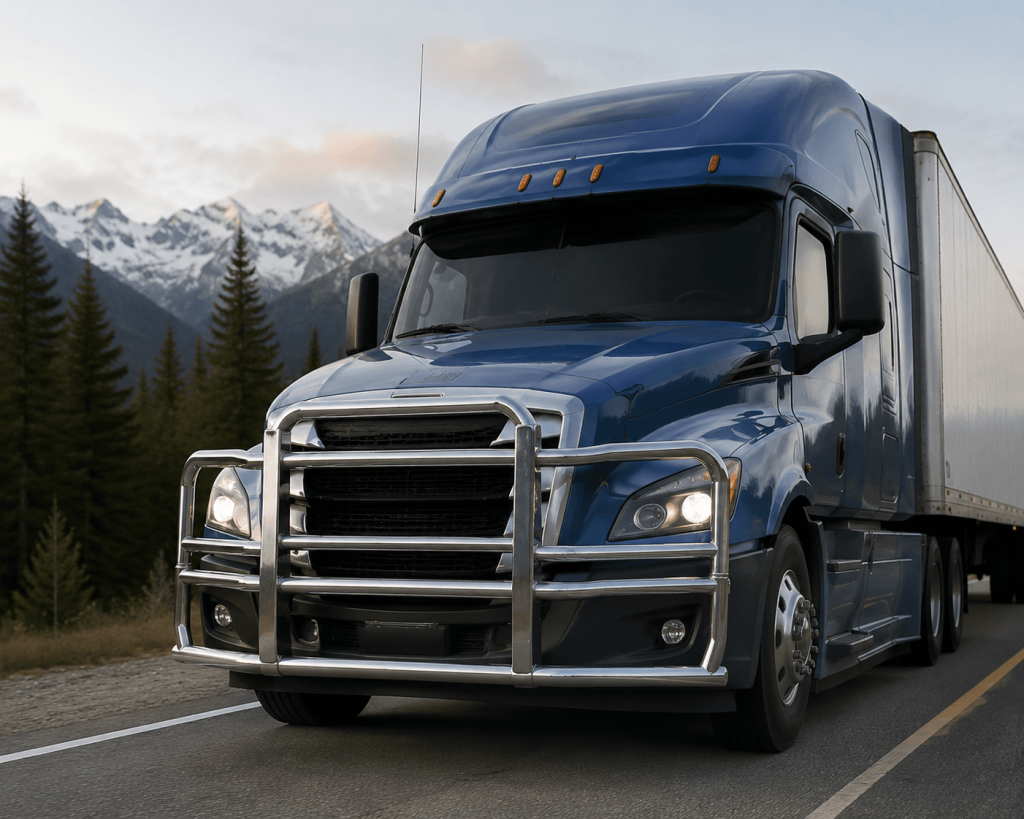
Truck front-end protection is essential because modern commercial vehicles house their most vulnerable and expensive mechanical components directly behind fragile plastic bumpers and grilles. If a collision punctures your radiator or charge air cooler, your engine will immediately overheat and strand your vehicle. Investing in physical guards ensures these critical fluid-exchange systems remain fully functional after an impact.
Additionally, the structural integrity of your vehicle’s frame must be preserved during heavy loading or unexpected collisions. Standard factory bumpers offer zero structural resistance and crumple under minor forces. Heavy-duty aftermarket guards act as a solid first line of defense to absorb and redirect kinetic energy away from the engine bay.
What are the primary front-end hazards?
Navigating active transit corridors, logging routes, or busy construction zones exposes your commercial vehicles to constant front-end hazards. Flying highway debris, loose gravel, and minor parking lot fender-benders can instantly shatter expensive LED headlight assemblies. These frequent incidents lead to costly cosmetic and structural repairs.
The danger compounds dramatically when driving through rural or forested areas at dawn and dusk. Colliding with a heavy animal at highway speeds will completely obliterate unprotected front-end panels. Installing high-strength barriers prevents these catastrophic collisions from disabling your fleet.
- High-velocity highway debris and gravel impacts.
- Low-speed backing accidents in tight loading docks.
- Severe wildlife collisions, including deer and moose strikes.
- Direct exposure of fragile aluminum radiator cores to external debris.
Here is the deal:
| Hazard Level | Typical Event | Vulnerable Components | Fleet Impact |
|---|---|---|---|
| Minor | Gravel & Debris | LED Headlights, Chrome Trim | Aesthetic damage, replacement costs |
| Moderate | Low-speed dock bumps | Plastic bumper, grill | Radiator leaks, minor downtime |
| Severe | Wildlife collision | Radiator, intercooler, frame | Total vehicle disablement, high TCO |
The data in this table clearly shows that minor hazards quickly escalate to severe fleet disablement if you operate without structural armor.
Key Takeaway: Implementing commercial-grade shielding is a proactive strategy that eliminates high-cost mechanical repairs and keeps your trucks running smoothly through every hazardous driving environment.
How Do Grille Guards Prevent Costly Repairs?
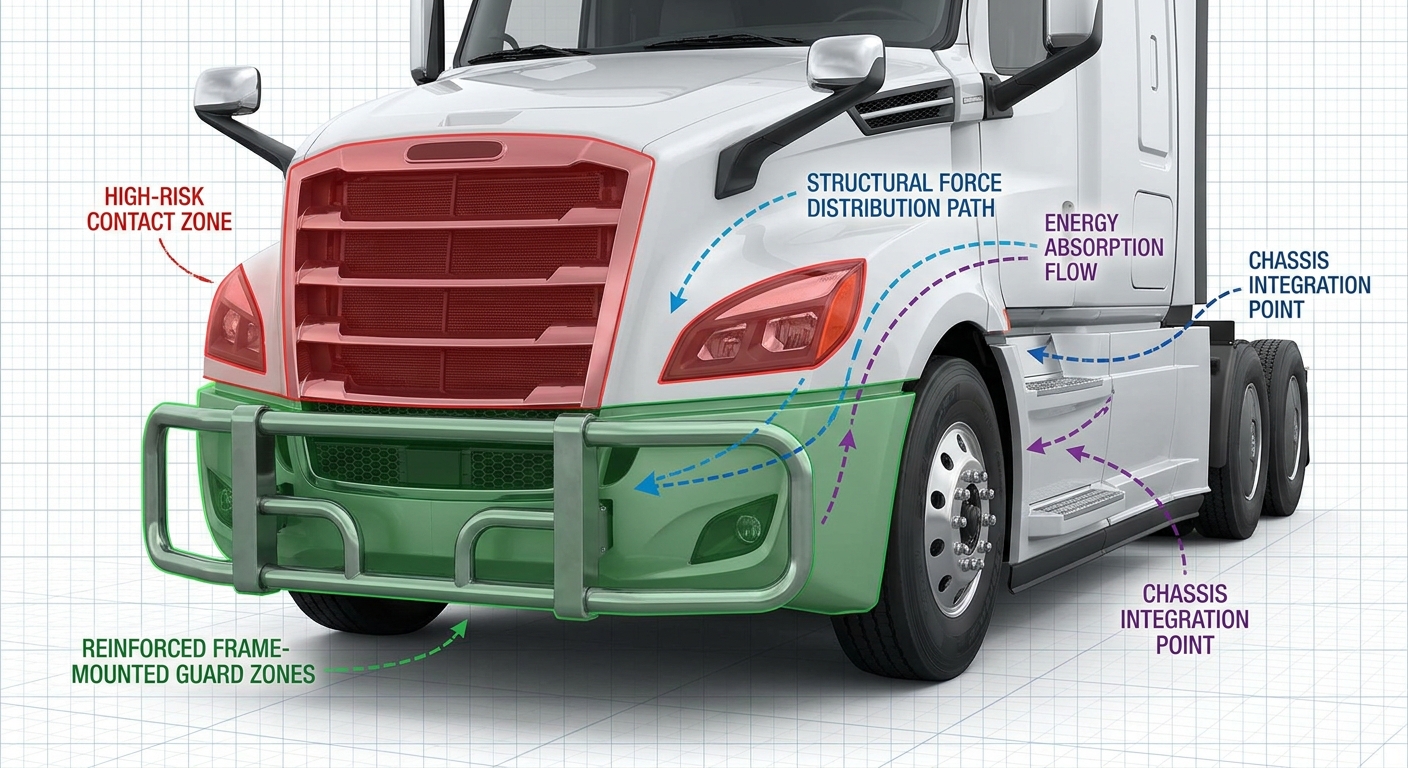
Grille guards prevent costly repairs by dispersing high-energy impact forces away from delicate body panels and routing them directly to your vehicle’s frame. Selecting a robust, frame-mounted system ensures that your investment in truck front end protection completely shields the radiator, cooling fans, and outer fenders. This heavy-gauge barrier stands between unexpected road hazards and your bottom line.
Furthermore, preventing minor contact from escalating into structural damage reduces your long-term fleet maintenance overhead. By absorbing localized forces, these guards prevent the costly warping of engine mounts and front chassis components. They keep your vehicle aligned and operating at peak mechanical efficiency.
How is impact energy distributed?
When an object collides with a wrap-around grille guard, the kinetic energy is immediately transferred through structural uprights to the mounting brackets. These heavy-duty steel brackets are bolted directly to your truck’s chassis frame rails, which are designed to handle massive loads. This structural pathway bypasses the fragile cosmetic components entirely.
This calculated energy dissipation protects the core cooling stack from being pushed back into the engine block. It ensures that even after a significant highway impact, your driver can safely navigate to a terminal. This saves your business from expensive remote towing and recovery fees.
- Direct-to-frame mounting brackets transfer forces safely.
- Heavy vertical uprights prevent localized sheet metal crushing.
- Crossbars distribute impact energy across the entire chassis width.
- Headlight loops deflect side brush and debris away from fenders.
Look:
| Component Type | Energy Path | Structural Role | Safety Outcome |
|---|---|---|---|
| Vertical Uprights | Direct frontal impact | Primary load absorber | Prevents radiator puncture |
| Side Headlight Loops | Angular sweep | Deflection shield | Safeguards LED headlights |
| Frame Brackets | Chassis connection | Load transfer path | Eliminates body panel warping |
This structural engineering breakdown demonstrates how frame-level integration transforms a local impact into a safely distributed load.
Key Takeaway: Choosing frame-mounted grille guards ensures that high-energy collisions bypass your fragile cooling systems entirely, preserving your truck’s structural integrity.
Are Frame-Mounted Steel Brackets Mandatory?
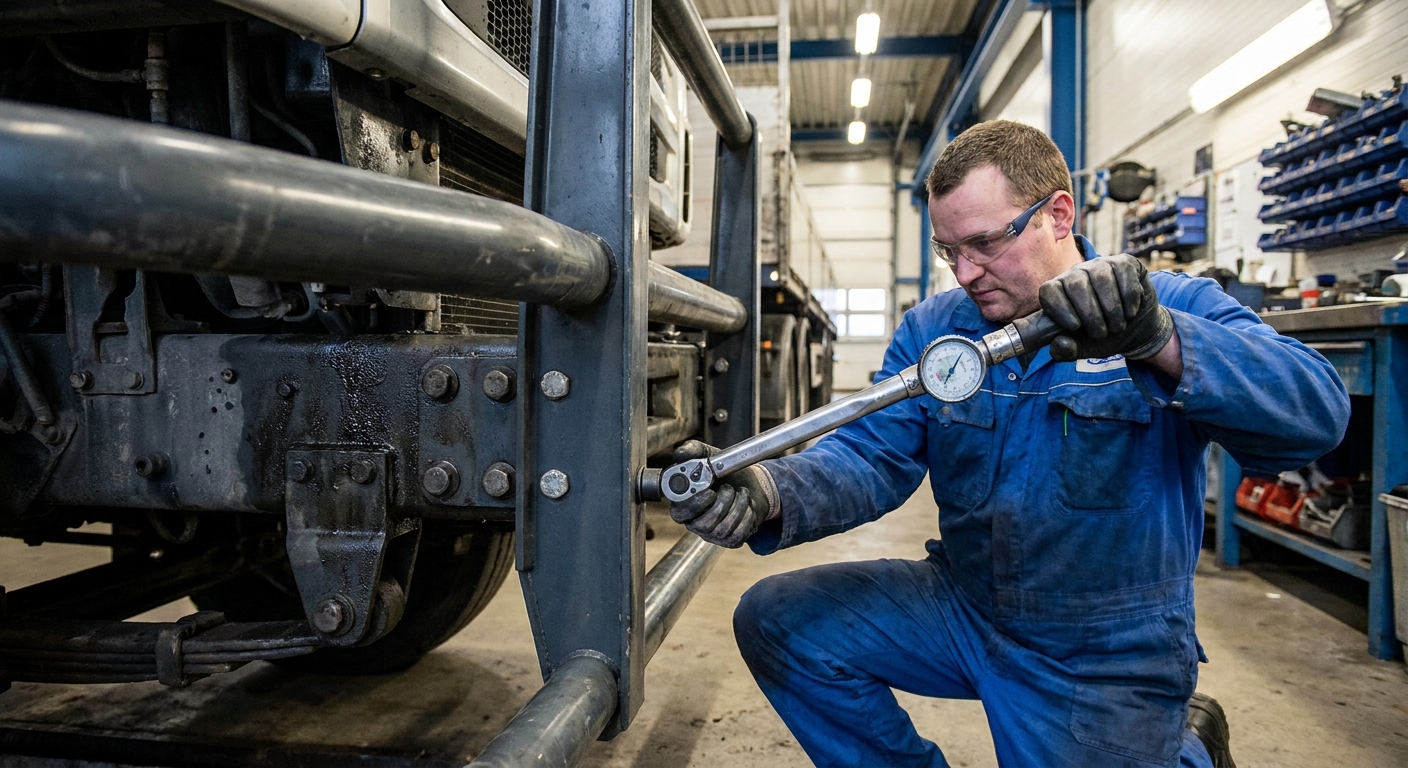
Frame-mounted steel brackets are absolutely mandatory for any front-end guard because they provide the structural foundation required to survive severe highway impacts. If you attempt to mount a guard to thin bumper skin or cosmetic radiator supports, the entire assembly will fail during a collision. These heavy brackets ensure a rigid, secure connection directly to your truck’s high-tensile chassis.
Utilizing heavy-duty brackets also prevents the guard from vibrating, rattling, or shifting during high-speed transit. This tight connection eliminates structural fatigue on the guard’s welded seams over years of operation. It guarantees that your investment remains solid and ready for unexpected impacts.
Why is chassis mounting superior?
Chassis-level mounting leverages the strongest structural point on your truck to anchor your front-end armor. Bolting directly to the pre-existing tow hook holes ensures that no weak aftermarket modifications compromise your vehicle’s safety rating. This direct connection creates a unified protective structure.
In contrast, mounting systems that rely on thin sheet metal brackets will twist or shear off under minimal force. This failure can actually cause the guard to fold backward, causing more extensive engine damage than the original impact. Secure frame mounting is the only way to guarantee reliable performance.
- Utilizes high-strength SAE Grade 8 hardware for assembly.
- Connects directly to OEM tow hook mounting channels.
- Eliminates the need for risky field drilling or welding.
- Prevents guard vibration and eventual weld joint failure.
But wait, there is more:
| Mounting Type | Material Thickness | High-Speed Impact Performance | Structural Damage Risk |
|---|---|---|---|
| Direct Frame-Mount | 8 mm – 10 mm Steel | Excellent (Energy fully absorbed) | Extremely low |
| Bumper-Skin Mount | 2 mm – 3 mm Alloy | Poor (Bracket easily shears) | High (Guard collapses) |
| Radiator-Support | Thin Sheet Metal | Fail (Crushes cooling core) | Catastrophic |
As detailed above, direct frame-mounting is the only method that eliminates the risk of guard collapse during severe highway impacts.
Key Takeaway: Insisting on direct chassis integration via thick steel brackets ensures your guards remain rigidly anchored to handle maximum collision forces.
Do Grille Guards Block Critical ADAS Sensors?
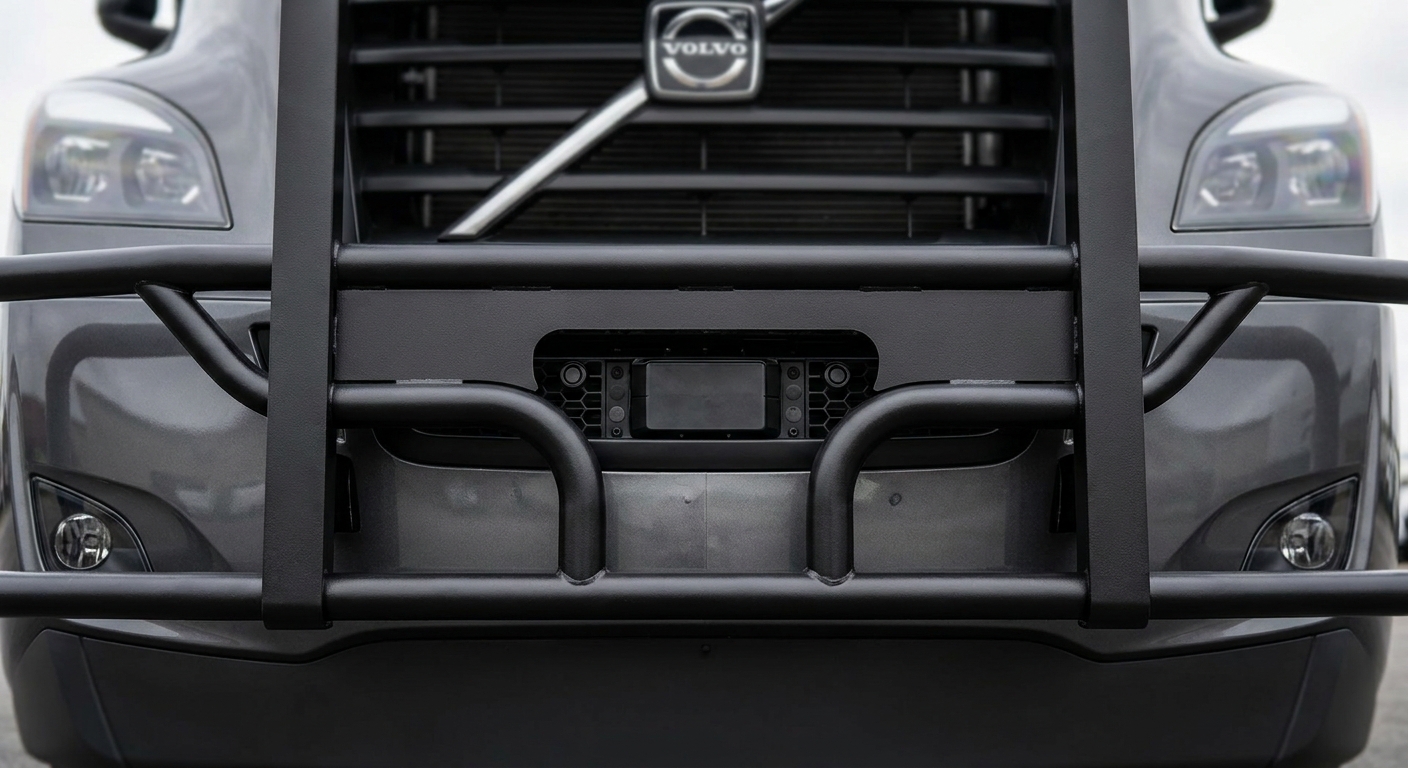
Grille guards do not block critical Advanced Driver Assistance Systems (ADAS) sensors when they are designed with precision vehicle-specific spacing and sensor-compatible profiles. Choosing an engineered truck front end protection system ensures your adaptive cruise control, collision mitigation radar, and parking sensors maintain an unobstructed field of view. This intelligent spacing lets you deploy robust physical armor without triggering frustrating safety system faults.
Proper engineering prevents the metallic surfaces of the guard from reflecting radar waves back into the receiver. This eliminates false collision warnings and keeps your active safety systems operating exactly as the OEM intended. You get the perfect blend of structural armor and high-tech accident prevention.
How is sensor alignment maintained?
Precision CAD modeling allows manufacturers to position horizontal bars and mesh panels around your truck’s front radar array. These specific openings are calculated to match the exact emission angles of modern safety sensors. This meticulous design process ensures that microwave signals pass through the guard without disruption.
For trucks with low-mounted radar units, specialized sensor relocation brackets are included to keep the system active. These brackets position the delicate sensor in a secure, elevated housing that maintains correct horizontal alignment. This maintains your factory safety ratings while providing maximum physical armor.
- Clear radar pathways prevent automatic emergency braking faults.
- Relocation brackets maintain factory-calibrated sensor angles.
- Specially spaced horizontal tubes clear front-facing camera views.
- Non-reflective black finishes prevent microwave signal bounce.
Here is the deal:
| ADAS System | Potential Issue | Precision Solution | System Functionality |
|---|---|---|---|
| Radar Cruise | Signal blockage | Calculated open-window design | 100% active calibration |
| Collision Mitigation | False braking | Non-reflective tube positioning | Factory standards maintained |
| Parking Sensors | Obstacle alerts | Relocation bracket housing | Full peripheral coverage |
This sensor integration overview highlights how advanced engineering preserves all factory digital safety nets while adding tough physical armor.
Key Takeaway: Choosing guards designed with precision CAD clearance allows you to safeguard your mechanical cooling systems without compromising critical ADAS functions.
Can Aluminum Guards Match Steel Durability?
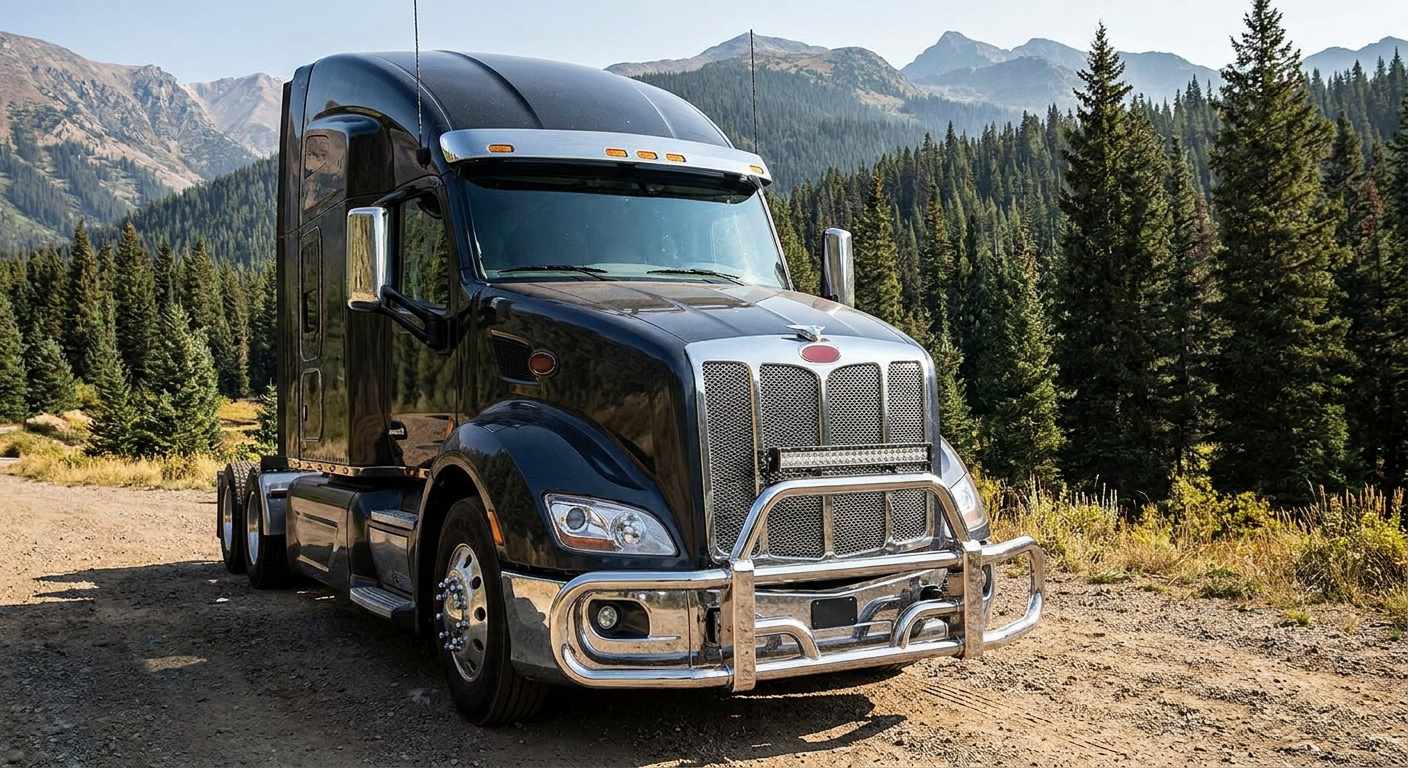
Aluminum guards can match steel durability in most highway environments when built with thick-walled, high-strength structural alloys like 6061-T6. While steel remains the ultimate material for extreme, severe-duty impacts, premium heavy-duty aluminum provides incredible structural strength at a fraction of the weight. This lightweight resilience makes aluminum the ideal choice for maximizing your payload capacity.
Additionally, aluminum naturally resists corrosion without requiring expensive powder coatings or chrome plating. It stands up to winter road salt and moisture without weakening or staining over time. It represents a highly durable, low-maintenance option for regional transport.
When does aluminum excel?
Aluminum excels in long-haul highway applications where every pound of vehicle weight directly impacts fuel economy and payload limits. Installing a lightweight aluminum guard protects your front end without exceeding front-axle weight ratings. It allows your fleet to haul more freight while maintaining a robust safety barrier.
The natural flexibility of structural aluminum alloys also helps absorb energy during animal strikes. It deforms slightly to dissipate kinetic forces before returning to its original shape under moderate loads. This material behavior provides reliable physical protection for high-speed highway fleets.
- High-strength 6061-T6 aluminum offers excellent structural integrity.
- Saves up to 50% of the weight compared to standard steel guards.
- Built-in resistance to rust, oxidation, and aggressive winter chemicals.
- Maintains front-axle weight limits for maximized fleet cargo capacity.
But wait, there is more:
| Material Profile | Tensile Strength | Average Weight | Corrosion Protection |
|---|---|---|---|
| 6061-T6 Aluminum | 310 MPa | 60 – 90 lbs | Inherent (Rust-proof oxide layer) |
| Mild Carbon Steel | 400 MPa | 140 – 220 lbs | High (Requires powder coating) |
| 304 Stainless Steel | 505 MPa | 160 – 240 lbs | Outstanding (Chrome alloy blend) |
This material comparison proves that engineered aluminum provides a high-strength, lightweight alternative for fuel-conscious transport operators.
Key Takeaway: Utilizing thick-walled 6061-T6 aluminum guards allows you to achieve reliable front-end protection while keeping vehicle weight low and fuel savings high.
Should You Choose Polished Stainless Steel?
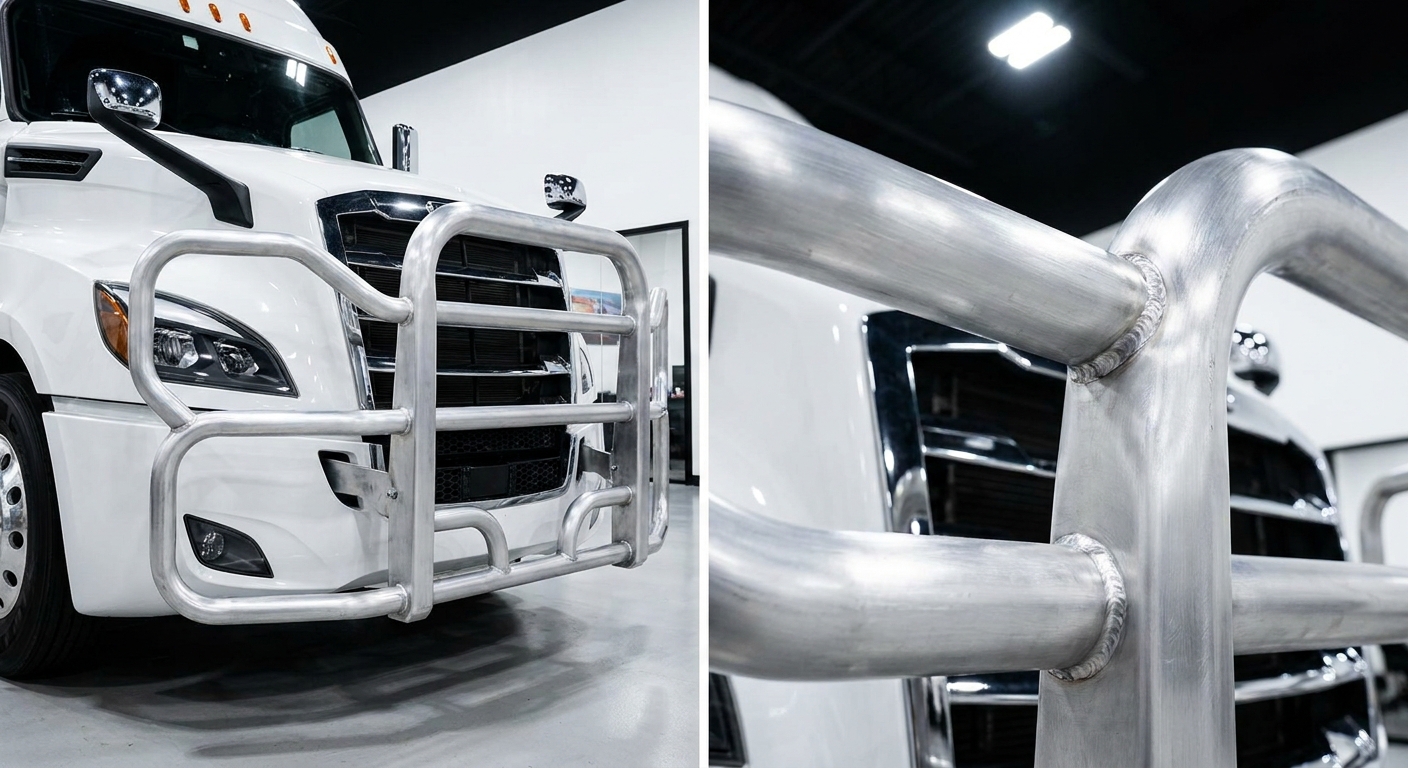
You should choose polished stainless steel if you operate in harsh winter climates where aggressive road salts and moisture would rapidly corrode standard steel guards. Investing in premium 304 stainless steel truck front end protection guarantees that your guards will never rust, peel, or weaken over years of severe exposure. This alloy contains high levels of chromium and nickel to deliver permanent, lifetime corrosion protection.
Beyond its incredible durability, polished stainless steel provides a highly professional, premium look for your fleet. It retains its brilliant mirror finish through countless wash cycles and heavy highway miles. It represents the gold standard for long-term reliability and professional aesthetic appeal.
Why is 304 stainless steel superior?
The chemical composition of 304 stainless steel makes it highly resistant to pitting and oxidation caused by highway chemicals. Unlike standard chrome-plated steel, which rusts as soon as a rock chips the thin outer coating, stainless steel is rust-resistant throughout. This ensures permanent structural strength.
In addition to corrosion resistance, 304 stainless steel has exceptional tensile strength to withstand high-energy impacts. It resists cracking and structural deformation under extreme stress, keeping your radiator fully protected. This is the ultimate material for severe-duty transit routes.
- Permanent corrosion resistance throughout the entire metal structure.
- Withstands rock chips and highway sand without rusting.
- Easy to clean and polish to maintain a professional appearance.
- High tensile strength to absorb and deflect severe highway impacts.
Look:
| Alloy Type | Rust Resistance | Chip Vulnerability | Lifespan Rating |
|---|---|---|---|
| 304 Stainless Steel | Outstanding | None (Solid alloy composition) | Lifetime durability |
| Painted Carbon Steel | Low | High (Exposes bare metal to rust) | 2 – 5 Years |
| Chrome-Plated Steel | Moderate | High (Micro-cracks let moisture in) | 3 – 6 Years |
This chemical evaluation clearly demonstrates why solid 304 stainless steel outlasts coated options in corrosive winter road conditions.
Key Takeaway: Investing in polished 304 stainless steel ensures your front-end armor remains structurally sound and highly professional for the life of your truck.
Is a Full Bumper Replacement Necessary?
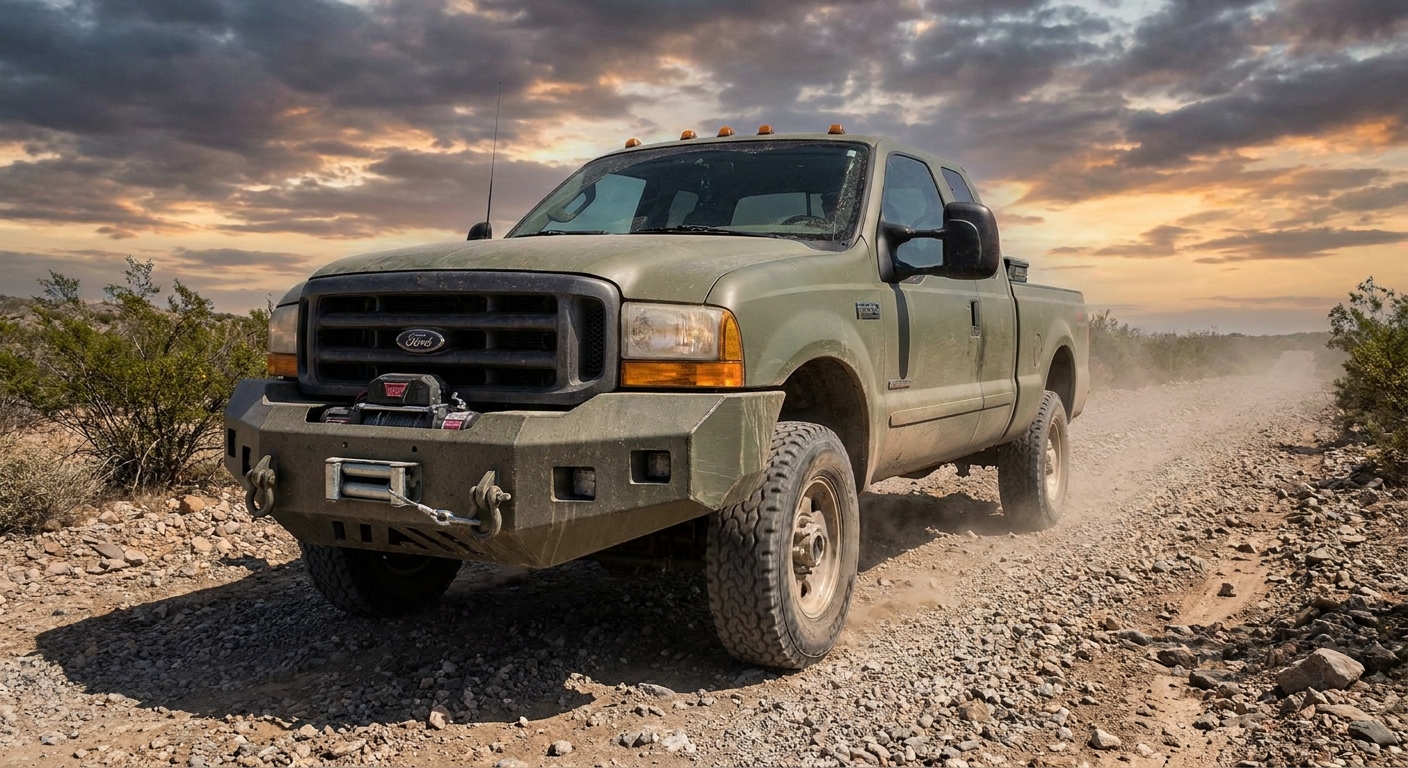
A full bumper replacement is necessary when your vehicles operate in extreme terrain like logging trails, mining pits, or deep wilderness routes where maximum impact defense is required. These monolithic steel assemblies replace your fragile factory plastic bumper with a solid armor plate. This complete replacement eliminates vulnerable lower entry points for rocks, logs, and deep brush.
For standard highway transport, a frame-mounted grille guard is usually sufficient to handle common debris and wildlife strikes. However, if your business takes trucks off-road, a heavy-duty bumper replacement is the only way to guarantee survival. It turns the entire front-end of your vehicle into an impenetrable steel shield.
When do you need maximum armor?
Utility trucks, heavy logging fleets, and mining vehicles face severe mechanical abuse that would instantly destroy standard highway guards. Off-road trails feature deep ruts, falling limbs, and hidden stumps that require maximum lower-chassis protection. A full steel bumper replacement guards the steering gear and underbody components from these hazards.
These heavy-duty assemblies also feature built-in winch mounts and reinforced recovery points welded directly to the frame brackets. This allows for safe, heavy self-recovery operations in isolated wilderness environments. It provides the ultimate utility for severe off-grid commercial operations.
- Heavy-gauge structural steel plate replaces vulnerable OEM plastic.
- Integrated high-capacity winch plate supports self-recovery.
- Angled design improves front approach angles on steep off-road terrain.
- Protects fragile lower steering linkages and oil pan components.
Here is the deal:
| Protection Option | Terrain Suitability | Frame Load Transfer | Integrated Recovery |
|---|---|---|---|
| Full Replacement Bumper | Severe Off-Road, Mining | Maximum (Heavy bracket rails) | Yes (Winch, heavy shackles) |
| Standard Grille Guard | Highway, Regional Routes | High (Direct frame tow points) | No (Light duty only) |
| Cosmetic Bull Bar | Urban, Suburban Commuting | Low (Light mounting plates) | No (None allowed) |
The application guidelines above help you determine whether your terrain demands a complete bumper replacement or a standard grille guard.
Key Takeaway: Upgrading to a full steel replacement bumper provides ultimate, gap-free armor for vehicles operating in severe off-road and high-risk utility sectors.
How Can You Properly Maintain Steel Guards?
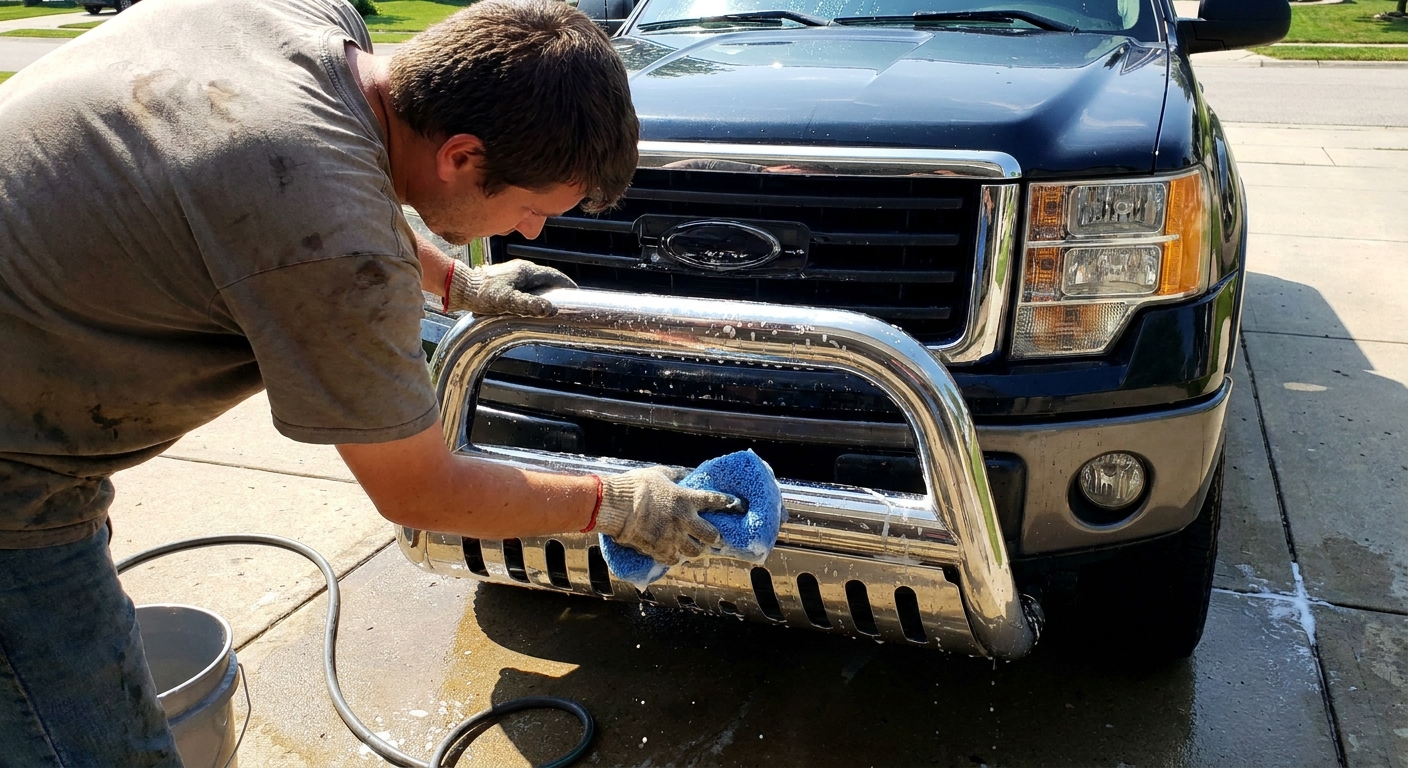
You can properly maintain steel guards by performing regular cleanings to wash away corrosive road salts and checking the frame-mount bolts for proper torque. Over time, heavy road vibrations can loosen mounting hardware, leading to unwanted rattles and structural wear. A simple maintenance routine preserves both the appearance and safety function of your front-end armor.
Additionally, inspecting painted or powder-coated guards for rock chips allows you to touch up exposed metal before rust takes hold. Keeping the surface sealed prevents oxidation from undermining the structural steel beneath. Proper care ensures your guards remain tough and look professional for years.
What is the optimal care schedule?
A monthly inspection schedule is ideal for fleets operating in harsh seasonal environments or high-mileage transport. Washing your guards with mild soap and water removes aggressive winter de-icing chemicals and road grime. This simple step prevents chemical staining and dulling of polished stainless steel finishes.
During your monthly inspection, you should also visually check all welded joints for stress fractures or paint cracks. Ensuring that the mounting brackets are tightly secured to the frame rails keeps the guard properly aligned. This proactive approach ensures your equipment is always ready for an unexpected collision.
- Wash with clean water and mild soap to remove corrosive winter salt.
- Inspect frame mounting bolts and re-torque to specifications.
- Touch up any minor powder coat chips with protective metal paint.
- Check structural weld joints for signs of stress or fatigue.
But wait, there is more:
| Maintenance Task | Recommended Frequency | Tool Required | Purpose |
|---|---|---|---|
| Surface Washing | Monthly (Weekly in winter) | Hose, sponge, mild soap | Removes road chemicals & salt |
| Hardware Check | Every 10,000 Miles | Torque wrench, socket set | Prevents vibration & bolt looseness |
| Paint Touch-Up | Quarterly | Rust-inhibitive paint | Seals rock chips, prevents rust |
| Weld Inspection | Semi-annually | Flashlight, visual check | Guarantees structural integrity |
This straightforward maintenance schedule outlines how minimal investment in routine care extends the service life of your fleet’s protection.
Key Takeaway: Performing quick monthly cleanings and regular hardware checks keeps your front-end guards structurally sound and looking highly professional.
Which Finish Outperforms in Harsh Weather?
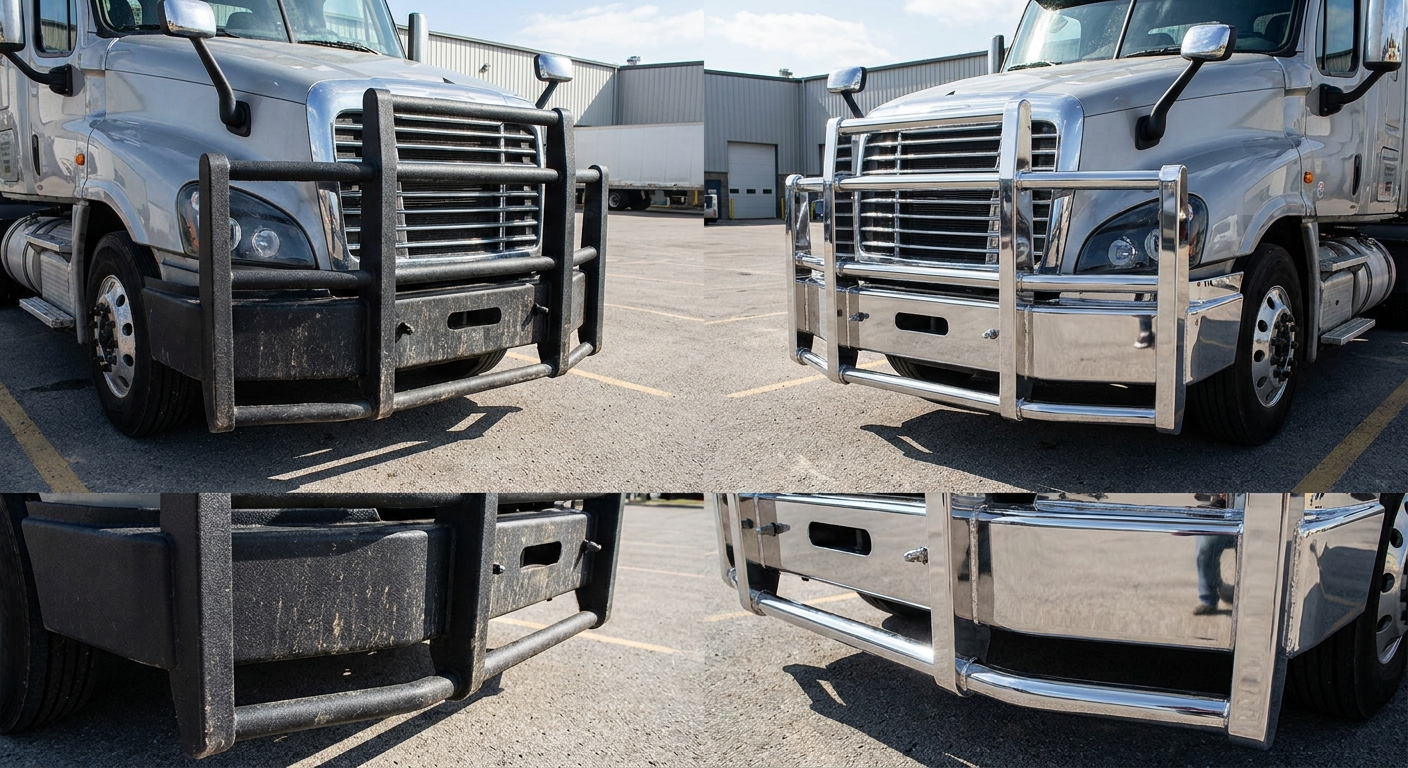
A polished stainless steel finish outperforms all other options in harsh weather due to its natural, solid resistance to rust, peeling, and chemical staining. Unlike painted or powder-coated finishes that can chip and allow rust to spread underneath, stainless steel contains its corrosion protection throughout the entire alloy. This ensures it stays completely unaffected by winter road salts and humidity.
For fleets that prefer a dark look, a high-quality multi-stage powder coat over a stainless steel base represents the absolute best colored option. This premium dual-layer combination offers the style of black powder coating with the rust-proof safety of stainless steel. It delivers exceptional durability in any seasonal environment.
How do coatings compare in winter?
Cold winter roads are treated with aggressive calcium chloride and salt mixtures that rapidly corrode bare carbon steel. If you choose a standard powder-coated carbon steel guard, minor rock chips will quickly lead to unsightly rust streaks. Polished stainless steel naturally resists these chemical attacks without requiring any protective coatings.
Furthermore, the smooth surface of polished stainless steel makes it difficult for ice, snow, and road grime to bond to the metal. This keeps your front grille clear and ensures optimal airflow to your engine during winter storms. It is the ultimate weather-resistant solution for long-haul trucks.
- Polished stainless steel offers natural, solid-alloy rust protection.
- Multi-stage powder coating provides excellent impact resistance.
- Stainless steel bases prevent rust from spreading under chipped paint.
- Smooth polished surfaces naturally repel winter ice and road grime.
Look:
| Finish Option | Salt-Spray Rating | Resistance to Chipping | Aesthetic Lifespan |
|---|---|---|---|
| Polished Stainless | 1000+ Hours (Outstanding) | Inherent (No coating to chip) | Permanent mirror shine |
| Powder over Stainless | 800+ Hours (Very High) | High (Stainless base resists rust) | 5 – 8 Years |
| Powder over Carbon | 400+ Hours (Moderate) | Medium (Chips will rust) | 2 – 4 Years |
This weather-performance comparison highlights why choosing polished stainless steel minimizes long-term aesthetic and structural maintenance.
Key Takeaway: Opting for a premium polished stainless steel finish provides the highest level of weather resistance, eliminating rust worries on winter transport routes.
What Is the Real Return on Guard Investment?
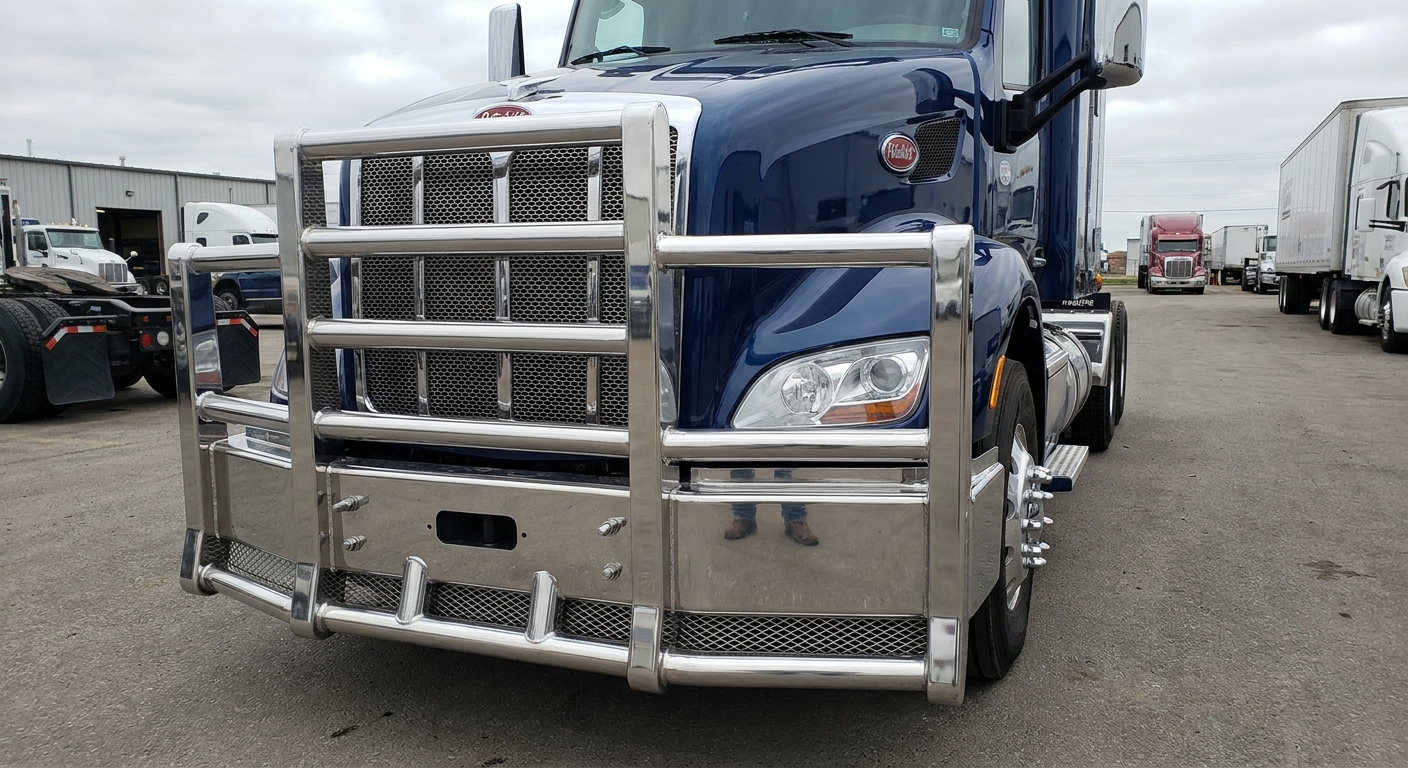
The real return on investment for a front-end guard is realized through the immediate prevention of costly mechanical repairs and the elimination of expensive vehicle downtime after a highway collision. A single wildlife strike can easily cause over $30,000 in combined towing fees, cooling system parts, body panel replacement, and lost business revenue. Installing a truck front end protection system ensures your truck survives the impact and continues its route.
This robust physical defense keeps your insurance premiums stable by avoiding costly collision claims. It also extends the lifecycle of your vehicles by protecting core chassis alignments from warping during impacts. It represents a highly strategic, high-yield financial decision for B2B fleet operations.
How do you calculate fleet savings?
Calculating fleet savings requires comparing the initial cost of front-end guards against the historical expenses of repair bills and cargo delays. If your trucks operate in high-risk wildlife corridors, a single animal collision can write off a vehicle or cause weeks of idle driver downtime. A reliable guard pays for itself the very first time it deflects an impact.
Additionally, preserving vehicle uptime helps you maintain consistent delivery schedules and retain valuable commercial B2B clients. It prevents the reputational damage and financial penalties associated with late or missed deliveries. Protecting your front end is key to safeguarding your operational revenue.
- Saves thousands of dollars in parts and labor per collision.
- Eliminates remote towing charges and emergency driver lodging.
- Prevents costly delivery delays and B2B contract penalties.
- Lowers overall fleet insurance claims and maintains stable premiums.
Here is the deal:
| Fleet Scenario | Without Front-End Armor | With Frame-Mounted Guard | Net Fleet Savings |
|---|---|---|---|
| Highway Deer Strike | $8,500 repair + 5 days idle | $0 damage (Guard deflected impact) | $8,500 + Zero Downtime |
| Minor Dock Collision | $1,800 repair + 1 day idle | $0 damage (Bumper shielded) | $1,800 + Zero Downtime |
| Severe Wildlife Strike | $30,000 total loss + Towing | $600 (Guard replaced, truck saved) | $29,400 + Active Fleet |
The financial comparisons above prove that installing high-strength guards delivers an immediate, massive return on investment during typical fleet accidents.
Key Takeaway: Equipping your commercial vehicles with heavy-duty front-end shielding is a high-yield financial investment that keeps your fleet active and protects your bottom line.
Frequently Asked Questions
Can I install a grille guard if my truck has front parking sensors?
Yes, but you must use a sensor-compatible guard or a relocation bracket to keep the safety systems active. Precision-engineered guards are designed with CAD-mapped openings that align perfectly with OEM sensor coordinates. This prevents the steel bars from blocking the sensor’s field of view, ensuring your parking alerts and collision warnings continue to work flawlessly.
What’s the best material for severe-duty wildlife protection?
High-grade 304 stainless steel or thick-walled structural steel is the absolute best choice for high-impact wildlife protection. These materials offer the extreme tensile strength and wall thickness required to absorb and redirect the massive kinetic forces of a high-speed animal strike. While aluminum is excellent for weight-sensitive highway fleets, severe-duty environments demand the dense structural mass of heavy steel.
How do I know if a guard will affect my truck’s fuel economy?
You should expect negligible impacts on your fuel economy if you select an aerodynamically optimized, open-tube grille guard. High-quality guards undergo extensive computational fluid dynamics (CFD) modeling to ensure they do not increase the vehicle’s drag coefficient or block cooling airflow. Only heavy, solid-plate replacement steel bumpers will cause a minor drop in MPG due to their added physical weight.
Can I recover my vehicle using a standard bull bar mounting point?
Absolutely not, because light-duty bull bar brackets are not designed to withstand heavy pulling or recovery forces. Attempting to winch or pull a stuck vehicle from a bull bar will rip the brackets from the frame and cause severe structural damage. You must use a heavy-duty replacement bumper with frame-welded, high-capacity recovery tabs for safe towing and winching operations.
How do I know if my guard requires professional installation?
Professional installation is highly recommended if your guard requires complex ADAS sensor relocation, custom frame cutting, or heavy bumper replacement. While simple bolt-on grille guards can be mounted in a standard garage with basic tools, aligning heavy plate steel bumpers and recalibrating advanced radar sensors requires specialized equipment. Ensuring perfect alignment prevents structural vibrations and system errors.
Strategic Action Plan
Safeguarding your commercial fleet from catastrophic collisions and costly downtime requires a proactive, engineering-led approach to physical defense. Modern roads present constant hazards, from high-velocity gravel and loading dock mishaps to severe high-speed wildlife strikes. Leaving your expensive, fragile cooling systems and delicate ADAS sensors protected by nothing more than factory plastic is a risk your business cannot afford. Implementing heavy-duty, frame-mounted shielding is the ultimate way to lower your TCO and ensure your operations never grind to a halt.
Our B2B heavy-duty protection programs utilize robotic welding, multi-axis CNC machining, and rigorous quality control to deliver precise, rattle-free fitment with within +/- 0.5 mm tolerances. We help you eliminate sample-to-batch variance and secure your fleet with the absolute highest level of physical protection. Partner with a manufacturer that prioritizes structural integrity, long-term durability, and manufacturing excellence. To discuss your fleet’s custom protection requirements, explore engineering drawings, and request a technical volume quote, contact us today and let our expert engineering team secure your bottom line.