
High-performing fleets maximize the road uptime and structural integrity of their aerodynamic assets by selecting a custom-engineered Volvo VNL Truck Guard to absorb front-end impact forces before they reach critical engine components. Operating on busy regional routes exposes modern Volvo VNL tractors to unpredictable road hazards, wildlife crossings, and terminal debris that threaten their aerodynamic bumper assemblies. A single deer strike can shatter composite fairings and puncture the delicate cooling pack behind the grille, leading to immediate towing costs and weeks of expensive diagnostic downtime. Standardizing your fleet with high-durability shielding provides an unyielding mechanical buffer that preserves active safety systems and keeps assets rolling.
Why Spec a Volvo VNL Truck Guard for Your Fleet?
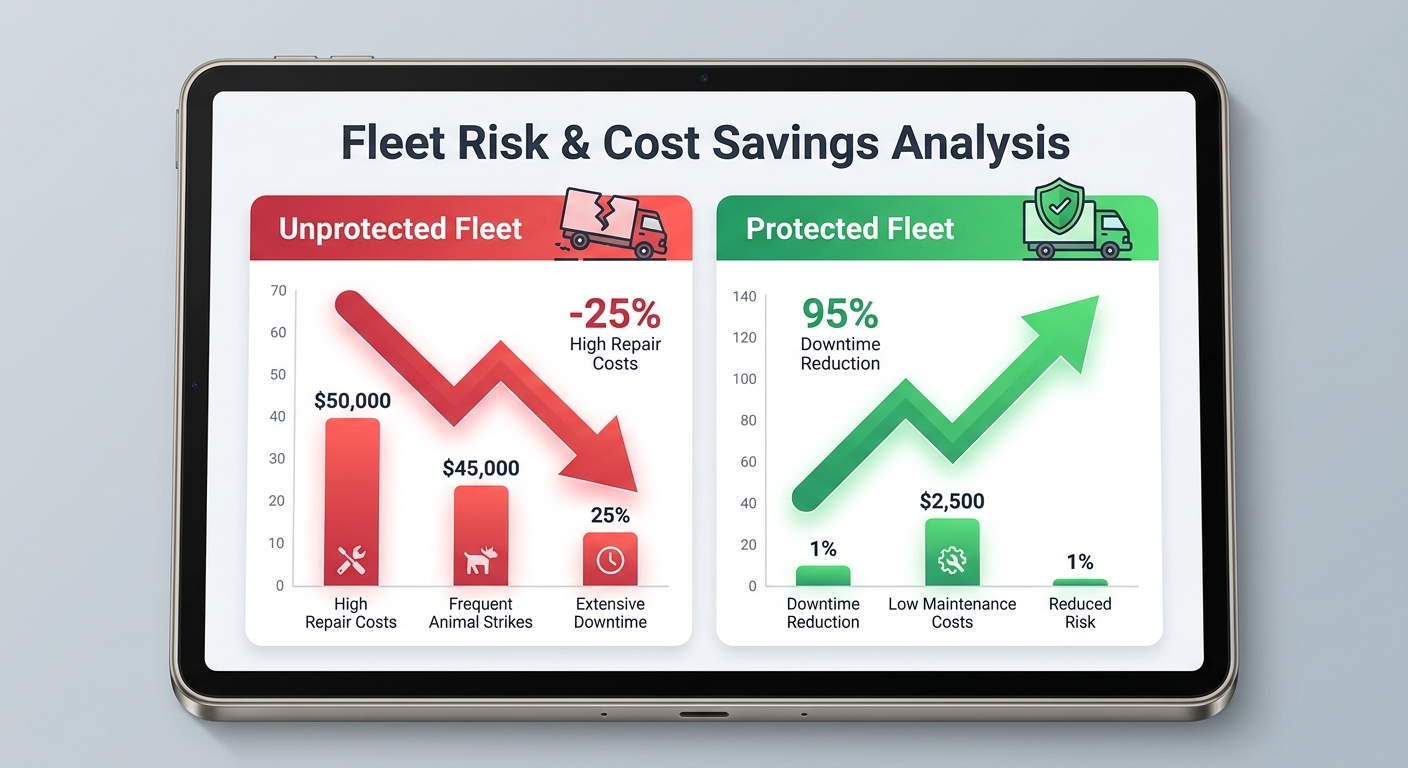
High-volume fleets specify a custom Volvo VNL Truck Guard to transform unpredictable road collisions into highly manageable physical events. By reinforcing the front end before dispatching vehicles on high-exposure routes, operators protect delicate composite panels and cooling packs from devastating physical damage. This proactive defense ensures that your heavy-duty investments remain in service rather than sitting in a repair bay. Maintaining structural integrity is essential for keeping shipping commitments and protecting driver safety on the highway.
How Do Road Hazards Threaten Aerodynamic Fleets?
The sleek profile of your Volvo VNL is designed to slip through air resistance, but this aerodynamic design positions fragile components closer to the bumper. High-speed impacts with wildlife, highway debris, and terminal obstacles can punch through plastic OEM bumpers with minimal resistance. You cannot afford to let minor road hazards compromise your delivery schedules or driver morale.
Think about it:
A single deer strike can breach your radiator and intercooler, instantly halting your load. Protecting this vulnerable zone requires a structural shield capable of diffusing localized impact energies across reinforced mounting points.
- Radiator Vulnerability: Unprotected VNL cooling packs sit directly behind thin composite grilles.
- Sensor Exposure: Forward-facing safety radars are housed in areas prone to low-velocity impacts.
- Fascia Fractures: Aerodynamic lower air dams are easily shattered by standard road debris.
Why Transition From Reactive to Proactive Planning?
Traditional fleet managers historically treated front-end damage as an unpredictable cost of doing business. However, you can choose to shift from reactive repair budgets to proactive protection investments. Specifying heavy-duty guards at vehicle acquisition prevents the costly cycle of towing, scheduling, and rebuilding.
Here is why:
Preventing the damage entirely is always more cost-effective than managing the downstream chaos of an out-of-service truck. This proactive philosophy protects your fleet schedules, driver safety, and corporate bottom lines simultaneously.
- Reduced Towing Expenses: Eliminates the need for long-distance heavy towing.
- Predictable Budgeting: Replaces volatile collision repairs with a one-time capital expense.
- Driver Retention: Keeps your operators safe and confident on high-exposure regional routes.
| Protection Parameter | OEM Factory Front End | Spec’d Volvo VNL Truck Guard |
|---|---|---|
| Primary Material | Composite plastic / light aluminum | Heavy-duty extruded/formed aluminum |
| Impact Tolerance | Extremely low (shatters on minor animal strike) | High (absorbs severe wildlife and debris impacts) |
| Downtime Risk | High (frequent unplanned shop visits) | Minimized (truck continues to destination) |
This comparison clearly highlights the operational transition from fragile factory vulnerabilities to unyielding structural defense on the road.
Key Takeaway: Specifying a high-durability guard during fleet acquisition ensures that every aerodynamic asset is structurally prepared to absorb road impacts, drastically reducing your downtime and protecting your profit margins from day one.
Is a Volvo VNL Truck Guard a True Risk Shield?
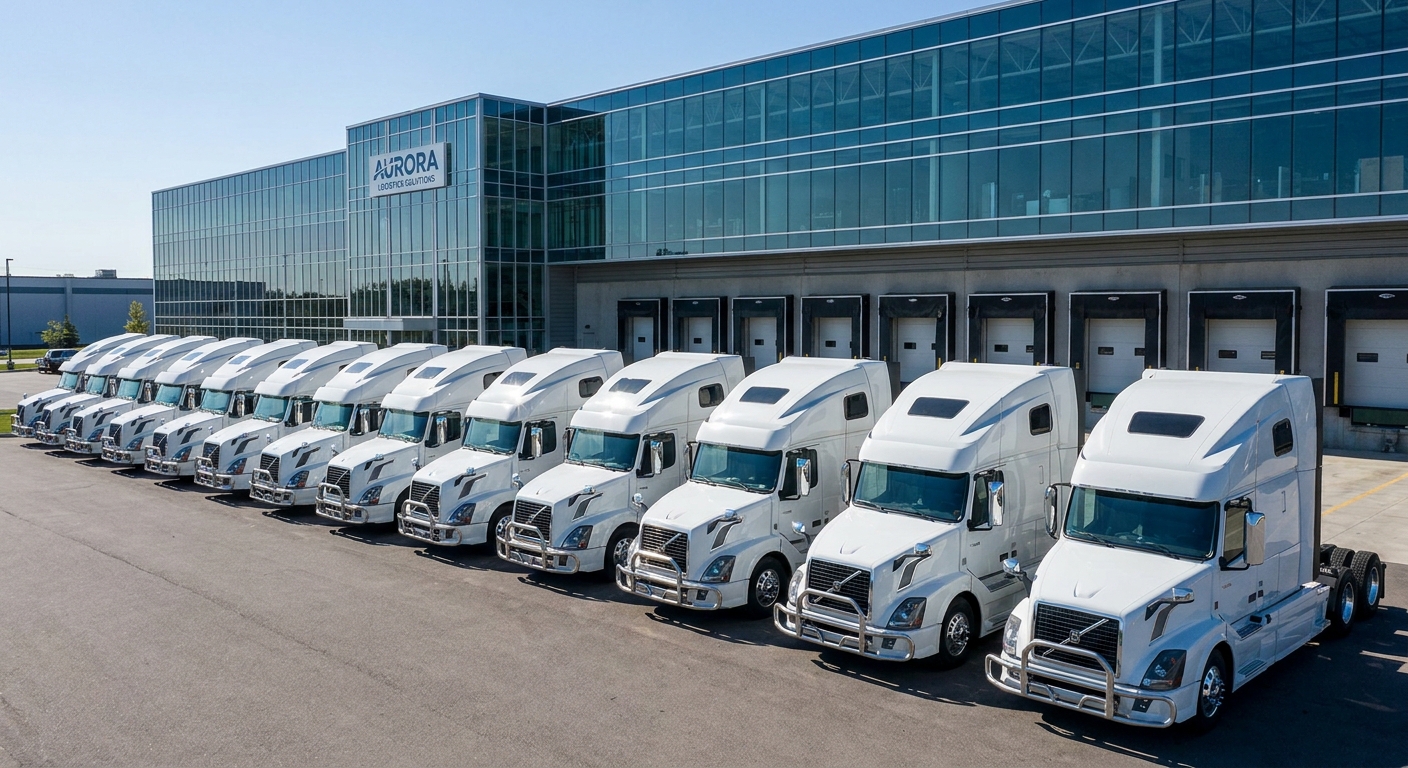
A premium Volvo VNL Truck Guard acts as an active physical risk barrier that prevents minor highway incidents from developing into major financial liabilities. By mitigating the physical damage of wildlife collisions, the guard keeps your trucks on their scheduled paths and shields your fleet from soaring insurance claims and cargo delay penalties. This physical security layer protects your operating metrics from the unpredictable nature of regional haul routes. Investing in physical armor is a proven strategy for neutralizing highway hazards before they disrupt your logistics network.
How Can You Mitigate Upstream Wildlife Risks?
Fleets traveling through heavy wildlife corridors face a continuous threat of deer and moose collisions. These incidents are not random anomalies; they are highly predictable route hazards that you can proactively manage.
Look at it this way:
A structural barrier installed upstream on your bumper absorbs the primary impact force. This ensures that the energy is dissipated through your frame brackets rather than crushing your engine compartment.
- Midwest Lanes: High deer population density across regional freight routes.
- Northern Corridors: Elevated risk of severe moose strikes on Canadian and border highways.
- Southern Routes: Debris hazards and brush contact on remote extraction and regional roads.
How Does Front-End Armor Prevent Fleet Downtime?
Downtime is the silent killer of your fleet’s overall profitability. When an unprotected VNL takes a front-end hit, the resulting repair process can keep your asset sidelined for weeks while waiting for parts.
Here’s the deal:
Hardened front-end armor allows your truck to absorb the blow and safely limp back to the yard or complete the delivery. This containment of damage is the direct mechanism that keeps your fleet operational metrics stable.
- Immediate Driveability: AllReduced Immobilization Risk: May help limit damage that could otherwise leave the vehicle inoperable after an impact.ows your drivers to continue safely after an animal encounter.
- Parts Availability Shield: Bypasses backordered OEM body panels and trim pieces.
- Service Level Agreements: Keeps your operations running and ensures you meet tight shipper delivery windows.
| Risk Metric | Unprotected Fleet Profile | Protected Fleet Profile |
|---|---|---|
| Average Incident Downtime | Higher potential for extended downtime | Reduced downtime risk, depending on impact severity |
| Towing Requirements | Mandatory for radiator/body damage | Rare (structural guard absorbs primary shock) |
| Driver Schedule Reliability | Low (disrupted by roadside events) | High (minimal unscheduled interruptions) |
By establishing a physical defense layer, fleet managers effectively eliminate the volatility associated with roadside collision logistics.
Key Takeaway: Implementing a standardized physical shield transforms your risk management strategy from reactive post-collision recovery into automated, proactive asset protection.
Which Volvo VNL Truck Guard Style Fits Best?
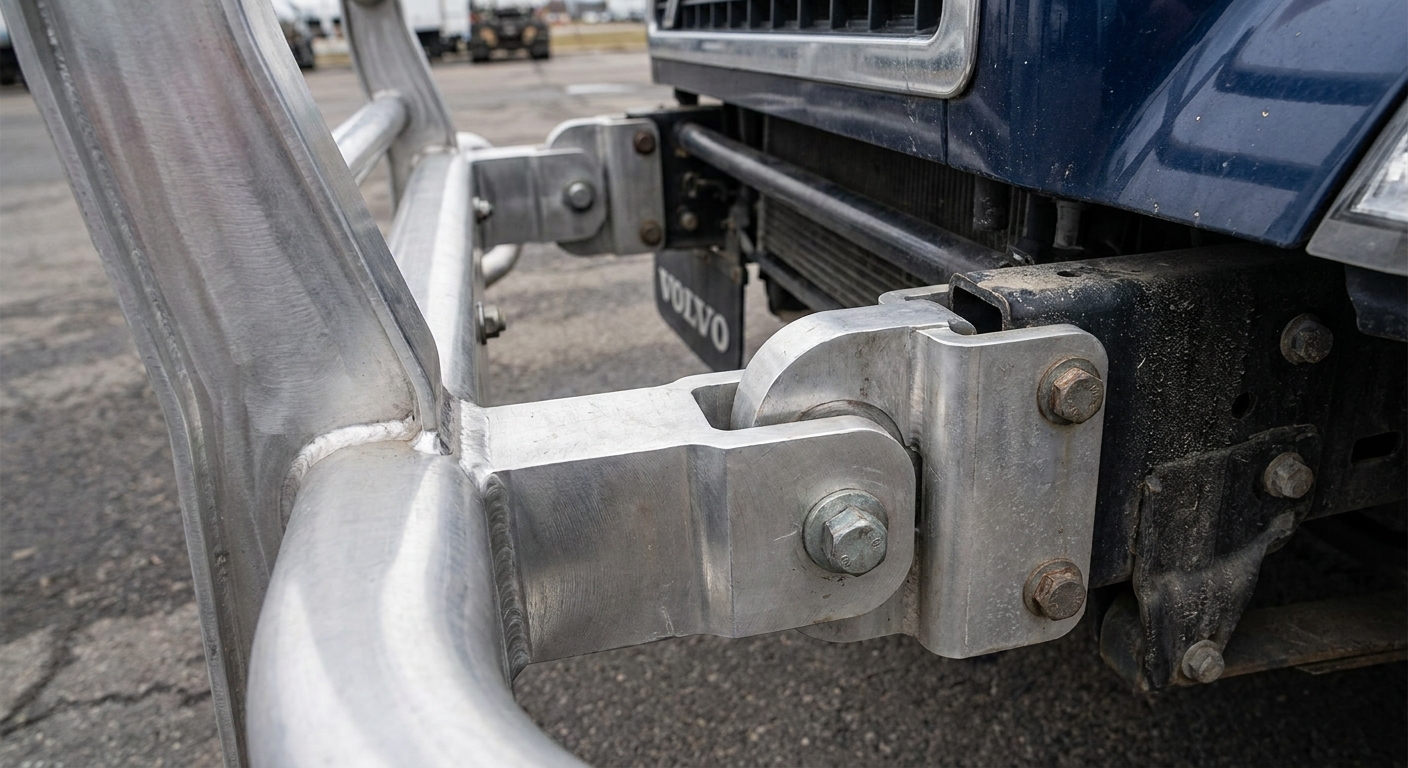
Finding the ideal Volvo VNL Truck Guard requires a careful evaluation of your fleet’s specific geographic routes and exposure levels. Operations running deep into wildlife-heavy corridors demand full-coverage protection systems, while regional highway fleets may prioritize aerodynamic, lightweight grille guards. Your choice should align with the specific hazard profiles of the lanes your trucks travel daily. Matching the correct shield to your operational environment optimizes both protection and aerodynamic performance.
Are Full-Coverage Guards Right for Extreme Runs?
Full-coverage models feature integrated bumper structures, wrap-around corner defense, and high-strength vertical uprights. These units replace or completely shield your factory bumper assembly, offering maximum physical defense.
Think about it:
If your trucks operate on remote, dark northern highways, a full-coverage guard is absolutely non-negotiable. This complete structural envelope ensures that off-center impacts do not bend your steering tire assembly or compromise your wheel wells.
- Full Bumper Wrap: Protects the delicate composite corners of your VNL hood.
- Reinforced Lower Plate: Defends critical steering joints and low-hanging air pipes.
- Heavy-Duty Uprights: Provides a rigid center shield against large animal strikes.
Are Grille Guards Better for Regional Efficiency?
For fleets seeking targeted protection without modifying the lower bumper fascia, specialized grille guards offer an ideal balance. These systems focus their defense directly on your radiator, grille, and safety sensor arrays.
Here is the deal:
Your regional haulers will appreciate these guards because they preserve the clean aerodynamic efficiency of the VNL’s factory bumper. They offer robust defense against road debris and moderate animal strikes while keeping the vehicle light.
- Aero Preservation: Maintains the factory air dam profile for optimal fuel economy.
- Targeted Shielding: Protects the most vulnerable central intake and cooling components.
- Lightweight Structure: Minimizes the impact on front-axle weight ratings.
| Guard Category | Coverage Area | Best Application Environment | Weight Impact |
|---|---|---|---|
| Full Truck Guard | Bumper, corners, grille, headlights | Wildlife corridors, logging, rural routes | Moderate |
| Grille Guard | Radiator, center grille, radar array | Interstate highway haulage, regional distribution | Minimal |
Choosing the appropriate guard configuration aligns your physical defenses with the actual environmental hazards of your daily routes.
Key Takeaway: Balancing structural coverage with your specific route profiles allows you to customize your front-end defense, maximizing vehicle protection without compromising highway efficiency.
Does a Volvo VNL Truck Guard Protect Radar?
A properly engineered Volvo VNL Truck Guard is built from the ground up to integrate seamlessly with advanced safety systems, ensuring radar sensors remain completely unobstructed. By positioning structural uprights and tube spacing around the factory sensor field-of-view, these guards maintain complete Collision Avoidance System (CAS) functionality. You never have to worry about physical armor causing electronic interference or system diagnostic faults. Protecting these delicate electronic components is just as important as shielding the mechanical engine parts.
How Do You Ensure Calibration and Alignment?
Volvo’s active safety radar relies on an unobstructed forward field-of-view to calculate following distances and trigger automatic emergency braking. Any metal structure placed directly in front of these sensors can cause signal deflection or system failure.
But wait, there’s more:
Precision-engineered mounting brackets are designed to drop or offset the guard structure away from the central radar cone. This ensures the guard protects your front end without introducing electronic interference.
- Radar Cone Clearance: Structured gaps in center tubes accommodate sensor sweeps.
- Rigid Steel Brackets: AR450-grade brackets prevent structural vibration from triggering false alerts.
- Sensor Shielding: Protects expensive radar modules from direct rock impacts.
Can You Prevent Costly Diagnostic Faults?
Cheaper, universal-fit aftermarket guards often trigger persistent dashboard warning lights due to poor alignment with your VNL’s radar array. Model-specific equipment can reduce the risk of fitment- or obstruction-related diagnostic issues when properly installed.
Think about it:
A clean dashboard keeps your drivers focused on the road and prevents unnecessary downtime spent troubleshooting electronic phantom faults. Investing in compatibility from the start keeps both your hardware and software working in perfect harmony.
- Reduced Risk of Dashboard Alerts: Proper sensor clearance helps minimize obstruction-related warnings.
- Plug-and-Play Fitment: No calibration adjustments are required during installation.
- Full CAS Compatibility: Retains emergency braking and adaptive cruise features.
| System Component | Unshielded OEM Setup | Guard-Protected CAS Setup |
|---|---|---|
| Radar Unit Protection | Exposed to direct road debris and animal strikes | Protected by structural gaps and rigid steel framing |
| False Positive Alarm Rate | Standard factory baseline | Unchanged (when using model-specific alignment) |
| Replacement Cost (Radar) | High (vulnerable to minor nose-end impacts) | Shielded (impact forces are absorbed by brackets) |
Integrating structural protection with modern radar arrays ensures you never have to sacrifice electronic safety for physical durability.
Key Takeaway: Model-specific bracket designs ensure your truck’s advanced safety systems remain active, protecting your drivers with both physical armor and electronic collision avoidance.
How Does a Volvo VNL Truck Guard Lower TCO?
Installing a premium Volvo VNL Truck Guard directly lowers your fleet’s total cost of ownership by eliminating expensive emergency repairs and reducing secondary downtime expenses. By converting potentially catastrophic animal strikes into minor maintenance inspections, these guards preserve capital and stabilize operating budgets. The financial return is clear when you calculate the compound expenses of a single unmitigated highway collision. Protecting your physical assets from road wear is a direct injection of predictability into your operational balance sheet.
What Are the True Indirect Downtime Costs?
A front-end collision does not just create a body shop bill; it triggers a chain reaction of operational losses. Towing fees, cargo delay fines, temporary vehicle rentals, and driver layover costs accumulate rapidly.
Look at it this way:
A single incident can easily exceed several thousand dollars in indirect operational costs before any physical repairs even begin. Preventing this operational hemorrhage is the most direct way to protect your balance sheet.
- Emergency Towing: Heavy-duty towing fees over long distances are highly expensive.
- Service Disruptions: Late delivery penalties from your key logistics clients.
- Driver Standby Pay: Paying driver layovers while the tractor sits idle in the shop.
Can Proactive Prevention Outperform Repairs?
Sourcing OEM replacement parts for modern aerodynamic cabs can be incredibly slow and expensive. Shifting your financial focus from reactive repair to proactive prevention shields you from supply chain delays.
Here is the deal:
Standardizing front defense across your assets ensures you pay a predictable, one-time capital cost rather than facing volatile, unbudgeted repair charges. Prevention provides financial stability that reactive maintenance models simply cannot match.
- Fixed Asset Protection: Shields your primary equipment from sudden depreciation.
- Stable Maintenance Budgets: Eliminates unexpected spikes in repair spending.
- Insurance Premium Stability: Minimizes claim frequency to keep your coverage rates low.
| Financial Cost Center | Reactive Repair Strategy | Proactive Guard Strategy |
|---|---|---|
| Initial Capital Expense | $0 upfront | Moderate (one-time guard purchase) |
| Average Collision Outlay | High (repairs, towing, cargo delays) | Low (insignificant guard inspection or swap) |
| Operational Volatility | High (unpredictable maintenance spikes) | Low (highly predictable, stable operating costs) |
Shifting your operating model from reactive spending to proactive asset protection removes major financial risks from your fleet’s books.
Key Takeaway: A calculated investment in heavy-duty front-end shielding pays dividends by converting unpredictable collision overhead into a stable, managed capital expense.
Why Choose an Aluminum Volvo VNL Truck Guard?
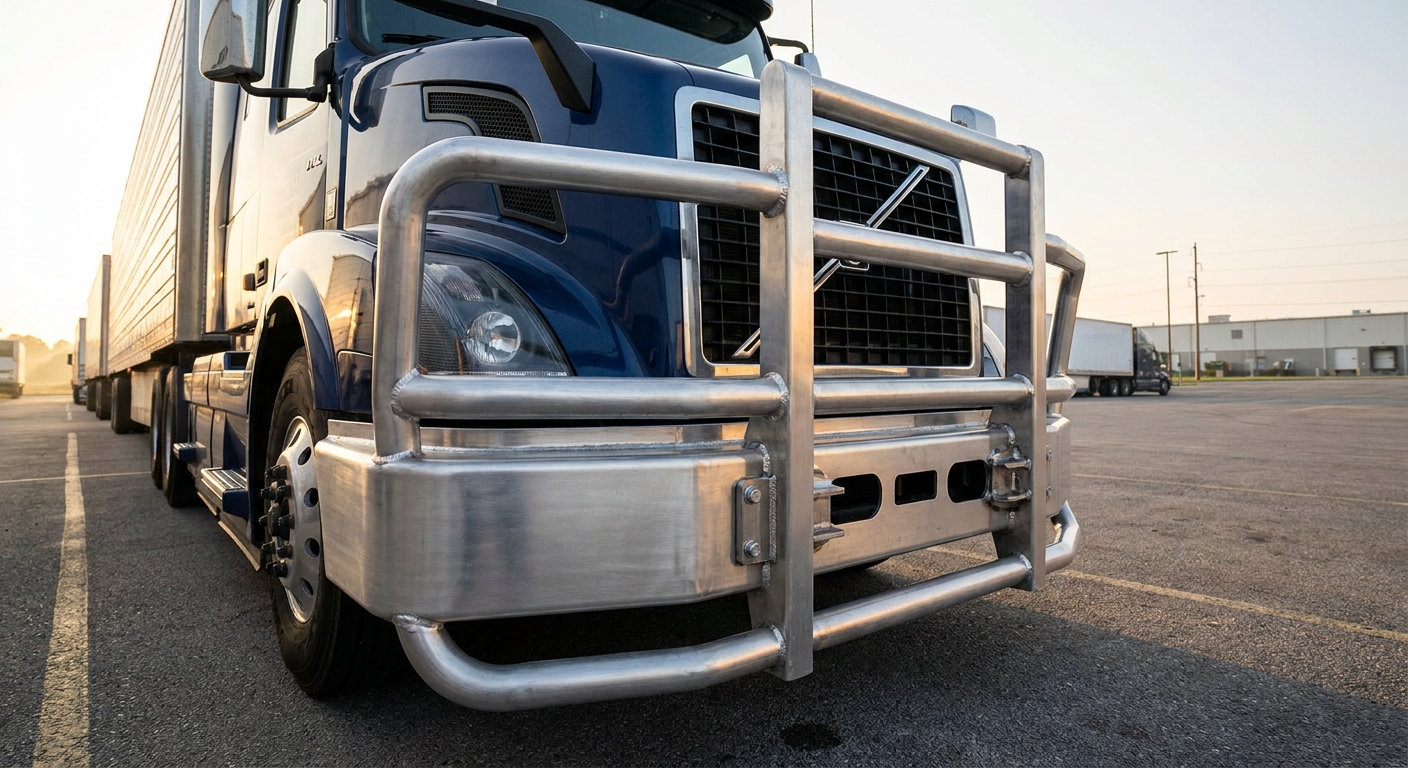
Choosing a high-strength aluminum Volvo VNL Truck Guard ensures your truck receives maximum impact defense without carrying the heavy, fuel-draining weight penalty of steel alternatives. This advanced material selection keeps your aerodynamic tractor running light, preserving fuel economy while providing unyielding front-end strength. Marine-grade aluminum alloys are uniquely suited to withstand both physical stress and environmental degradation. You get a long-lasting, premium barrier that doesn’t compromise your truck’s cargo-carrying capacity.
How Do You Maximize Payload and Efficiency?
The Volvo VNL is highly engineered to maximize payload capacity and fuel efficiency. Installing a heavy steel bumper guard on your front axle can throw off weight distribution and reduce fuel economy over long runs.
Think about it:
Extruded aluminum provides a high strength-to-weight ratio that absorbs heavy impacts without overloading your front suspension. This material keeps your front axle well within legal limits while protecting critical engine systems.
- Suspension Relief: Reduces wear on front-axle leaf springs and shocks.
- Payload Retention: Keeps the tractor light to maximize legal cargo capacity.
- Fuel Conservation: Minimizes additional rolling resistance over millions of fleet miles.
Does High-Strength Aluminum Fight Corrosion?
Winter road maintenance relies heavily on highly corrosive salt brine mixtures that eat through standard steel components. Marine-grade aluminum naturally forms a protective oxide layer that resists rust and chemical degradation.
Here’s the deal:
This natural resistance ensures your front-end protection retains its structural strength and polished look through years of harsh winter operations. Investing in corrosion-resistant materials reduces long-term maintenance labor and keeps your trucks looking professional.
- Salt-Brine Resistance: Impervious to calcium chloride and road salt mixtures.
- Polished Professionalism: Retains its high-shine aesthetic without rusting.
- Low Maintenance: Eliminates the need for continuous repainting or recoating.
| Material Attribute | Marine-Grade Aluminum | Heavy-Duty Structural Steel |
|---|---|---|
| Weight Impact | Minimal (preserves front-axle capacity) | High (can limit payload and accelerate tire wear) |
| Rust & Corrosion Resistance | Excellent (naturally self-healing oxide layer) | Poor (requires continuous coating maintenance) |
| Vibration Tolerance | Outstanding (designed for long-term road vibration) | Moderate (prone to weld fatigue under constant vibration) |
Utilizing advanced aluminum alloys ensures your front-end defense does not compromise your vehicle’s payload capacity or fuel efficiency.
Key Takeaway: High-strength aluminum alloys deliver the ultimate combination of structural impact resistance, corrosion defense, and lightweight performance on your long-haul routes.
Can a Volvo VNL Truck Guard Simplify Service?
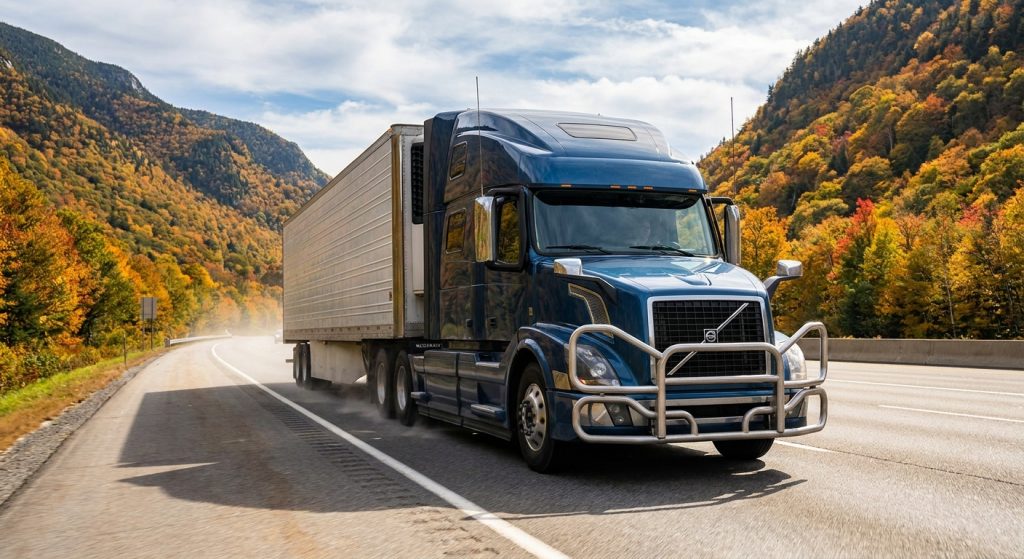
Specifying a Volvo VNL Truck Guard equipped with an integrated quick-release latching system ensures your maintenance team retains rapid, hassle-free access to the engine compartment. This thoughtful mechanical design ensures that protective armor never becomes an obstacle during routine oil checks or scheduled service procedures. You can easily balance maximum road security with rapid-turnaround maintenance efficiency. Keeping your service windows short directly contributes to overall fleet productivity.
Why Does Quick Engine Access Matter?
In busy fleet maintenance shops, every minute your truck spends on the service bay floor directly affects overall shop throughput. Forcing technicians to remove heavy bolted guards to check fluids or inspect belts introduces major inefficiency.
Here is why:
Technicians need to access the under-hood area quickly to complete standard pre-trip inspections and scheduled maintenance tasks. A guard that folds down effortlessly keeps your shop running at peak efficiency.
- Inspection Speed: Allows drivers to complete daily pre-trip checks without delay.
- Labor Efficiency: Minimizes time wasted on mounting and unmounting safety gear.
- Shop Throughput: Keeps service bays clear by accelerating routine maintenance.
How Does Grip Latch Tech Save Labor?
The proprietary Grip Latch system provides a heavy-duty, zero-play connection that you can release in seconds without special tools. This quick-release engineering allows a single driver or technician to fold the guard forward easily.
But wait, there’s more:
This mechanism completely eliminates the rattling and joint wear common in basic pin-and-sleeve setups. Investing in a high-quality latching system ensures your guard remains structurally tight while offering rapid accessibility.
- No-Tool Release: Folds down with a simple, ergonomic latch mechanism.
- Rattle-Free Joints: Internal tensioning prevents annoying cab vibration.
- One-Person Operation: Safely managed by a single operator on the road.
| Service Metric | Standard Bolted Guard | Folding Guard with Grip Latch |
|---|---|---|
| Engine Access Time | 15 to 30 minutes (requires tools) | Under 10 seconds (no tools required) |
| Required Personnel | Two technicians (to handle guard weight) | One driver or technician |
| Long-Term Joint Wear | High (prone to loosening and rattling) | Zero (internal tensioning prevents movement) |
Selecting a guard with a quick-release mechanism ensures your physical security does not introduce maintenance labor bottlenecks.
Key Takeaway: Integrated folding mechanisms prevent front-end defense systems from slowing down your maintenance technicians or complicating your roadside pre-trip inspections.
How to Order Your Volvo VNL Truck Guard Bulk?
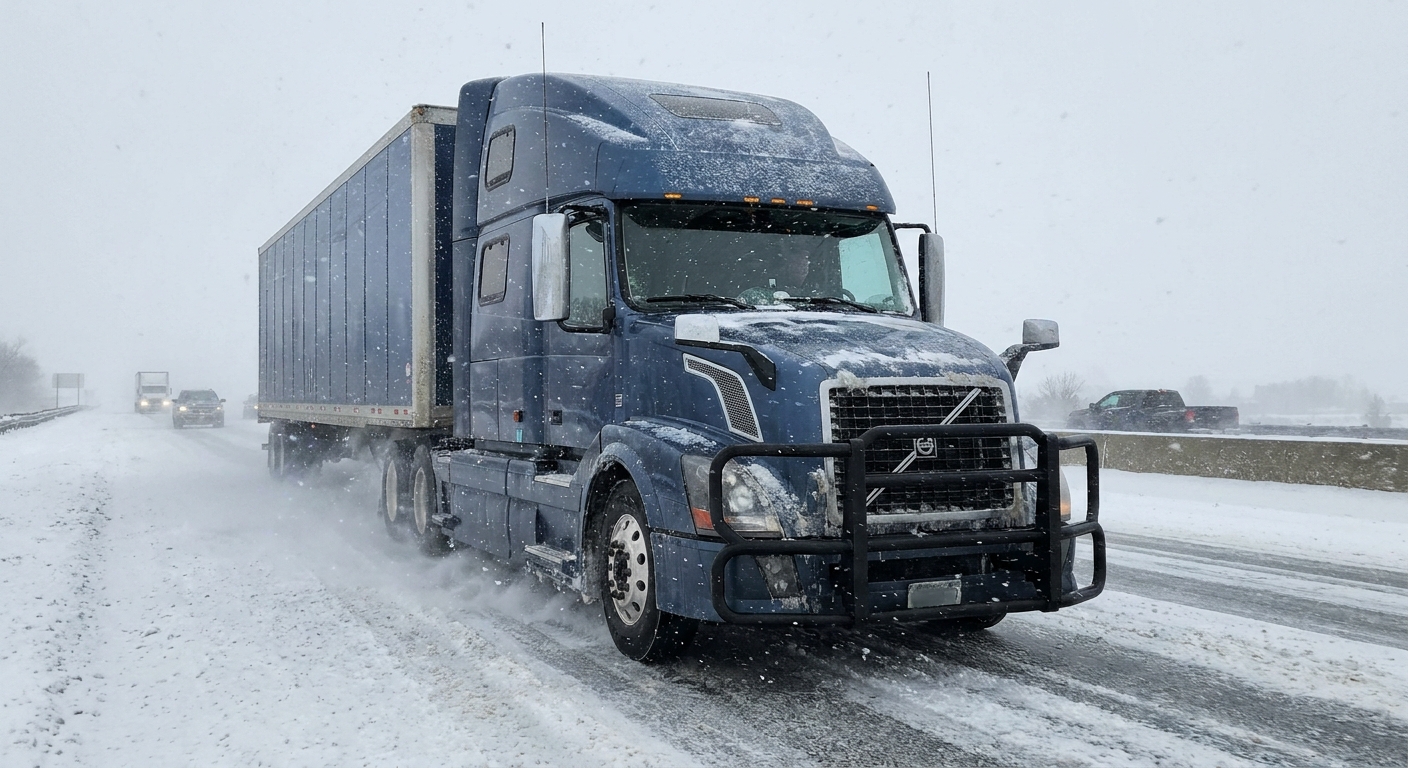
Standardizing your fleet with a bulk purchase of the Volvo VNL Truck Guard simplifies your procurement process while unlocking valuable volume shipping benefits. Fleet buyers can coordinate orders through an authorized commercial dealer network to ensure consistent specifications, matching finishes, and streamlined logistics. You can easily sync deliveries with your planned maintenance schedules or vehicle acquisition cycles. Bulk procurement is the most efficient path to securing uniform protection across your entire transportation footprint.
Are Large-Order Freight Incentives Real?
Sourcing front-end protection for multiple units in a single procurement cycle drastically reduces your per-unit shipping costs. Large-scale orders of matching SKUs frequently qualify for free freight programs that protect your capital.
Look at it this way:
Eliminating freight charges on multiple heavy-duty shipments delivers immediate, tangible savings back to your operational budget. Consolidating your orders maximizes your procurement leverage and protects your bottom line.
- Freight Consolidation: Combining shipments to a single terminal reduces handling fees.
- Volume Pricing: Bulk purchasing lowers the individual unit acquisition cost.
- Coordinated Delivery: Matches shipments to your scheduled fleet integration windows.
How Do You Match Exact OEM Build Specs?
The Volvo VNL has undergone subtle front-end design changes across different model years and generations. To ensure a perfect fit, your procurement team must verify the exact year, model, and active safety package of each truck.
Here is the deal:
Providing accurate OEM configuration details prevents installation delays and avoids costly returns. Confirming these specifications with your dealer before shipping keeps your fleet modernization projects on schedule.
- Generation Verification: Ensures alignment with specific bumper contours.
- Sensor Array Matching: Places guard brackets correctly relative to radar units.
- Custom Hardware Kits: Provides model-specific mounting plates for secure fitment.
| Procurement Element | Individual Guard Sourcing | Bulk Fleet Standardization |
|---|---|---|
| Shipping & Freight Cost | Variable (applicable per unit) | Free freight programs (on matching bulk SKUs) |
| Specification Consistency | Risk of model-year variation | Locked-in matching specs across all units |
| Dealer Support Level | Standard retail coordination | Dedicated fleet account support and tracking |
Consolidating your fleet’s protection orders maximizes your buying power and simplifies delivery logistics.
Key Takeaway: Bulk purchasing streamlines your fleet deployment, secures major shipping incentives, and ensures every asset is protected by uniform, factory-matched hardware.
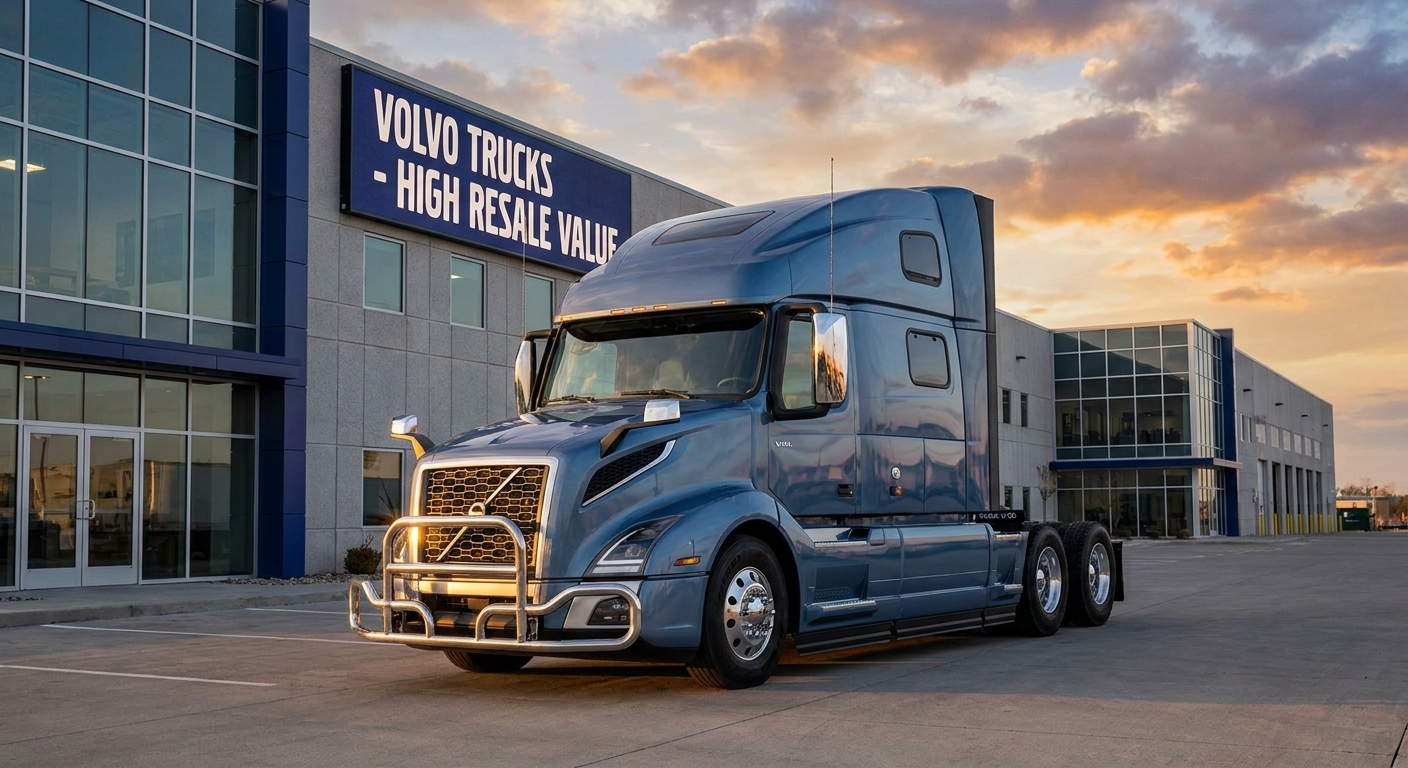
How Does a Volvo VNL Truck Guard Boost Resale?
Installing a premium Volvo VNL Truck Guard preserves the pristine aesthetic and structural condition of your vehicle’s hood and bumper, driving up its eventual trade-in value. When it comes time to cycle out your assets, used truck appraisers immediately reward vehicles that ran protected with top-tier valuations. You can easily prove the meticulous care your trucks received by presenting a damage-free front fascia. Protecting physical appearance is a direct investment in your fleet’s terminal equity.
Why Protect the Aesthetic Cab Lines?
The distinctive front-end styling of your Volvo VNL is one of its most recognizable and valued assets. Accumulated stone chips, minor cracks, and road rash on your composite bodywork quickly drag down a truck’s visual appeal.
Think about it:
A clean, guarded front end tells prospective buyers that the asset was meticulously maintained throughout its service life. First impressions matter immensely in the used truck market, and a flawless cab commands a premium.
- No Composite Cracks: Guard prevents structural cracking in expensive fiber-reinforced plastics.
- Preserved Chrome/Paint: Minimizes road-grit pitting on grilles and trim pieces.
- Aligned Hood Gaps: Prevents impact forces from twisting your hood latches and hinges.
Do Used Buyers Reward Unblemished Frame Rails?
Savvy secondary buyers carefully inspect the front-end frame rails and steering components for signs of past collision damage. A vehicle that spent its career behind a heavy-duty aluminum guard is highly unlikely to have hidden structural issues.
Here is the deal:
This physical assurance allows you to negotiate from a position of strength during trade-ins or private sales. Keeping the front end clean is the most visible way to prove your fleet’s operational excellence.
- Preserved Structural Condition: Helps reduce exposure to certain types of front-end impact damage.
- Cooling Package Protection: Helps protect cooling components from road debris and certain front-end impacts.
- Fast Appraisal Sign-off: Accelerates your vehicle turn-in process at the dealer.
| Appraisal Checklist | Unprotected Secondary Asset | Guard-Protected Secondary Asset |
|---|---|---|
| Fascia & Bumper Condition | Frequently pitted, cracked, or repaired | Pristine (original factory finish preserved) |
| Cooling Package Integrity | Prone to bent fins and minor debris leaks | Clean, straight fins with zero impact history |
| Appraisal Value Category | Average / Fair market value | Premium / Excellent resale tier |
Protecting your vehicle’s physical presentation ensures you recover maximum capital when cycling out older fleet assets.
Key Takeaway: Preserving the cosmetic and structural integrity of your truck’s nose ensures your vehicles command top-tier pricing when you trade them in.
What FAQ Explains the Volvo VNL Truck Guard?
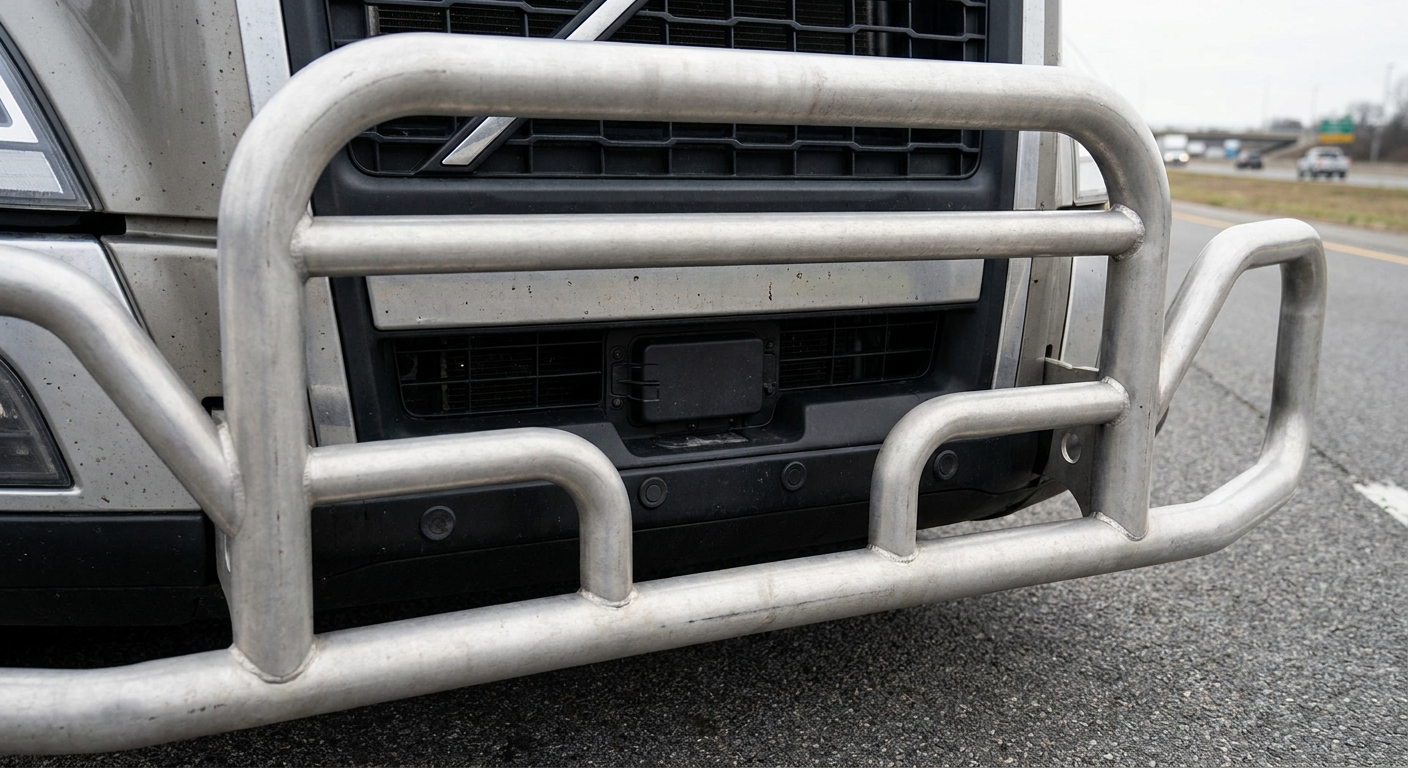
This section addresses the most common technical questions fleet managers ask when specifying a new Volvo VNL Truck Guard for their operations. Getting these core compatibility, finish, and serviceability details right upfront ensures your protective hardware fits perfectly and performs reliably on the road. You can resolve your specific configuration queries by examining the detailed design parameters of these engineered systems. Understanding compatibility parameters is the final step in securing your fleet’s investment.
Can I Install a Guard on Any Volvo VNL Generation?
Yes, you can. You must specify the exact generation and model year of your truck during ordering. Volvo has refined the front-end dimensions, hood curvature, and mounting points of the VNL platform across different production cycles.
Here is the deal:
Sourcing a model-specific guard ensures that your brackets line up perfectly with your factory tow receivers. This precise engineering ensures the bumper clearances match your truck’s specific aerodynamic profile.
- First-Gen Models: Requires older frame bracket dimensions.
- New VNL (2025+): Features specific contoured plates to match the updated aerodynamic nose.
- Aerodynamic Fairing Clearance: Keeps lower air dams unobstructed for maximum efficiency.
What’s the Best Finish for High-Salt Environments?
Satin finishes or premium powder coats are the best options. While polished finishes look exceptional, they require regular cleaning to prevent road brine spots and cosmetic pitting in harsh winter climates.
Think about it:
Satin and powder-coated layers offer outstanding resistance to harsh road chemicals and are much easier to wash down and maintain in busy fleet yards. This natural durability helps your fleet maintain a professional look with minimal effort.
- Satin Finish: Minimizes the appearance of road debris micro-scratches.
- Powder Coat: Provides a tough polymer barrier against moisture and chemicals.
- Polished Aluminum: Best for dry, non-corrosive regional environments.
How Do I Know if My Radar Sensors are Blocked?
Absolutely, you will know instantly. Your truck’s diagnostic system will display warning alerts on your dashboard the moment an obstruction is detected. Volvo’s active safety computers run continuous self-checks, and any signal deflection caused by a misaligned bumper will trigger a persistent warning light. Specifying a model-specific, CAS-compatible guard completely eliminates this issue.
Protecting Your Aerodynamic Fleet for the Long Haul
Transitioning your fleet operations from reactive collision repair to proactive front-end defense is the key to mastering road risk. By installing an engineered, lightweight aluminum shield on your Volvo VNL, you shield your balance sheet from heavy towing expenses, extended body shop delays, and costly diagnostic errors caused by sensor damage. Protecting your physical assets preserves your schedules, shields your margins, and maintains the safety and confidence of your drivers.
At Brontec, we build the heavy-duty shielding systems that keep North America’s logistics networks rolling through every challenge. If you are ready to stabilize your operating costs and secure your primary assets, contact us today to find a trusted authorized dealer near you. We stand committed to the vision that no driver should have to choose between aerodynamic fuel efficiency and physical road survival.