
Hanging tire chains on a rack is best done by laying the assembly completely flat on the ground to remove all twists, draping the center of the side rails evenly over the rack’s steel hooks, and securing the locking latch to prevent shifting during transit. Imagine pulling a heavy load through a mountain pass when a sudden blizzard hits. You pull over to chain up, only to find a tangled, rusted mass of steel buried deep within your side toolbox. As your fingers freeze and daylight fades, every second wasted wrestling with knotted links eats into your hours-of-service and threatens your safety. Utilizing a dedicated tire chain hanger rack from Brontec Trailer is the ultimate way to eliminate this operational bottleneck, ensuring your traction equipment remains perfectly organized, dry, and ready for instant deployment.
Why use a tire chain hanger rack?
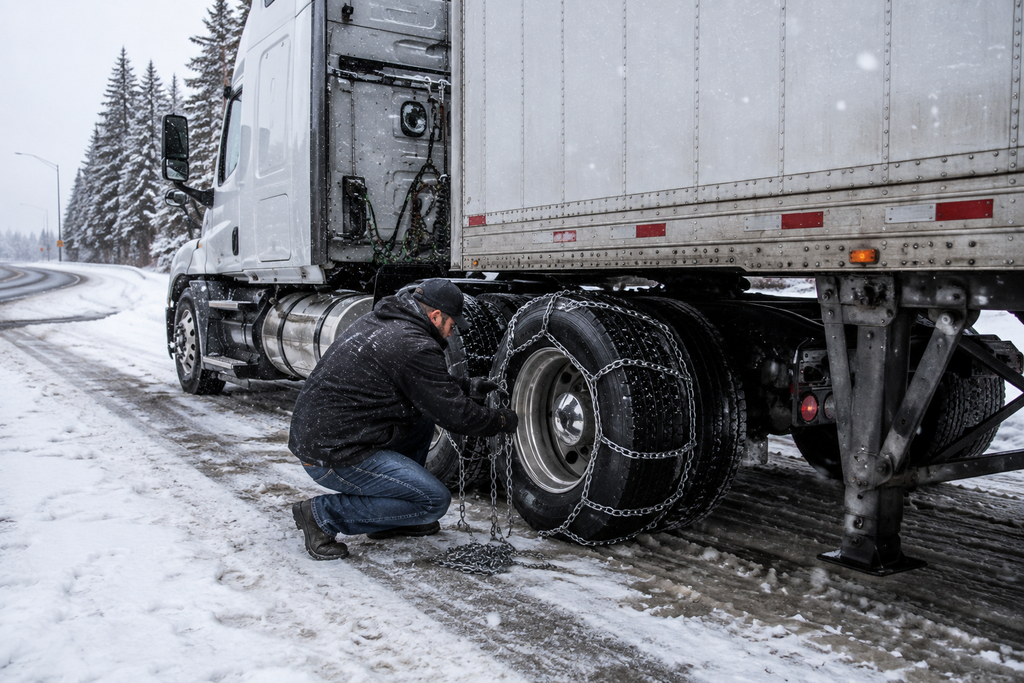
You should use a tire chain hanger rack because it keeps your critical winter traction devices organized, dry, and ready for immediate deployment when severe weather strikes. Storing heavy steel links loosely in your toolbox leads to accelerated wear and dangerous roadside delays.
Here is the bottom line: proper organization is not just about convenience; it is a critical component of fleet safety and driver efficiency. By suspending your chains, gravity pulls moisture away from the metal, mitigating the rapid progression of corrosion.
Avoiding Tangled Links
Unraveling knotted chains on a dark, freezing shoulder is a safety hazard that you can easily prevent. When you hang each chain set individually, you ensure they remain separated and tangle-free.
Think about it:
- Knotted links cause uneven tension.
- Tangled assemblies increase physical strain during handling.
- Pre-sorted chains can be deployed in under half the time of loose ones.
Preventing Corrosion Issues
Trapping road salt, moisture, and snow in an enclosed toolbox creates a perfect breeding ground for destructive oxidation. A dedicated open or well-ventilated rack allows airflow to dry the assemblies quickly after use.
Best of all? This simple exposure to dry air dramatically extends the operational lifespan of your high-tensile alloy steel chains.
Saving Roadside Deployment Time
Every minute you spend on the side of a busy interstate increases your exposure to oncoming traffic. Having immediate, organized access means you can complete your safety protocols and get back on the road swiftly.
Key Takeaway: Using a dedicated hanging system protects your capital investment in traction hardware while securing critical operational uptime during winter storms.
| Storage Type | Tangle Risk | Drying Rate | Deployment Speed |
|---|---|---|---|
| Toolbox Storage | High | Very Slow | Slow (15-20 mins) |
| Dedicated Hanger Rack | None | Rapid | Fast (5-7 mins) |
This structured comparison highlights how passive storage failures translate directly into delayed transit times.
What is a tire chain hanger rack?
A tire chain hanger rack is a specialized, frame-mounted metal enclosure or bracket system engineered specifically to store heavy-duty commercial snow chains securely. Unlike improvised cargo boxes, these units are fabricated to handle extreme dynamic loads and harsh environmental conditions.
They are built to mount directly onto the tractor’s chassis or cab guard, optimizing available frame space. Let us look closer at what makes these systems so essential for winter-ready fleets.
Stationary Design Features
A stationary rack offers a rigid, non-moving frame bolted directly to your truck’s chassis or mud flap bracket. It provides a highly reliable, straightforward storage point with no moving parts to service.
Here is the kicker:
- Fewer moving parts mean zero mechanical failure points.
- It offers a highly cost-effective solution for fleets of all sizes.
- Heavy-duty rigid hooks hold chains firmly in place during high-vibration transit.
Covered and Retractable Options
If you need maximum protection from road grime, ice, and salt, covered and retractable racks are the premium choice. These systems feature heavy-duty slides that pull outward for effortless loading.
It gets better:
- Smooth roller bearings allow easy operation in sub-zero temperatures.
- Sturdy latching systems keep covers securely locked.
- They provide a clean, streamlined aesthetic for custom show trucks and fleets alike.
Heavy-Duty Material Composition
Industrial-grade chain racks are typically fabricated from thick-gauge structural steel or lightweight, marine-grade aluminum alloys. They must withstand constant vibration, flying road debris, and corrosive chemical deicers.
Key Takeaway: Selecting the correct material and design configuration ensures your chain storage withstands decades of severe highway service without structural degradation.
| Design Configuration | Access Ease | Mounting Footprint | Price Point |
|---|---|---|---|
| Stationary Bracket | Standard | Minimal | Economical |
| Retractable Covered | Premium | Moderate | Investment |
Evaluate your fleet’s specific regional climate and clearance limitations to select the most efficient design.
How to mount a tire chain hanger rack?
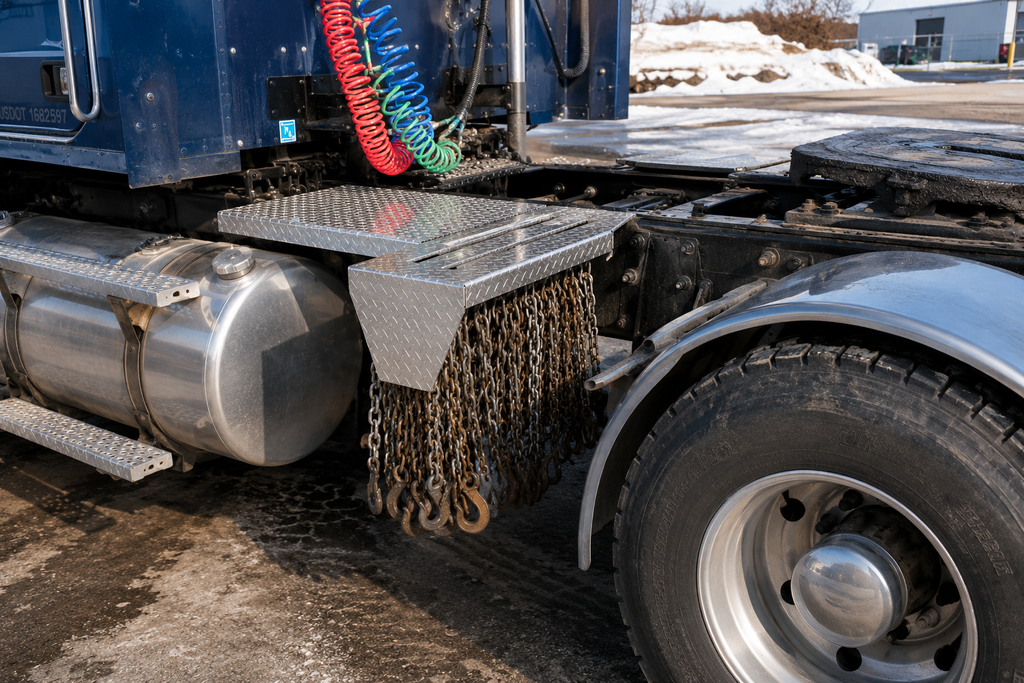
To mount a tire chain hanger rack, you must securely bolt the heavy-duty frame bracket directly to the truck’s chassis member or cab guard using high-tensile hardware. This critical structural connection ensures that hundreds of pounds of steel chain remain locked to the truck under severe road vibrations.
Why does this matter? A poorly mounted rack can shear off during transit, creating a catastrophic safety hazard for everyone on the road. Let us review the precise technical steps required for a bulletproof installation.
Choosing the Optimal Location
You must identify a mounting zone that keeps the rack easily accessible while maintaining adequate clearance from tires, fuel tanks, and air lines. Common locations include the frame rails behind the sleeper cab or directly on the cab guard (headache rack).
Think about it:
- Accessibility prevents driver fatigue during roadside chain-ups.
- Sufficient tire clearance prevents accidental impact during tight turns.
- Keep the rack clear of moving suspension components at all times.
Recommended Fastener Grades
Never skimp on the hardware when installing high-capacity storage racks on a commercial truck. You must use Grade 8 bolts, hardened washers, and nylon-insert lock nuts to prevent loosening.
Best of all?
- Grade 8 fasteners offer superior tensile strength under extreme shear forces.
- Nyloc nuts resist backing out under continuous highway vibrations.
- Torque all bolts to the manufacturer’s exact specifications during installation.
Checking Clearance Tolerances
Before completing the installation, you must fully cycle the suspension and articulate the trailer to check for physical interference. A clearance safety margin prevents costly frame or tire damage during tight maneuvering.
Key Takeaway: Utilizing high-grade fasteners and verifying mechanical clearance guarantees a stable, DOT-compliant installation that handles extreme highway forces.
| Mounting Parameter | Specification Requirement | Recommended Hardware | Safety Margin |
|---|---|---|---|
| Frame Rail Mount | Heavy-Duty Steel Brackets | Grade 8 Bolts / Nyloc Nuts | Minimum 3″ Clearance |
| Cab Guard Mount | Reinforced Backing Plates | Grade 8 Fasteners | Flush Alignment |
Always double-check torque values after the first 500 miles of operation to ensure the system remains tightly secured.
How to load a tire chain hanger rack?
You load a tire chain hanger rack by laying the chain assembly completely flat on the ground, shaking out any twists, and then draping the center of the side rails evenly over the rack’s steel hanger hooks. Taking those few extra seconds to prepare the chains beforehand prevents severe tangling and ensures rapid deployment later.
Proper loading technique ensures that the weight of the chains is balanced across the structural hooks, minimizing stress on individual weld points. Let us dive into the details of the loading process.
Pre-Storage Link Inspection
Before hanging your chains, you must inspect the entire assembly for worn cross-links, loose side-rail connectors, or cracked tensioners. Identifying issues before storage prevents unexpected failures during a winter emergency.
Here is the kicker:
- Look for shiny flat spots on links, indicating excessive wear.
- Replace any bent or stressed connectors immediately.
- Ensure the tensioning cam locks are fully functional.
Debris and Salt Removal Steps
Never store chains covered in wet slush, mud, or highly corrosive highway deicing salts. Hose them down thoroughly with clean water and let them dry completely before hanging.
Think about this:
- Leftover salt accelerates rust even on hardened alloys.
- Mud buildup can jam tensioners and locking links.
- Clean chains are significantly easier and safer to handle.
Balanced Weight Distribution
You must distribute the heavy steel assemblies evenly across the multiple hanger hooks on the rack. Avoid hanging all your triple-rail or dual chains on a single hook, which can fatigue the steel bracket over time.
Key Takeaway: Consistent execution of the proper inspection, cleaning, and balanced loading process dramatically shortens roadside mounting time and prolongs chain service life.
- Inspect: Examine links for physical damage.
- Clean: Wash away corrosive salts and grime.
- Align: Lay flat to eliminate twists.
- Drape: Place evenly over the support hooks.
- Lock: Secure the cover latch.
Following this structured sequence ensures your traction equipment remains pristine and ready for instant action.
Which tire chain hanger rack fits best?
Determining which tire chain hanger rack fits best depends on your specific truck model, available chassis frame space, and the overall weight of your snow chains. Selecting a rack that perfectly matches your vehicle platform prevents interference with critical components and ensures seamless access during storms.
Let’s look closer. Standard commercial fleet tractors often have highly congested frame rails, requiring compact or specialized mounting configurations to stay within safe operational tolerances.
Compatibility with OEM Platforms
Commercial trucks like Kenworth, Peterbilt, and Freightliner feature unique chassis layouts that dictate where a rack can be mounted. You must choose a storage system designed to adapt easily to these factory hole patterns.
Best of all?
- OEM-aligned mounting brackets eliminate the need for dangerous frame drilling.
- Universal adapter plates provide flexible mounting options on various chassis rails.
- A perfectly integrated rack preserves factory warranty compliance.
Heavy-Duty Semi Configurations
For heavy-haulers and long-haul semis carrying multiple sets of dual or triple-rail chains, high-capacity racks are mandatory. These systems feature reinforced steel frames and wider hook spacings to accommodate massive payloads.
Here is the kicker:
- Standard single-chain racks are insufficient for multi-axle trailers.
- High-capacity racks prevent hook fatigue under heavy static loads.
- Heavy-duty welds ensure the rack resists fracturing on rough terrain.
Specialized Utility Application
If you operate utility trucks, dump trucks, or vocational vehicles, space is at an absolute premium. Compact, mud-flap mounted or vertical-stacking chain racks provide excellent alternatives that maximize every inch of space.
Key Takeaway: Choosing a rack tailored to your specific vehicle class and axle configuration ensures maximum storage capacity without sacrificing precious frame real estate.
| Truck Brand | Recommended Rack Type | Chain Capacity | Mounting Method |
|---|---|---|---|
| Peterbilt | Frame Rail Mounted | 4-6 Single Sets | Direct Bolt-On |
| Kenworth | Cab Guard Integrated | 6-8 Dual Sets | Heavy-Duty Brackets |
| Freightliner | Compact Chassis Mount | 2-4 Single Sets | Universal Rail Mount |
Correct vehicle matching prevents interference with trailer swing clearances and exhaust stacks.
Is your tire chain hanger rack secure?
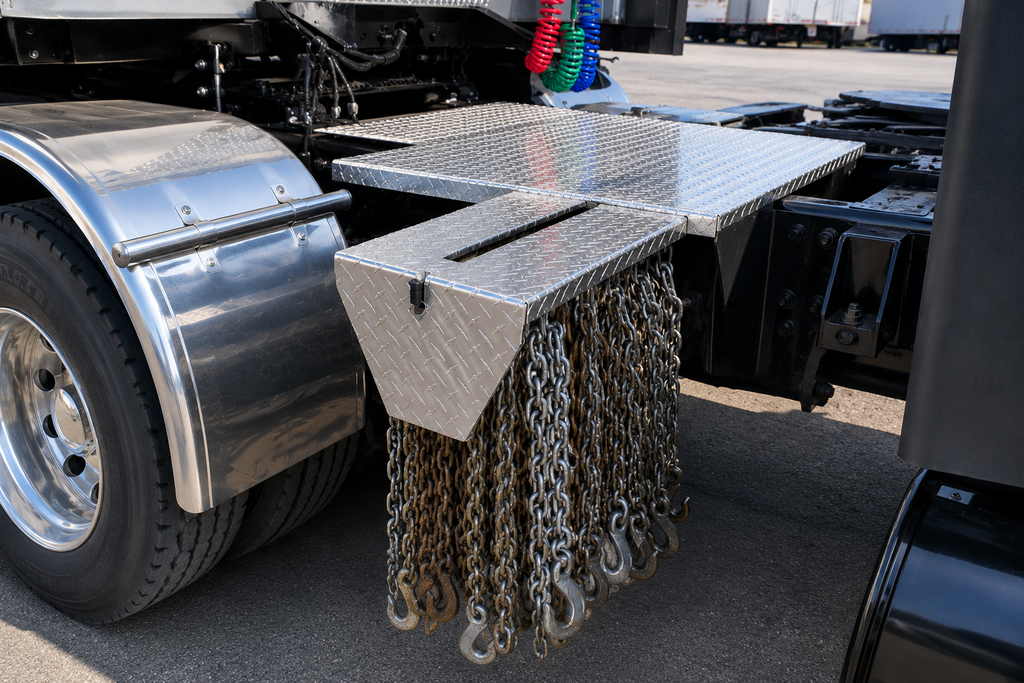
Yes, your tire chain hanger rack is highly secure when it features a robust locking mechanism, high-strength mounting brackets, and a heavy-duty checker plate cover. These security components work together to prevent valuable traction equipment from shifting or being stolen while parked overnight.
Road vibrations can easily cause unsecured steel links to walk off open hooks during transit, creating a dangerous projectile on the highway. Let us examine how to ensure your storage system remains locked down tight.
The Role of Checker Plate Covers
An aluminum checker plate cover provides an essential barrier that physically traps the chains inside the rack. While it does not seal out fine road moisture, its main job is to prevent chains from slipping off the hangers during violent bumps.
Think about it:
- Covers protect the hooks from flying gravel and road debris.
- Heavy-duty spring latches keep the cover tightly closed.
- An integrated lock tab allows you to padlock your valuable chains.
Eliminating Vibration and Play
Constant highway vibration can wear down metal contact points and loosen fasteners over time. You must ensure that the chains fit snugly on the hooks with minimal excess play to prevent damaging rattling.
It gets better:
- Snug chain placement reduces cabin noise.
- Rubber dampeners can be added to absorb vibration.
- Eliminating play reduces stress on the mounting welds.
Regular Fastener Torque Audits
You must establish a routine maintenance schedule to check the torque of all mounting hardware on your chain rack. Vibration is the enemy of tight bolts, and a loose fastener can quickly lead to structural bracket failure.
Key Takeaway: Implementing simple security measures like locking covers and routine torque checks protects your investment and ensures highway safety.
- Vibration Checklist for Fleet Operators:
- Inspect mounting brackets for hairline weld cracks.
- Verify that Nyloc nuts have not backed off.
- Check that the spring-loaded latches function smoothly without binding.
- Confirm padlocks are lubricated and rust-free.
| Inspection Area | Warning Signs | Action Required |
|---|---|---|
| Frame Rail Brackets | Rust streaks around bolts, movement | Tighten to spec, replace worn washers |
| Cover Latches | Loose latching tension, binding | Adjust spring tension, apply lubricant |
Catching minor mechanical play early prevents complete structural failure of the rack on the highway.
How to clean a tire chain hanger rack?
To clean a tire chain hanger rack, you should wash it thoroughly with high-pressure hot water and a mild, salt-neutralizing detergent to remove accumulated road salts, grime, and debris. Regular maintenance prevents corrosive chemical agents from eating through the protective finishes of both the rack and your stored chains.
Neglecting the cleanliness of your rack leads to premature rust, frozen hinges, and seized locking mechanisms when you need them most. Let us explore the optimal process for keeping your storage unit in pristine condition.
Removing Road Grime and Salts
Highway deicing chemicals like magnesium chloride are incredibly corrosive and stick to metal surfaces like glue. You must use a high-pressure wash to blast away these hidden chemical deposits from the corners and welds of the rack.
Why does this matter?
- Road salt rapidly corrodes raw and powder-coated steel alike.
- Deicers attract environmental moisture, compounding the oxidation process.
- A clean surface allows you to easily inspect for structural cracks.
Lubricating the Slide Mechanism
If you use a retractable or covered rack, you must lubricate the slide rails, roller bearings, and hinge pins regularly. Using a premium dry-film lubricant prevents road dust from sticking while keeping parts moving smoothly in sub-zero cold.
Best of all?
- Dry lubricants do not attract abrasive road grit.
- Regular lubrication prevents binding and physical jams.
- It ensures quick, one-handed operation during roadside emergencies.
Thawing Ice Build-Up Safely
During severe winter storms, your rack can become encased in thick road ice. You should use warm water, specialized deicing sprays, or park the truck in a heated bay to thaw the ice, avoiding heavy hammers that can damage the metal.
Key Takeaway: A clean, well-lubricated rack functions flawlessly in deep sub-zero conditions and extends the lifespan of both your storage hardware and steel chains.
| Cleaning Agent | Best For | Application Method | Frequency |
|---|---|---|---|
| Neutralizing Detergent | Salt removal | High-pressure warm spray | Weekly in winter |
| Dry Silicone Lube | Slides & Hinges | Aerosol spray | Monthly |
| Clear Warm Water | Heavy mud & slush | High-volume rinse | After every storm |
Consistent cleaning prevents the chemical degradation of your fleet’s critical safety gear.
Are tire chain hanger rack units legal?
Yes, tire chain hanger rack units are completely legal as long as they comply with FMCSA cargo securement standards and do not block required lights, license plates, or safety decals. Utilizing a professionally engineered storage system ensures you easily pass DOT roadside inspections without facing costly equipment violations.
Think about this: law enforcement officers are trained to look for loose or improperly secured equipment that could fall onto the highway. Let us break down the exact regulatory parameters you must meet to stay fully compliant.
Understanding DOT Compliance
Federal regulations require that all vehicle accessories and cargo securement devices be rigidly attached to the truck’s frame. You must ensure that your rack exhibits no physical movement, cracked welds, or loose mounting fasteners.
Here is the kicker:
- FMCSA 393.102 governs cargo securement and device integrity.
- A loose rack can lead to an immediate out-of-service violation.
- Using certified, high-strength mounting hardware is required by law.
Preventing Roadside Violations
To avoid costly citations, you must make sure that the rack’s physical dimensions do not exceed legal truck width limits. Furthermore, stored chains must be fully secured so they cannot swing, vibrate loose, or touch the ground.
It gets better:
- Locked covers provide clear visual proof of secure cargo to officers.
- A compact footprint keeps the rack safely within your tractor’s frame limits.
- Properly mounted racks reduce the likelihood of random inspections.
Pre-Trip Inspection Protocols
You must integrate your chain rack into your standard pre-trip inspection checklist before hitting the road. Check the mounting bolts, latch mechanisms, and chain alignment to ensure everything is locked down.
Key Takeaway: Staying proactive with pre-trip inspections and choosing a compliant rack design protects your carrier safety score and keeps you moving.
| Securement Rule | Compliance Indicator | Common Violation |
|---|---|---|
| FMCSA 393.102 | No structural play or loose bolts | Cracked bracket weld, loose fastener |
| FMCSA 393.11 | No obstruction of tail or brake lights | Low-mounted rack blocking rear light box |
| Width Regulations | Under 102″ total vehicle width | Oversized side-mount bracket |
Regular compliance audits protect your commercial driver’s license and fleet safety ratings.
Why does a tire chain hanger rack rust?
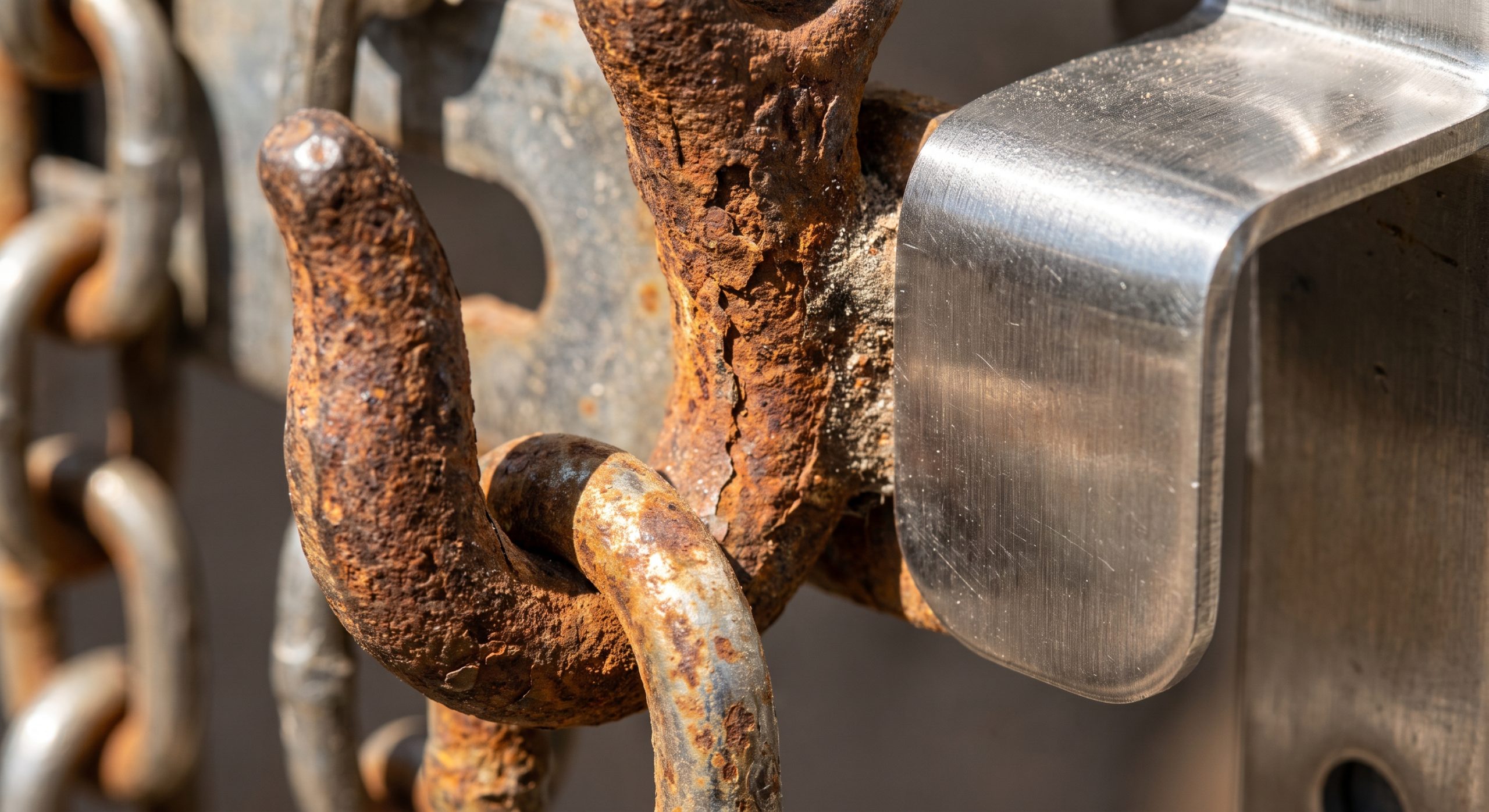
A tire chain hanger rack typically rusts because of continuous exposure to highly corrosive road salts, chemical deicers, and environmental moisture trapped in unventilated areas. When steel lacks a premium protective barrier or suffers paint chipping from swinging chains, rust quickly takes hold.
Understanding the physical and chemical triggers of corrosion is the first step in stopping rust from compromising your structural storage gear. Let us examine how moisture and chemistry work together to degrade your equipment.
Impact of Winter Deicing Salts
Modern highway departments rely heavily on aggressive chemical deicers like calcium and magnesium chloride. These chemicals cling to your chassis, lower the freezing point of water, and keep moisture in direct contact with the metal.
Think about it:
- Chemical deicers are significantly more corrosive than standard rock salt.
- They seep into tiny microscopic pores in low-quality steel finishes.
- Without regular rinsing, they cause deep pitting and structural weakening.
Dissimilar Metal Galvanic Action
If you mount a steel rack directly to an aluminum trailer frame without an insulating barrier, you create a galvanic cell. This chemical reaction causes the less noble metal (the aluminum) to corrode at an accelerated rate.
To prevent this, you should follow these mounting tips:
- Place durable rubber or neoprene isolators between the steel and aluminum.
- Use coated fasteners to prevent electrical current flow between metals.
- Regularly inspect the contact points for signs of white powder oxidation.
Long-Term Surface Protection
To keep rust at bay, you should invest in racks protected by heavy-duty hot-dip galvanizing, industrial powder coating, or high-grade stainless steel components. These premium finishes seal out oxygen and corrosive chemicals.
Key Takeaway: Choosing a rack with superior surface engineering and using galvanic isolators prevents structural rot, preserving both your truck’s appearance and the rack’s utility.
| Material / Finish | Rust Resistance | Durability | Longevity |
|---|---|---|---|
| Raw / Painted Steel | Low | Poor | Short (1-2 seasons) |
| Powder-Coated Steel | Medium-High | Good | Moderate (5+ seasons) |
| Stainless Steel | Maximum | Outstanding | Long-Term (Lifetime) |
Upgrading to premium materials eliminates the need for yearly paint touch-ups and structural repairs.
Where to buy a tire chain hanger rack?
You can buy a high-performance tire chain hanger rack directly from trusted B2B manufacturers specializing in heavy-duty commercial truck protection equipment. Investing in industrial-grade storage hardware ensures your fleet benefits from precise manufacturing standards, robust welds, and long-term durability.
Ready to upgrade your fleet? To secure the ultimate combination of structural reliability, compliance, and custom-fit options for your commercial vehicles, we invite you to contact us today for a tailored quote.
Finding Quality OEM Manufacturers
Choosing an experienced OEM manufacturer means your storage solutions are designed to handle real-world highway stress. Look for brands that build to strict quality standards and offer comprehensive product warranties.
Why does this matter?
- OEM builds guarantee consistent steel thickness and premium weld quality.
- They provide reliable replacement parts and custom mounting adapters.
- You receive direct support from the engineers who designed the system.
Evaluating Build-to-Print Specs
If you manage a large commercial fleet, you may need a custom storage configuration to fit specialized trailer designs or toolboxes. A manufacturer with build-to-print capabilities can fabricate racks to your exact dimensions.
It gets better:
- Custom dimensions ensure 100% compatibility with your existing truck setups.
- You can specify materials, finish colors, and latch styles.
- It streamlines fleet standardization across diverse vehicle makes.
Ordering Custom Fleet Solutions
Ordering in volume allows you to standardize your securement gear, reduce maintenance overhead, and negotiate direct fleet pricing. Partnering with a dedicated manufacturer makes fleet-wide deployment simple and cost-effective.
Key Takeaway: Partnering with an established manufacturer of heavy-duty truck equipment secures a long-term, high-ROI solution that protects your gear and drivers.
| Procurement Method | Best For | Typical Lead Time | Key Advantage |
|---|---|---|---|
| Standard OEM Catalog | Rapid deployment | 1-2 Weeks | Instant availability |
| Custom Build-to-Print | Specialized fleets | 4-6 Weeks | Tailored structural fit |
Selecting the right partner ensures your fleet is equipped to handle the toughest winter challenges.
Conclusion: Master Winter Roadways with Brontec Trailer
Operating a commercial transport business in cold climates demands uncompromising equipment reliability. A disorganized side box filled with knotted, rusted tire chains is a liability that costs you critical uptime and threatens driver safety. Standardizing your fleet with high-performance storage racks solves this issue permanently, providing structured, clean, and rapid access to traction hardware.
At Brontec Trailer, we manufacture premium-grade truck protection equipment engineered to withstand the harshest environments. From structural grille guards to custom fleet accessories, our products are crafted with the durability and precision that modern B2B fleet managers expect. Do not let the next major winter storm catch your drivers unprepared. Protect your equipment, secure your cargo, and keep your fleet moving safely by reaching out to our expert engineering team. We are ready to help you implement robust, custom-designed storage systems tailored to your exact operational requirements.
To discover how we can enhance your winter fleet readiness and protect your transportation assets, contact us today for a comprehensive consultation and factory-direct quote.
Frequently Asked Questions
Can I mount a tire chain hanger rack directly to my aluminum trailer chassis?
Yes, you can mount it to aluminum, but you must install rubber or neoprene isolating barriers between the steel mounting plate and the aluminum frame to prevent destructive galvanic corrosion.
What’s the best way to prevent my slide mechanism from freezing in sub-zero conditions?
It depends on your maintenance routine, but applying a premium dry-film silicone or graphite lubricant is the most effective method because it repels road dust and does not freeze.
How do I know if my tire chain hanger rack is DOT compliant?
Yes, your rack is compliant if it is rigidly mounted with no mechanical play, exhibits no structural weld cracks, and does not obstruct your vehicle’s lighting, air lines, or license plate.
Can I use a single tire chain hanger rack to hold both load binders and snow chains?
No, we do not recommend this practice because load binders and snow chains have completely different weight distributions and hook profiles, which can lead to overloaded hooks and physical damage.
How do I know if a frame-mounted rack is better than a mud-flap-mounted rack?
It depends on your available frame space and axle configuration. Frame-mounted racks offer superior weight distribution and structural stability, while mud-flap-mounted racks are ideal for trucks with highly congested frame rails.