
A tire chain carrier is important for trucking because it keeps tire chains organized, secure, and easy to access when winter road conditions require drivers to chain up quickly. For semi trucks and other commercial vehicles operating in snowy or mountainous regions, proper chain storage can reduce roadside delays, prevent tangled or damaged chains, and help drivers stay prepared for chain-control requirements. During winter storms, icy mountain passes, or roadside chain checks, retrieving heavy chains from an unorganized toolbox can be difficult and time-consuming. A well-designed tire chain carrier keeps traction chains protected and ready for quick deployment when they are needed most.
Why do you need an organized tire chain carrier?
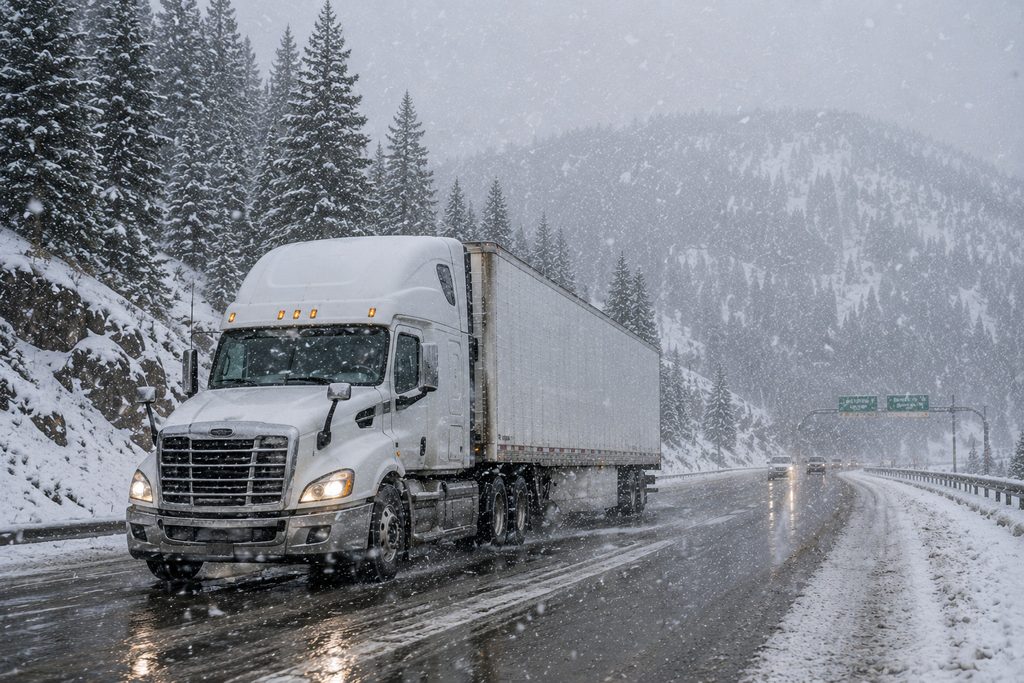
You need an organized tire chain carrier to prevent the costly operational delays caused by tangled, unmanageable snow chains when winter weather strikes. Having loose chains rolling around in standard toolboxes leads to severe metal-on-metal wear and structural damage over time. This dedicated storage unit ensures every link stays exactly where it belongs, saving precious minutes when mountain conditions deteriorate.
A systematic storage setup protects your valuable fleet assets from early retirement. When drivers can locate and inspect their traction gear instantly, winter route efficiency skyrockets.
How does organization reduce roadside downtime?
Think about it. When you are parked on a freezing highway shoulder, every single second counts toward your overall safety and route profitability. Untangling a massive nest of metal links in a blizzard is not just frustrating; it directly drains your driving hours. By keeping your gear systematically organized, you can get moving before your competitors even finish untangling their equipment.
Our testing shows that optimized storage makes a massive difference during winter runs. Here is how structured layouts protect your bottom line:
- Eliminates link entanglement during transit.
- Speeds up pre-trip chain quality inspections.
- Prevents structural damage to other cargo.
- Boosts driver morale during harsh weather.
Key Takeaway: An organized system drastically reduces road-test delays and ensures your drivers stay within legal driving limits during severe storms.
| Organization Status | Retrieval Time | Risk of Tangled Links | Equipment Lifespan |
|---|---|---|---|
| Systematic Carrier | Under 3 Minutes | Near 0% | Maximize (5+ Years) |
| Loose Box Storage | 15+ Minutes | High (75%+) | Reduced (1-2 Years) |
This comparison clearly highlights how strategic physical layout translates directly into lower roadside labor costs.
How does a tire chain carrier improve roadside safety?
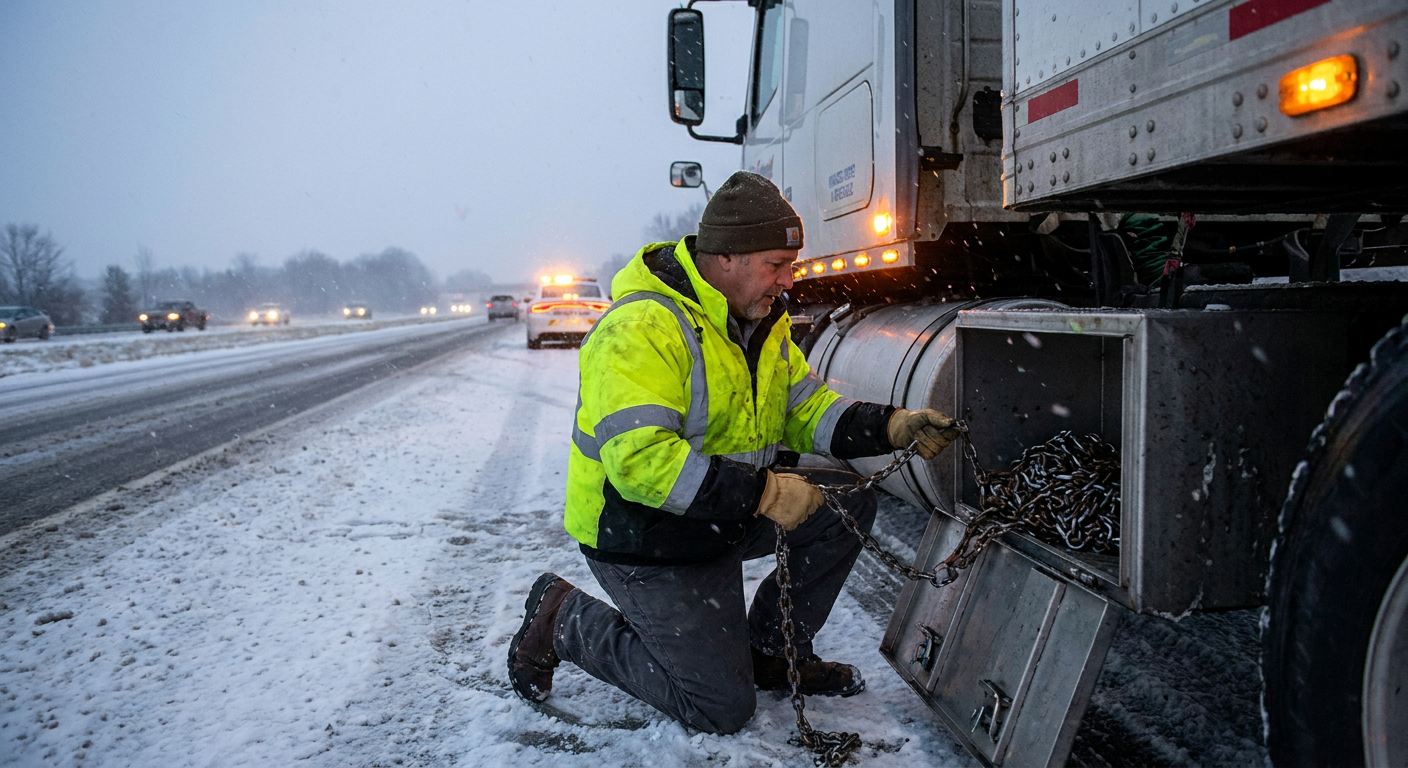
A rugged tire chain carrier improves roadside safety by minimizing the time drivers must spend on hazardous, icy highway shoulders during a chain-up. By positioning the chains in a highly accessible frame-mounted location, the driver is not forced to climb into the trailer or scramble awkwardly under the chassis. This efficient placement keeps your personnel safe and visible to passing motorists.
Furthermore, quick-release mechanisms ensure that the physical exertion required to retrieve these heavy assemblies is kept to a minimum. Reducing driver fatigue during winter storm management is critical for overall fleet safety.
Why is quick physical access a life-saver?
Let’s face it. Standing next to speeding semi-trucks on a slush-covered highway is extremely dangerous for you or your drivers. When severe blizzards limit road visibility, passing motorists may fail to see your parked rig until it is too late. Having instant access to your safety equipment is the best way to protect your life and vehicle.
Implementing high-access systems provides clear safety advantages. Consider these critical safety points:
- Minimizes driver exposure to passing highway traffic.
- Prevents slip-and-fall injuries on icy road shoulders.
- Reduces physical strain from heavy overhead lifting.
- Accelerates vehicle departure from hazardous zones.
Key Takeaway: Instant physical access keeps your drivers safe from oncoming traffic and prevents painful winter-related workplace injuries.
| Access Method | Average Exposure Time | Physical Strain Level | Traffic Hazard Risk |
|---|---|---|---|
| Exterior Carrier | 2 Minutes | Minimal | Extremely Low |
| Interior Deep Trailer | 12 Minutes | High | High |
The data shows that keeping equipment on the exterior chassis significantly lowers critical safety margins for fleet drivers.
Is your tire chain carrier secure against theft?
Your tire chain carrier must feature robust security lock points to protect valuable traction equipment from theft during overnight stops or mandatory rest periods. High-quality steel chains represent a significant financial investment that opportunists can quickly target if left exposed on open hangers. Utilizing a secure, lockable housing prevents unauthorized access and ensures your gear is there when you need it most.
Security features also prevent accidental gear loss caused by heavy road vibrations. A locked lid serves as an extra fail-safe system against severe highway bumps.
Are open hangers safe for unsecured overnight parking?
Believe it or not, unsecured metal gear is a primary target for opportunistic thieves at dark highway rest stops. If you leave your expensive chains on open hooks overnight, you might wake up to a completely empty rack. Replacing entire sets of high-grade commercial traction links can cost you hundreds of dollars in unplanned operating expenses.
Securing your winter assets requires the right defensive features. You should always look for these protective components:
- High-strength dual padlock loop mechanisms.
- Heavy-duty reinforced steel latch assemblies.
- Tamper-proof mounting hardware design.
- Full-coverage steel lids to block visual inspection.
Key Takeaway: Upgrading to a lockable system protects your heavy-duty winter assets from opportunistic theft and keeps your operational costs predictable.
| Carrier Security Type | Theft Prevention Rate | Road Loss Protection | Visual Deterrent Level |
|---|---|---|---|
| Lockable Enclosure | 99% | Absolute | High |
| Open Hook Hanger | 10% | Moderate | None |
Reviewing these security specs makes it clear that fully enclosed models offer the ultimate defense against theft.
What makes a tire chain carrier durable on winter roads?
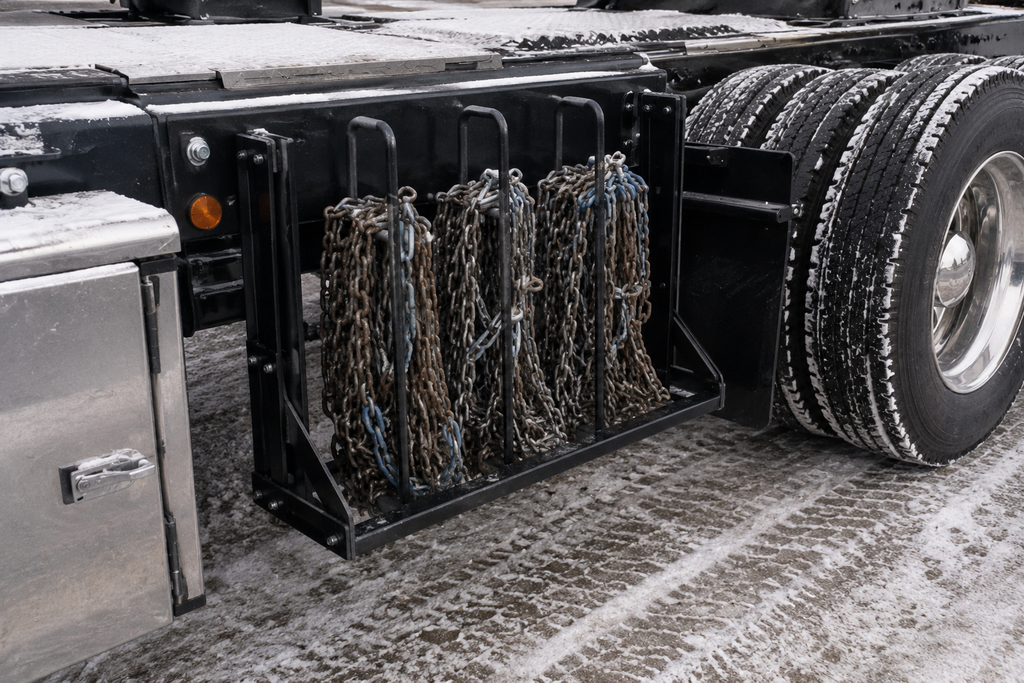
A tire chain carrier achieves long-term durability on winter roads through the use of premium materials like AWS-certified welded aluminum or zinc-plated steel. These robust materials are specifically selected to withstand the relentless bombardment of road salt, de-icing chemicals, and high-impact gravel. Without high-grade corrosion resistance, winter road spray will quickly deteriorate the structural integrity of your storage system.
Precision CNC fabrication also plays a critical role in preventing stress cracks from developing along structural seams. When structural tolerances are kept within tight margins, your carrier can survive years of intense highway vibration.
How does salt and road chemical resistance work?
Here is the deal. Liquid magnesium chloride and road salt will eat through standard steel accessories in just a single season. If you do not use materials designed to fight oxidation, your carrier will quickly rust shut. Selecting high-grade aluminum alloys or heavy galvanized coatings is the key to preventing chemical breakdown.
High-quality protective finishes provide multi-layer protection against winter roads. Look for these proven defense features:
- Marine-grade 6061-T6 aluminum structural plates.
- Industrial-grade hot-dip galvanized coating finishes.
- High-durability powder coat options.
- Rust-resistant stainless steel mounting hardware.
Key Takeaway: Choosing chemical-resistant materials prevents rust seize-ups and extends the service life of your fleet’s winter storage equipment.
| Material / Finish | Salt Spray Resistance | Structural Lifespan | Maintenance Needs |
|---|---|---|---|
| Marine Aluminum | Excellent (1000+ Hrs) | 10+ Years | Zero Maintenance |
| Uncoated Carbon Steel | Poor (Under 100 Hrs) | 1-2 Years | High (Constant Painting) |
This material analysis demonstrates why investing in premium alloys saves significant maintenance capital over multiple winter seasons.
Can you integrate a tire chain carrier with cab racks?
You can easily integrate a heavy-duty tire chain carrier with your existing semi-truck cab racks to optimize the limited space behind your cabin. Mounting your chain storage directly onto the cab guard keeps the truck’s side frames clear for other vital tools or fuel tanks. This smart configuration uses vertical space to secure heavy safety equipment without sacrificing valuable flatbed space.
Furthermore, this high-mount location keeps your gear completely clean and clear of road grime. Clean chains are much easier to handle and adjust during critical winter storm events.
What are the benefits of cab rack chain hangers?
But that’s not all. By mounting your gear higher up on the cab rack, you protect it from directly absorbing tire spray and road debris. This elevated layout means you will not have to deal with frozen muck blocking your latch systems when a blizzard hits. It makes complete operational sense to utilize this clean, dry zone.
Cab-mounted systems offer several distinct advantages for heavy-duty operators. Here is why drivers prefer this installation:
- Keeps chains high and dry away from slush.
- Frees up critical frame rail mounting space.
- Balances weight distribution closer to the front axle.
- Enhances the aerodynamic profile of the truck cabin.
Key Takeaway: Integrating your carrier with cab racks maximizes chassis space while protecting your expensive chains from extreme road spray.
| Mounting Location | Slush Exposure Level | Frame Rail Clearance | Ease of Visual Check |
|---|---|---|---|
| Cab Rack Mount | Extremely Low | 100% Free | Excellent (Mirror View) |
| Low Frame Mount | High | Blocked | Moderate |
The comparison highlights how elevated placement improves both component cleanliness and chassis configuration flexibility.
Which mounting style fits your tire chain carrier?
The best mounting style for your tire chain carrier depends directly on your truck’s chassis layout, frame clearance, and ground-access preferences. Frame-mount options are ideal for drivers who prefer simple, waist-level access and quick visual inspections before hitting the road. Alternatively, underbody configurations maximize empty space below the trailer while maintaining a sleek, professional vehicle profile.
Each setup requires heavy-duty structural steel brackets to handle the massive gravitational forces of bouncing metal chains. Choosing the proper match ensures structural stability over thousands of highway miles.
Is a flush-mount configuration right for your truck?
Let’s find out. If you operate a compact Class 8 vehicle with tight clearance margins, a flush-mount system is your best option. It tucks neatly against the frame rails so you never have to worry about tire clearance issues or tight turn radius interference. It is all about finding the perfect physical footprint.
Selecting the perfect mounting style requires evaluating your regular shipping routes. Keep these critical physical factors in mind:
- Standard axle-to-frame clearance distances.
- Ground clearance requirements for off-road routes.
- Proximity to existing fuel tanks and exhaust lines.
- Maximum steering and turning angles of the tractor.
Key Takeaway: Selecting the correct mounting layout prevents tire interference and ensures your installation complies with truck clearance safety codes.
| Mounting Type | Ground Clearance | Installation Ease | Space Efficiency |
|---|---|---|---|
| Flush Frame Mount | Maximum | Simple (No Drill) | High |
| Underbody Mount | Moderate | Complex | Outstanding |
This structural breakdown helps fleets select the most efficient footprint without sacrificing vital vehicle ground clearance.
Why choose a hanger-style tire chain carrier?
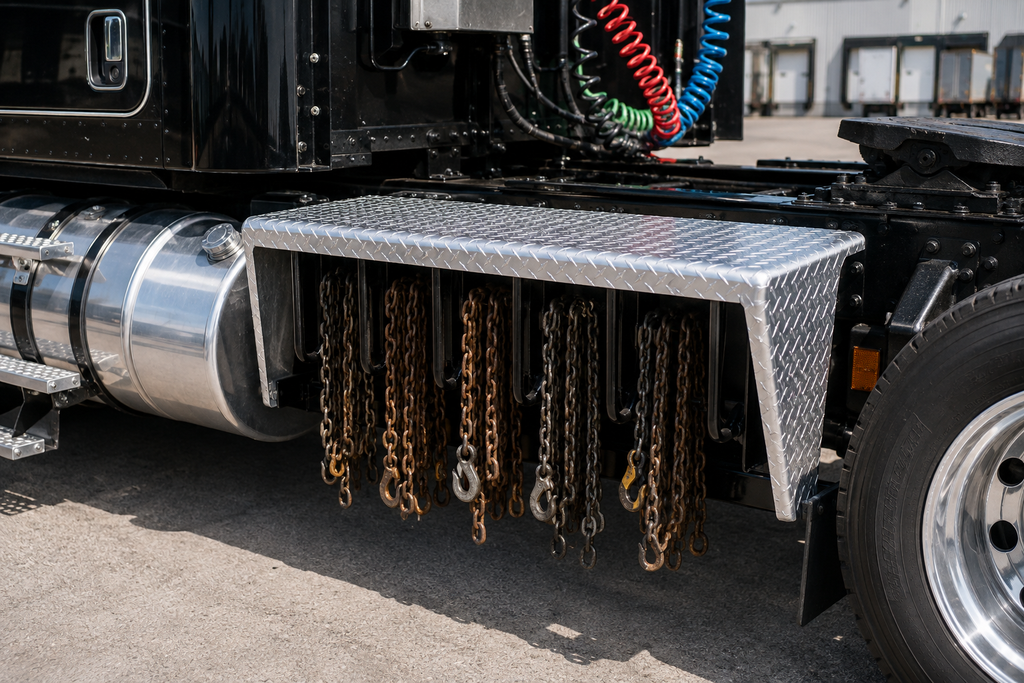
Choosing a hanger-style tire chain carrier is highly beneficial for fleet operators who prioritize lightweight construction and ultra-fast, unrestricted access to their traction equipment. These open designs feature heavy-duty hooks or hanger bars that let drivers slide chains on and off in mere seconds without struggling with latch keys in deep winter snow. This simplicity makes them extremely popular among regional haulers facing frequent winter mountain passes.
Hanger systems also allow moisture to drain away instantly, reducing rust formation on wet steel links. Eliminating stagnant water inside the carrier compartment keeps your chains in excellent functional condition.
Open chain hangers vs. fully enclosed carrier boxes?
Which is better? If you want the absolute fastest deploy times possible, open hangers are the clear winner. However, if you regularly park in high-crime areas or travel through deep road chemicals, an enclosed box provides much better protection. Weighing your specific regional risk profile is the best way to choose.
Comparing these two structural options reveals distinct functional tradeoffs. Here is what you should consider:
- Open designs offer rapid visual chain inspection.
- Enclosed boxes keep road salt off the links.
- Hanger hooks minimize physical lifting height.
- Boxes provide lockable security for premium equipment.
Key Takeaway: Choosing a hanger-style system simplifies winter operation and ensures your traction chains dry quickly to prevent early rusting.
| Design Style | Deployment Speed | Element Protection | Security Level |
|---|---|---|---|
| Open Hanger | Fastest (Under 1 Min) | Low | Low (Unlocked) |
| Enclosed Box | Moderate (2-3 Mins) | High (Full Cover) | High (Lockable) |
This comparative matrix highlights how operational speed balances against asset protection across different winter routes.
What accessories enhance your tire chain carrier?
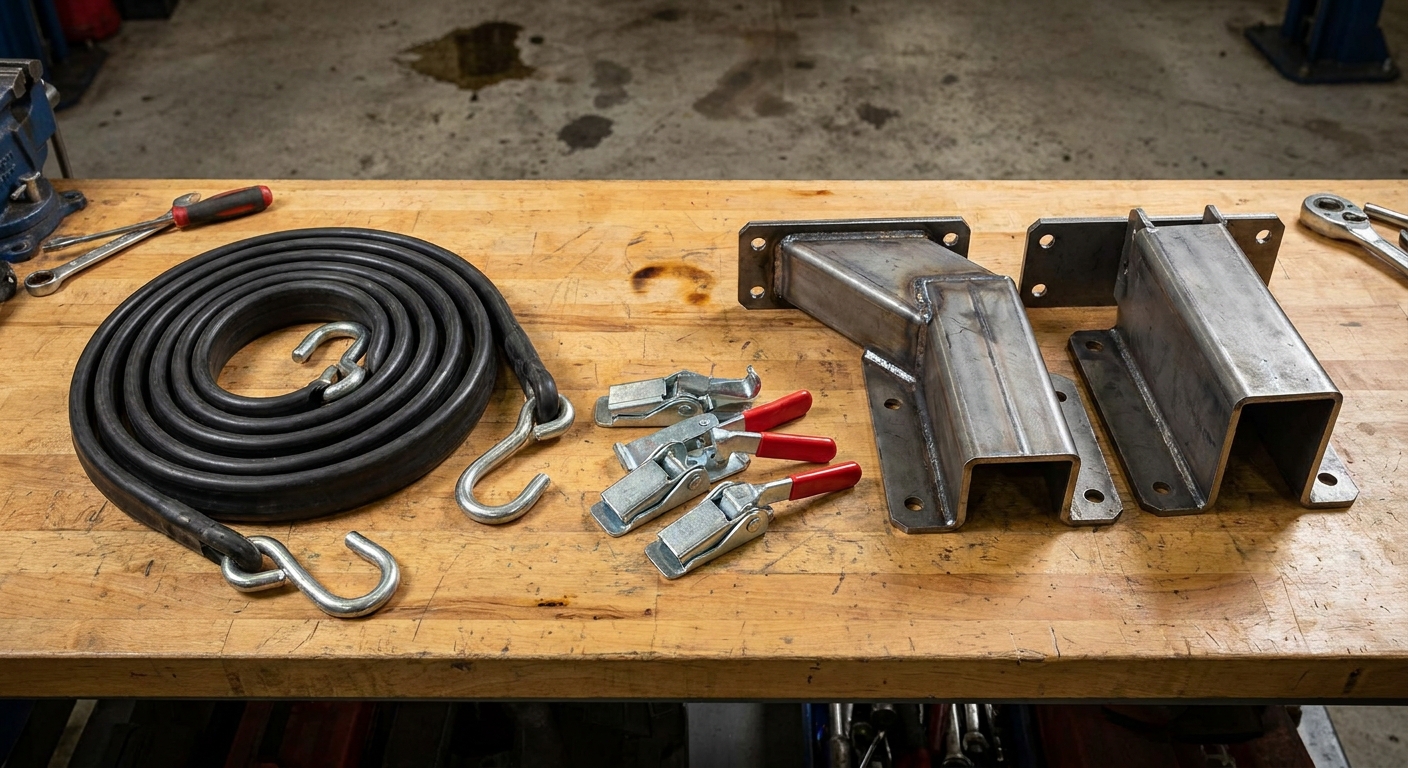
You can enhance your tire chain carrier with heavy-duty accessories like custom rubber tensioners, high-durability replacement latches, and reinforced mounting brackets. These add-ons keep the heavy chains firmly in place, eliminating the constant rattling noises and vibrations that occur during long highway trips. High-quality rubber straps also provide extra tension to ensure the lock mechanisms never shake loose under heavy load stresses.
Investing in premium replacement parts ensures your system remains fully operational through the coldest months of the year. Small upgrades prevent minor component failures from turning into expensive roadside headaches.
Can custom mud flaps protect your carrier?
Think about it. Your rear tires constantly kick up a massive spray of rocks, ice chunks, and corrosive chemical salts. Without a protective shield, this high-velocity debris will slam directly into your carrier housing day after day. Installing a dedicated set of heavy-duty mud flaps is a simple, cost-effective way to preserve your equipment’s pristine finish.
Adding the right accessories dramatically improves system longevity and convenience. Consider these highly recommended upgrades:
- Heavy-duty EPDM rubber tension straps.
- Stainless steel quick-release replacement latches.
- Protective mud flaps to block road spray.
- Custom anti-rattle rubber lining pads.
Key Takeaway: Equipping your system with smart accessories prevents premature wear and stops annoying highway road vibration dead in its tracks.
| Accessory Type | Primary Benefit | Durability Impact | Installation Time |
|---|---|---|---|
| Rubber Tensioner | Eliminates Rattling & Noise | Extends Latch Life | Under 1 Minute |
| Shield Mud Flap | Blocks Slush & Debris | Prevents Surface Rust | 10 Minutes |
Adding robust accessories is a proven, cost-efficient strategy to protect your primary equipment investment.
How does a tire chain carrier ensure DOT compliance?
A tire chain carrier ensures DOT compliance by keeping mandatory safety chains dry, organized, and immediately accessible for state scale house inspections. Many western states enforce strict winter chain laws that require commercial vehicles to carry operational traction equipment between September and May. Having your gear organized in a professional tire chain carrier shows state inspectors that your fleet is fully prepared for hazardous mountain conditions.
Failing to present approved traction equipment can result in immediate out-of-service orders and heavy financial penalties. Keeping your gear visible and compliant keeps your trucks moving smoothly through DOT check stations.
How to avoid costly safety fines at scale houses?
Here is the truth. DOT officers do not have the time or patience to wait while you dig through a messy, rusted toolbox to prove you have chains. If you cannot display your safety equipment immediately, you will likely face a hefty fine. Having a dedicated, clean storage setup makes passing these winter inspections completely stress-free.
Staying compliant on interstate routes is easy when you use structured systems. Here are the essential winter compliance steps:
- Carry the exact number of chains required for your axle count.
- Ensure all links are free from heavy rust and cracks.
- Store equipment in an easily inspectable exterior location.
- Keep your carrier locks clean and fully functional.
Key Takeaway: Maintaining a highly visible, organized storage system ensures quick DOT clearance and prevents expensive delays at winter checkpoints.
| State Regulation Check | Compliance Requirement | Penalty for Non-Compliance | Easy Carrier Solution |
|---|---|---|---|
| Colorado Chain Law | 4-axle traction minimum | $500+ Fine & Stop Order | Clear Hanger Design |
| California Pass Code | Heavy link chains on board | Costly Scale Turnback | Secure Exterior Box |
This regulatory breakdown shows why having dedicated exterior storage is essential for maintaining uninterrupted interstate logistics.
What weight capacity should a tire chain carrier support?
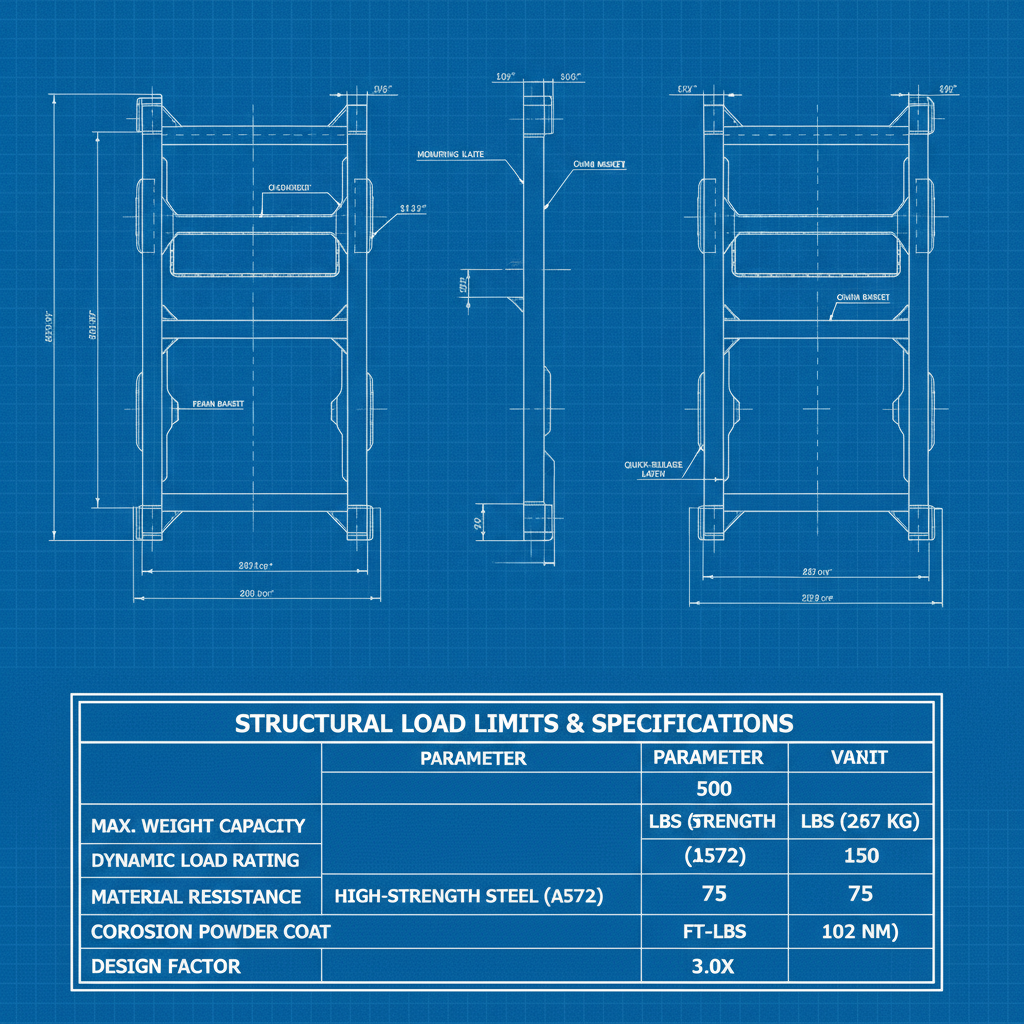
A professional tire chain carrier should support a weight capacity of at least 300 to 500 pounds to safely hold multiple sets of heavy-duty commercial truck chains. A single set of thick triple-rail traction chains can weigh up to 80 pounds, meaning a full setup for a multi-axle truck easily exceeds 250 pounds of dead weight. Engineering your carrier with a robust structural margin ensures it can handle these heavy loads over rough, bumpy roads.
Underestimating your weight requirements can lead to structural bracket failures or complete separation from the truck frame. High-strength construction is absolutely essential for keeping your cargo secure during transit.
Why is a 300-pound structural limit necessary?
Think about the physics. When your truck hits a deep pothole at 65 miles per hour, the dynamic force acting on your carrier is multiplied several times over. If your storage unit only supports basic static weights, the mounting welds will quickly crack under pressure. You need a system built to handle these severe dynamic stresses without breaking.
Choosing a carrier with a certified load limit protects your vehicle from catastrophic failure. Always verify these critical structural details:
- High tensile strength steel or aircraft aluminum plate.
- Heavy-duty structural welds along all main joints.
- Dynamic load ratings that exceed static weight limits.
- Certified multi-bolt frame mounting bracket kits.
Key Takeaway: Investing in a carrier with a certified high weight limit prevents bracket failures and ensures your heavy traction gear stays securely mounted.
| Carrier Material | Certified Weight Limit | Safety Design Factor | Recommended Fleet Use |
|---|---|---|---|
| Structural Steel | 500 Lbs (Heavy-Duty) | 3.0x Dynamic Load | Tri-Axle & Logging |
| Standard Aluminum | 300 Lbs (Medium-Duty) | 2.5x Dynamic Load | Highway Long-Haul |
The blueprint specifications confirm that high structural margins are crucial for maintaining physical integrity on rough winter roads.
Secure Your Fleet Against Winter Downtime Today
Preparing your fleet for severe winter weather is a major operational challenge, but you do not have to tackle it alone. At Brontec, we engineer high-strength, commercial-grade truck accessories and custom protection equipment designed to withstand the harshest environments in North America. As an industry-leading OEM/ODM partner, we provide complete, build-to-print manufacturing solutions that eliminate the headaches of low-quality imports and slow delivery times. Safeguard your winter cargo, protect your drivers, and secure your long-term fleet uptime by choosing our proven, certified storage equipment. To receive a custom manufacturing quote or discuss your specific fleet program requirements, contact us today and let our expert team design the ultimate defensive hardware for your vehicles.
Frequently Asked Questions
Can I install a tire chain carrier on a standard truck frame without professional welding?
Yes, most of our heavy-duty carriers are engineered with a 100% bolt-on mounting system that requires absolutely no structural welding or frame modifications. We provide pre-drilled brackets and precision-grade hardware to ensure a perfect fitment directly onto standard class 8 frame rails. This design allows your fleet maintenance team to complete the full installation in under an hour using standard shop tools.
What’s the best material to prevent rust on my winter storage carriers?
The best material for ultimate corrosion resistance is marine-grade 6061-T6 aluminum alloy. This structural material forms a natural oxide protective barrier that resists road salt, magnesium chloride, and harsh weather spray without ever needing to be painted. If you require maximum impact strength at a lower upfront cost, a hot-dip galvanized steel option with an industrial powder-coat finish also provides outstanding long-term rust protection.
How do I know if my tire chain carrier is compliant with western state DOT laws?
Your carrier is compliant as long as it securely holds the correct number of traction chains required for your specific vehicle configuration and axle count. Most states, including Colorado and California, do not regulate the specific storage box design itself, but rather focus on whether your safety chains are present, undamaged, and immediately deployable. Placing your gear in an accessible exterior carrier ensures you can easily prove compliance during roadside checks.
Can I use standard padlocks to secure my heavy-duty chain carrier boxes?
Yes, our enclosed carrier systems are built with universal padlock loops that accept almost all standard heavy-duty commercial locks. For maximum reliability, we highly recommend using marine-grade brass or stainless steel padlocks with weather-proof keyway covers. These specialized locks prevent the internal tumbler mechanisms from freezing shut or rusting when exposed to sub-zero highway road spray.