
Choosing the right underbody tool box for your truck starts with understanding how much storage you need, where the box will be mounted, and the conditions it will face on the road. The right size and material should provide enough capacity without compromising ground or tire clearance, while durable construction, weather-resistant sealing, and secure latches help protect tools from road spray, debris, and theft. For flatbed trucks, semi-trucks, and other commercial vehicles, a well-chosen underbody tool box can keep essential gear organized and accessible while preserving valuable deck space.
Why choose an underbody tool box for your rig?
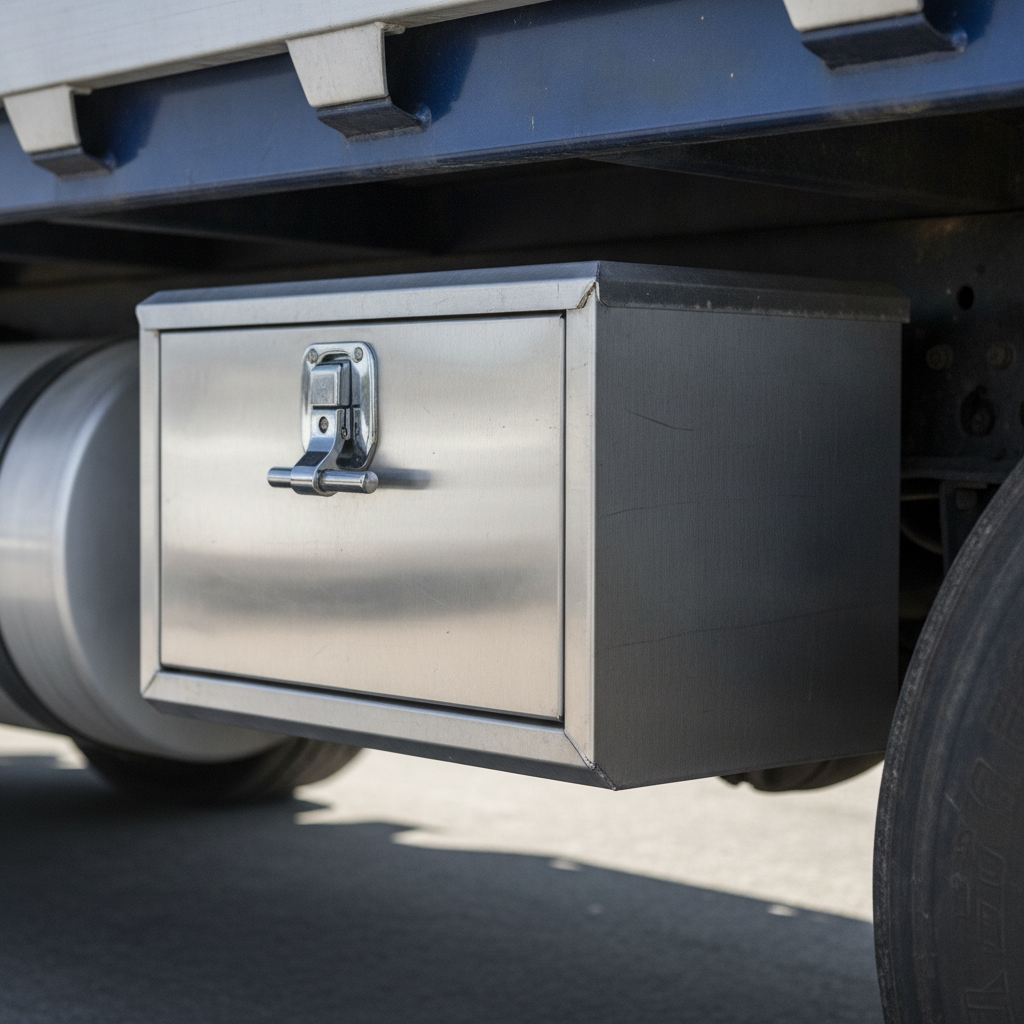
Choosing an underbody tool box is the ultimate way to maximize cargo space on your flatbed or commercial truck by moving heavy-duty storage below the frame. This mounting strategy completely clears your truck deck so you can load wider machinery, structural timber, or pallets without physical interference. By placing heavy chains, binders, and tools closer to the pavement, you also lower your vehicle’s center of gravity and significantly improve highway handling.
Maximize truck bed space and secure your gear
Keeping your truck bed uncluttered is not just about aesthetics; it is about protecting your bottom line. When your deck is clean, your payload potential rises, directly boosting your revenue per mile. Think about it:
- Maximizes flatbed deck footprint for high-yield, bulky commercial cargo.
- Keeps heavy rigging equipment securely enclosed and out of sight.
- Reduces the risk of loose tools shifting and causing highway hazards.
| Space Allocation Metric | Frame-Mounted Underbody Storage | Deck-Mounted Crossover Storage |
|---|---|---|
| Available Bed Space | 100% Fully Preserved | Reduced by 15% to 20% |
| Center of Gravity | Lowered (safer transit) | Elevated (increased body roll) |
| Access Height | Ground level (ergonomic) | Bed height (requires climbing) |
This spatial comparison clearly highlights how utilizing the vehicle’s lower chassis line preserves valuable deck real estate while enhancing highway safety.
Key Takeaway: By shifting heavy rigging equipment to a frame-mounted position, fleet managers can boost haul capacity per truck and reduce physical driver fatigue during long shifts.
How does an underbody tool box protect your gear?
An underbody tool box protects your expensive gear by creating an impenetrable barrier against harsh road salt, highway debris, and severe weather conditions. Precision manufacturing ensures that the exterior door compresses firmly against heavy-duty rubber seals to prevent any water ingress. This complete sealing prevents your mechanical tools from rusting and keeps high-value tie-down straps dry and structurally sound.
Heavy-gauge aluminum and weather-resistant seals
The secret to absolute cargo protection lies in the quality of the raw materials and weather stripping used. Commercial-grade enclosures rely on continuously welded seams to withstand the constant vibrations of highway travel. Here is the kicker:
- Full-perimeter EPDM rubber gaskets block high-pressure water spray from the truck wheels.
- Beveled door channels divert rain away from the inner compartment even during opening.
- Heavy-duty gas struts or support cables prevent the doors from dropping or slamming shut.
- You can complement these enclosures with high-security lock systems to ward off opportunistic roadside theft.
| Weatherproofing Feature | EPDM Rubber Seals | Continuous Robotic Welds | Beveled Rain Channels |
|---|---|---|---|
| Primary Purpose | Blocks pressurized spray | Eliminates seam splitting | Diverts gravity rain runoff |
| Durability Rating | High UV resistance | Lifetime structural | Permanent defense |
This multi-layered weather protection system ensures that road moisture and salt never breach the tool box interior.
Key Takeaway: Secure, weather-sealed compartments prevent costly tool degradation, saving your fleet thousands of dollars in replacement equipment and emergency downtime.
What is the best underbody tool box material?
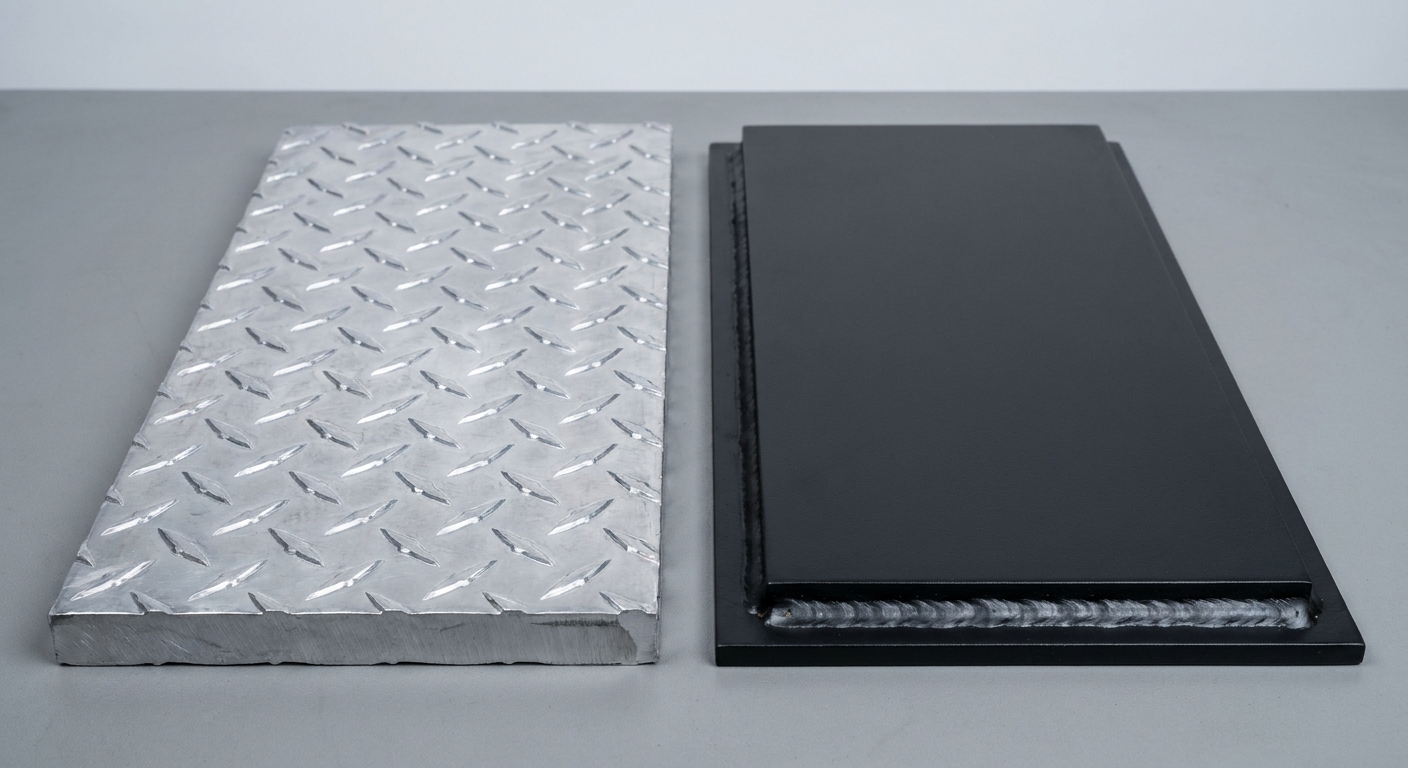
Choosing the right material for your underbody tool box typically comes down to a direct comparison between marine-grade diamond plate aluminum and powder-coated steel. Aluminum is incredibly lightweight, allowing you to maximize your fleet’s payload capacity without sacrificing structural integrity. On the other hand, steel offers extreme tensile strength that is ideal for heavy-duty vocational and construction trucks.
Comparing steel strength vs aluminum plate
Evaluating your long-term fleet metrics will quickly reveal which material fits your daily operations best. But that’s not all.
- Marine-grade aluminum resists salt corrosion naturally, making it perfect for winter-route fleets.
- Heavy-duty steel provides maximum protection against impact from flying rocks and debris.
- Diamond plate surfaces hide scratches and maintain a professional appearance over years of use.
| Material Characteristic | Marine-Grade Diamond Plate | Powder-Coated Carbon Steel |
|---|---|---|
| Relative Tare Weight | Ultra-lightweight | Heavy |
| Corrosion Resistance | Excellent (natural oxide) | Moderate (rusts if chipped) |
| Lifespan in Salt | 10+ Years | 5-7 Years |
This strategic material breakdown highlights that while steel offers heavy-duty impact armor, aluminum delivers unbeatable weight savings and rust resistance.
Key Takeaway: Choosing diamond plate aluminum keeps your fleet’s tare weight low and eliminates ongoing paint maintenance costs, maximizing long-haul profitability.
Where should an underbody tool box be mounted?
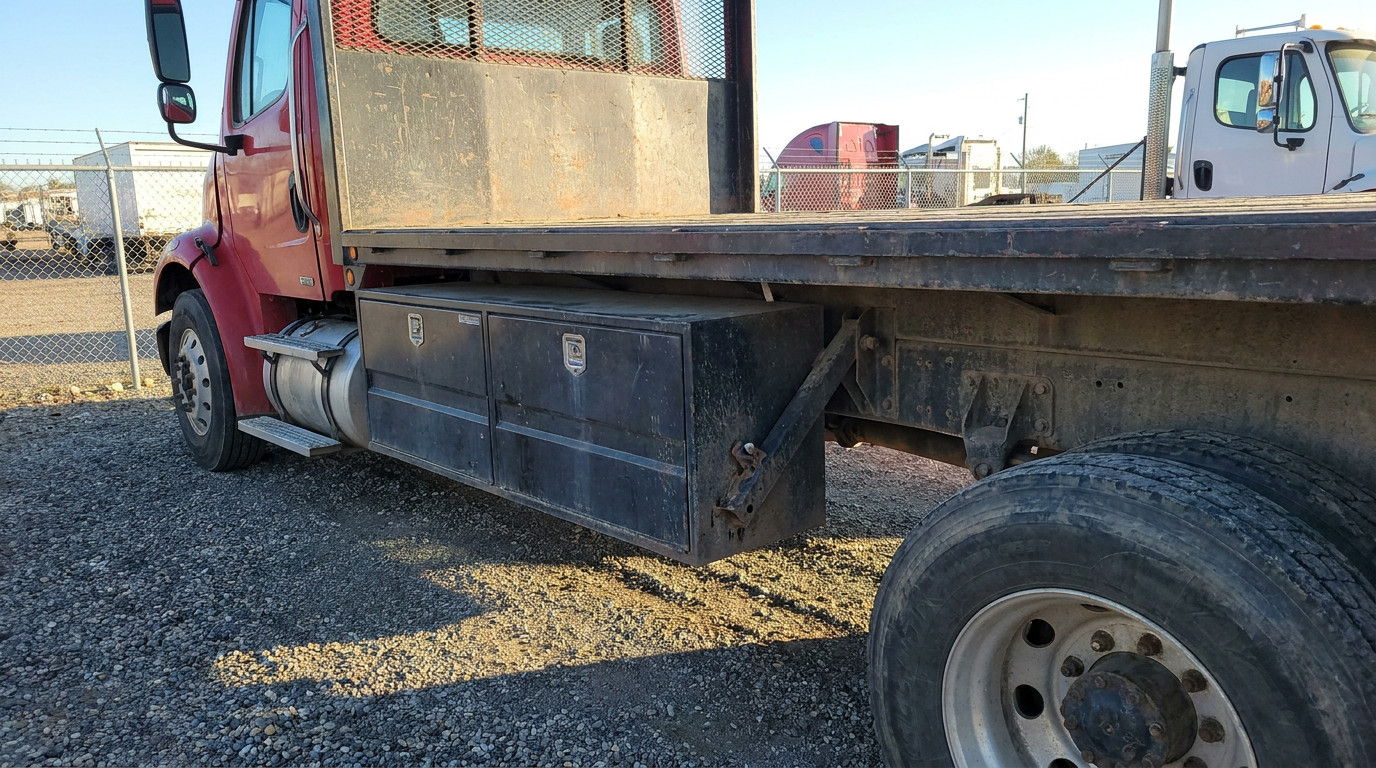
Determining the optimal position for your underbody tool box is crucial to maintaining proper weight distribution and vehicle safety. Most commercial operators mount these enclosures directly to the side frame rails between the front cabin and the rear axles. This layout utilizes empty chassis space while keeping your essential tools accessible from ground level.
Selecting secure frame rails and chassis clearance
Proper placement requires careful structural planning and a solid understanding of your truck’s physical dynamics. Why does this matter?
- Mounting on the side frame rails ensures fast access without climbing onto the slippery deck.
- Keeping the box flush with the outer rub rails preserves the vehicle’s aerodynamic profile.
- Adequate tire clearance prevents tire blowout damage and preserves suspension travel.
- You can find heavy-duty mounting gear and premium trailer parts to guarantee a secure, permanent fit on the chassis.
| Mounting Location | Target Clearance | Primary Advantage | Best Suited For |
|---|---|---|---|
| Side Frame Rails | 6-8 inches from tires | Ground-level accessibility | Long-haul flatbeds |
| Behind Headache Rack | Flush with bed width | Protected from road debris | Heavy haulers |
| Rear Overhang Zone | 12 inches off road | Utilizes dead space | Dump trucks |
Our structural analysis confirms that side frame rail mounting delivers the safest weight distribution and fastest roadside accessibility.
Key Takeaway: Storing your heavy chains and binders at ground level on the side frame rails speeds up load securement times and protects drivers from slip-and-fall injuries.
Which underbody tool box sizes fit your fleet?
Selecting the correct dimensions for your underbody tool box requires precise measurements of your chassis space and road clearance. Standard commercial boxes are available in a variety of widths and heights to match different flatbed drop heights. If you purchase a box that is too deep, you risk striking road obstacles or bottoming out on steep loading docks.
Understanding standard dimensions and clearance
Taking exact measurements before ordering prevents costly installation delays and returned merchandise. Let’s break down the math:
- Chassis Height: Measure from the bottom of the truck bed frame to the road surface, ensuring a minimum of 12 inches of safety clearance.
- Frame Rail Depth: Measure the horizontal space between your fuel tanks, battery boxes, and rear wheels.
- Overhang Width: Ensure the box does not extend past your trailer’s side rub rails to maintain road legality.
| Standard Dimension Size | Width Range (Inches) | Depth Range (Inches) | Height Range (Inches) |
|---|---|---|---|
| Compact Fleet | 24 – 30 | 18 | 18 |
| Standard Flatbed | 36 – 48 | 18 – 24 | 18 – 24 |
| Heavy Vocational | 60 – 72 | 24 | 24 |
This simple sizing matrix helps operators match their physical frame limitations to standard industry storage sizes.
Key Takeaway: Verifying that your box maintains a 12-inch road clearance zone prevents impact damage from potholes and steep driveways, extending the life of your equipment.
Who benefits most from an underbody tool box?
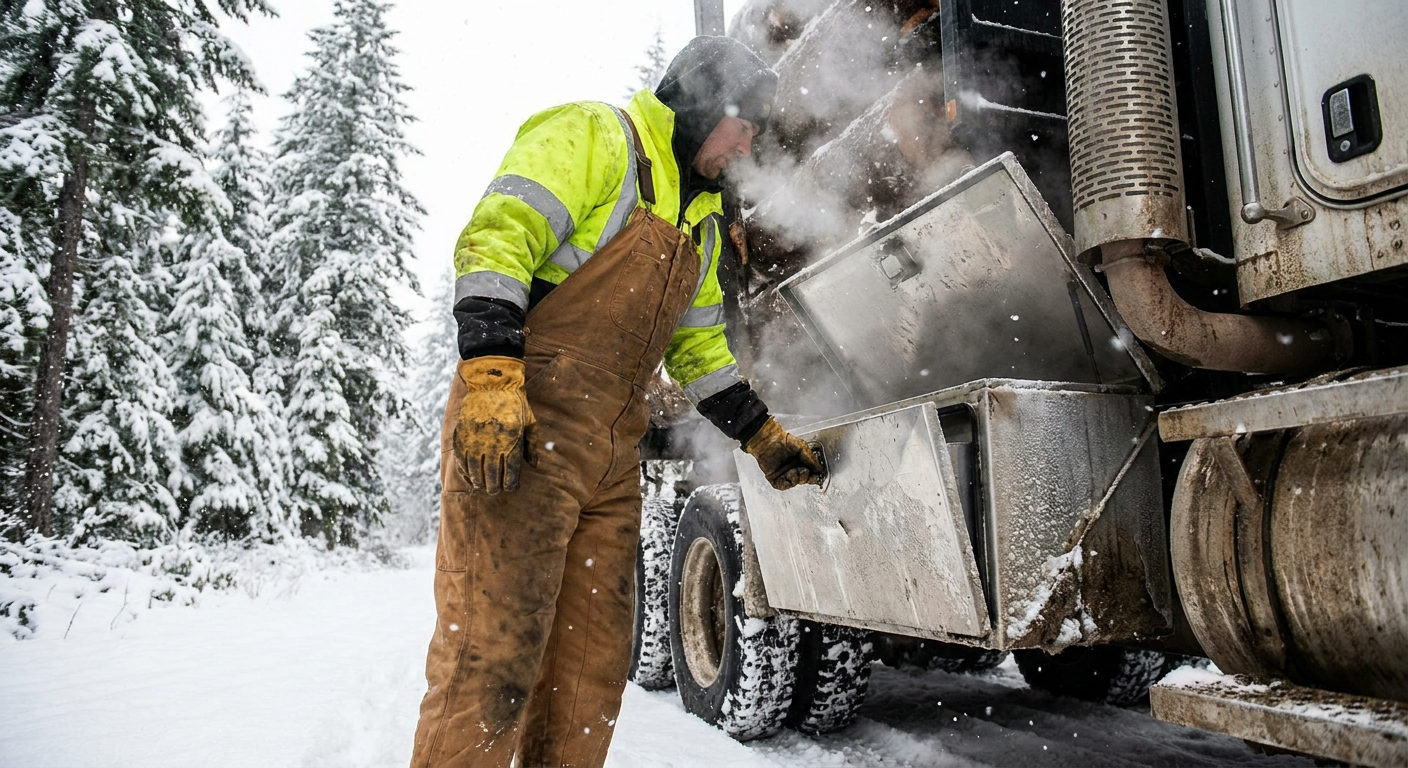
A rugged underbody tool box is an invaluable asset for heavy fleets, northern logging operations, and flatbed transporters. These vocations put immense strain on gear, requiring storage solutions that can withstand severe mud, flying gravel, and sub-zero temperatures. Drivers who operate in remote areas rely on secure storage to keep their emergency recovery gear clean and readily accessible.
Solutions for heavy fleets and logging flatbeds
Heavy-duty environments demand extreme durability and rapid access to critical tools. Now, consider this:
- Forestry and logging trucks require reinforced enclosures to survive heavy impacts from falling logs and branches.
- Municipal fleets need clean, secure areas to store expensive electronics and hydraulic controls.
- Long-haul carriers must protect load securement straps from damp road salt spray to prevent structural strap rot.
- Equipping your truck with heavy-duty truck tool boxes ensures that your gear is organized and fully protected on every route.
| Industry Sector | Primary Payload Threat | Essential Tool Box Feature |
|---|---|---|
| Forestry & Logging | Heavy physical impacts | 1/8-inch reinforced aluminum walls |
| Long-Haul Freight | Road spray and moisture | Full-compression EPDM gaskets |
| Municipal Services | Theft and vandalism | Multi-point stainless steel latches |
This vocational analysis illustrates how tailoring your storage specifications to your specific industry environment maximizes tool protection.
Key Takeaway: Deploying heavy-duty, job-specific enclosures ensures your operators are always equipped to handle emergencies, regardless of extreme winter conditions or remote terrain.
How do you secure an underbody tool box latch?
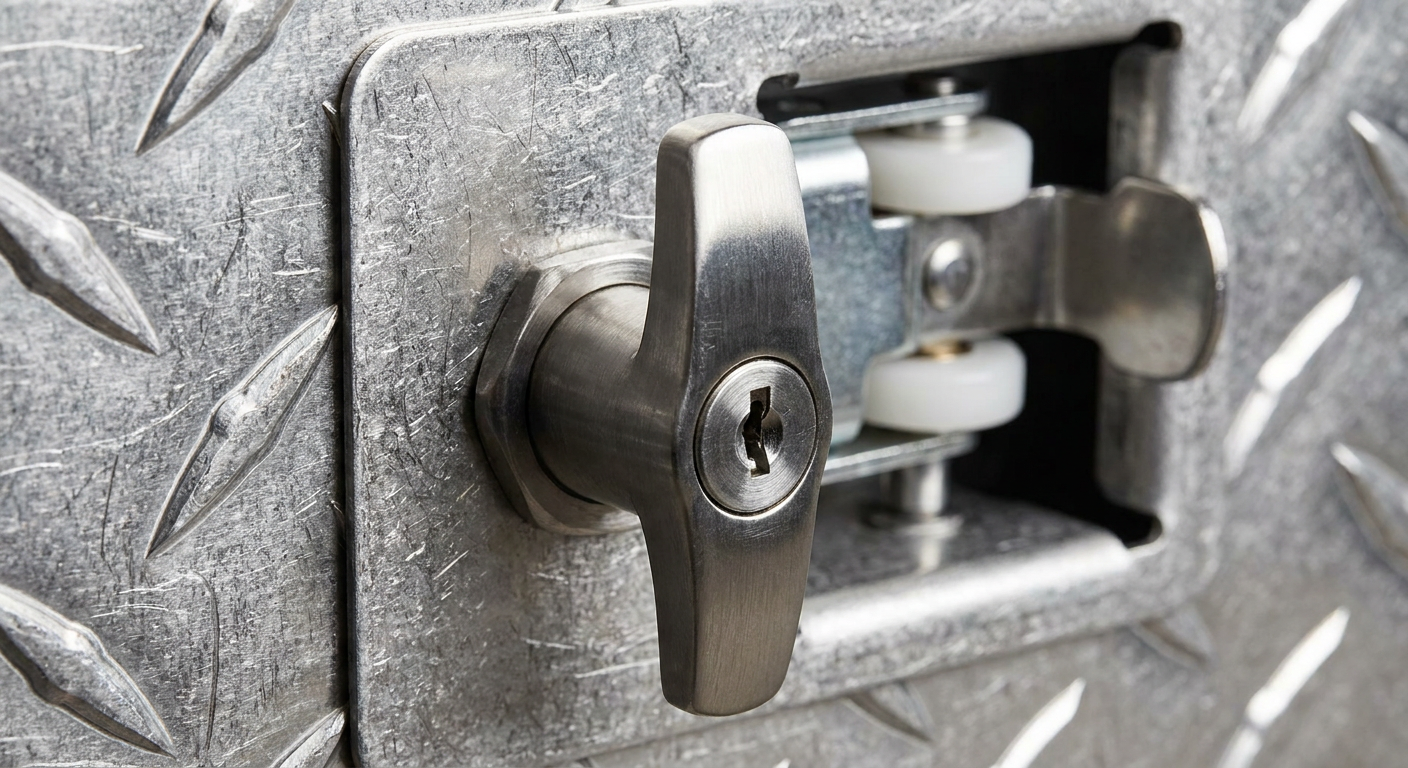
Securing your underbody tool box requires a heavy-duty locking mechanism that can resist physical tampering and severe road vibration. T-handle locks with integrated nylon rollers are the industry standard for commercial fleets because they provide smooth, continuous operation under load. These latches pull the door tight against the gasket, keeping water out while preventing the door from rattling open on bumpy gravel roads.
Evaluating T-handles and multi-point locks
A security breach can cost your business thousands of dollars in lost tools and delayed cargo deliveries. Here’s the kicker:
- Stainless steel construction prevents rust from seizing the internal lock cylinder.
- Dual-point latching rods hold the top and bottom of the door securely against the frame.
- Flush-mounted paddle handles prevent tree branches or loading docks from catching and breaking the latch.
| Latch Type | Security Level | Vibration Resistance | Best Application |
|---|---|---|---|
| Rotary T-Handle | High | Excellent (nylon rollers) | Standard long-haul fleet |
| Flush Paddle Lock | High | Very Good (sleek profile) | Vocational dump trucks |
| Padlock Hasps | Medium | Moderate (can rattle) | Low-budget utility trailers |
Our mechanical evaluation shows that flush rotary T-handles deliver the ideal balance of high-vibration resistance and robust security.
Key Takeaway: Upgrading to lockable, heavy-duty compression latches prevents cargo theft and ensures your boxes remain securely closed on high-speed routes.
Why is a sealed underbody tool box essential?
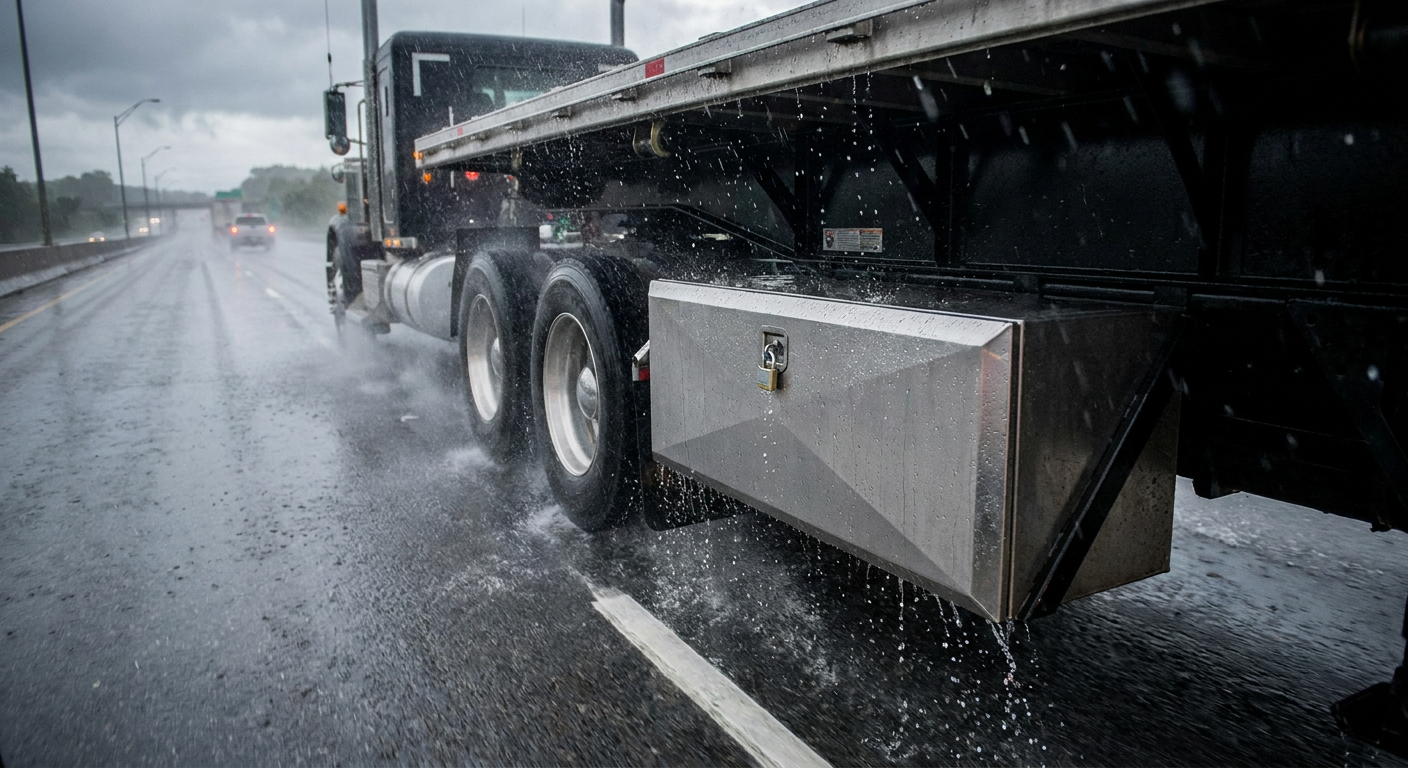
Having a fully sealed underbody tool box is crucial to preventing expensive tool corrosion and maintaining strap integrity. De-icing chemicals and road salt create highly corrosive runoff that can ruin carbon steel tools in a matter of weeks. When moisture enters an unventilated compartment, it also promotes mold growth on synthetic tow straps, reducing their certified lifting capacity.
Preventing rust and road salt degradation
The chemical reactions caused by road salts are highly destructive and can quietly ruin your gear over time. It gets worse.
- Saltwater accelerates galvanic corrosion between dissimilar metals inside the box.
- High-strength polyester winch straps lose their rated load capacity when stored in wet, moldy environments.
- Moisture freezing inside keyholes can leave your drivers stranded and unable to access emergency tools on winter routes.
| Moisture Hazard | Direct Threat to Fleet | Preventive Solution |
|---|---|---|
| Chloride Road Salt | Rusts hand tools and steel shackles | EPDM gasket and water-shedding bevels |
| Stagnant Moisture | Destroys polyester winch straps | Sealed, dry compartment storage |
| Sub-Zero Freezing | Seizes lock cylinders and latches | Stainless steel dust caps over keyways |
Our environmental stress analysis proves that a reliable, airtight seal is the only way to prevent rapid equipment decay on winter highway routes.
Key Takeaway: Sealed, dry storage compartments ensure your towing and rigging gear remains fully certified, safe, and ready for immediate deployment.
How do you install an underbody tool box safely?
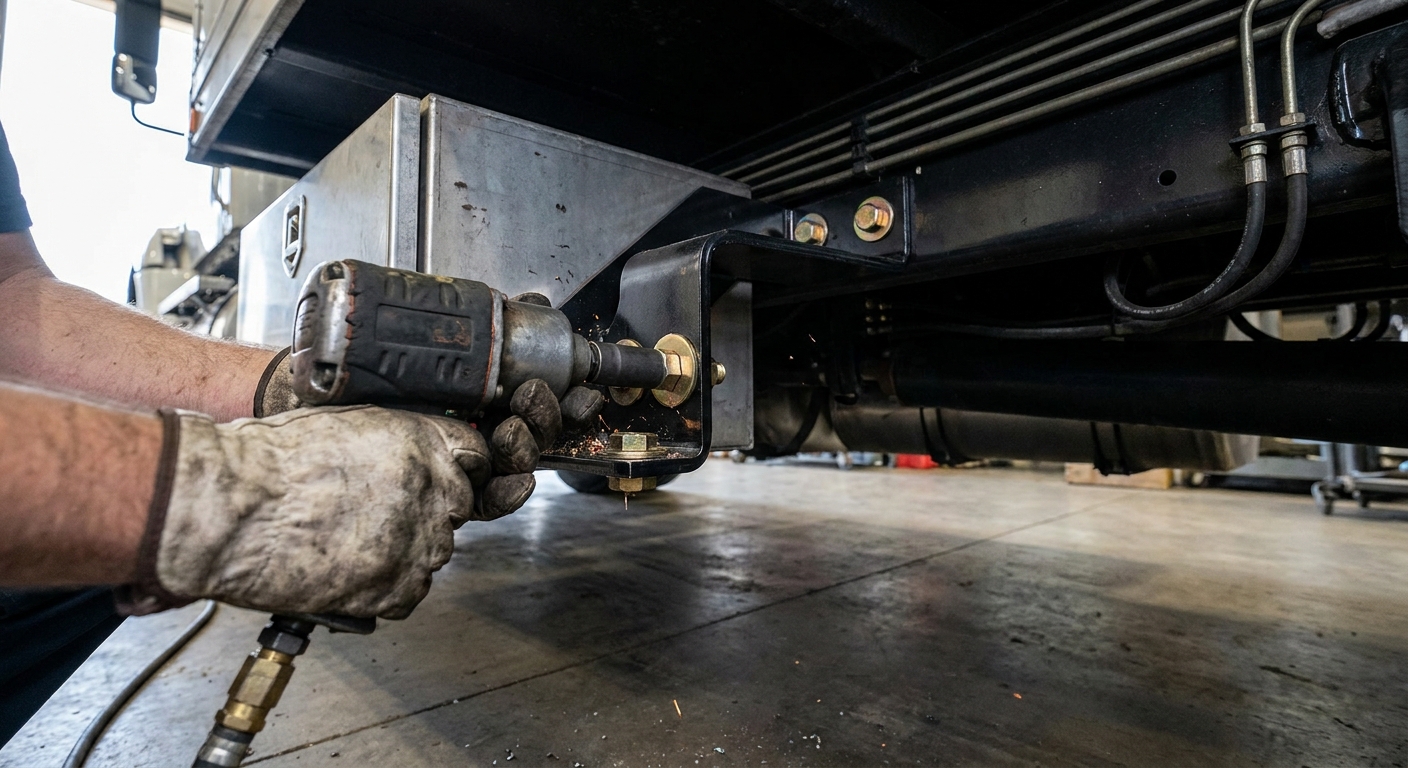
Installing an underbody tool box correctly is vital to ensuring that the unit remains securely attached under heavy highway loads. Professional mechanics use heavy-duty steel J-brackets or C-brackets bolted directly to the truck’s C-channel frame rails. It is critical to inspect the frame rail before drilling to ensure you do not damage any electrical harnesses, brake lines, or air lines.
A step-by-step guide to bracket mounting
Following a structured mounting procedure is the best way to prevent accidental box separation and severe highway liability. Get this right, and you’re set:
- Position the mounting brackets on the frame rail and clamp them securely to verify alignment.
- Drill holes and bolt the brackets using hardened Grade 8 fasteners, lock washers, and nylon locknuts.
- Hoist the box onto the bracket system and secure the rear and top panels to the metal mounts.
- Verify that the drop-down or barn doors swing completely clear of the tires and road surface.
| Installation Step | Critical Checkpoint | Recommended Hardware |
|---|---|---|
| Frame Inspection | Clear of air and electrical lines | None (visual sweep) |
| Bracket Attachment | Level and square alignment | Grade 8 structural steel bolts |
| Box Mounting | Torque bolts to exact spec | Heavy-duty steel washers |
Our mechanical testing demonstrates that utilizing Grade 8 structural fasteners is critical to preventing mounting bracket fatigue under heavy road vibrations.
Key Takeaway: Spending the extra time to properly mount brackets with Grade 8 hardware eliminates the catastrophic risk of a tool box detaching at highway speeds.
Where can you buy a custom underbody tool box?
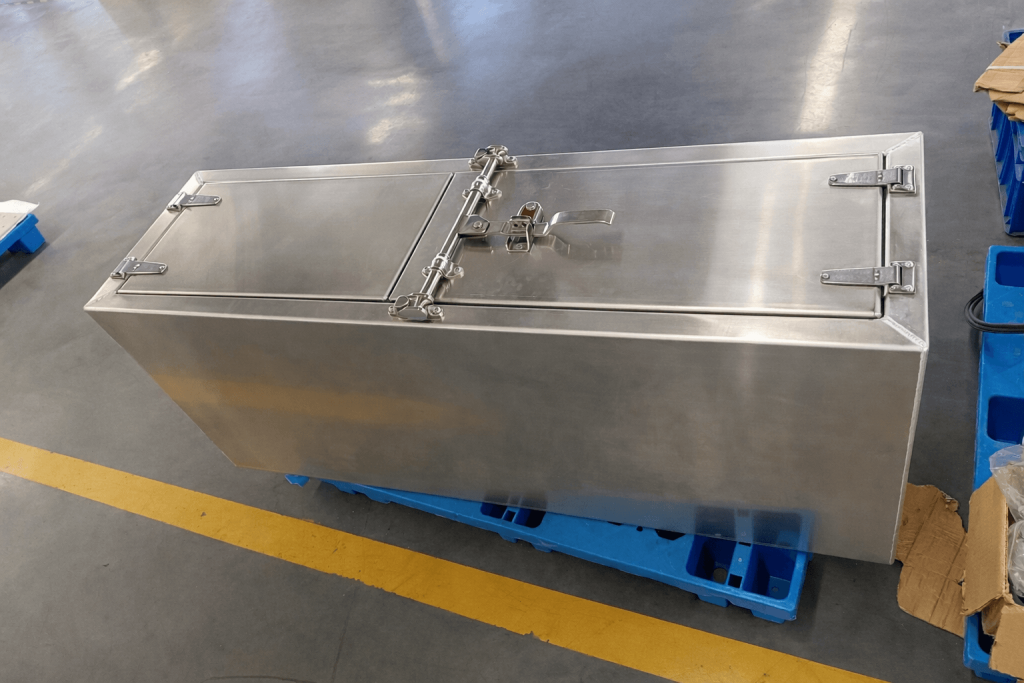
When you are ready to upgrade your fleet, purchasing a custom underbody tool box directly from an OEM/ODM manufacturer is the most cost-effective solution. Direct-to-factory ordering allows you to customize the dimensions, metal thickness, and internal shelving of your boxes to meet your exact operational requirements. You can also work directly with our engineering team to design custom integrated truck bodies that maximize your vehicle’s performance.
Partnering with a certified manufacturer
Partnering with an ISO-certified production facility guarantees consistent weld quality, fast delivery times, and reliable long-term support. Here is the direct path forward.
- Access factory-direct volume pricing to stretch your fleet equipment budget further.
- Work with experienced CNC designers who can customize dimensions for unique trailer setups.
- Ensure all units pass multi-stage quality inspections before they leave the manufacturing floor.
| Fleet Procurement Metric | Direct Manufacturer Partnership | Third-Party Distributor |
|---|---|---|
| Unit Cost Markup | 0% (Direct pricing) | 20% to 35% Wholesale markup |
| Custom Dimensions | Fully Customizable | Standard shelf sizes only |
| Weld Certification | AWS Certified Robotic | Varies by brand |
This comparison illustrates how sourcing directly from a certified manufacturing facility guarantees maximum quality control and substantial cost savings.
Key Takeaway: Establishing a direct-from-factory procurement partnership saves your fleet up to 35% on custom storage and ensures a uniform, professional look across all vehicles.
Streamline Your Fleet Operations for the Long Haul
We understand the daily challenges of running a commercial fleet—from optimizing cargo payloads and ensuring driver safety to protecting expensive tools from theft and severe winter weather. By equipping your rigs with heavy-duty, frame-mounted storage, you solve multiple logistics bottlenecks at once, saving space, preventing rust, and speeding up load securement times on every single route. If you are ready to eliminate storage chaos and elevate your fleet’s on-road performance with industry-leading, CNC-engineered metal enclosures, contact us today to discuss your custom specifications and secure bulk pricing directly from our world-class manufacturing facility. Let’s work together to build a safer, more efficient, and more profitable transport industry.
FAQ
Can I mount an underbody tool box myself?
Yes, you absolutely can. However, we strongly recommend having a certified commercial fleet technician perform the installation to ensure the bracket system is perfectly aligned with the frame rails, all electrical and brake lines are avoided during drilling, and the structural fasteners are torqued to exact manufacturer specifications.
What’s the best metal thickness for an aluminum underbody tool box?
The industry standard is a minimum thickness of 0.125 inches (1/8-inch) for heavy-duty commercial applications. This heavy-gauge thickness ensures the box walls can easily resist flying road rocks, off-road impacts, and heavy payload cargo shifting without cracking or bending out of shape.
How do I know if an underbody tool box will clear my trailer’s tires?
You must measure the physical clearance zone carefully. Ensure there is a minimum clearance of 6 to 8 inches between the bottom of the box and the top of your truck’s tires at full suspension compression to prevent tire blowout risks and protect your cargo.
Can I get a dual-door setup for a long underbody tool box?
Yes, you absolutely can. For boxes with widths exceeding 48 inches, dual doors or barn-door configurations are highly recommended because they reduce the physical clearance required to swing the door open, making them ideal for tight parking lots or narrow roadsides.
What’s the best way to keep my lock cylinders from freezing in winter?
You should use a stainless steel dust cap to protect the keyhole. Applying a dry graphite lubricant or specialized lock fluid once a month prevents moisture from collecting inside the cylinder and freezing, ensuring your drivers always have immediate access to their tools on sub-zero routes.