
Selecting the right materials and surface finishes is the single most critical factor in determining the long-term protection, durability, and operational lifespan of your commercial fleet vehicles. You invest heavily in outfitting your service trucks, expecting them to withstand punishing road conditions and extreme weather. Yet, within just a few seasons, highway gravel chips the cheap paint, and road de-icers turn pristine steel into a bubbling, rusted liability that compromises your professional image and structural safety. The most effective way to eliminate this threat is to specify premium materials paired with an advanced powder coated grille guard that shields your front end from physical impact and chemical corrosion alike.
How does finish selection affect your fleet’s lifespan?
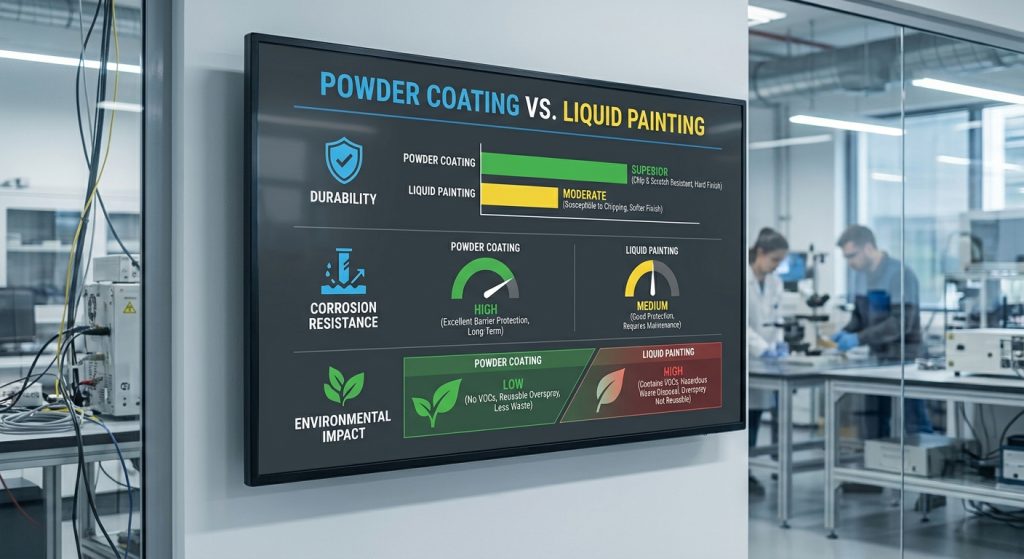
Selecting a high-quality surface finish directly maximizes your fleet’s operational lifespan by preventing rust and surface degradation from compromising structural integrity. Specifying a robust powder coated grille guard ensures your vehicles remain on the road longer without requiring frequent aesthetic touch-ups or structural repairs. This strategic investment keeps your fleet looking professional and performing safely under heavy use.
When you choose a protective finish, you are actively choosing how well your equipment survives intense highway wear and road salts. A failure to specify the correct finish guarantees rapid wear and eventual safety failures.
Why is liquid paint failing modern fleet managers?
Traditional wet spray paint simply cannot hold up to the intense physical impacts that your transport vehicles face daily. Here is the deal: liquid paint dries into a thin, brittle layer that is highly susceptible to rock chips, micro-abrasions, and chemical peeling. Once moisture penetrates this paint barrier, rust spreads rapidly underneath, hiding serious structural decay.
- Low Impact Resistance: Rocks easily chip the paint layer.
- Poor Chemical Defense: Road salt eats through standard liquid finishes.
- High Maintenance Costs: Constant touch-ups drain your operating budget.
You cannot afford to have your service vehicles sidelined by cosmetic failures that quickly lead to structural weakness. Specifying a tougher surface treatment is essential for maintaining fleet readiness.
How does powder coating outperform liquid paint?
Unlike wet paint, powder coating creates an incredibly thick, resilient polymer shield that chemically bonds to the metal surface. Think about it: during the curing process, the powder melts into a continuous, non-porous layer that offers up to ten times the impact resistance of standard coatings. This means your equipment stays shielded from the harshest highway hazards.
- Electrostatic Bonding: Ensures a uniform, high-strength adhesion.
- Thicker Protective Layer: Usually double the thickness of wet paint.
- Eco-Friendly Process: Zero volatile organic compounds (VOCs) are released.
When you invest in a professional polymer finish, you are securing a barrier that flexes with the metal and resists chipping. This guarantees that your fleet remains presentable and fully protected.
Key Takeaway: Choosing a heat-fused finish over wet paint reduces your long-term maintenance costs and keeps your fleet vehicles out of the repair bay.
| Finish Feature | Liquid Spray Paint | Powder Coating |
|---|---|---|
| Impact Resistance | Low (easily chips) | Very High (flexible polymer) |
| Salt Spray Rating | Under 200 hours | Over 1,000 hours |
| Lifecycle Cost | High (frequent repaints) | Low (one-time application) |
Let’s analyze how different vehicle designs utilize these premium coatings to maintain their value on the open road.
What makes premium carbon steel a top fleet choice?
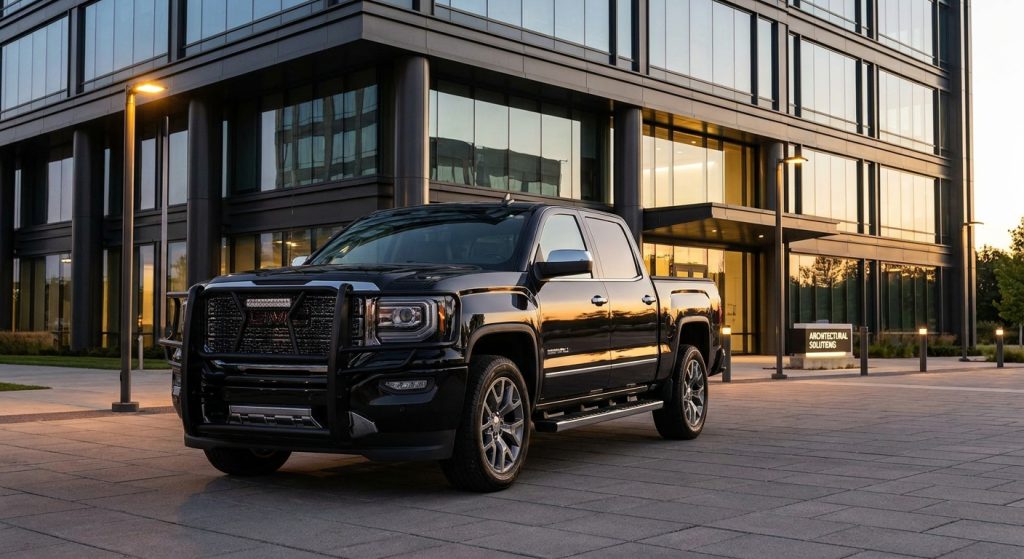
Premium structural carbon steel provides the foundational tensile strength required to absorb extreme front-end impact forces during highway collisions. Mounting a heavy-duty powder coated grille guard fabricated from this robust material guarantees that your vehicles survive collisions with minimal structural frame damage. This material balance of rigidity and ductility makes carbon steel the ideal choice for demanding commercial duties.
When you deploy steel protection, you gain peace of mind knowing your drivers and vehicle cooling systems are fully shielded. However, you must pair this strength with an airtight finish to prevent raw moisture from causing oxidation.
Why does carbon steel offer unmatched safety?
Heavy-duty carbon steel acts as an incredibly rigid shield that absorbs massive collision forces before they reach your vehicle’s engine compartment. Here is the deal: when you are operating heavy commercial trucks, the sheer mass of the vehicle requires a bumper material that can deflect severe impacts without fracturing. High-tensile steel provides this essential structural insurance.
- Unrivaled Tensile Yield: Withstands forces that crumple lighter alloys.
- Ductile Properties: Absorbs energy rather than shattering on impact.
- Welded Integrity: Creates rigid, unified defense structures on your truck.
You cannot afford to put weak protective gear on a hard-working truck. Investing in robust steel construction directly safeguards your capital investments.
Does cold-rolling steel prevent surface flaws?
Cold-rolled steel processes eliminate surface scale and create a perfectly uniform surface that dramatically increases coating adhesion. Think about it: a smooth, flaw-free steel surface means there are no microscopic pockets where pockets of air or moisture can get trapped under your coating. This prevents the bubbling and lifting that ruins cheap protective gear.
- Tighter Tolerances: Ensures precision fits during final installation.
- Smoother Grain Structure: Optimizes electrostatic powder bonding.
- Increased Hardness: Resists deep gouges and structural dings better.
When you purchase premium steel products, you are ensuring your fleet components are built to precise dimensional standards. This high-quality engineering makes maintenance simple and extends operational lifespans.
Key Takeaway: Specifying cold-rolled carbon steel gives you the perfect physical foundation of extreme strength and flawless paint adhesion for long-term fleet protection.
| Substrate Steel Grade | Tensile Strength | Surface Quality | Best Application |
|---|---|---|---|
| A36 Mild Steel | Moderate | Standard (has mill scale) | General utility framing |
| Cold-Rolled Carbon | High | Superior (smooth, clean) | Premium vehicle guards |
Let us turn our attention to the specific application methods that turn this raw steel into a rust-free powerhouse.
Why choose electrostatic coating over wet paint?
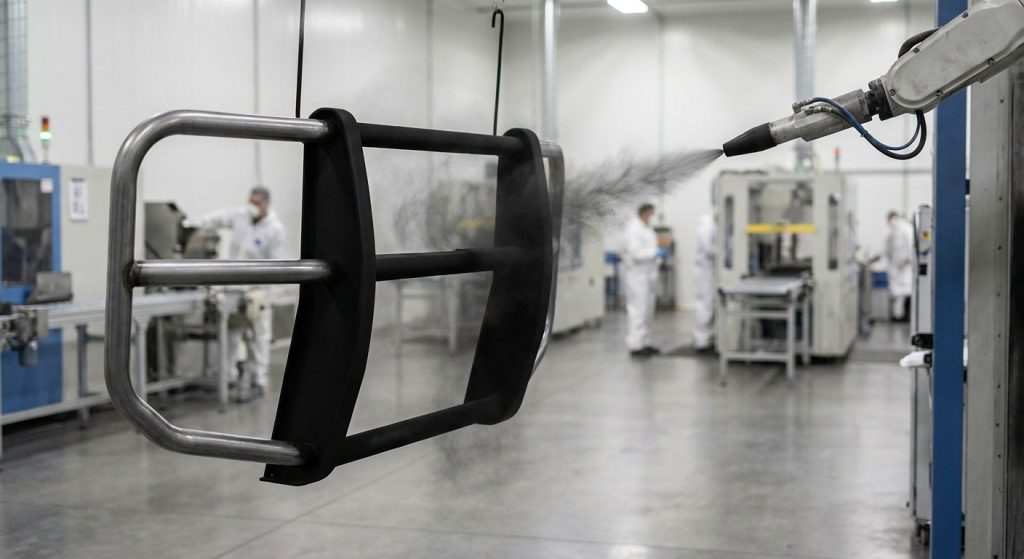
Electrostatic powder coating establishes an exceptionally tight chemical bond that wet paint simply cannot match. Investing in a specialized powder coated grille guard ensures that your fleet vehicles are wrapped in a continuous, high-strength plastic barrier that repels chemicals and road debris. This advanced application technology eliminates the runs, drips, and thin spots common with liquid spray alternatives.
When you see a flawless electrostatic finish, you are looking at advanced material science at work on your fleet. This industrial process wraps completely around complex geometric shapes to ensure full corrosion protection.
How does the electrostatic process bond powder?
The electrostatic application process charges dry powder particles with high-voltage electricity, forcing them to cling tightly to the grounded metal. But wait, there is more: because the powder and metal have opposite electrical charges, the coating pulls itself into hard-to-reach recessed areas, complex welds, and tight inside corners. This ensures you get complete, even coverage over every square inch of your guard.
- Perfect Wrap-Around: Charges pull powder behind tubes and brackets.
- Uniform Coating Thickness: Eliminates the risk of thin spots.
- Zero Solvent Runoff: Prevents sagging or pooling during curing.
You will notice that electrostatic coating never leaves runs, drips, or holidays in the finish. This precision is the secret to providing total defense against the elements.
What temperature ensures a complete chemical cure?
Baking the coated parts at 400°F (204°C) triggers a chemical cross-linking reaction that melts the dry powder into a solid, indestructible plastic skin. The best part? This high-heat curing process creates long-chain molecular bonds that are far tougher and more flexible than any air-dried paint layer. This thermal engineering ensures your finish will not chip, peel, or crack under physical stress.
- High-Heat Melting: Fuses individual powder grains into one layer.
- Chemical Cross-Linking: Creates strong, permanent polymer bonds.
- Elastic Durability: Allows the coating to flex without cracking.
When you choose thermal-cured finishes, you are investing in a protective shield designed to withstand intense highway vibrations. This tough layer keeps your steel protected in all seasons.
Key Takeaway: Utilizing an electrostatically applied, oven-cured polymer coat provides your fleet with an airtight, impact-resistant finish that outlasts liquid paint.
| Finish Parameter | Air-Dried Wet Paint | Electrostatic Powder Coat |
|---|---|---|
| Curing Temp | Ambient air (room temp) | 400°F (204°C) convective oven |
| Chemical Structure | Linear polymers (weak) | Cross-linked molecular chains (strong) |
Let us examine how this advanced coating molecular structure reacts when confronted with extreme highway moisture and winter road chemicals.
How does moisture test the durability of your finish?
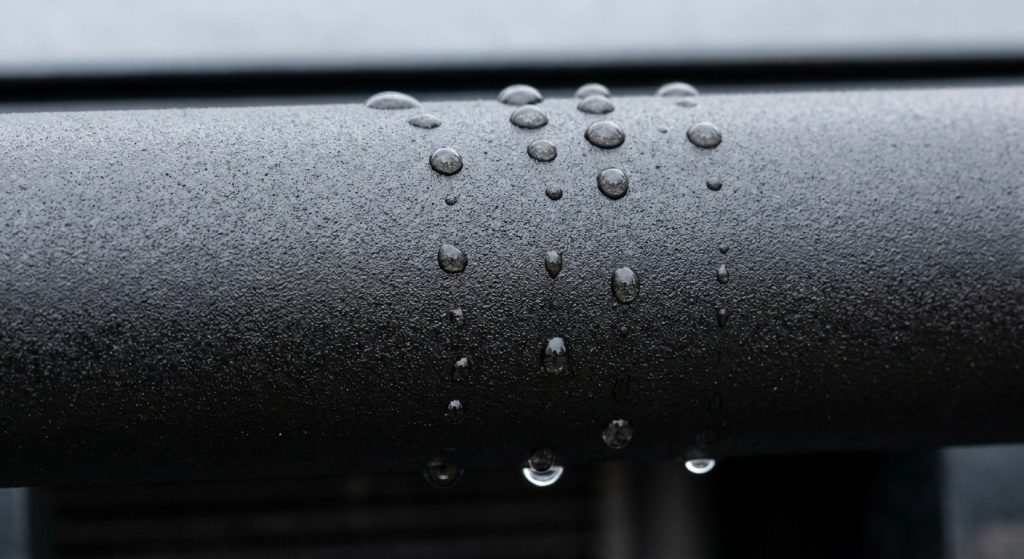
Moisture tests your vehicle’s finish by seeking out microscopic pores and cracks where oxidation can establish a foothold. Specifying a professional powder coated grille guard creates an impenetrable hydrophobic barrier that actively prevents water and road salts from contacting the raw steel substrate. This specialized surface engineering is crucial for maintaining both structural safety and visual appeal over years of road service.
When water pools on your vehicle’s protection systems, any vulnerability in the finish will lead to rapid cosmetic bubbling. You must ensure your coatings are fully non-porous to survive wet highway conditions.
How do road salts accelerate structural rust creep?
Road salts mixed with highway water create an aggressive electrolyte solution that rapidly speeds up raw steel’s electrochemical corrosion. Think about it: once a small chip exposes bare metal, this saltwater solution establishes a microscopic battery cell that dissolves the iron molecules. This chemical attack creates ugly rust blisters that expand horizontally and lift the surrounding finish.
- Electrochemical Attack: Accelerates the oxidation of raw iron.
- Under-Film Creeping: Rust spreads horizontally beneath weak paint.
- Pitting Corrosion: Creates deep structural cavities in the metal.
You must prevent this creeping corrosion from undermining your structural components. Specifying a fully sealed barrier is the only reliable way to safeguard your vehicles against this chemical threat.
Can micro-pores in weak finishes cause pitting?
Cheap, air-dried liquid paints naturally contain microscopic solvent evaporation pores that allow moisture to seep slowly down to the metal. Here is the deal: even if the paint looks perfectly fine from a distance, these tiny channels allow salt-laden moisture to attack the substrate. This invisible moisture migration results in deep pitting corrosion that weakens your heavy-duty steel without warning.
- Solvent Pores: Micro-cracks left behind as paint solvents dry.
- Deep Pitting: Localized corrosion that drills into the metal thickness.
- Hidden Weakness: Structural failure that occurs beneath an intact paint film.
When you spec a non-porous polymer coat, you are eliminating these microscopic pathways entirely. This dense protective barrier keeps water out and locks long-term durability in.
Key Takeaway: Eliminating finish micro-pores with a thick, dense polymer barrier protects your structural steel from localized chemical pitting and long-term frame damage.
| Corrosion Risk | Standard Wet Paint | Hydrophobic Powder Coat |
|---|---|---|
| Moisture Penetration | High (due to drying pores) | Zero (dense polymer barrier) |
| Creep Resistance | Poor (rust easily spreads) | High (zinc-rich primers halt creep) |
Now let’s look at how the physical fabrication process prepares the underlying steel to withstand these severe loads and stresses.
Which substrate material holds up under heavy loads?
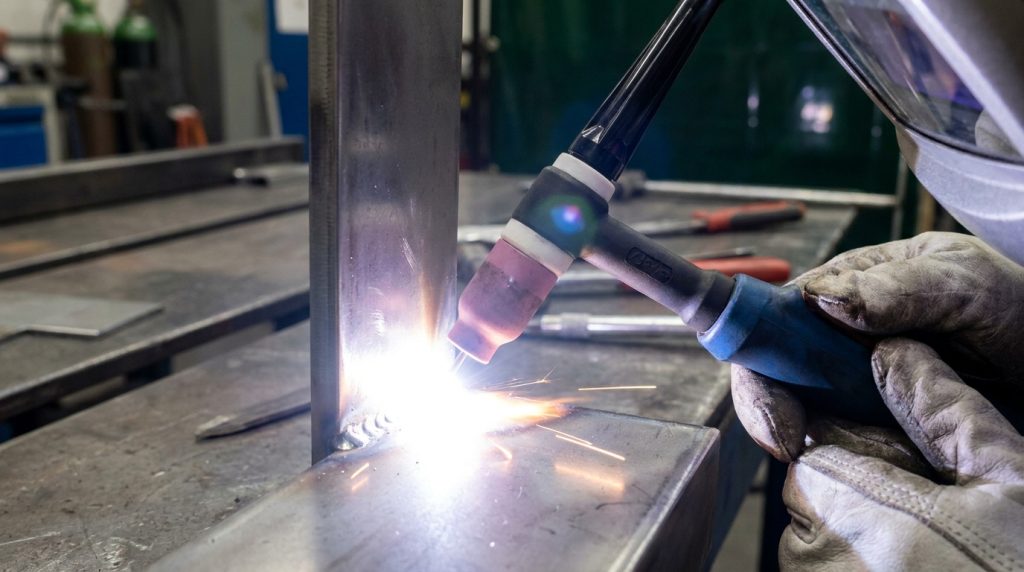
Heavy-duty carbon steel is the best substrate material for resisting permanent bending and structural fatigue under severe operational loads. Equipping your work trucks with a powder coated grille guard built on a solid steel foundation guarantees maximum front-end protection during heavy off-road use. This extreme durability ensures your vehicles handle rugged terrain without suffering frame misalignment or structural cracking.
When you choose a steel substrate, you are prioritizing maximum fatigue limits and impact resistance. This engineering choice is vital for utility fleets that operate in demanding structural environments.
Why is raw material grade selection critical?
Specifying verified structural-grade steel ensures that your front-end guards will not fracture or fail when subjected to sudden, high-energy impact loads. But wait, there is more: cheap, uncertified steel alloys often contain high sulfur or phosphorus impurities that make them highly brittle in cold weather. Standardizing on high-yield, certified carbon steel guarantees reliable physical performance in freezing northern climates.
- Certified Chemistry: Eliminates impurities that cause cold-weather brittleness.
- Consistent Yield Limits: Guarantees structural performance under load.
- Superior Ductility: Allows the guard to bend safely instead of snapping.
You need to know your equipment can handle extreme load stresses without sudden failure. Specifying certified materials gives your operations team the structural reliability they need.
Does carbon steel offer high deflection limits?
Carbon steel has an incredibly high modulus of elasticity, allowing it to resist severe bending and deflection under heavy structural loads. The best part? This physical rigidity ensures that if your truck hits road debris, the guard deflects the energy instead of bending backward and crushing your expensive radiator. This structural rigidity is critical for preserving your vehicle’s engine and keeping your drivers safe.
- High Elastic Modulus: Resists structural bending under heavy loads.
- Energy Deflection: Directs impact forces away from vital engine parts.
- Vibration Resistance: Resists fatigue cracking from rough road vibrations.
When you use a high-rigidity steel substrate, you are ensuring your vehicles stay operational after minor off-road incidents. This durable engineering minimizes expensive repair bills and keeps your trucks working.
Key Takeaway: Standardizing on high-yield, certified structural carbon steel ensures your front-end protection can absorb and deflect massive impacts without transferring damage to your truck’s chassis.
| Substrate Material | Modulus of Elasticity | Yield Strength | Weld Joint Integrity |
|---|---|---|---|
| Certified Carbon Steel | 200 GPa | High (250-400 MPa) | Exceptional (certified AWS welds) |
| Standard Recycled Steel | 180 GPa | Variable (unpredictable) | Moderate (impurities cause cracking) |
Let us explore how these rugged structural steel systems perform when driven into wild, off-road environments.
How do off-road conditions test vehicle finishes?
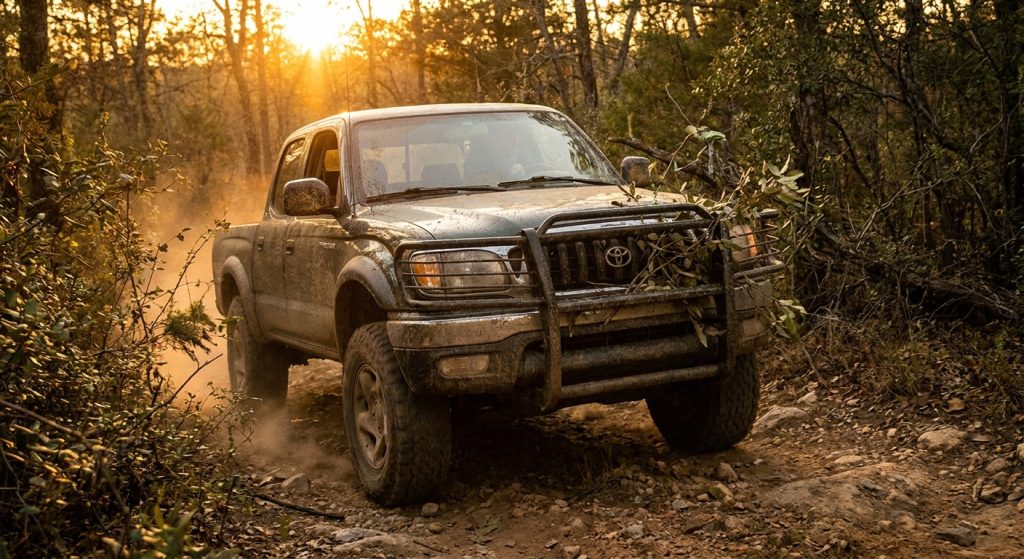
Off-road environments test vehicle finishes through constant physical abrasion from low-hanging branches, flying gravel, and dense trail brush. Outfitting your service vehicles with a heavy powder coated grille guard ensures that these daily mechanical impacts do not scrape away your protective rust barrier. This specialized coating durability is essential for preventing premature cosmetic decay and structural metal fatigue during off-road operations.
When you drive through thick trail brush, standard paint finishes scratch and peel away down to the raw metal in minutes. You require a flexible, high-hardness polymer coating that shrugs off these abrasive trail hazards.
Why does trail debris ruin cheap paint so quickly?
Flying rocks, low-hanging branches, and dense trail brush act like high-speed sandpaper that quickly strips away thin liquid paint finishes. Here is the deal: once standard paint is scraped down to bare metal, mud and water are trapped directly against the substrate, starting the rust cycle. This rapid physical wear can turn a brand-new vehicle into a rusted, unprofessional eyesore in just a few weeks of off-road work.
- Low Scratch Resistance: Soft paint layers gouge easily.
- Moisture Trapping: Rough scrapes hold mud against raw steel.
- Cosmetic Decay: Scratched paint quickly turns into orange rust stains.
You must protect your investments from these abrasive off-road hazards. Choosing a tough, high-hardness polymer coating is the only way to maintain a clean, professional look.
Can thick coatings prevent high-energy rock chips?
Thick, flexible powder finishes absorb the impact energy of high-speed gravel and trail debris, preventing the finish from chipping. Think about it: because the polymer layer is highly elastic, it slightly deforms and bounces back instead of fracturing like brittle, air-dried paint. This physical resilience ensures that your underlying steel remains completely sealed against moisture, even after miles of gravel road travel.
- Elastic Absorption: Finish deforms slightly to absorb rock impacts.
- Chipping Resistance: Resists shattering when hit by sharp gravel.
- Substrate Sealing: Maintains a continuous barrier despite heavy abrasion.
When you spec a thick, impact-absorbing powder finish, you are protecting your vehicles from the punishing wear of rural highways. This added durability keeps your fleet rust-free and looking sharp.
Key Takeaway: Specifying a flexible, thick polymer coating prevents high-speed gravel from chipping your finish, keeping your raw steel sealed and rust-free during rugged off-road missions.
| Coating Finish Type | Dry Film Thickness | Impact Flexibility | Scratch Concealment |
|---|---|---|---|
| Standard Wet Paint | 1.0 – 1.5 mils | Low (brittle and chips) | Poor (shows every scratch) |
| Heavy-Duty Powder | 2.5 – 3.5 mils | High (absorbs impact) | Excellent (textured options) |
Now let’s examine how major commercial logistics operators utilize these materials to protect high-mileage highway transport fleets.
Where are protective guards most critical for fleets?
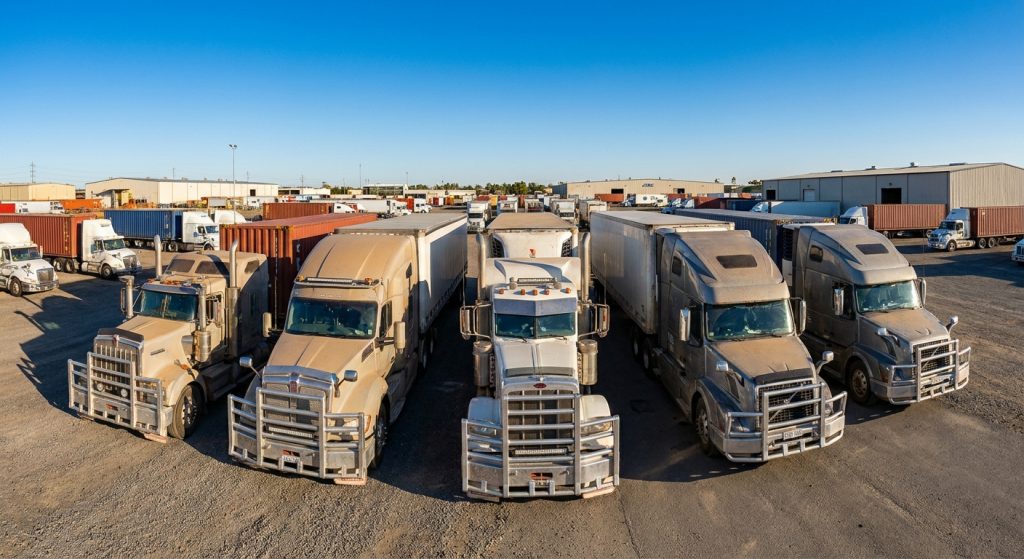
Protective guards are most critical on high-mileage highway transport trucks where front-end collision risks and gravel abrasion are highest. Equipping your logistics vehicles with a heavy-duty powder coated grille guard protects expensive radiator assemblies, headlights, and safety sensors from sudden, catastrophic road-debris damage. This protective layout is a smart investment that prevents costly vehicle downtime and load delays.
When you analyze fleet operating costs, a single front-end collision can easily total a vehicle or ruin a delivery schedule. Specifying robust front protection ensures your transport assets keep rolling through any highway hazard.
How does front-end protection reduce down-time?
Specifying a heavy-duty front guard protects critical cooling systems and expensive headlights from being destroyed during sudden road impacts. But wait, there is more: keeping your truck’s radiator and cooling lines intact means your driver can safely navigate to a repair center after a collision instead of waiting for an expensive heavy tow truck on a remote highway. This vital protection keeps your delivery schedules running on time and prevents costly load claims.
- Radiator Protection: Prevents punctures that lead to engine overheating.
- Shedding Towing Costs: Keeps trucks drivable after minor animal strikes.
- Schedule Reliability: Minimizes load delivery delays and customer penalties.
You know that keeping your trucks on the road is the key to maintaining profitable logistics operations. Installing robust front protection is a simple, cost-effective way to eliminate unexpected downtime.
Which components face the highest risk on highways?
Your truck’s radiator, intercooler, expensive LED headlight assemblies, and advanced driver assistance safety sensors are highly vulnerable to highway debris and animal impacts. The best part? Placing a rigid steel barrier in front of these sensitive components fully shields them from high-speed gravel and wildlife strikes. This structural buffer prevents minor road hazards from turning into five-figure repair bills and weeks of lost revenue.
- Intercooler Guarding: Prevents performance loss and engine damage.
- Headlight Protection: Shields expensive, breakable lighting systems.
- Radar Sensor Security: Keeps safety warning systems fully operational.
When you protect these high-cost components, you are securing your fleet’s advanced safety systems. This durable design keeps your trucks safe, compliant, and ready for long-haul runs.
Key Takeaway: Specifying heavy-duty front-end guards shields your transport trucks’ most vulnerable and expensive engine, cooling, and safety systems from sudden road debris and animal strikes.
| Impact Risk Area | Standard Truck Front End | Truck with Steel Guard |
|---|---|---|
| Radiator Protection | Highly vulnerable (thin aluminum) | Completely shielded (heavy steel tubes) |
| Advanced Sensors | Exposed to gravel damage | Securely recessed behind steel plates |
Let’s look closely at why a semi-gloss black powder coat finish is the preferred choice for major commercial fleets.
What makes black powder coat the industry standard?
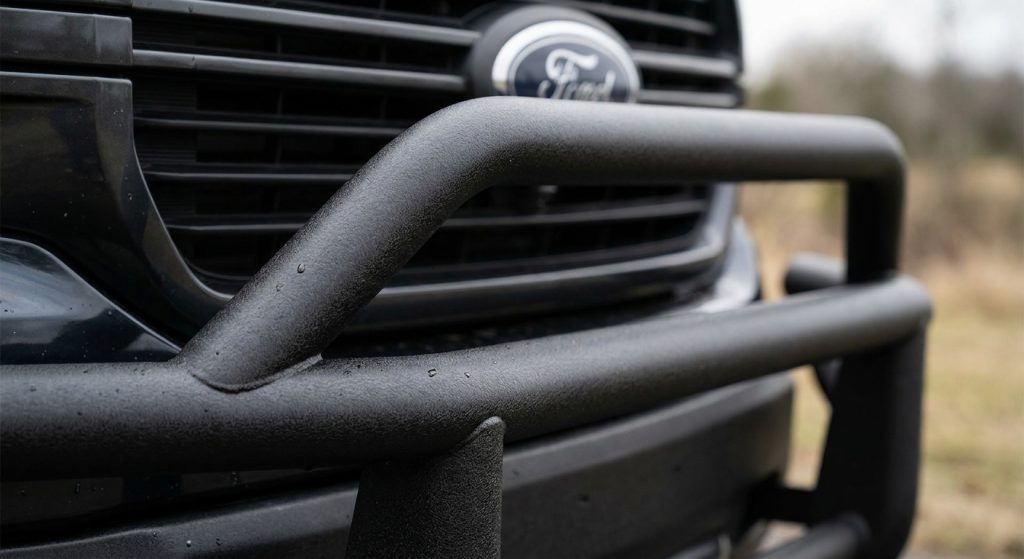
A black powder coat finish is the industry standard because it delivers the ultimate balance of heavy-duty corrosion resistance, UV stability, and easy maintenance. Specifying a semi-gloss black powder coated grille guard gives your commercial vehicles a professional, uniform appearance that matches any corporate color scheme. This durable finish is highly resistant to staining, chemical de-icers, and highway stone chips.
When you standardize on black powder coatings, you simplify fleet maintenance while maintaining high corporate standards. This versatile finish looks clean longer and resists UV fading better than alternative colors.
Why does black powder resist UV degradation best?
Premium black powder coat finishes use specialized carbon black pigments that naturally absorb and block destructive ultraviolet light before it can degrade the polymer binder. Here is the deal: standard colors and clear coats can dry out, chalk, and crack under constant sun exposure, but a UV-stable black finish maintains its flexible physical properties for decades. This chemical stability ensures your protective barrier remains completely intact and waterproof.
- Solar Absorption: Blocks UV light from breaking down the coating.
- Flexible Longevity: Prevents the polymer layer from drying and cracking.
- Color Preservation: Keeps its deep, professional look without fading.
You want your fleet vehicles to look professional and stay protected under the hot summer sun. Specifying UV-stable black powder coatings guarantees your equipment will not fade or crack.
Does a dark finish hide deep structural scrapes?
A dark semi-gloss black finish is highly effective at concealing the superficial scrapes and scuffs that occur during normal commercial work. Think about it: unlike bright chrome or raw silver finishes, a dark black surface absorbs light and diffuses glare, making minor surface marks almost invisible from a distance. This visual benefit keeps your trucks looking clean, uniform, and well-maintained without requiring frequent cosmetic detailing.
- Light Absorption: Diffuses glare to make scuffs blend into the finish.
- Aesthetic Uniformity: Matches easily with any corporate truck color scheme.
- Low Maintenance Visuals: Looks clean and professional even when dusty.
When you choose a dark finish, you are simplifying your fleet’s cosmetic maintenance routines. This smart specification keeps your trucks looking sharp on every route.
Key Takeaway: Specifying a UV-stable black finish preserves your fleet’s clean, modern appearance while preventing the protective polymer barrier from drying out, fading, or cracking under constant sun exposure.
| Visual Property | Polished Mirror Chrome | Semi-Gloss Black Powder |
|---|---|---|
| UV Sun Resistance | High (reflective metal) | Exceptional (UV-stable pigments) |
| Scratch Concealment | Very Poor (shows every line) | High (absorbs light and diffuses scuffs) |
Let us review the simple maintenance procedures that can extend the service life of your fleet’s finishes even further.
How do you properly maintain your vehicle’s coating?
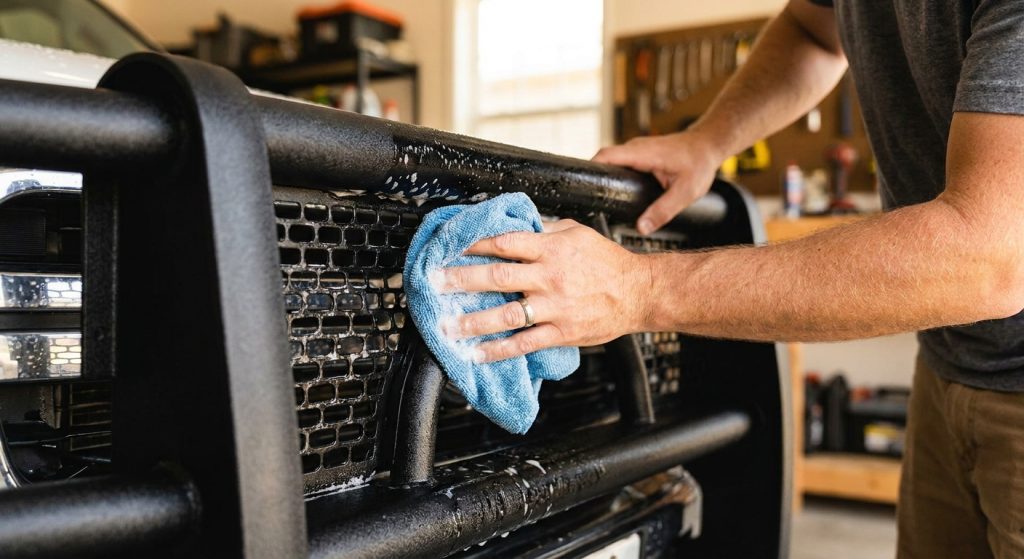
Proper maintenance of your vehicle’s coating involves regular gentle cleanings to remove corrosive road salts, industrial fallout, and acidic bug splatters. Regularly washing your powder coated grille guard with mild soap and clean water ensures that chemical contaminants do not slowly etch into the polymer protective layer. This simple preventive maintenance keeps your protective equipment looking like new and performing reliably for years.
When you clean your fleet equipment, you must avoid harsh abrasive brushes and acidic solvents that can dull or scratch the coating. A gentle, consistent washing routine is the key to achieving a multi-decade finish lifespan.
Why are mild detergents best for powder coatings?
Using mild detergents lifts away dirt, road salt, and grease without chemically attacking or dulling the cross-linked polymer surface of your finish. But wait, there is more: harsh industrial chemical washes and strong acidic solvents can slowly dissolve the top layers of your coating, making it porous and vulnerable to moisture. A simple wash with pH-neutral soap is all you need to keep your finish perfectly smooth and watertight.
- Saves the Polymer: Cleans without breaking down the chemical bonds.
- Preserves the Gloss: Keeps the finish looking smooth and professional.
- Safe and Simple: Requires no special safety gear or complex procedures.
You can maintain your protective coatings easily without using expensive, hazardous chemicals. Standardizing on mild, pH-neutral soap keeps your vehicles clean and fully protected.
How often should you wash off highway road chemicals?
Washing your equipment every two weeks during the winter season prevents highly corrosive de-icing chemicals from slowly etching into your protective finish. The best part? A quick rinse with fresh, clean water flushes out packed salt and road grime from hard-to-reach recessed areas and brackets, stopping corrosion before it can start. This regular maintenance ensures your protective barriers remain in top condition year-round.
- Removes De-Icers: Flushes away highly corrosive highway chemicals.
- Prevents Etching: Stops salt from dulling the polymer’s outer surface.
- Keeps Welds Clean: Cleans salt out of tight mounting bracket corners.
When you establish a regular wash routine, you are directly extending the life of your fleet’s protective finishes. This simple, low-cost maintenance pays massive dividends in long-term durability.
Key Takeaway: Cleaning your protective equipment every two weeks with mild soap and fresh water keeps highly corrosive road salts from dulling, etching, or breaking down your watertight polymer barrier.
| Wash Frequency | Recommended Season | Primary Operational Benefit |
|---|---|---|
| Every 2 Weeks | Winter / High salt seasons | Halts de-icing chemicals from etching finish |
| Once a Month | Summer / Low salt seasons | Removes road dust and acidic bug splatter |
Let us analyze the differences between matte and semi-gloss finishes to help you choose the perfect look for your fleet.
Which gloss level offers the best fleet protection?
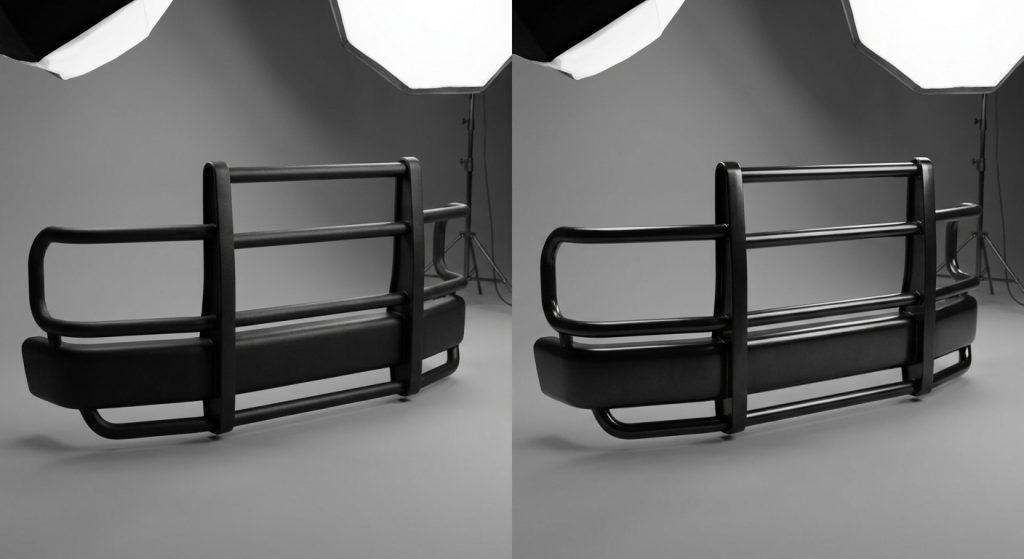
Selecting the right gloss level depends on whether you prioritize concealing off-road scuffs or achieving a modern, easily washed surface. Choosing a semi-gloss powder coated grille guard delivers a versatile, low-maintenance finish that resists stains while looking clean under normal highway driving conditions. Understanding how different gloss levels interact with light and road dirt helps you specify the optimal protection for your trucks.
When you compare matte and high-gloss options, you are balancing cosmetic maintenance with environmental resistance. Each gloss formulation offers distinct advantages for specific commercial trucking applications.
Why is semi-gloss the practical fleet standard?
Semi-gloss black finishes are the practical fleet standard because they release road grime easily while offering excellent scratch concealment. Here is the deal: while high-gloss finishes show every finger mark and minor scratch, and matte finishes can trap mud in their rough texture, semi-gloss strikes the perfect middle ground. This versatile gloss level washes clean in standard truck washes while maintaining a clean, professional, non-reflective appearance.
- Easy Soil Release: Smooth finish allows mud to wash off effortlessly.
- Scratch Concealment: Diffuses light to blend scuffs into the background.
- OEM Aesthetics: Coordinates perfectly with standard truck trim panels.
You will spend less time washing and detailing your vehicles when you specify semi-gloss protective gear. This balanced finish keeps your trucks looking business-ready with minimal effort.
When should you choose a textured carbide finish?
Textured carbide finishes are highly recommended for severe off-road and construction environments where physical traction and extreme scratch resistance are your top priorities. Think about it: the highly structured, sandpaper-like texture provides a safe, slip-resistant surface for your drivers to step on when climbing on utility beds or mounting frames. This rough surface is virtually impossible to scratch with standard boots, chains, or heavy iron tools.
- Extreme Slip Resistance: Provides high physical traction in wet or icy weather.
- Ultimate Scratch Defense: Sandpaper texture shrugs off severe tool scrapes.
- Rugged Appearance: Adds a heavy-duty, industrial look to your work trucks.
When your vehicles operate in wet, muddy, or icy conditions, safety step plates require textured carbide coatings. This rugged specification keeps your operators safe and your equipment protected.
Key Takeaway: Specifying a semi-gloss finish delivers the easiest cleaning for highway fleets, while textured carbide finishes provide the ultimate slip resistance and tool defense for rugged construction vehicles.
| Gloss Finish Type | Soil Release Ease | Slip Resistance | Best Fleet Environment |
|---|---|---|---|
| Semi-Gloss Black | Very High (smooth surface) | Low (can be slick when wet) | Highway hauling & urban logistics |
| Textured Carbide | Moderate (traps clay mud) | Extreme (gritty texture) | Heavy off-road & construction |
Let’s summarize the key insights to help you finalize your next vehicle purchasing decision.
Selecting Your Ultimate Protection Solution
Investing in high-quality materials and durable surface coatings is the smartest way to reduce fleet maintenance costs, minimize unexpected vehicle downtime, and preserve trade-in value. Whether your trucks are navigating freezing highway routes covered in de-icers, hauling heavy loads through off-road construction sites, or managing high-mileage logistics runs, specifying the right substrate and finish ensures your drivers and equipment remain fully protected.
Our dedicated engineering team is here to help you design, test, and manufacture custom heavy-duty front-end protection systems that align perfectly with your fleet’s specific operational needs. We combine ISO 9001-certified quality control with premium carbon steel, aluminum, and advanced powder-coating technologies to deliver products that easily exceed North American standards. To receive a tailored corporate quote, discuss custom OEM specifications, or request a complete virtual factory tour, contact us today and let us help you build a safer, more durable fleet for the road ahead.
Frequently Asked Questions (FAQ)
Can I repair small scratches in my powder-coated finish myself?
Yes, you can. You can touch up small chips or scratches using a matching, high-quality liquid polyurethane enamel paint after carefully sanding away any loose surface debris and cleaning the area with isopropyl alcohol. While this won’t replicate the heat-fused durability of the original electrostatic bake, it creates an airtight seal that prevents moisture from getting under the remaining polymer shield and causing rust creep.
What is the best way to clean road salts off my protective guard?
It is highly recommended to wash your guard with mild soap and warm water. Using standard, pH-neutral automotive soap and a soft microfiber wash mitt will easily lift away stubborn road salts and grime without scratching the finish. Always avoid using aggressive industrial acids, abrasive wire brushes, or high-pressure spray nozzles held too close to the guard, as these can dull and weaken the protective polymer layer.
How do I know if my fleet needs steel or aluminum protection?
You should choose based on your vehicle’s weight constraints and impact risks. Steel is highly recommended if your vehicles operate in heavy collision zones or off-road sites where maximum structural strength and impact absorption are non-negotiable. However, if your vehicles are already close to their front gross axle weight rating (GAWR) and you need to optimize fuel economy, choosing a lightweight, heat-treated aluminum guard is the ideal alternative.
Can I powder coat over a guard that is already painted?
No, you cannot. Applying an electrostatic powder coat directly over existing wet paint is not possible because the high oven-curing temperatures will burn, melt, and blister the underlying liquid paint. To achieve a proper, long-lasting bond, the original guard must be completely media-blasted down to bare, white metal to remove all paint, rust, and surface oils before the powder is applied.
How do I know if my powder coating has been properly cured?
You can verify curing through simple solvent rub and impact tests. A fully cured powder-coated finish will not soften or change color when rubbed firmly with an acetone-soaked cloth, and it will resist chipping when subjected to standard impact testing. If the finish feels soft, scratches easily with a fingernail, or peels away in large sheets, the guard was likely under-baked during the manufacturing process.