
Selecting the right electric semi truck grille guard is essential for protecting high-value EV fleets from road debris, wildlife strikes, and front-end damage. Unlike traditional diesel trucks, electric semi trucks feature specialized front-end architecture with sensitive radar, camera systems, and battery cooling lines. Choosing a guard that is custom-engineered for your vehicle ensures full sensor compatibility, maintains aerodynamic efficiency, and prevents costly repairs, while providing durable, lightweight protection that keeps your fleet on the road safely and efficiently.
Can an electric semi truck grille guard fit?
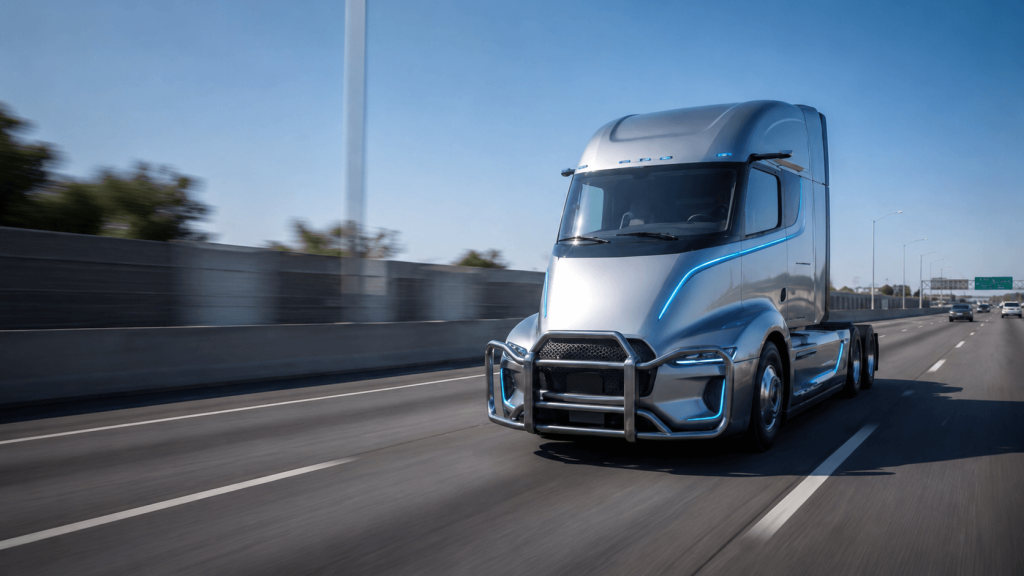
Yes, an electric semi truck grille guard can fit modern commercial electric vehicles perfectly when it is custom-designed to match their specific frame geometry and cooling paths. Unlike standard diesel trucks, electric semi-trucks rely on tightly packed front-end architecture that demands high-precision engineering. A properly fitted guard protects the front fascia without creating clearance problems or blocking critical components.
Operating high-value zero-emission fleets in rough conditions makes front-end protection an absolute necessity. If you try to mount an incorrect guard on an EV chassis, you run the risk of structural misalignment and performance degradation. Choosing a purpose-built protection accessory ensures absolute compatibility and peace of mind on every route.
How do EV front ends differ from diesel configurations?
Let’s look at the facts:
Commercial electric vehicles feature completely re-engineered front fascias designed to optimize aerodynamics and direct clean airflow to thermal management systems. Traditional diesel rigs have simple steel bumpers, while electric platforms integrate sensitive electrical networks and safety hardware. Installing a generic bumper guard can quickly lead to costly technical conflicts.
- Specialized structural mounting points built into the EV frame.
- Clearance cutouts designed to accommodate active cooling ducts.
- Strategic positioning that avoids blocking advanced safety radar.
Key Takeaway: Custom-fit guards are mandatory because electric semi trucks utilize a highly specialized front-end architecture that cannot support generic diesel accessories.
| Vehicle Aspect | Diesel Semi Trucks | Electric Semi Trucks |
|---|---|---|
| Front Bumper Design | Standard steel or chrome | Composite aerodynamic panels |
| Cooling Requirements | Engine radiator airflow | Multi-circuit battery thermal loops |
| Accessory Mount Points | Traditional frame rails | Specialized high-clearance brackets |
This comparison clearly demonstrates that the unique engineering profile of electric vehicles requires a custom-engineered guard solution to prevent structural issues.
Why buy an electric semi truck grille guard?
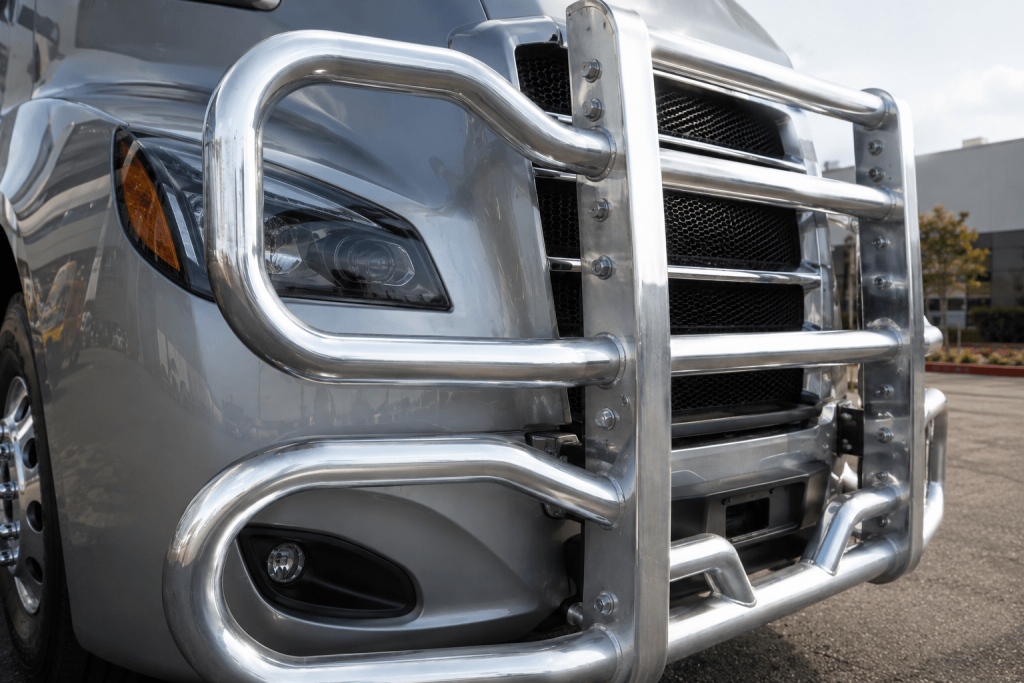
You should buy an electric semi truck grille guard to shield your heavy fleet investment from catastrophic animal impacts and severe highway debris. A single collision with wildlife on remote shipping routes can instantly disable an unprotected electric commercial vehicle. Maintaining continuous uptime requires a physical barrier capable of absorbing intense kinetic forces.
The high cost of repair parts for electric trucks makes upfront protection a highly logical business decision. By deflecting road hazards, these guards prevent minor road incidents from turning into major capital expenditures. Securing your front-end components ensures your logistics operations run smoothly without interruption.
What are the real risks of going unprotected?
Think about it:
Driving a high-value electric semi truck without a heavy-duty guard is an expensive gamble every time the vehicle hits the road. Road debris can easily puncture the cooling lines that regulate the high-voltage battery system. Once the thermal loop is compromised, the vehicle must be towed immediately to a specialized facility.
- Expensive composite body panels that are highly prone to cracking.
- Delicate thermal management lines running behind the lower bumper.
- High-tech lighting assemblies that cost thousands of dollars to replace.
Key Takeaway: Safeguarding the front fascia of your fleet prevents costly secondary mechanical damage to your underlying battery and thermal systems.
| Risk Category | Unprotected Electric Semi | Protected Electric Semi |
|---|---|---|
| Minor Impact Outcome | Cracked bumper, coolant leaks | Intact fascia, slight guard scuff |
| Wildlife Collision Cost | Extreme ($15,000+ repairs) | Low (Bumper guard absorbs impact) |
| Operational Status | Immediate roadside towing | Uninterrupted delivery schedule |
As shown above, the data confirms that a dedicated guard acts as a highly effective financial shield against unexpected highway hazards.
How does an electric semi truck grille guard mount?
An electric semi truck grille guard mounts directly to the vehicle’s structural steel frame rails using custom-designed, heavy-duty steel brackets. This robust connection bypasses the fragile composite bumper and aerodynamic panels to transfer impact energy safely into the truck’s chassis. You do not need to perform any drilling or welding on your truck’s original frame.
Precise alignment is critical to ensure the brackets fit seamlessly within the tight physical tolerances of modern electric rigs. High-tensile mounting hardware ensures that the assembly remains completely stable under high levels of road vibration. Preserving structural integrity is the primary goal of this non-destructive installation process.
What does the installation process involve?
Here is the deal:
Professional mounting kits utilize factory-drilled frame holes to secure the guard without modifying the manufacturer’s structural design. This ensures the guard can be removed or tilted forward easily when maintenance teams need access to the front end. Using precision-engineered brackets eliminates the risk of introducing frame stress or corrosion.
- Uses factory-drilled chassis mounting points for a secure fit.
- Tilt-down bracket designs that allow for easy front-end service access.
- Zinc-plated Grade 8 hardware to prevent galvanic metal corrosion.
Key Takeaway: A direct-to-frame mounting system guarantees maximum strength without altering or damaging your electric semi truck’s structural chassis.
| Installation Aspect | Generic Diesel Mount | Custom EV Mount |
|---|---|---|
| Frame Modification | Often requires drilling | 100% no-drill direct fitment |
| Maintenance Access | Fixed brackets block hood | Easy-tilt mechanisms standard |
| Hardware Rating | Standard grade fasteners | High-tensile Grade 8 bolts |
This technical breakdown clearly demonstrates that high-quality, custom-engineered mounting kits are essential for keeping your vehicle frame safe.
Does an electric semi truck grille guard affect range?
An electric semi truck grille guard does not noticeably affect driving range when it is constructed from lightweight, high-strength aluminum alloys. Adding unnecessary weight to a battery-powered commercial vehicle will force the electric drivetrain to consume more energy. By prioritizing advanced materials, you get maximum impact protection without compromising battery efficiency.
Modern aerodynamic testing proves that streamlined guards allow air to slide smoothly around the front cab. This prevents the drag penalties commonly associated with heavy, blocky steel guards designed for older diesel models. Keeping your range high is essential for meeting tight delivery windows and optimizing charging schedules.
Why is material choice critical for range?
But wait, there’s more:
Choosing a premium aluminum alloy reduces accessory weight by up to fifty percent compared to traditional structural steel. This weight reduction directly translates to a lower front axle load, preserving tire life and steering responsiveness. It allows your fleet to maintain its maximum legal cargo payload on long-haul routes.
- High-grade aluminum alloys reduce front-end weight by half.
- Low-drag tubular profiles minimize high-speed aerodynamic resistance.
- Preserves daily battery range for maximum fleet routing flexibility.
Key Takeaway: Selecting lightweight aluminum front-end guards ensures your electric trucks maintain optimal driving range while remaining highly protected.
| Guard Material | Average Accessory Weight | Estimated Range Impact | Cargo Capacity Impact |
|---|---|---|---|
| Premium Aluminum | 80 – 110 lbs | Negligible (Under 0.5%) | Fully Optimized |
| Heavy-Duty Steel | 200 – 300+ lbs | Noticeable (1.5% – 2% loss) | Slightly Reduced |
As shown above, the data confirms that utilizing high-grade aluminum is the best way to protect your vehicles without hurting efficiency.
How does an electric semi truck grille guard protect ADAS?
An electric semi truck grille guard protects Advanced Driver Assistance Systems (ADAS) by combining rugged perimeter defense with specialized open spaces that clear sensor viewing windows. Modern electric trucks utilize forward-facing radar, lidar, and camera systems to assist drivers and maintain safe highway distances. A minor collision can easily destroy these fragile sensors, leading to costly safety shutdowns.
Precision manufacturing ensures that the guard’s protective metal bars sit completely outside the operational cone of your radar. This allows your safety systems to operate continuously while remaining protected from flying road debris. Shielding these systems prevents expensive recalibration processes after minor accidents.
Why is sensor calibration so vulnerable?
Let’s face it:
Even a slight bump to a front-end radar sensor can throw off its calibration angles completely. This triggers warning lights on the dashboard and disables essential safety features like automated emergency braking. A custom-engineered guard keeps the sensor housing stable and secure under all driving conditions.
- Prevents physical debris from striking delicate glass lenses.
- Eliminates sensor housing vibration to ensure accurate road data.
- Reduces the need for costly post-impact sensor recalibrations.
Key Takeaway: Protecting your high-tech sensors with custom-fit guards ensures your driver assistance systems remain active and reliable.
| ADAS Component | Potential Physical Threat | Guard Protection Solution |
|---|---|---|
| Forward Radar | Flying stones, highway debris | Recessed structural steel framing |
| Collision Cameras | Pavement gravel, weather debris | Overhead protective deflector plates |
| LiDAR Sensors | Direct impacts, wildlife strikes | Multi-point high-strength tubing |
This comparison clearly demonstrates that specialized guard designs are essential for preserving the operational reliability of safety hardware.
What components does an electric semi truck grille guard shield?
An electric semi truck grille guard shields the vehicle’s high-tech battery cooling radiators, expensive composite hood paneling, and advanced headlight systems. Unlike diesel engines that can handle minor debris, electric powertrains rely on sensitive multi-circuit cooling loops to manage battery temperatures. A single puncture to these cooling systems can disable the entire high-voltage powertrain instantly.
Rugged tubular guards absorb and distribute collision forces across the truck’s frame, protecting vulnerable body parts. This comprehensive coverage ensures that road hazards do not cause expensive structural damage to your green fleet. Protecting these components keeps your maintenance costs low and your trucks active on the road.
Which areas are most vulnerable to damage?
It gets better:
The lower front bumper of an electric truck contains complex electrical wiring harnesses and high-voltage cooling lines. These parts are highly exposed to low-lying road debris and minor animal strikes at highway speeds. A robust guard provides an indispensable physical barrier that stops debris from piercing these high-value components.
- Low-mounted cooling radiators that regulate battery heat.
- Fragile LED headlight assemblies that are expensive to replace.
- Low-voltage wiring harnesses connecting key safety sensors.
Key Takeaway: Shielding the entire lower fascia of your electric trucks protects your critical battery cooling circuits and electrical networks from destruction.
| Front-End Component | Replacement Cost (Unprotected) | Protection Level (With Guard) |
|---|---|---|
| Battery Cooling Loop | High ($8,000 – $12,000) | Maximum (Complete metal coverage) |
| LED Headlight Array | Medium ($2,500 – $4,000) | High (Tubular wrap-around loops) |
| Composite Hood | High ($5,000 – $9,000) | High (Deflector bars divert debris) |
As shown above, the data confirms that front-end shielding provides substantial financial protection for the most expensive parts of your EV.
Which material is best for an electric semi truck grille guard?
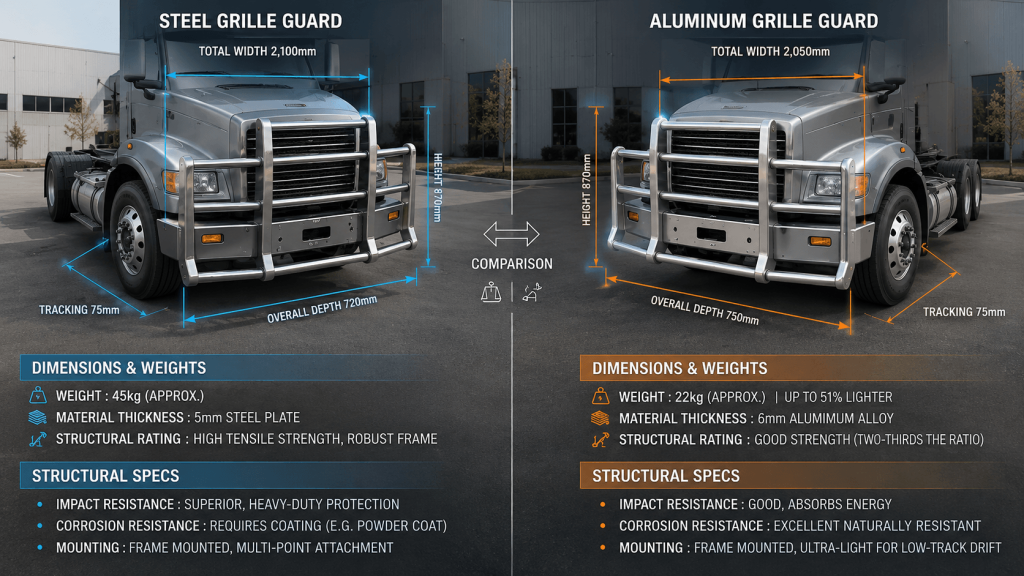
High-grade marine-grade aluminum alloy is the best material for an electric semi truck grille guard due to its exceptional strength-to-weight ratio and natural resistance to corrosion. While traditional heavy steel guards offer ultimate impact resistance, their extreme weight can significantly hurt the operating range of battery-powered commercial vehicles. Choosing aluminum gives you robust physical protection without adding unnecessary front axle weight.
Aluminum guards are treated with advanced powder coatings or highly polished finishes to withstand harsh environmental conditions. They resist rust and cosmetic degradation even when exposed to corrosive winter road salts over long shipping routes. This ensures your fleet maintains a professional, high-quality look for years to come.
How do steel and aluminum compare?
Here is the truth:
Steel guards provide unmatched structural rigidity for extreme logging or mining operations where heavy front-end impacts are common. However, highway-based electric long-haul fleets benefit far more from the weight savings offered by premium aluminum alloys. Reducing accessory weight allows your fleet to maximize its legal payload capacity on every route.
- Premium aluminum is up to fifty percent lighter than standard steel.
- Natural corrosion resistance prevents structural rust without constant upkeep.
- High-strength alloys absorb impact forces by flexing slightly under load.
Key Takeaway: Premium aluminum alloys represent the ideal material choice for electric trucks, offering the perfect balance of weight, durability, and impact strength.
| Material Property | Premium Aluminum Alloy | High-Strength Structural Steel |
|---|---|---|
| Weight per Unit | 80 lbs – 110 lbs | 180 lbs – 260+ lbs |
| Corrosion Resistance | Superior (Naturally rust-proof) | Moderate (Requires powder coating) |
| Primary Application | Highway long-haul fleets | Severe off-road & logging routes |
This material comparison clearly demonstrates that premium aluminum is the optimal choice for weight-conscious, range-focused electric truck operations.
Which brands fit an electric semi truck grille guard?
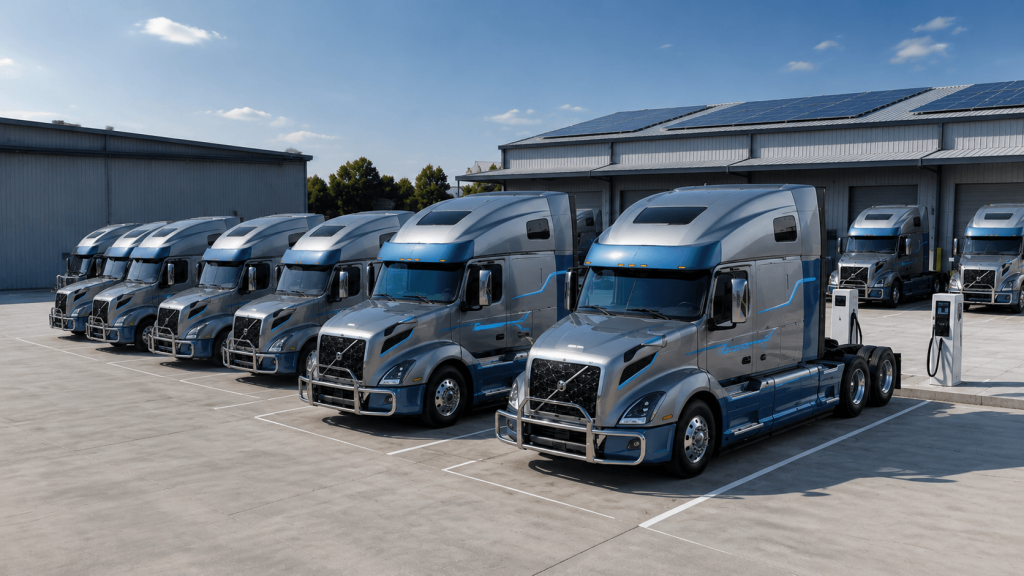
Every major commercial vehicle manufacturer can fit an electric semi truck grille guard when you utilize custom-engineered mounting kits tailored for their specific chassis. Major brands like Freightliner, Volvo, Kenworth, Peterbilt, International, and Tesla have developed advanced electric semi platforms. Because each manufacturer employs a unique bumper shape and sensor layout, a one-size-fits-all guard is not viable.
Partnering with a specialized manufacturer ensures you receive a guard designed specifically for your fleet’s vehicle models. Custom guards align perfectly with existing frame holes to provide a secure, bolt-on installation. This guarantees your safety sensors and active cooling vents continue to operate exactly as the manufacturer intended.
Which models have dedicated guard designs?
Think about it:
Leading electric truck platforms require specialized structural designs to maintain their streamlined aerodynamics and sensor paths. For instance, the Freightliner eCascadia and Volvo VNR Electric models rely on specific sensor alignments that must remain completely unobstructed. Custom guards are engineered to wrap around these unique brand-specific features perfectly.
- Freightliner eCascadia models with integrated collision radar systems.
- Volvo VNR Electric platforms requiring low-slung bumper clearance.
- Peterbilt 579EV and Kenworth T680E heavy-duty electric platforms.
Key Takeaway: Implementing model-specific guards is the only way to ensure 100% fitment accuracy, safety sensor operation, and structural safety.
| EV Semi Platform | Primary Fitment Requirement | Airflow Consideration |
|---|---|---|
| Volvo VNR Electric | Clearance for aerodynamic bumper | Unobstructed low-lying cooling vents |
| Freightliner eCascadia | Clear sensor field of view | Open central air intake path |
| Kenworth / Peterbilt EVs | Direct frame mounting points | Clear access for hood-tilt clearance |
As shown above, the data confirms that brand-specific engineering is mandatory to maintain the structural and electrical functionality of your electric trucks.
Can an electric semi truck grille guard cut costs?
Yes, an electric semi truck grille guard can cut operational costs significantly by preventing expensive collision repairs and eliminating vehicle downtime. For commercial logistics providers, a single front-end collision can cost thousands of dollars in towing, replacement parts, and lost shipping revenue. Protecting your high-value electric fleet assets with rugged armor is a highly effective way to control maintenance budgets.
Shielding your vehicles reduces the frequency of insurance claims, helping you maintain low fleet insurance premiums over time. It gives your drivers confidence, knowing their trucks are built to withstand sudden road hazards. Keeping your trucks active and productive maximizes your return on investment in green fleet technology.
How do protective guards improve fleet ROI?
Here is the kicker:
The financial impact of having an electric semi truck sidelined for weeks while waiting for specialized parts can devastate fleet profitability. A robust bumper guard acts as an insurance policy that absorbs impact forces, allowing your drivers to complete their deliveries. This small upfront investment prevents massive operational disruptions and customer service penalties.
- Eliminates the high costs of towing and specialized roadside recovery.
- Saves thousands of dollars in post-collision sensor recalibration fees.
- Prevents cargo delays, protecting your company’s logistics reputation.
Key Takeaway: Installing high-quality front-end guards pays for itself by preventing costly vehicle downtime and lowering overall repair costs.
| Cost Category | Fleet Without Guards | Fleet With Custom Guards |
|---|---|---|
| Average Collision Cost | Extreme ($10,000 – $20,000) | Low ($500 – $1,500) |
| Post-Collision Downtime | 10 to 30 operational days | 0 to 1 operational day |
| Fleet Insurance Impact | Increased claim rates and premiums | Stable low-risk insurance rates |
This cost analysis clearly demonstrates that investing in front-end protection yields immediate financial benefits for modern commercial fleets.
Who builds an electric semi truck grille guard?
Premium OEM/ODM manufacturers build an electric semi truck grille guard using advanced CAD engineering, precision CNC machining, and automated robotic welding. Partnering with a manufacturer that possesses deep industry experience guarantees that your guards are built to the highest technical standards. Professional manufacturers understand the unique aerodynamic and electrical requirements of commercial electric vehicles.
These state-of-the-art facilities conduct rigorous quality control testing to ensure structural integrity and a perfect bolt-on fit. They design mounting brackets that align flawlessly with factory frame holes, eliminating the need for destructive drilling. Choosing a certified manufacturing partner ensures your fleet receives reliable, long-lasting protection on every highway.
Why is manufacturing quality so critical?
Think about it:
A guard that is poorly welded or misaligned can vibrate heavily during highway operation, causing false sensor alarms and structural fatigue. Professional facilities utilize high-precision jigs and AWS-certified welding processes to eliminate structural defects. Investing in high-quality manufacturing guarantees your guards will perform flawlessly when an impact occurs.
- ISO 9001-certified production lines ensuring consistent manufacturing quality.
- Precision CNC laser cutting for perfect bracket and tube alignment.
- Multi-stage quality control checks to verify flawless fitment.
Key Takeaway: Partnering with an experienced, certified manufacturer ensures your electric trucks are protected by precision-engineered, high-strength armor.
| Manufacturing Process | Certified OEM Standard | Standard Accessory Shop |
|---|---|---|
| Design Engineering | Advanced 3D CAD modeling | Basic manual blueprints |
| Fabrication Tolerance | Precision within ±0.5 mm | Loose manual alignments |
| Welding Quality | Certified robotic MIG/TIG | Manual welding with variance |
This production comparison clearly demonstrates that premium manufacturing standards are essential for producing safe, durable guards.
Secure Your Electric Fleet Today
Shielding your commercial electric vehicles with high-quality front-end protection is a vital step toward ensuring long-term fleet efficiency and safety. Do not wait for a costly wildlife collision or flying road debris to sideline your high-value assets and disrupt your delivery schedules. Our expert engineering team is ready to design and manufacture the perfect custom-fit solutions tailored specifically to your fleet’s unique operating requirements. Please contact us today to request a custom quote and discover how our premium bumpers can keep your electric trucks safe on every route.
FAQs
- Can I use my old diesel grille guard on my new electric semi truck?
No, it is not recommended. Electric semi trucks feature completely re-engineered front-end geometries, modified frame rails, and sensitive radar sensors that require custom-tailored mounts to avoid safety risks. - What’s the best material for protecting an electric truck’s front end?
Yes, premium aluminum alloy is the best choice. Aluminum provides excellent impact deflection and structural strength while keeping weight to an absolute minimum, preserving your vehicle’s electric driving range. - How do I know if a grille guard will block my truck’s safety sensors?
Yes, you can verify this by checking the manufacturer’s CAD design specs. Professional builders design their guards with specific open spaces that align perfectly with forward-facing radar systems to prevent any electronic interference. - Can I install a custom grille guard without voiding my vehicle warranty?
Yes, absolutely. High-quality guards utilize a bolt-on mounting design that secures directly to the factory-drilled frame holes, meaning no drilling or welding is required, which keeps your manufacturer’s warranty completely intact. - How do I know if my fleet needs lightweight aluminum over steel guards?
Yes, you should evaluate your route lengths and cargo requirements. If your electric commercial trucks travel on long highway routes where maximizing battery range and cargo payload is critical, lightweight aluminum is definitely your best option.