
The primary pickup truck tool box types include crossover boxes, side-mount solutions, and heavy-duty utility chests. You face a constant challenge when your expensive equipment is left sliding across an open bed, exposed to both the elements and potential theft. As a result, this lack of organization doesn’t just look unprofessional; moreover, it leads to damaged gear and lost billable hours while you dig for the right wrench. By investing in professional pickup truck tool box types, you secure your inventory and streamline your entire mobile operation.
What are the primary pickup truck tool box types?
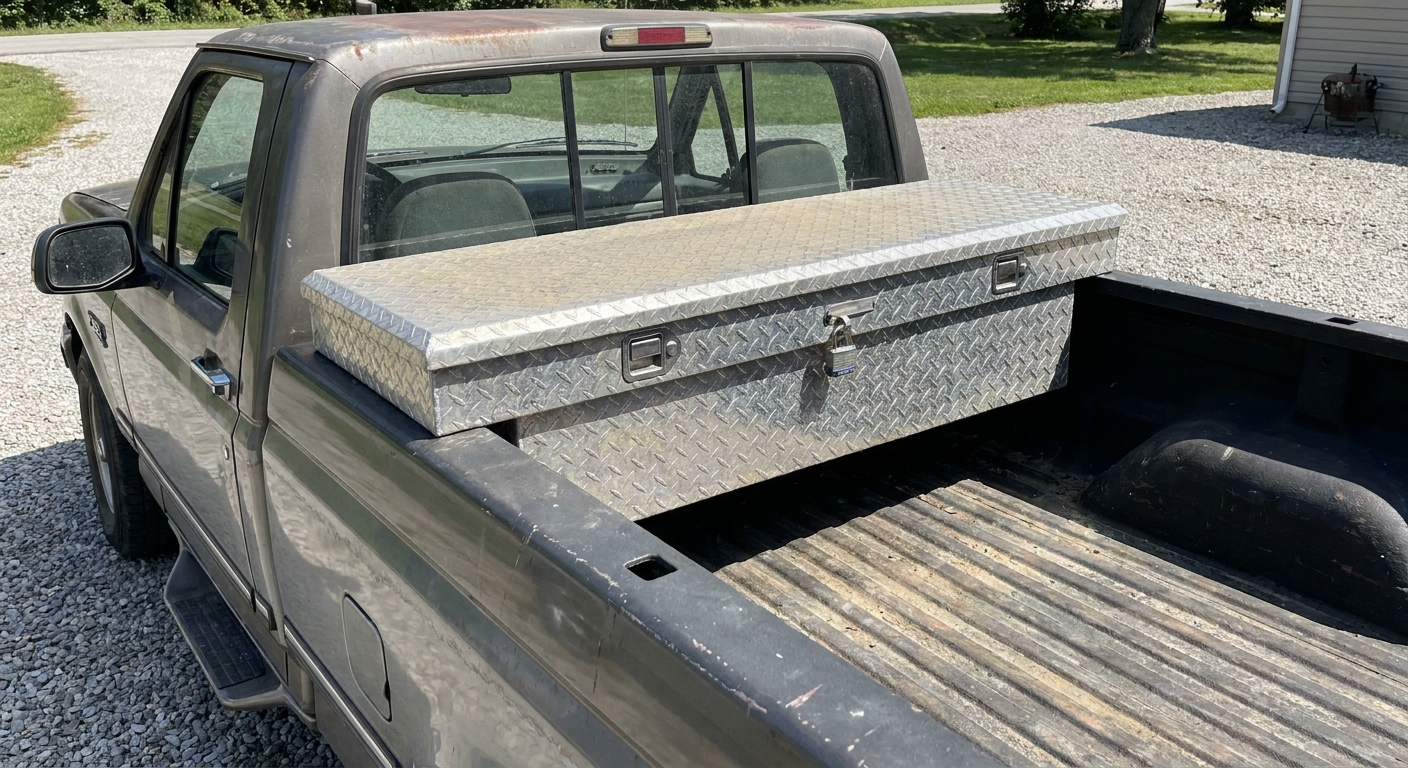
The three fundamental pickup truck tool box types are crossover, side-mount, and utility chests. Each configuration serves a specific vocational need, ranging from daily contractor use to heavy-duty fleet management. Choosing the right style depends on how much bed floor space you need to preserve for large payloads.
Traditional Crossover Storage
These crossover units are the most popular choice because they sit on the bed rails, leaving the floor clear for plywood or lumber. Additionally, they rest just behind the cab, providing a centralized location for your most-used tools.
Accessible Side-Mount Units
Side-mount boxes offer the advantage of accessibility without forcing you to climb into the truck bed. They run along the interior rails, making them perfect for long-handled tools like levels and shovels.
How do utility chests differ?
Utility chests sit directly on the bed floor and do not overhang the rails, making them compatible with most tonneau covers.
Here is the kicker:
- Lower Center of Gravity: Providing a lower center of gravity, these boxes are easily removable for temporary storage.
- Portable Storage: They are also easily removable for transport to other job sites.
- Unobstructed Visibility:Additionally, they keep your rear-view visibility completely unobstructed.
Key Takeaway: Understanding the base configuration of your storage unit ensures you don’t sacrifice critical bed floor space for security.
| Box Type | Mounting Location | Primary Benefit |
|---|---|---|
| Crossover | Bed Rails (Behind Cab) | Maximizes bed floor length |
| Side-Mount | Bed Rails (Sides) | Exterior accessibility |
| Utility Chest | Bed Floor | Tonneau cover compatibility |
This comparison highlights that your choice should be dictated by your specific cargo-loading habits and visibility requirements.
Which pickup truck tool box types offer the best visibility?
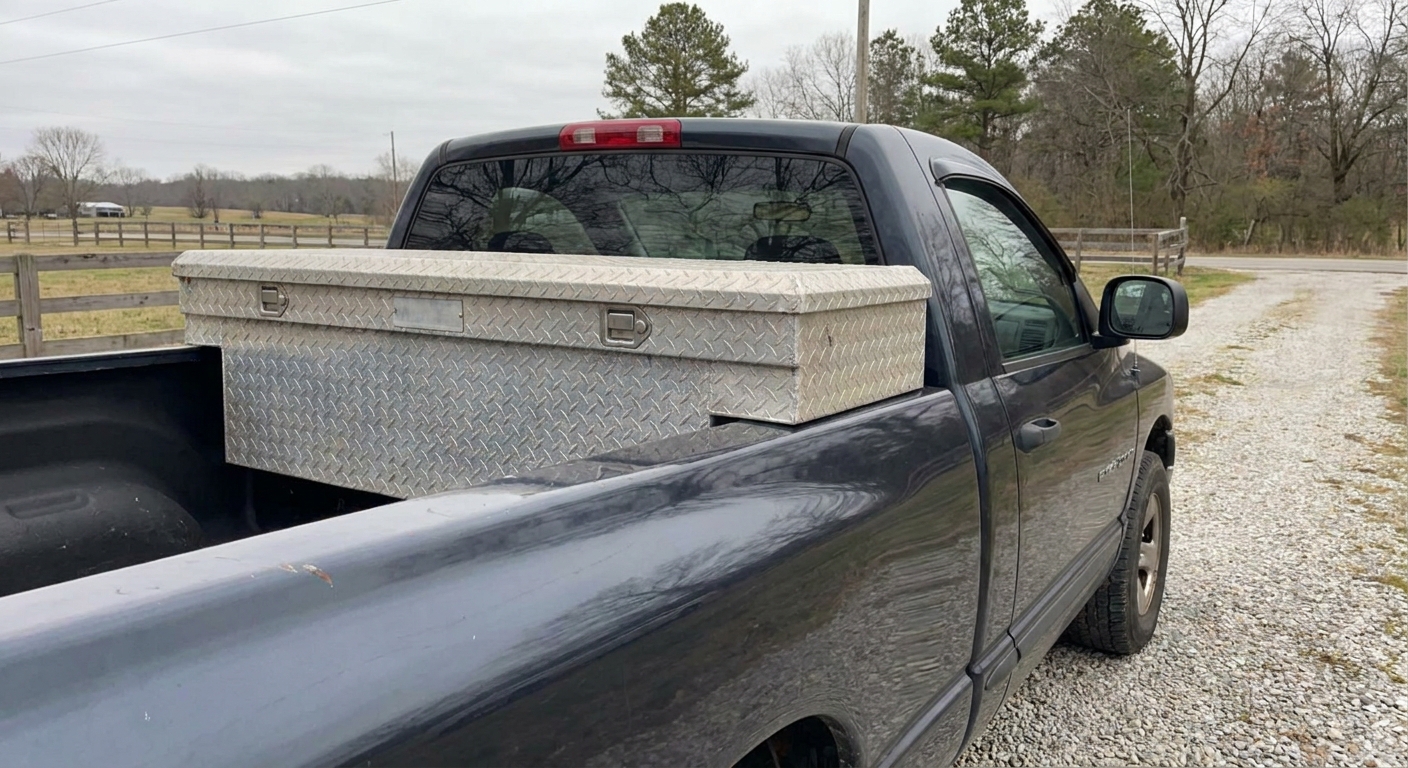
Low-profile and chest-style pickup truck tool box types offer the best visibility because they sit at or below the bed rail line. Maintaining a clear line of sight through the rear window is critical for safety, especially when maneuvering on crowded jobsites. Standard units often block several inches of the rear window, which can be a significant drawback for smaller truck platforms.
Benefits of Low-Profile Designs
Low-profile boxes are engineered specifically to provide a sleek look while keeping the lid out of your rearview mirror. They offer the same internal volume as many standard boxes but achieve this through a deeper tub design.
Why choose a floor-mounted chest?
Floor-mounted chests are essentially invisible from the driver’s seat because they sit entirely below the bed rail. This makes them the ultimate choice for operators who prioritize 360-degree visibility while driving.
Let’s dive in:
- Standard Profile: Maximum volume, higher lid.
- Low Profile: Better visibility, modern aesthetics.
- Utility Chest: Zero window obstruction, maximum security.
Key Takeaway: Choosing a profile that aligns with your truck’s cab height is essential for maintaining jobsite safety and driver comfort.
| Profile | Window Impact | Storage Volume |
|---|---|---|
| Standard | Moderate | High |
| Low-Profile | Minimal | High |
| Utility Chest | None | Moderate-High |
Selecting a low-profile unit allows you to maintain professional storage capacity without compromising your safety standards.
Which crossover pickup truck tool box types fit your cab?
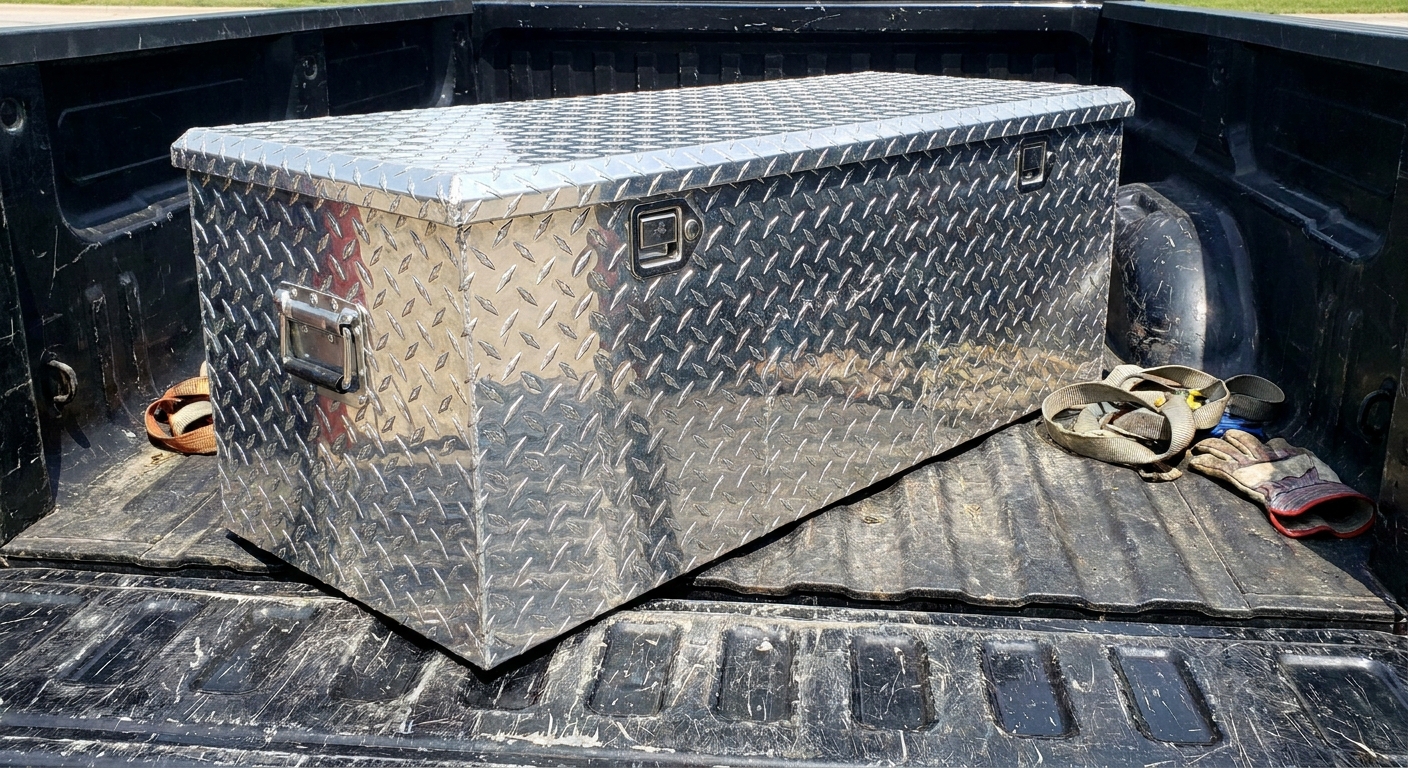
Selecting the right pickup truck tool box types depends on the width of your bed rails and the clearance available behind your cab. Most full-sized trucks require a 69-inch to 72-inch box, while mid-sized trucks typically utilize 60-inch to 63-inch configurations. It is vital to measure the distance between your wheel wells to ensure the “tub” portion of the box fits correctly.
Standard vs. Slim-Line Fitment
Standard tubs provide the most cubic feet of storage but take up significant space in the bed. If you have a short-bed truck, a slim-line design might be necessary to leave room for other equipment.
Are angled tubs necessary?
Angled tubs are designed specifically to clear wheel wells in trucks with shorter beds or unique bed layouts. They allow for a full-width box where a squared-off tub would otherwise interfere with the truck’s structural components.
The truth is:
- Measure rail-to-rail width first.
- Check the depth from the rail to the bed floor.
- Confirm the distance between the cab and wheel wells.
Key Takeaway: Precision measurement is the only way to ensure your crossover box provides a secure, “no-rattle” fit for your specific vehicle.
| Vehicle Class | Typical Box Length | Common Tub Style |
|---|---|---|
| Full-Size (Heavy Duty) | 72″ | Deep/Wide |
| Full-Size (Light Duty) | 69″ | Standard |
| Mid-Size / Compact | 60″ | Slim-Line |
Proper fitment prevents bed rail damage and ensures the box stays anchored during off-road or high-vibration maneuvers.
How do latching pickup truck tool box types impact security?
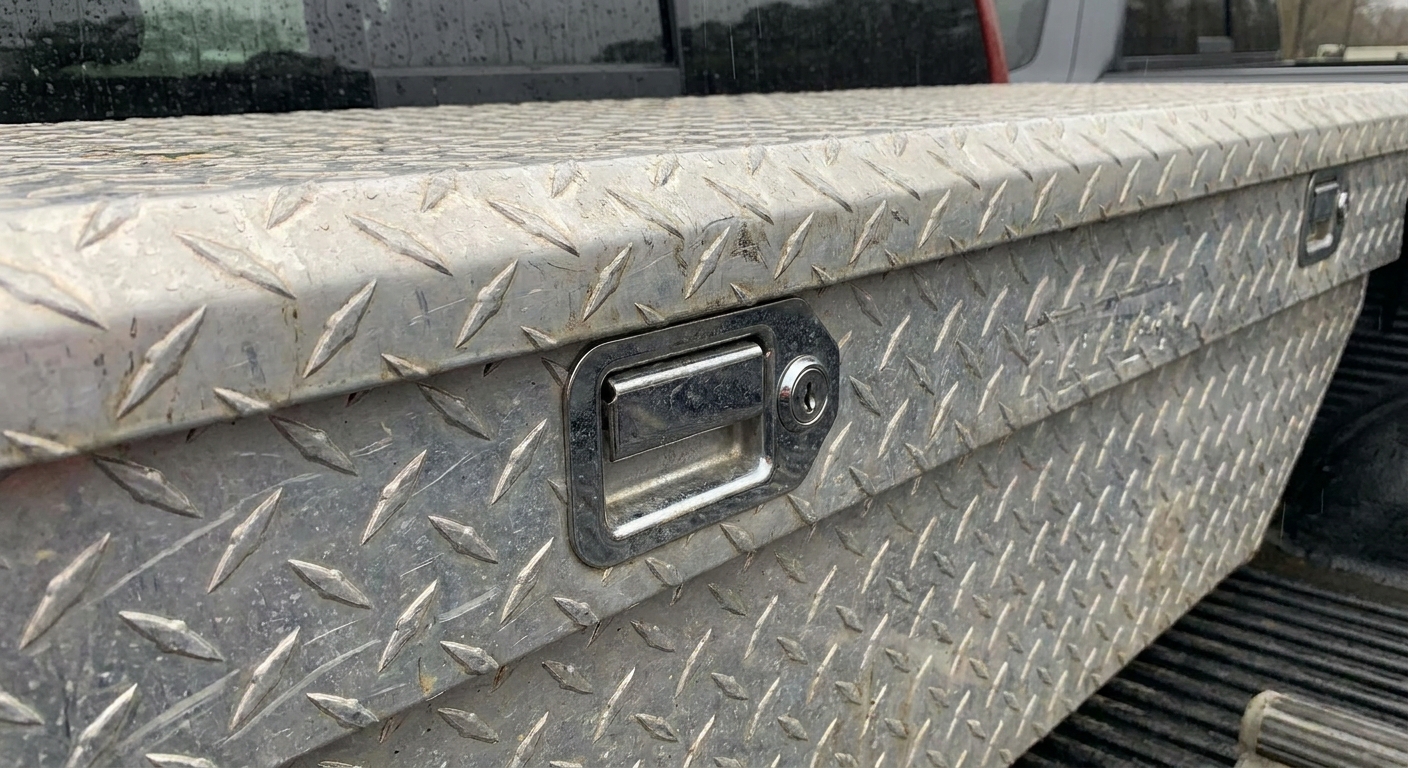
Latching pickup truck tool box types determine how easily an intruder can access your gear and how well the lid stays shut during transport. Professional-grade boxes often utilize stainless steel paddle latches or dual-locking twist handles to prevent prying. A high-quality latching system also compresses the weather seal, keeping your tools dry even in torrential rain.
Professional Paddle Latches
Paddle handles are the industry standard because they are easy to operate with one hand while holding gear. They sit flush against the box surface, reducing the risk of catching on clothing or external equipment.
Can pull handles improve ergonomics?
Pull handles provide extra clearance, which is particularly useful if your operators frequently wear heavy work gloves. They often feature a more robust internal connecting rod that ensures both sides of the lid unlatch simultaneously.
The secret to longevity:
- Stainless steel components prevent rust-related failures.
- Dual-locking systems provide double the theft deterrence.
- Self-adjusting strikers maintain a tight seal over years of use.
Key Takeaway: The quality of the latch is often the first point of failure; investing in stainless steel hardware prevents long-term maintenance headaches.
| Latch Type | Ease of Use | Security Level |
|---|---|---|
| Paddle Handle | Excellent | High |
| Twist Handle | Good | Maximum |
| Pull Handle | Best (with gloves) | High |
A secure latching mechanism not only protects against theft but also ensures the structural integrity of the box lid.
What lid-specific pickup truck tool box types work best?
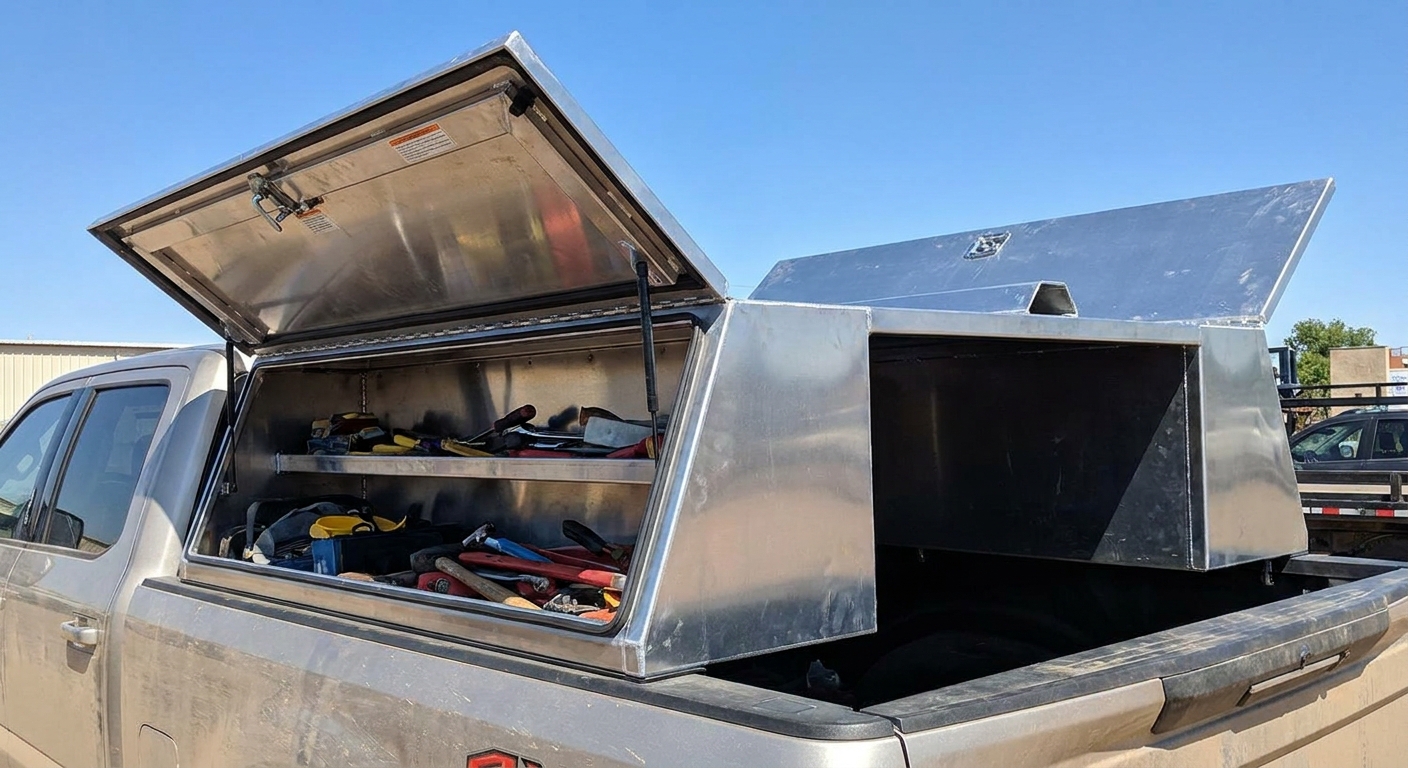
The best pickup truck tool box types for your workflow depend on whether you need full-width access or dual-sided entry. Single-lid designs are ideal for storing long items like shovels or sledgehammers, whereas gull-wing lids allow you to grab specific tools from either side of the truck. Consider how often you park in tight spaces where a full-width lid might be difficult to open.
Single-Lid Efficiency
Single-lid boxes offer a wide-open storage area that simplifies the organization of bulky power tool cases. They usually feature heavy-duty gas struts that assist with lifting and prevent the lid from slamming shut.
Why choose a gull-wing design?
Gull-wing lids feature two separate doors that open from the sides toward the center. This is perfect for service fleets where multiple workers might need to access different parts of the box at once.
Check this out:
- Single-lid: Better for large equipment.
- Gull-wing: Superior for multi-person access.
- Rail-lid: Adds external tie-down points for extra cargo.
Key Takeaway: Your choice of lid style should reflect how you physically interact with your truck on a daily basis.
| Lid Configuration | Access Style | Best Application |
|---|---|---|
| Single Lid | Full-Width | Bulky equipment storage |
| Gull-Wing | Dual-Sided | Service/Maintenance fleets |
| Rail Lid | Full-Width | Multi-layered cargo loads |
Selecting the correct lid configuration minimizes the time spent walking around the vehicle to retrieve necessary equipment.
Why consider specialized tub pickup truck tool box types?
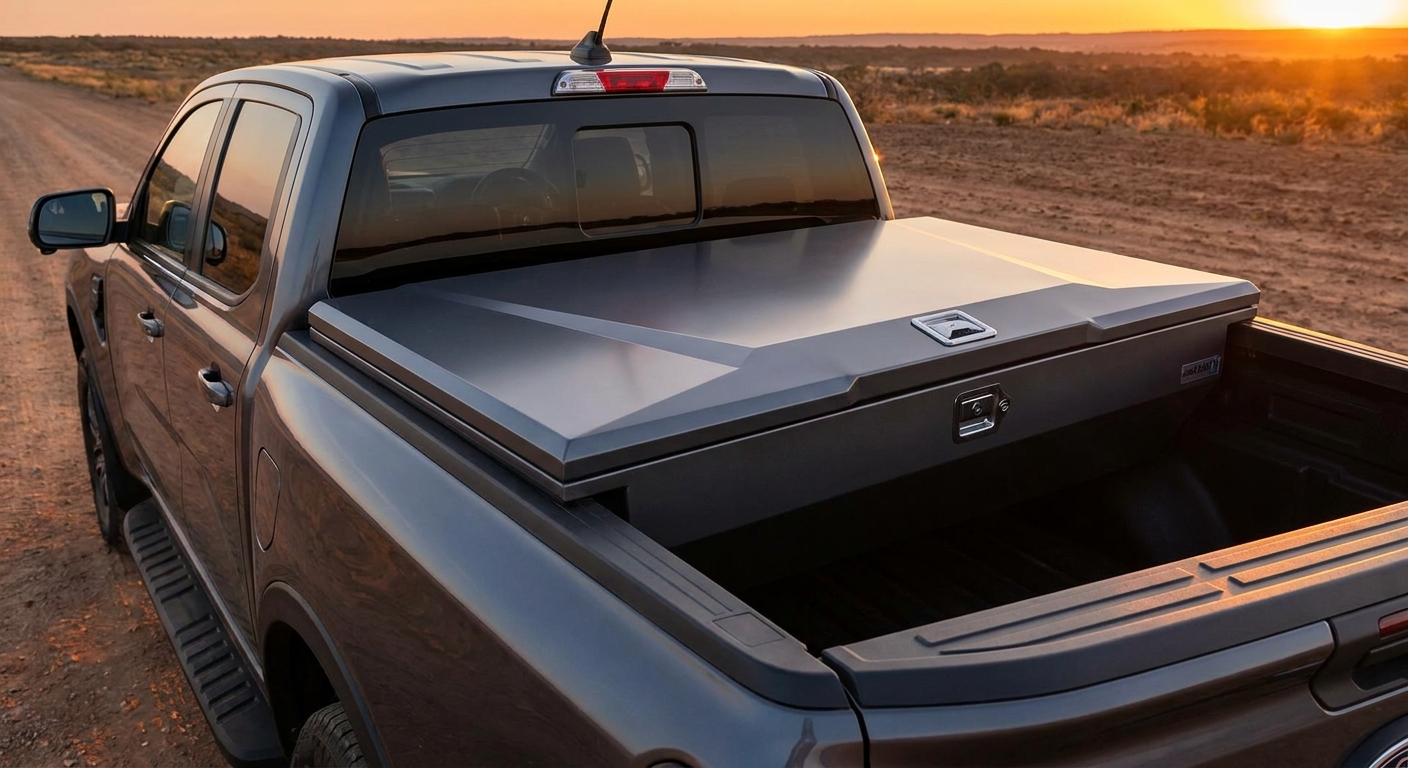
Specialized tub pickup truck tool box types are engineered to solve specific space constraints like wheel well interference or the need for extra-deep storage. A standard tub is rectangular, but many modern trucks require angled or notched designs to fit properly. Choosing a tub that matches your bed’s internal geometry prevents wasted space and ensures the box sits level on the rails.
Deep Tubs for Professional Use
Deep-tub models provide maximum volume for those carrying heavy hydraulic jacks or large socket sets. These are particularly popular in the logging and northern fleet sectors where specialized recovery gear is a daily requirement.
Benefits of Slim-Line Tubs
Slim-line tubs are narrower from front to back, which is essential for trucks with short beds. They provide secure storage without taking up so much space that you can’t fit a pallet or dirt bike in the back.
Here’s the deal:
- Standard Tubs: Most common, high volume.
- Angled Tubs: Clear wheel wells in short beds.
- Extra-Wide Tubs: For those who need maximum lockable space.
Key Takeaway: The “tub” is the heart of your storage; matching its shape to your truck’s bed layout is non-negotiable for a professional fit.
| Tub Style | Depth/Width | Ideal Truck Type |
|---|---|---|
| Standard | Balanced | Full-size long bed |
| Deep | Maximum | Heavy-duty fleet trucks |
| Slim-Line | Narrow | Mid-size/Short bed |
A specialized tub ensures that you utilize every available inch of storage without compromising the truck’s hauling utility.
When are side-mount pickup truck tool box types necessary?
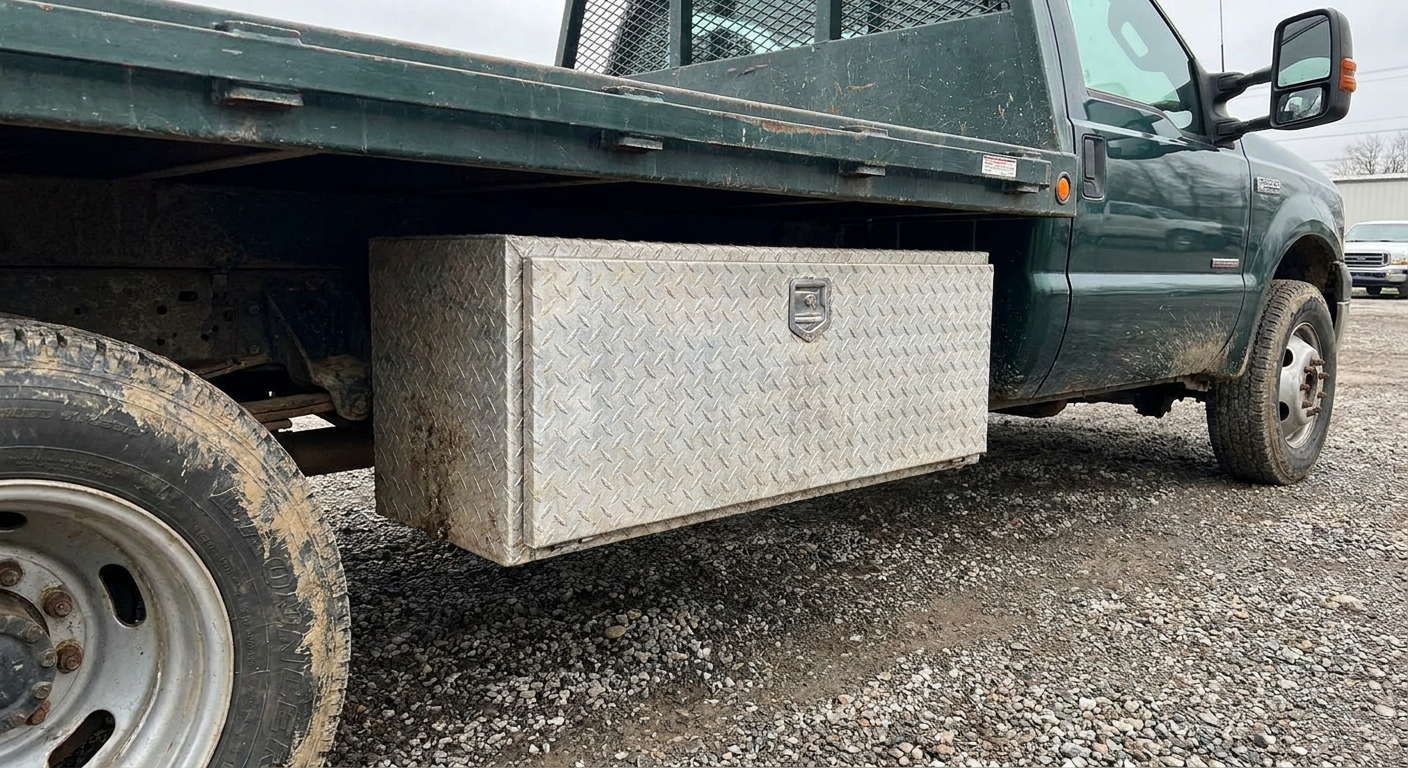
Side-mount pickup truck tool box types are necessary when you need to store long tools or require frequent access without stepping into the bed. They are often used in conjunction with a crossover box to create a “U-shaped” storage system. For flatbed and dump truck operators, underbody boxes are the only viable solution for keeping tools safe and low to the ground.
Topside and Bed-Side Utility
Topside boxes sit on top of the rails and open outward, providing massive storage capacity for mobile mechanics. Bed-side boxes hang inside the rail, keeping the exterior profile of the truck clean while still offering easy side access.
The Role of Underbody Boxes
Underbody storage is critical for heavy-duty commercial trucks. They utilize the empty space beneath the frame, keeping heavy chains and binders accessible while lowering the vehicle’s center of gravity.
Let’s look closer:
- Wheel Well Boxes: Utilize the dead space behind the tires.
- Topsider Boxes: Perfect for high-volume commercial needs.
- Underbody Boxes: Essential for flatbeds and trailers.
Key Takeaway: Side-mount units turn the perimeter of your truck into a high-efficiency workstation, freeing up the center of the bed for primary cargo.
| Side-Mount Type | Mounting Position | Best For |
|---|---|---|
| Wheel Well | Interior Bed Floor | Small tools/Accessories |
| Topside | On top of rails | Commercial service |
| Underbody | Under frame/Flatbed | Heavy hardware/Chains |
Analysis: Distributed storage across side-mount units improves weight distribution and worker ergonomics during long shifts.
Which chest-style pickup truck tool box types add versatility?
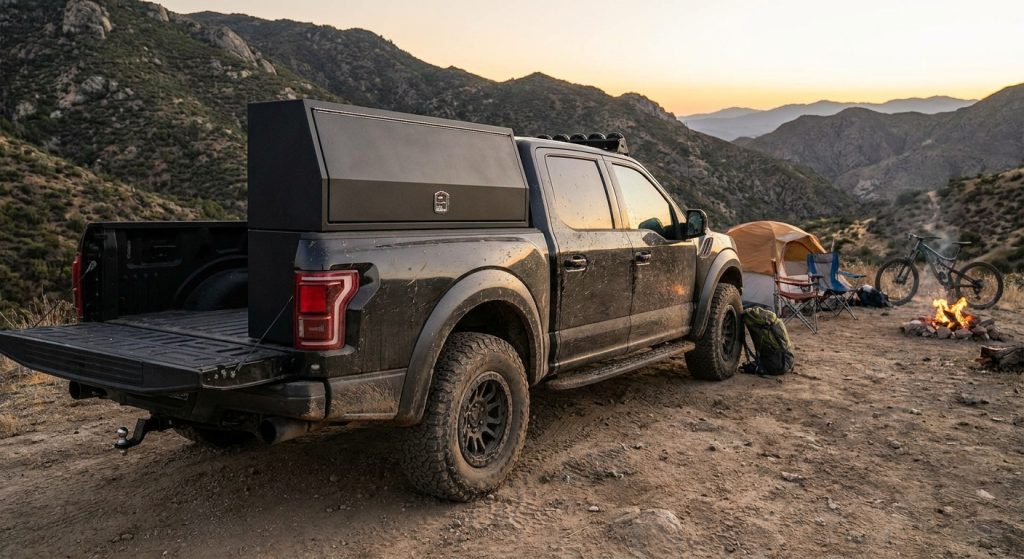
Chest-style pickup truck tool box types add versatility because they can be used both in the truck bed and as stationary storage in a shop or garage. Because they don’t rely on bed rails for support, they are easily portable and can be moved between different vehicles in a fleet. They are also the only choice for trucks equipped with 5th wheel hitches where rail-mounted boxes might interfere with the trailer’s turning radius.
Standard and Notched Utility Chests
Standard chests offer a clean, rectangular storage area that sits flush against the front of the bed. Notched chests are available for trucks with prominent wheel wells, allowing the box to sit closer to the cab for better weight distribution.
Specialized 5th Wheel Boxes
If you frequently tow heavy trailers, a specialized 5th wheel chest is mandatory. These units feature a lower profile or a notched lid to ensure the trailer pin and cab-over section have enough clearance during tight turns.
Here is the kicker:
- Under-Tonneau Chests: Keep gear hidden and dry under a cover.
- Portable Totes: Heavy-duty storage that you can take to the jobsite.
- Stationary Chests: Perfect for organizing your main workshop.
Key Takeaway: Chests offer a “transferable” security solution that adapts to various vehicle configurations and towing requirements.
| Chest Variety | Height | Primary Use Case |
|---|---|---|
| Standard | Full | General shop/truck storage |
| Under-Tonneau | Low (approx. 16″) | Concealed security |
| 5th Wheel | Low/Notched | Heavy towing applications |
Analysis: The versatility of a chest-style box makes it a long-term investment that outlasts any single vehicle in your fleet.
Are aluminum pickup truck tool box types built for durability?
Aluminum pickup truck tool box types are built for extreme durability using heavy-gauge diamond-plate fabrication. Professional-grade aluminum provides a superior strength-to-weight ratio, ensuring your truck isn’t weighed down by its own storage system. Unlike steel, aluminum is naturally corrosion-resistant, making it the preferred choice for northern fleets operating in road-salt environments.
Industrial Fabrication Standards
Most high-end boxes use 0.058-inch thick aluminum, which is significantly more rigid than the thin sheets found in retail-grade units. This thickness prevents the tub from warping under the weight of heavy power tools and ensures the lid remains square for a perfect seal.
Corrosion Resistance in Extreme Climates
In regions with high moisture or chemical exposure, aluminum is the only material that provides a “buy it once” solution. The natural oxide layer prevents rust from eating through the floor of the box, protecting your expensive internal inventory.
Let’s dive in:
- Diamond-plate texture adds structural rigidity.
- Reinforced lids prevent “flex” when opening gas struts.
- Internal bracing protects against heavy shifting loads.
Key Takeaway: Material grade is the primary differentiator between a box that lasts two years and one that lasts twenty.
| Material Feature | Benefit | Fleet Impact |
|---|---|---|
| 0.058″ Aluminum | High Impact Resistance | Reduced replacement costs |
| Diamond-Plate | Slip-resistant surface | Increased safety |
| Natural Oxide Layer | Zero Rust | Long-term asset protection |
Analysis: Choosing industrial-grade aluminum ensures your storage solution can withstand the same environmental rigors as your heavy-duty bumpers and guards.
How to choose between varied pickup truck tool box types?
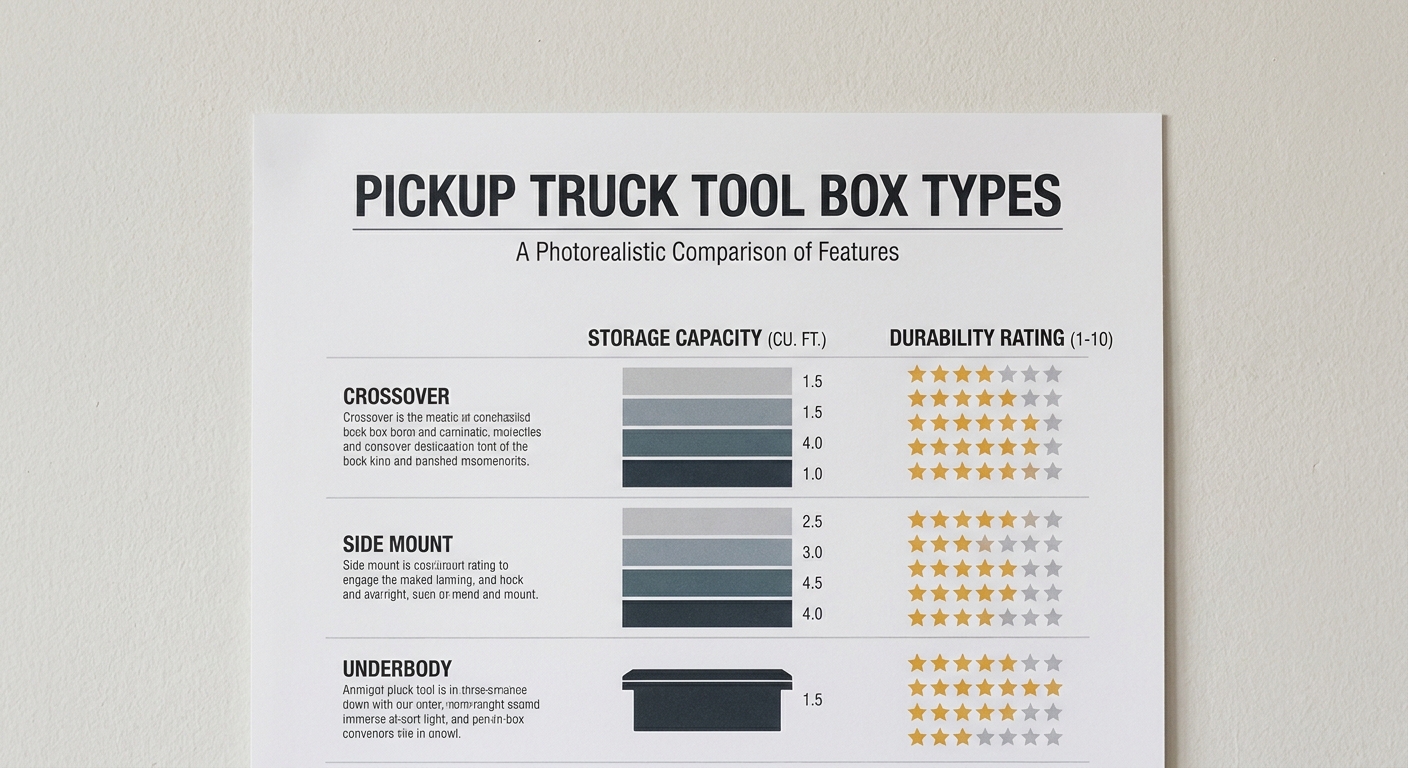
Audit your daily inventory and measure your truck bed carefully before choosing the right pickup truck tool box type. You must prioritize the features that directly impact your uptime, such as ease of access and cargo protection. For large-scale fleet operations, custom OEM fabrication may be necessary to ensure consistency across multiple vehicle makes and models.
Identifying Your Storage Density
If you carry hundreds of small fasteners, a box with built-in drawers or organizers is essential. If your payload consists of large, bulky items like generators, a deep-tub utility chest will provide the necessary clearance and volume.
Evaluating Quality Certifications
When procuring for a professional fleet, look for ISO-certified manufacturing standards. This ensures every box in your order meets the same structural integrity and fitment accuracy, preventing installation delays and field failures.
Consider these steps:
- Audit your most frequent tool list.
- Map your truck bed’s “dead zones.”
- Select a finish (Matte Black or Bright Aluminum) that matches your brand.
Key Takeaway: The “ultimate” box is the one that fits your truck perfectly while organizing your tools so well that you never have to search for them.
| Selection Factor | Priority | Decision Driver |
|---|---|---|
| Bed Length | High | Tub Style (Slim vs. Standard) |
| Tool Size | High | Depth (Deep vs. Shallow) |
| Security Needs | Critical | Latch Type (Paddle vs. Twist) |
Analysis: A data-driven selection process minimizes procurement errors and maximizes the return on investment for your vehicle accessories.
FAQ
- Can I install multiple pickup truck tool box types simultaneously to maximize space?
Yes, many professionals combine a crossover box with side-mount or wheel well boxes to create a comprehensive storage system. This “U-shape” configuration maximizes the perimeter of the bed while keeping the center floor open for primary cargo. - What’s the best material thickness for heavy-duty logging and northern fleet operations?
You should look for a minimum of 0.058-inch diamond-plate aluminum for heavy-duty environments. This thickness provides the necessary impact resistance to handle shifting heavy equipment without denting or compromising the weather-resistant seal. - How do I know if a specific box profile will interfere with my rear-view visibility?
Standard boxes typically rise 2-4 inches above the bed rail, which may block the lower portion of your rear window. If you prioritize visibility, choose a “low-profile” crossover or a floor-mounted utility chest that sits entirely below the rail line. - Can I utilize utility chest boxes for stationary shop or garage storage?
Absolutely, chest-style boxes are highly versatile because they do not require bed rail mounting. Their flat bottoms and side handles make them excellent portable tool chests that can transition from your truck bed to your primary workshop as needed. - What’s the best latching mechanism for operators wearing heavy work gloves?
Stainless steel pull handles or oversized paddle latches offer the most clearance for gloved hands. These designs provide a larger “grip area,” allowing for easier unlatching in cold-weather conditions where manual dexterity might be limited.
Conclusion
Selecting the correct storage configuration is critical for safeguarding expensive assets and ensuring fleet uptime. Whether deploying crossover units or side-mount underbody boxes, material grade and fitment accuracy remain the primary benchmarks of quality. Audit your current tool inventory and vehicle bed dimensions before selecting a storage solution to ensure your new box provides the long-term utility your business demands.
At Brontec, we understand that professional-grade protection extends beyond the bumper. Our commitment to ISO-certified quality ensures that every storage solution we manufacture meets the rigorous standards of North American fleets. For high-performance, weather-resistant storage, explore our full range of heavy-duty aluminum equipment, or contact us today to discuss custom OEM specifications for your fleet.