
A robust front-end barrier directly intercepts massive animal impacts before they can compromise the truck’s cab, ensuring the operator remains secure and in total control of the vehicle. Striking a 1,000-pound moose or a sudden deer at highway speeds presents a catastrophic risk for drivers navigating rural or heavily forested night routes. Without purpose-built protection, the radiator shatters, the hood caves in, and extreme kinetic forces can easily breach the windshield, jeopardizing the driver’s life and instantly stranding the payload. Equipping your fleet with a structural grille guard for truck safety prevents this severe frontal damage, serving as the ultimate solution to keep both your assets moving and your operators out of harm’s way.
What Happens During a High-Speed Wildlife Strike?
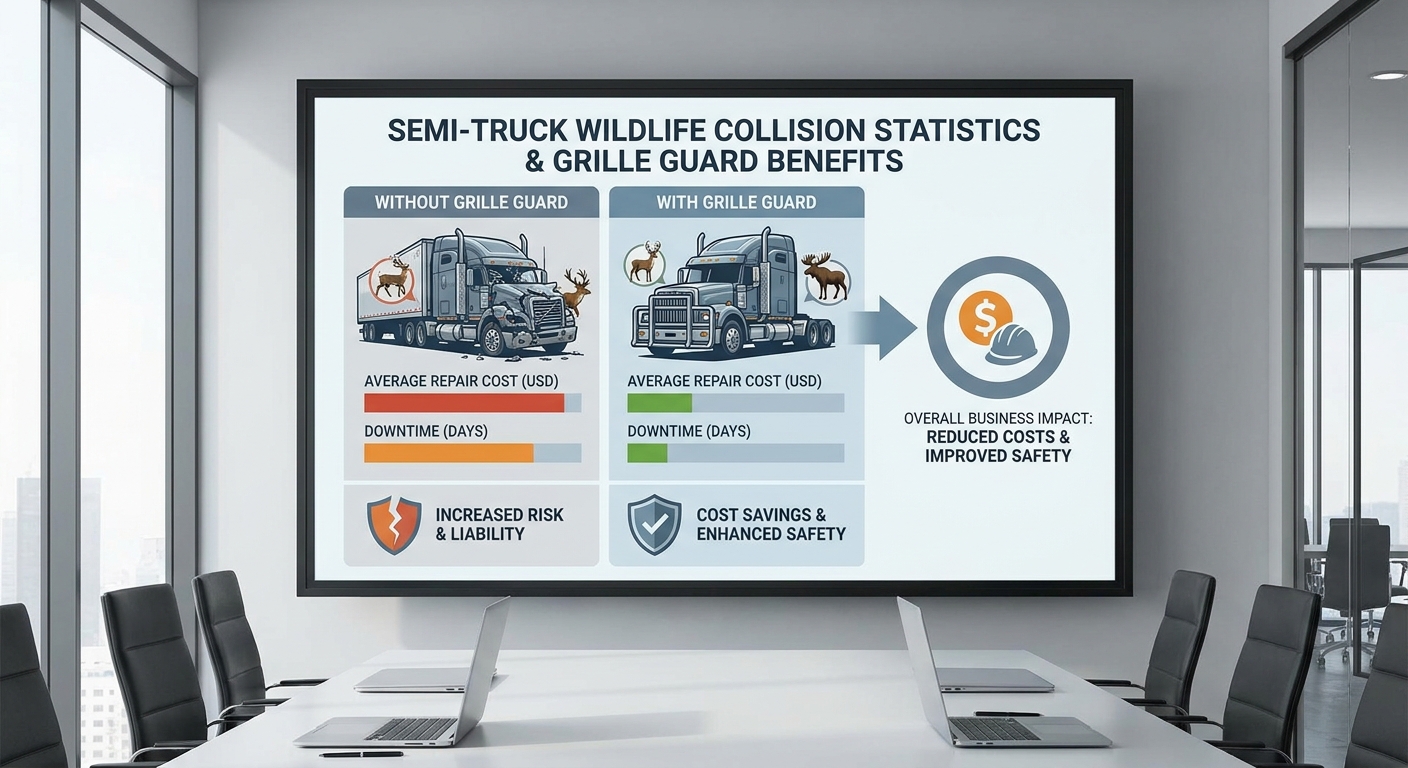
A high-speed wildlife strike transfers immense kinetic energy directly into the vulnerable cooling systems and structural frame of the vehicle. Installing a grille guard for truck safety acts as a critical buffer that absorbs and redirects this extreme force away from the driver.
Analyzing the Initial Impact Zone
Think about it: a mature moose can weigh well over a thousand pounds, turning an unprotected front end into crumpled metal in a fraction of a second. When the animal hits the standard factory fascia, the radiator and engine block become the immediate failure points.
- Radiator rupture leading to an immediate and dangerous engine stall.
- Violent hood displacement that instantly blinds the vehicle operator.
- High probability of the animal’s mass breaching the windshield glass.
Without structural defense mechanisms, the operator is completely exposed to immense physical trauma and flying debris inside the cabin. Key Takeaway: Understanding the brutal physics of a high-speed strike highlights exactly why factory bumpers fail to protect drivers.
| Impact Variable | Without Front-End Protection | With Structural Protection |
|---|---|---|
| Energy Transfer | Direct to engine block and cab | Deflected across steel uprights |
| Vehicle Mobility | Immediate disabling damage | Capable of reaching service points |
| Driver Risk | High risk of windshield breach | Contained outside the safety cell |
Analyzing the impact timeline reveals that catastrophic mechanical failure and driver peril occur within milliseconds without a proper front-end defense.
How Do Structural Metals Absorb Kinetic Energy?
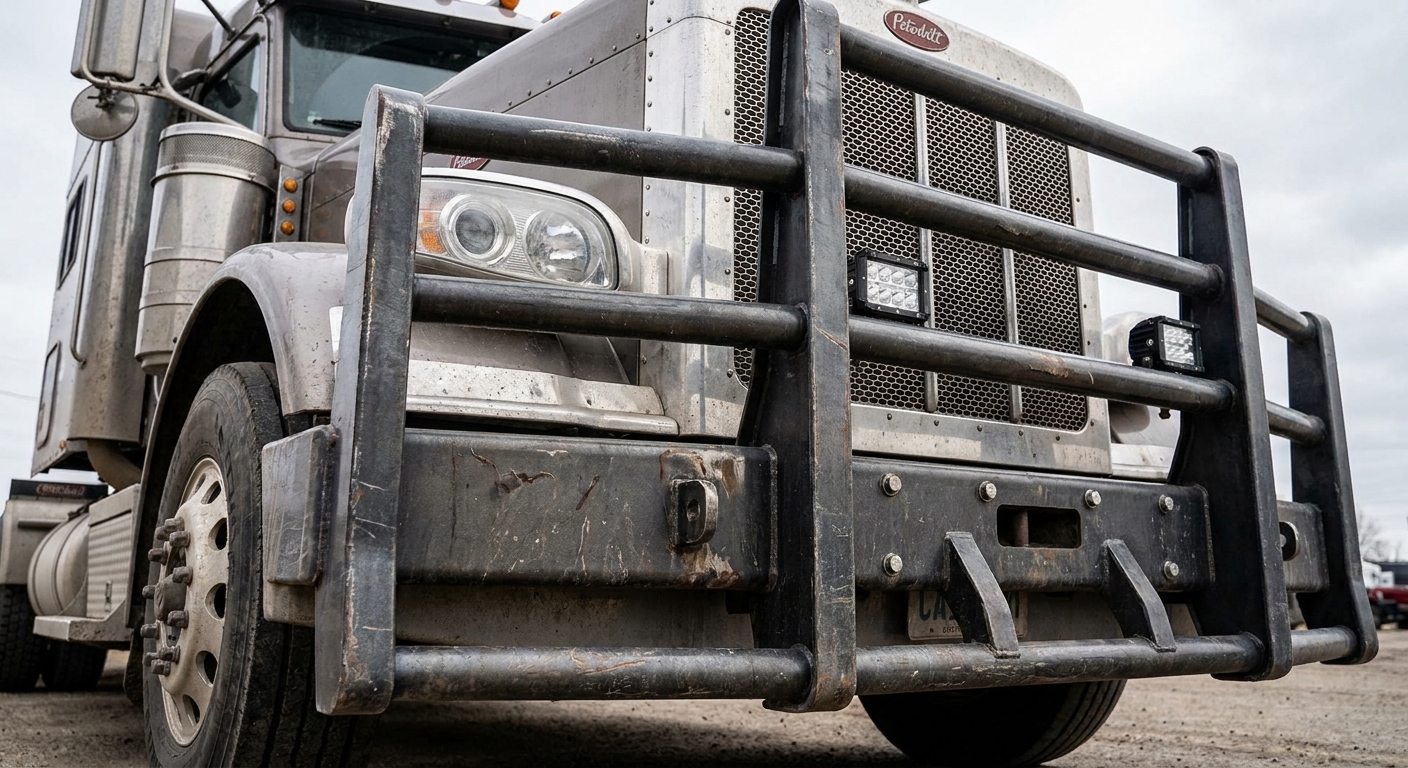
Structural metals absorb kinetic energy through controlled deformation and by distributing the load rigidly across the truck’s heavy-duty chassis. An engineered grille guard for truck safety leverages these material properties to channel the shockwave harmlessly into the frame rather than the fragile cab.
The Science of Impact Deflection
Here is the thing: commercial-grade stainless steel yields just enough to absorb shock while maintaining the core rigidity required to stop massive bodies. Manufacturers utilizing custom aluminum bodies and heavy steel know that this prevents the animal’s momentum from transferring directly into the driver’s space.
- Energy dispersion is forced across multiple vertical steel uprights.
- Heavy-gauge brackets prevent localized frame buckling at the joints.
- The rigid structure preserves critical engine components behind the grille.
By carefully selecting high-tensile materials, engineers ensure the barrier remains completely intact even after sustaining a massive, high-velocity blow. Key Takeaway: Superior energy absorption relies entirely on high-grade material strength and highly engineered mounting bracket designs.
| Material Type | Energy Absorption Rating | Deformation Resistance |
|---|---|---|
| Factory Plastic/Fiberglass | Very Low | Minimal |
| Standard Aluminum Tube | Moderate | Prone to bending under heavy loads |
| 304 Stainless Steel | Extremely High | Maximum structural rigidity |
Selecting the correct structural metal alloy is the foundational step in engineering a survivable front-end barrier for commercial operators.
Why Is Visibility Critical During Night Runs?
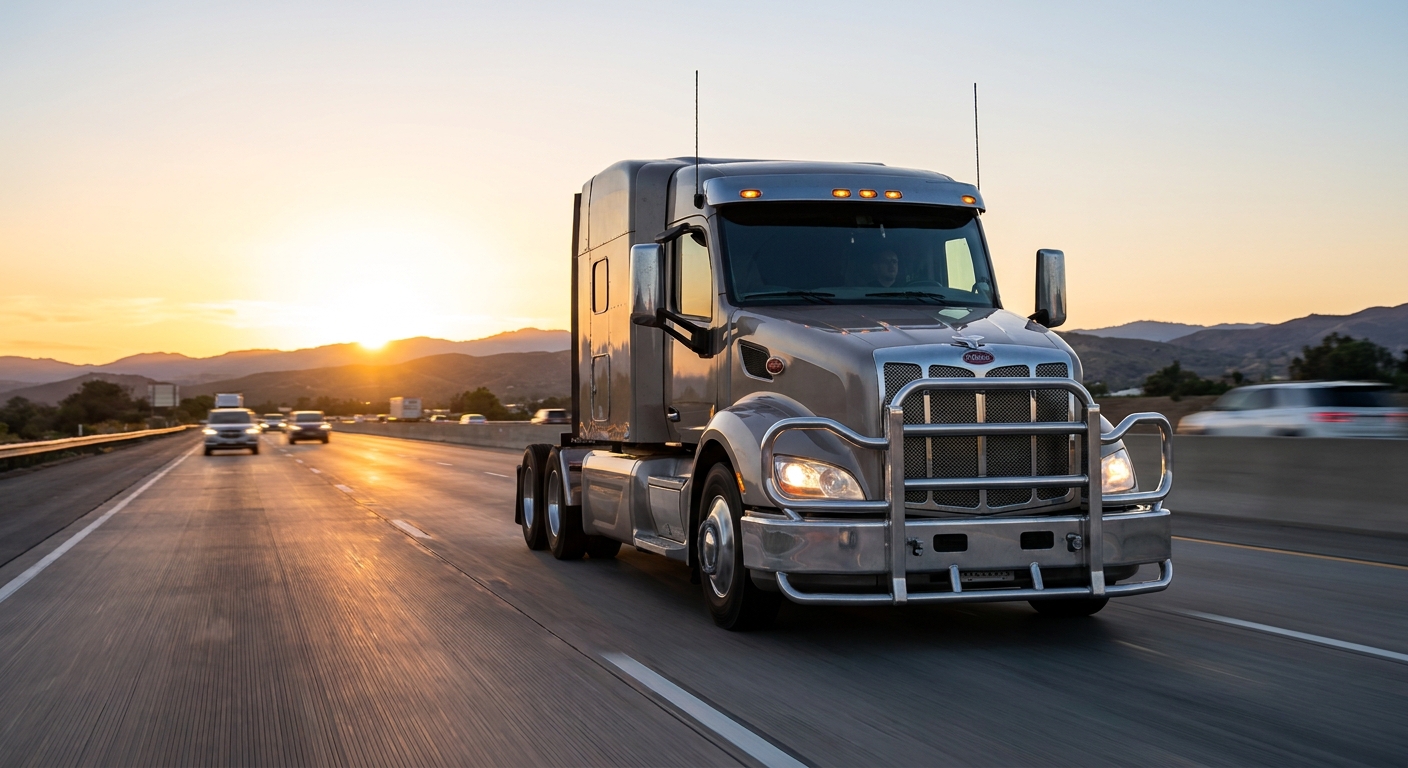
Low visibility drastically reduces a driver’s reaction time, making proactive physical defense the only reliable safeguard against sudden highway obstructions. Integrating a grille guard for truck safety ensures that even if an operator cannot physically brake in time, their safety is never compromised.
Reaction Times and Low-Light Hazards
But wait, there’s more: nocturnal animals frequently freeze in oncoming headlights, instantly turning a potential near-miss into a direct, high-speed collision. Commercial drivers operating heavily loaded rigs during dusk and dawn naturally face the highest statistical risk of these unpredictable events.
- Dramatically reduced peripheral vision on unlit rural highways.
- Headlight glare effectively masking erratic animal movements.
- Significantly slower driver reactions to sudden, dark obstacles.
Upgrading front-end armor is a mandatory component of nocturnal risk management for any serious transport operation. Key Takeaway: When visual avoidance inevitably fails in the dark, physical steel barriers remain the only reliable defense mechanism.
| Time of Day | Visibility Level | Wildlife Activity | Driver Reaction Window |
|---|---|---|---|
| High Noon | Maximum | Very Low | Optimal (3-5 seconds) |
| Dusk/Dawn | Poor | Maximum | Critical (1-2 seconds) |
| Midnight | Lowest | High | Minimal (< 1 second) |
Recognizing the extreme danger of low-light operations heavily justifies the immediate investment in heavy-duty front-end shielding.
What Role Do Precision Welds Play in Safety?
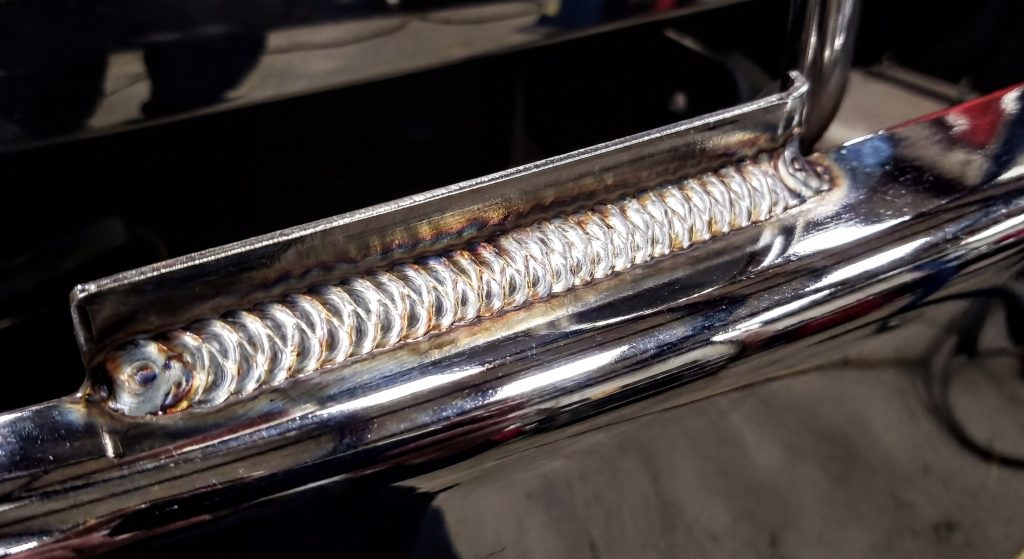
Precision welds prevent joint shear during a violent collision, ensuring the entire guard reacts as a single, unified energy sink. A poorly constructed grille guard for truck safety will instantly snap at the joints under the immense pressure of a heavy animal strike.
Evaluating Weld Integrity Under Stress
Think about it: a structural chain is only as strong as its weakest link, and in heavy-duty metal fabrication, that link is always the weld. Utilizing deep-penetration TIG welding ensures that the heavy-gauge steel barriers function as a cohesive shield without fracturing.
- Total elimination of hidden micro-fractures in critical joints.
- Massively enhanced load-bearing capabilities across the structure.
- Exceptional resistance to vibration-induced metal fatigue over time.
Fleet managers must fiercely scrutinize the manufacturing quality of these components to guarantee actual, life-saving protection for their teams. Key Takeaway: High-quality, deeply penetrated welds are absolutely non-negotiable for authentic and reliable impact deflection.
| Welding Technique | Penetration Depth | Impact Shear Resistance |
|---|---|---|
| Spot Welding | Shallow | Fails under highway-speed impact |
| Standard MIG | Medium | Moderate failure risk under heavy loads |
| Precision TIG | Maximum | Sustains extreme kinetic force |
Weld penetration depth directly correlates to the absolute maximum kinetic load a guard can sustain before it suffers catastrophic failure.
Can Weather Exacerbate Wildlife Strike Risks?
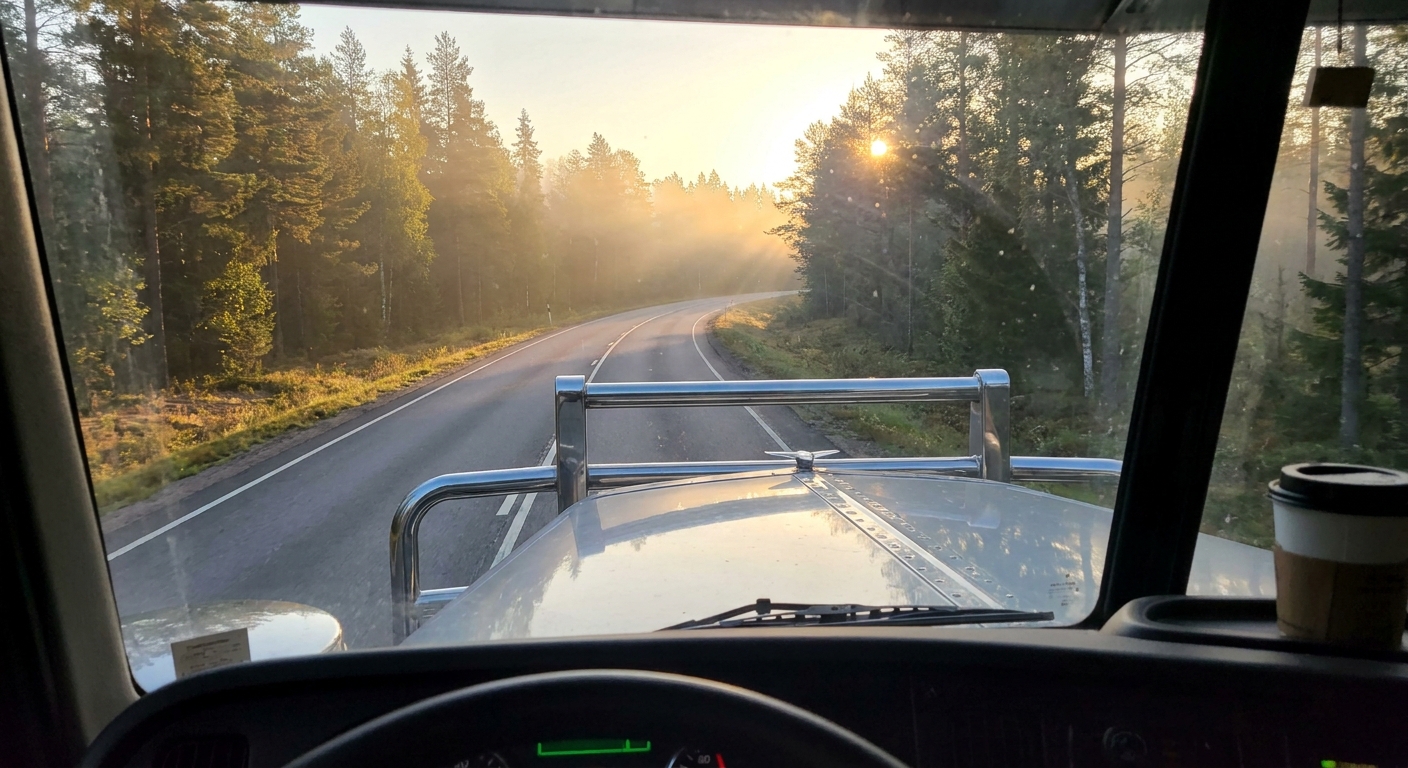
Adverse weather completely destroys tire traction, making evasive maneuvers highly dangerous and often physically impossible for heavy rigs. During snow, ice, or rain, a grille guard for truck safety allows the driver to maintain their lane and safely absorb the hit.
Traction Loss and Evasive Maneuvers
Here is the thing: swerving a fully loaded commercial trailer on a slick highway almost guarantees a devastating jackknife or rollover incident. Professional drivers are strictly trained to hold the steering wheel straight, meaning the truck’s front end must absorb the animal entirely.
- Massively increased stopping distances on wet or icy asphalt.
- Extreme risk of total vehicle control loss when attempting to swerve.
- Heavy fog obscuring early warning signs of wildlife near the shoulder.
Relying on sturdy frontal armor prevents weather-related wildlife encounters from escalating into multi-vehicle or fatal rollover accidents. Key Takeaway: Severe weather conditions mandate holding your lane, placing the entire burden of survival on the front-end hardware.
| Weather Condition | Road Traction | Safe Evasive Maneuverability |
|---|---|---|
| Dry Asphalt | Optimal | Possible but risky |
| Heavy Rain | Reduced by 40% | Highly dangerous |
| Black Ice / Snow | Near Zero | Impossible |
Weather-induced traction loss clearly makes mechanical front-end defenses significantly more critical than relying on driver avoidance tactics.
How Do Fleet Managers Calculate Downtime Costs?
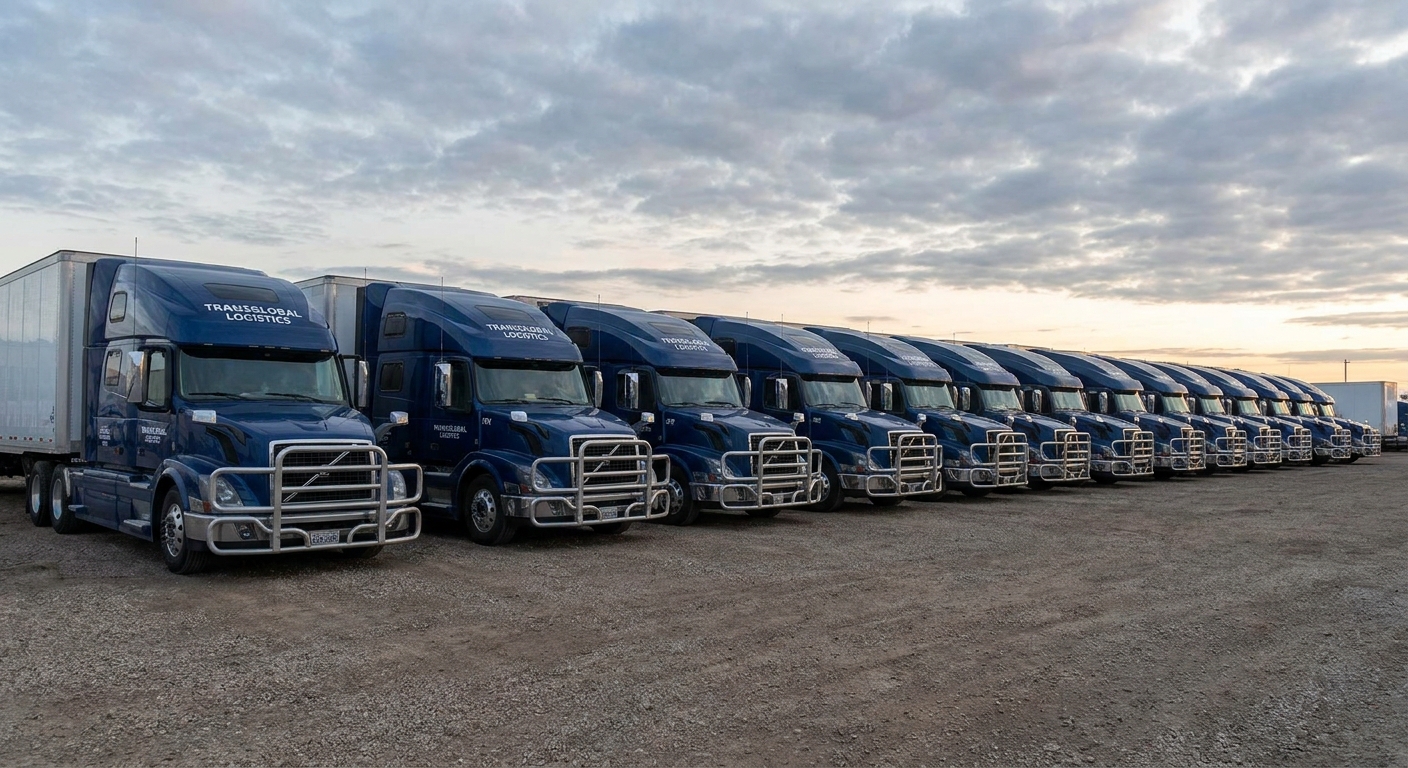
Fleet managers calculate downtime by compounding repair expenses, severe missed delivery penalties, and the cost of alternative asset rentals. Implementing a robust grille guard for truck safety dramatically neutralizes these complex logistical and financial burdens simultaneously.
The Financial Impact of Sidelined Assets
But wait, there’s more: towing a disabled commercial vehicle from a remote, northern highway can cost thousands of dollars before mechanical repairs even begin. When the radiator is shielded by structural protection equipment, the truck can generally finish its route and return to the depot under its own power.
- Total elimination of exorbitant emergency towing and recovery fees.
- Strict protection of highly lucrative, just-in-time delivery contracts.
- Substantial reduction in commercial insurance premium spikes post-accident.
Equipping fleets with true heavy-duty hardware translates directly into highly predictable operational uptime and protected profit margins. Key Takeaway: Frontal protection must be viewed as a strategic financial investment rather than a simple aesthetic truck accessory.
| Expense Category | Unprotected Strike Event | Protected Strike Event |
|---|---|---|
| Radiator/Engine Repair | $5,000 – $12,000 | $0 |
| Emergency Heavy Towing | $1,500 – $3,000 | $0 (Drivable) |
| Missed Load Penalties | High probability | Zero disruption |
Strategic procurement of impact defenses yields an incredibly rapid return on investment by eliminating unpredictable towing, repair, and penalty costs.
Why Are Impact Tests Essential for Verification?
Rigorous impact tests provide the empirical data necessary to prove that a specific design can withstand real-world, high-velocity kinetic forces. Purchasing a grille guard for truck safety without reviewing verified testing data leaves your drivers exposed to unproven failure points.
Simulating Highway-Speed Collisions
Think about it: a purely cosmetic bumper might look intimidating, but it will shatter instantly when subjected to a 65 mph moose collision. Controlled hydraulic stress testing ensures that brackets, tubing, and welds meet the absolute highest heavy-duty safety standards.
- Precise validation of mounting bracket shear strength under extreme loads.
- Accurate measurement of steel tube deflection to prevent engine contact.
- Strict verification that modern radar and sensor systems remain functional.
These rigorous engineering validations separate true life-saving equipment from dangerous, superficial chrome accessories sold in the aftermarket. Key Takeaway: Empirical impact testing stands as the only reliable metric for assessing a unit’s true driver protection capabilities.
| Testing Metric | Standard Accessory | Certified Structural Guard |
|---|---|---|
| Hydraulic Load Test | Fails at low pressure | Sustains multi-ton kinetic force |
| Weld Integrity Check | Visual inspection only | Ultrasonic or destructive testing |
| Sensor Calibration | Frequently blocked | Engineered for CAS compatibility |
Laboratory stress analysis entirely removes the guesswork from procurement, ensuring the barrier performs exactly as engineered during a real crisis.
What Maintenance Do Protective Guards Require?
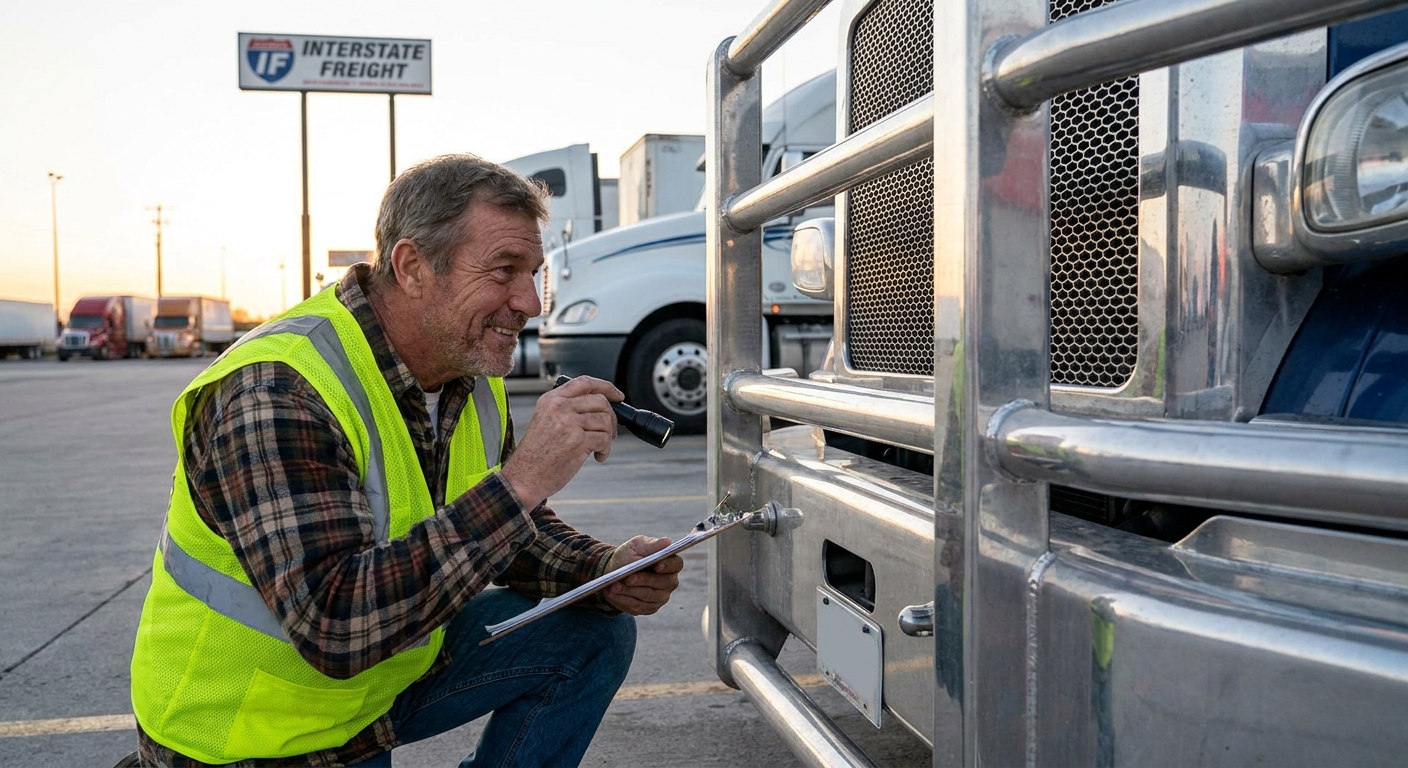
Routine physical inspections of all mounting hardware and hinge mechanisms guarantee that the guard remains rigidly secure and fully functional. A properly engineered grille guard for truck safety requires very minimal upkeep while delivering maximum long-term reliability on the road.
Implementing Routine Hardware Checks
Here is the thing: intense road vibrations across thousands of highway miles can slowly loosen even the most heavy-duty anchor bolts. Drivers must incorporate physical torque checks of the tow receiver mounts into their daily, standardized pre-trip inspection routines.
- Routine torque verification on all primary chassis anchor bolts.
- Visual inspection of hinge latch mechanisms for easy engine access.
- Thorough checks for stress-induced micro-cracks near the mounting zones.
Including these quick checks alongside standard OEM manufacturing capabilities evaluations ensures the entire asset is road-ready. Key Takeaway: Proactive, simple maintenance prevents secondary mechanical failures caused by vibration and prolonged structural fatigue.
| Maintenance Task | Frequency | Primary Purpose |
|---|---|---|
| Bolt Torque Check | Monthly | Prevent vibration loosening |
| Hinge Lubrication | Bi-Annually | Ensure quick hood access |
| Visual Weld Audit | Post-Impact / Quarterly | Identify micro-fractures early |
Consistent hardware auditing transforms a static metal barrier into an active, thoroughly dependable, and permanent safety system.
Do Wildlife Hotspots Demand Specialized Gear?
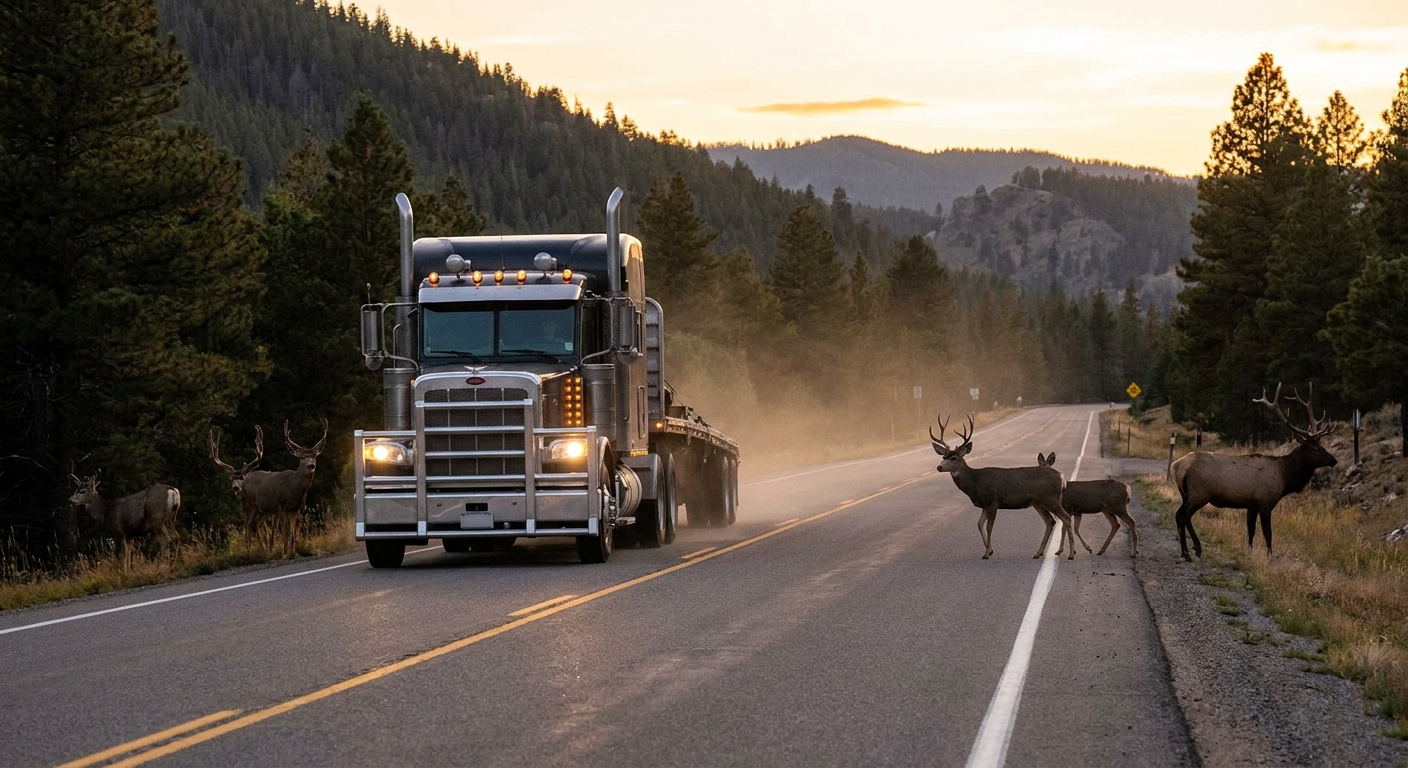
High-risk migration corridors require oversized, structurally reinforced barriers that cover the entire frontal profile of the commercial cab. Deploying a heavy-duty grille guard for truck safety is an absolute necessity for fleets navigating dense northern forests and mountainous sectors.
Upfitting for Regional Hazard Zones
But wait, there’s more: standard deer guards are wholly inadequate for regions heavily populated by massive, towering animals like elk and moose. Drivers operating in these sectors desperately need expanded tubular coverage that shields the upper grille, hood, and headlight assemblies completely.
- Expanded vertical height to safely intercept tall animal center-of-mass strikes.
- Thicker gauge steel tubing dedicated to extreme, high-risk impact zones.
- Strategic wrap-around designs formulated to deflect off-center corner hits.
Customizing your fleet’s defense profile to directly match regional wildlife statistics is a defining hallmark of highly intelligent fleet management. Key Takeaway: The specific severity of regional hazards must strictly dictate the necessary scale and strength of your hardware.
| Hazard Region | Primary Threat | Recommended Guard Profile |
|---|---|---|
| Urban/Suburban | Minor debris / Passenger cars | Standard profile protection |
| Midwest Corridors | High density White-tailed deer | Mid-level reinforced coverage |
| Northern/Mountain | Massive Elk and Moose | Maximum height, heavy-gauge wrap |
Geographically targeted equipment upgrades ensure that your commercial operators are never outmatched by severe local environmental threats.
How Does Driver Psychology Improve With Safety?
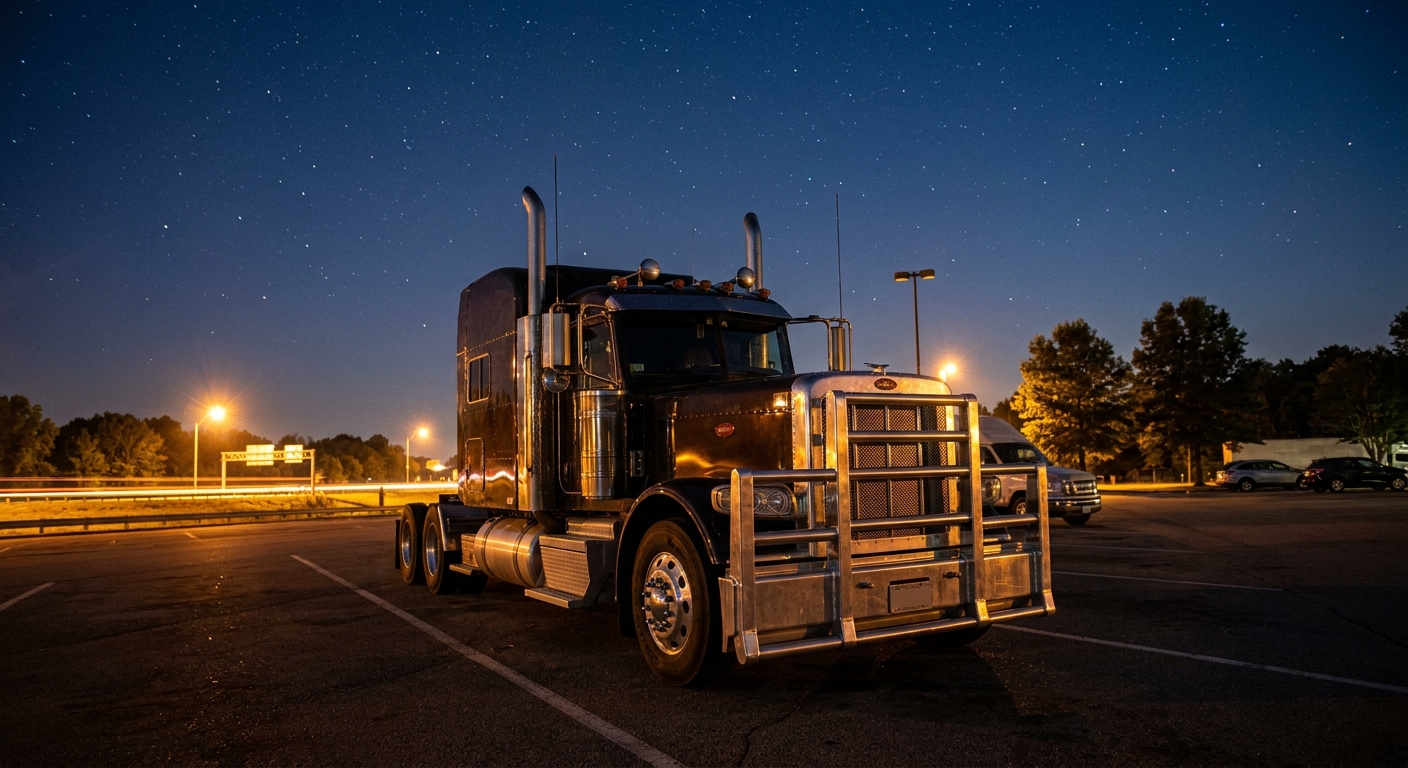
Operating a commercial vehicle equipped with substantial frontal protection drastically reduces driver fatigue, burnout, and anxiety on dark highways. Knowing they have a completely reliable grille guard for truck safety allows operators to focus their cognitive energy on general road awareness.
Reducing Stress on Long-Haul Night Routes
Think about it: constantly anticipating a catastrophic animal strike severely drains a driver’s cognitive resources over a grueling ten-hour shift. Providing an impenetrable physical safety net allows drivers to maintain a steady, confident course without making panic-induced overreactions.
- Dramatically lowered baseline stress levels during long night operations.
- Significantly increased confidence when handling unavoidable animal strikes.
- Considerably better retention rates of highly skilled commercial operators.
An investment in heavy-duty physical hardware through an expert engineering team is simultaneously an investment in operator well-being. Key Takeaway: Deep psychological security directly translates to much better vehicle handling and superior overall logistical efficiency.
| Psychological Factor | Unprotected Driver Experience | Protected Driver Experience |
|---|---|---|
| Night Driving Anxiety | Severe | Minimal |
| Focus Allocation | Hyper-fixated on shoulders | Balanced scanning |
| Career Burnout Rate | Elevated due to chronic stress | Greatly reduced |
Eliminating the existential dread of night-driving hazards rapidly fosters a significantly more focused, professional, and efficient trucking workforce.
Conclusion
Protecting the lives of commercial operators while securing your logistical assets requires much more than just basic driving training; it demands uncompromising physical hardware. When the worst-case scenario steps out onto a pitch-black highway, a heavy-duty front-end barrier is the definitive line between a safe stop and a fatal disaster. At Brontec Trailer, we engineer our structural protections with absolute precision, ensuring every weld and bracket delivers maximum survivability for the driver and the vehicle. Do not leave your operators exposed to unpredictable wildlife hazards—contact us today to fortify your fleet with true, heavy-duty safety solutions.
Frequently Asked Questions
Can I install this hardware on any commercial truck?
Yes. These units are engineered with model-specific mounting brackets designed to utilize the factory tow receiver points of major commercial truck brands, ensuring a precise, structural fit without drilling the frame.
What is the best material for wildlife impact deflection?
Heavy-gauge 304 stainless steel is the superior choice. It offers the perfect balance of massive tensile strength for energy absorption and excellent resistance to rust and road corrosion over thousands of miles.
How does this impact my vehicle’s front sensor systems?
It does not impede them. High-quality structural guards are meticulously engineered with CAS (Collision Avoidance System) compatibility in mind, ensuring radar and factory safety sensors retain full operational clarity.
Can I reduce my insurance premiums with front-end protection?
Yes, in many cases. Commercial insurance providers frequently offer adjusted premiums for fleets that proactively install approved, heavy-duty impact defenses, as it drastically lowers the risk of catastrophic total-loss payouts.
What is the actual lifespan of these structural units?
Decades, barring a massive collision. Because they are constructed from high-grade stainless steel with deep-penetration TIG welds, these guards routinely outlast the operational lifespan of the commercial truck itself.